-
-
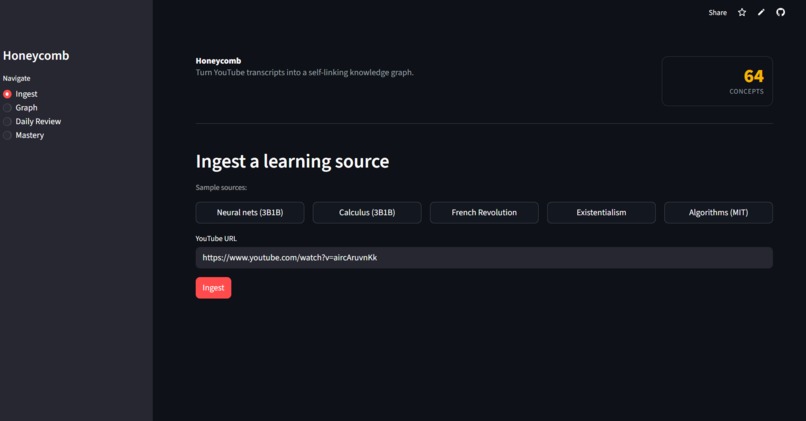
injest any youtube video and learn them adaptively
-
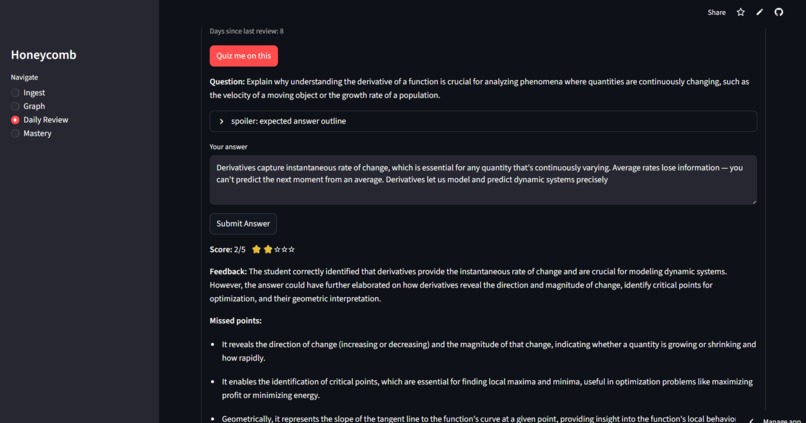
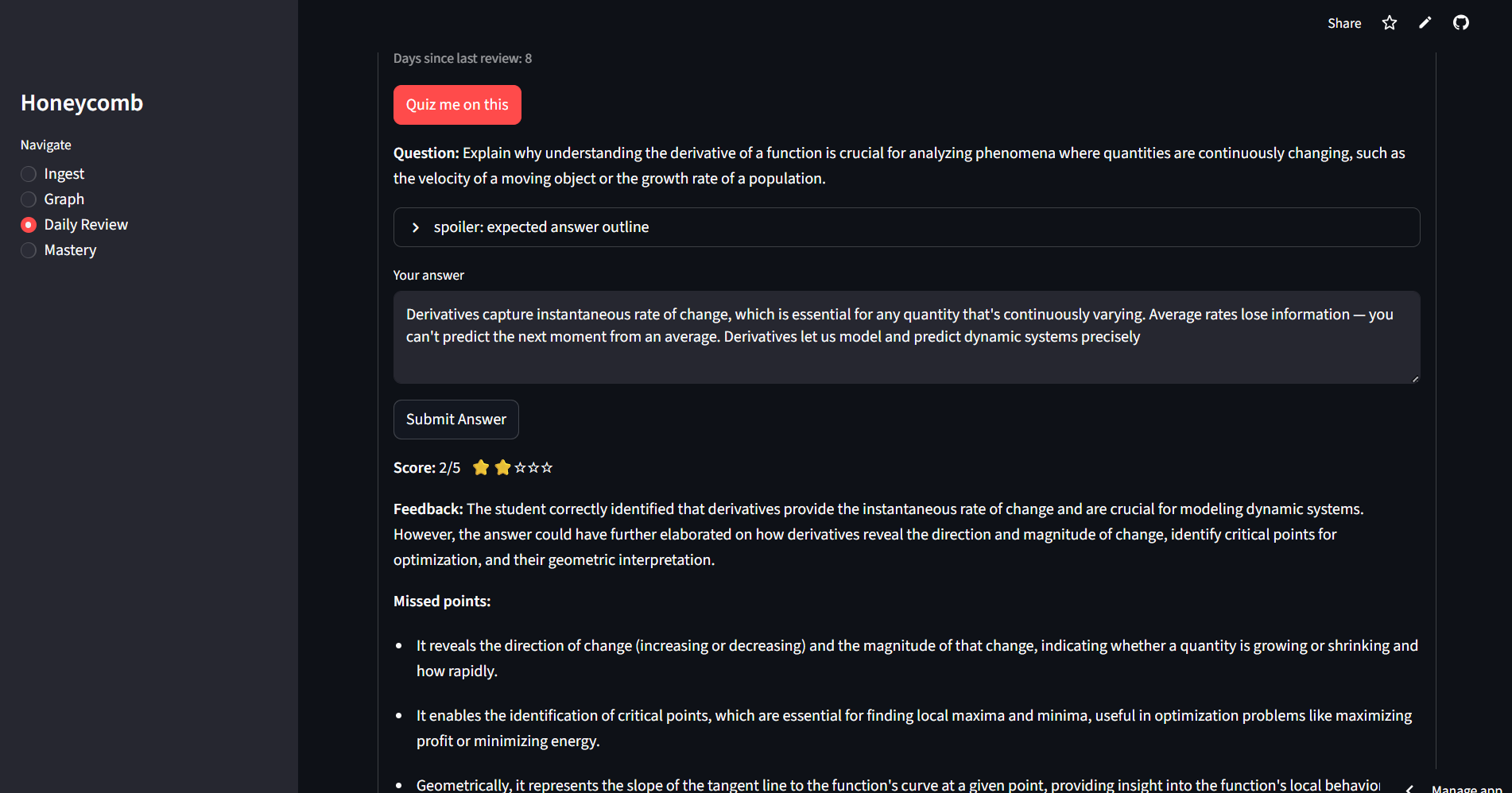
feedback of the quiz after answer
-
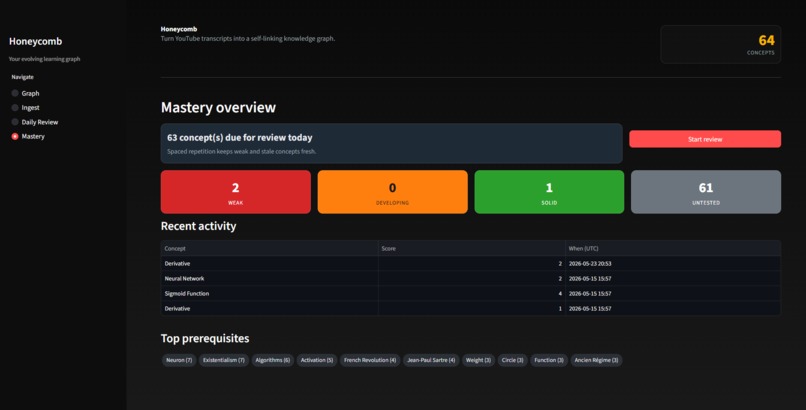
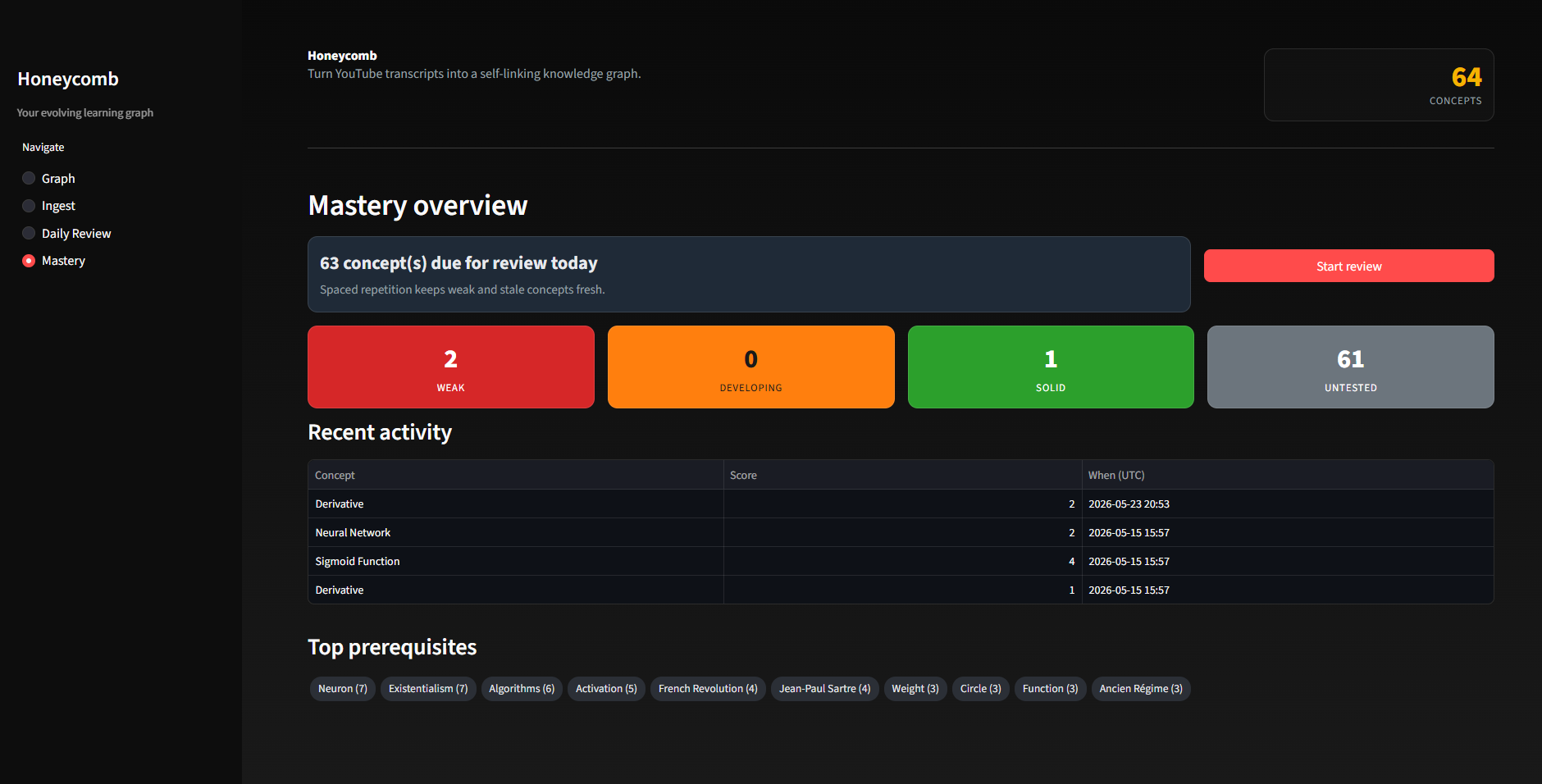
mastery over view screen
What makes Honeycomb different
Other AI study tools (Monic, Quizgecko, Mindgrasp, Edpuzzle) are quiz generators with per-source memory. Each video, each PDF, each transcript becomes its own isolated flashcard deck.
Honeycomb is built on a different premise: everything you've ever learned should live in one connected graph, and an agent should be able to reason over that graph to teach you next.
Three things only Honeycomb does:
1. Cross-source concept merging. When you ingest a calculus lecture and later a physics lecture, "derivative" from both becomes a single graph node with two source URLs. Powered by MongoDB Atlas Vector Search with a 0.95-cosine threshold plus a name-similarity gate to prevent false merges. Verified across 5 source domains during evaluation: 86% same-source merge rate, 6% cross-source merge rate (correctly low — different domains stay separate).
2. Prerequisite-aware learning paths. Gemini doesn't just extract concept names — it extracts each concept's prerequisites. These become graph edges. After ingesting calculus + ML videos, Honeycomb knows that "backpropagation" depends on "chain rule" which depends on "derivative." When you're weak on backprop, the agent suggests reviewing chain rule first.
3. An agent that plans, not a tool that responds. Honeycomb's Google Cloud Agent Builder (ADK) agent has 6 tools. Ask it "what should I study today?" and it executes a multi-step mission: queries MongoDB via MCP for your weakest concepts, looks up their prerequisites, ranks by spaced-repetition priority, surfaces the right concept to quiz first, grades your answer, and updates your mastery — all in one conversational turn.
Other tools quiz you. Honeycomb teaches you.

Log in or sign up for Devpost to join the conversation.