Inspiration
Ask anyone in Jamaica and they can name someone. A grandmother on insulin. An uncle who lost a foot. A mother who found out her sugar was high only after the damage was done.
None of them were careless. They trusted the box. "Heart healthy." "Made with real fruit." "Whole grain." The truth was on the back in grams nobody can picture, on a shelf where you have about five seconds to decide.
We built Honest Label so the next person doesn't have to find out the hard way.
What it does
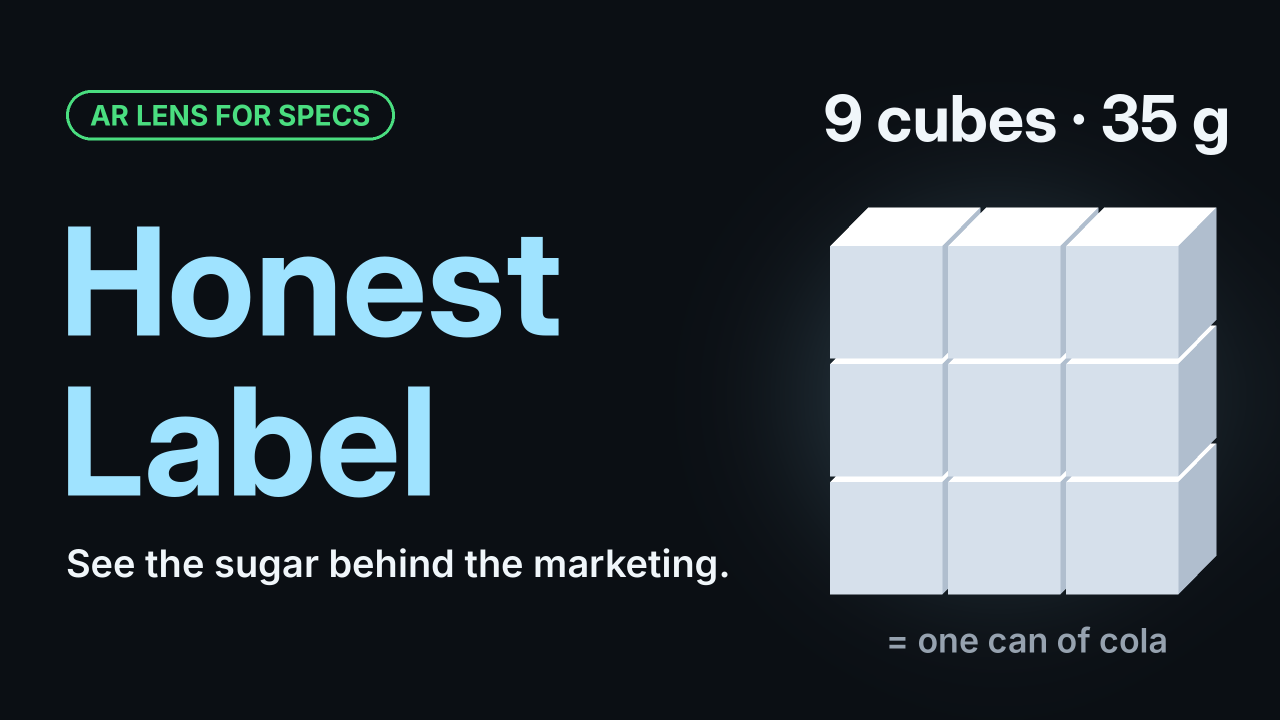
Look at any packaged food or drink through SPECS and press Scan. A few seconds later the sugar it hides appears as real sugar cubes stacked right beside it, with a plain verdict like "Basically soda" or "Dessert, not breakfast" and a quick check on every claim on the front.
No numbers to decode. You just see it.
Why glasses
Your hands are full and your eyes are already on the shelf. The glasses see what you see and put the truth right next to the product, at real size.
How we built it
Planned with the Devpost Learn skill pack, built through CLAD and the Lens Studio MCP in TypeScript on the SPECS template. A small Python bridge sends the camera frame to Gemini and returns sugar, serving, claims and a verdict over a WebSocket. If the scan is slow, the Lens falls back to a stored label so it never stalls.
Challenges
Keeping it from becoming a floating website. We cut menus, counters and extra buttons down to one Scan ring.
What we learned
Numbers on a label don't change anything. Ten sugar cubes next to a "healthy" cereal does.
What's next
Salt and fat, side by side comparisons on the shelf, and healthier swaps nearby. Then putting it in the hands of the people who need it most: parents, grandparents, and anyone who has just been told to watch their sugar.
Built With
- gemini
- lens-studio
- opencv
- python
- typescript
- websockets


