-
-
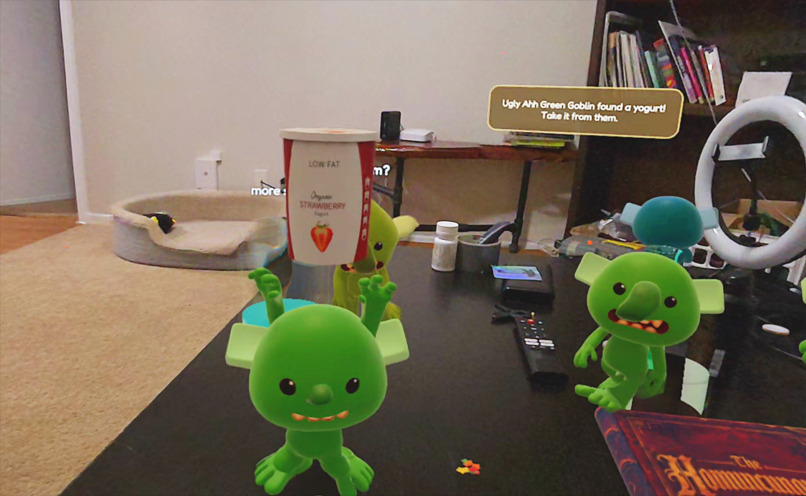
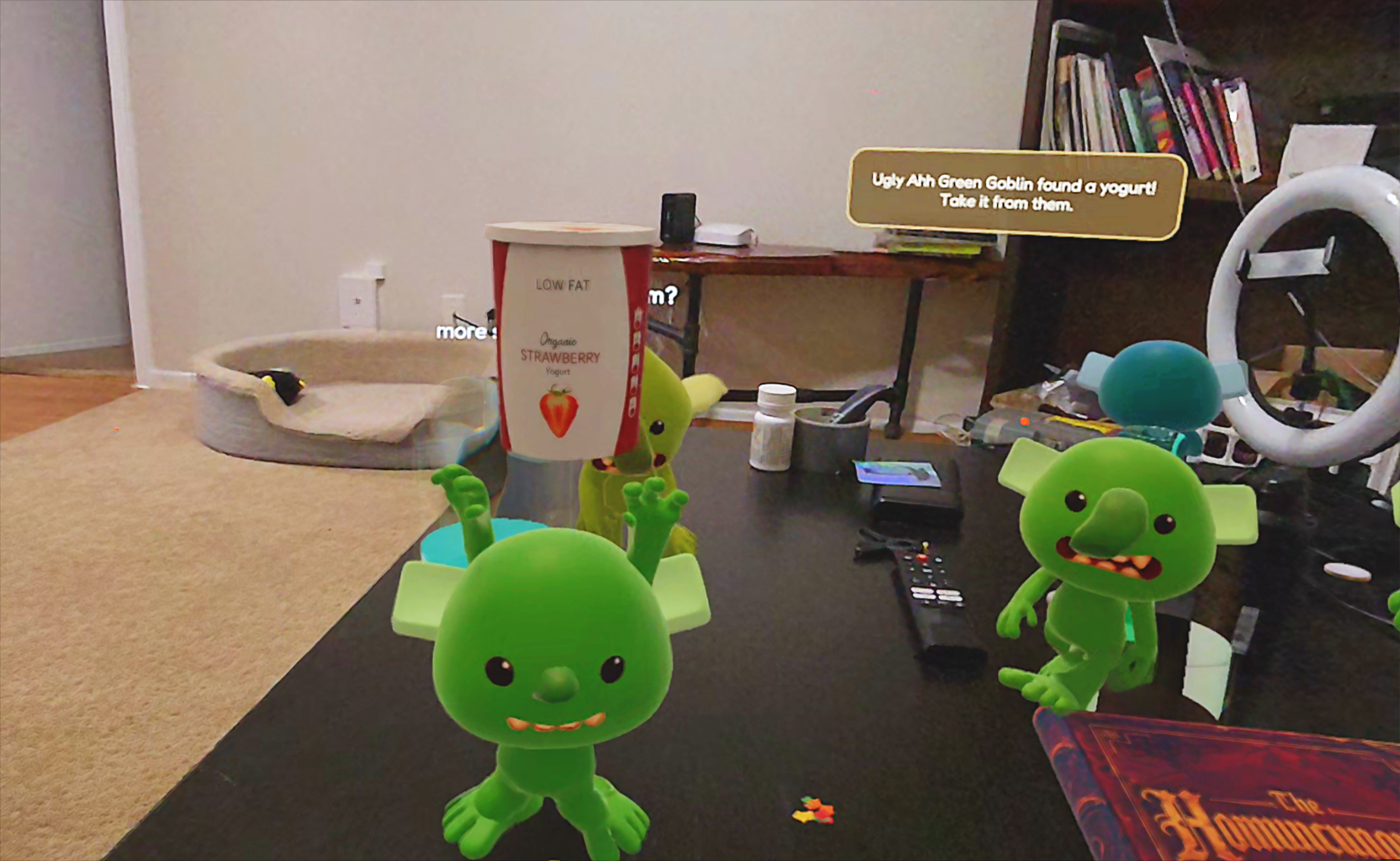
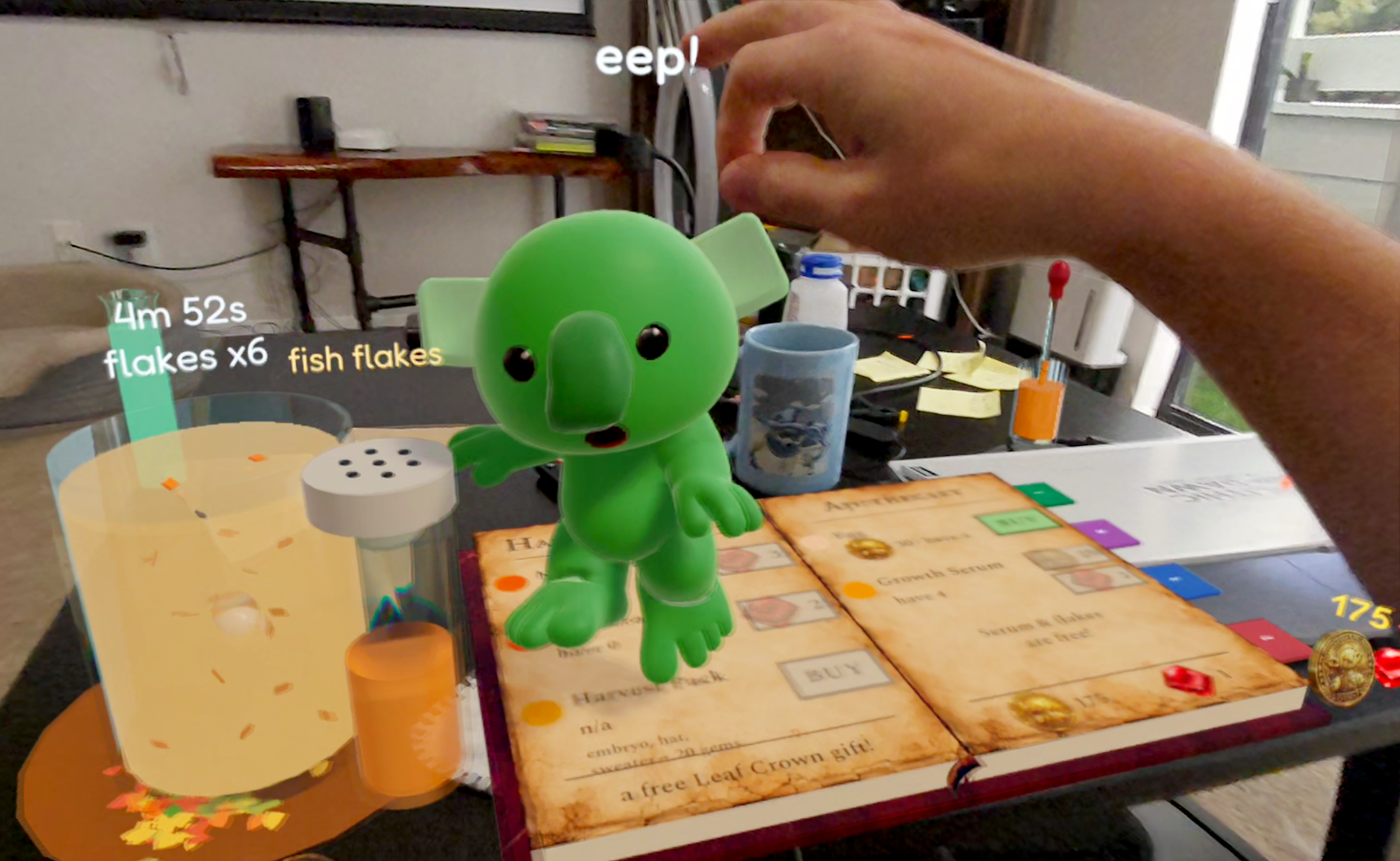
He comes bearing gifts... Behold! Yogurt!
-
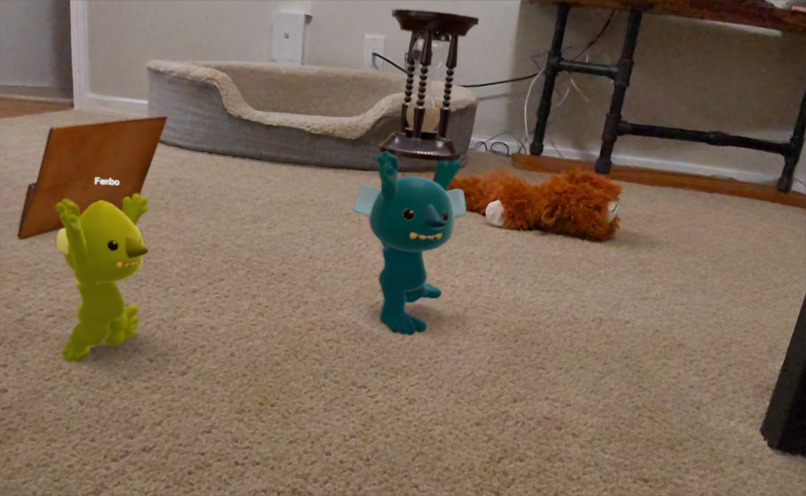
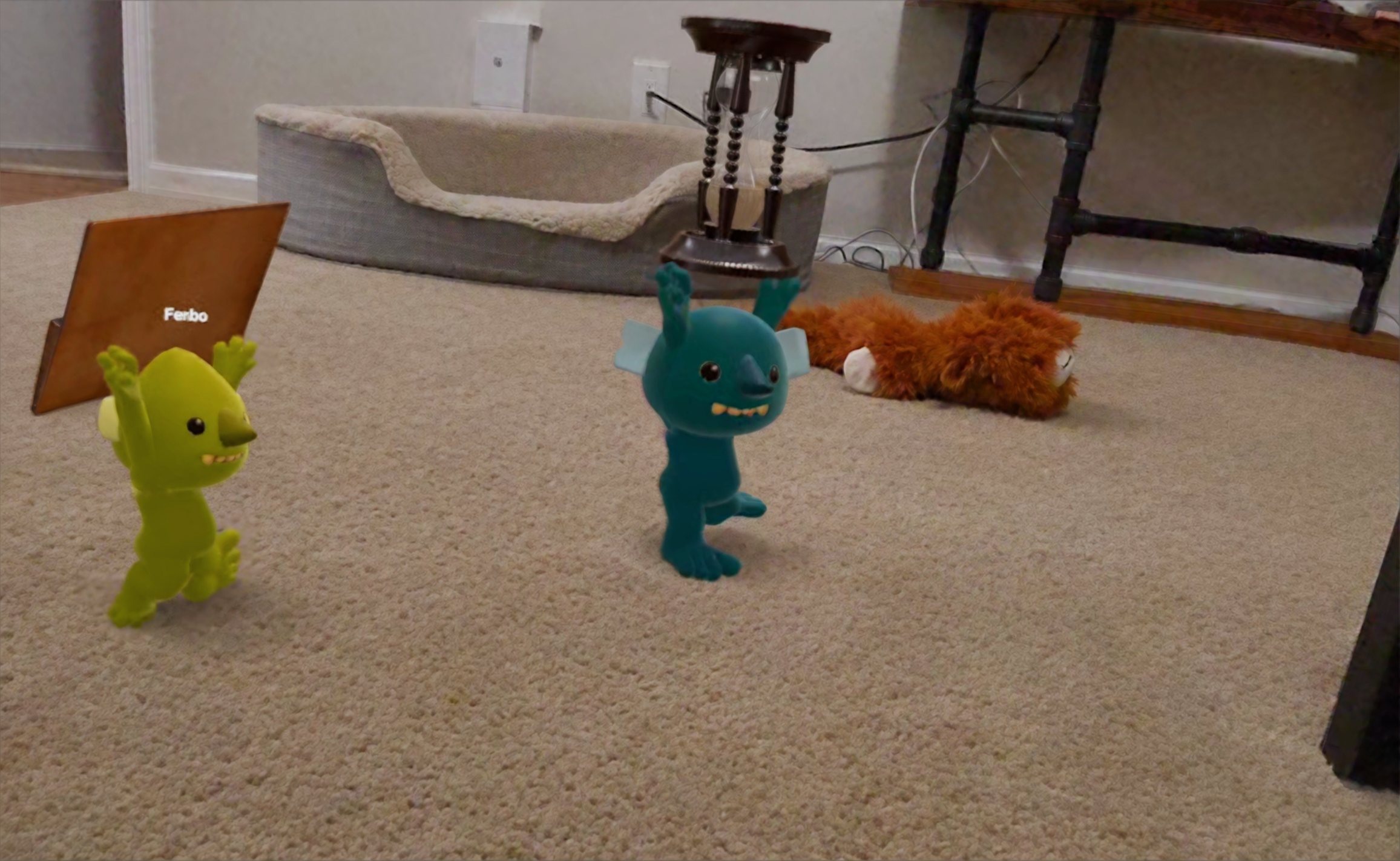
Hey put those back!!! That's a family heirloom!
-
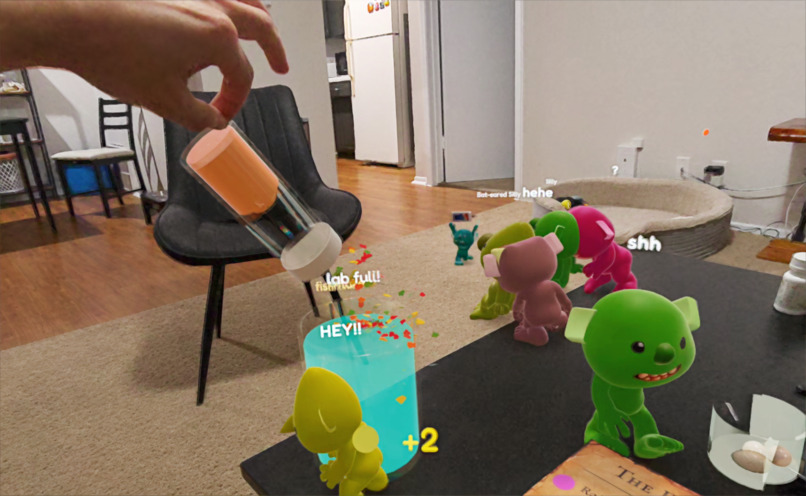
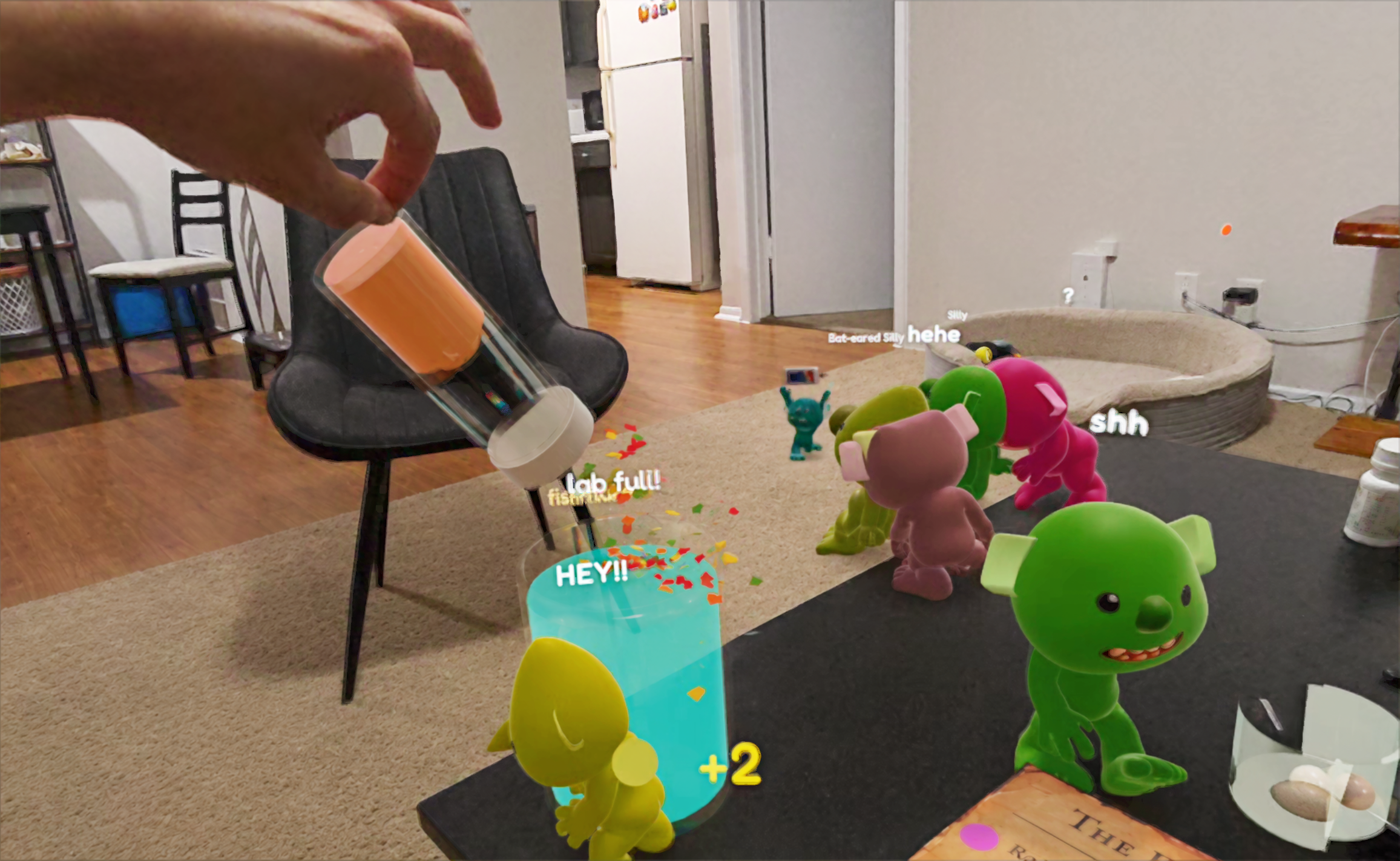
Grow my minions! GROW!
-
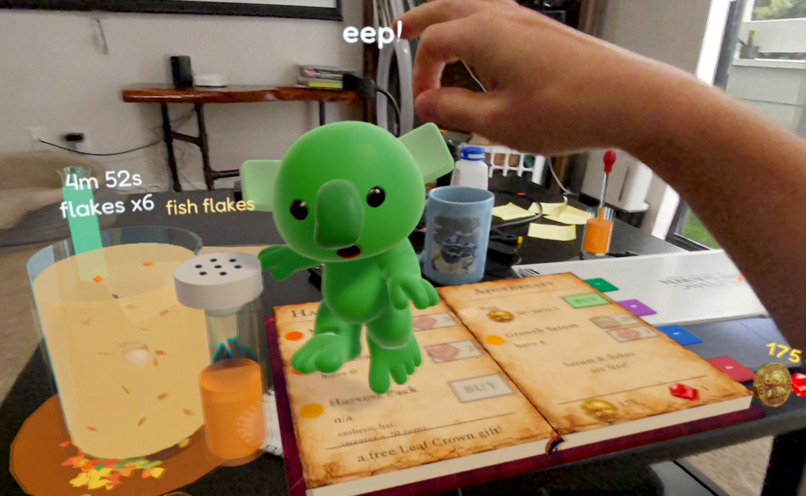
Just hanging out
-
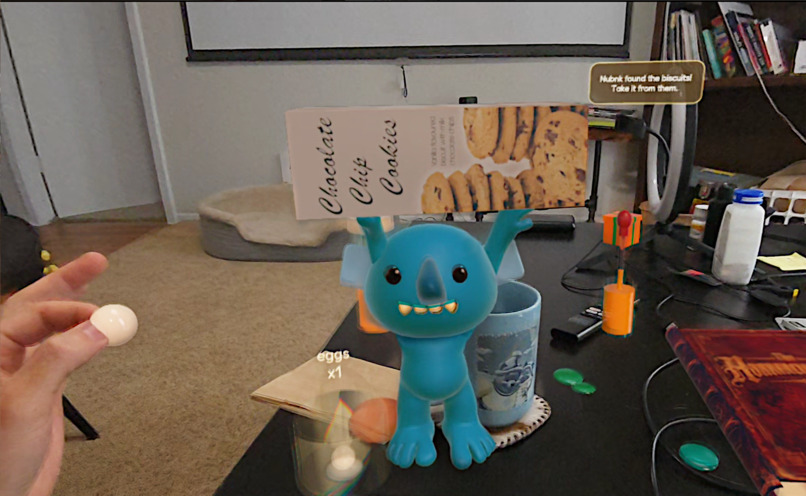
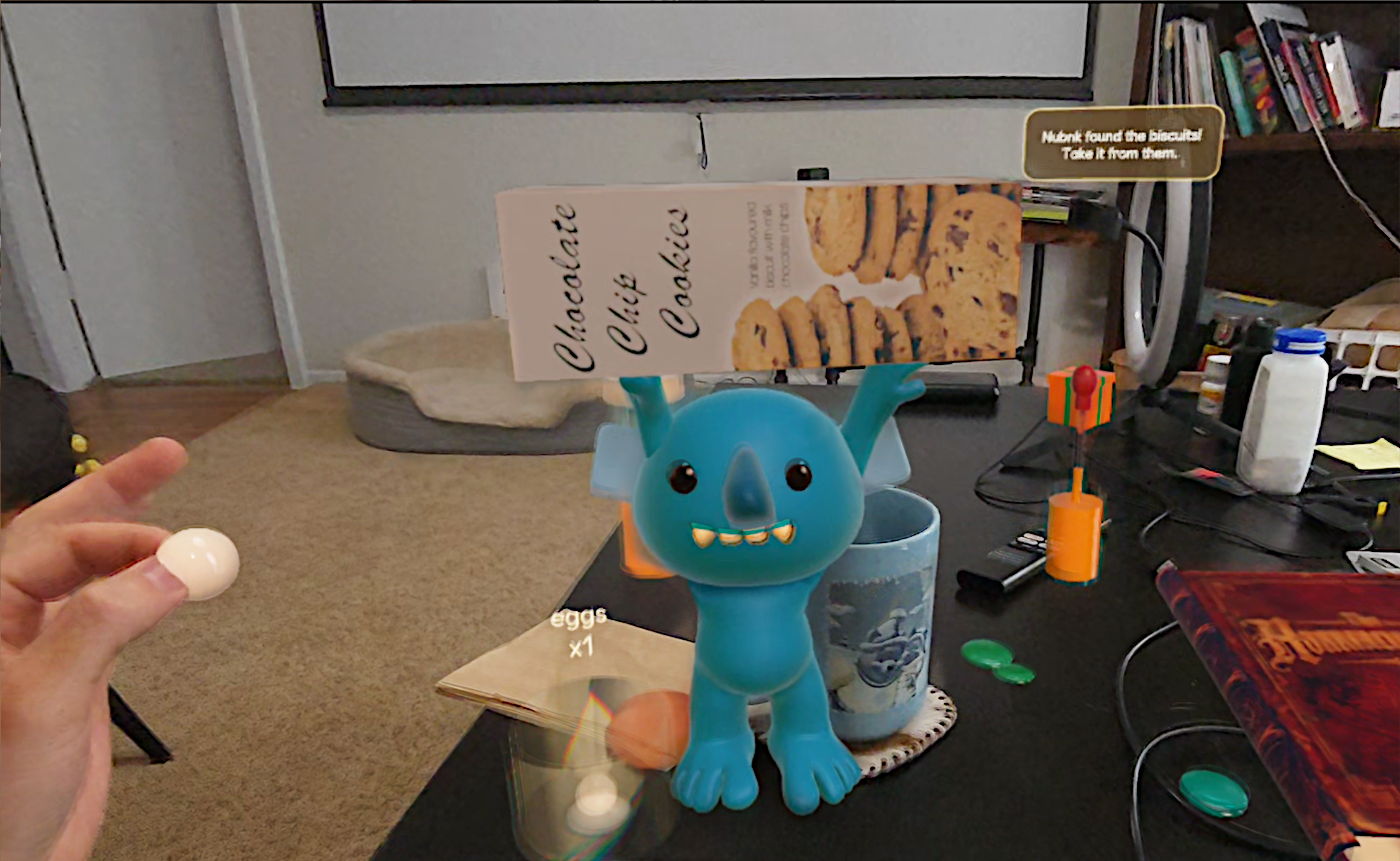
Blue guy brings some biscuits that he totally didn't steal from your pantry!
Inspiration
I grew up on Gremlins, The Borrowers, The Indian in the Cupboard, Small Soldiers, Honey I Shrunk the Kids. Every one of those movies left me with the same feeling as a kid. There might be little guys living just out of sight, and they only come out when nobody's looking. That's why your sock goes missing in the dryer and your keys are never where you left them.
I wanted to capture that feeling in my own apartment, Homunculus Lab is the result. You brew tiny, ugly-cute homunculi using glass chemistry set on your real table, with just a pinch of alchemy and dark magic. They nap, eat, squabble, sing together, go exploring around your room, and come back presenting you with the "treasure" (junk) they found... from your home.
How I Built It
It's Unity 6 with URP and the Meta XR SDK, using Mixed Reality and Hand Tracking.
The thing we obsessed over most was making these guys look like they belong in your room. A cartoon character pasted over passthrough looks like a sticker. So we capture the headset's passthrough and use it to match the lighting on the creatures and props to whatever room you're actually in. We use those same captures to fake refraction on the glass containers, so when you look through the culture cup or a serum vial you see a warped version of your own table behind it. It's a cheap trick and it sells the glass better than anything else we tried. Liquid physics and sprinkles (our fish/homunculus food) also add to the immersion, when you pour it on your table or floor it makes a fun little mess without actually making a mess.
The homunculi themselves were a lot of fun to design. They have randomized head shapes, ears, body builds, colors and accessories, so every brew comes out a little different, and usually a little uglier than you hoped. Their skin uses a subsurface-style shader so they have that soft, fleshy glow when light hits them. Their faces are painted textures, but we run them through a parallax mapping shader, so when one yells or grins there's some fake depth in their mouth. The look is like bad CGI character out of a kids movie, and its charmingly cute.
On the MR side, I used MRUK to find the biggest table in your room, but there's a fallback to lay your hands flat on the table and place the lab using the Depth API. We wanted to have the least amount of friction between launching the app and actually playing, and cover all bases. If the game confuses one room for another, (which happened to me once in my office play space after starting the game in my living room) it will depth check and compare surfaces, and worst case scenario if it can't be resolved in a reasonable amount of time the Dr. will guide you through a new room setup process. We tried to make grabbing feel intuitive whether you pinch or full-hand grab or switch hands. An open palm face up lets you hold one of your little gremlins, who hop into your palm and gleefully kick their feet. You can pinch their head to dangle them in the air, push down from above to squish them flat, slap them, punch them, its all in good fun. The pipette for the growth serum we made a gesture where you pinch to squeeze out a drop, that was a fun one inspired by Meta's on UI pinching.
The voices are synthesized live with a formant synth in a lo-fi, babbly style, and when the colony gets big enough they start singing together in harmony. This was a bit inspired by the "Throng" episode of Black Mirror, and those familiar will definitely hear the similarity. Under all of it is a plain C# simulation with around 266 tests, running on real-world time. Your homunculi keep living, and keep exploring, while the app is closed to encourage retention and daily check-ins, with a reward system for coming back each day. We have a reset button as well in the corner of the table in case something goes wrong, a beaker goes missing from the chemistry set, or you left it out of reach that puts everything back into its default position.
The Naming
Early on we had to decide whether players would name their creatures. We decided they wouldn't. Instead, Dr. Homunkenstein, the ghost of an olden-timey alchemist who lives inside the book on your table, floats out after every brew and names the thing himself. He looks at what you made and gives it a name based on how it turned out, and he is not kind about it. You get names like "Wet Sock", "Attempt #17" and "Freaky Ahh Lil Weirdo", little borderline insults aimed at whatever weird ears or lumpy body your creature rolled. Meanwhile the newborn is looking back and forth between your face and your finger, completely unaware it's being roasted. It's one of our favorite moments in the game, there's thousands of possible combinations and on the off chance that one repeats, the Dr. acknowledges that he's used it before or makes a joke that he's running out of ideas. It never gets old. The spirit of the doctor also has some commentary in other situations like if you pour out an embryo early to let the player know he's disappointed in them.
Challenges I ran into
The biggest one was cutting. My initial design had floating UI panels, a multi-step test-tube process, cosmetics, and a table covered in too many small tools and items. It was much too much, even on a large coffee table, and after our second playtest we decided to streamline. The big leather spellbook, the Homuncunomicon, servers as your primary game menu for storing items, information on creatures, and interfaces that were too complicated to do practically. You flip the pages by hand, selecting items in the shop adds the ingredient to the active solution, and a ledger to speed up exploring homunculus with coffee beans or banish them to humanely dispose of ones you don't want anymore. The table stays clear when the book is closed so the creatures can stay the main focus. Brewing got simpler too. It's basically Sea-Monkeys now: pour liquid, drop an egg, shake flakes, wait. The flakes and liquid refill automatically, and theres optional growth serum in the dropper to instant grow them for impatient players. Should be easy to learn and satisfy the chemistry lab player fantasy without being frustrating and overly complicated.
Getting a cartoon character to feel like it's standing on your real table took more iteration than anything else. The lighting has to match your room, and every pour and every drop has to land on the real surface instead of floating a centimeter above it. If any one of those is off, the magic is gone.
What I Learned
Mixed reality has a kind of magic that regular VR doesn't. When a little guy who looks like he walked out of an animated movie is standing on your coffee table, you stop thinking of it as a game. Designing for a room scale / tabletop hand tracked game also reminded me of the magic from the first time I ever used VR, that was seemingly lost from years of working with thumbstick locomotion and hardcore games like Blade & Sorcery, Green Hell, and Neolithic Dawn. Sometimes the smallest experiences in your own house are more magical and more personal than the big adventure you get lost in.
What's Next for Homunculus Lab
I want to go much deeper and launch Homunculus Lab as free-to-play, with premium purchases for special ingredients, cosmetics, etc. Beyond that, I want to let the colony build its own little civilization on your table and around your house, maybe with a building resources they get from recycling your household items such as popsicle sticks, twist ties, or cardboard. I'd like to lean further into the lore of the Homuncunomicon, have the creatures gather around natural leaders, and engage in emergent behavior that is mysterious, funny, and entertaining to watch. I also want to continue polishing interactions and physics so players can fully suspend disbelief.
Thank you for your consideration, and I hope you enjoyed your introduction to Homunculus Lab! This is only the beginning :)
- James


