-
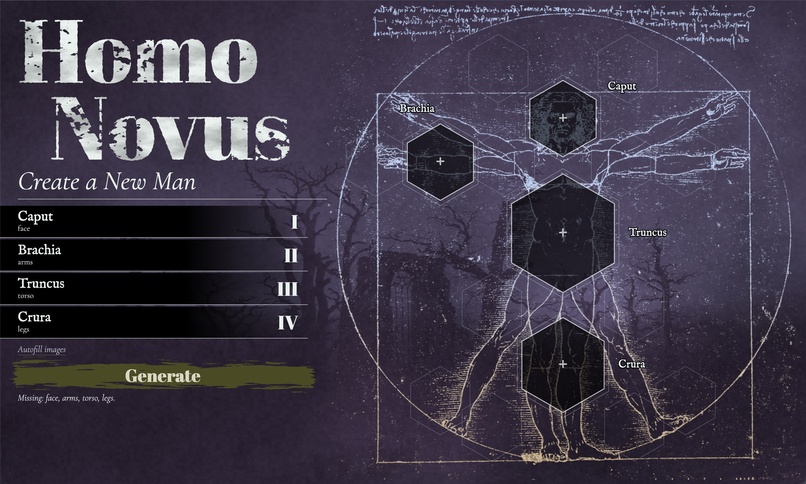
Main screen without any photos added
-
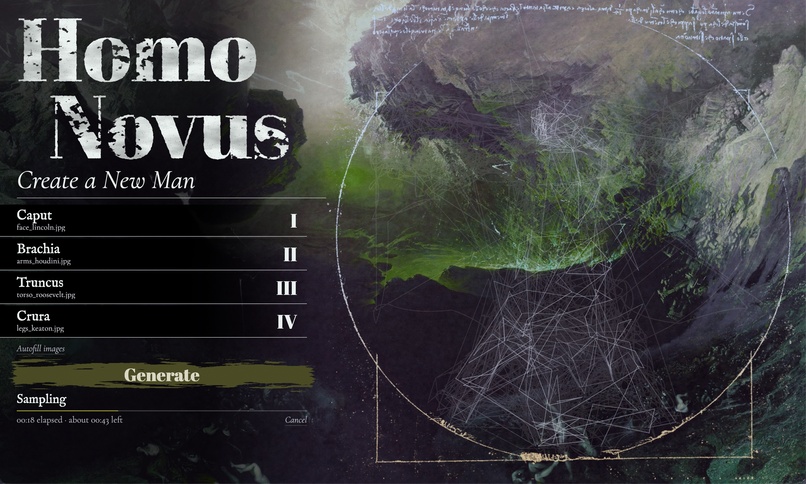
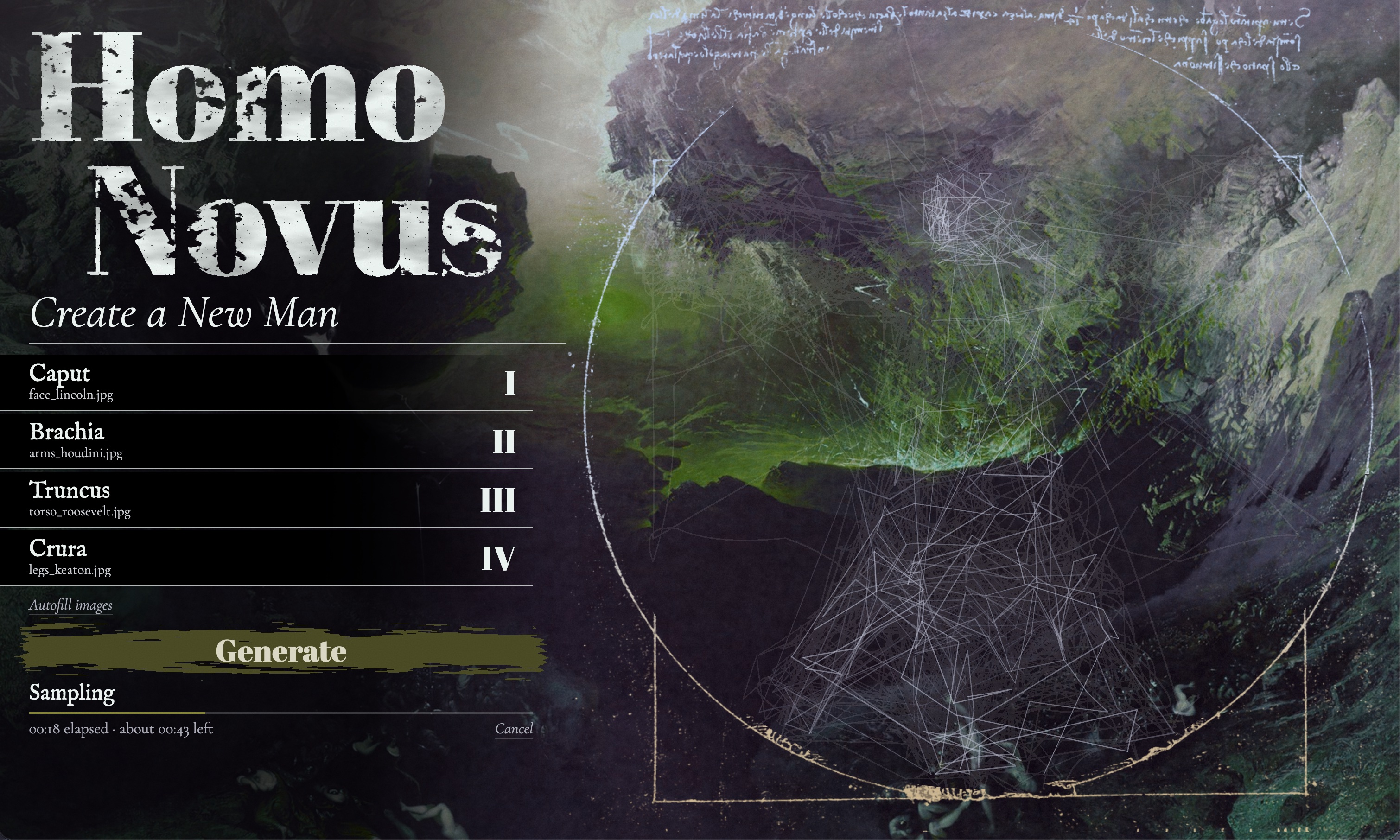
Image creation in progress
-
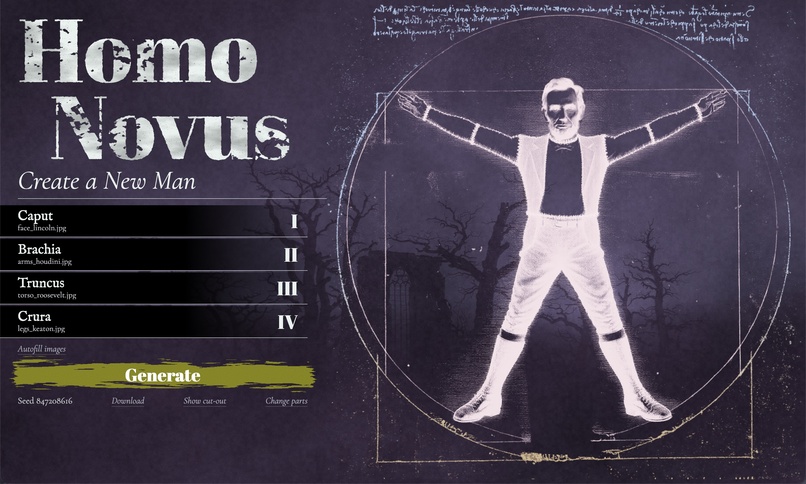
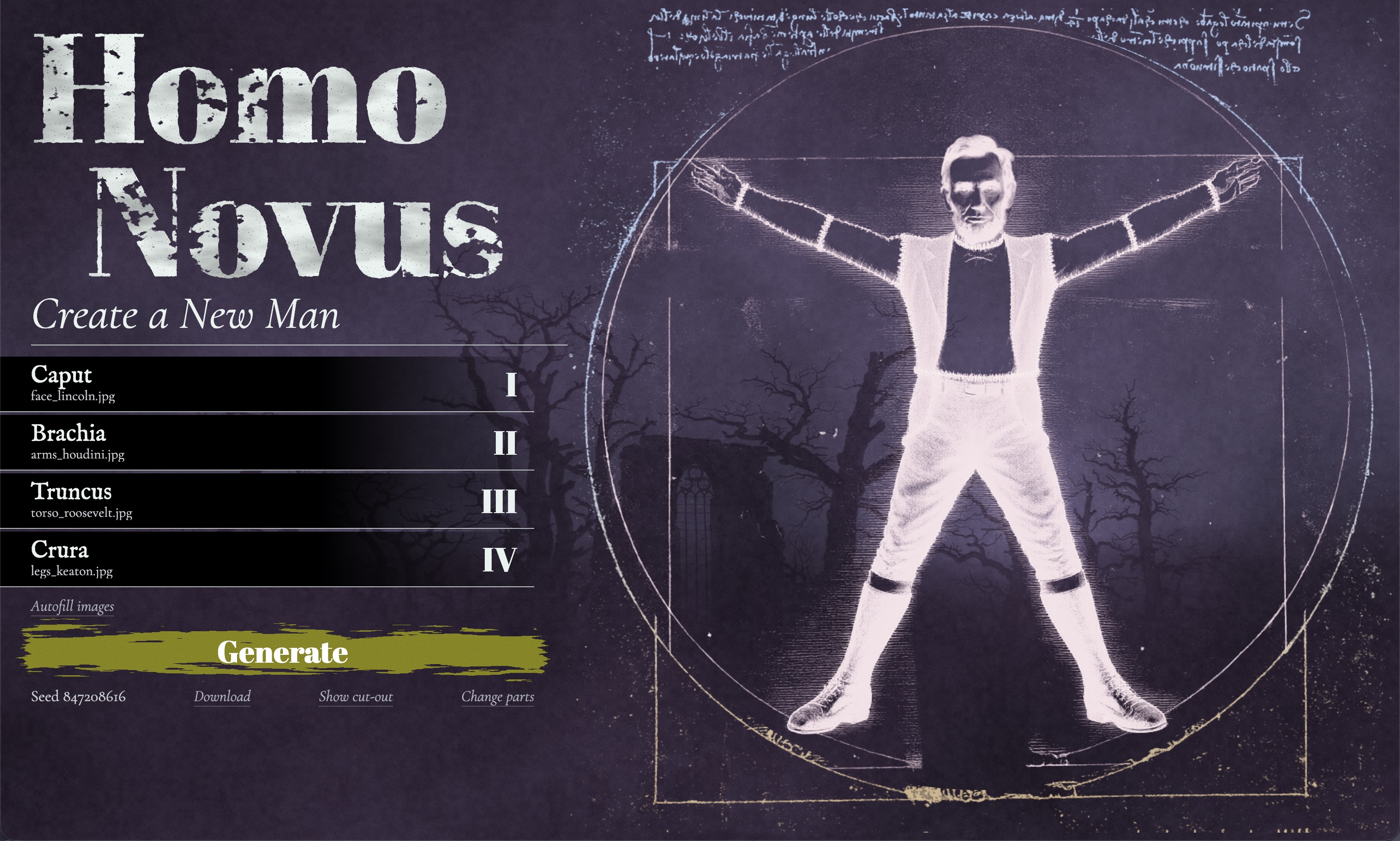
Completed image
Inspiration
In Mary Shelley’s novel, the creature asks Victor Frankenstein for a companion. Victor starts building her, panics, and destroys her. His bigger mistake came earlier: he assembled the first creature without ever seeing the result for its true appearance until it opened its eyes. For the theme, I gave Victor the tool he was missing, a way to preview a creature before cutting anything.
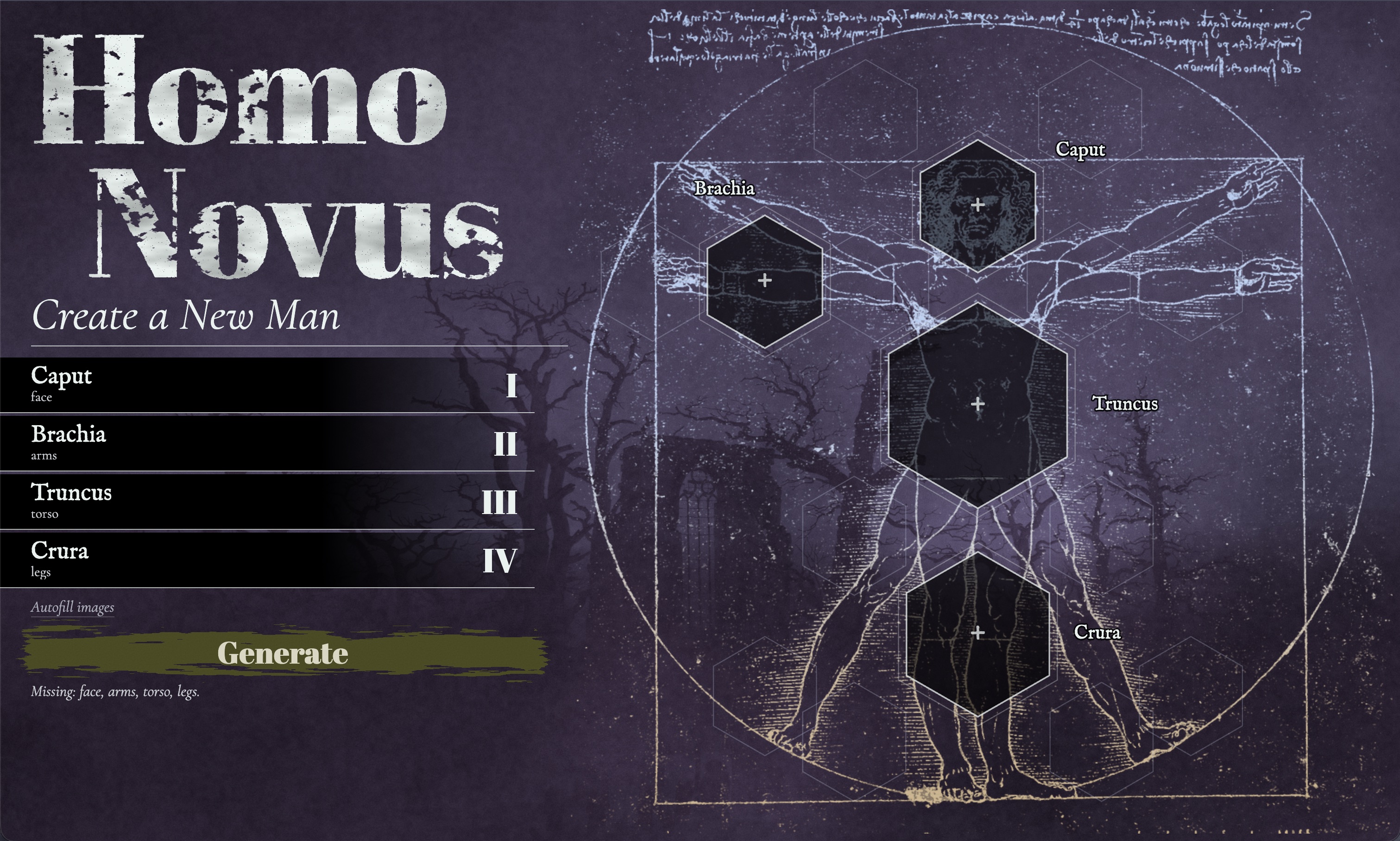
Leonardo’s Vitruvian Man already works as a body specification sheet, so it became the interface for Homo Novus. The look comes from the book’s era: Latin anatomical labels, ruins and bare trees in the background, and historical photographs from Wikimedia Commons as the donors.
What it does
Homo Novus (“new man”) puts Leonardo’s Vitruvian Man on screen with a clickable slot for each body part: Caput (head), Brachia (arms), Truncus (torso), and Crura (legs). You assign a person's photo to each slot, so a creature might have one person's head, another's arms, torso, and legs. The same figure can fill as many slots as you like.
How I built Homo Novus
I sketched multiple thumbnails of the UI style I wanted for the website on my iPad then fleshed it out in code with Claude Code. For the image generation backend, I used a local ComfyUI workflow for Qwen Image 2.1 Turbo then adapted it for MLX in Python. For image preprocessing for better quality image output, I used a SegFormer B2 model to cut out individual body parts from each image.

Log in or sign up for Devpost to join the conversation.