Inspiration
Selling second-hand is slow. The seller writes a listing and waits. The buyer scrolls for days. Then both send messages back and forth.
We wanted a version where you take one photo and the item finds the person who already wants it. Payment and shipping should not need extra steps.
What it does
- You sign in with PayPal. One tap, no typing. Your name, country and address come from PayPal.
- To sell, you snap a photo, write what it is, pick a category and a price.
- The AI looks at the photo and checks that it really shows what you wrote. It also lists what it can see and what the description leaves out.
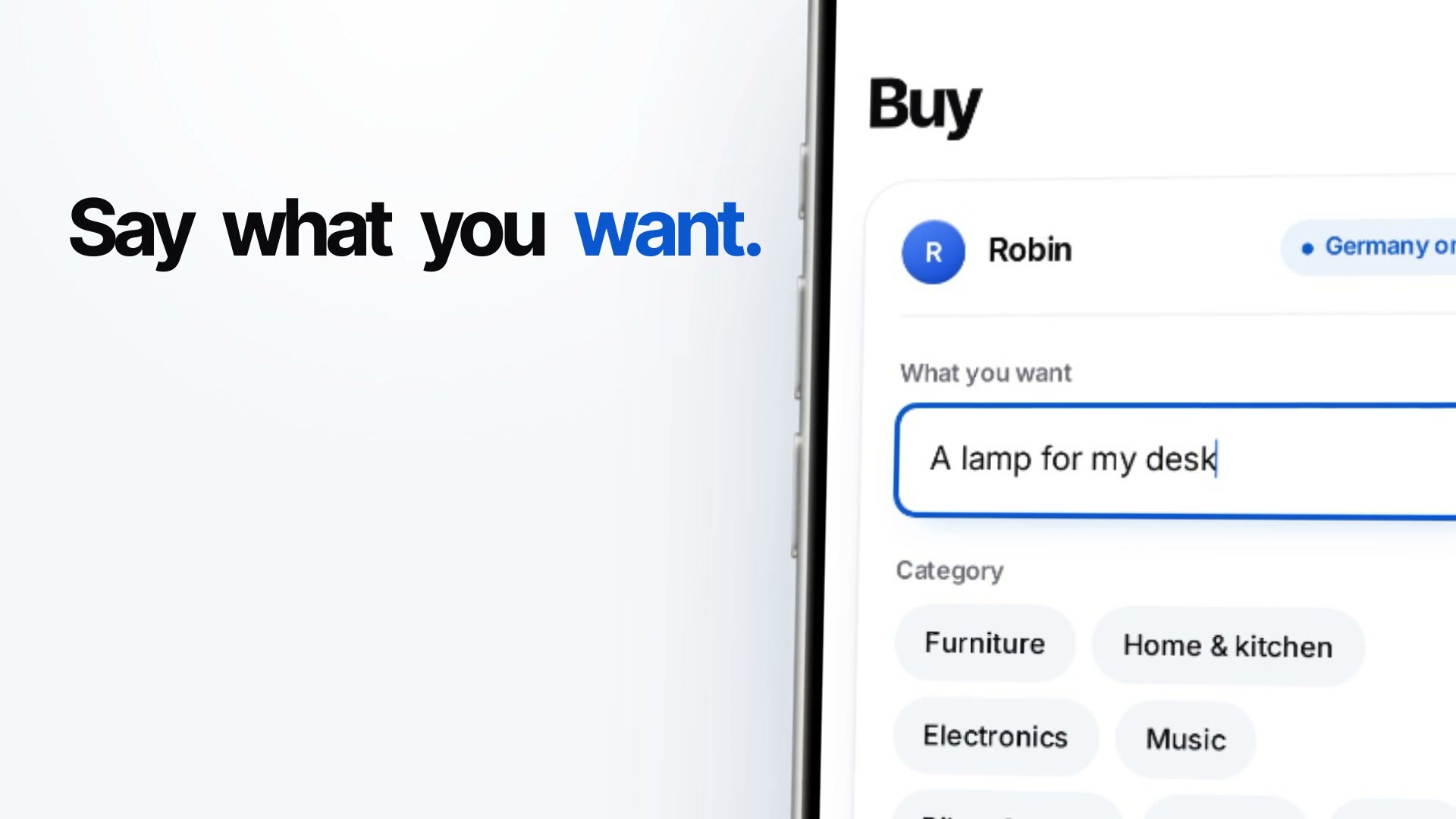
- Buyers can say once what they are looking for and their price range. The AI matches new items to those requests.
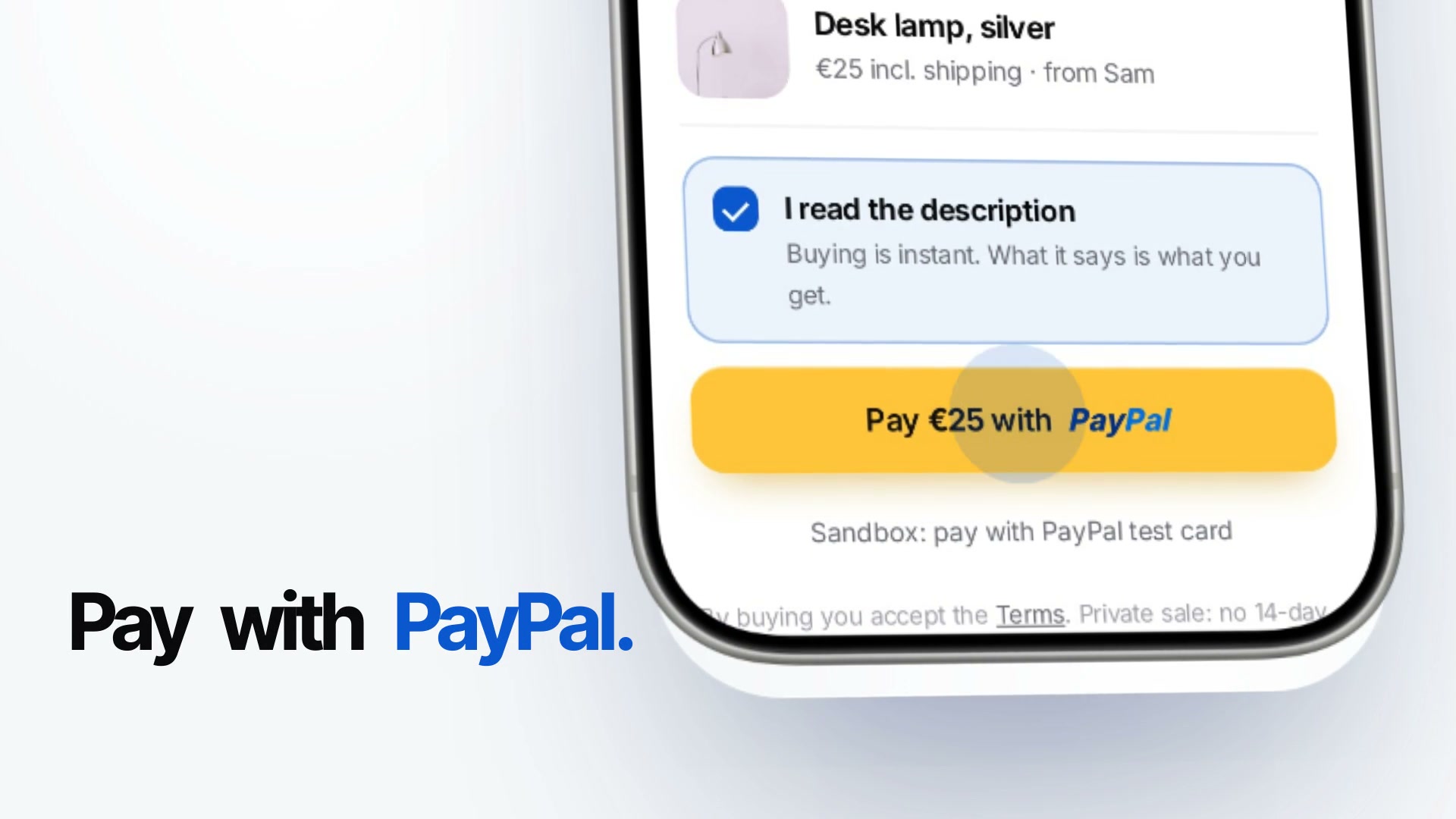
- The buyer pays with PayPal in one tap. The first buyer to pay gets the item.
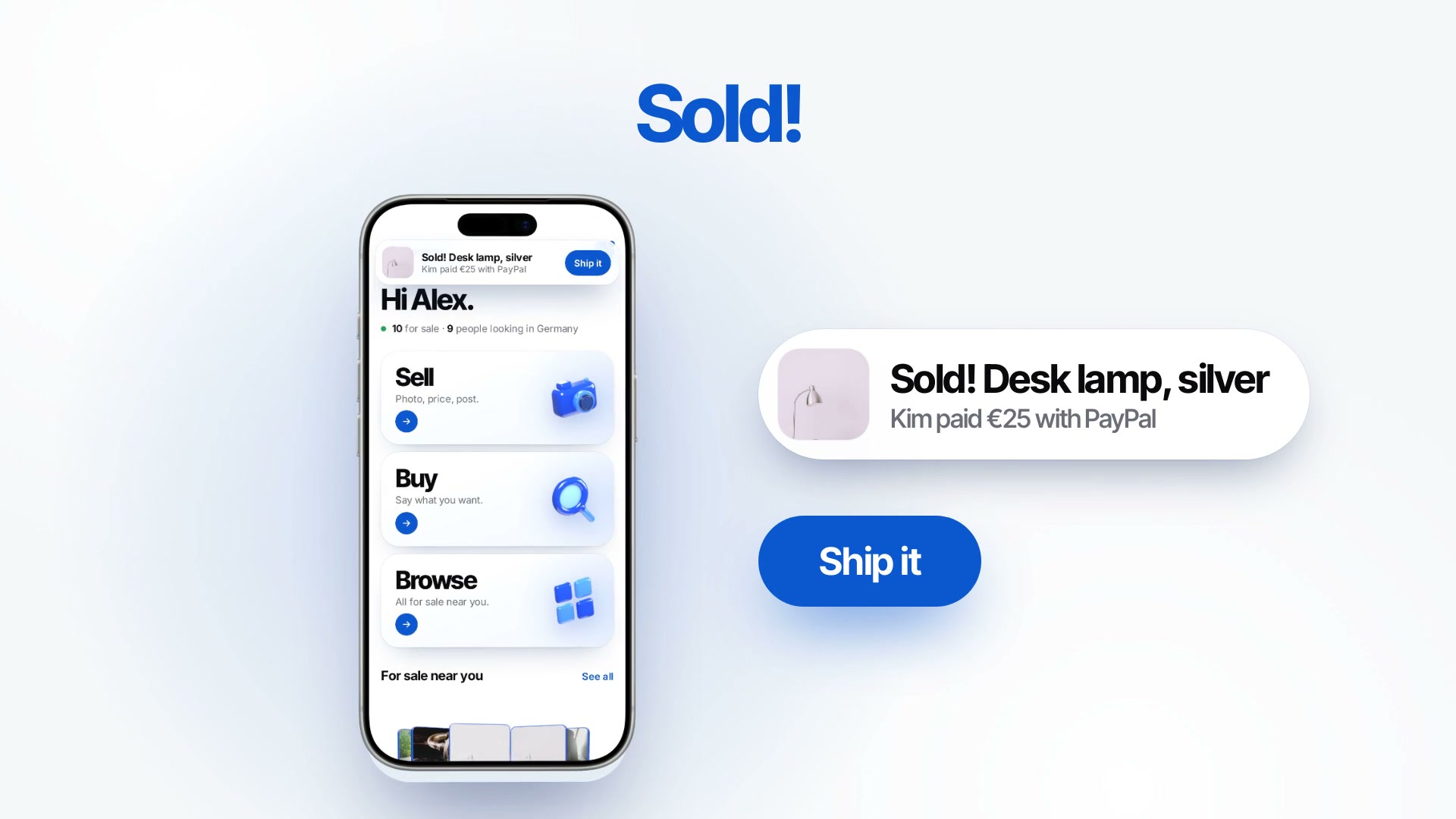
- After the sale, the seller gets a printable shipping label with a QR code. A parcel number is booked and attached to the PayPal payment. The tracking steps then update by themselves.
- Reviews exist only for finished deals, so they cannot be faked.
How we built it
- Stack: Node.js and Express. SQLite for data. Plain JavaScript front end with a three.js 3D shelf and a WebGL intro. No build step.
- PayPal APIs:
- Log in with PayPal (OpenID Connect) for sign-in and the user's name, country and address.
- Orders v2: create an order and capture it. The buyer's address goes into the order.
- Capture check: the server confirms status, item, currency and exact amount. If anything is wrong, it refunds the capture (Payments API).
- Add tracking to an order, so the tracking number shows on the PayPal payment.
- AI: Google Gemini (flash-lite model, with fallback models). It reads the photo, checks it against the title, matches requests to items, and writes packing notes.
- The server allows one payment per item at a time, so two buyers cannot both be charged.
- Security tests cover the server (34 test cases).
Challenges we ran into
- PayPal would not save our Log in with PayPal settings. The dashboard hid the error. We caught the API reply and found that PayPal needs a public https return URL and public privacy and terms pages.
- Two buyers paying for the same item at once. We added a lock and a full capture check.
- Real carrier labels need a business carrier account. In this demo the parcel number and the tracking steps are sandbox test data, labelled as such.
- Getting the interface to feel quick and simple, not like a form.
Accomplishments that we're proud of
- A full flow works end to end in the PayPal sandbox: sign in, post, match, pay, label, tracking.
- Sign-in is one tap.
- The photo check runs before the item reaches any buyer.
- The money check and refund path protect both sides.
What we learned
- PayPal's sandbox is good enough to test a whole deal, including tracking.
- Small checks on the server (amount, currency, item) matter more than the AI part for trust.
- One clear step per screen beats many options.
What's next for Homing
- Real carrier labels and live tracking through a carrier API.
- Offers delivered by email or push, not only inside the app.
- Payouts straight to each seller's PayPal at scale.
- Small shops: one product photo reaches only people who asked for it.
Built With
- express.js
- google-gemini
- javascript
- log-in-with-paypal
- node.js
- paypal
- paypal-orders-api
- paypal-tracking-api
- qrcode
- sqlite
- three.js
- webgl
