-
-
-
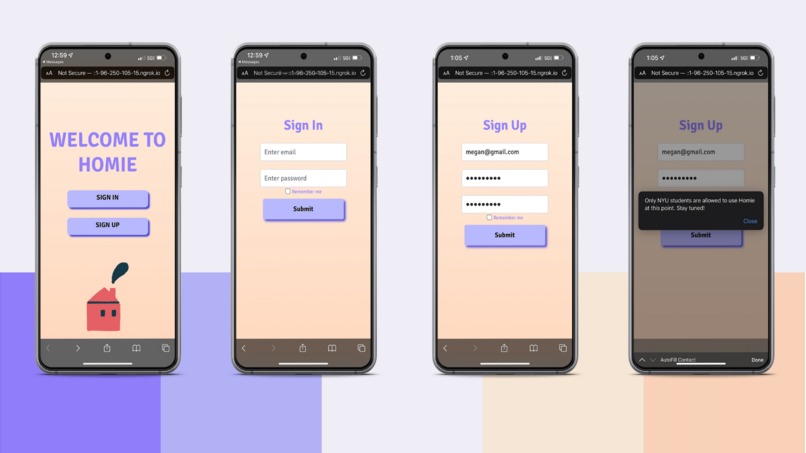
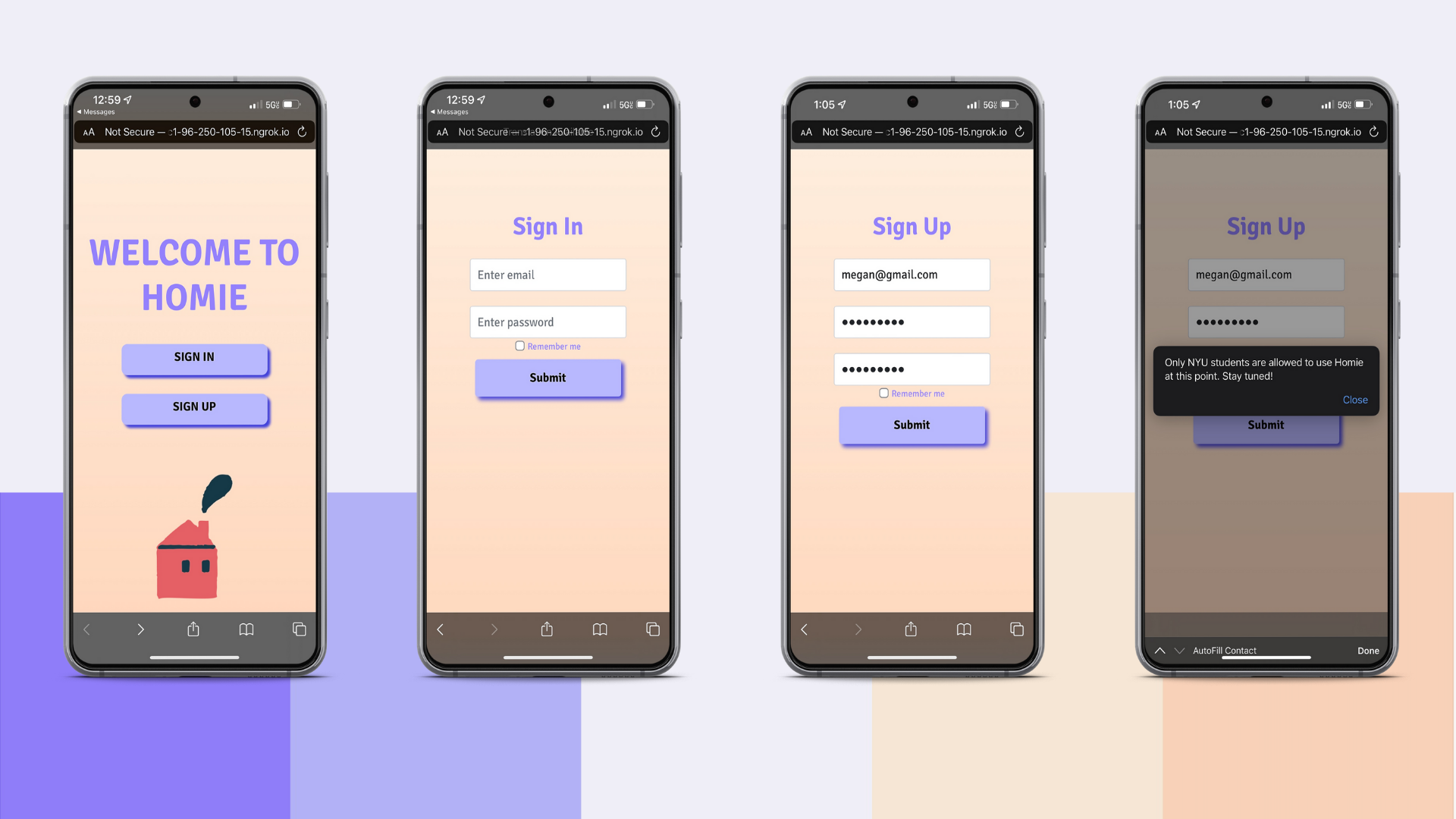
Login Pages
-
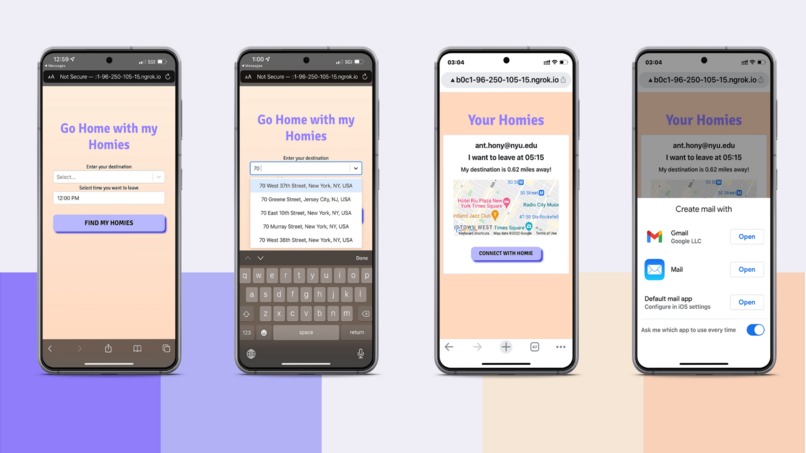
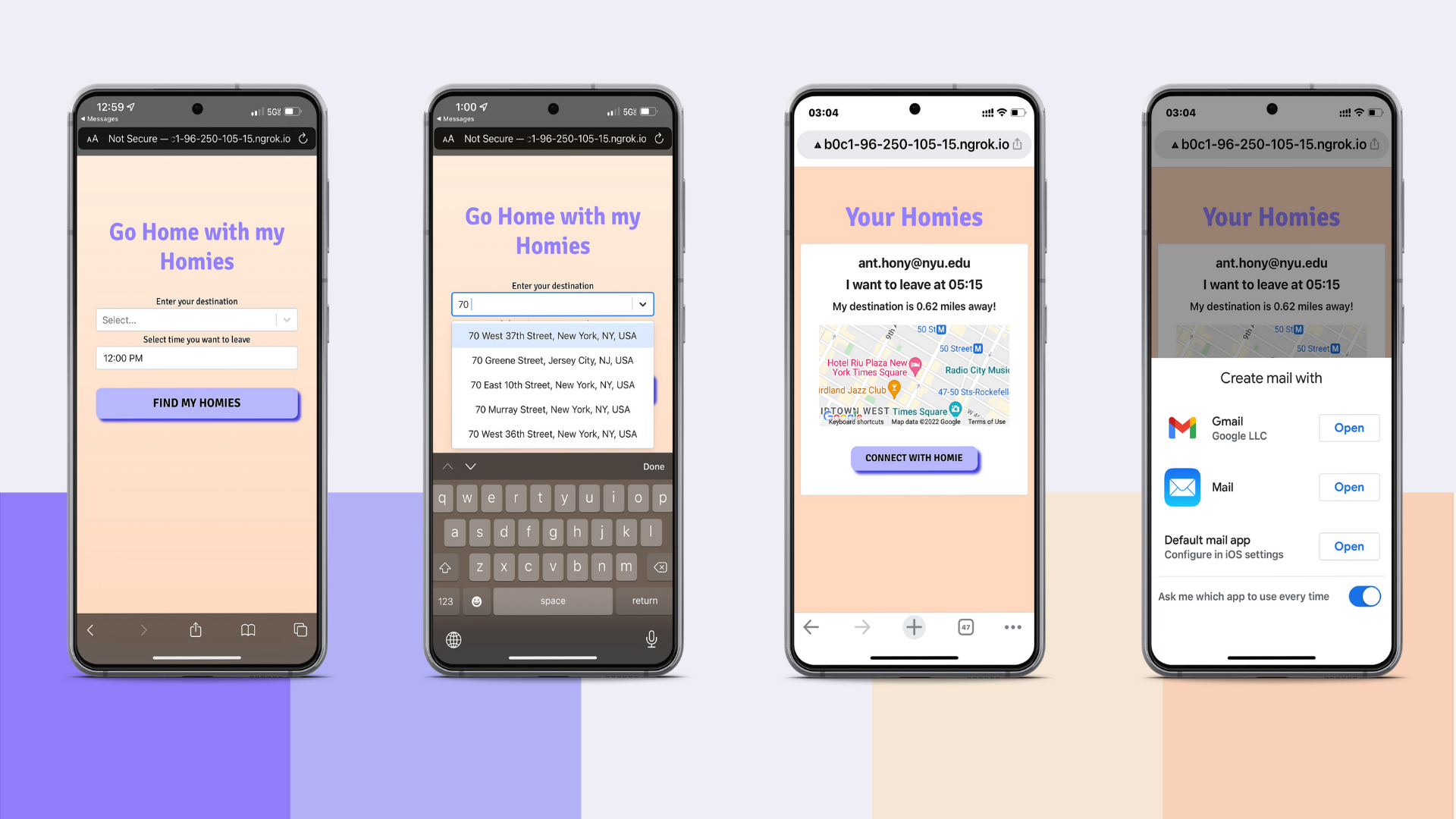
Selection + Homie Pages
Inspiration
After a long night of studying at school, the last thing we need to worry about is danger on our way home. Our team noticed that many students were scared to walk home alone from campus, and rideshare apps were often too costly for students’ budgets. Especially in light of recent news of NYC residents being attacked on the street and subway, we wanted to provide a solution to the compromised sense of security within the student body.
What it does
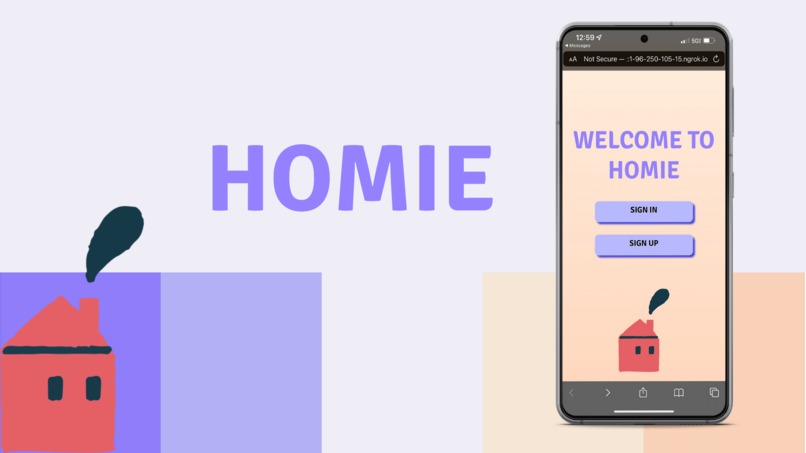
Homie is a mobile platform that connects students with other students who want to walk home safely, significantly increasing their security. The site prompts users for login/sign-up info to sign in to a home page, where they can enter their destination and the app will provide a list of potential Homies who live in close proximity to the user, allowing them to connect with each other. Homie currently only supports NYU students with an “@nyu.edu” email address, as an extra verification step to prevent outside users from abusing the service.
How we built it
We used React, TypeScript, CSS, Next.js, and Node.js to build the Homie website, and the Google Maps API to handle location data. To store and verify user data like time and destination, we used Firebase/Firestore
Challenges we ran into
For 3 of our 4 members, this was the first hackathon we ever participated in. Most of our members learned React during the hackathon and initially struggled to implement simple features. After hours of video tutorials, we were finally able to get a grasp of React. We were also challenged by how to decide on the best “homies,” having to balance between the time a user wanted to leave and the distance between destinations of possible homies. Our most challenging obstacle was figuring out how to prioritize each student’s security while also being able to provide enough information about the other students to make the site functional, and we settled on providing a visual map of the area that other students were trying to get to, but not provide an actual address.
Accomplishments that we're proud of
We were proud to successfully utilize online APIs; for example, we used the Google Maps API to convert location data to coordinates, helping us sort all students’ destinations from the user’s and find the best Homies. One of our proudest accomplishments was the positive impact that our idea had on our friends when we asked them for feedback, and we were excited to learn that this app was something that many of them felt like they could use to feel safe. We realized we could make a difference in our community—we could make people feel safer and foster better mental wellness via our efforts.
What we learned
We learned how to use new technical frameworks through online resources, but more importantly we developed comprehensive perspectives of thinking and collaboration. We had to consider not only the technical and coding challenges but also the social and mental impacts of our site on our users. To ensure a safe and comfortable user experience, we had to take the worst-case scenarios into account. This was an opportunity for us to have a hands-on experience to study the connection between the user interface to the user experience, and a process to learn with and from our team members.
What's next for Homie
Our current prototype makes it possible for only NYU students to find Homies, and we would like to expand Homie to students from different universities who feel unsafe going home alone at night. Our team has heard from students from schools like UC Berkeley and USC that walking back to campus always feels dangerous, and we would like to be able to extend our help to them as well. The most crucial component of Homie is our users’ security, and our team has discussed teaming up with universities to use their student verification processes as an extra safety measure.





Log in or sign up for Devpost to join the conversation.