-
-
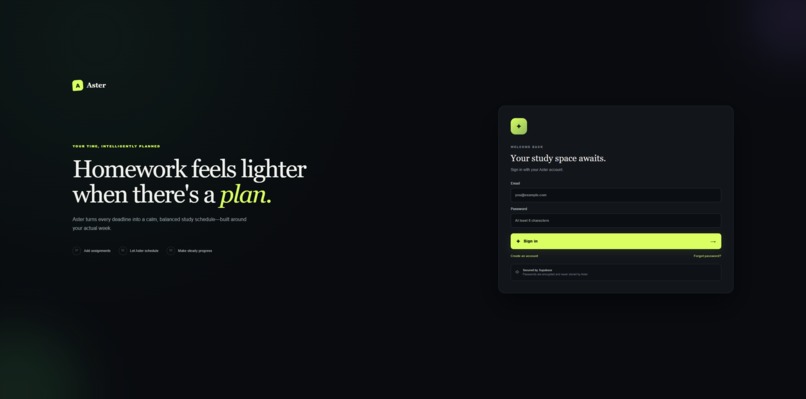
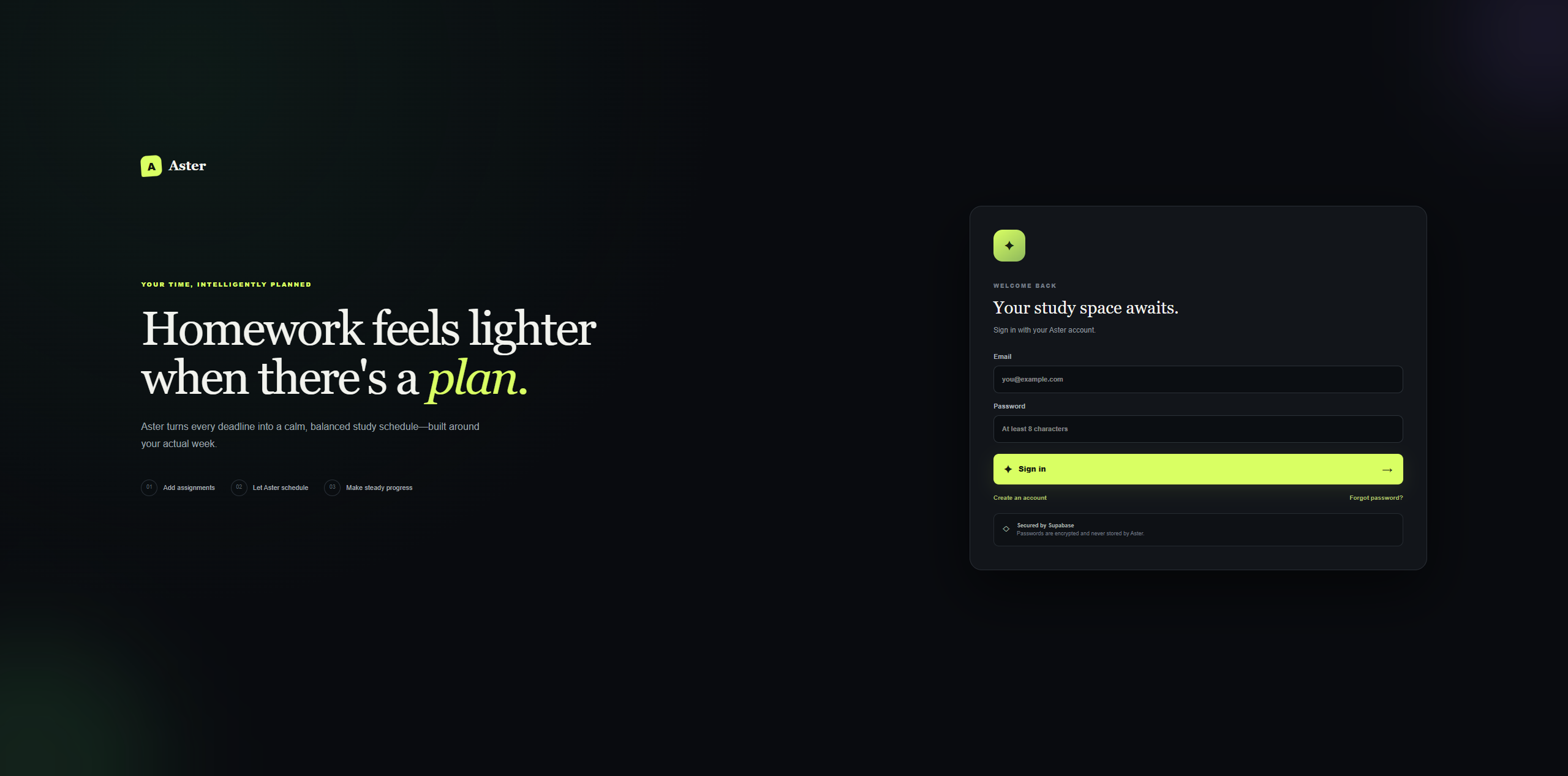
Login Screen
-
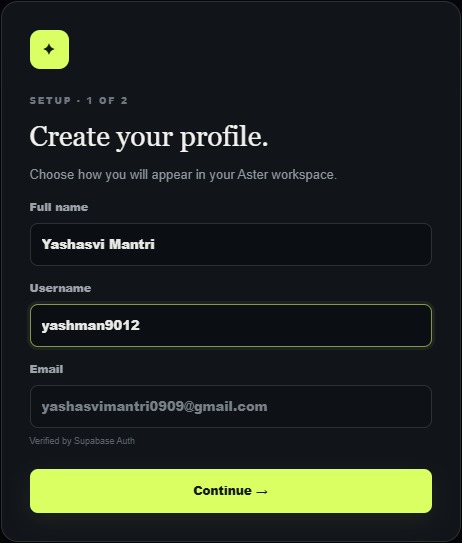
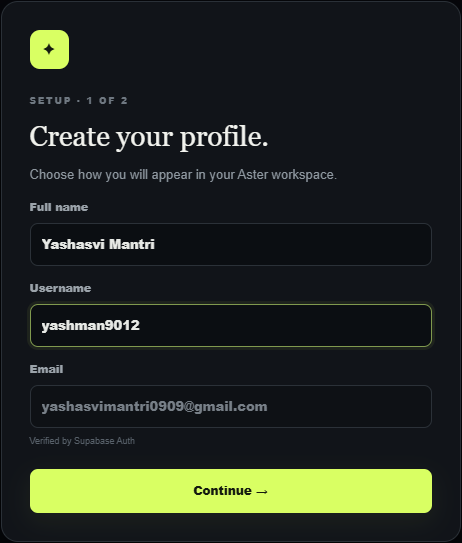
Onboarding Screen 1
-
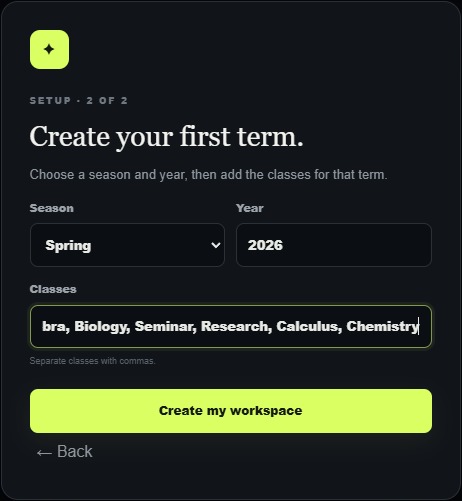
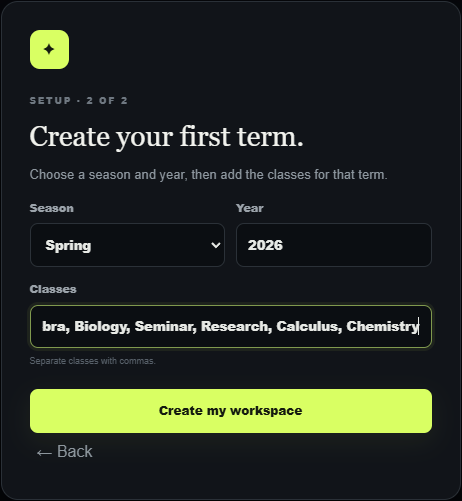
Onboarding Screen 2
-
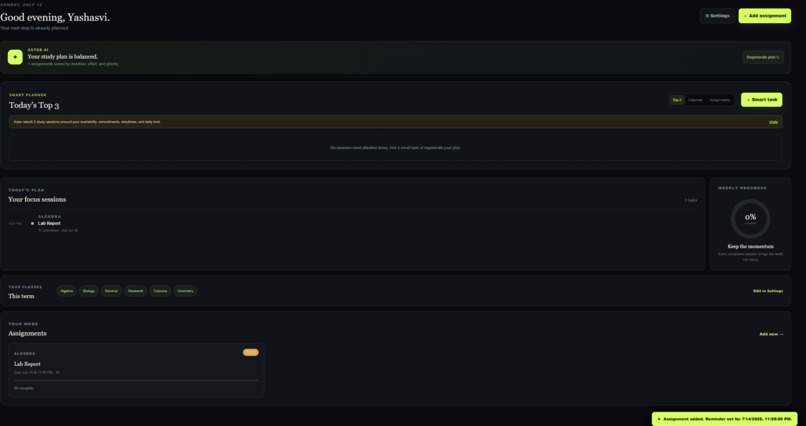
Home Screen
-
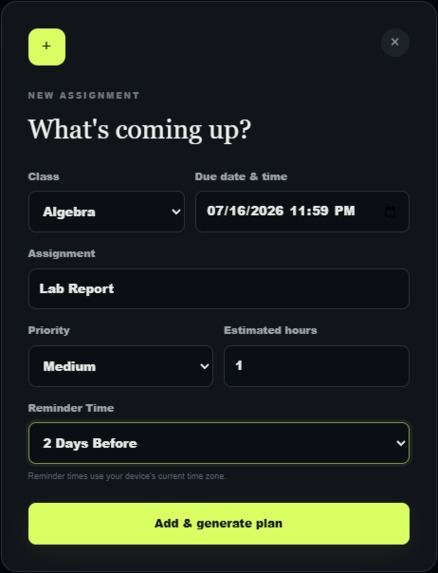
Add Asignment
-
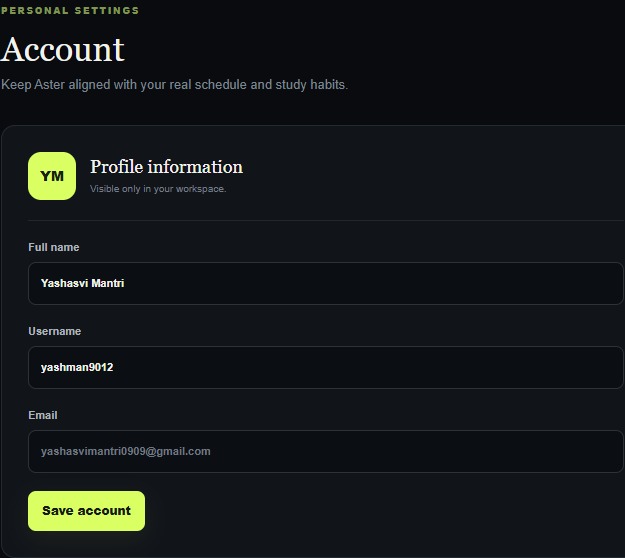
Account Settings
-
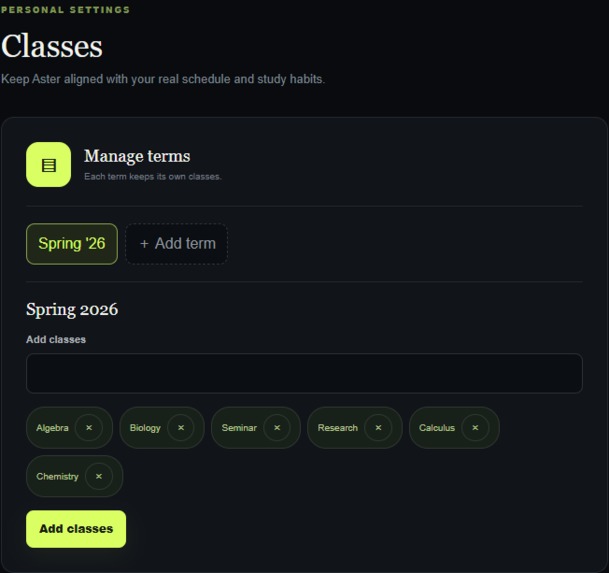
Classes Settings
-
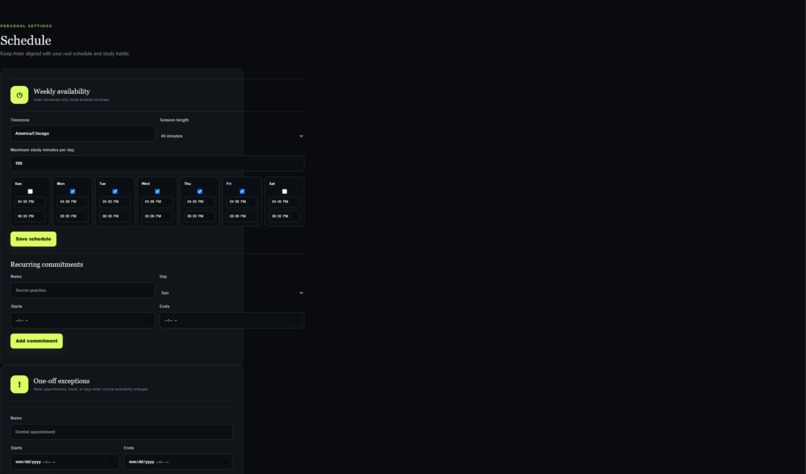
Schedule Settings
-
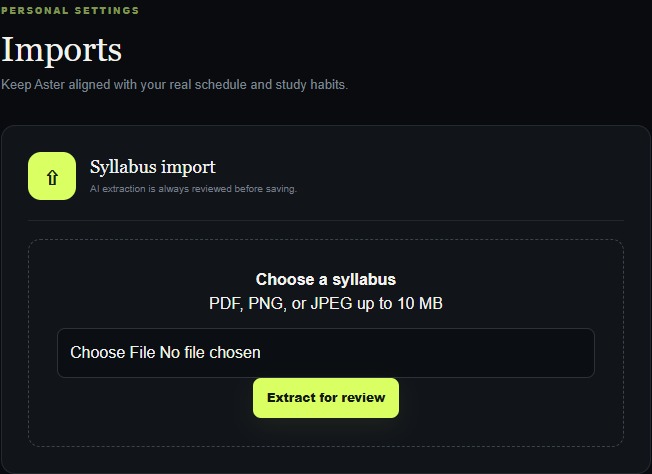
Import Syllabus
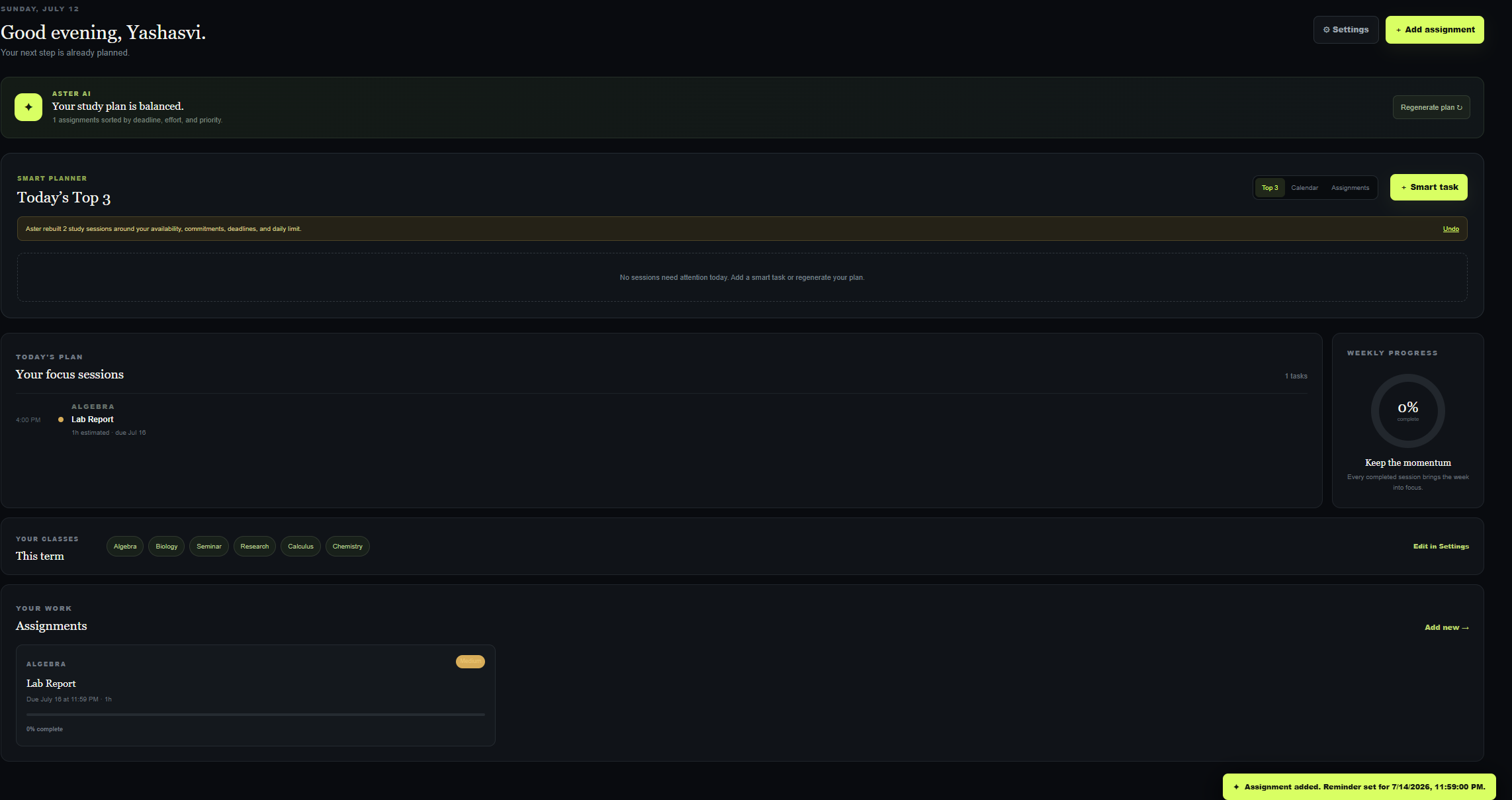
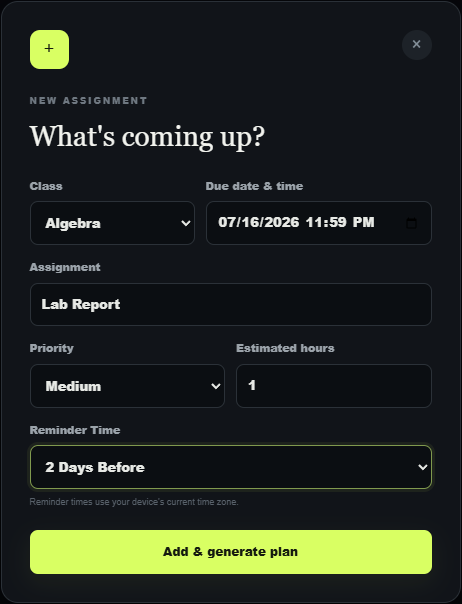
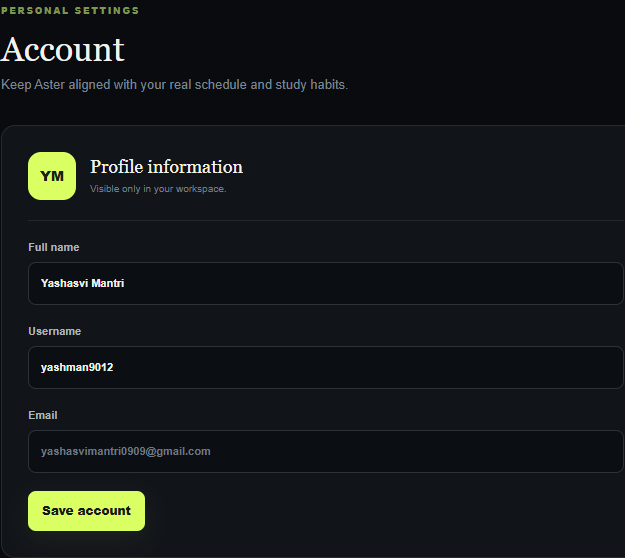
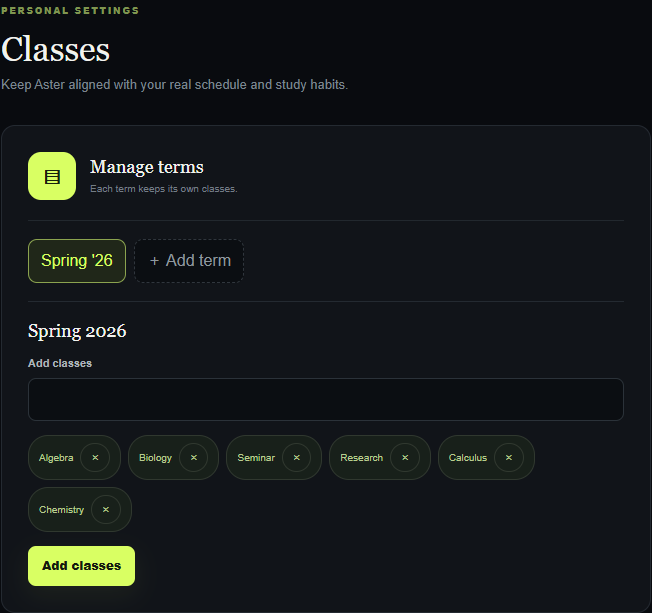
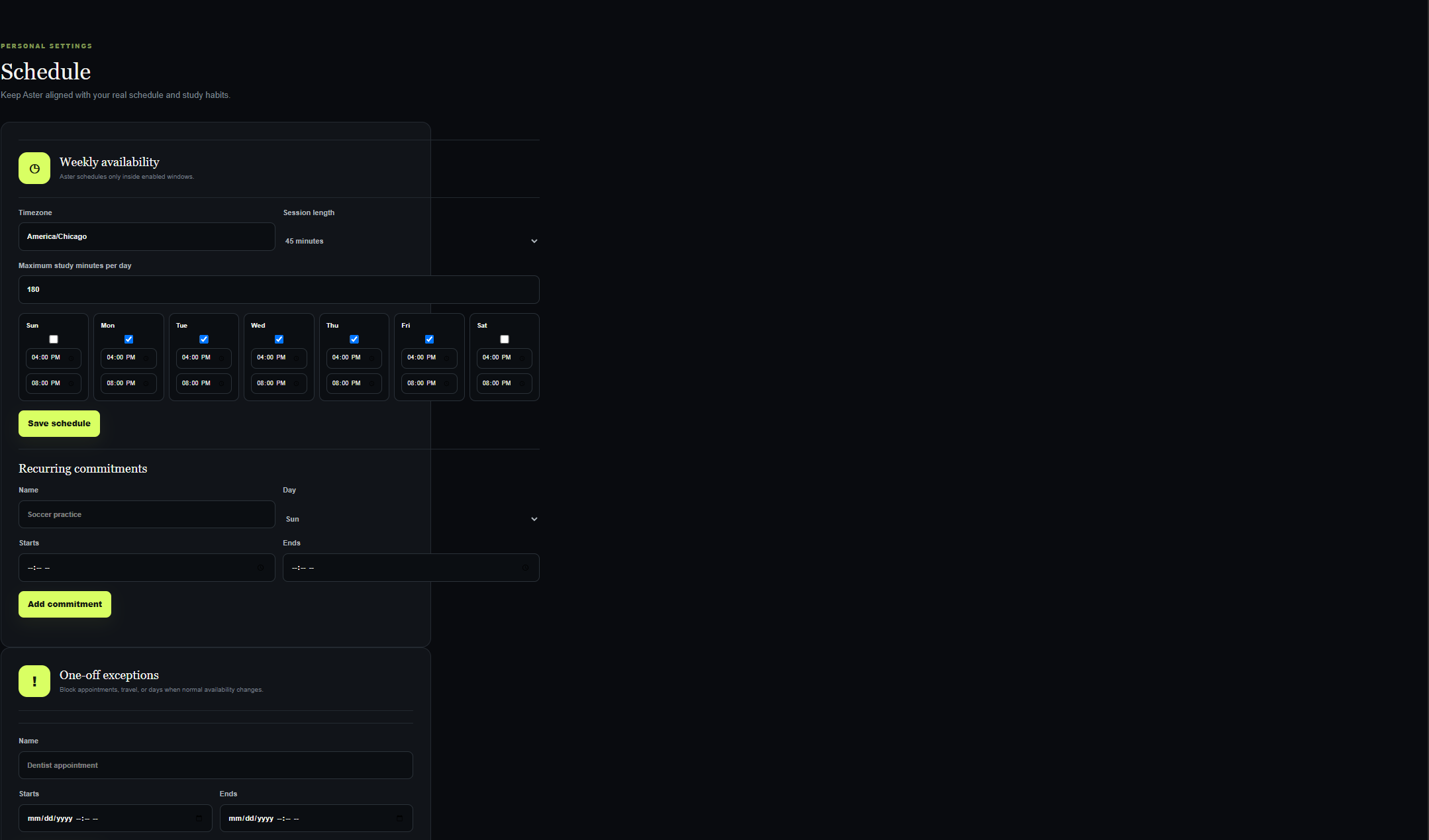
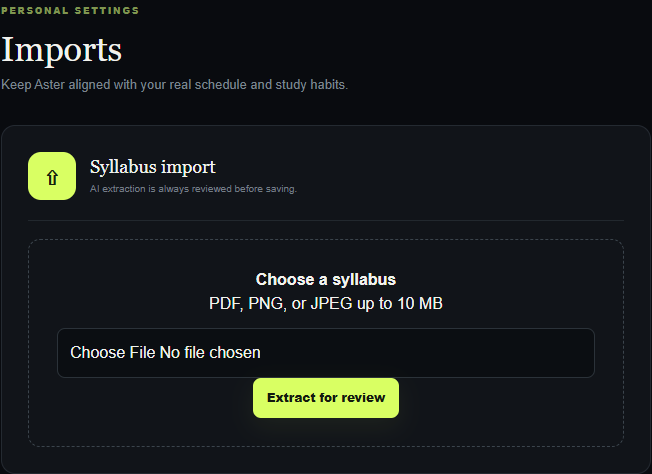
Inspiration Students often know what assignments they need to finish, but deciding when to work on them can be difficult. Deadlines, exams, activities, and missed study sessions can quickly become overwhelming. We created Aster to help students turn their assignments into a realistic study schedule. Aster breaks large tasks into smaller steps and plans them around each student’s available time. What it does Aster is an AI-assisted homework planner that lets students: Organize classes by term Add assignments and exams Break large assignments into smaller steps Generate study sessions around their availability View their three most important tasks each day Reschedule unfinished work automatically Track progress and actual study time Create spaced review sessions for exams Import assignments from a syllabus Sync study sessions with Google Calendar Receive assignment reminder emails How we built it We built Aster using Next.js, React, and TypeScript. Supabase handles user authentication, while Cloudflare D1 stores planner information and Cloudflare R2 stores uploaded syllabi. Aster’s scheduling system considers deadlines, priorities, estimated effort, availability, daily study limits, and calendar conflicts. It uses deterministic scheduling rules to ensure sessions are placed at valid times. We use the OpenAI API to extract assignments from syllabi, suggest subtasks, generate practice questions, and explain schedule changes. AI provides helpful suggestions, while Aster’s scheduling engine controls the final schedule. Challenges we faced The biggest challenge was making schedules realistic. Aster needed to avoid classes, activities, calendar events, and unavailable hours while still completing work before deadlines. Automatic rescheduling was also challenging. When a student misses a session, Aster must preserve completed work, redistribute unfinished tasks, explain what changed, and allow the student to undo the change. Google Calendar synchronization and syllabus extraction also required careful handling of conflicting edits, failed requests, duplicate assignments, and uncertain AI results. What we learned We learned that AI works best when combined with reliable rules. AI is useful for understanding documents, suggesting ideas, and explaining changes. Deterministic code is better for preventing conflicts and ensuring schedules remain valid. We also learned that a useful student planner must be flexible. Students’ plans change, so Aster needs to adjust without making the experience stressful. What’s next In the future, we would like to add: Outlook Calendar support Mobile notifications Focus timers Study groups More detailed progress insights School learning-management-system integrations Our goal is to make Aster a calm planning partner that always helps students understand what to do next.
Built With
- cloudflare
- css
- html
- javascript
- next.js
- react
- supabase
- typescript

Log in or sign up for Devpost to join the conversation.