-
-
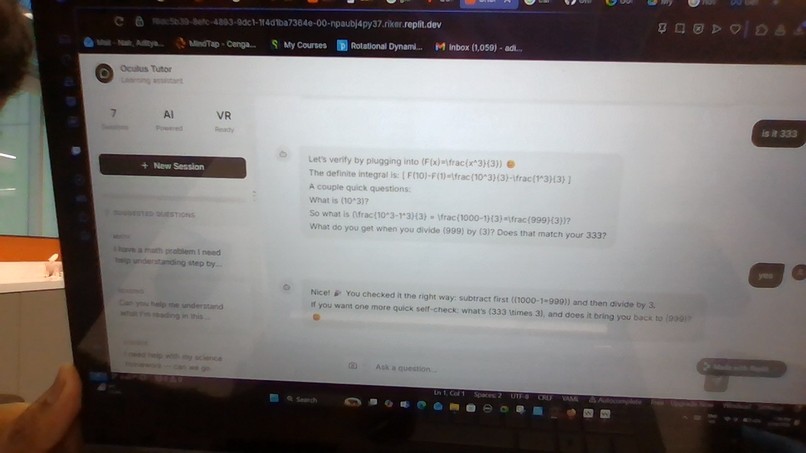
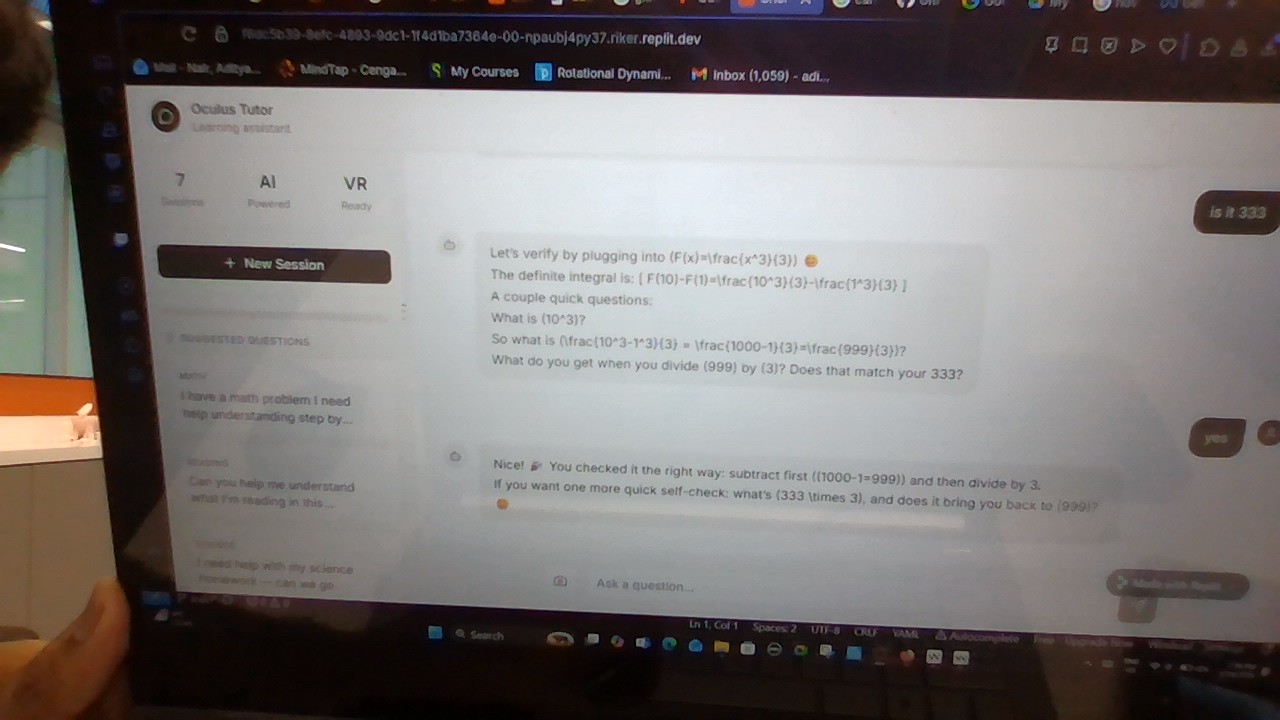
chatbot visualized
The Inspiration
We’ve all been there: staring at a textbook, feeling stuck on a complex equation like I wanted to move beyond just "finding the answer" on a website. I was inspired to create a bridge between the physical page and digital intelligence—turning a smartphone camera or a VR headset into a live, interactive tutor.
How I Built It
The core of Homework Assist relies on a powerful computer vision pipeline. The Vision: I used OCR (Optical Character Recognition) to extract text from images. The Brain: The text is fed into an AI model that recognizes mathematical notation and logical structures. The Interface: I integrated these tools into a VR environment to overlay step-by-step solutions directly onto the user's field of view.
Challenges & Lessons
The biggest hurdle was perspective. Cameras don't always look at text head-on, and VR tracking can be jittery. I learned a lot about image preprocessing—handling shadows, skewed angles, and messy handwriting. Most importantly, I realized that while solving the problem is great, explaining it is what truly helps a student learn.

Log in or sign up for Devpost to join the conversation.