-
-
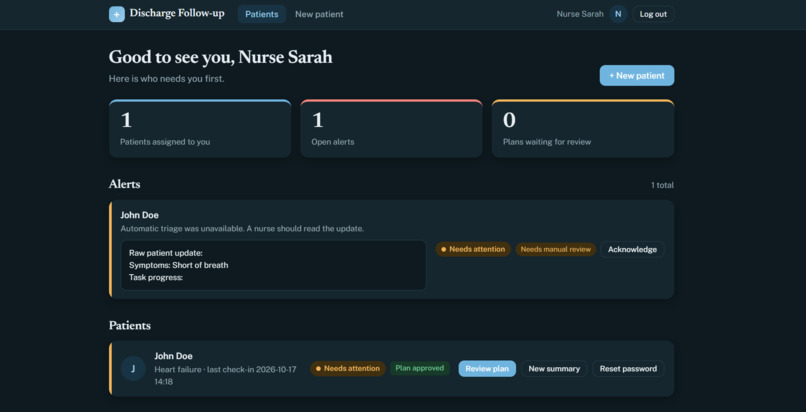
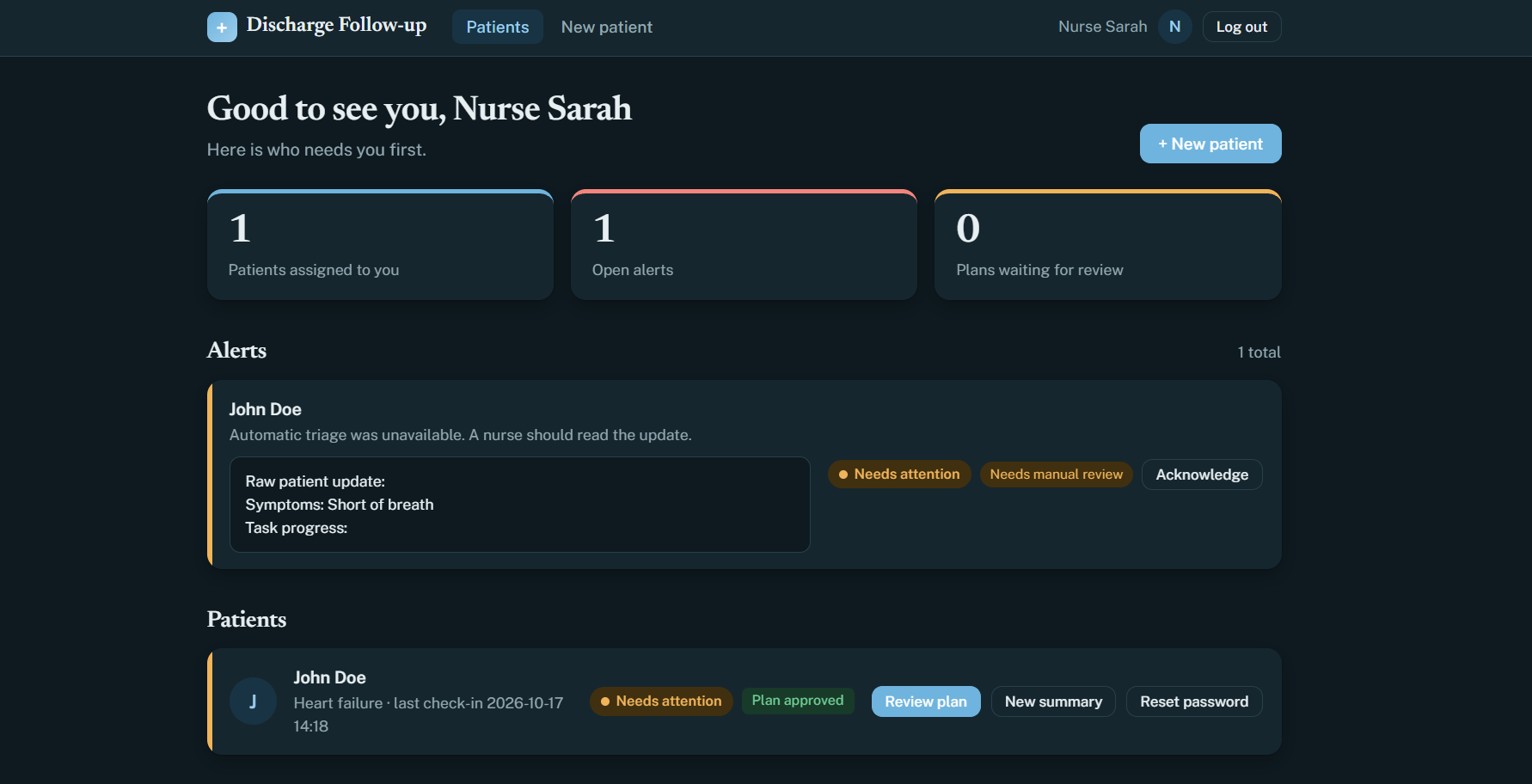
Nurse Landing Page
-
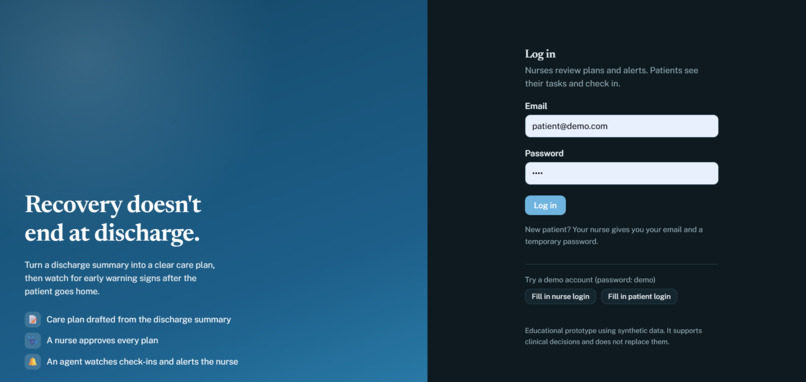
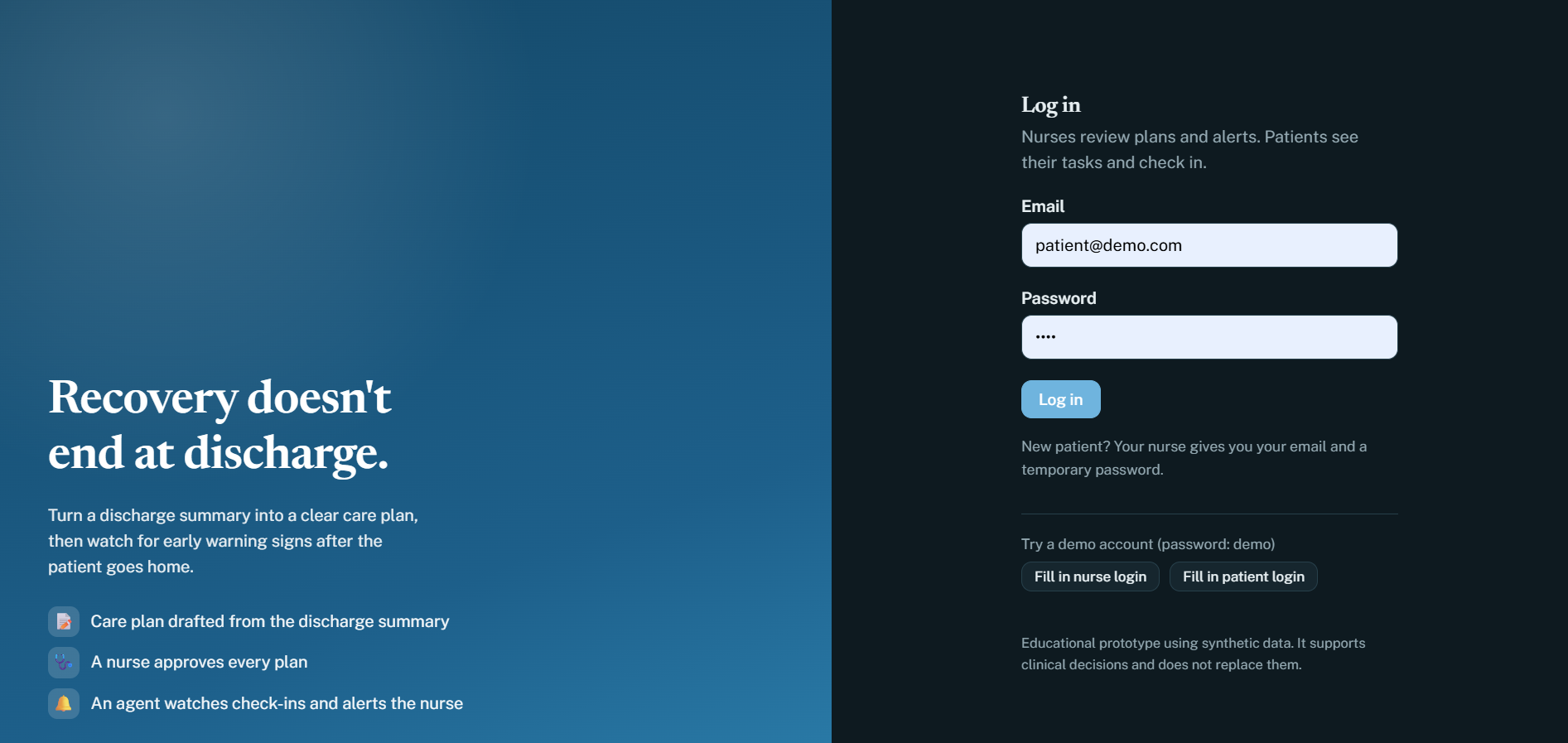
Landing page
Inspiration
Leaving hospital is when many patients are on their own. They go home with a dense discharge summary, a handful of new medicines, appointments to book and warning signs to watch for, and no one checking in. Nurses can't phone everyone every day. We built Homeward to turn that paperwork into a clear daily plan for the patient and a calm, reliable early-warning system for the nurse.
What it does
- A nurse uploads a discharge summary. AI agents draft a care plan, and every task is tied to a word-for-word quote from the summary, so the nurse can see where it came from.
- A second agent acts as a critic, flagging anything missing or unsupported before the nurse approves.
- The patient gets a simple Today and All tasks view, a tick button on each task and a progress bar.
- When the patient reports symptoms, a third agent rates the risk, explains why and decides whether to alert the nurse, using the patient's own warning signs and recent trend.
How we built it
Homeward is written in Jac, which let us put the graph data model, the agents, the API and the React-style frontend in one language. Patients, plans, tasks, check-ins and alerts are nodes in a graph, linked by edges. The agents call the Google Gemini API and return structured JSON.
We kept the AI on a short leash. Code checks that each quoted source line really exists in the summary, and a rule-based safety net sits on top of the triage agent:
$$risk_{final} = \max(risk_{agent},\ risk_{rule})$$
A red-flag phrase such as "chest pain" can only raise the risk, never lower it. If the AI call fails, the update goes to the nurse as "needs manual review" instead of disappearing.
Challenges we ran into
- Version mismatch. The AI library we started with no longer compiled against the newer Jac compiler, with dozens of errors in code we didn't write. Rather than patch a dependency, we replaced it with a small, direct Gemini client that uses only the standard library.
- Trusting AI output. Models return slightly wrong types and invented text. We coerce every field and verify every quote.
- Safety first. Deciding what the AI may decide, and what fixed code must always guarantee.
What we learned
- Grounding every AI suggestion in a checkable source builds far more trust than a fluent answer.
- A human-in-the-loop design (nurse approval, safety rules, visible "who decided") matters more than model cleverness in healthcare.
- Fewer dependencies mean fewer surprises.
What's next
Show task completion to the nurse and feed it into triage, add timed alerts for patients who stop checking in, and support PDF uploads.
Synthetic data only. Decision support, not medical advice.

Log in or sign up for Devpost to join the conversation.