-
-
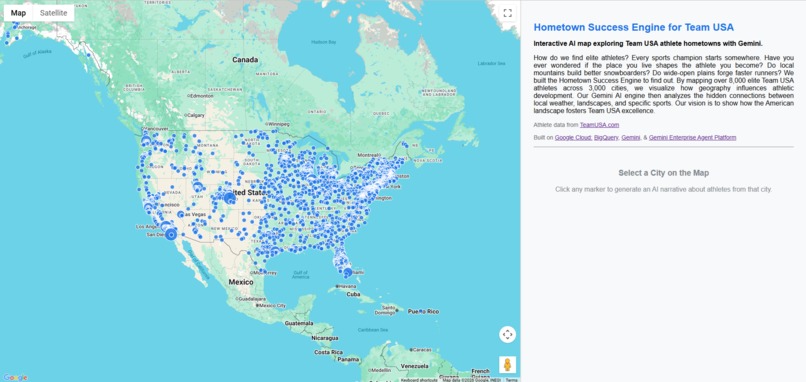
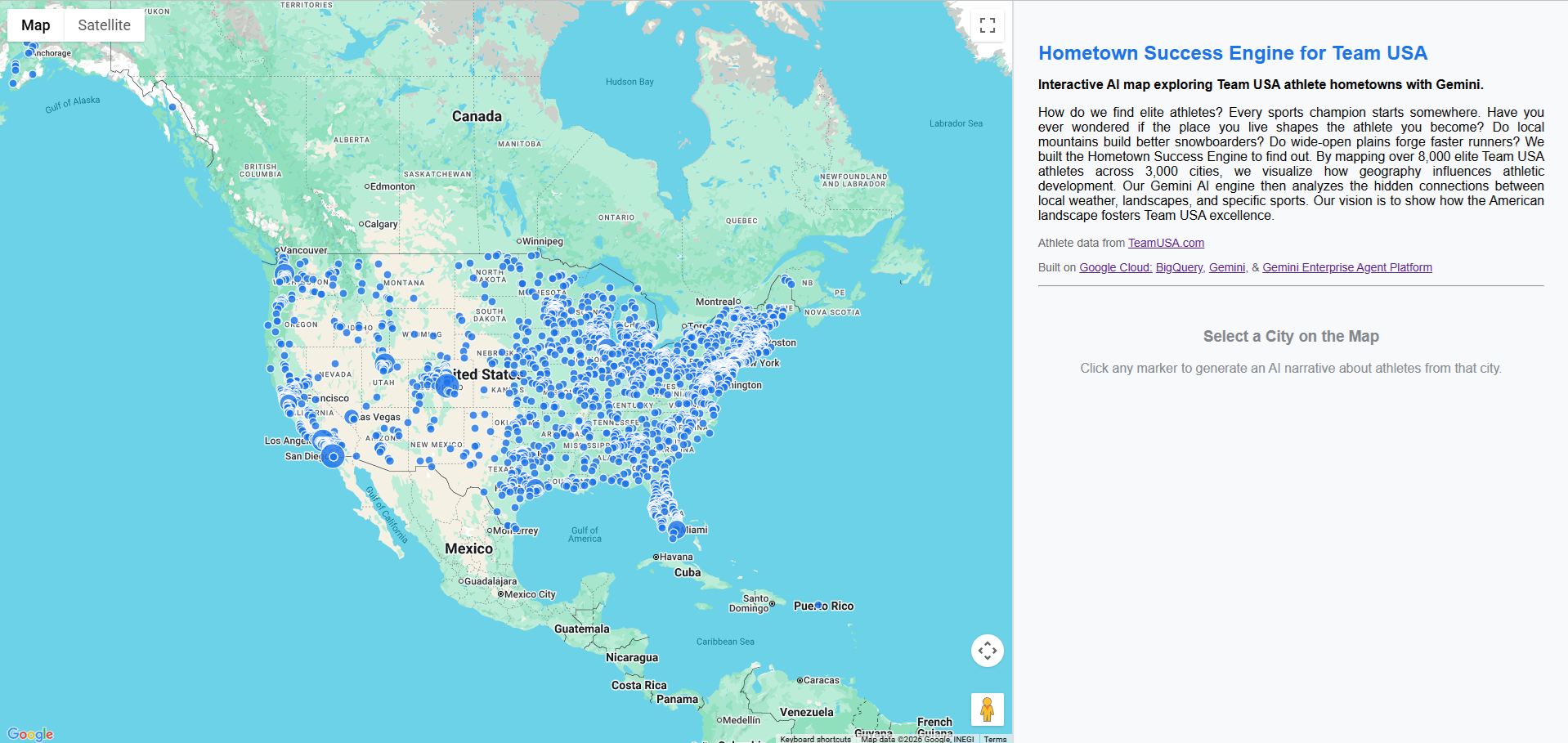
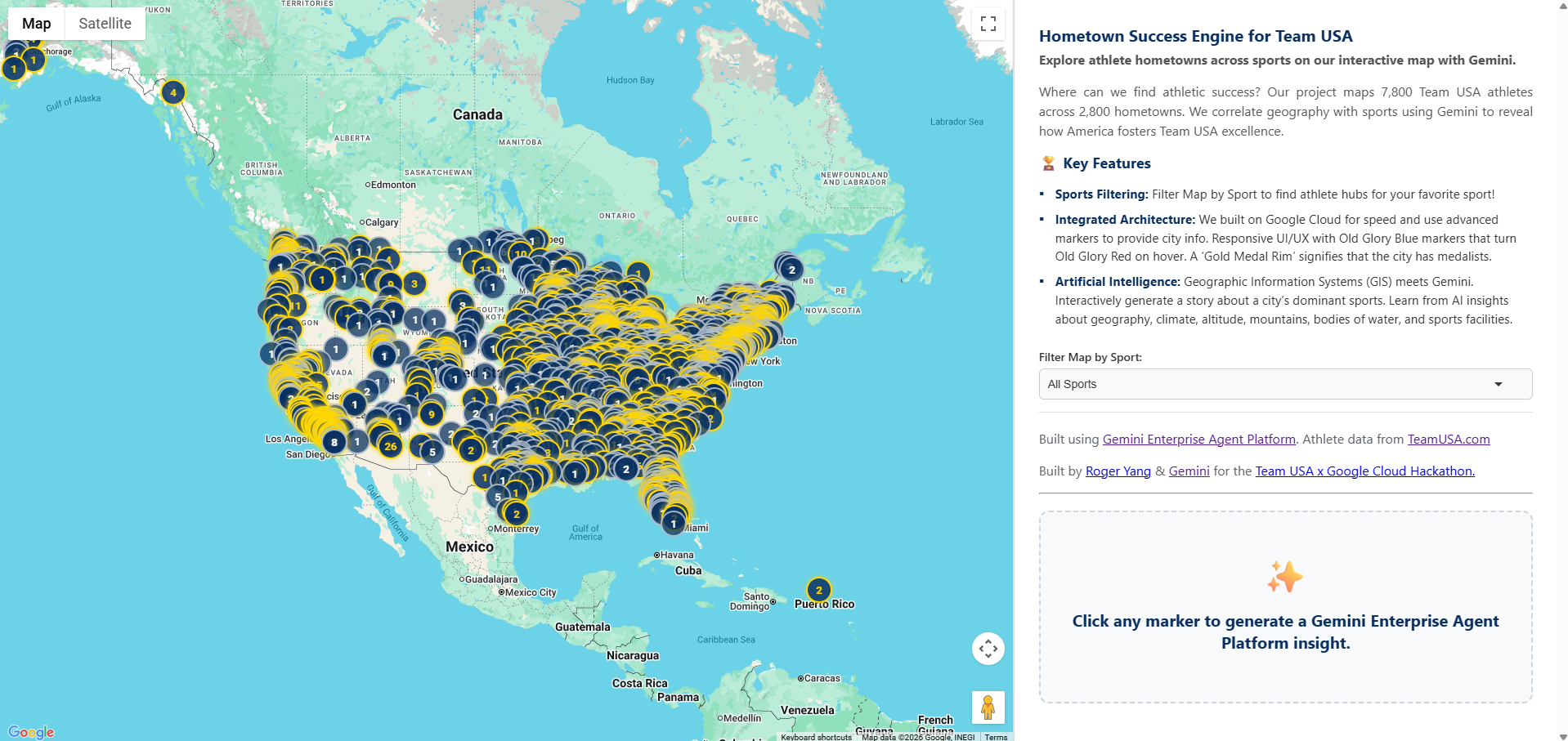
HometownSuccess.com Initial Design
-
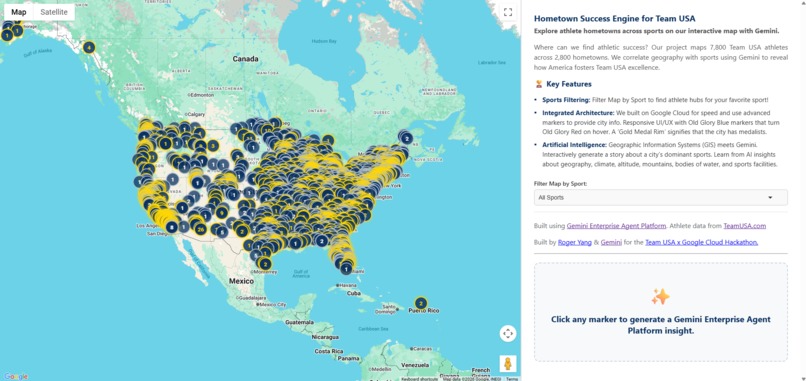
HometownSuccess.com Homepage
-
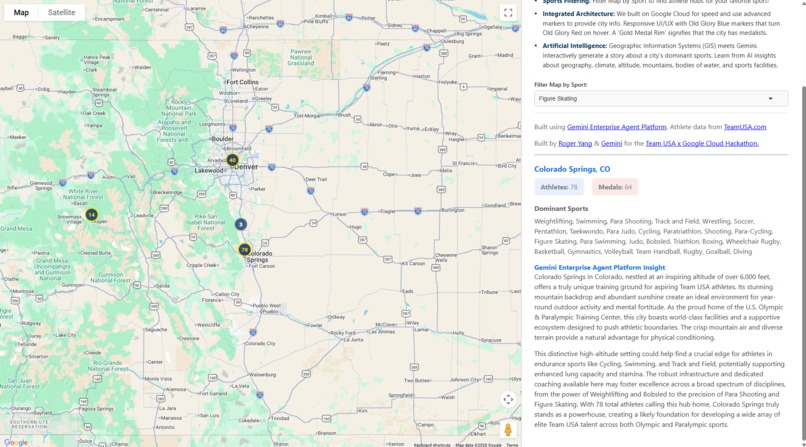
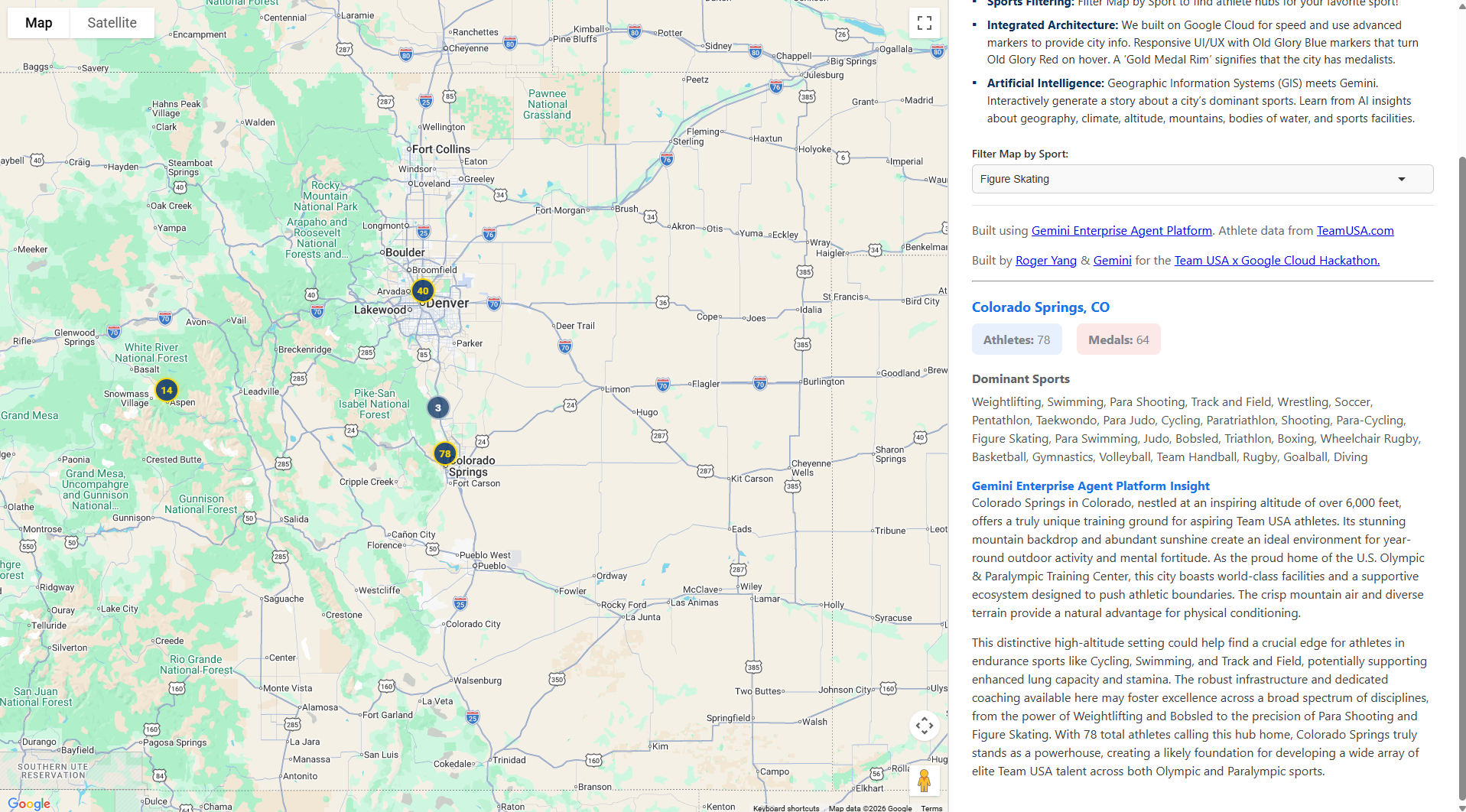
Hometown Success at Colorado Springs, CO with Gemini
-
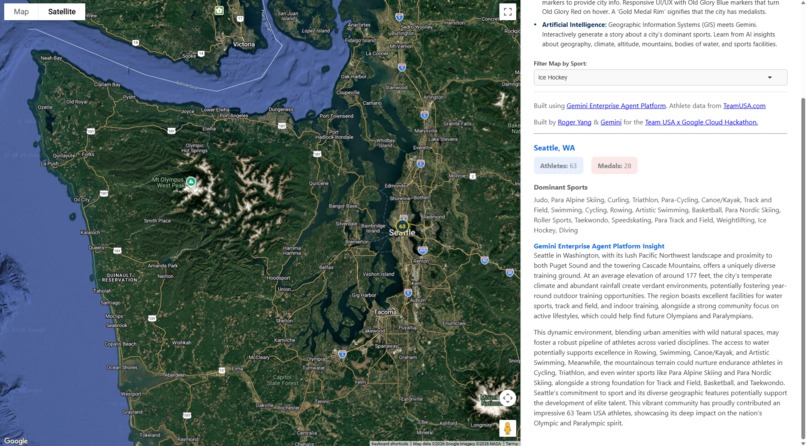
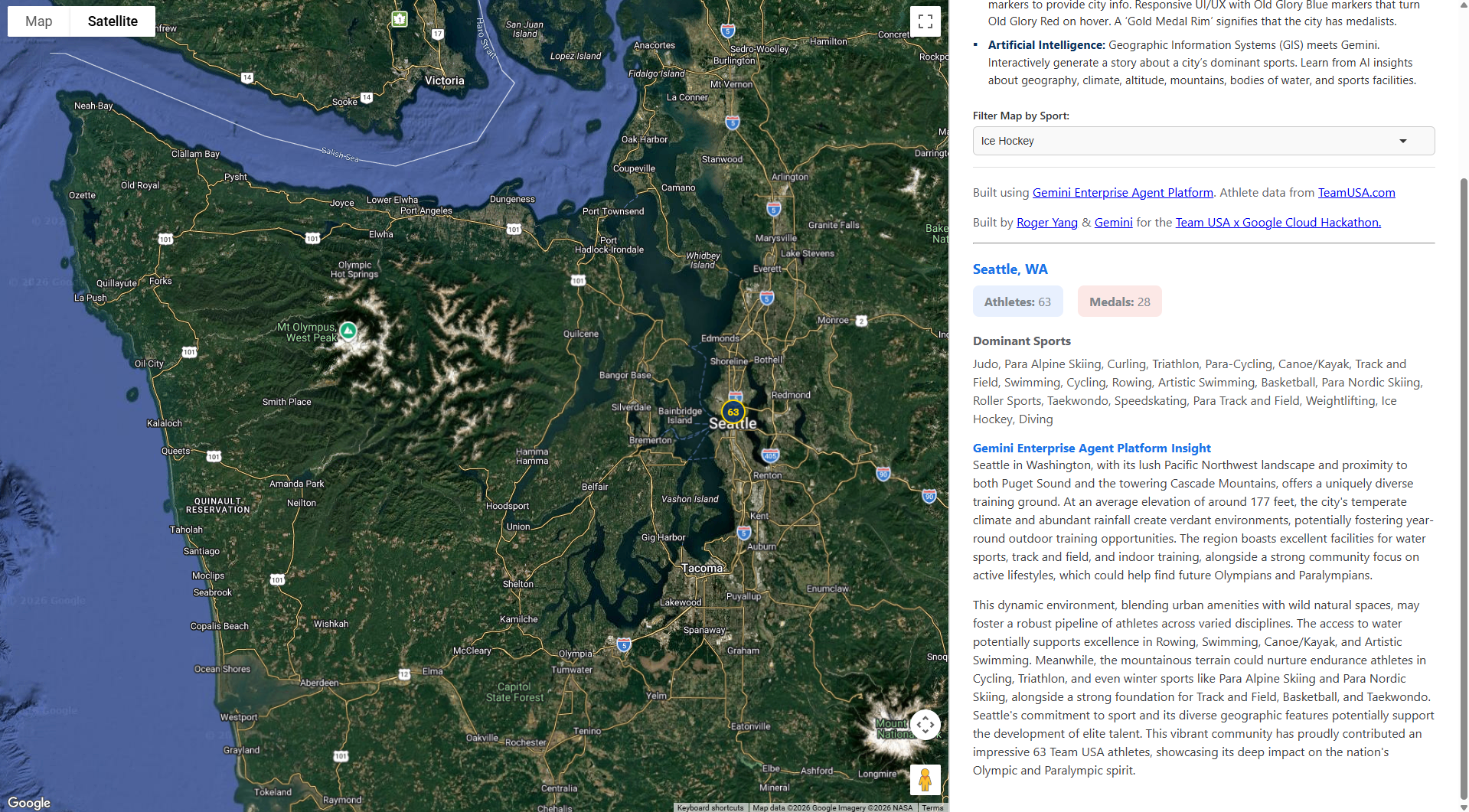
Hometown Success at Seattle, WA using satellite showing Mount Olympus
Inspiration
I was inspired to build for the Team USA x Google Cloud Hackathon because I had recently completed the Google AI Essentials course and wanted to put what I learned into practice. As a huge sports fan who feels a lot of pride when Team USA competes, this felt like the perfect opportunity. I specifically chose Challenge 2: The Hometown Success Engine because of my background in real estate. In real estate, location dictates everything. I thought it was a fascinating question to apply to athletes: does the geography, terrain, and climate of where a Team USA athlete is born and raised help shape the champion they become?
What We Learned
Building this alongside Gemini as my AI pair-programmer was an incredible learning experience. Together, we explored the vast ecosystem of Google Cloud Platform and full-stack artificial intelligence development. I learned how to use Python for heavy data engineering, how to integrate third-party APIs to process spatial data, and how to deploy a containerized web application to the cloud. We also spent a lot of time learning how to engineer precise System Instructions to guide Gemini's output. Beyond the code, I learned so much about the sheer scale of the United States. Mapping out the hometowns revealed just how incredibly diverse our country's terrain, climates, and sports facilities are, and how many unique sports are played on the world stage.
How It's Built
Instead of just a list of tools, here is how the Hometown Success Engine connects together: The foundation is Google BigQuery, which securely hosts and queries our geocoded dataset of Team USA athletes. To connect this data to the web, we built a lightweight Python Flask server deployed via Google Cloud Run, which acts as the bridge. The user interface is an interactive HTML/JS dashboard hosted globally on Firebase, utilizing the Google Maps Platform to visualize the athlete hubs. Finally, when a user interacts with a city on the map, the Gemini Enterprise Agent Platform processes the hub's statistics on the fly to generate a nuanced, geographically contextual narrative.
Challenges We Faced
The biggest hurdles by far involved data engineering and spatial accuracy. Mapping thousands of athletes sounds straightforward until you have to deal with real-world, messy data. Our most significant challenge was geocoding collisions. During the data ingestion phase, we realized that plain-text geocoders (like Nominatim) were generating "helpful" but wildly inaccurate global fallbacks. For example, a typo in the source data for "Colorado Springs, SC" was defaulting to coordinates in Colorado, creating false data overlaps. We overcame this by entirely rewriting our Python geocoding script to pass strict, structured query dictionaries that enforced exact City-to-State matching before we could confidently drop any map pins.
Author: ♊︎ . Roger: This Project Story was generated by Gemini and we're submitting it unedited to showcase the capabilities of this AI model when working together on HometownSuccess.com from start to finish.


Log in or sign up for Devpost to join the conversation.