-
-
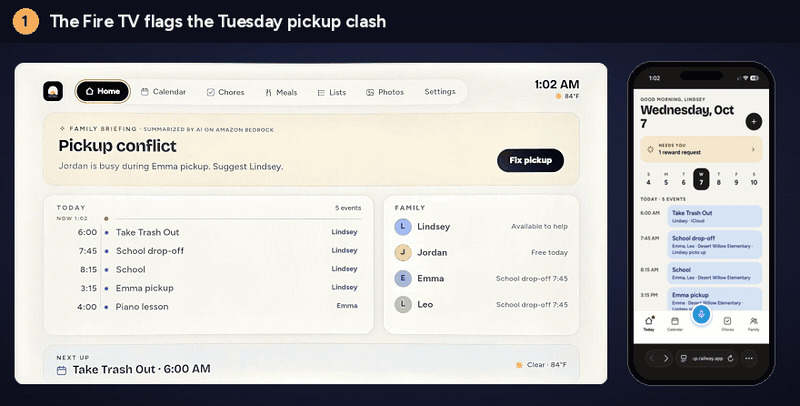 GIF
Hometide on a real Fire TV Stick
-
 GIF
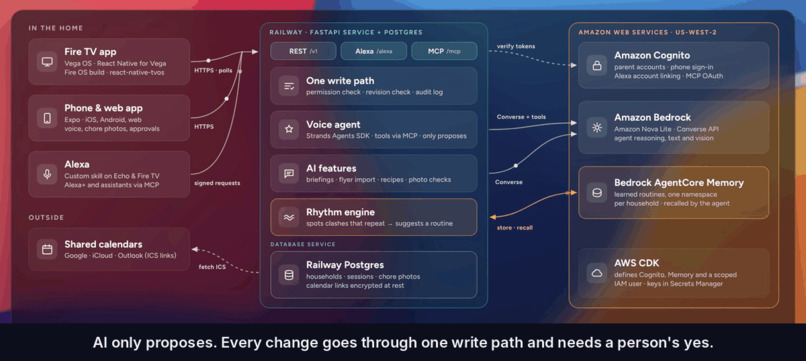
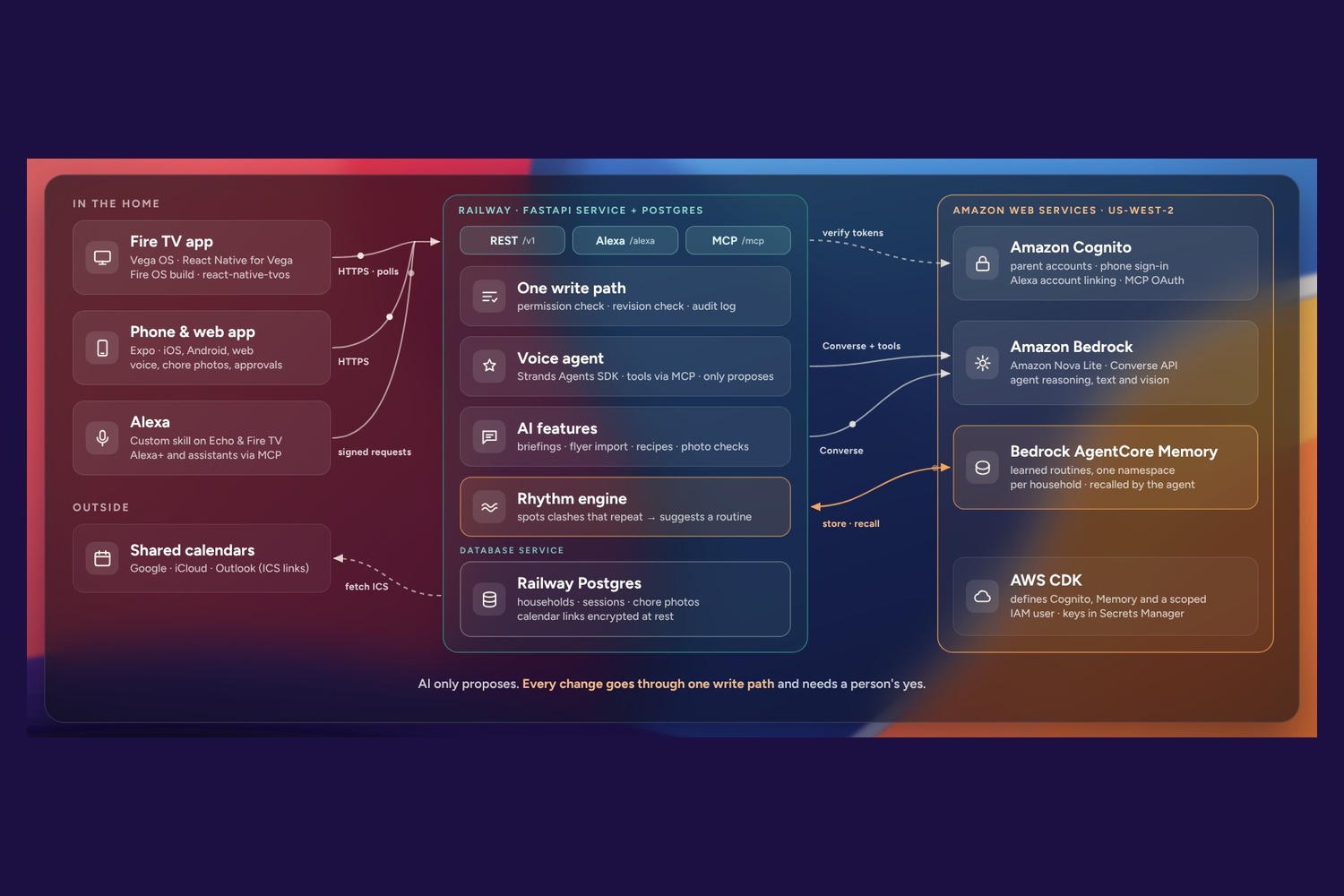
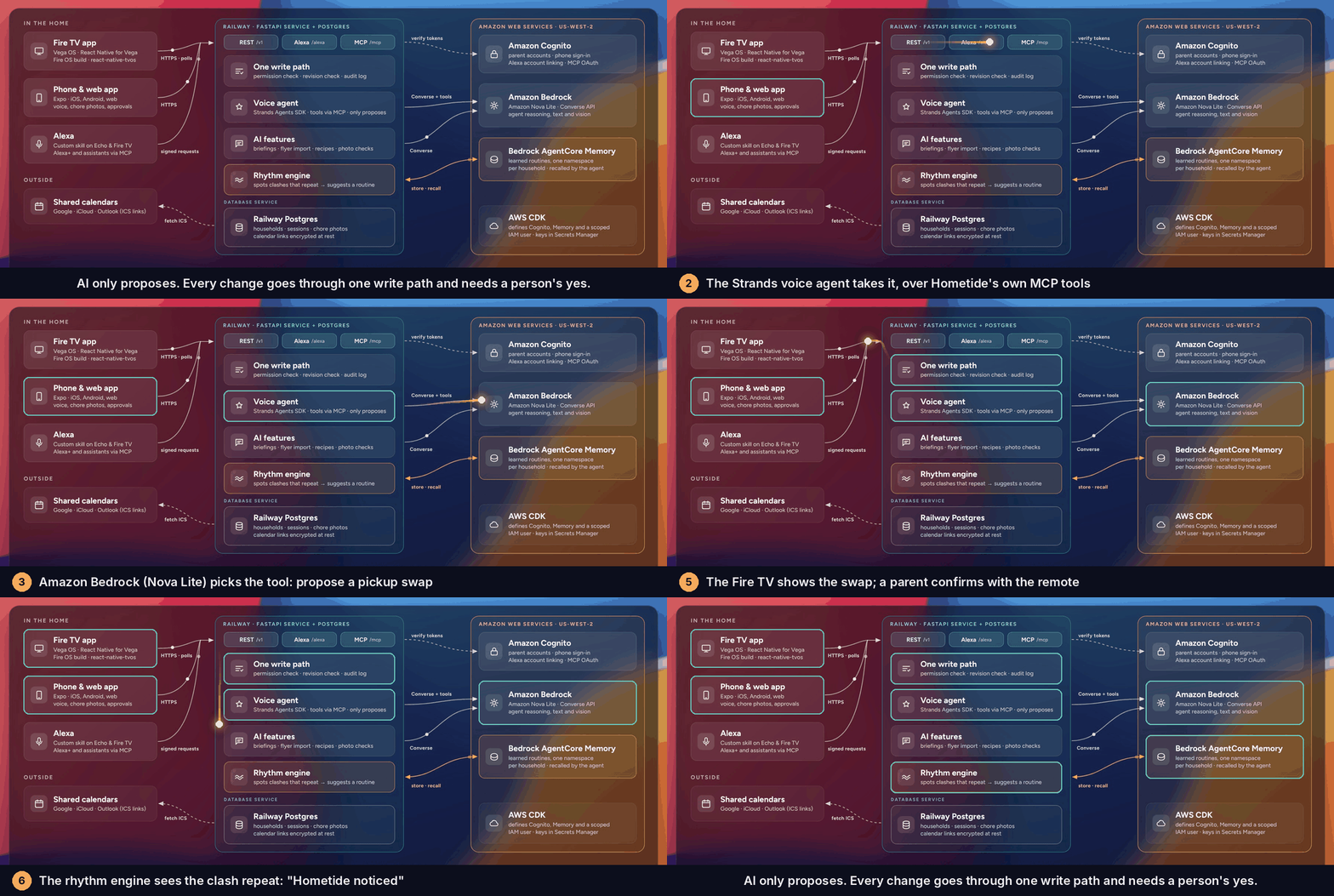
Animated architecture: a voice request through Strands and Bedrock, one write path, the TV confirm and AgentCore Memory.
-
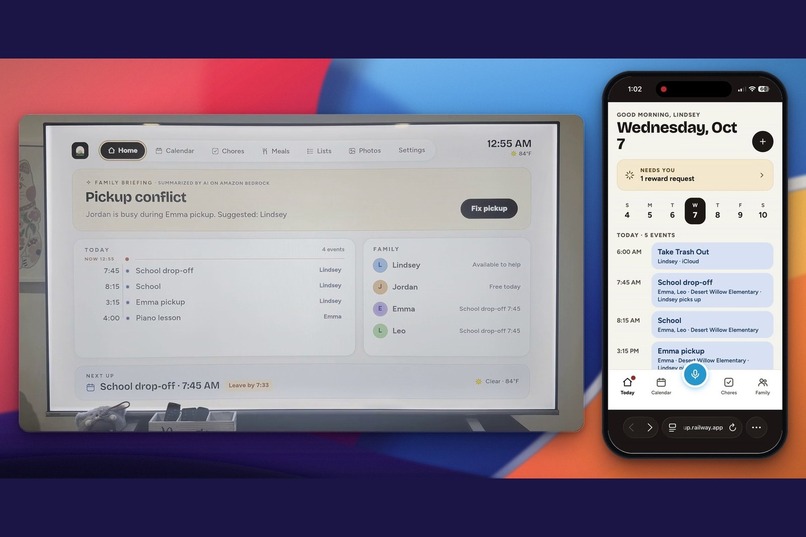
Hometide
-
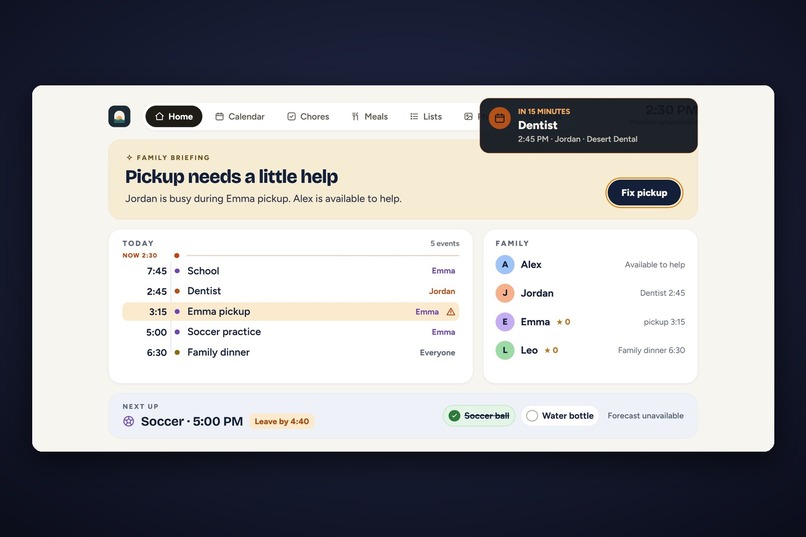
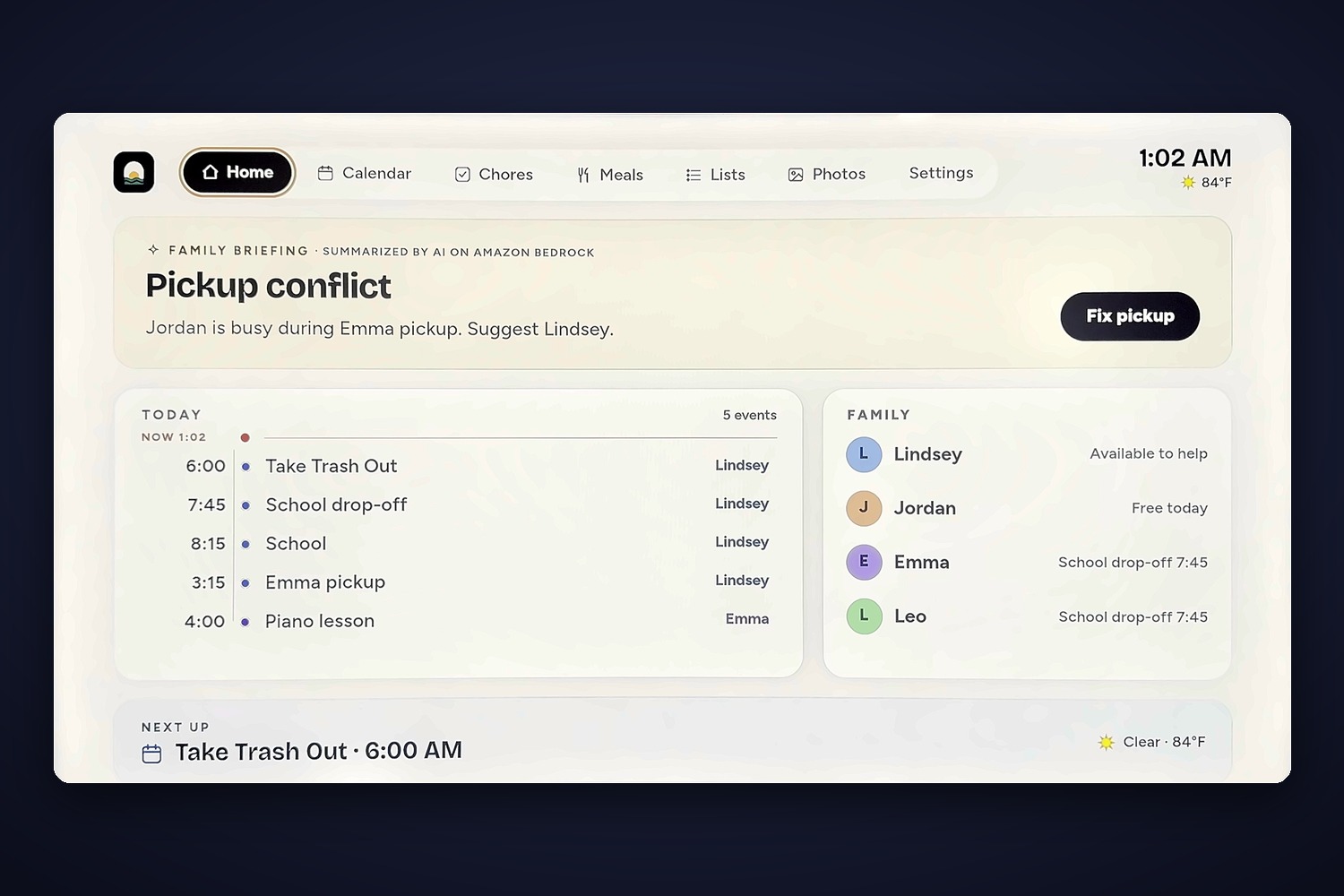
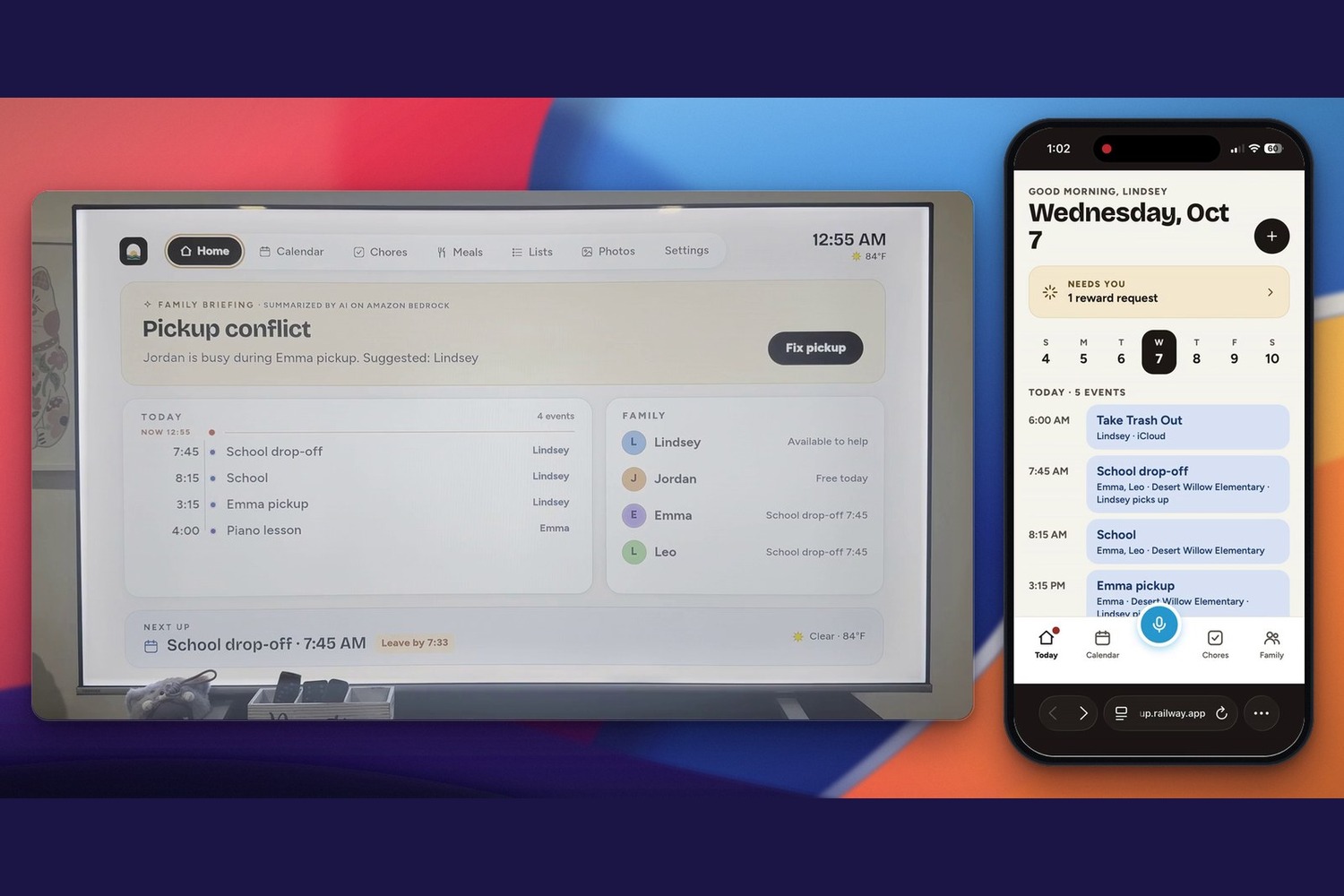
Home on a real Fire TV: the briefing flags the Tuesday pickup clash and says Lindsey is free to help.
-
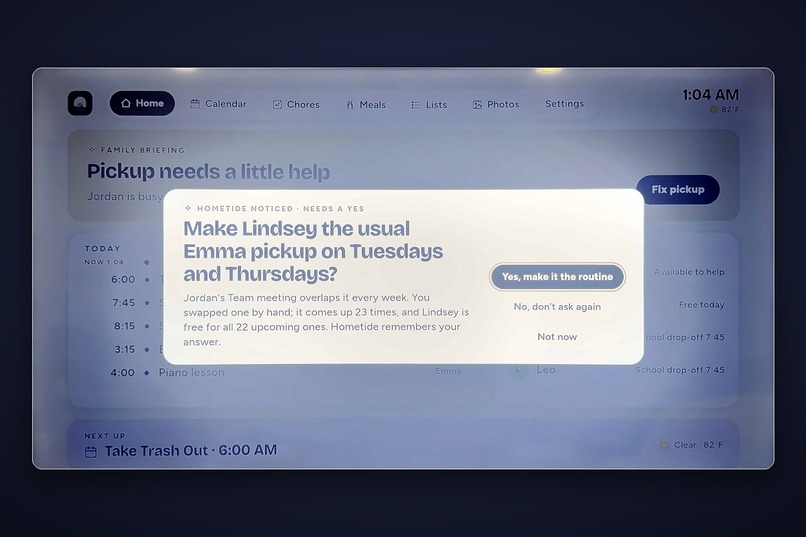
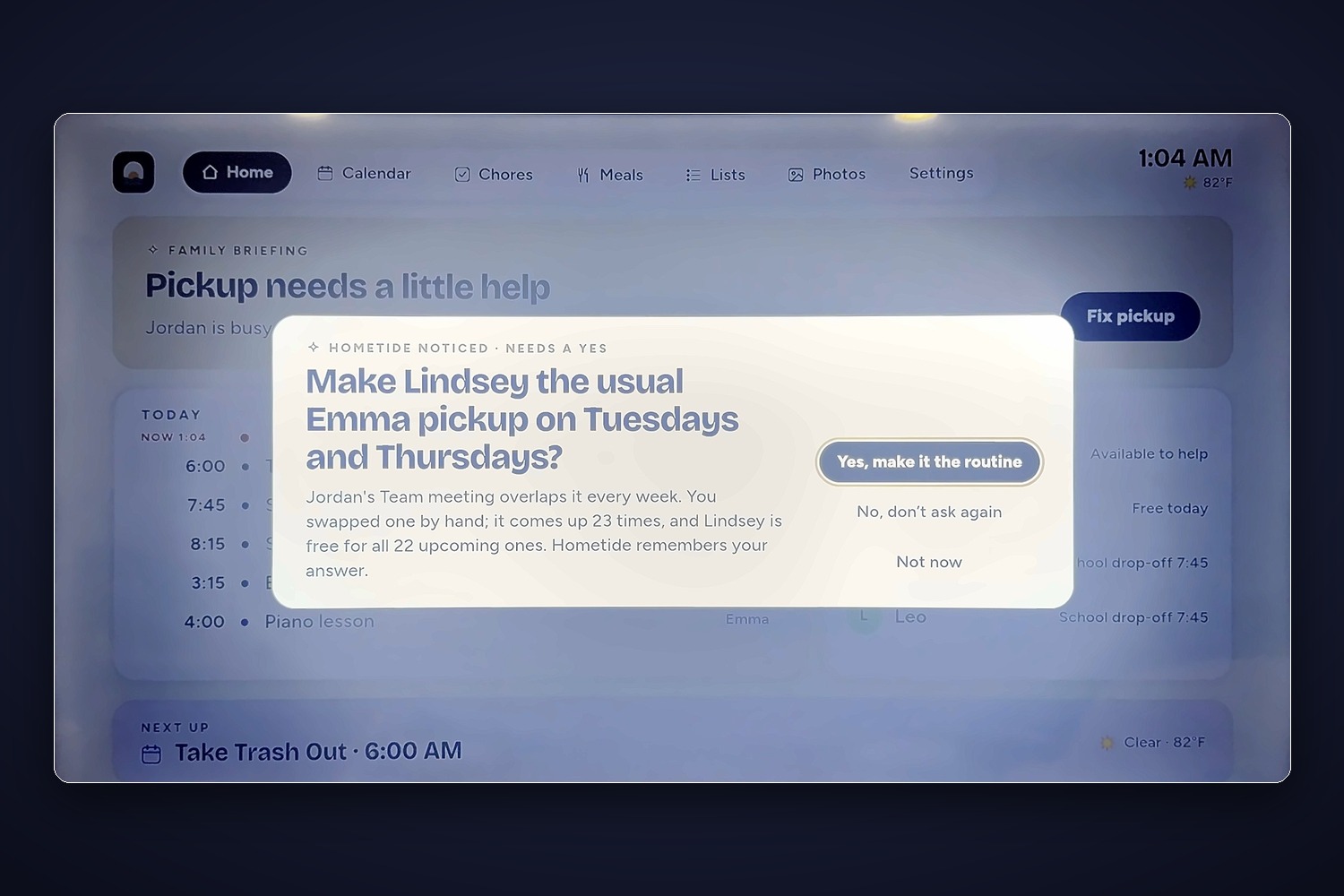
Hometide noticed
-
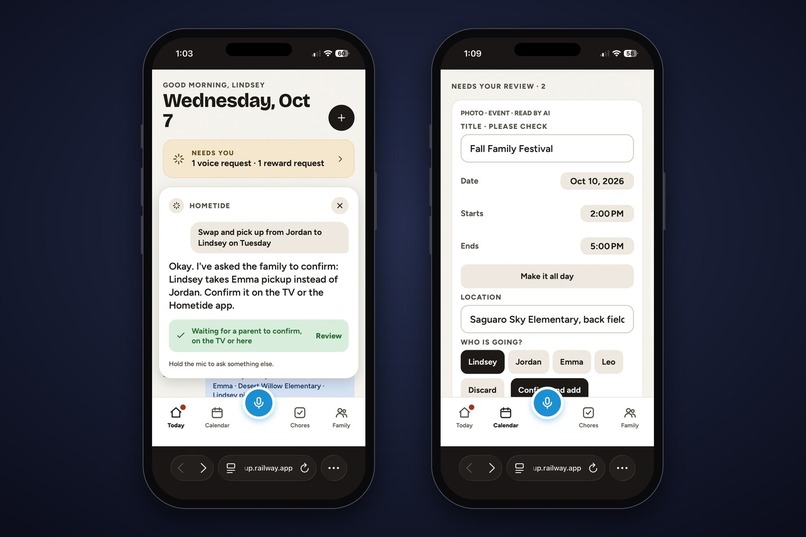
Phone app
-
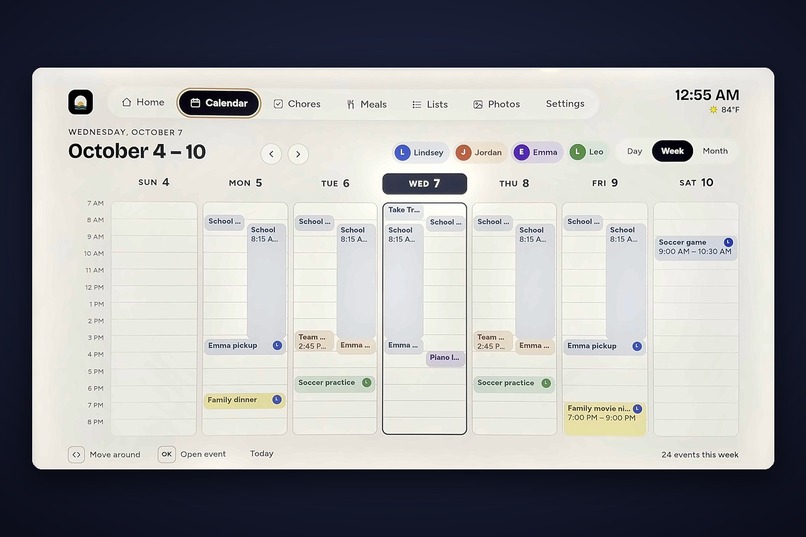
The week
-
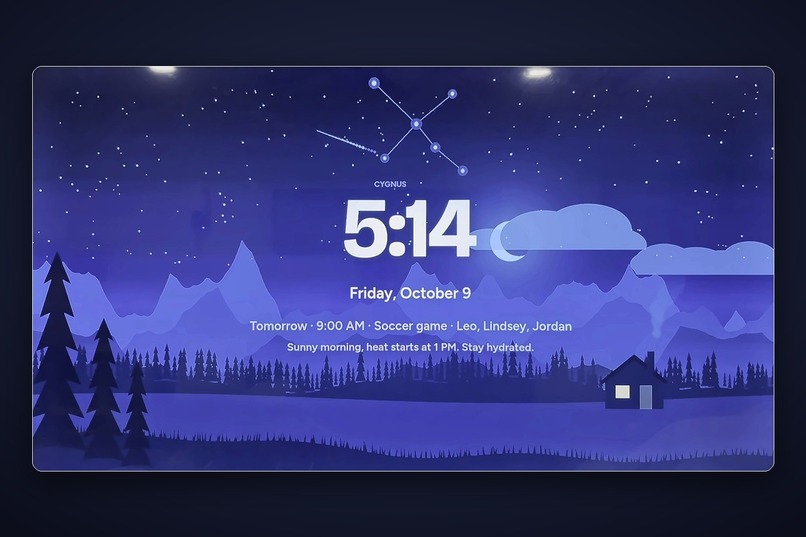
The living wall
-
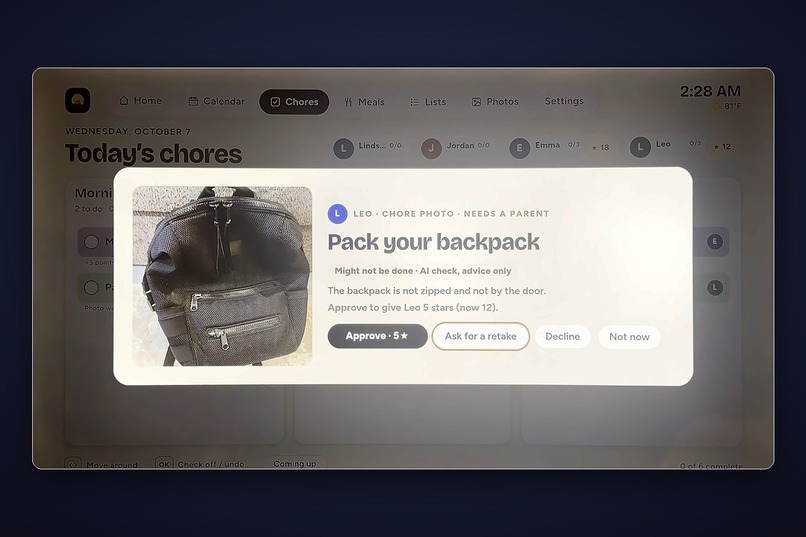
Chore approval
-
Family feedback improvement
-
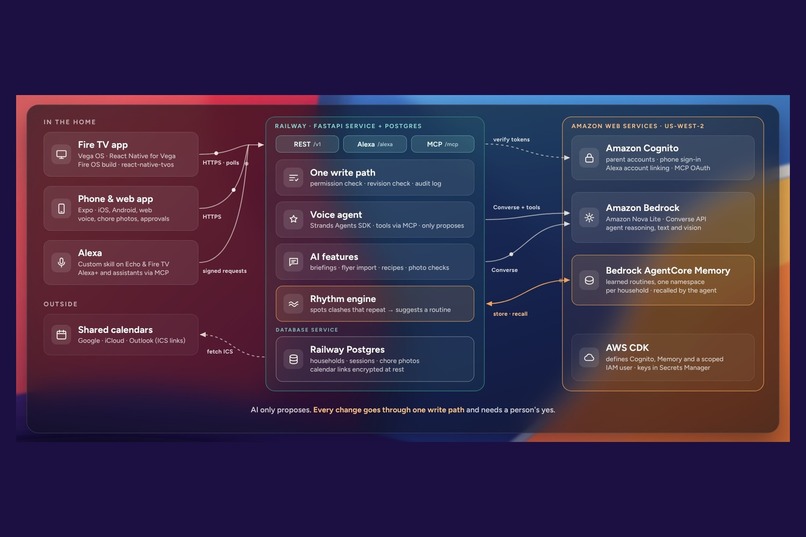
Architecture
-
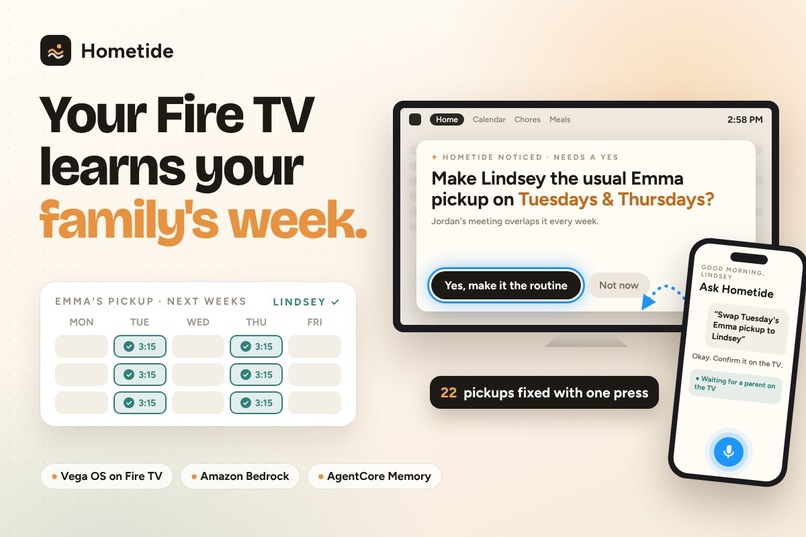
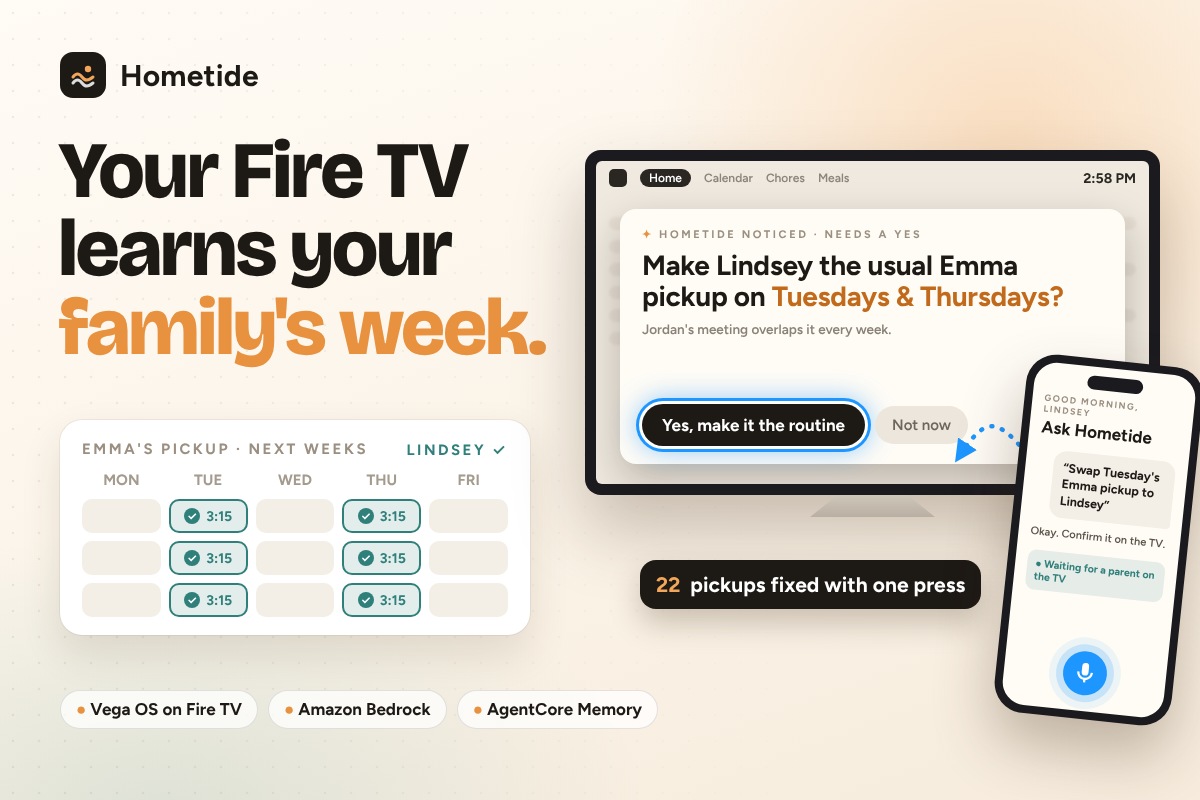
Family calendars show you the clash. None of them remembers how your family fixed it last time. Hometide does.
Hometide is a native Fire TV app that spots the scheduling clash that keeps coming back, learns the fix your family made, and asks once to make it the routine. Nothing changes until a parent says yes with the remote.
Two families use Hometide on their own calendars today. It runs on a physical Fire TV Stick 4K Select, finds 181 of 181 recurring patterns in our evals, and asks about 0.8 questions per family per week.
 Running on a physical Fire TV Stick 4K Select (Vega OS 2.0)
Inspiration
I'm a working parent, and school pickup is the part of the week that breaks. One Tuesday my meeting ran long, I looked at the clock at 3:10, and realised nobody was on the way to school. My partner thought I had it; I thought it was their day. My kid was the last one waiting at the school office when I got there.
The worst part was that it wasn't new. That meeting landed on that pickup most weeks, and we fixed it by hand every time: a "can you grab them today?" text at lunch, sometimes too late. Our shared calendar showed the clash if anyone opened it, but nobody opens a calendar app at 2:58, and it never learned that we always solved it the same way.
The one screen everyone in our house walks past is the living-room TV. So I built what I wanted that afternoon: a TV that flags the clash in the morning and says who's free, and, once it has watched us make the same swap a few times, asks once whether to make it the usual pickup. One press of the remote, and it sticks.
In the demo, that afternoon is Jordan's Tuesday meeting against Emma's (9) 3:15 pickup, the same overlap every Tuesday and Thursday.
It isn't just us. About 1 in 3 parents of school-age kids have missed work getting them to and from school, and 11% say it cost them a job (AP-NORC with HopSkipDrive, 2025). In 2025, both parents had jobs in 66.3% of U.S. married-couple families with children under 18 (BLS).
Smart wall calendars like Skylight show the schedule, but need their own screen ($149.99 to $569.99) and subscriptions. Amazon has sold more than 250 million Fire TV devices, so most families already have the big screen. We wanted it to notice the snag, and learn how this family fixes it.
Who it's for: two working parents with school-age kids, splitting pickups and practices.
What it does
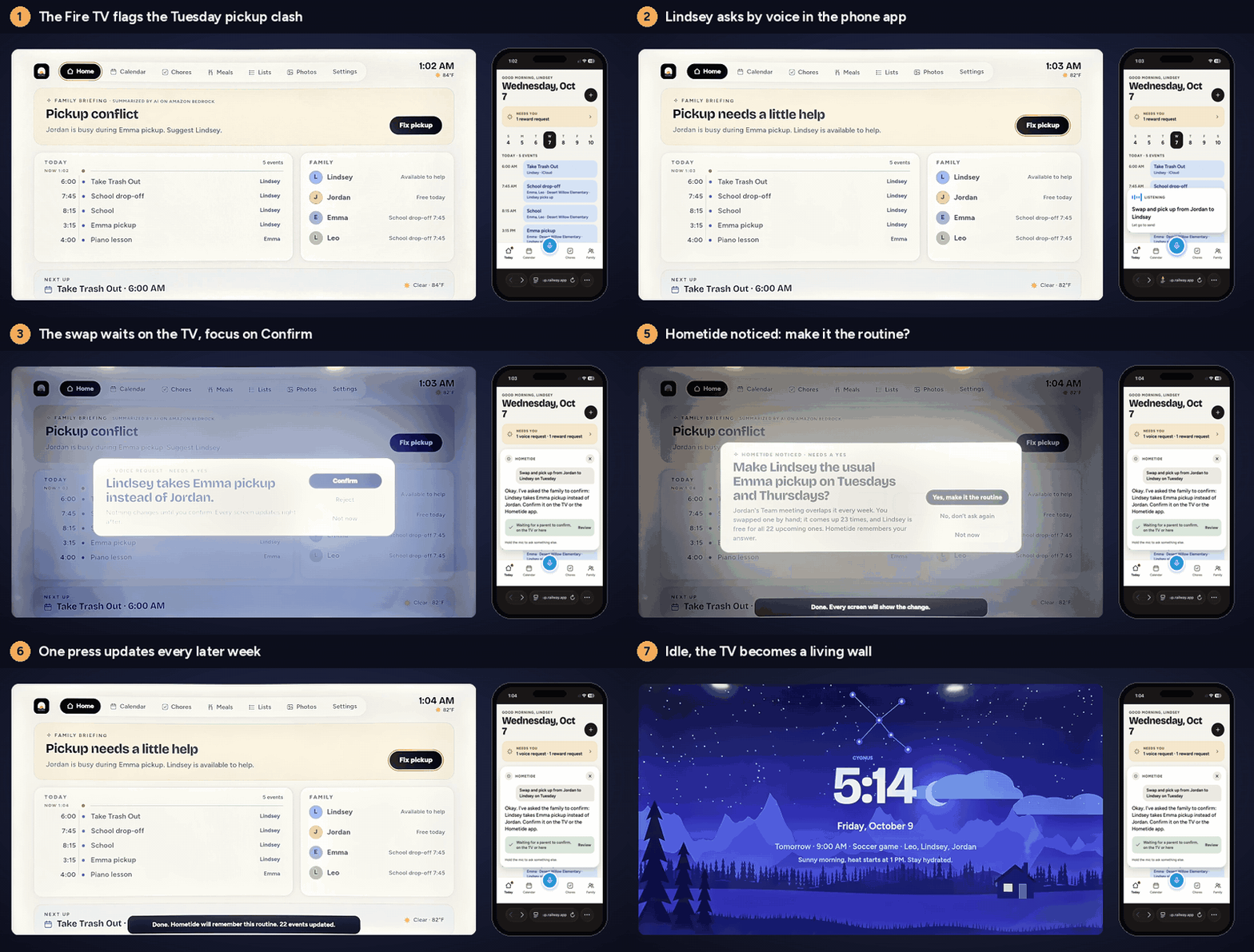
One week, on the TV
| The moment | On the TV | The one press | What changes |
|---|---|---|---|
| Tuesday morning | "Jordan is busy during Emma's 3:15 pickup. Lindsey is free to help." | Ask Lindsey | Lindsey's phone shows the request |
| Lindsey says "Swap Tuesday's Emma pickup to Lindsey" on her phone | The swap appears on the TV, focus already on Confirm | Confirm, with the four-digit parent code | The calendar changes once, with an audit entry |
| The third week of the same swap | Hometide noticed: "Make Lindsey the usual Emma pickup on Tuesdays and Thursdays?", with the reason | Yes | Every later Tuesday and Thursday is fixed. No is final for that pattern |
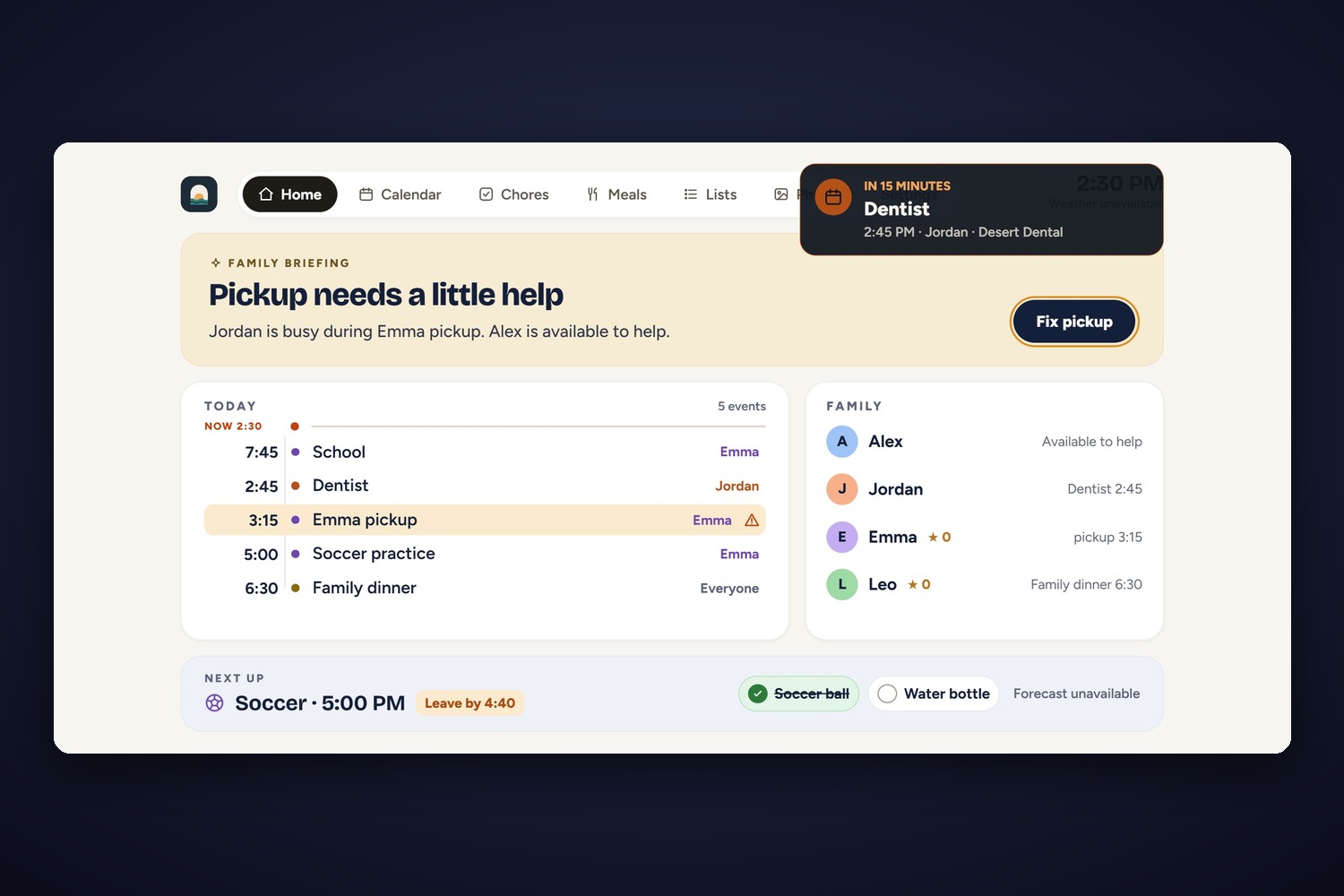
| 15 minutes before an appointment | A reminder card (built because a family asked for it) | OK | Nothing else |
| The TV is idle | The day in large type over a live-weather landscape: "Rain from about 3 PM. Emma's soccer is at 4:00 PM, so pack rain jackets." | None | Nothing |
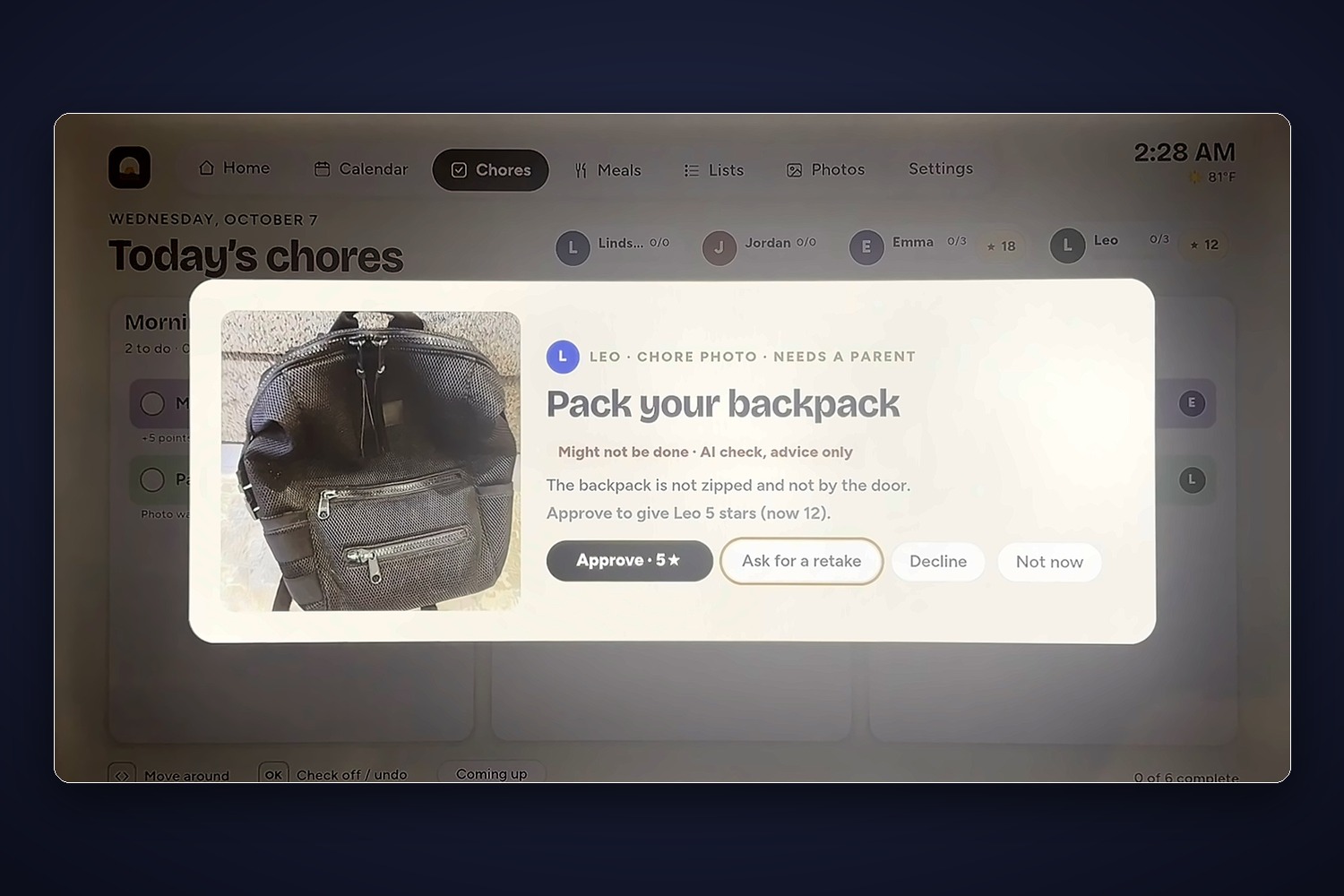
| A child finishes a chore | The proof photo, with the AI check as advice | Approve | Stars awarded |
What Hometide never does: it never changes the calendar until a parent says yes on the TV; it never asks the same question twice; No is final; a question to the voice agent only ever gets read-only tools; and its memory stores a hashed household id, never names.
Used by real families today
Three households of family and friends (8 people) tried Hometide on 15 October. Both of their requests are now built: a parent chooses when the wall calendar starts, and a reminder card appears on the TV before each event. Two of the households now use Hometide on their own calendars.
Spots the clash and says who's free
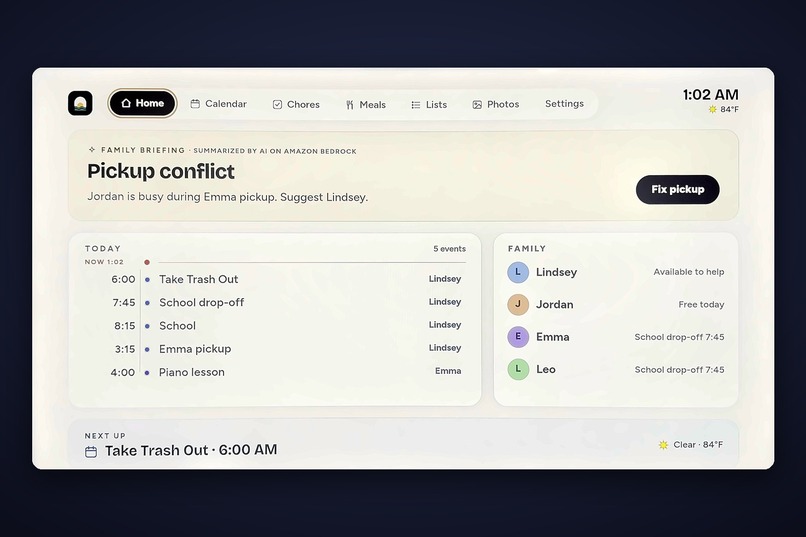
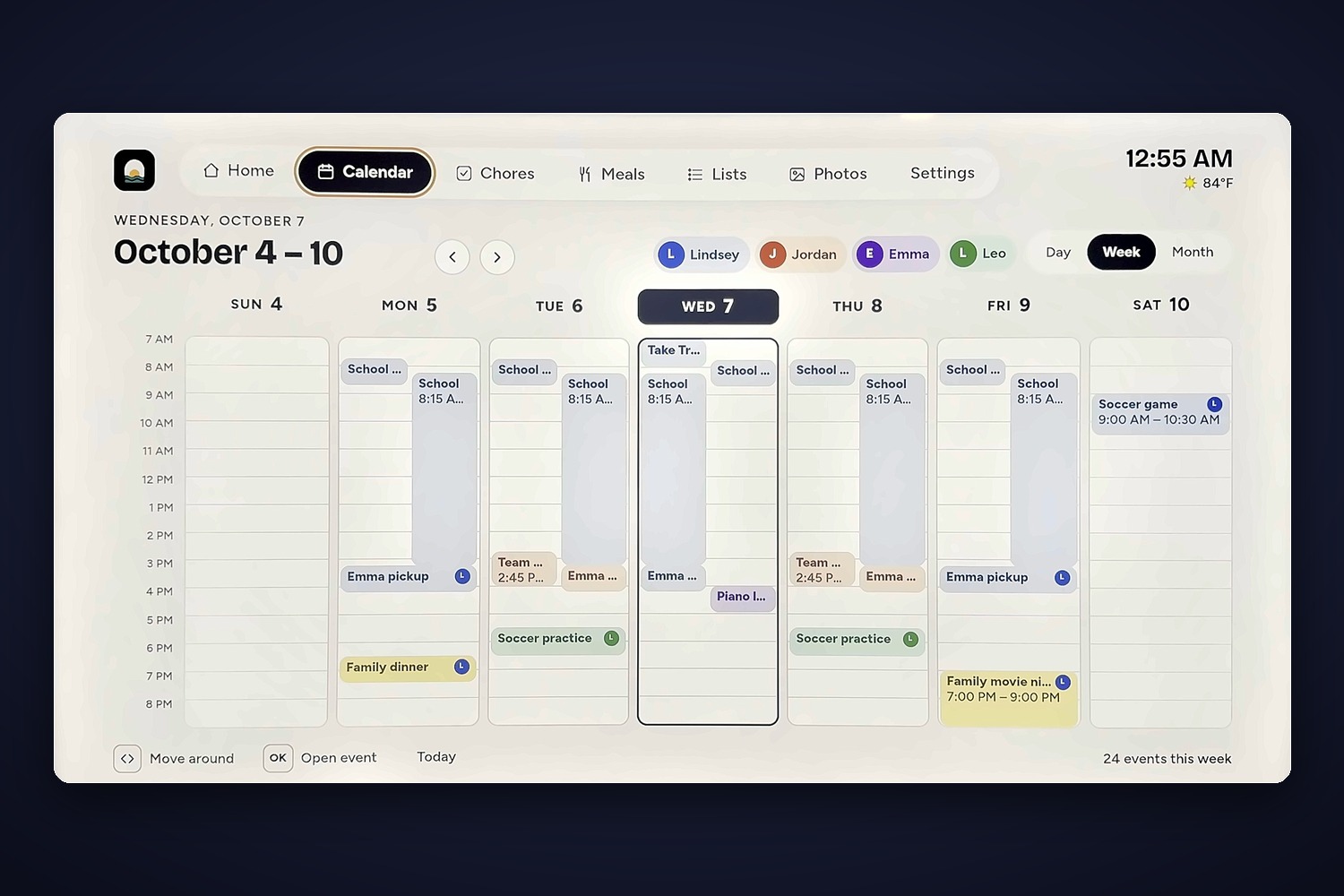
The TV's Home screen flags double-booked drivers and tight travel times, with today's timeline, who can help and when to leave. The week view shows every connected calendar (Google, iCloud or Outlook, read-only), color-coded by person.
Learns the family's rhythm: Hometide noticed
When the family fixes the same clash by hand, the TV says Hometide noticed: make Lindsey the usual Emma pickup on Tuesdays and Thursdays?, with the reason. One press fixes every later week; No is final for that pattern. Hometide also spots the usual driver for an activity and events added by hand every week. Later, "What has Hometide learned about us?" is answered from memory.
Voice → TV → remote → phone, in one flow
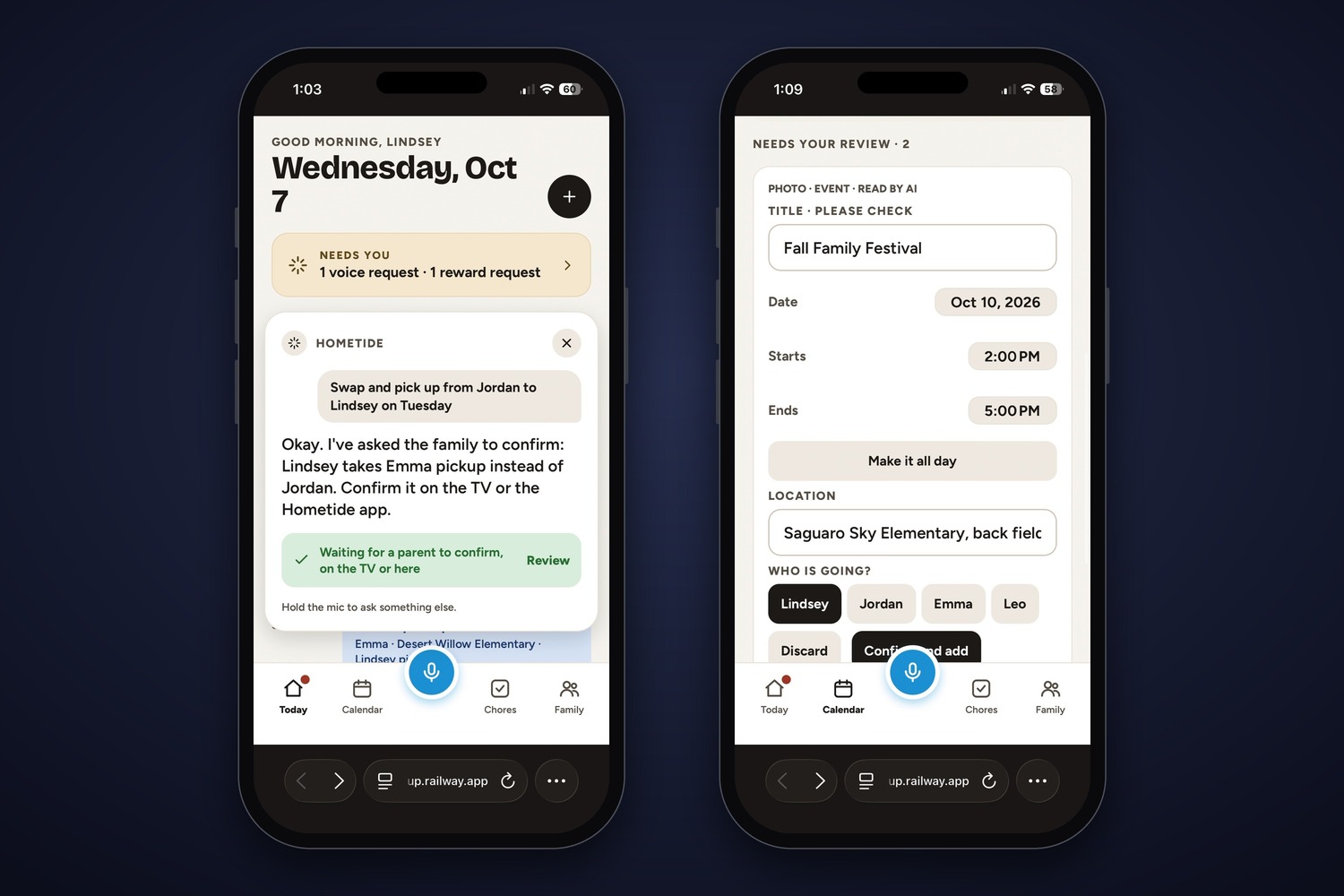
Lindsey taps the mic in the phone app and says "Swap Tuesday's Emma pickup to Lindsey". The swap appears on the TV with focus already on Confirm; a parent confirms it with the remote and the four-digit parent code, and the phone updates.
A living wall calendar
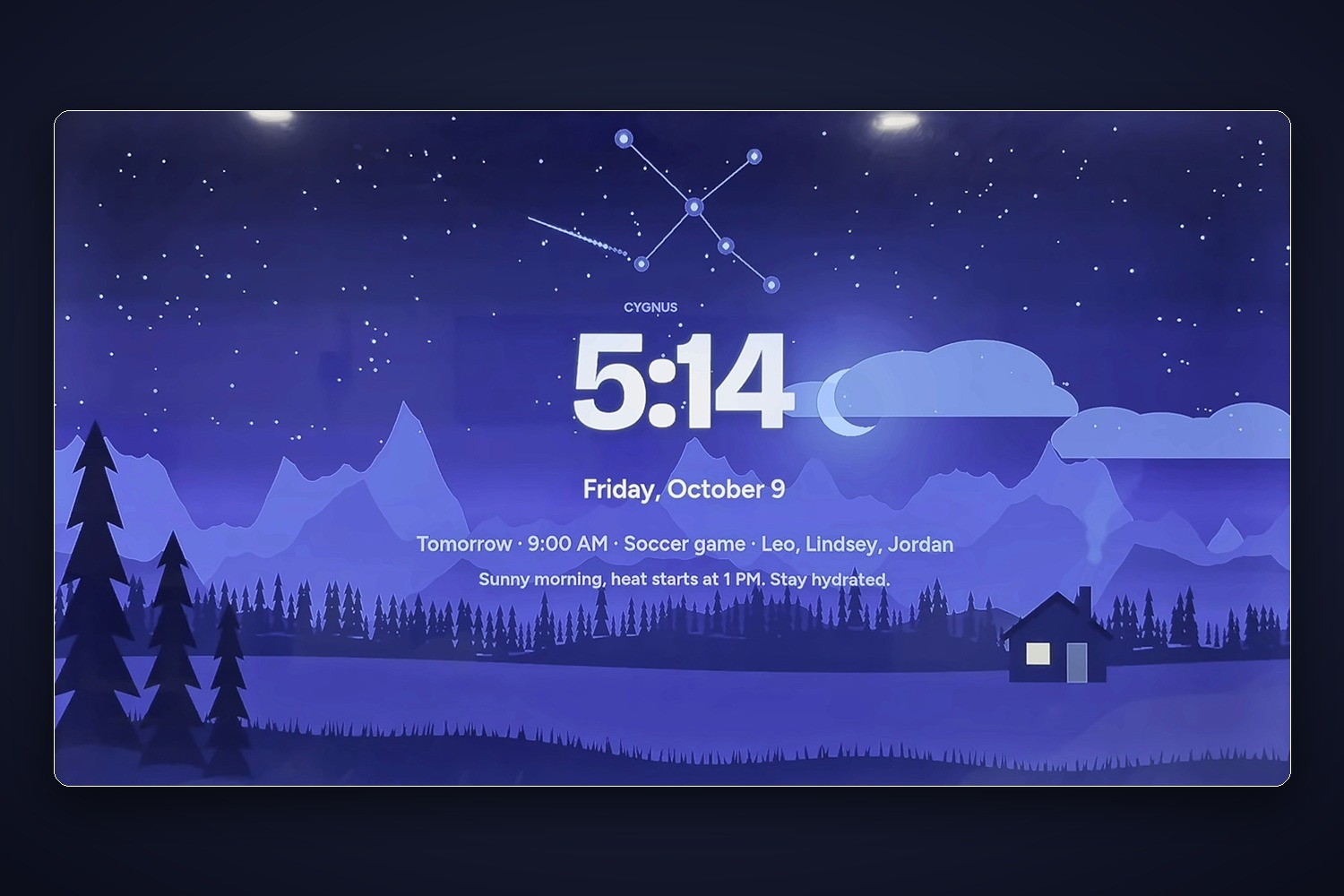
When the TV is idle, the day appears in large type over a looping landscape that follows the live U.S. National Weather Service forecast, with a short note such as "Rain from about 3 PM. Emma's soccer is at 4:00 PM, so pack rain jackets." The loop plays through Vega's own media player, which also keeps the Fire TV screensaver away. After 10 pm it dims to a night clock.
Snap a flyer, plan a meal, approve a chore
- Import: photograph a flyer or pick a PDF; Amazon Bedrock drafts the event for a parent to review.
- AI recipes: describe a meal, and it lands on that day's meal plan with its ingredients on the grocery list.
- Chores: a child snaps a proof photo, the AI check is advice, and a parent approves it on the TV to award stars.
How we built it
Three clients (the Fire TV app, the companion app and voice) talk to one Hometide service. Every change from any client goes through one write path that checks permissions, applies the change exactly once (revision check) and writes an audit entry. Clients never hold AWS credentials.
A native Vega OS app on a real Fire TV Stick
Built with React Native for Vega (@amazon-devices/react-native-kepler), registered on the Fire TV Home screen with its own icon, and tested on a Fire TV Stick 4K Select with its own remote.
- Remote input (
TVEventHandler): focus starts on the likely action (Confirm, Pair this TV), and Back never traps. - Vega media player (
@amazon-devices/react-native-w3cmedia): the wall's muted 8-second 1080p loops are decoded in hardware. - Vega ports of React Navigation and AsyncStorage: the TV keeps its pairing and an offline copy of the household across restarts.
- Accessibility: it follows the system reduce-motion setting, with screen-reader labels on buttons, the pairing QR code and the wall.
- Pairing by QR code: the code travels in the URL fragment, which browsers don't send to servers, and a signed-in parent still taps Approve TV.
Amazon Bedrock (Nova Lite, Converse API)
Voice tool use, the TV's family briefing, flyer and PDF import (image and document input), AI recipes, chore-photo checks and the wall note. Bedrock writes language; it never decides what changes. Measured cost: about $0.13–$0.51 per household per month.
Strands Agents SDK over Hometide's own MCP server
The voice agent is a Strands Agent with a BedrockModel. Its tools come from Hometide's MCP server (Streamable HTTP, protocol 2025-11-25), which has 13 tools: 8 read-only, one that switches the TV's screen, and 4 that only propose a change for a person to confirm. Questions get only the read tools. Any MCP host can use the same server, and an Alexa skill ("home tide") reaches the same agent in the Alexa developer console's simulator.
Amazon Bedrock AgentCore Memory
What Hometide noticed, and what the family decided, are written to AgentCore Memory under a hashed household id, so no names or account ids are stored. "What has Hometide learned about us?" is answered from it. Memory failures never block a family action.
Amazon Cognito, IAM, Secrets Manager and the AWS CDK
Cognito holds parent accounts and Alexa account linking. The CDK defines the memory, the Cognito pool and a least-privilege IAM identity for the service (Nova models and one memory only), with its key in Secrets Manager, all with assertion tests.
| Layer | Stack |
|---|---|
| TV | React Native for Vega, TypeScript |
| Companion | Expo (web and iOS), TypeScript |
| Service | Python, FastAPI, PostgreSQL, hosted on Railway |
| AI | Amazon Bedrock (Nova Lite), Strands Agents, AgentCore Memory, MCP |
| AWS as code | AWS CDK, Cognito, IAM, Secrets Manager |
Measured results
Offline evals with fixed seeds; anyone can rerun them with python eval/run_agent_evals.py (no AWS account, about 40 seconds).
| Question | Result | Rerun it |
|---|---|---|
| Does Hometide noticed find the patterns families have? | 181 of 181 planted patterns in 60 generated households | python eval/run_agent_evals.py |
| Does it stay quiet when it should? | 177 of 177 look-alikes left alone | python eval/run_agent_evals.py |
| How often does it interrupt? | 0.8 questions per family per week, never the same one twice | python eval/run_agent_evals.py |
| Does every voice request wait for a parent? | 64 of 64; and 600 of 600 random tool calls with hostile arguments changed nothing | python eval/run_agent_evals.py |
| Does the wall note keep made-up times off screen? | 880 of 880 made-up times and 693 of 693 times written another way kept off | python eval/run_agent_evals.py |
Where it falls short: on 15 requests worded in ways we never tuned for, the voice rules made the right card for 9 of 15, with 0 wrong cards (the rest asked back). A 50/50 driver split can look like "usually", which caused 7 of 188 nightly questions. The evals use generated households, not real families' calendars.
Challenges we ran into
- The Fire TV screen went to sleep. Vega OS has no keep-awake API for a non-media app, and a wall calendar is useless if the screensaver covers it. Playing the wall's weather loop through Vega's media player keeps it on screen, and the loop became the feature families liked most.
- Windows isn't a Vega SDK host, and our laptop couldn't run the Vega Virtual Device. We automated an Ubuntu VM for builds and ran the Virtual Device on an EC2 instance with nested virtualization. A remote-only regression there found and fixed 12 problems before we moved to the Stick.
- The remote went dead on some launches, because remote input was configured after the first render; overlays also didn't take focus. We configure the remote at module load and lock the page under each dialog.
- Alexa+ answered "ask home tide what's on today" from its own empty calendar, and on our Stick the remote's Alexa button never reached the in-development skill. The demo's voice comes from the Hometide phone app, through the same agent and tools.
- Given every tool, the agent proposed changes nobody asked for. Questions now get only the read tools.
- What we cut: reminders over another app's show. Vega OS has no supported way to do it, so reminders appear while Hometide is open.
All 21 issues are written up in the friction log, in the repository.
Accomplishments that we're proud of
- A native Vega OS app running on a physical Fire TV Stick, filmed with the real remote.
- A household agent that learns from the family's own fixes: 181 of 181 patterns found, 177 of 177 look-alikes left alone, and it rarely interrupts.
- Every AI action is a proposal that a person confirms: 64 of 64 voice requests waited for a parent.
- Real families asked for two features, we built both, and two households now use Hometide on their own calendars.
What we learned
- Deterministic code should find the pattern, and the model should write the words. Every suggestion comes with a plain reason, and a parent stays in control.
- On a TV, focus is the design. Starting focus on the likely action makes a remote-only flow feel quick.
- Measure the safety checks. Our wall-note check looked fine until the eval sent "16:00" and "half past 5" through it.
What's next for Hometide
- Publish in the Amazon Appstore and approval.
- The same loop (spot the clash, propose a fix, a parent says yes) for co-parents in two homes, families caring for a grandparent, and shift-working parents.
- Alexa+ as a voice client once access for MCP servers opens, and usage numbers from the families using it today.
Built With
- alexa-skills-kit
- amazon-bedrock
- amazon-cognito
- amazon-nova
- aws-cdk
- bedrock-agentcore
- fastapi
- fire-tv
- mcp
- postgresql
- python
- react-native
- strands-agents
- typescript
- vega-os

Log in or sign up for Devpost to join the conversation.