-
-

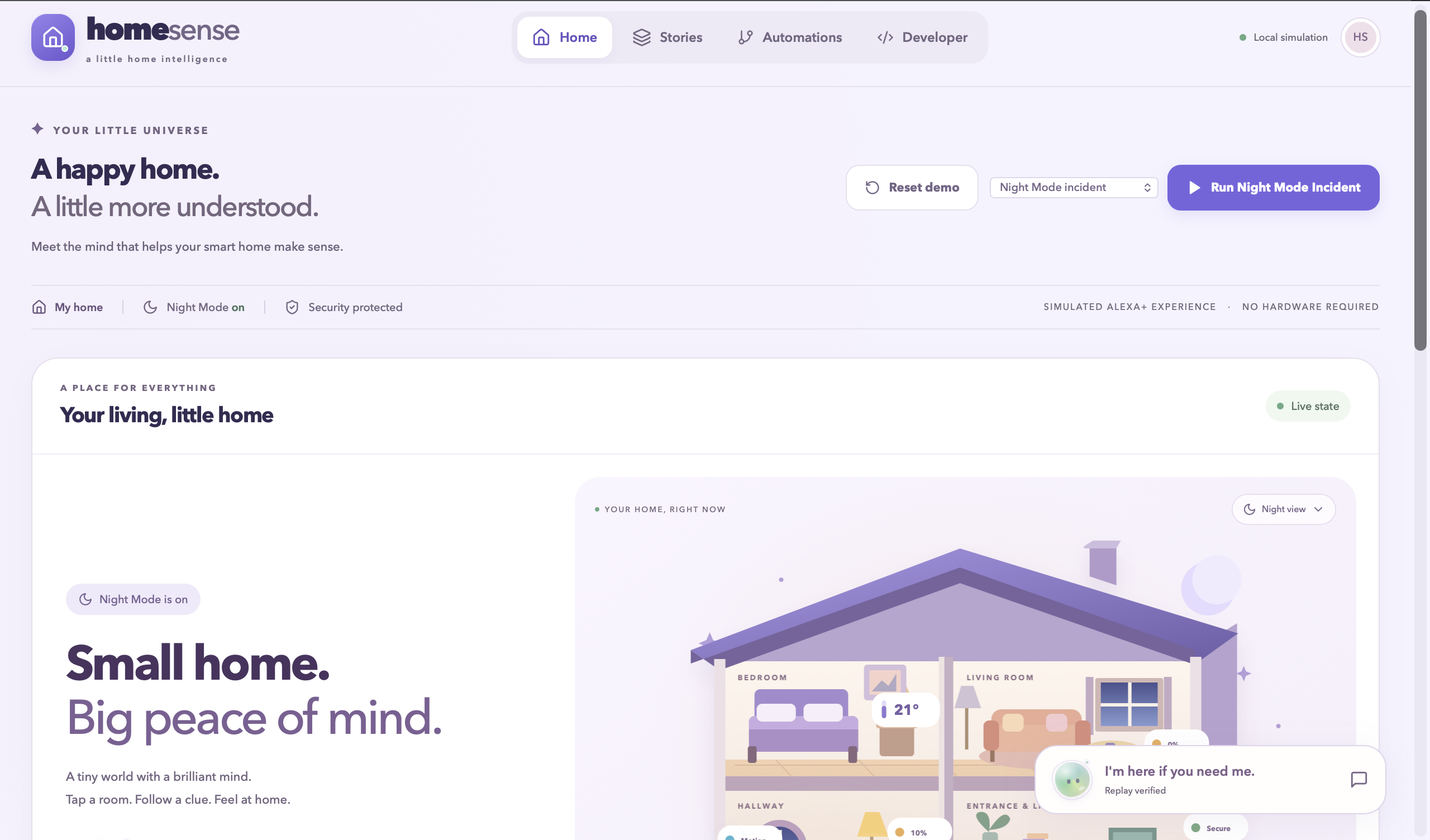
Home Dashboard: A cozy little smart home with a brilliant mind. Explore connected rooms, live device states, and intelligent automation.
-
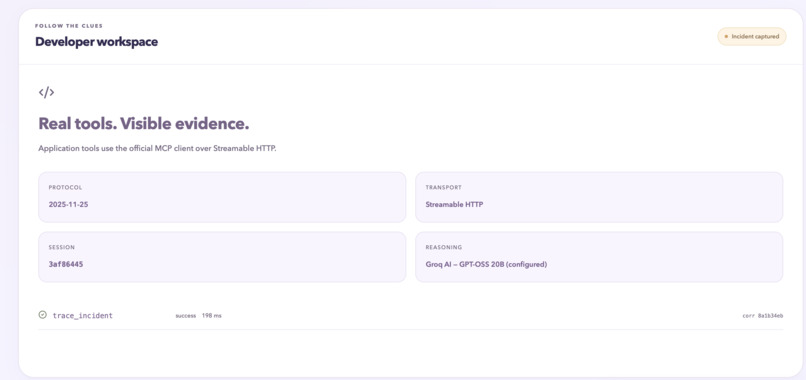
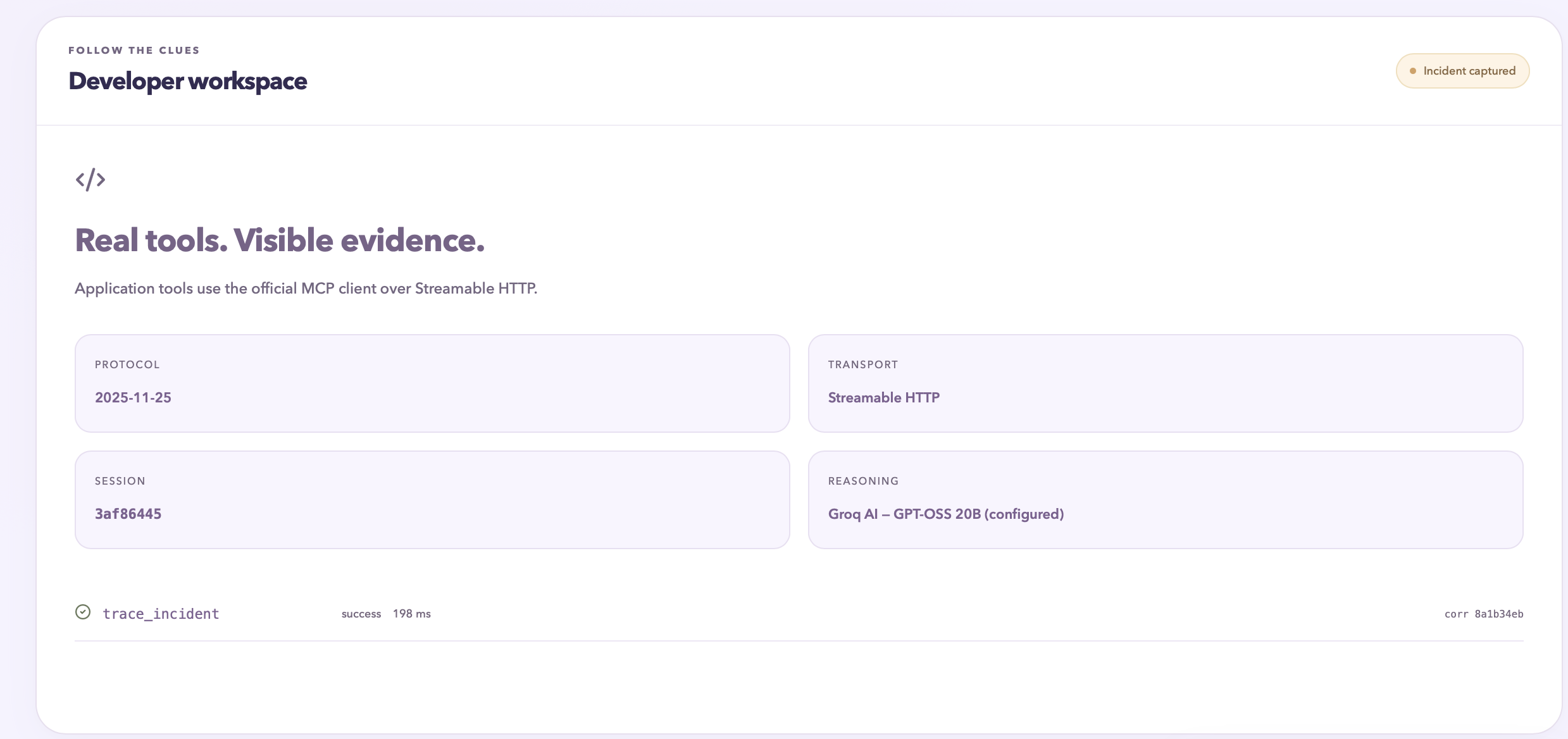
Developer Workspace: Real MCP tools, Streamable HTTP, and Groq-powered reasoning—all backed by visible execution evidence.
-
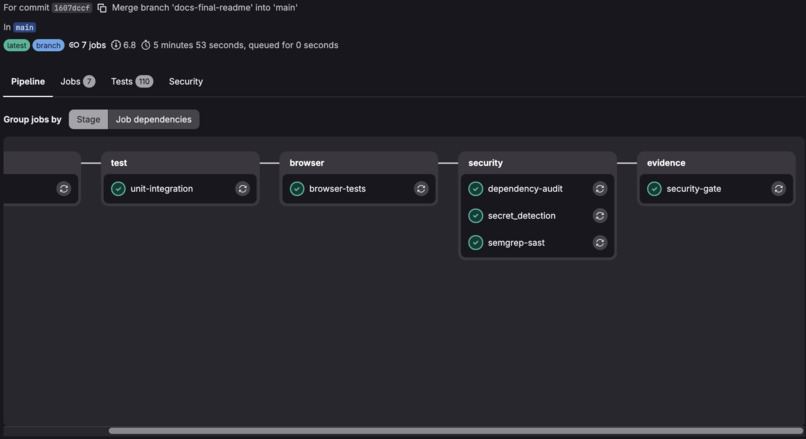
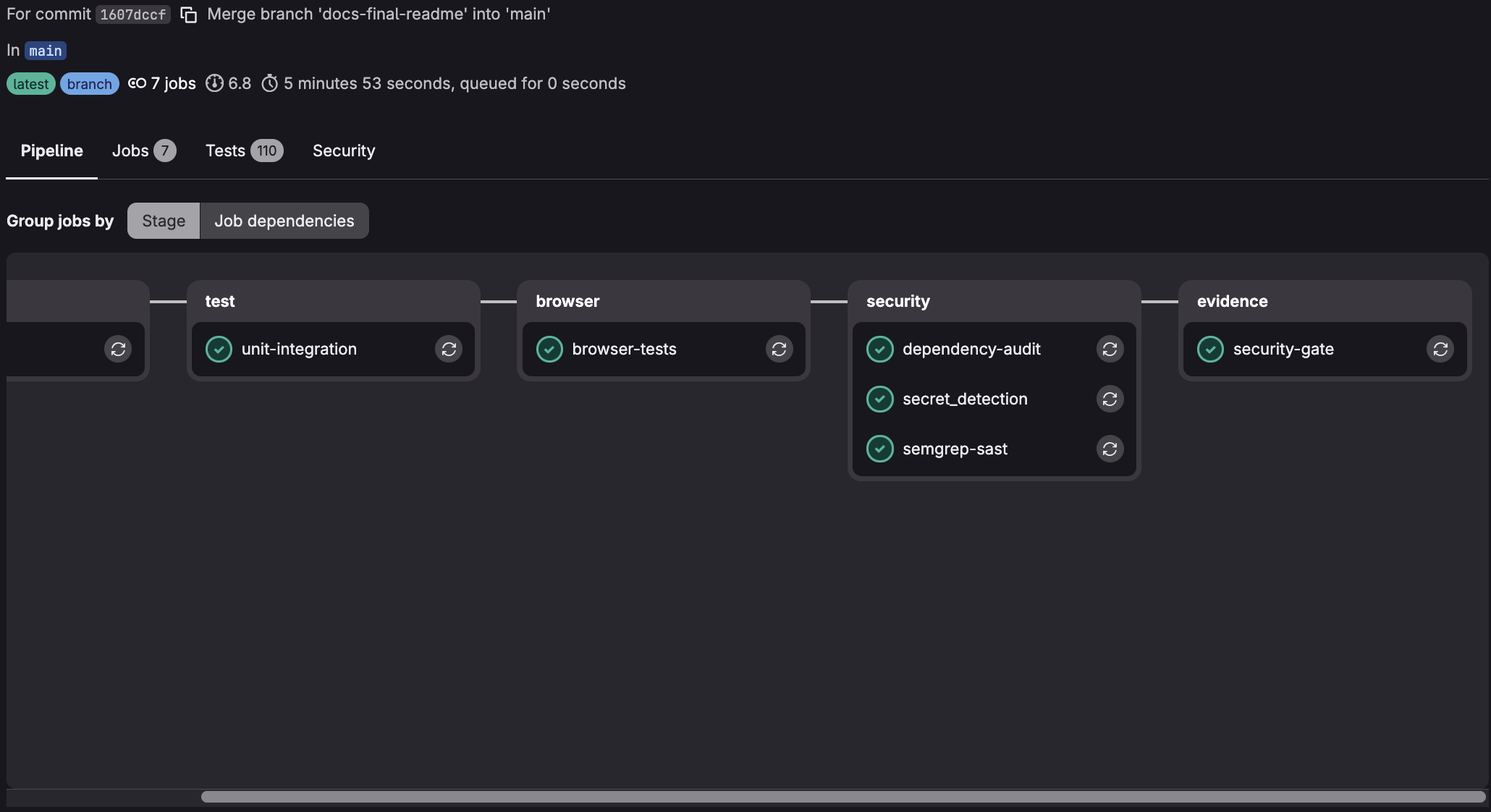
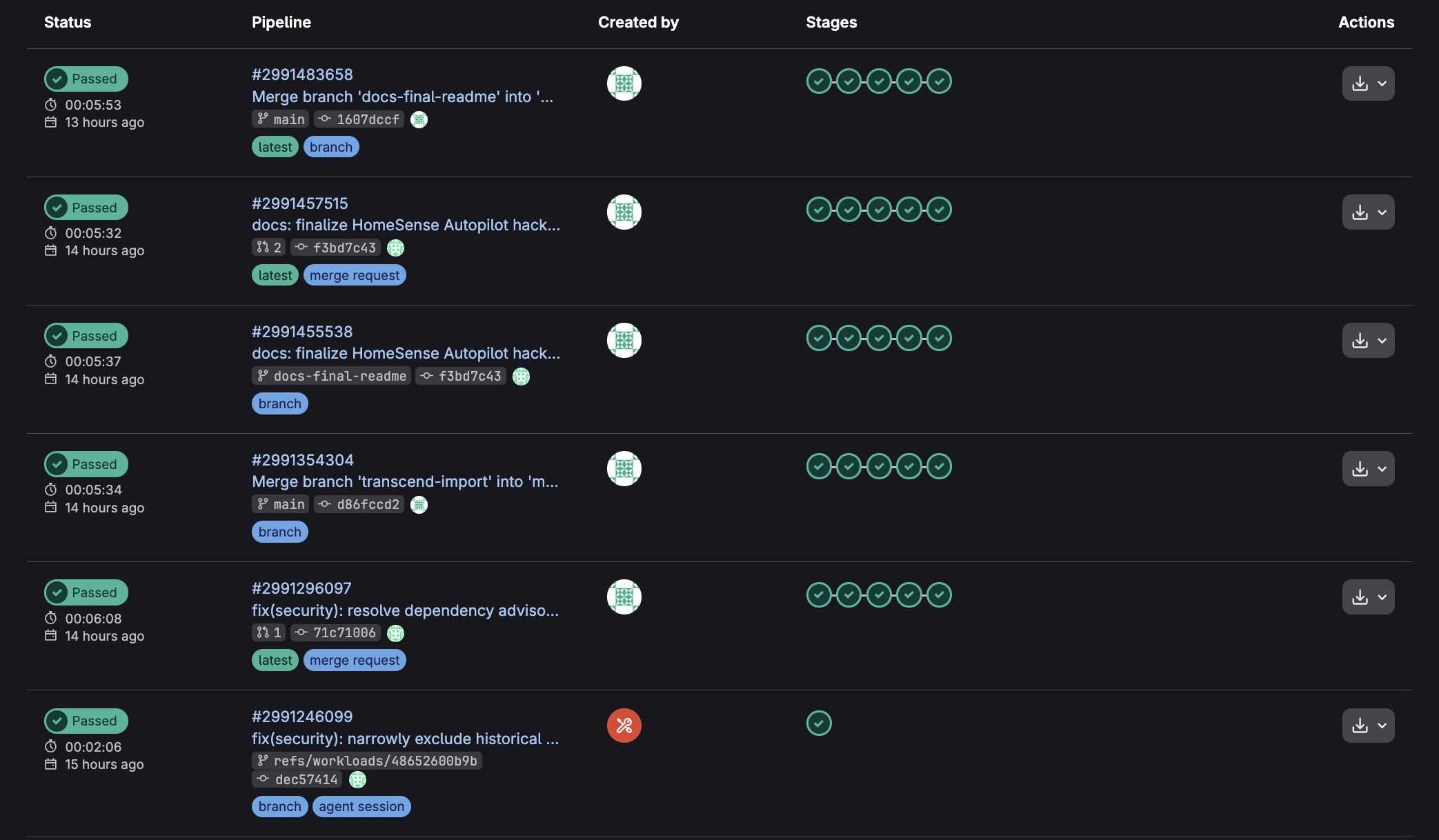
Seven green jobs, 110 passing tests, and a fully verified CI/CD pipeline. From automated testing to security gates, every check passes.
-
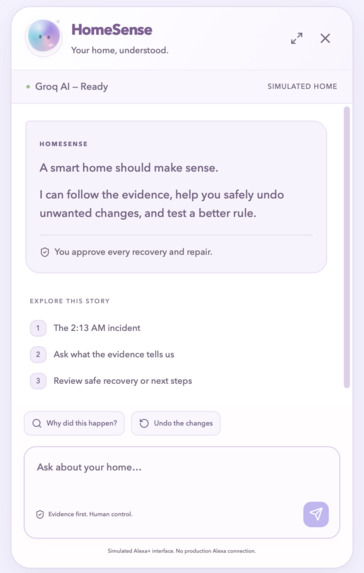
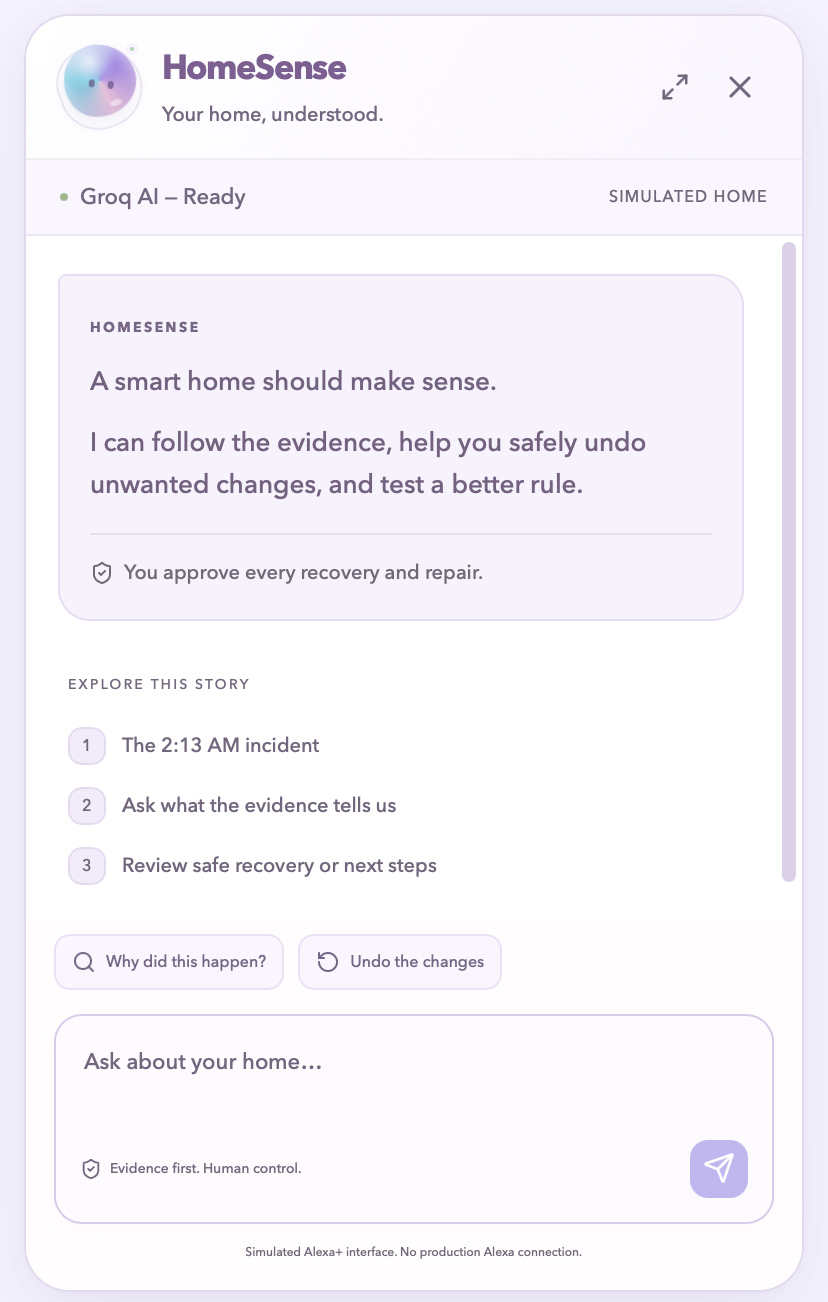
AI Home Companion: Meet your AI home companion! Investigate incidents, understand what went wrong, and approve safe recovery actions.
-
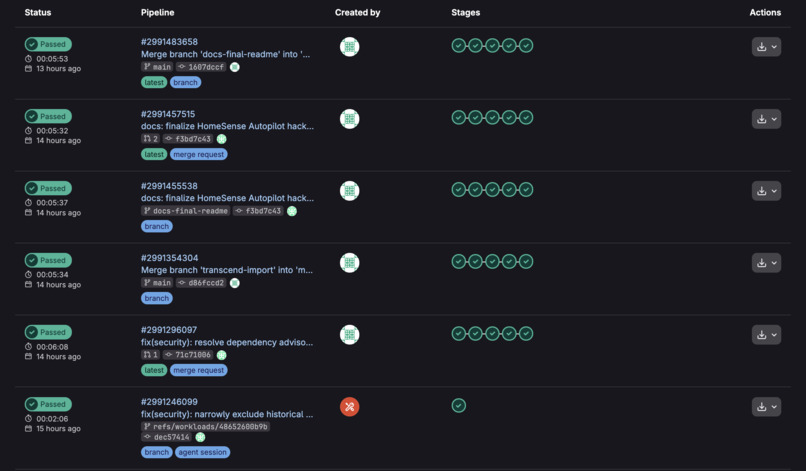
From security fixes to final deployment readiness: GitLab pipeline history documents our development journey and successful verification.
-
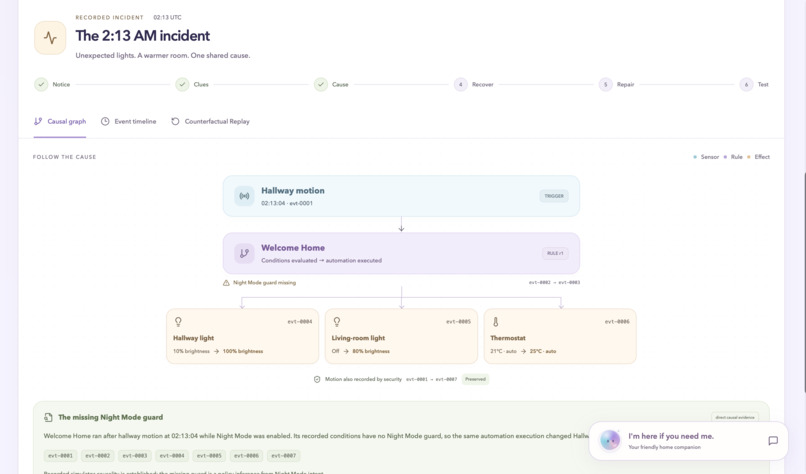
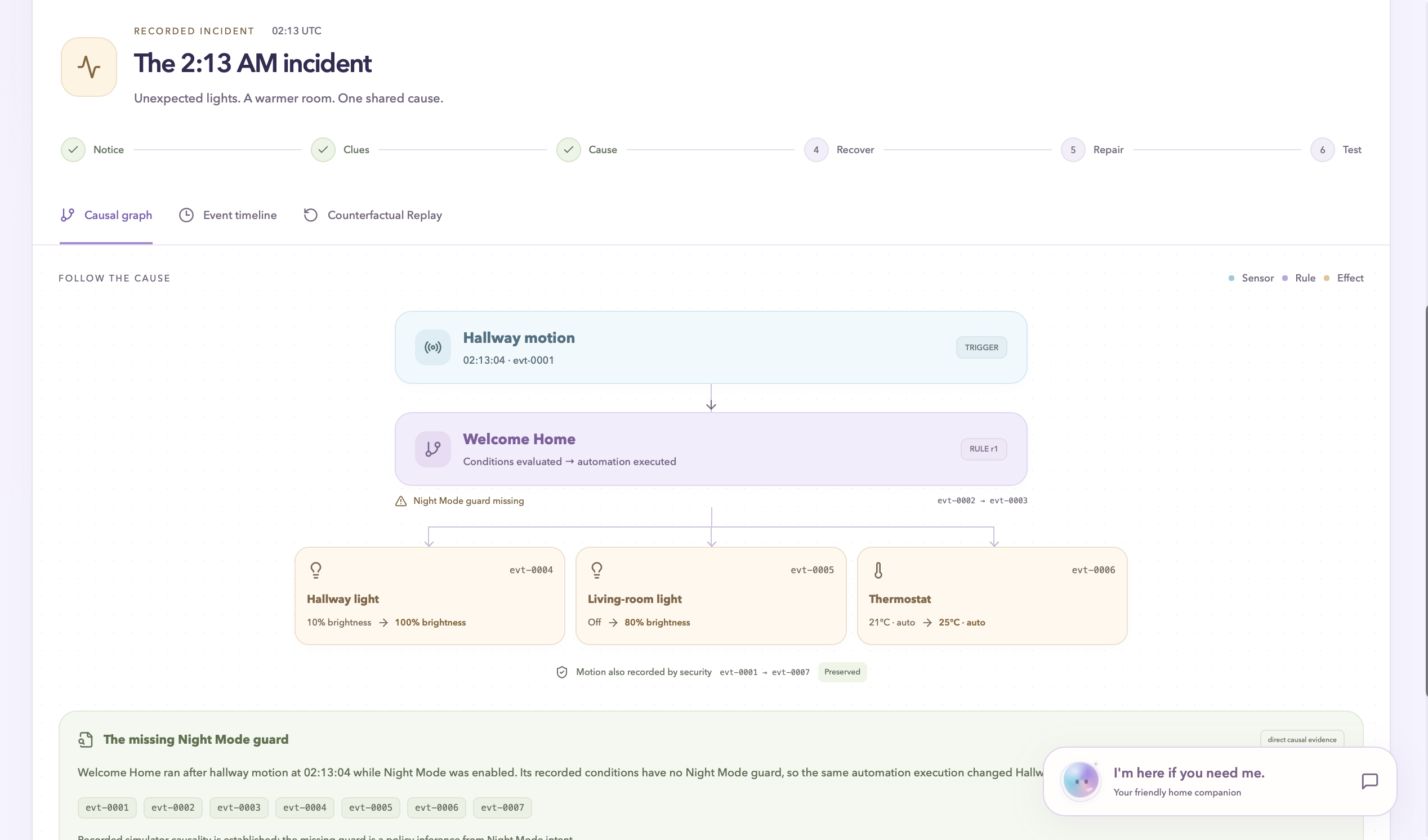
ncident Investigation: One unexpected motion, three unwanted changes. HomeSense traces the 2:13 AM incident to its root cause.
Inspiration
Smart homes are getting smarter, but what happens when something goes wrong? And what happens when the software powering them fails?
We built HomeSense Autopilot around one idea: intelligence isn't just about preventing failure. It's about knowing how to recover—and when to ask for help.
What it does
HomeSense Autopilot combines a smart-home simulation with a human-supervised software delivery workflow.
- Smart-home intelligence: Simulates connected devices, automations, incidents, and safe recovery.
- AI-powered assistance: Uses Groq and internal MCP tools for natural-language interaction, with deterministic safeguards and fallback behavior.
- GitLab CI/CD: Automatically runs quality checks, tests, dependency audits, secret detection, and SAST.
- GitLab Duo: Investigates pipeline failures and escalates security-sensitive decisions for human review.
How we built it
We used React, TypeScript, Node.js, Express, SQLite, MCP, and Groq for the application.
We integrated the project with GitLab CI/CD, GitLab Duo, Semgrep, dependency auditing, and secret detection. The application runs independently on Render, with a fail-closed security gate protecting the delivery workflow.
Challenges we ran into
Our biggest challenge was getting the actual GitLab pipeline green.
We encountered authentication issues, historical synthetic credentials flagged by security scanning, and three vulnerable dependencies.
GitLab Duo investigated the failures and recommended human review. We then used Codex under human direction to implement narrowly scoped fixes without disabling our security protections.
Accomplishments that we're proud of
- 110 automated tests passing—94 unit/integration and 16 browser tests.
- Seven successful GitLab CI jobs.
- Zero findings in the final dependency, secret-detection, and SAST reports.
- Two genuine GitLab Duo investigations with human-supervised remediation.
- An independently deployed, publicly accessible application.
- All achieved using free resources.
What we learned
We learned that responsible AI isn't measured by how many decisions it makes independently.
Sometimes, the most intelligent action is recognizing uncertainty, preserving safeguards, and involving a human.
We also learned how to build auditable CI pipelines, handle real security findings, and turn failed builds into opportunities to improve software reliability.
What's next for HomeSense Autopilot
We want to expand recovery scenarios, improve agent-assisted diagnostics, introduce richer incident timelines, and explore approval-controlled remediation workflows.
Our long-term vision is simple:
A home that knows how to recover. A development pipeline that knows when not to act alone.
Built With
- codex
- express.js
- git
- gitlab
- gitlab-ci/cd
- gitlab-duo
- gitlab-duo-agent-platform
- gitleaks
- gpt-oss-20b
- groq
- model-context-protocol-(mcp)
- node.js
- npm-audit
- playwright
- react
- render
- semgrep
- sqlite
- typescript
- vite
- vitest


Log in or sign up for Devpost to join the conversation.