Inspiration
As a homeowner frustrated by expensive professional security assessments, I noticed a gap: everyday people needed accessible, data-driven guidance to protect their homes without breaking the bank. I wanted to create a tool that combined local safety data, practical device advice, and real financial benefits (like insurance discounts) into one easy-to-use platform.
What it does
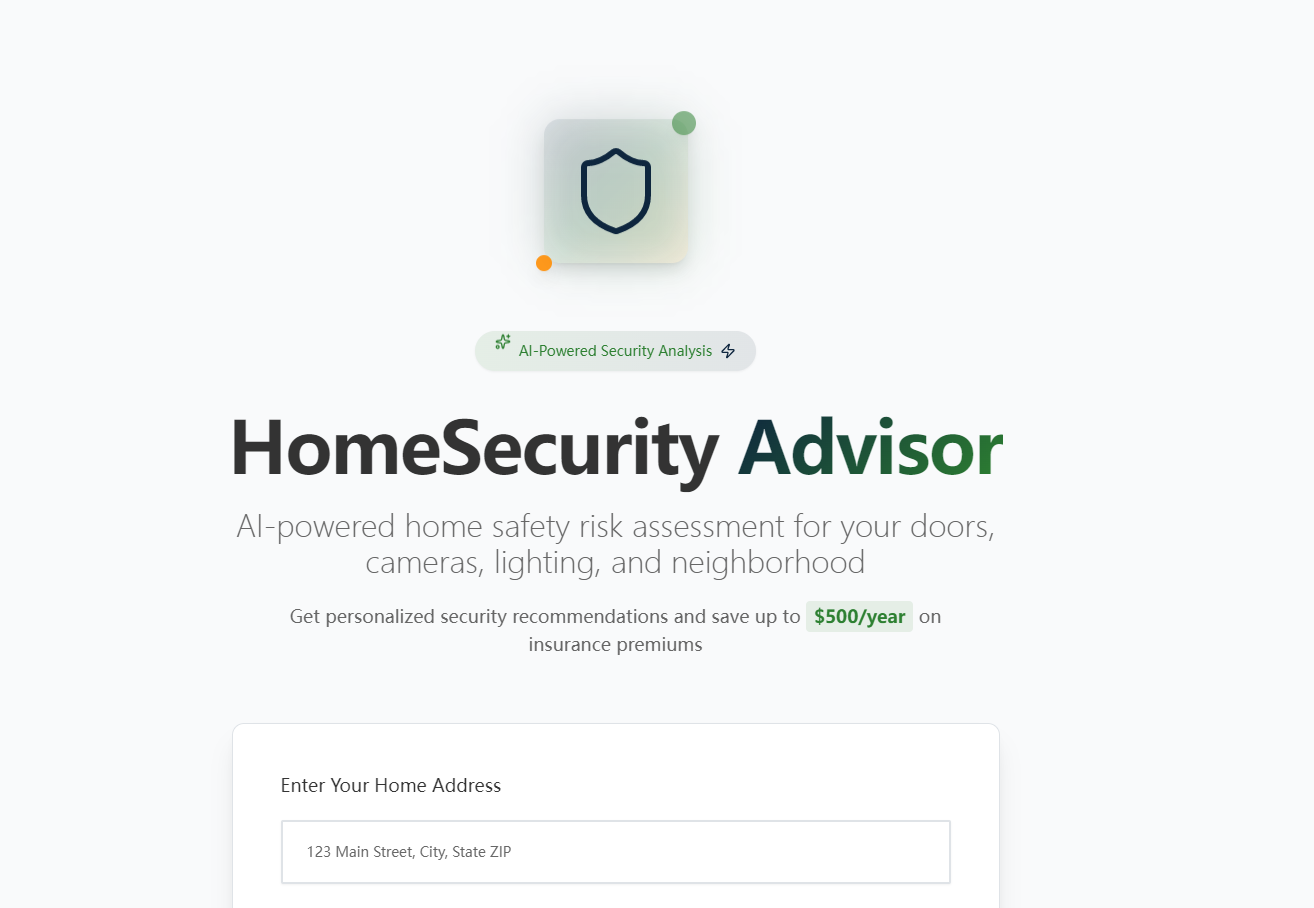
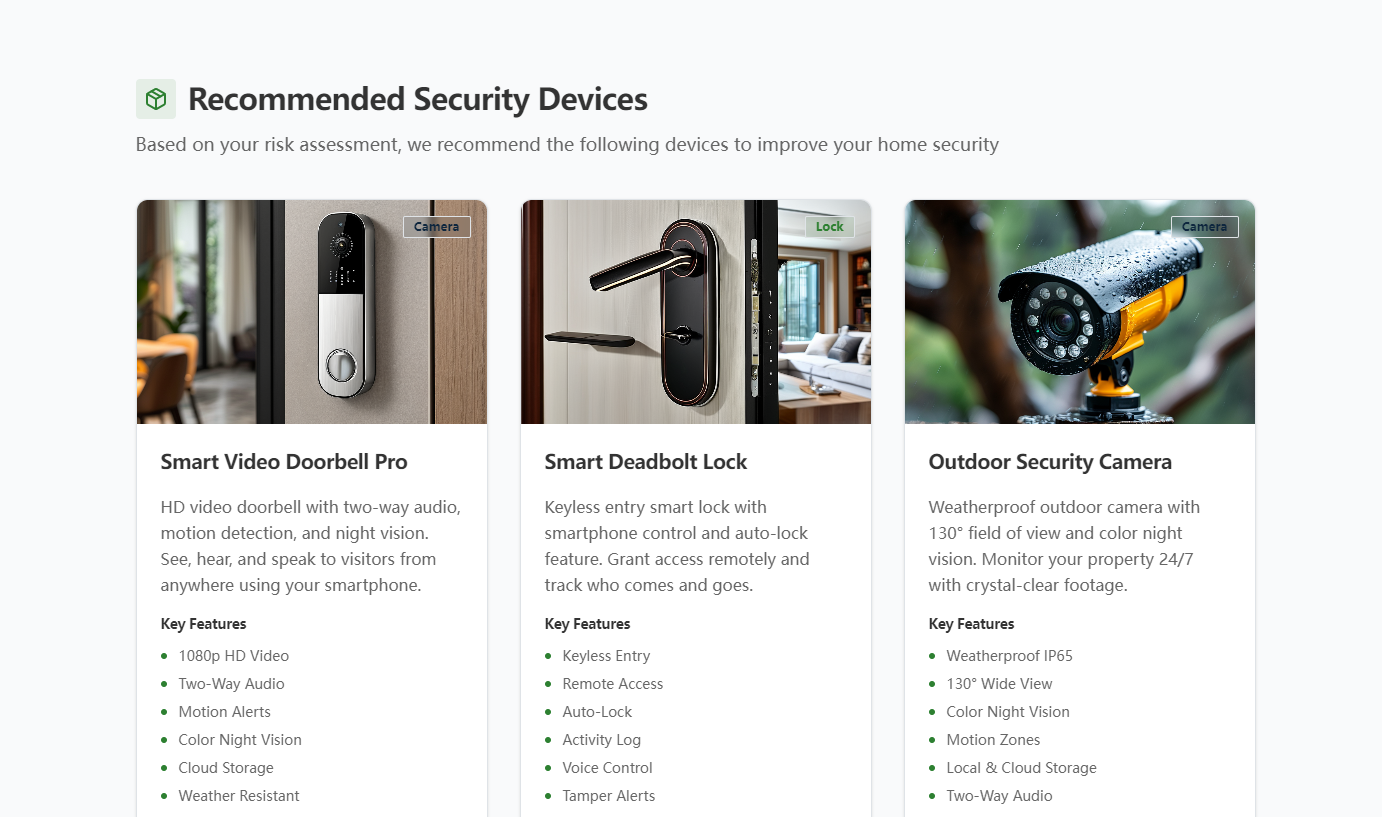
HomeSecurity Advisor lets users enter their address to get a clear security risk score (Low/Medium/High) with color-coded visuals. It delivers personalized recommendations for smart cameras, locks, sensors, and more, plus step-by-step DIY installation guides, a printable safety checklist, and details on insurance discounts for secured homes.
How we built it
We started by mapping core user needs (risk assessment, device guidance, insurance info) to a 3-page structure (Homepage, Assessment, Results). We integrated location APIs to analyze local safety trends, built a risk-calculation model (0-100% → 3 tiers), and curated affiliate links for recommended devices. The front-end was built for responsiveness across all devices, following a trust-focused color palette (navy, green, amber).
Challenges we ran into
The biggest hurdle was refining the risk assessment logic to balance accuracy and simplicity—ensuring scores felt meaningful without overwhelming users. We also faced broken affiliate links, so we built fallback messaging for alternative purchase options. Validating address inputs reliably (to avoid unrecognizable entries) required iterative testing with real user data.
Accomplishments that we're proud of
We created a fully functional tool that delivers value without login/account requirements—users get instant, actionable insights. The demo mode (with realistic assessment data) lets people explore the tool risk-free, and we achieved full responsiveness across mobile, tablet, and desktop. Most importantly, the affiliate model keeps the tool free for users while generating sustainable revenue.
What we learned
We learned to prioritize user trust: clear, jargon-free explanations of risk factors and insurance rules were critical. We also mastered balancing technical complexity (location data analysis) with intuitive UX—users don’t need to see the backend to trust the results. Troubleshooting edge cases (empty addresses, broken links) taught us to build resilience into every feature.
What's next for this project
We plan to expand insurance provider coverage to include more regional carriers, add visual step-by-step installation videos (beyond static guides), and refine the risk model with more granular neighborhood-level data. We’re also exploring partnerships with home security brands to enhance device recommendation accuracy and expand affiliate options for users.

Log in or sign up for Devpost to join the conversation.