-
-
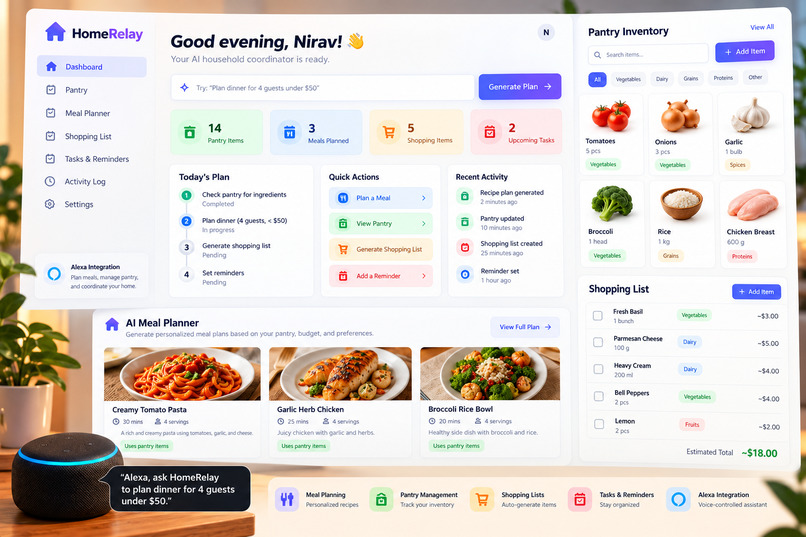
HomeRelay Dashboard — A unified view of pantry inventory, AI meal planning, shopping lists, household tasks, and activity updates.
-
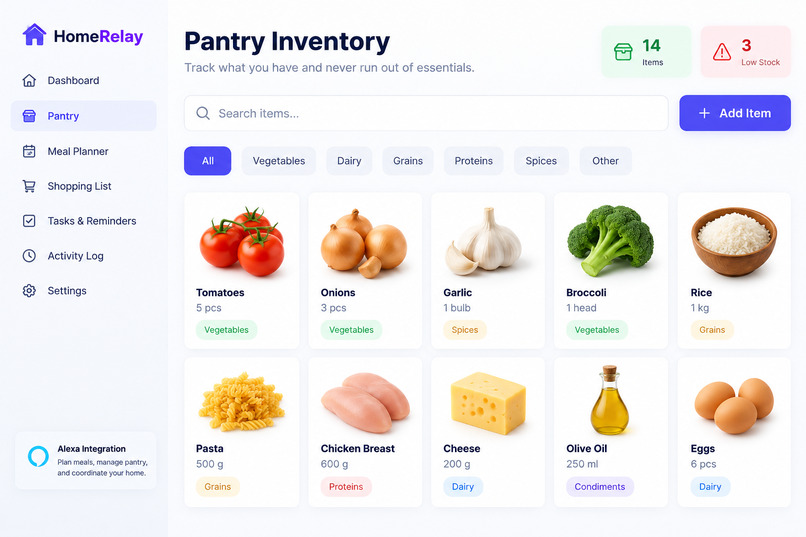
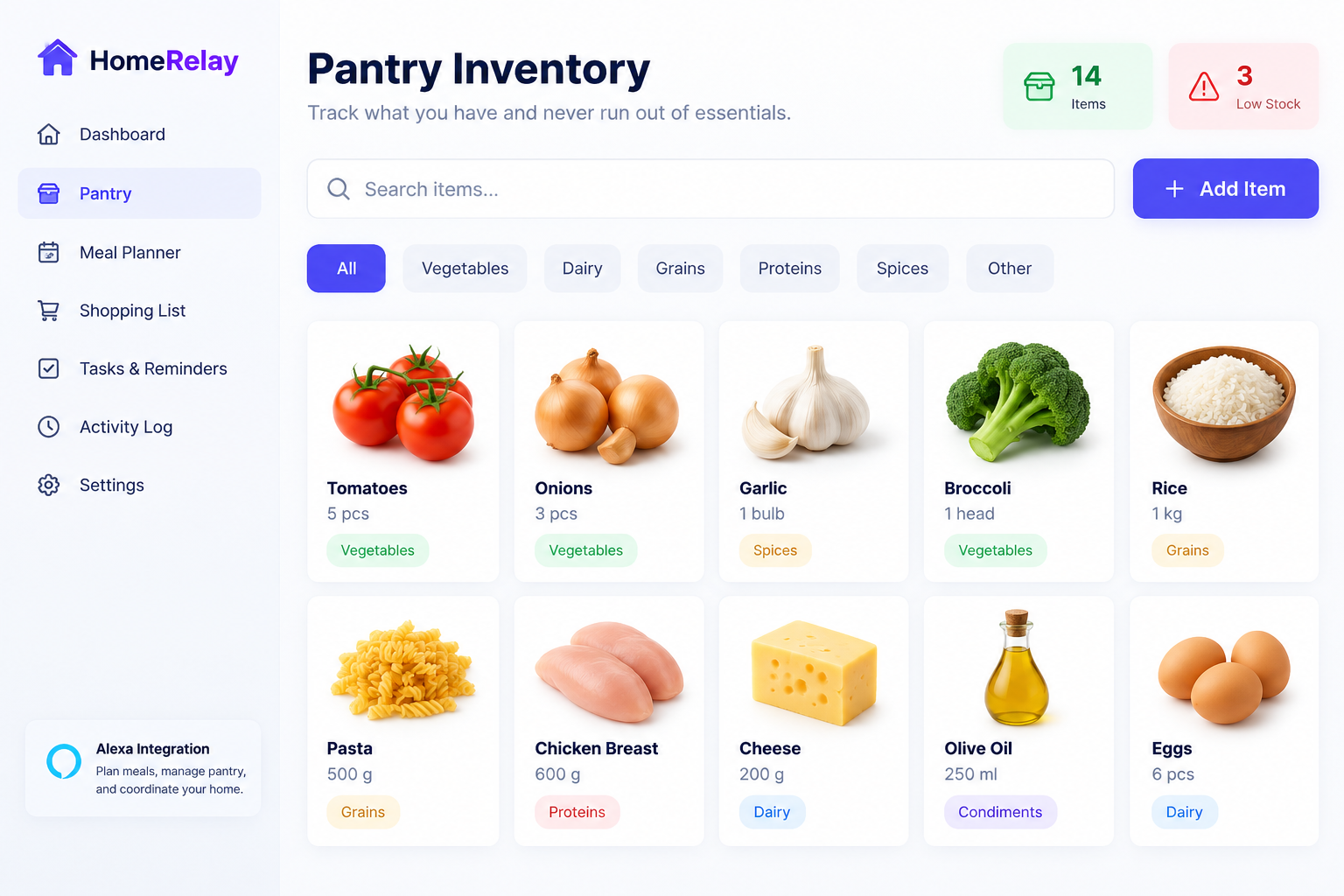
Smart Pantry Management — Track household ingredients, quantities, and categories in one organized inventory.
-
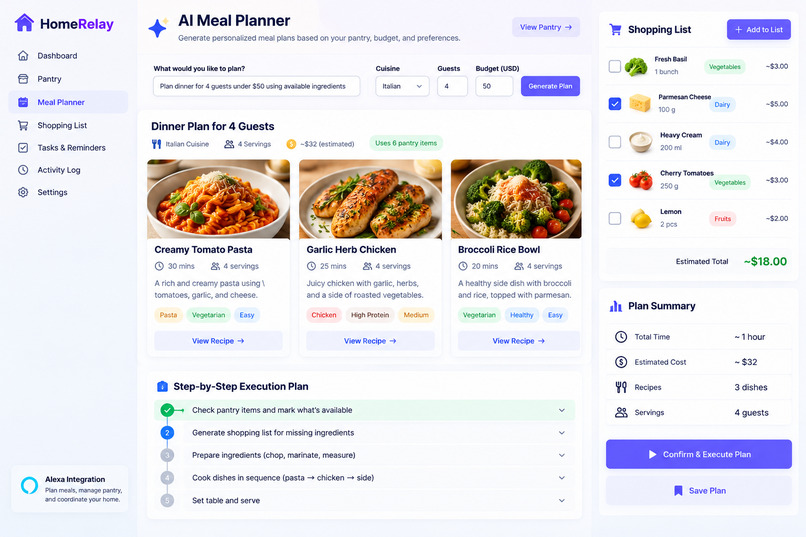
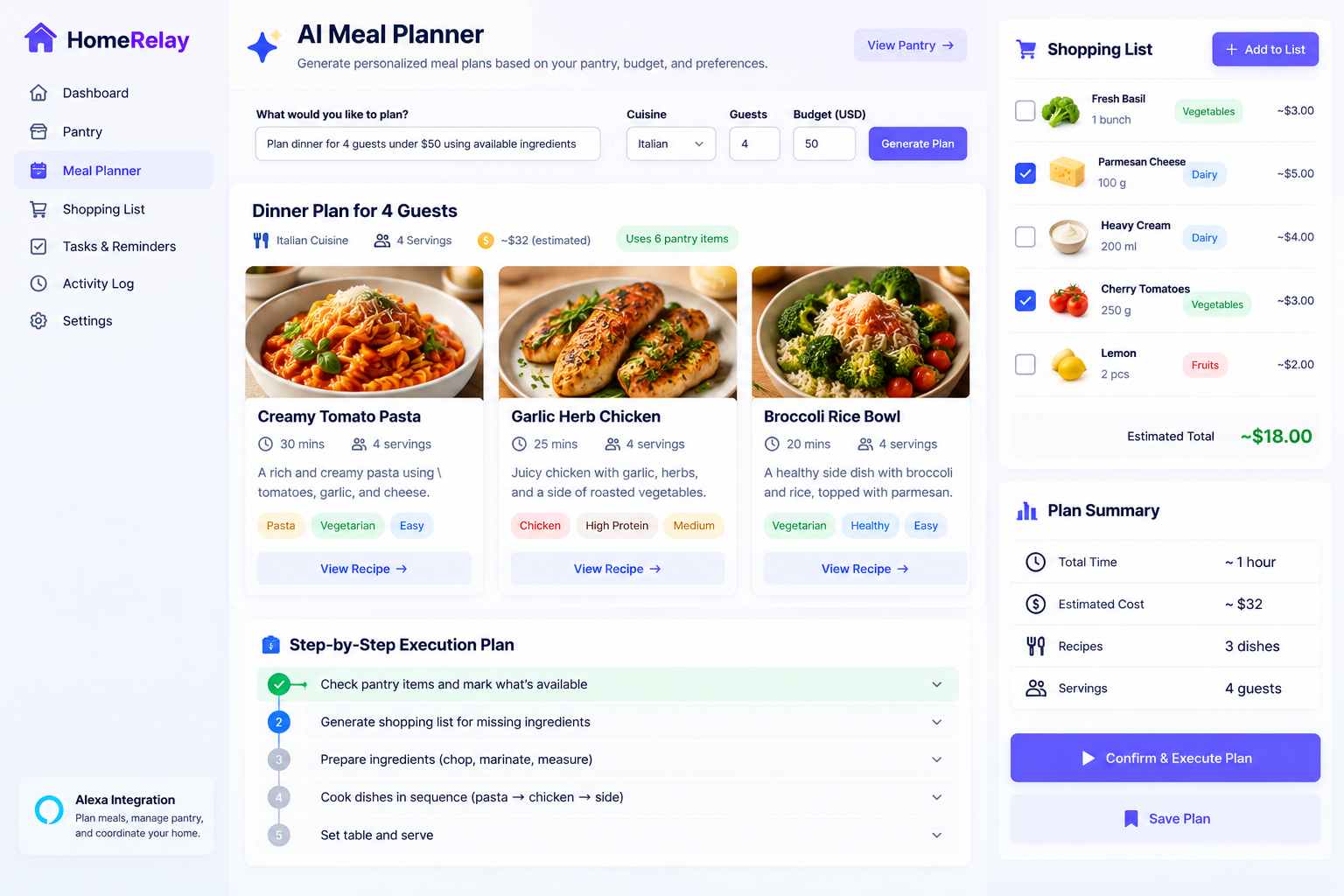
AI Meal Planner — Personalized recipes, budget-friendly meal plans, and smart shopping lists.
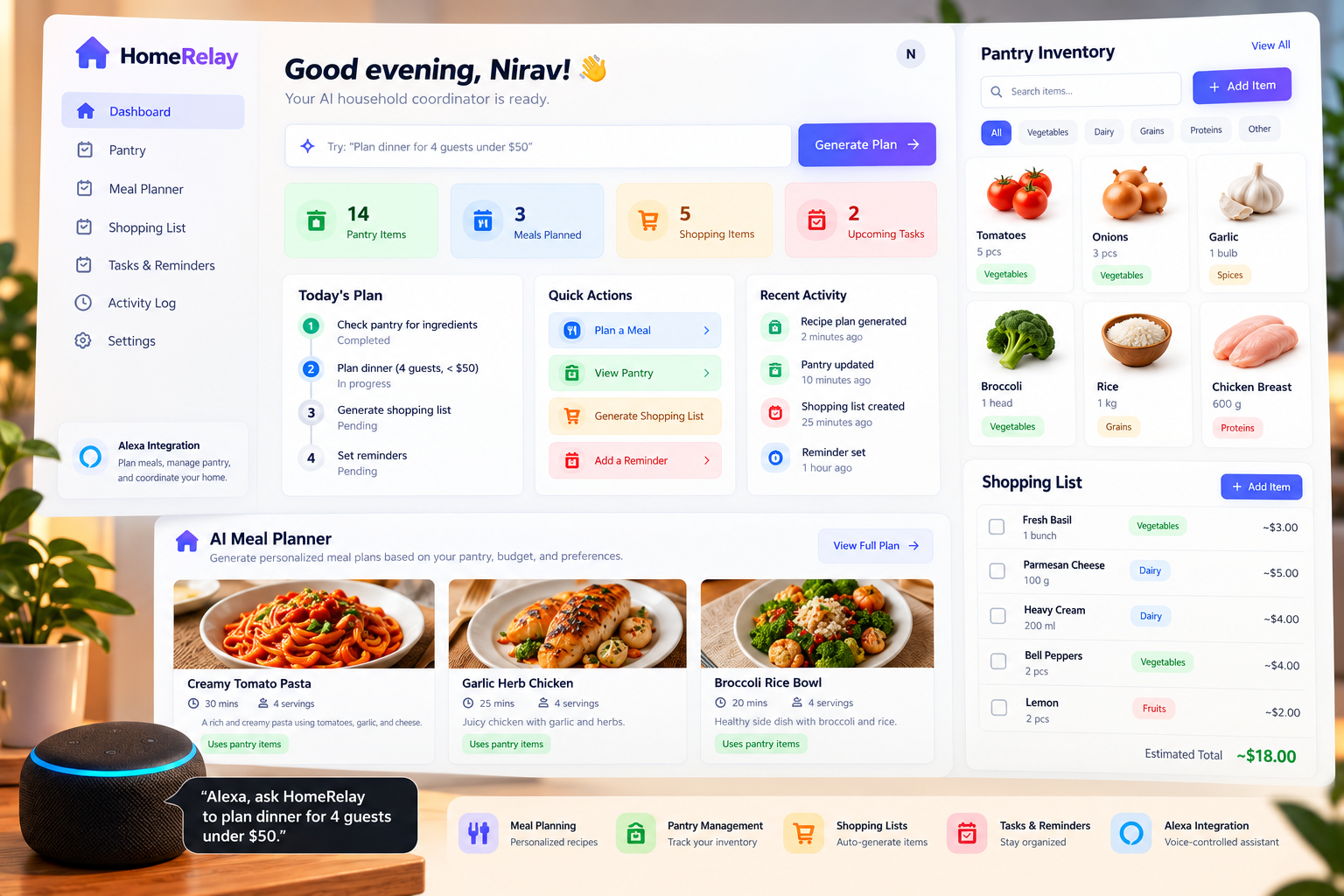
HomeRelay — Your AI Household Coordinator
Inspiration
Managing a household involves many small decisions: deciding what to cook, checking what is available in the pantry, identifying what needs to be purchased, coordinating errands, and remembering important tasks. These responsibilities are often handled across separate lists, notes, and conversations.
We built HomeRelay to explore how an AI-powered household coordinator could bring these everyday activities into one organized workflow.
What it does
HomeRelay is an AI-powered household coordination assistant designed to help users turn everyday requests into actionable plans.
Key features include:
- Meal Planning: Generate a structured plan based on household needs and preferences.
- Pantry Management: Check available ingredients and household inventory.
- Shopping Lists: Identify ingredients and items that need to be purchased.
- Errand Coordination: Organize errands and assign tasks.
- Reminders: Create reminders for important household activities.
- Action Preview: Review proposed steps before confirming execution.
- Activity Logs: Track actions and review the workflow.
How we built it
HomeRelay combines a React and TypeScript web dashboard with a Node.js and Express backend. The backend exposes REST endpoints for the dashboard and includes an MCP-based tool layer for household coordination tasks.
The project also includes an Alexa skill implementation and an AWS SAM deployment configuration, laying the groundwork for voice-based interaction and cloud deployment.
The web interface communicates with the backend to retrieve pantry information, request plans, and review proposed actions. The system is organized into separate frontend, backend, and Alexa components to make development and testing easier.
Challenges we faced
One of our main challenges was coordinating multiple household tasks through a single application while keeping the frontend, backend, and tool integrations organized.
We also worked on deployment preparation, API connectivity, cross-origin requests, automated tests, and packaging the application for cloud deployment. Testing these components independently helped us identify integration issues and improve the reliability of the development workflow.
What we learned
Building HomeRelay helped us explore full-stack application development, API integration, MCP-based tools, Alexa skill development, automated testing, and cloud deployment workflows.
It also reinforced an important design principle: an assistant should make its proposed actions understandable so users can review a plan before confirming it.
What's next
Our next priorities are persistent shared household data, more reliable production hosting, completed Alexa and AWS deployment, and deeper testing of end-to-end household workflows.
Built with
React, TypeScript, Vite, Node.js, Express, REST APIs, Model Context Protocol (MCP), Alexa Skills, AWS SAM, and AWS Lambda.
Project links
Source code: https://github.com/codebynv/homerelay-alexa-plus
Built With
- api
- context
- express.js
- json
- model
- node.js
- protocol
- react
- rest
- typescript
- vite
