-
-
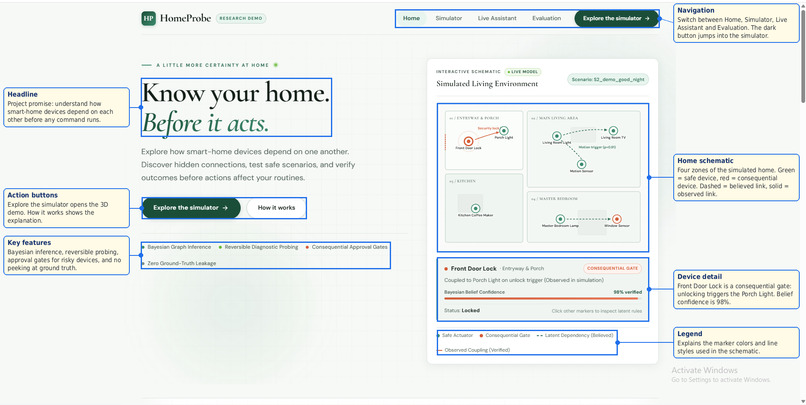
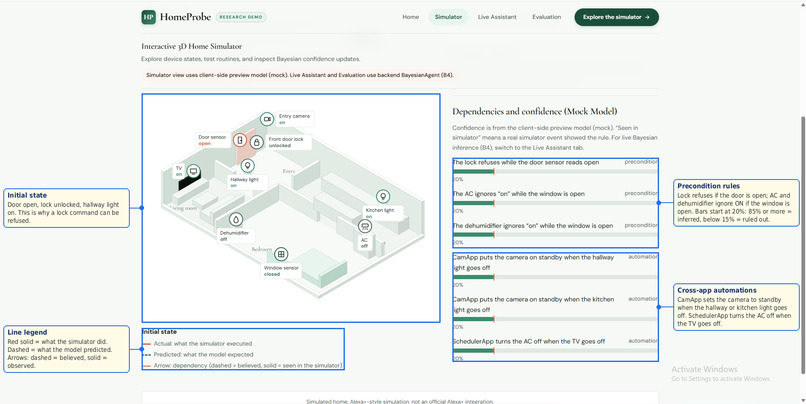
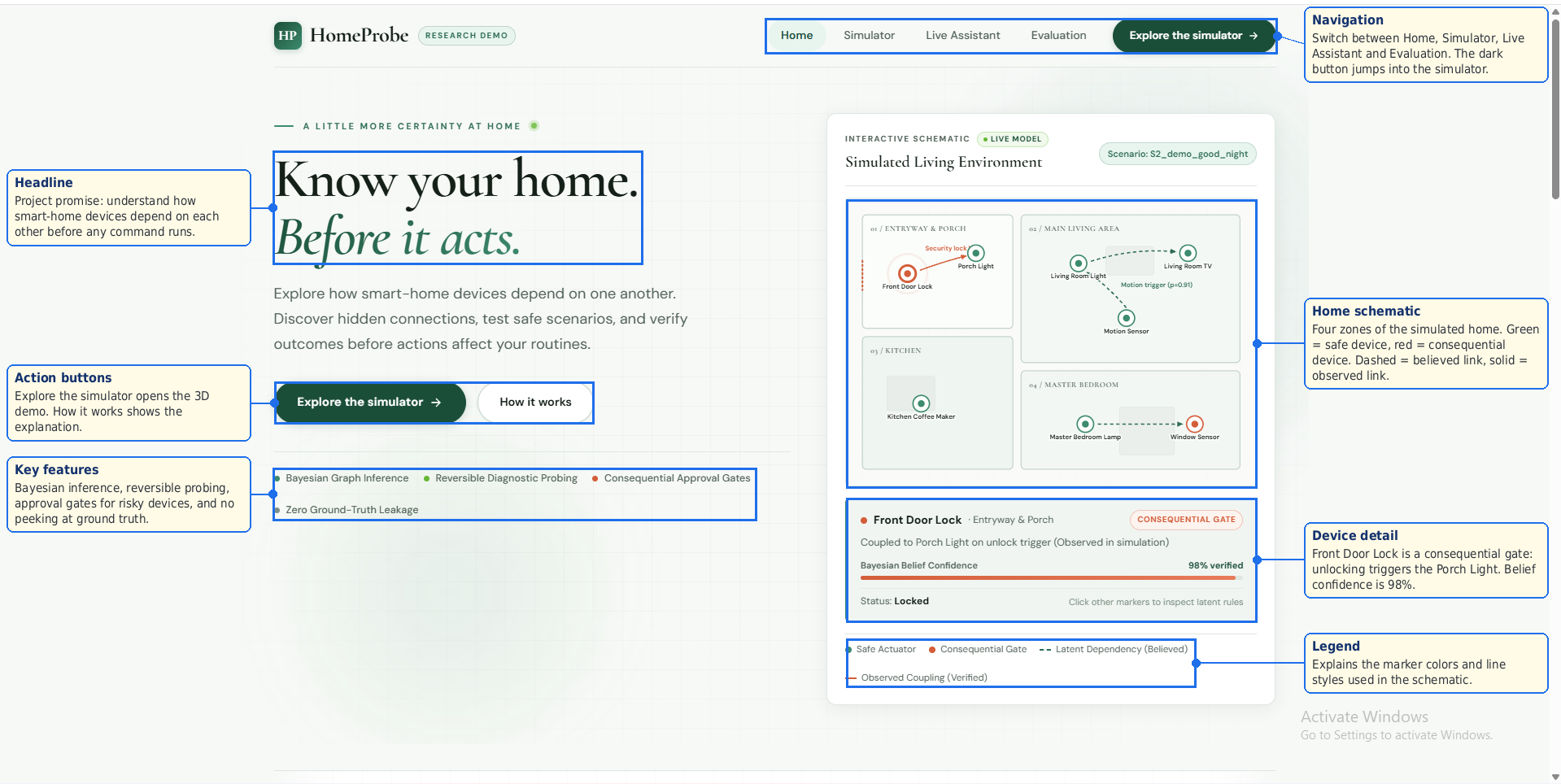
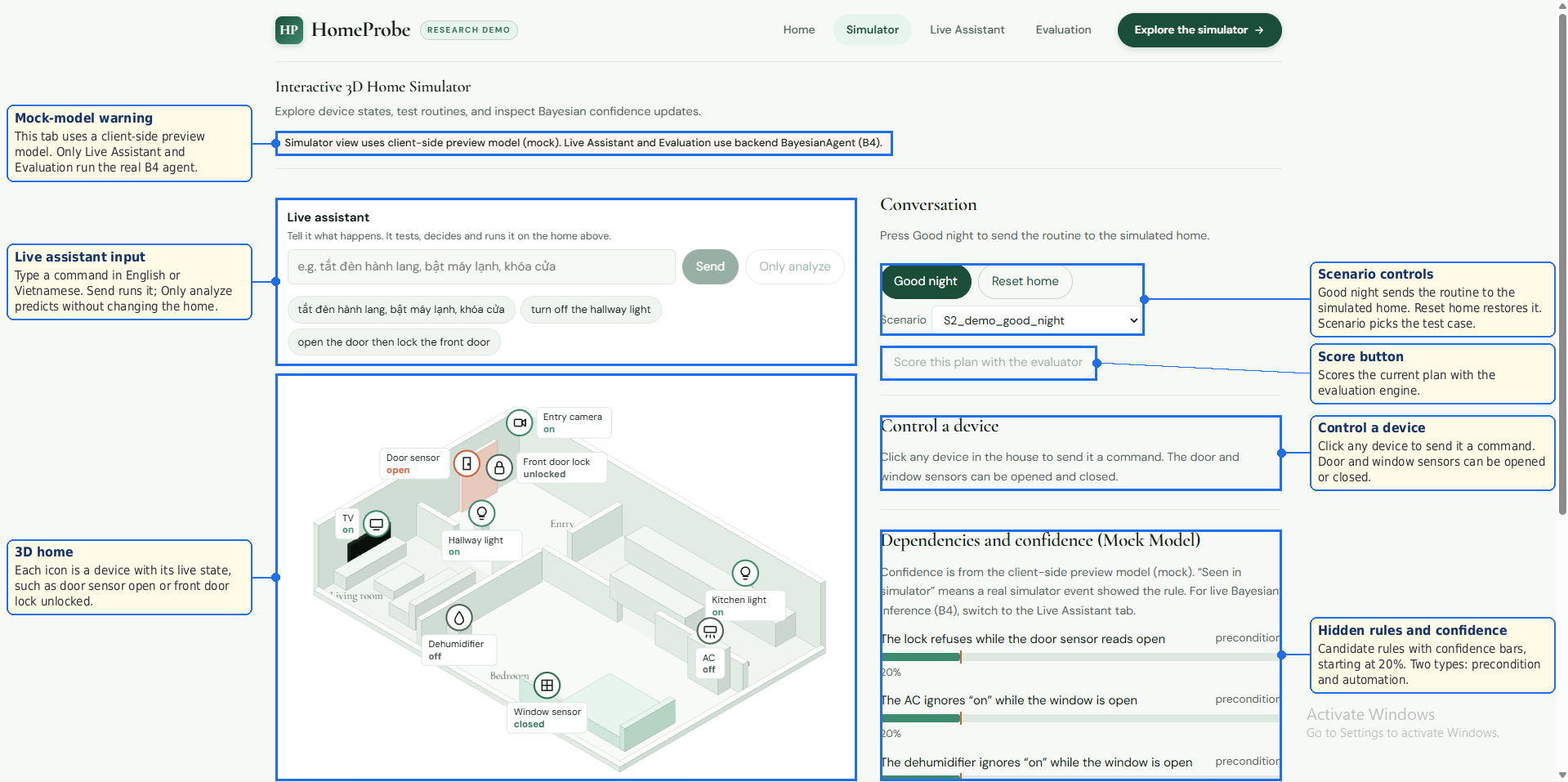
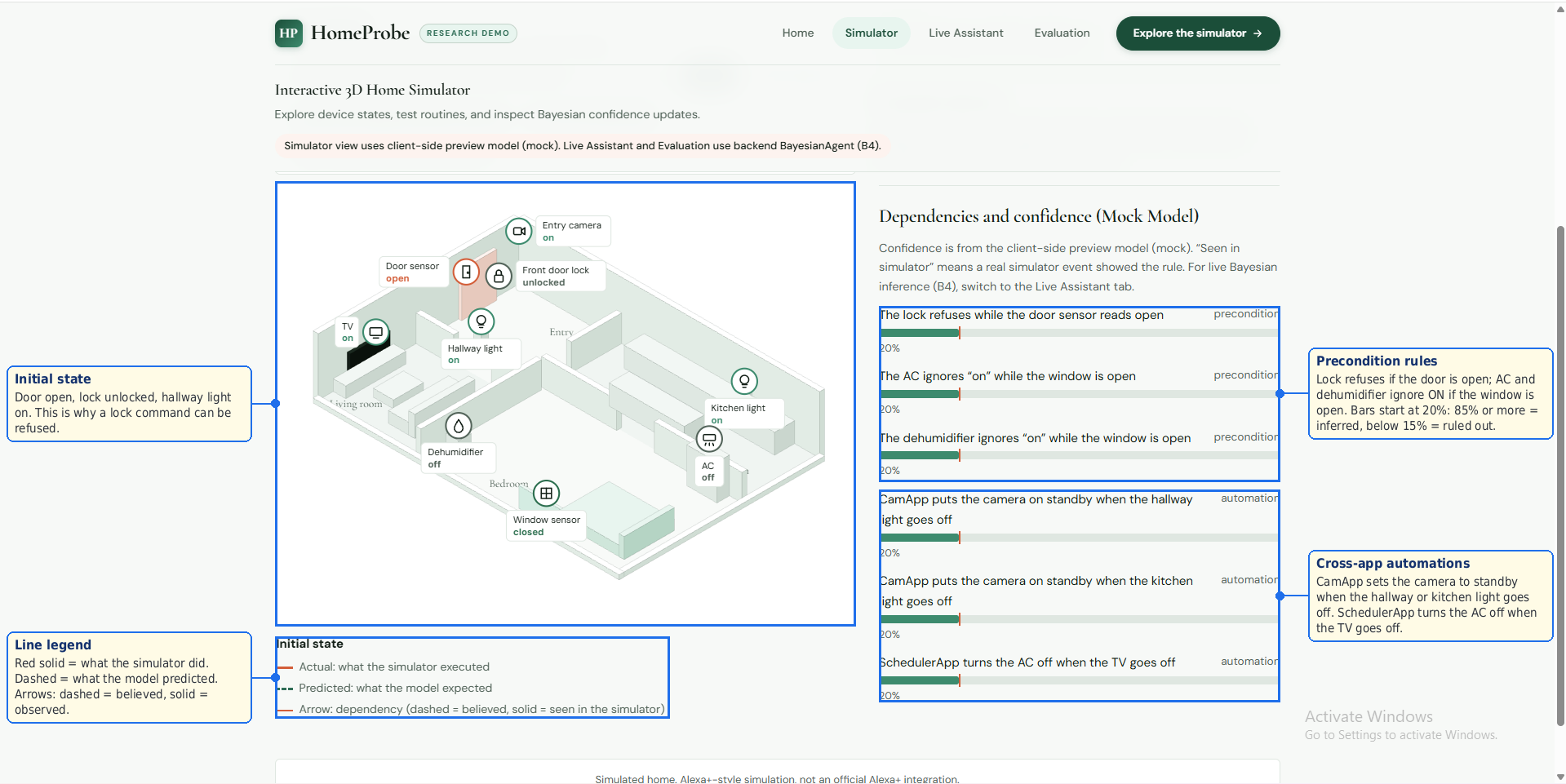
Interactive Digital Twin & Schematic
-
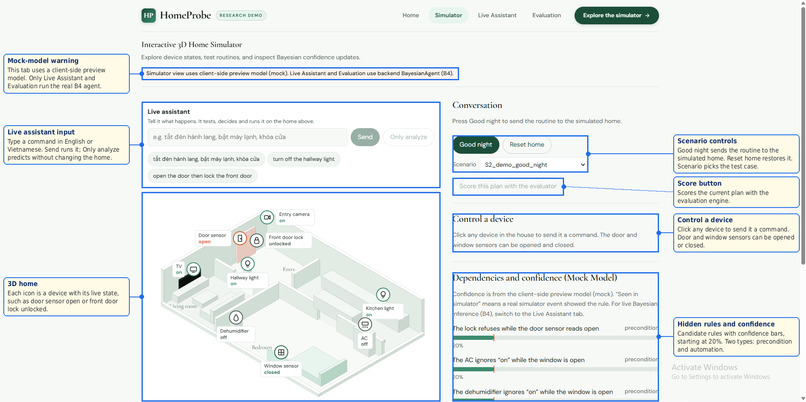
3D Simulator Workbench
-
Hidden Rules Visualization
-
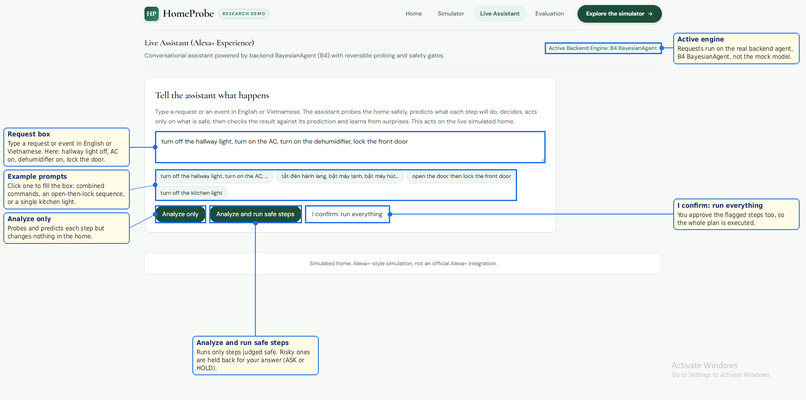
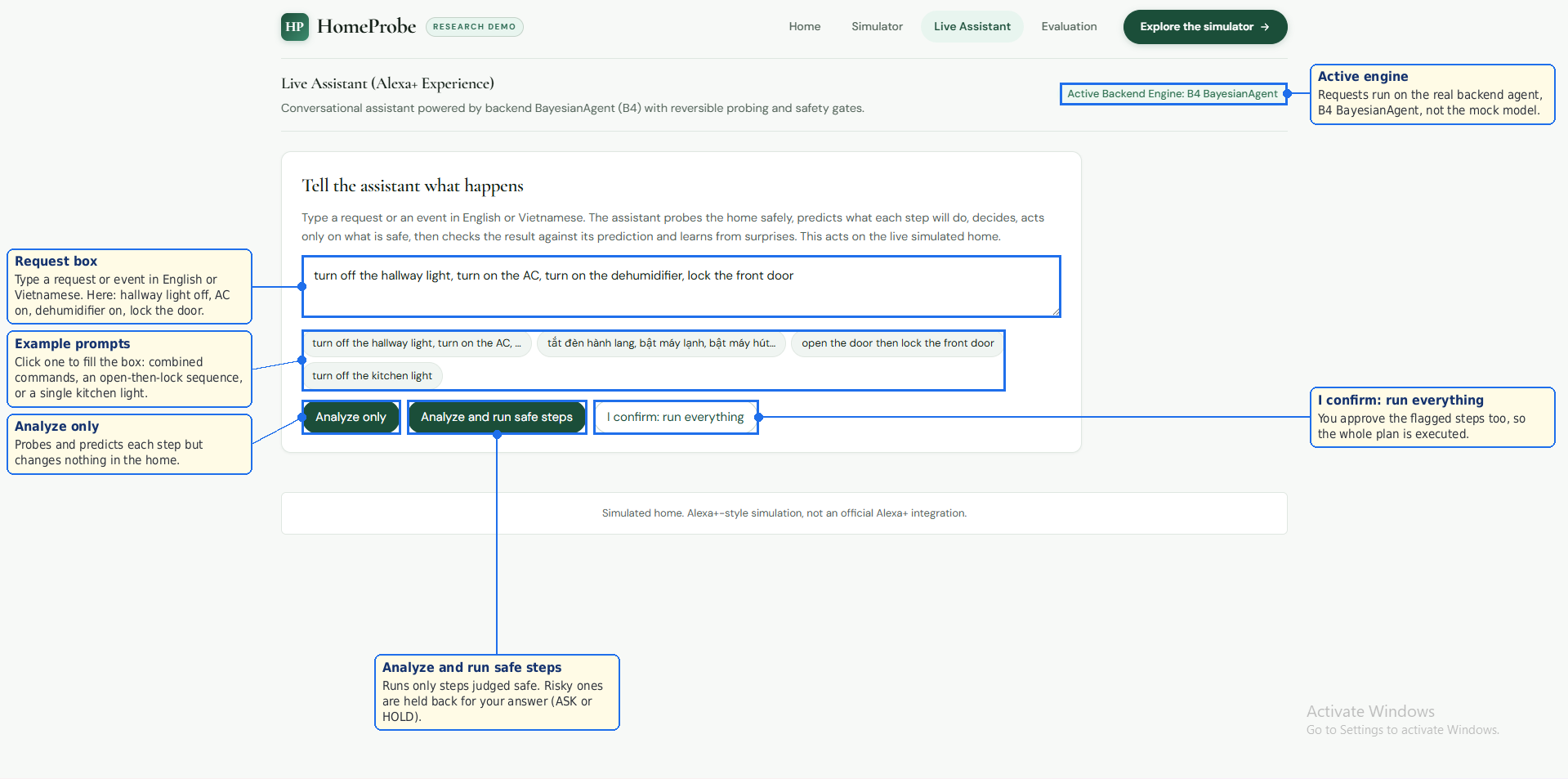
Live Assistant & Risk Gating
-
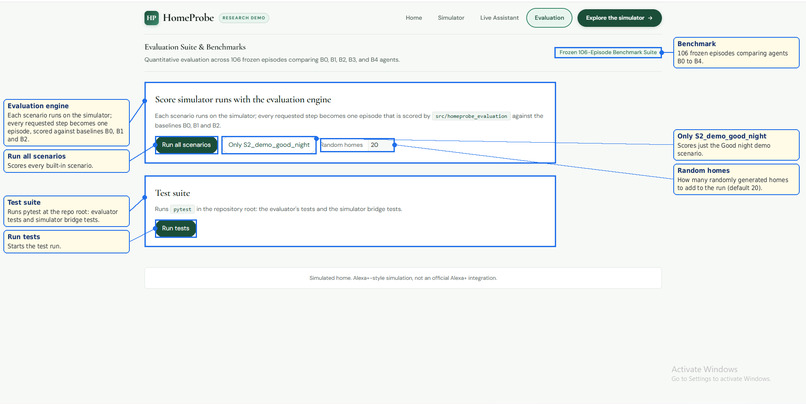
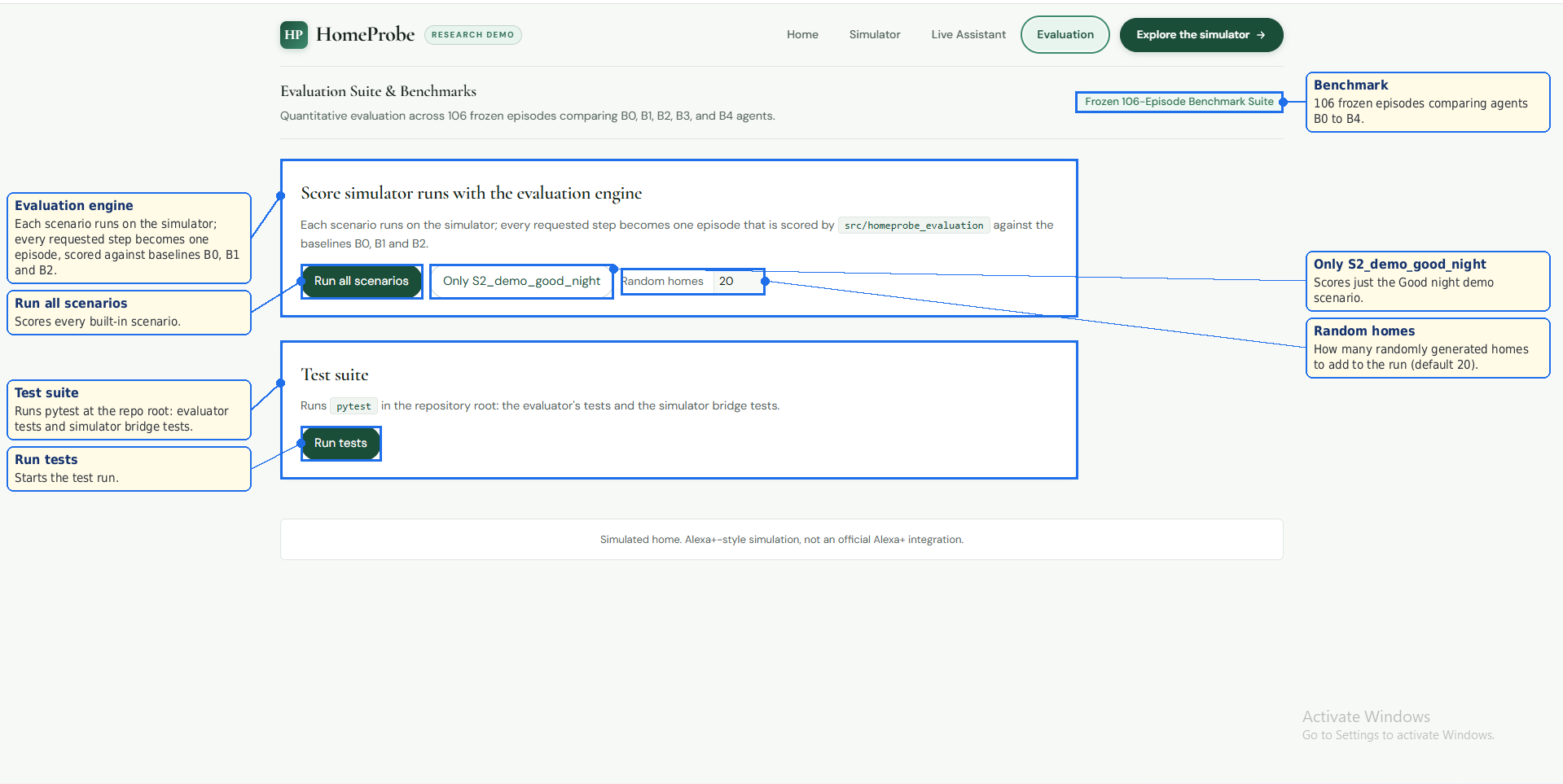
Empirical Evaluation Dashboard
The Problem: A Smart Home Should Understand More Than Commands
Imagine asking your smart home to prepare the house for the night. The lights turn off, the temperature changes, and your connected devices begin following their routines. Everything seems effortless.
But what if one device's action affects another? What if an automation triggers under the wrong conditions? And what if your assistant says a task is complete when the intended action never actually happened?
A smart home is more than a collection of connected devices. It is a living system of dependencies, routines, physical conditions, and consequences. Yet, understanding what a command might change across that system remains a significant challenge.
This concern is supported by real research. Amazon's own smart-home safety guidance recommends confirming that requested actions have actually completed. A 2024 study presented at ACM AsiaCCS also investigated command-hijacking vulnerabilities in Alexa's third-party skills, identifying potential attacks and suspicious hidden behaviours. Meanwhile, NIST's 2025 guidance highlights the cybersecurity and privacy risks that can emerge when voice assistants and other connected devices interact, particularly in sensitive environments such as home-based healthcare.
These findings inspired a question that became the foundation of HomeProbe-Deps:
What if a smart-home assistant could understand the possible consequences of an action before carrying it out?
Our Idea: Give the Smart Home a World Model
We built HomeProbe-Deps around the idea that an assistant should not merely recognise commands. It should maintain an evolving understanding of the environment it operates in.
At the heart of our approach is a world model represented as a digital twin: a software representation of smart-home devices, their relationships, dependencies, and relevant state.
Instead of treating every device as an isolated component, HomeProbe-Deps reasons about how actions may affect the wider system. A seemingly simple request can have implications beyond the device receiving the command, and our goal is to make those implications visible before they become unexpected outcomes.
We designed the system around several core capabilities:
- Dependency discovery: Investigating relationships between devices and identifying potential hidden interactions.
- Safe, reversible probing: Using controlled software experiments to gather information about uncertain dependencies.
- Bayesian belief updates: Revising confidence in possible relationships as new evidence becomes available.
- Risk-aware decisions: Using a GO / ASK / HOLD decision framework to distinguish actions that can proceed from those that require clarification or should be held back.
- Post-action verification: Checking simulated telemetry to determine whether an action produced its intended result, rather than trusting a command response alone.
- Honest uncertainty: Recognising unfamiliar or out-of-distribution situations instead of pretending to know more than the available evidence supports.
Our guiding principle is simple: when an assistant is uncertain about an action's consequences, uncertainty should lead to caution, not blind confidence.
How We Built It
HomeProbe-Deps combines a Python backend with a React, TypeScript, and Vite frontend, alongside an MCP Streamable HTTP server.
The backend handles the system's reasoning and decision workflows, while the frontend presents the resulting state, dependencies, and decisions in an accessible interface. The world-model approach connects these elements by representing relationships between devices and using available evidence to inform action decisions.
We also developed a deterministic simulation environment so that we could examine dependency discovery, risk decisions, and action verification in repeatable scenarios. This gives us a controlled way to explore situations where an action succeeds, fails, has uncertain consequences, or needs further investigation.
An important distinction: the current submission is a software prototype. Smart-home actions and benchmark scenarios run in a local simulation; the project does not currently control physical IoT devices or represent an officially integrated or certified Amazon Alexa+ service.
The Challenges We Faced
One of our biggest challenges was moving beyond the assumption that a successful command means a successful outcome.
A device can acknowledge a request without providing enough evidence that the desired real-world state was achieved. Likewise, a dependency that seems plausible should not automatically be treated as confirmed.
This pushed us to think carefully about uncertainty, evidence, and verification. We had to consider how a system should behave when it lacks sufficient information, how it should update its beliefs after new observations, and when it should ask for clarification instead of proceeding.
Another challenge was making the digital twin useful without pretending it had perfect knowledge. The model must represent what is known, what is inferred, and what remains uncertain. Our simulation helps us test these ideas systematically, but real-world reliability will require validation with actual devices, integrations, and diverse home environments.
What We Learned
Building HomeProbe-Deps changed how we think about intelligent assistants.
Intelligence is not only about producing a fast response or executing a command. In systems that interact with the physical world, intelligence also means understanding dependencies, evaluating consequences, acknowledging uncertainty, and checking whether an action achieved its intended result.
We explored how world models, digital twins, Bayesian reasoning, controlled probing, and risk-aware decision-making can work together to support safer automation.
We also learned the importance of distinguishing a promising prototype from a proven real-world solution. A simulation can help us test our reasoning and expose weaknesses, but it cannot replace physical-device testing or establish production-level safety.
Our Vision
We imagine a future in which smart homes are not merely automated, but more understandable and predictable.
A future in which assistants can explain why an action may have consequences, recognise when they do not know enough, and verify outcomes rather than relying on assumptions.
HomeProbe-Deps is an early step towards that vision: a smart-home assistant that tries to understand before it acts, asks when it is uncertain, and verifies instead of simply assuming.
Because the place where people should feel safest is home.
Built With
- bayesian
- bayesianinterference
- context
- fastapi
- model
- protocol
- python
- restapi
- smarthome
- sqlite
- streamable-http
- typescript
- vite
- worldmodel


Log in or sign up for Devpost to join the conversation.