-
-
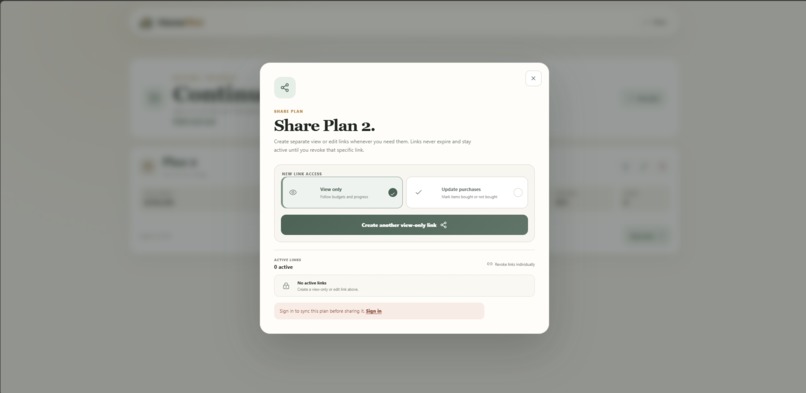
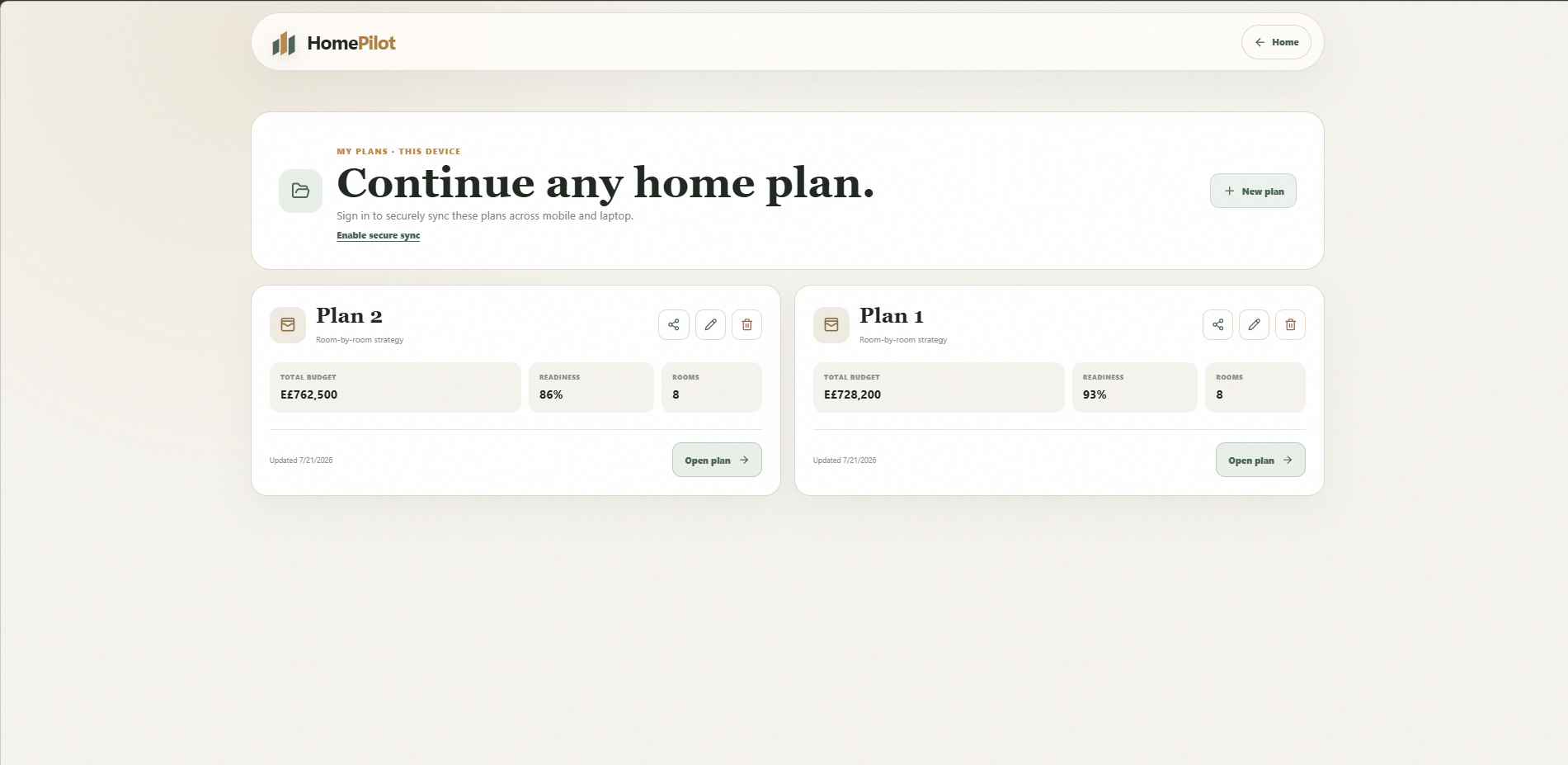
Plan library and permission-based sharing.
-
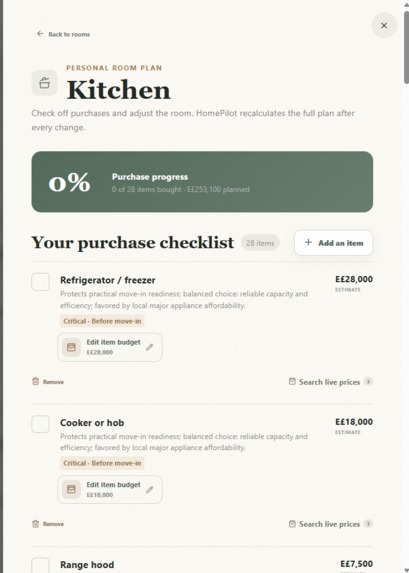
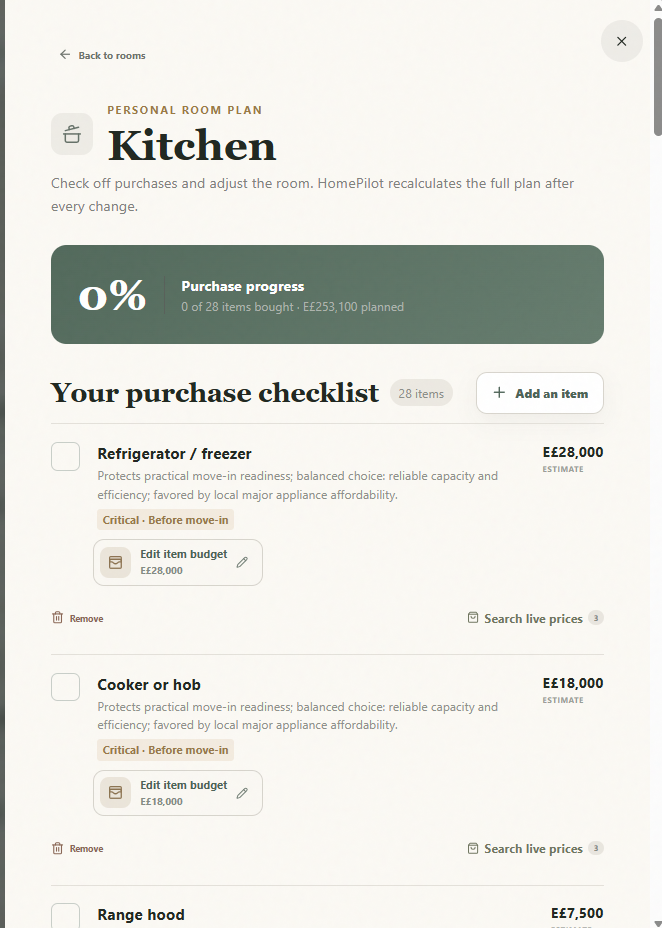
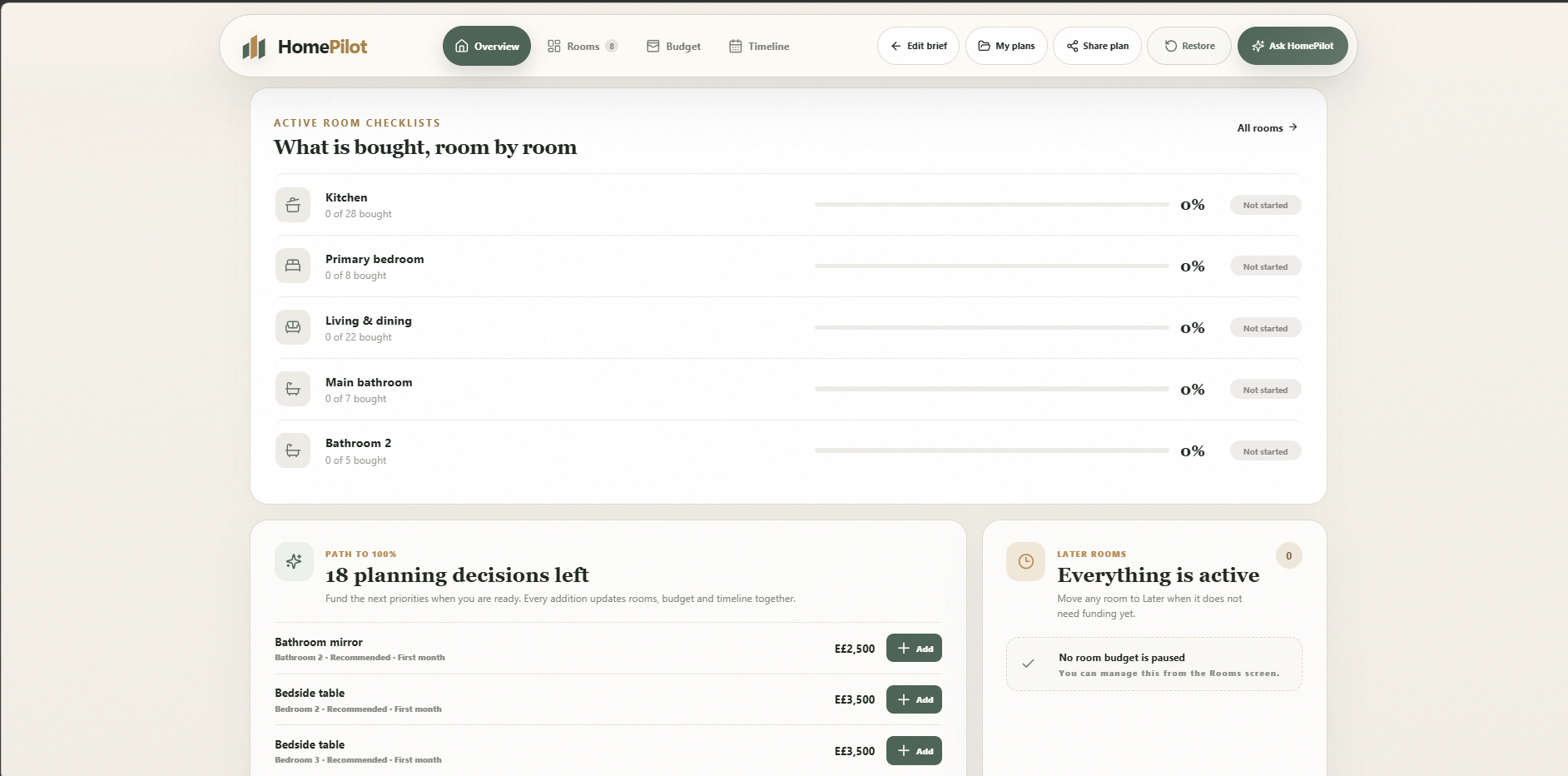
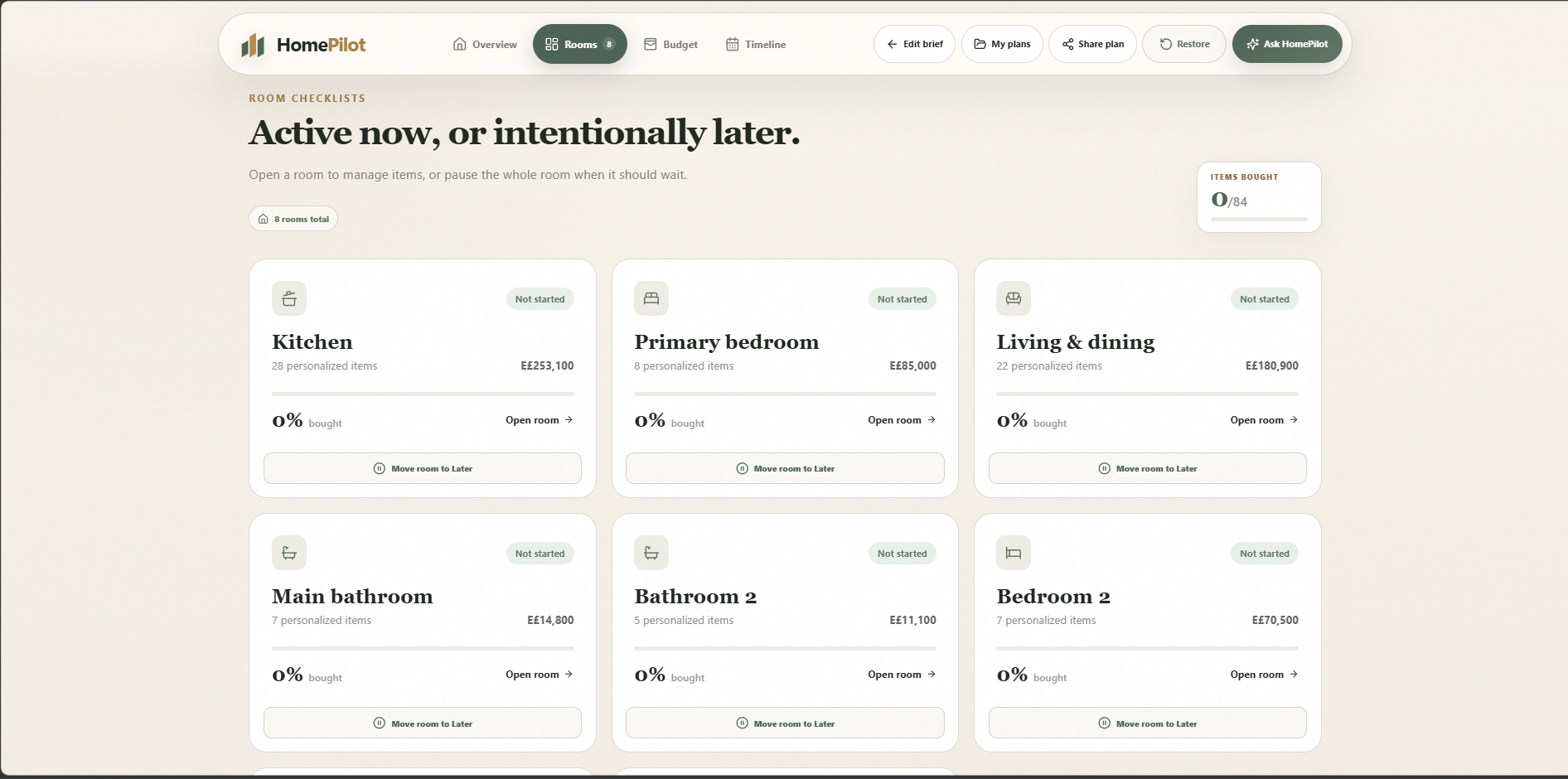
Room-by-room purchasing checklist.
-
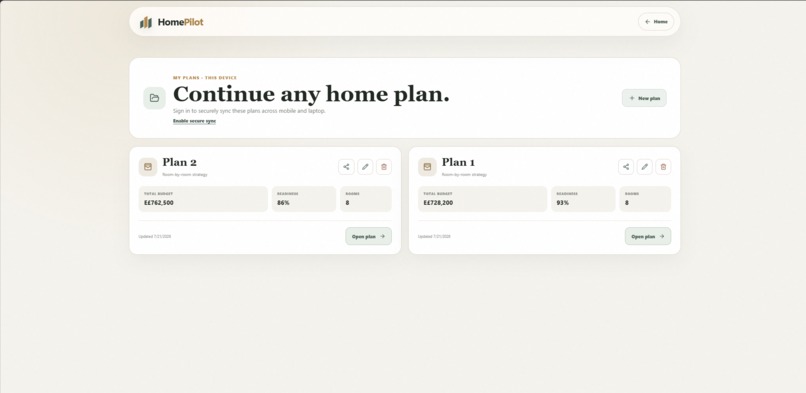
Plan library and permission-based sharing.
-
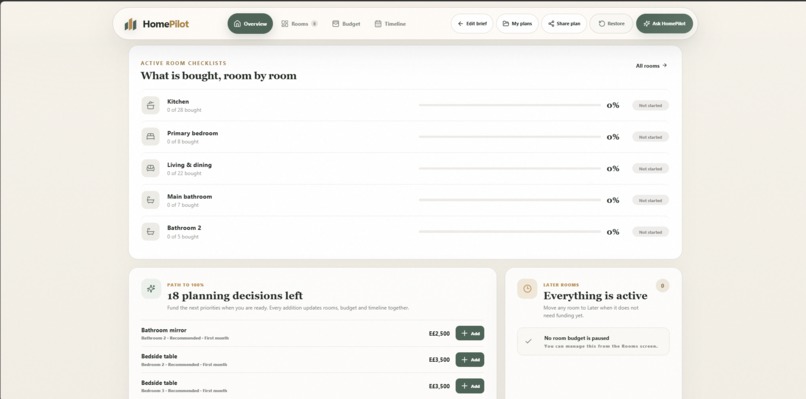
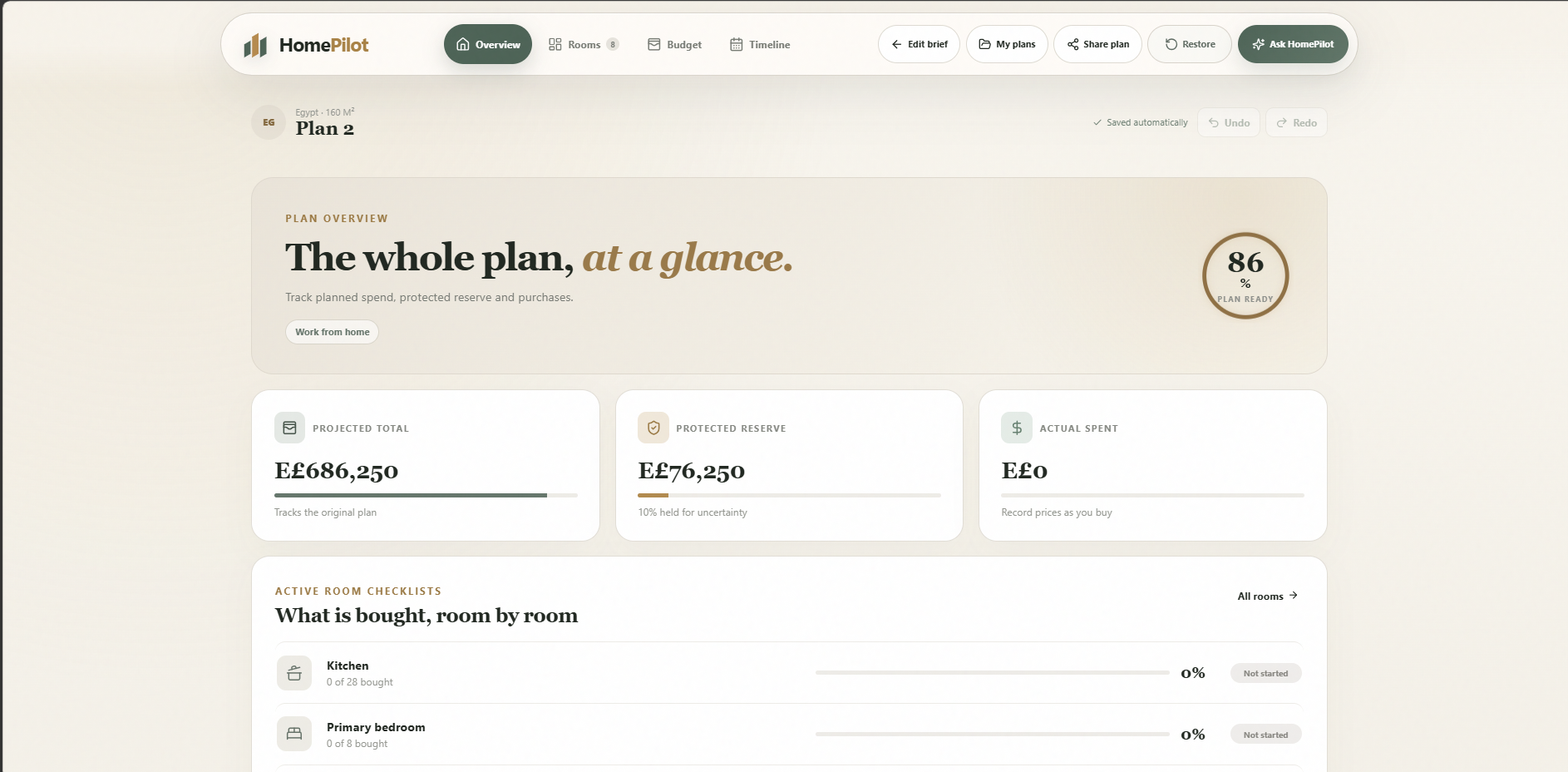
Personalized plan overview and readiness score.
-
-
-
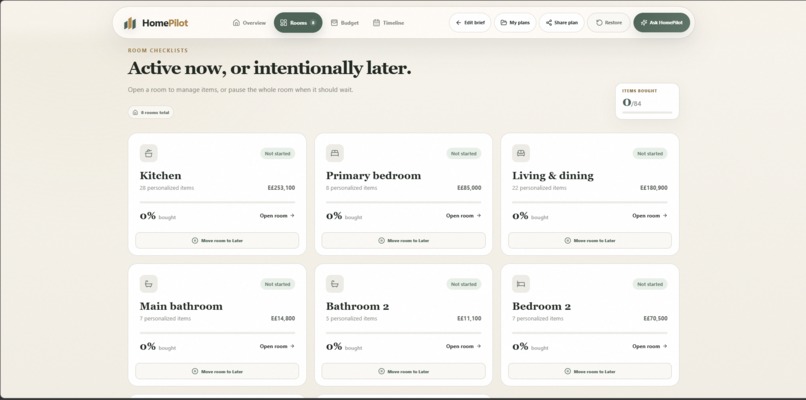
Room-by-room purchasing checklist.
-
-
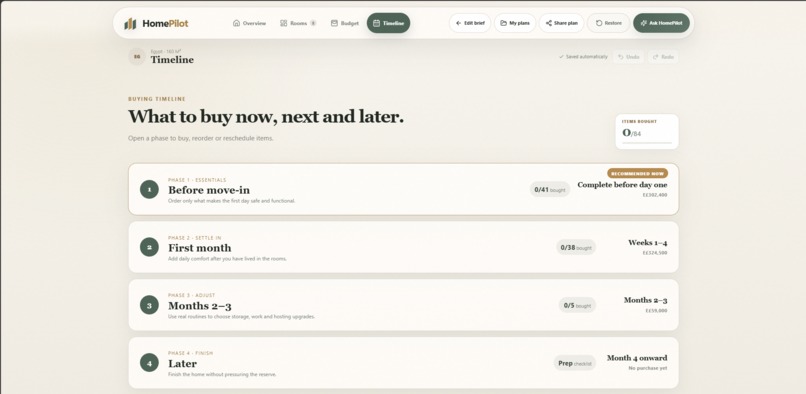
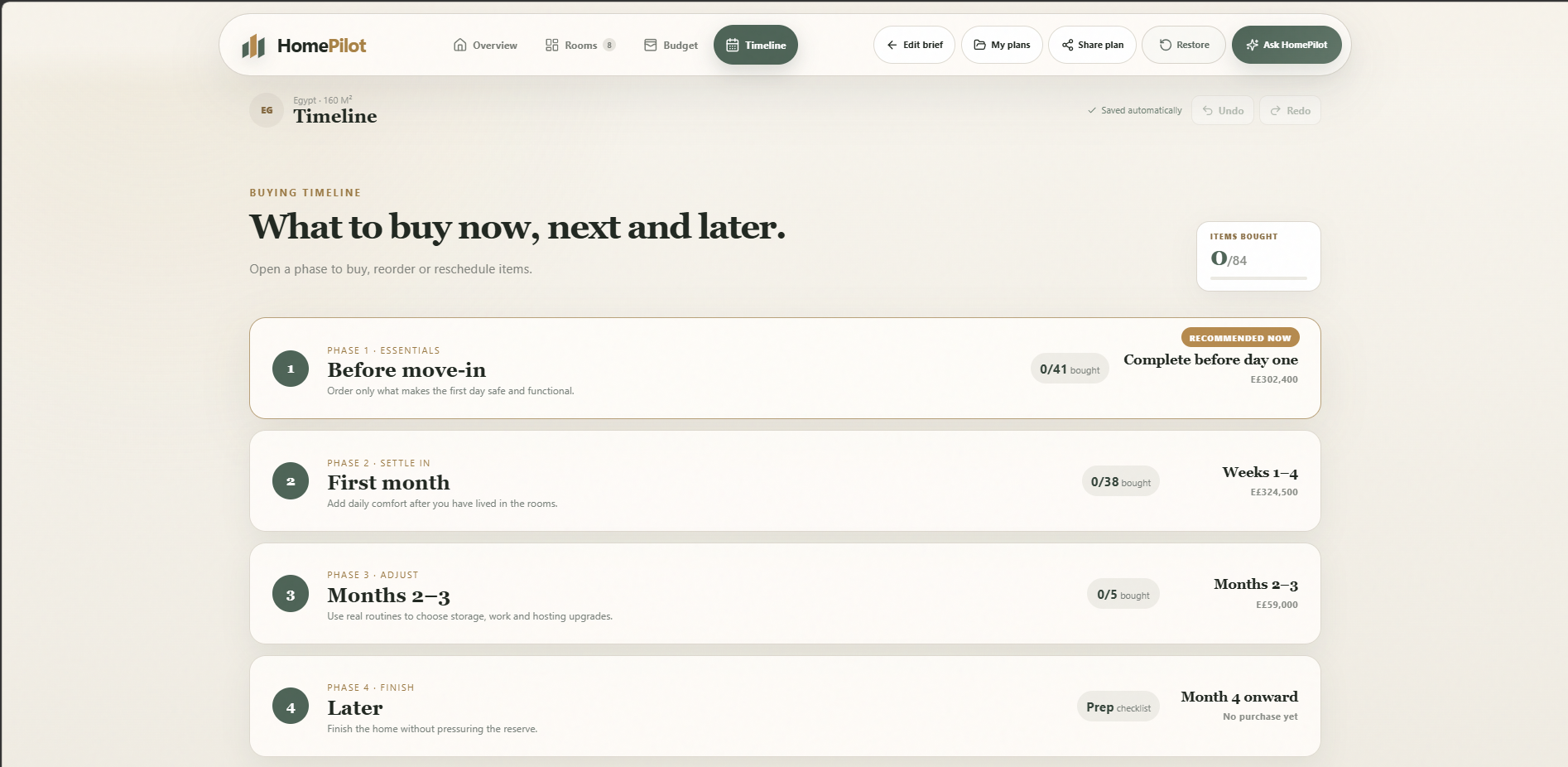
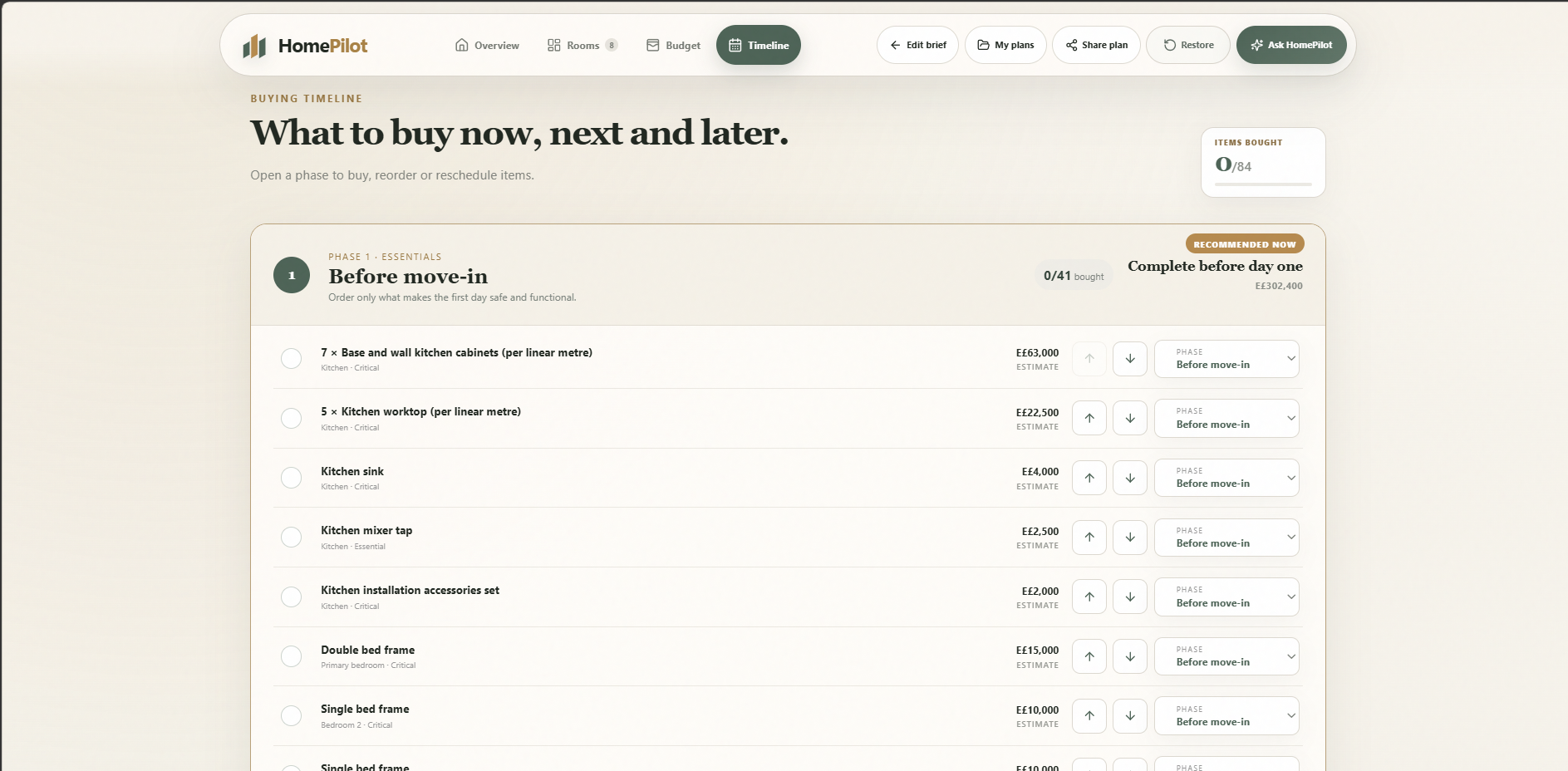
Purchasing timeline and postponed rooms.
-
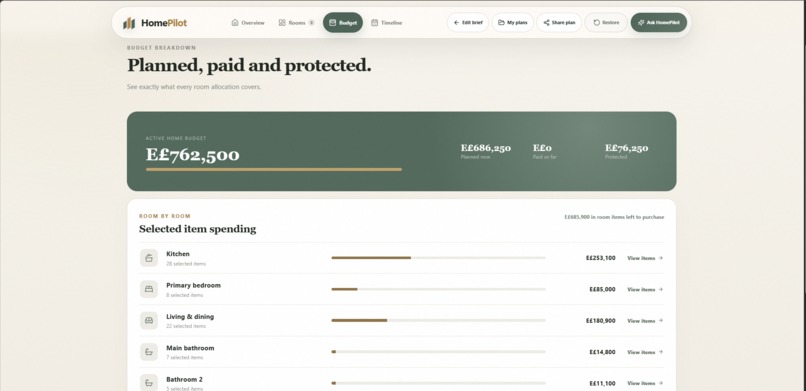
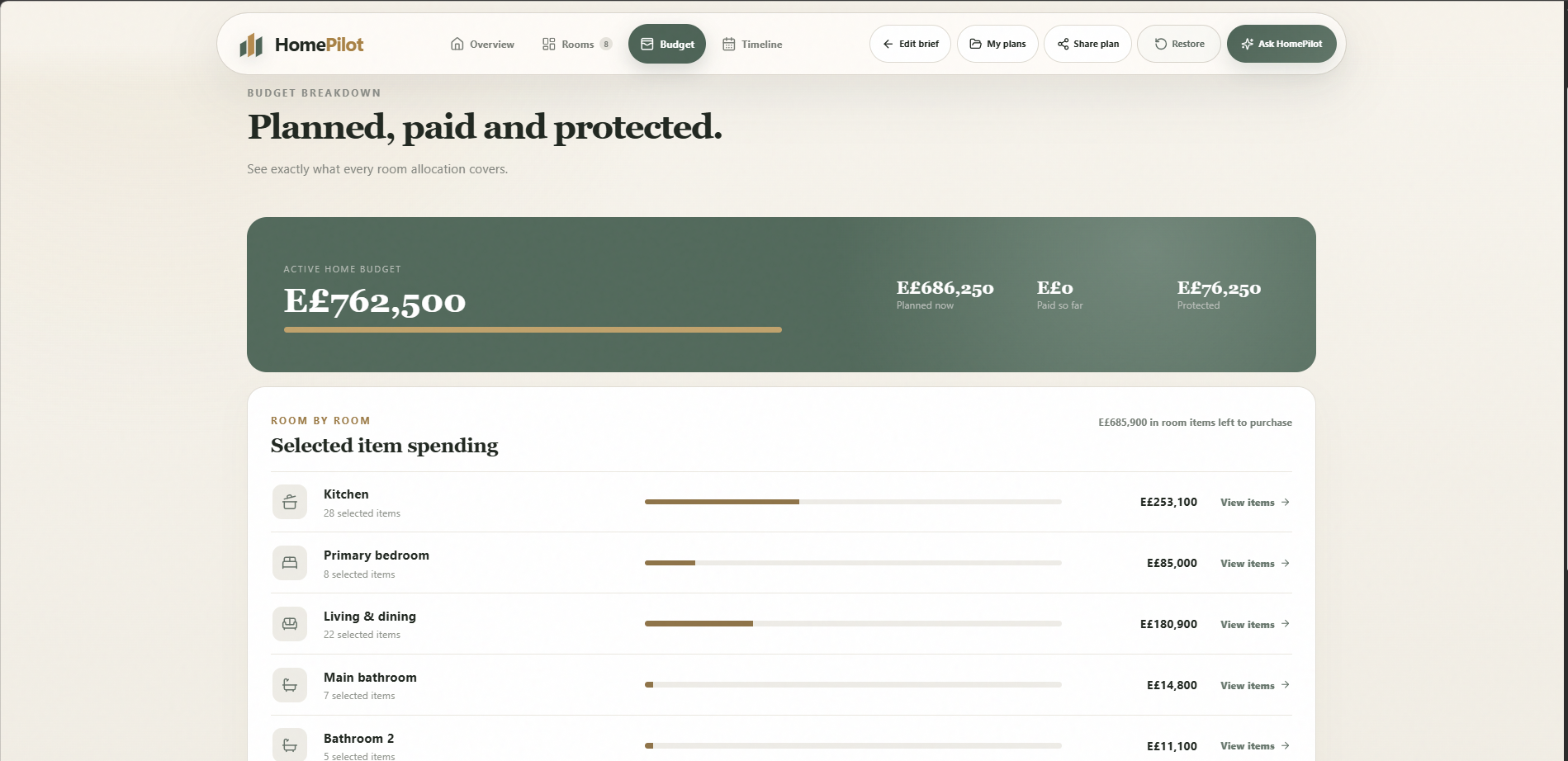
Budget allocation and item-budget controls.
-
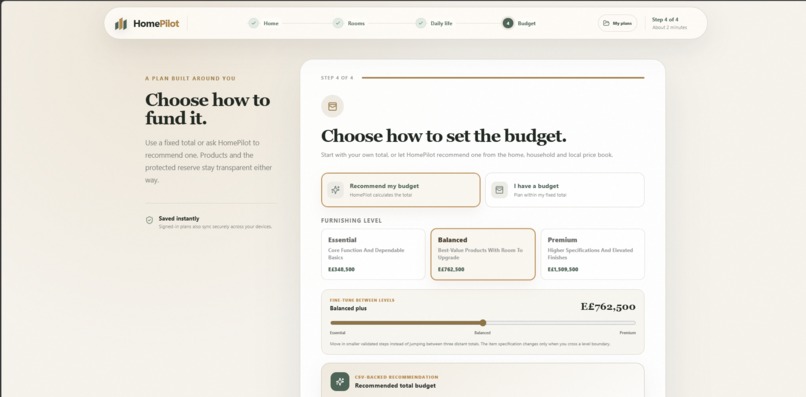
-
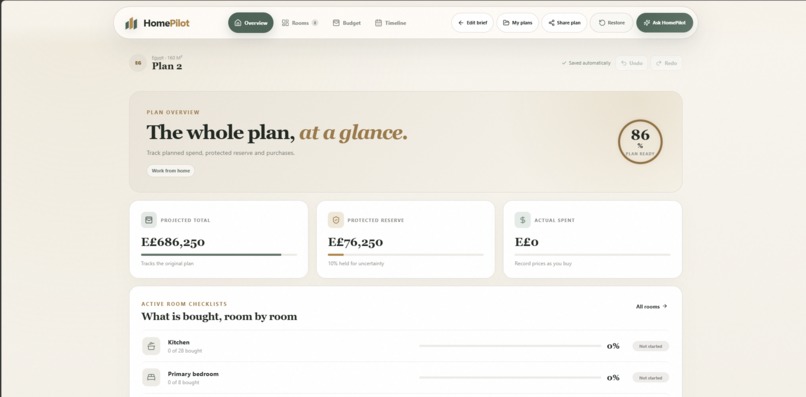
Personalized plan overview and readiness score.
-
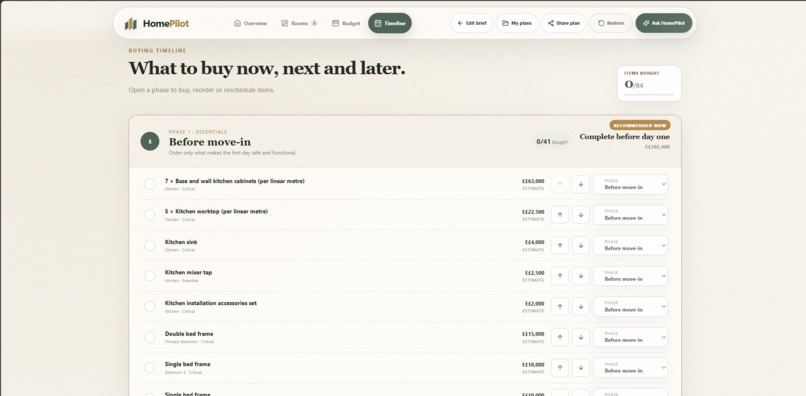
Purchasing timeline and postponed rooms.
-
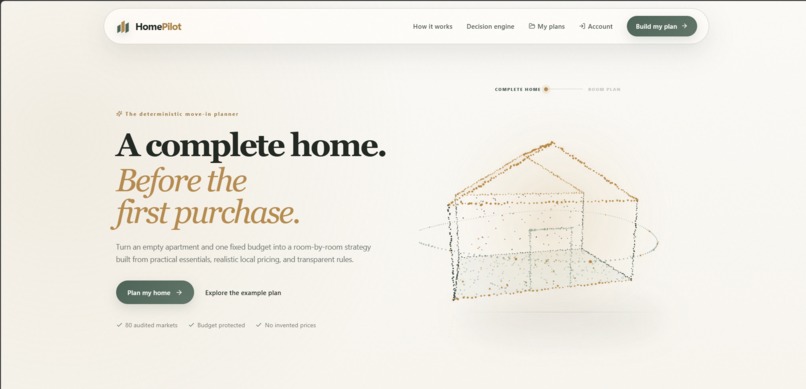
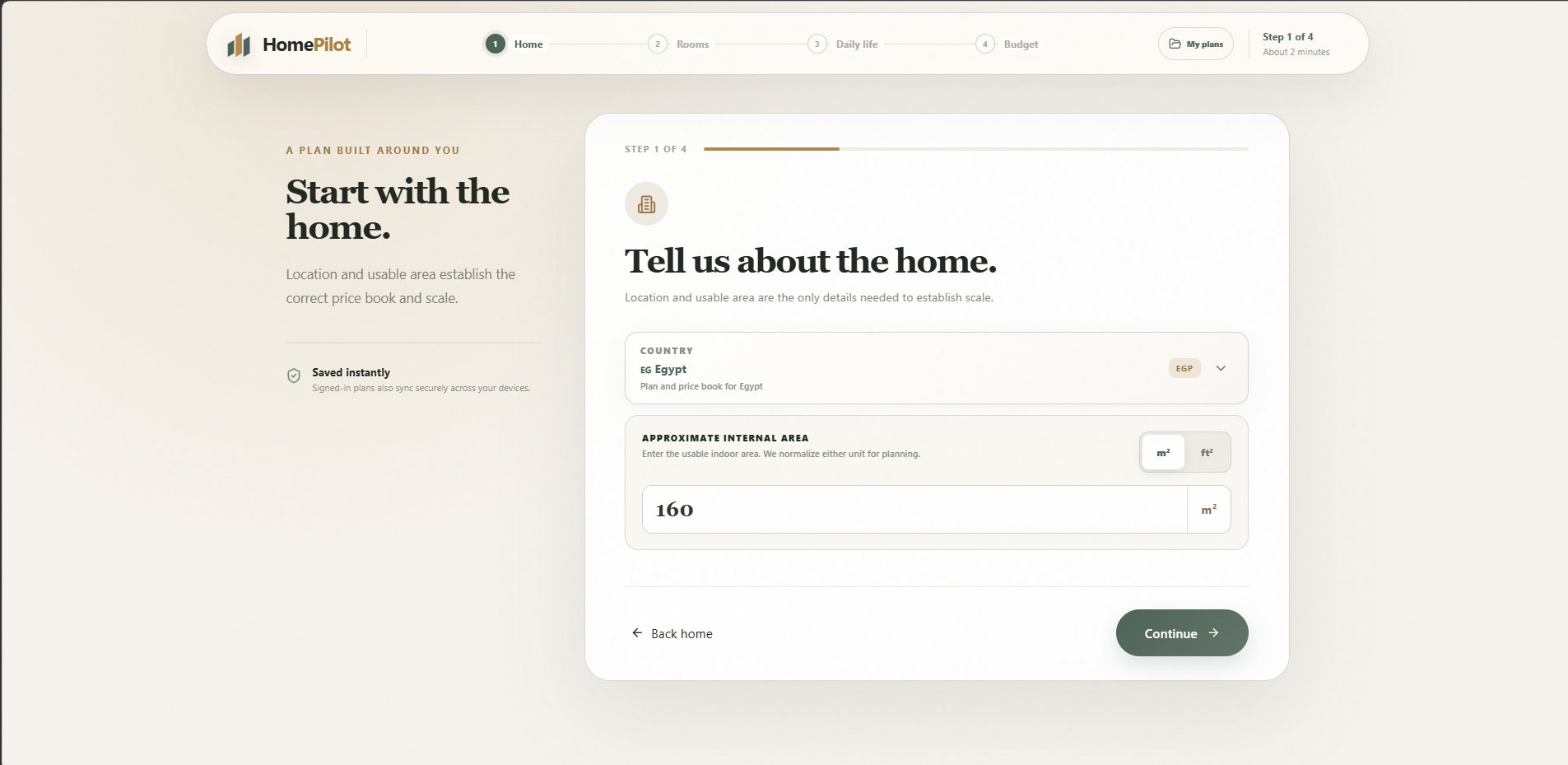
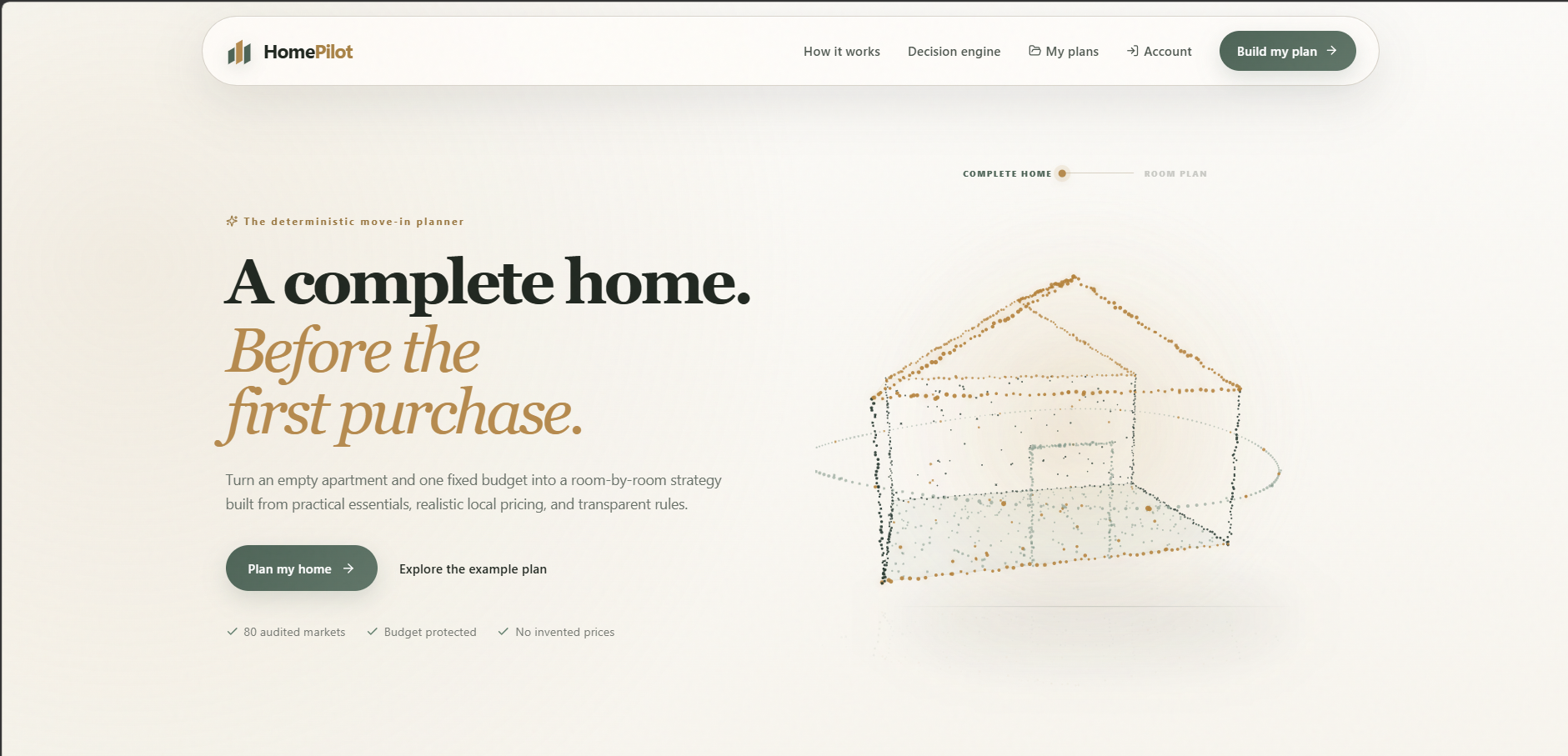
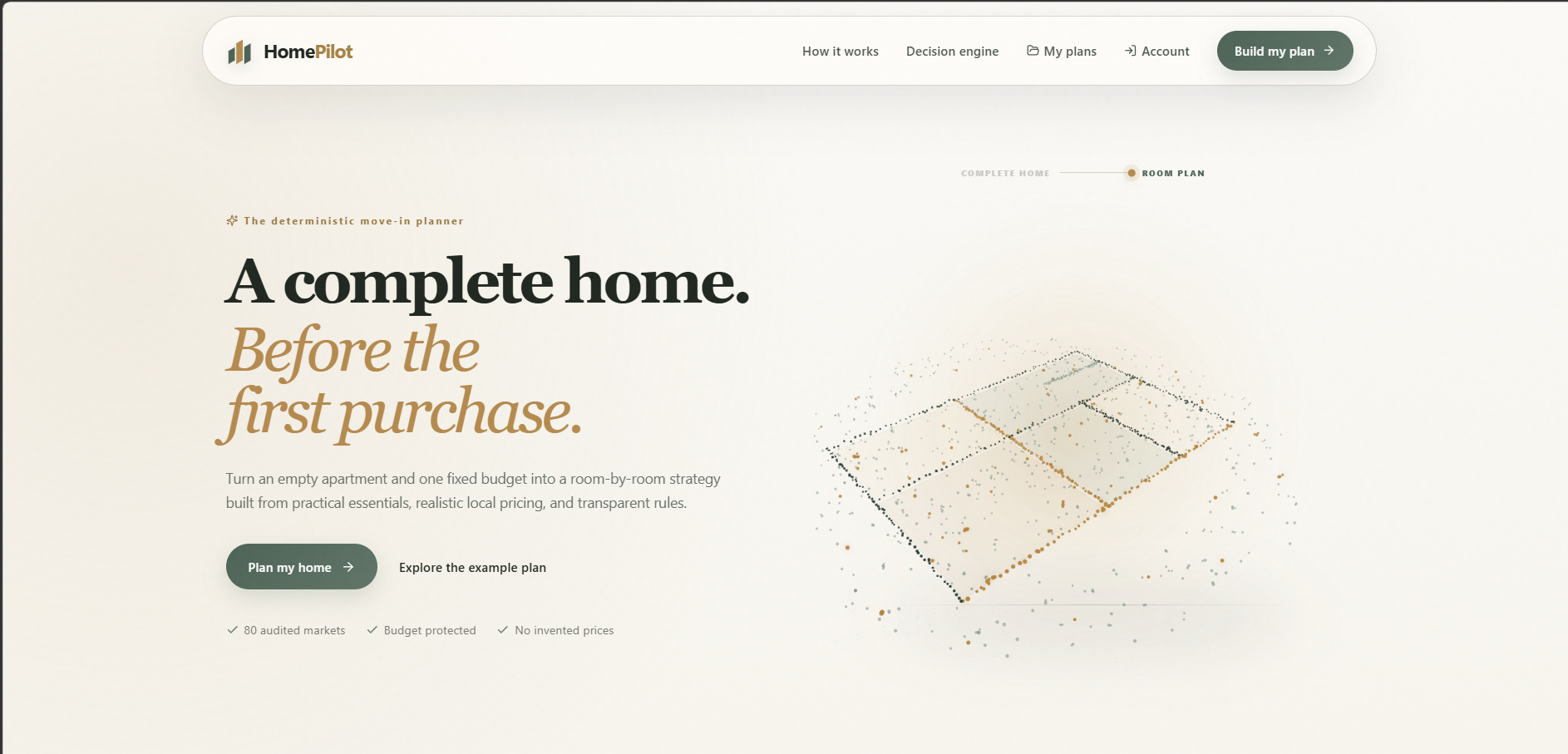
Landing page and animated home.
-
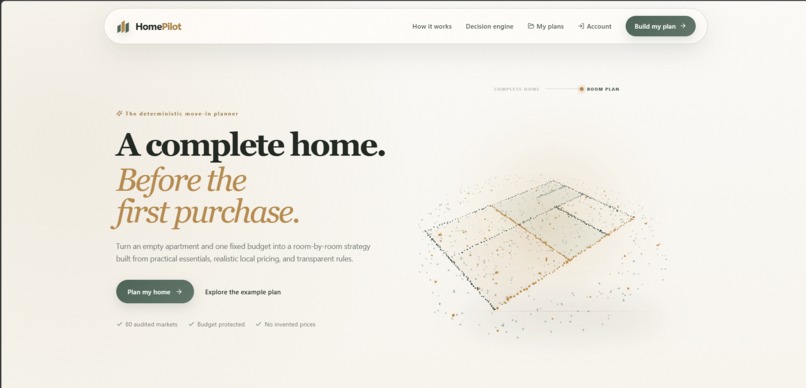
Landing page and animated home.
Inspiration
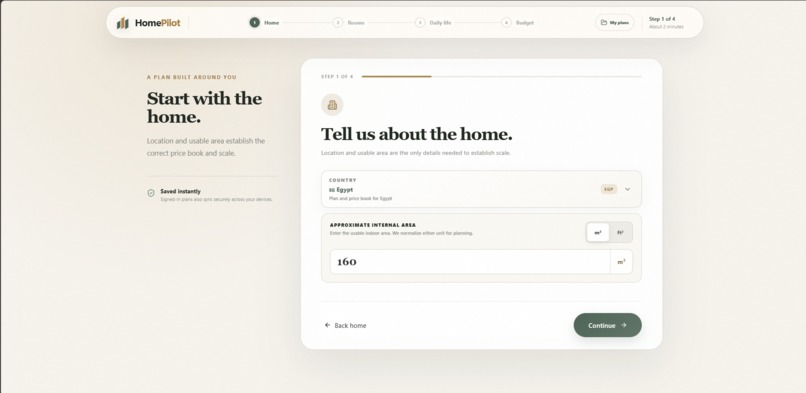
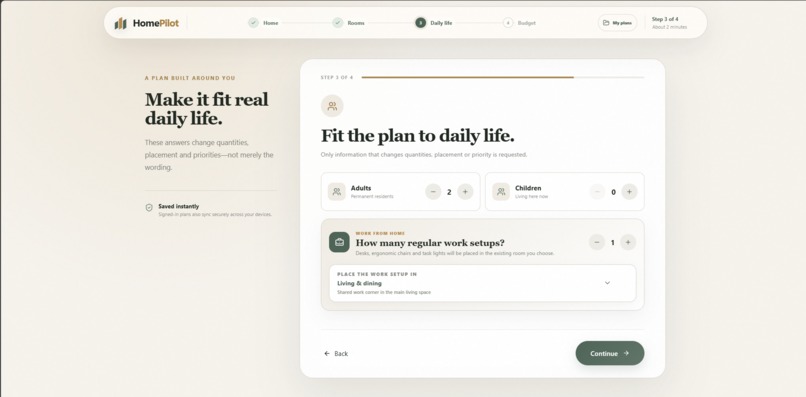
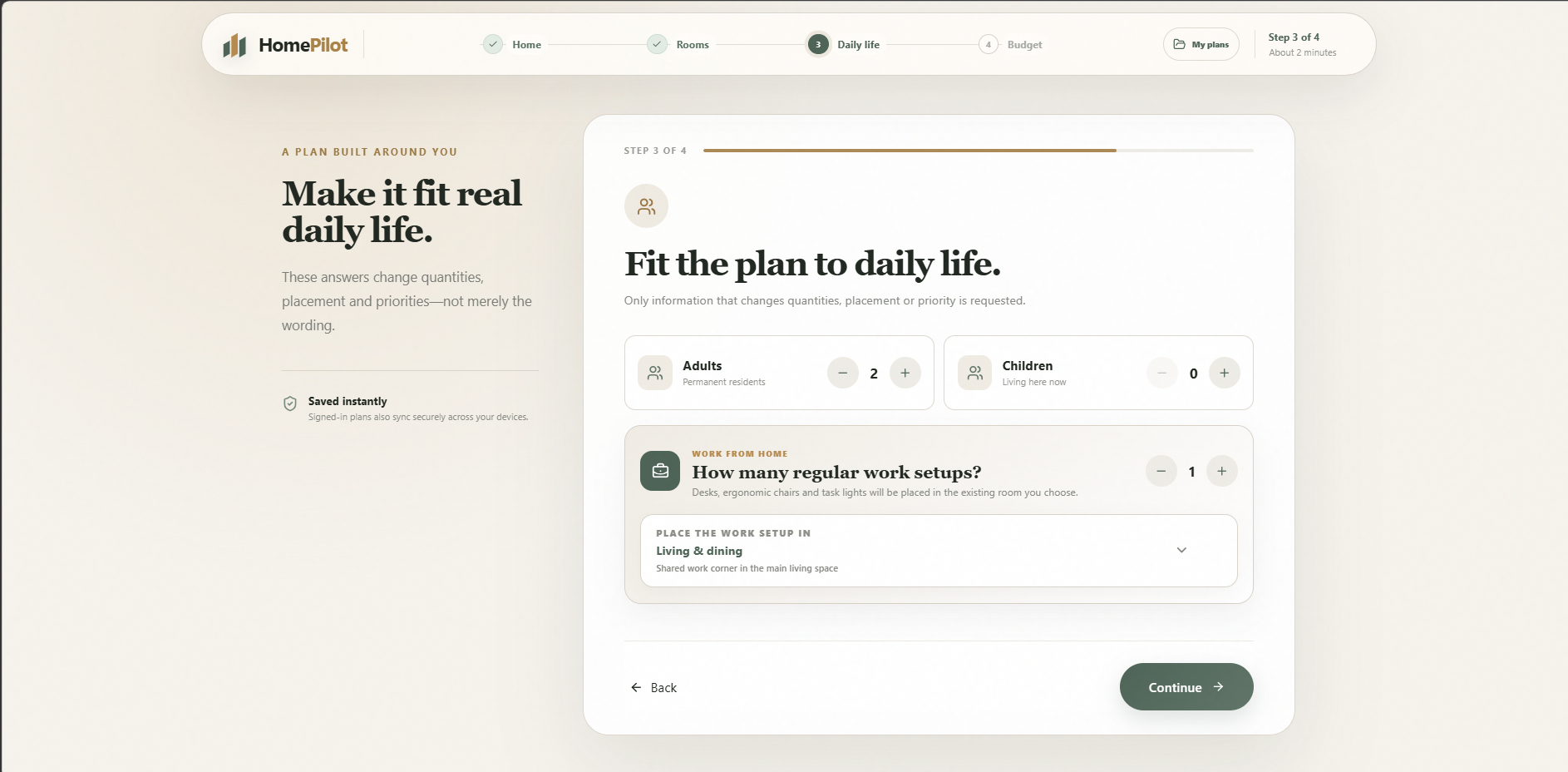
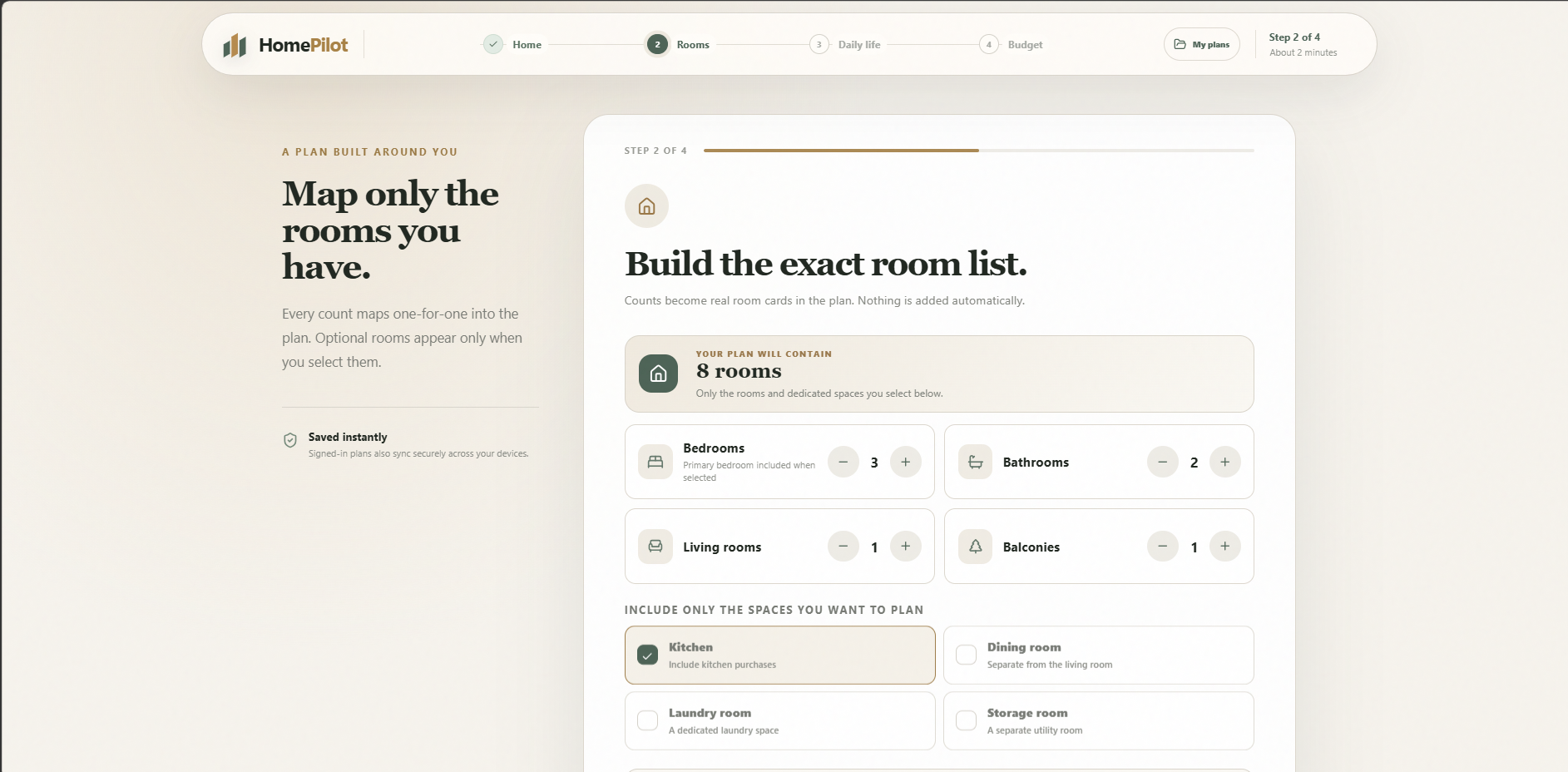
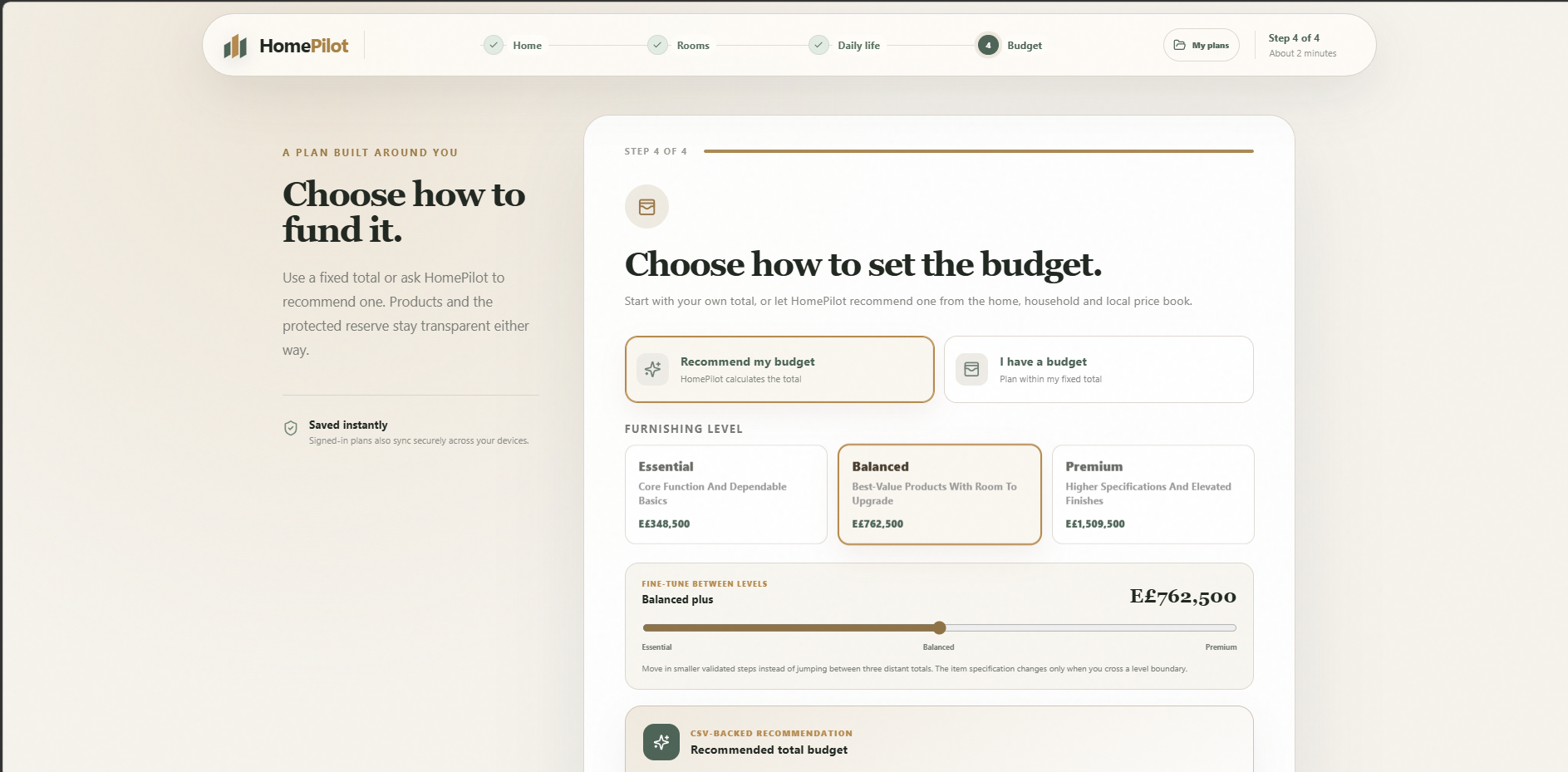
Moving into an empty home is exciting but deciding what to buy and when to buy it can become overwhelming. People often underestimate costs, overspend on one room, or postpone important purchases because they lack a clear plan. We built "HomePilot" to turn that uncertainty into a practical, personalized roadmap. Instead of providing a generic checklist, HomePilot creates a room-by-room furnishing plan based on the household's budget, location, priorities, property size, and preferred buying tier.
What it does
HomePilot helps users:
- Create, rename, save, share, and manage multiple home plans.
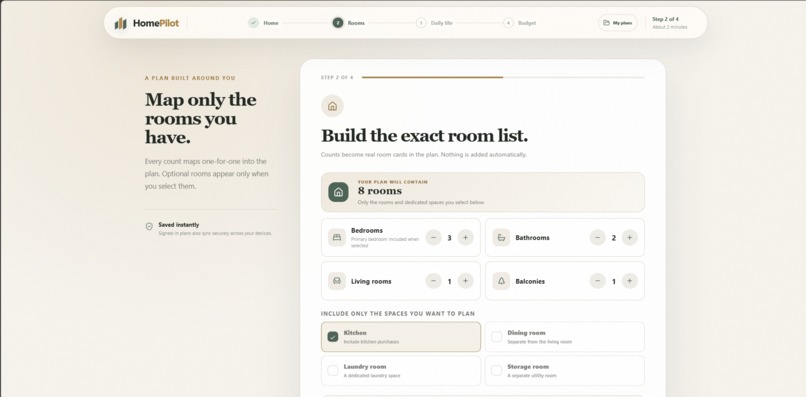
- Generate a prioritized purchasing plan for every selected room.
- Protect part of the budget as an emergency reserve.
- View budget allocation, move-in readiness, and purchasing timelines.
- Adjust individual item budgets and immediately update the entire plan.
- Mark items as purchased and track remaining costs.
- Add, remove, replace, or postpone items and entire rooms.
- Review and revert plan changes through an action history.
- Discover missing items needed to reach 100% move-in readiness.
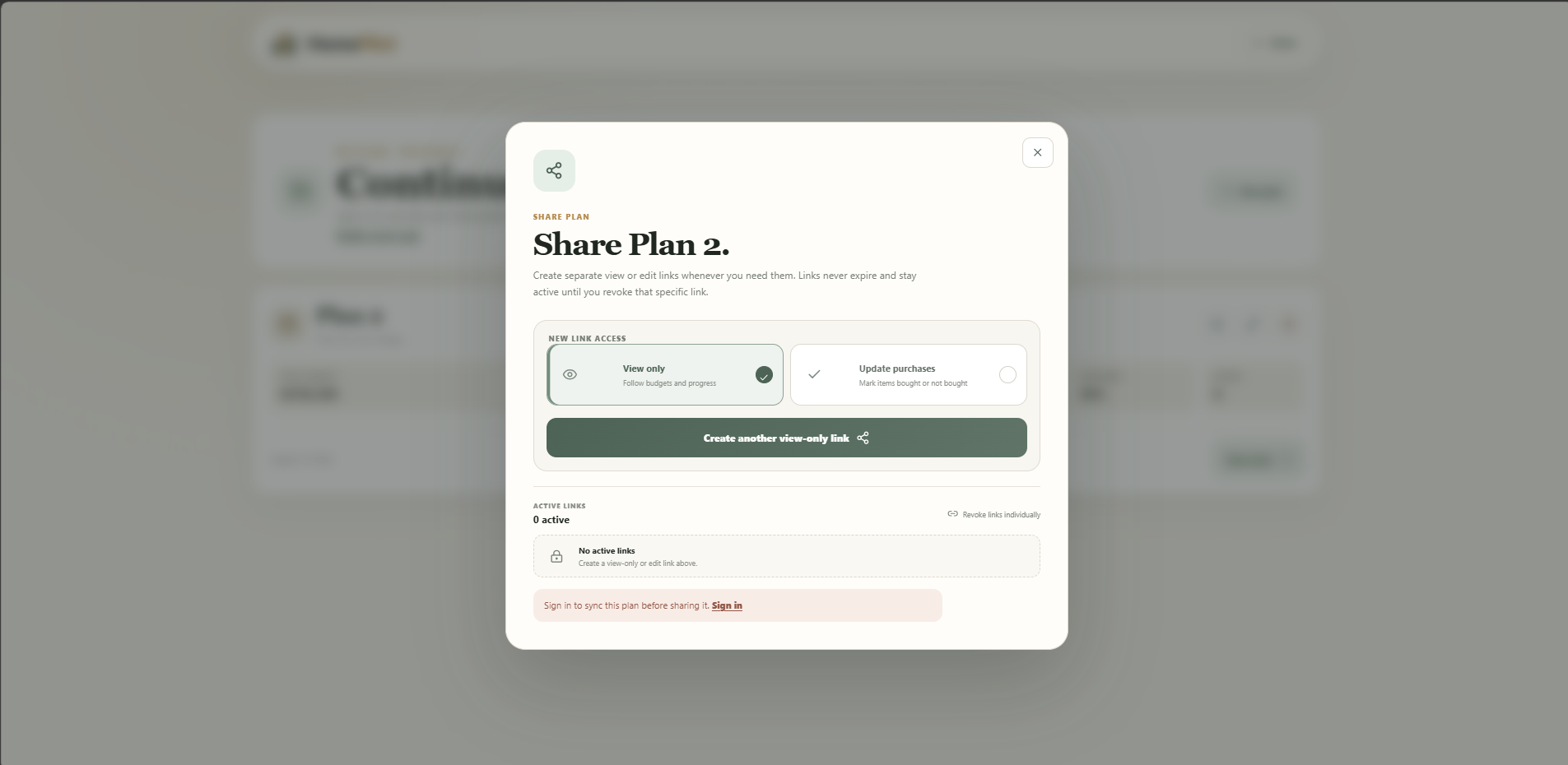
- Share persistent view-only or purchase-update links that remain active until revoked.
- Continue a saved plan across devices without repeating onboarding. HomePilot supports 80 markets, 53 currencies, 104 furnishing essentials, three buying tiers, and 14 apartment archetypes covering homes from 25 to 2,000 m².
How we built it
HomePilot is a responsive web application built with Next.js, React, TypeScript, and Supabase,, and deployed on Vercel.
Its schema-validated planning engine combines selected rooms, household needs, localized planning estimates, budget limits, readiness requirements, buying tiers, and protected reserves to produce a consistent purchasing strategy.
Supanase provides passwordless authentication, PostgreSQL storage, cross-device synchronization, and Row Level Security. Plans remain private and isolated by account, while shared plans use hashed tokens and permission-specific links.
We used OpenAI CODEX with GPT- throughout Build Week to accelerate application architecture, planning-engine development, interface refinement, security reviews, database migrations, debugging and testing.
The customer-facing planner remains deterministic, making its calculations consistent, predictable, and auditable.
Challenges we ran into
One of our biggest challenges was designing, building, testing, and deploying a complete product within four days, from 18 to July 21, 2026.
The largest technical challenge was keeping every part of a plan synchronized. Changing one item can affect the room allocation, total budget, readiness score, timeline, purchasing progress, and action history.
We also had to design realistic behavior for limited budgets. Instead of silently exceeding the available amount, HomePilot explains trade-offs, protects reserves, postpones lower-priority purchases, and shows users what is still needed.
Creating an interface that remained clear across mobile and desktop also required several iterations, especially for room lists, budget controls, plan navigation, and purchasing actions.
Accomplishments that we're proud of
- Built the complete product from concept to deployment in four days.
- Created a transparent, budget-safe planning engine.
- Developed a complete journey from onboarding to active purchasing.
- Added persistent multi-plan storage and cross-device synchronization.
- Implemented secure, permission-based plan sharing.
- Supported detailed plan changes without losing allocation consistency.
- Designed responsive budget, room, timeline, readiness, and history tools.
- Added automated checks for planning behavior, security, storage, APIs, build, and reference-data integrity.
What we learned
We learned that useful financial planning is not only about calculating totals. Users need to understand priorities, consequences, and the next best action.
We also learned the importance of separating deterministic calculations from interface behavior, protecting private data at the database level, and treating every plan change as part of one connected system.
Building HomePilot within four days taught us how to prioritize the most valuable features, iterate quickly, and user OpenAI Codex effectively across design, engineering, testing, and debugging.
What's next for HomePilot
Next, we plan to develop HomePilot into a dedicated mobile application and make mobile the primary experience. This will allow users to access and update their plans easily while moving, shopping, comparing product, and tracking purchases room by room.
we also plan to expand our localized reference data, improve collaborative household planning, introduce optional live retailer integrations, and provide smarter recommendations based on changing prices and purchasing progress.
HomePilot currently provides planning-grade estimates rather than live retailer quotations and clearly communicates this distinction to users.
Built With
- codex
- github
- gpt-5.6
- next.js
- node.js
- openai
- postgresql
- react
- supabase
- tailwind
- typescript
- vercel
- zod

Log in or sign up for Devpost to join the conversation.