-
-
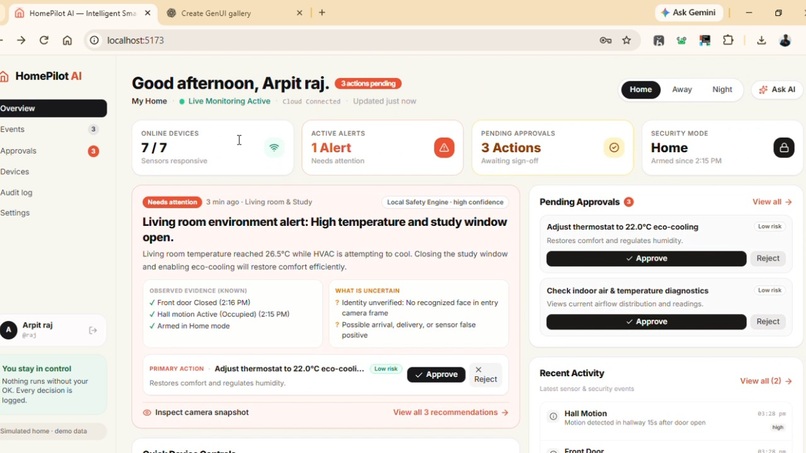
Home page
-
Inspiration
Smart homes generate alerts, but users still have to interpret events and decide what to do next. We wanted to create an AI assistant that understands household context, explains potential issues, and helps users take action safely.
What it does
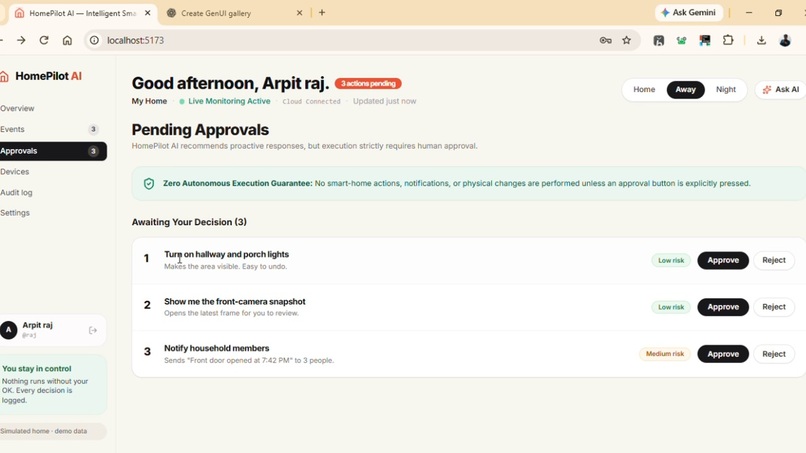
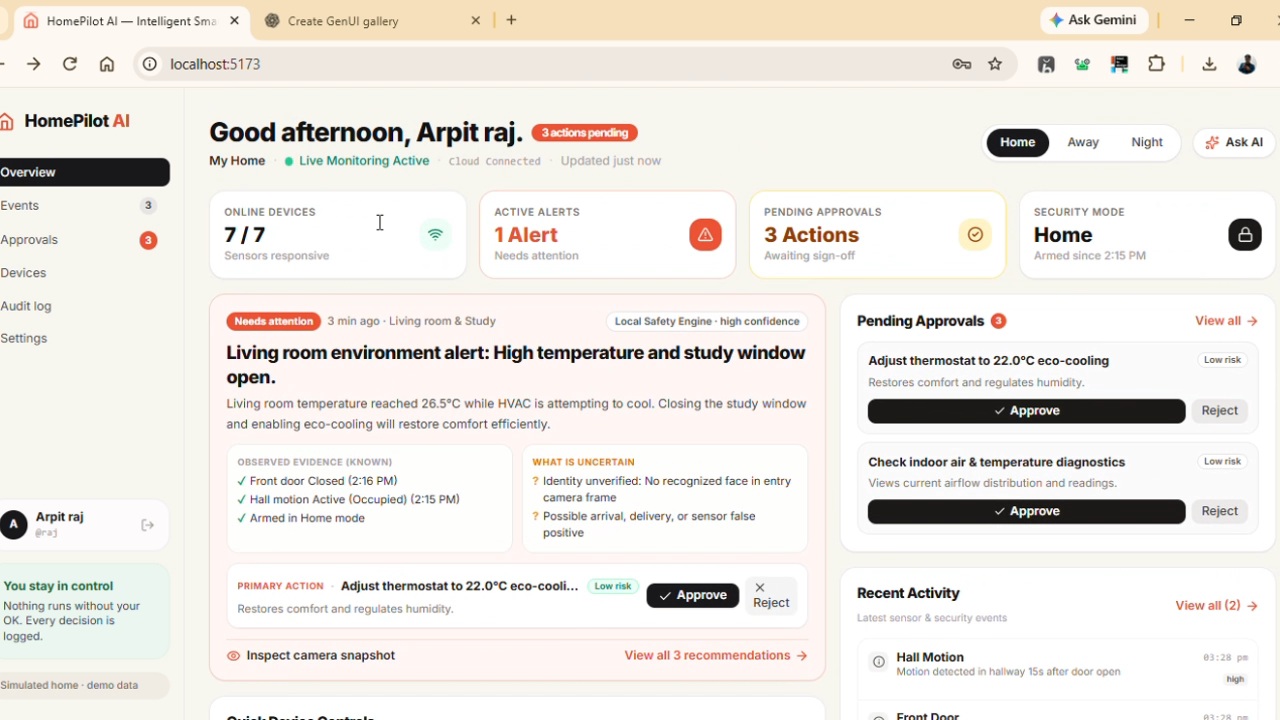
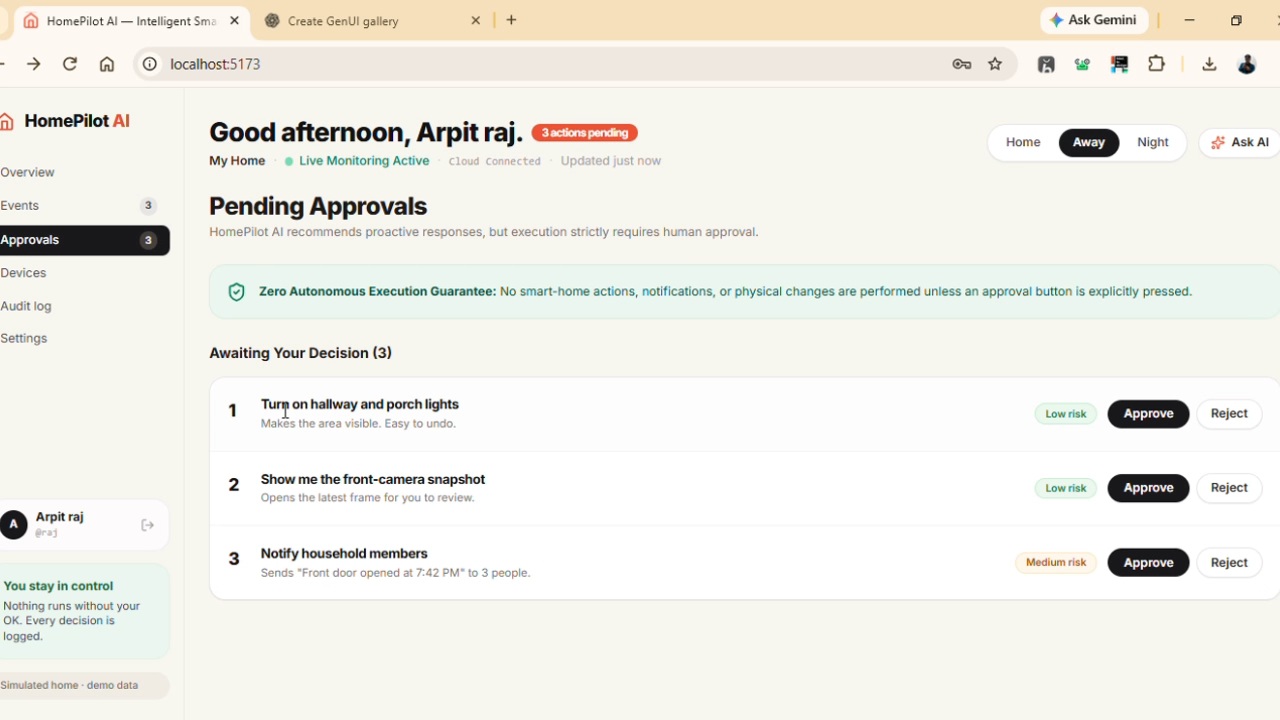
HomePilot AI is an AI-powered smart home assistant with an interactive dashboard. It combines household events, generates contextual explanations, recommends responses, and lets users approve or reject proposed actions before simulated devices respond.
How we built it
We designed a full-stack application using React and TypeScript for the interface, Node.js and Express for backend APIs, and Amazon Bedrock for AI-powered reasoning. A simulated smart home provides sensor events and device states, while an approval workflow and activity log make actions transparent.
Challenges we faced
Our main challenges were combining multiple events into meaningful situations, making AI responses useful and reliable, controlling which actions could execute, and keeping the interface synchronized with backend state.
What we learned
We learned that a useful AI agent needs more than natural-language responses. It also needs clear context, reliable tools, permission checks, and transparent feedback so users remain in control.
What's next
We plan to explore MCP-based integrations, expand supported smart-home actions, and connect real devices where supported.
Built With
- amazon
- amazon-web-services
- api
- bedrock
- css
- express.js
- git
- node.js
- react
- rest
- sdk
- sqlite
- tailwind
- typescript
- vite


Log in or sign up for Devpost to join the conversation.