



Inspiration
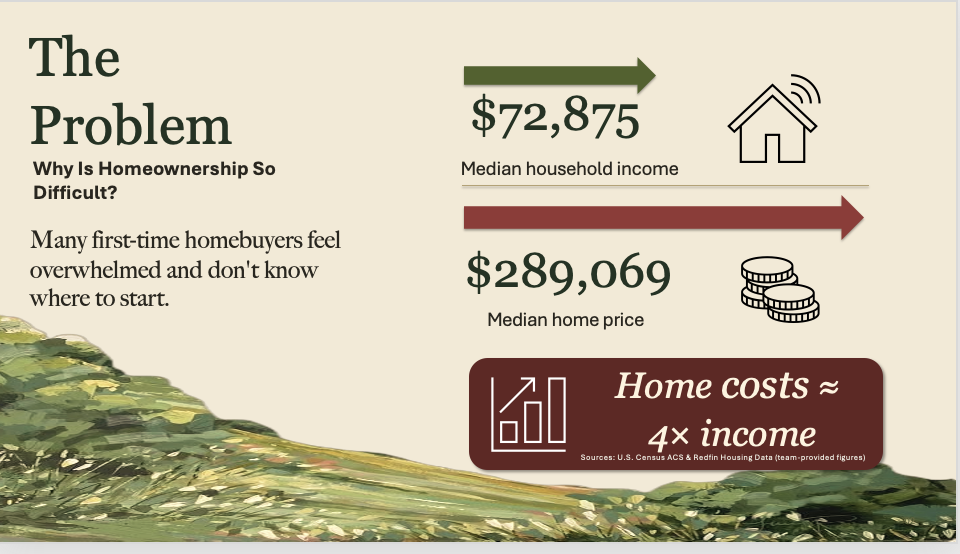
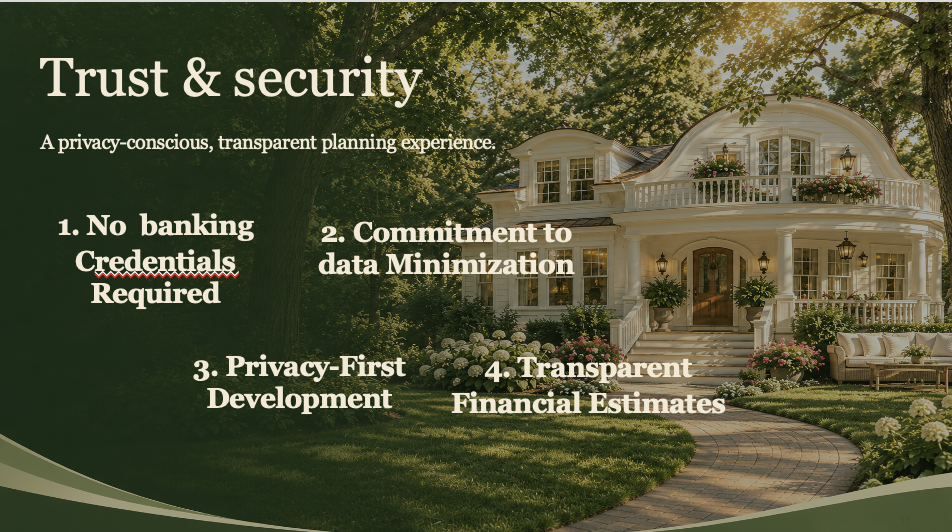
A lot of young people in Michigan have no idea if buying a home is realistic for them. Online calculators give you one date and act like it's a fact. We wanted something that treats the future like what it is: uncertain. HomePath tells you a realistic range and tells you exactly what it assumes.
What it does
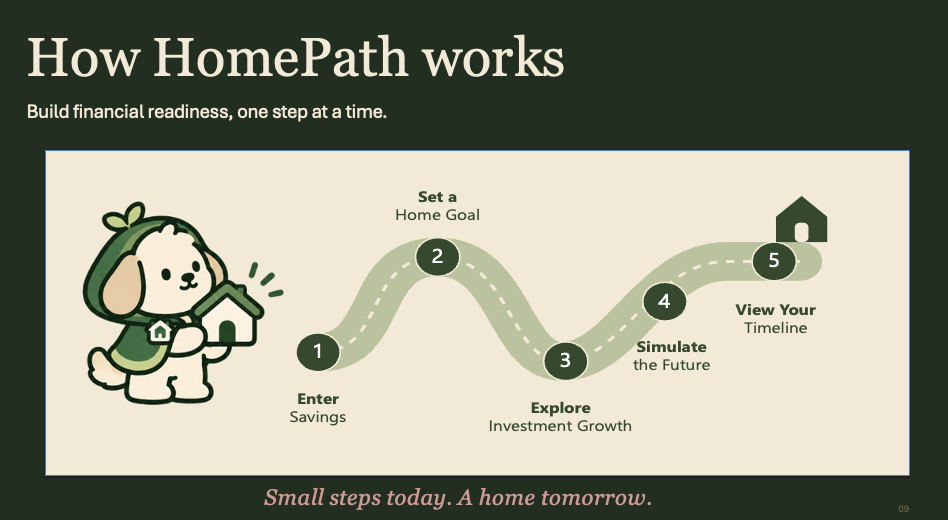
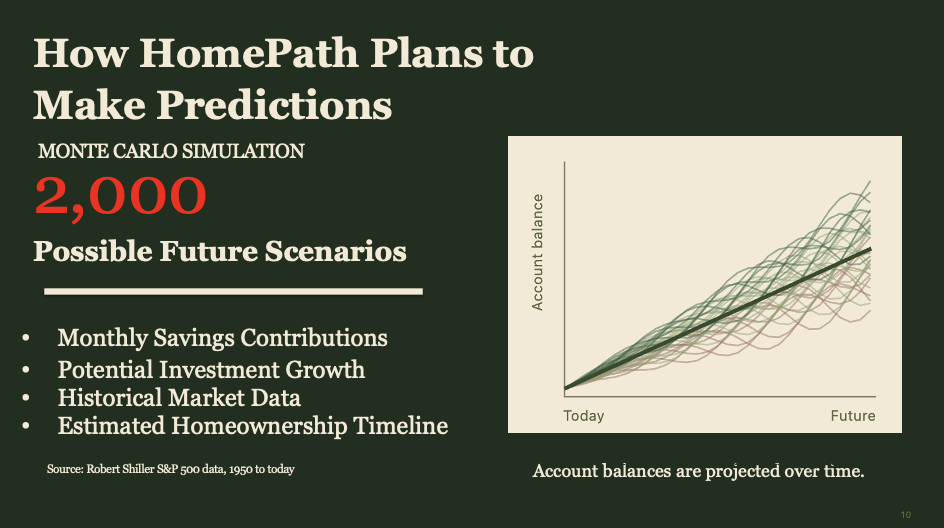
You enter your take-home pay, how much you save each month, what you have saved, the home price, and the down payment you're aiming for. HomePath simulates 2,000 possible futures for your savings and shows you:
- the month you are likely to hit your down payment goal
- how sure you can be about that date (you choose with a slider)
- a fan chart of how your savings could grow
- what your monthly payment would look like once you buy, including taxes and insurance
- an FAQ for first-time buyers, and a ? next to every term
Every number is labeled as data, an assumption, or a choice, so you know what to trust.
Future of money: Solana and Breez
- Solana: HomePath reads the USDC (digital dollars) balance of a Solana wallet live from the Solana blockchain and counts it in your savings. Read only. It never touches your keys.
- Breez: the Down Payment Jar is built with the Breez SDK (JavaScript). It is a savings jar the user controls, not a bank. It runs on the Breez test network (regtest) today, so no real money moves yet.
How we built it
We built it in R with Shiny and bslib for the interface. The savings model is a geometric Brownian motion with monthly deposits, which is a standard way to model an investment that grows randomly over time. Each month the balance updates as
$$ V_{k+1} = V_k \, e^{(\mu - \sigma^2/2)\Delta t + \sigma \sqrt{\Delta t}\, Z_k} + m $$
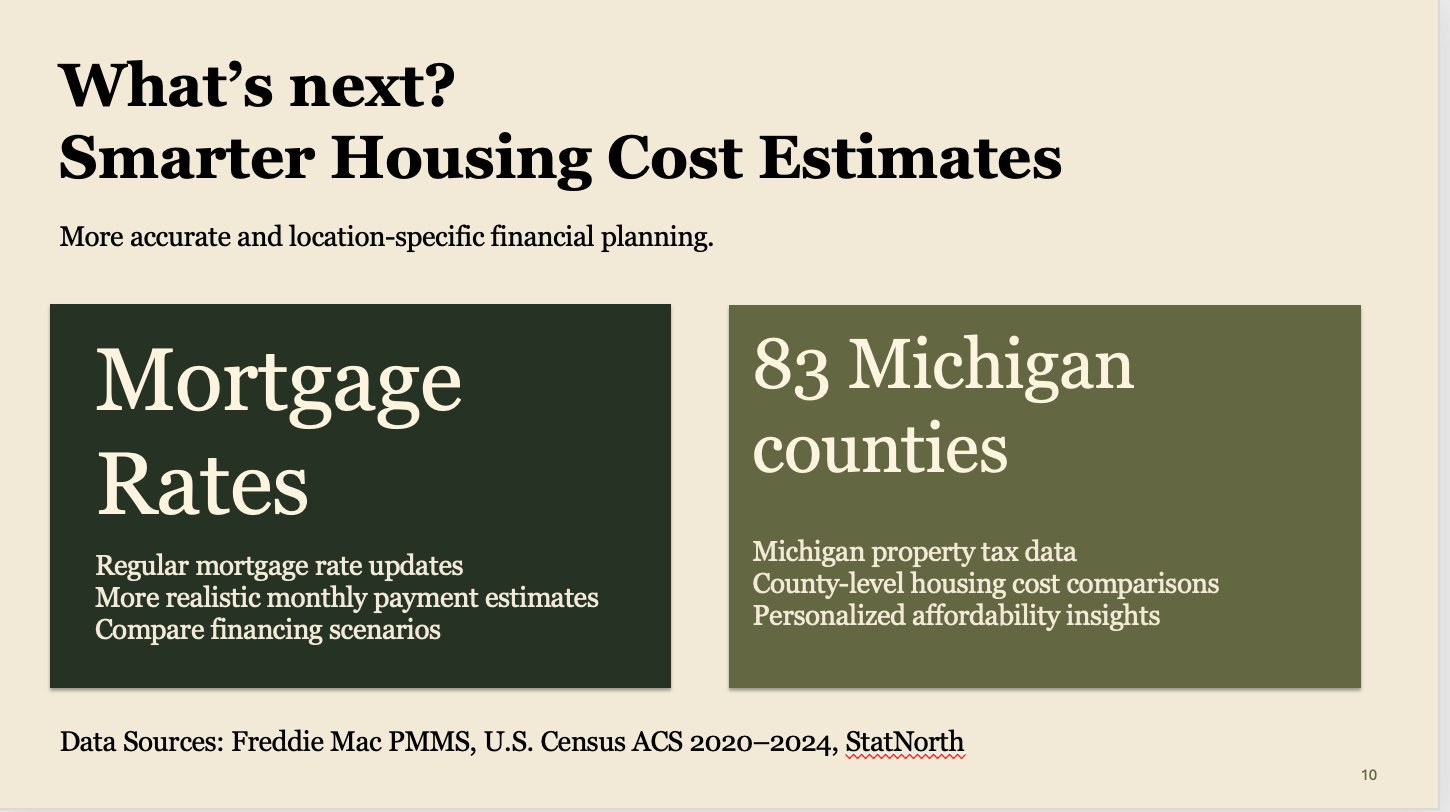
where \( \mu \) and \( \sigma \) are the long-run return and volatility, \( Z_k \) is a random normal draw, and \( m \) is the monthly deposit. We run this 2,000 times and record the first month each run reaches the goal. Returns are based on long-run US stock market data since 1950 (Shiller). Michigan numbers like the property tax rate, insurance cost, and mortgage rate come from public sources (Tax Foundation, HUD, Freddie Mac).
The Solana check calls the public Solana mainnet RPC from R. The Down Payment Jar is a JavaScript page built with the Breez SDK and served from the same website.
Challenges we ran into
The biggest one was the math. We first tried a closed-form formula, but it only works when money grows multiplicatively, and monthly deposits are additive. So we kept a month-by-month simulation instead. We also had to decide how to show uncertainty without confusing people. A histogram was too much, so we settled on one date plus a range. Putting an R app and a JavaScript Breez page on one website in the last hours was also hard.
What we learned
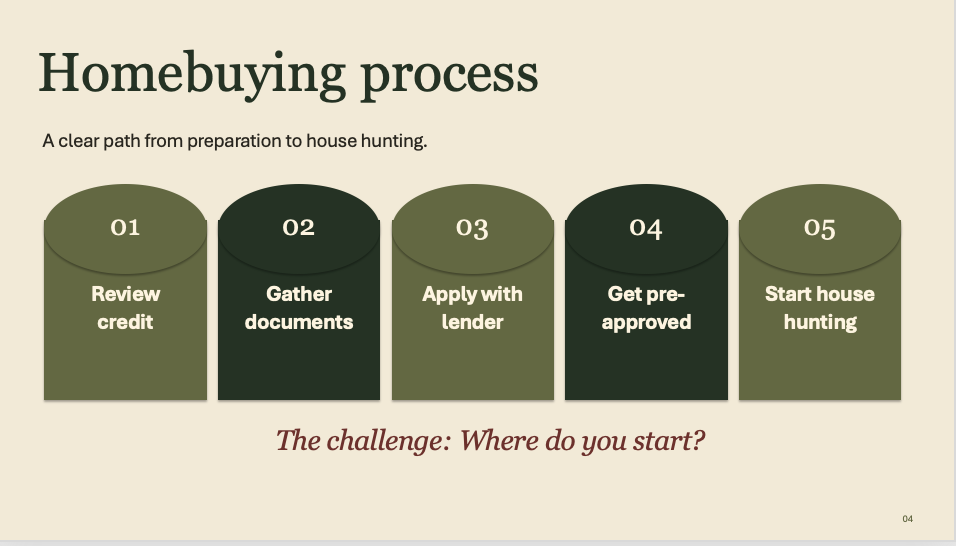
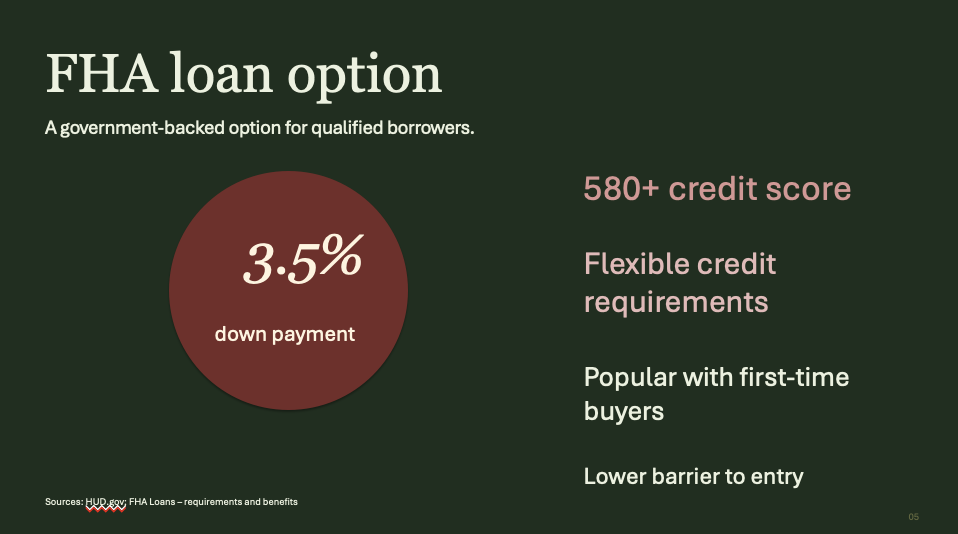
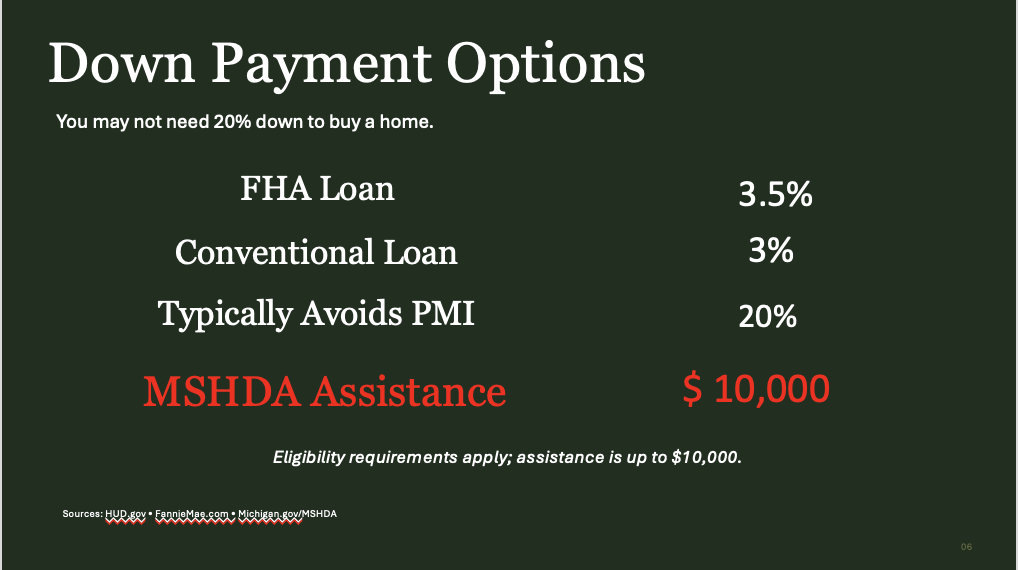
That being honest about uncertainty is harder than hiding it. We also learned a lot about how home buying actually works: PMI, FHA mortgage insurance, escrow, and why the first-time buyer rate is so low for young people.
What's next
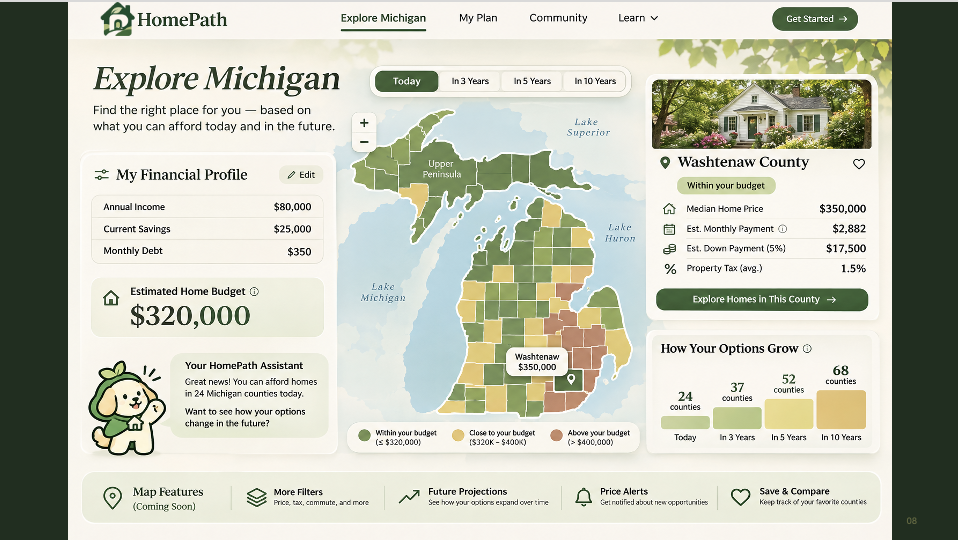
County-level home prices and taxes, a Michigan map, moving the jar from the test network to real payments, and letting users pick a more conservative investment mix.
Built With
- breez
- bslib
- ggplot2
- github
- javascript
- r
- shiny
- solana


