-
-
2
-
4
-
1
-
5
-
3
-
HomePath_AI
HomePath AI
Inspiration
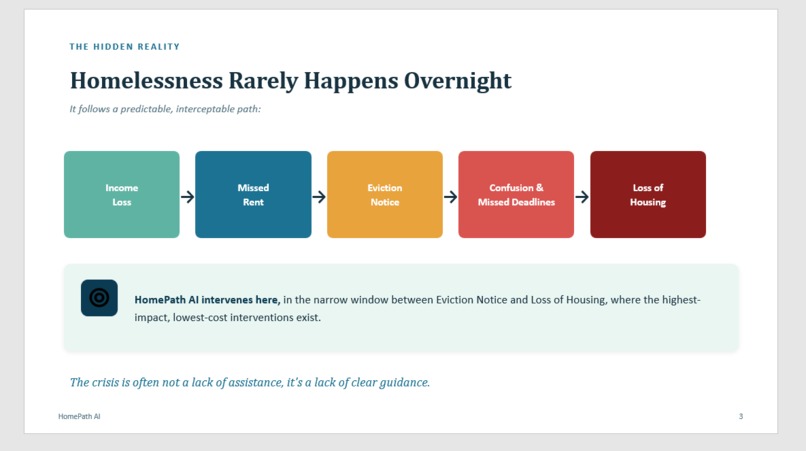
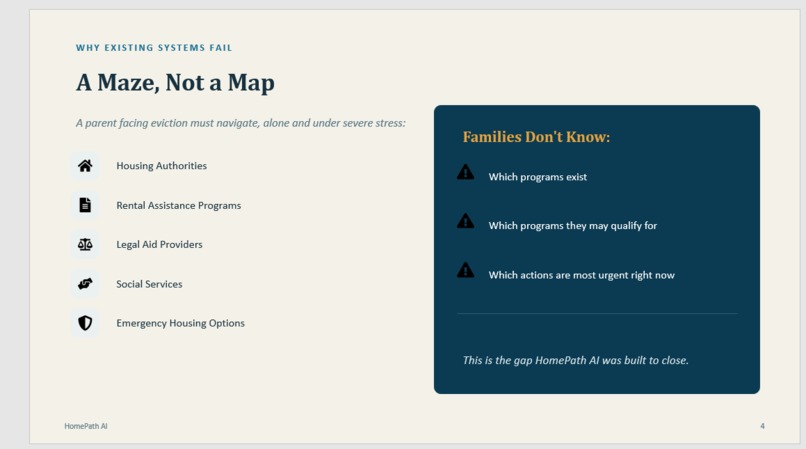
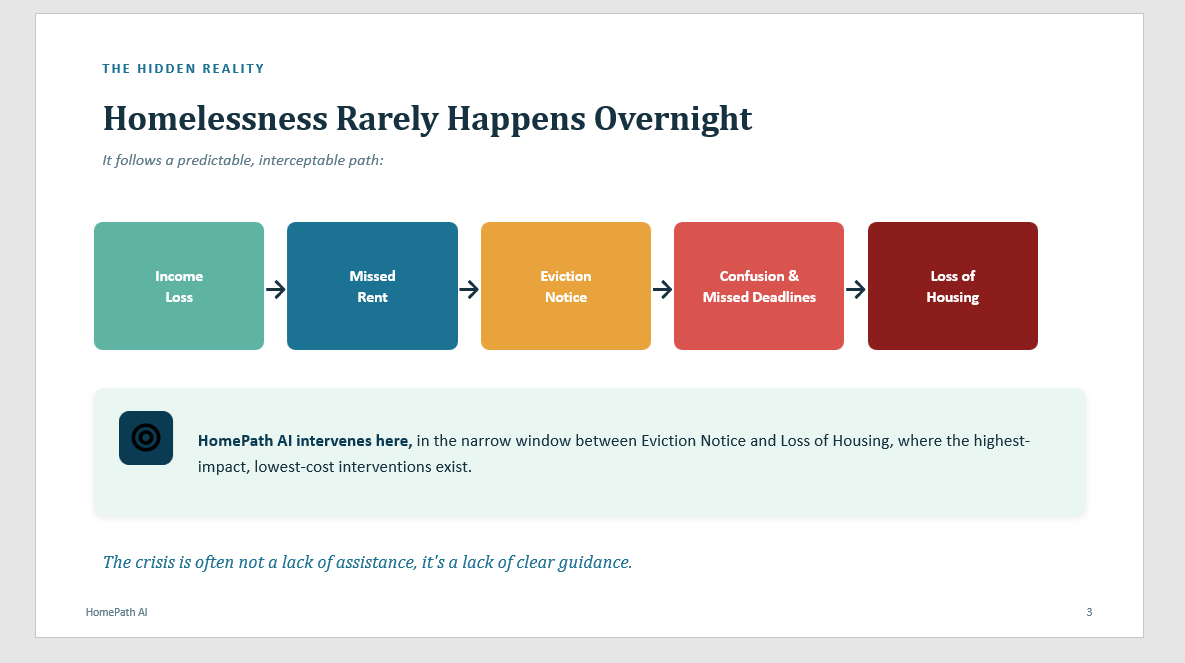
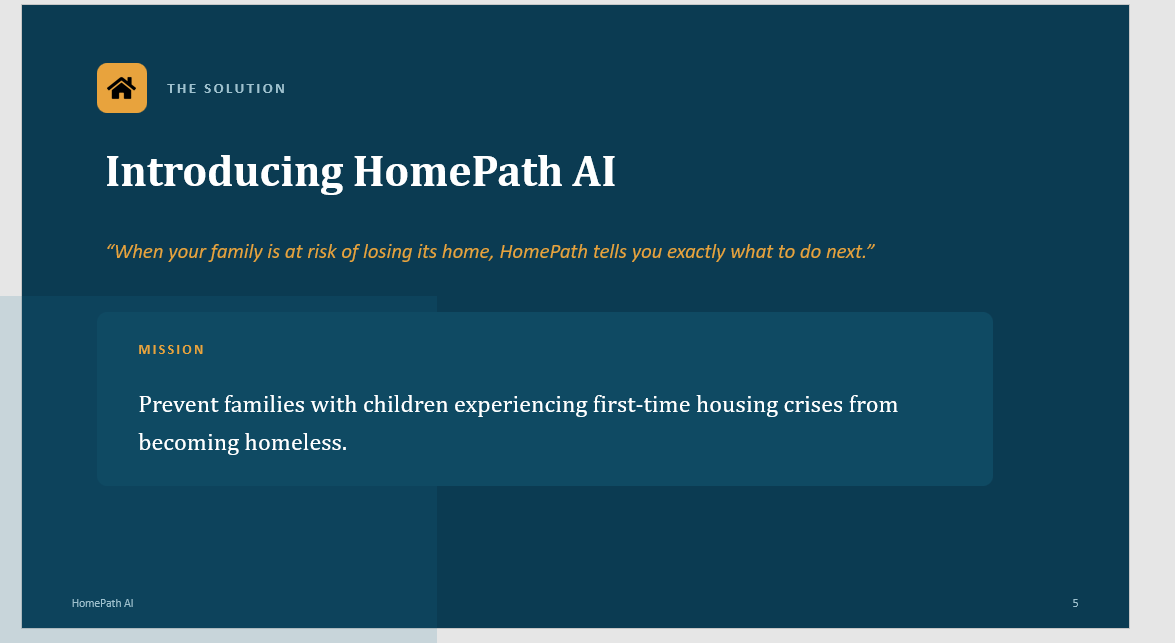
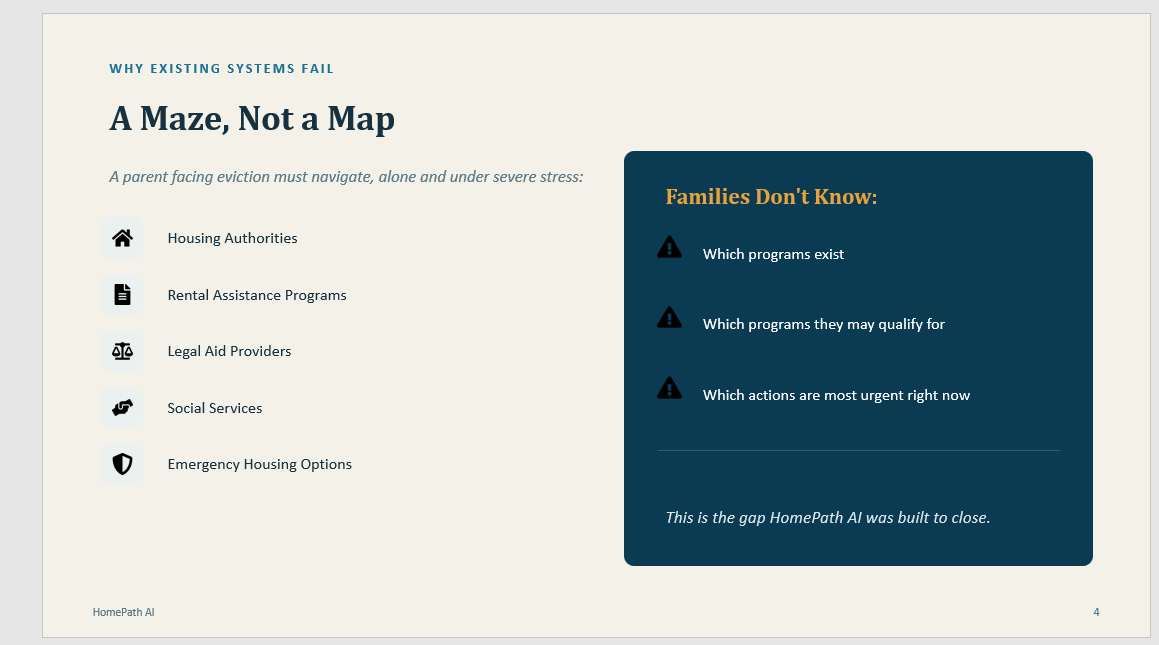
Housing instability affects millions of people every year, yet navigating assistance programs, understanding eviction notices, and knowing what steps to take can be overwhelming especially during a crisis. We wanted to build a tool that reduces confusion and empowers people with clear, actionable guidance when they need it most.
The inspiration for HomePath AI came from the challenge many families face when receiving legal or housing-related documents that are difficult to understand. Instead of forcing users to search through multiple websites and resources, we envisioned a single platform that could analyze their situation, explain their options, and connect them with relevant support programs.
What It Does
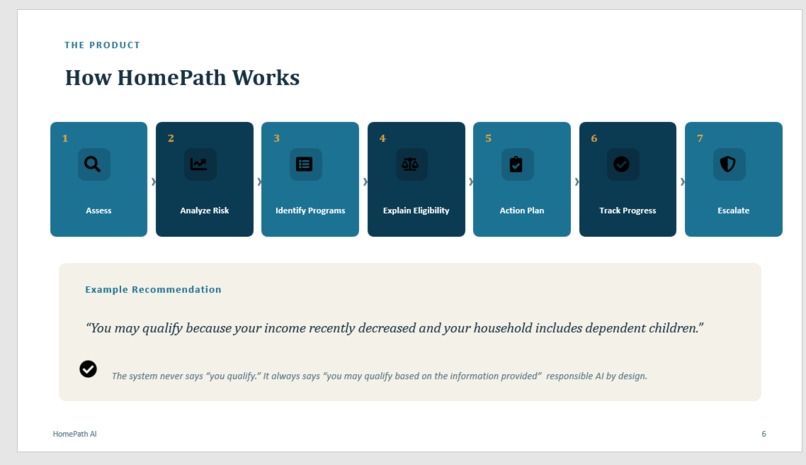
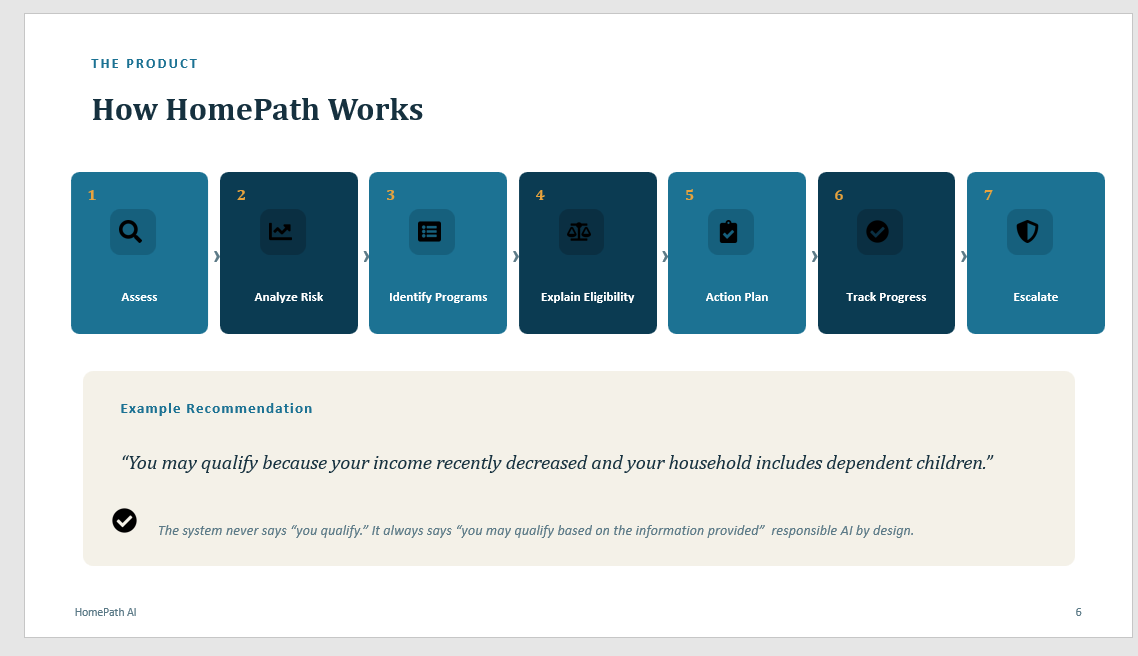
HomePath AI is an AI-powered housing assistance platform that helps users:
- Assess their housing risk through an interactive questionnaire.
- Upload eviction notices and housing documents for AI analysis.
- Extract critical information such as deadlines, notice types, and amounts due.
- Generate personalized action plans with immediate next steps.
- Discover relevant assistance programs and community resources.
- Review assessment history and case information.
- Access support in multiple languages.
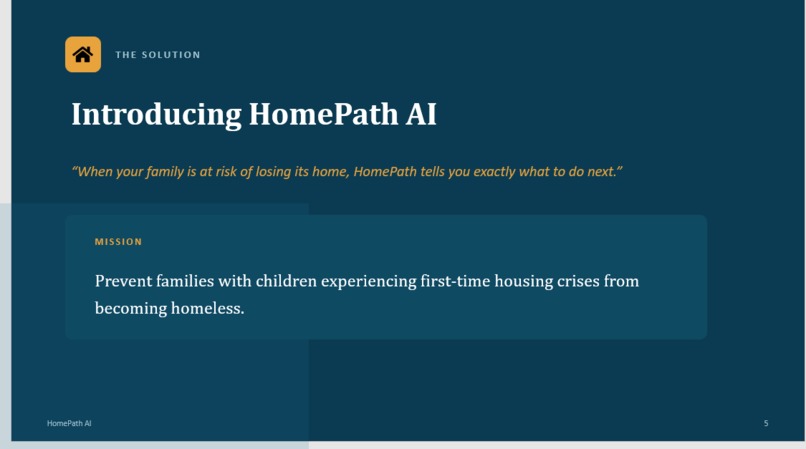
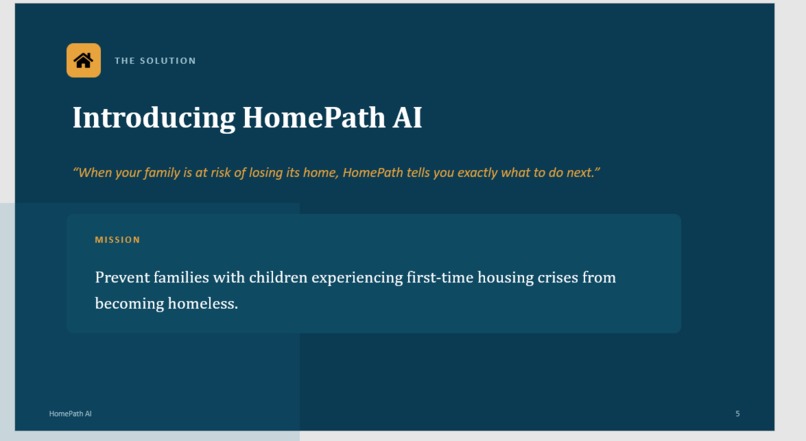
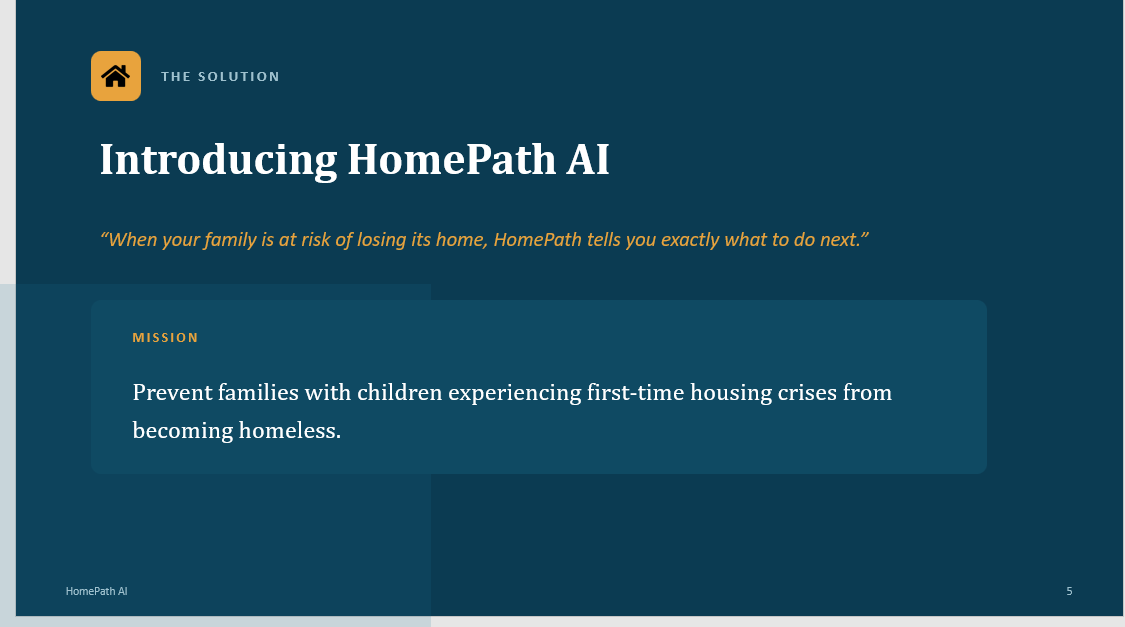
The goal is to transform complex housing information into clear, understandable guidance.
How We Built It
We built HomePath AI using a modern full-stack architecture:
Frontend
- Next.js
- TypeScript
- Tailwind CSS
- Responsive UI Components
Backend
- FastAPI
- Python
- REST APIs
Database
- PostgreSQL (Neon)
AI Layer
- Google Gemini
- PDF document analysis
- Action plan generation
- Translation services
Workflow
- User completes a housing assessment.
- Assessment data is stored in PostgreSQL.
- AI evaluates risk factors and generates recommendations.
- Users can upload eviction notices.
- PDF text is extracted and analyzed.
- Gemini generates summaries, urgency levels, and action plans.
- Users explore programs and resources relevant to their situation.
Challenges We Faced
One of the biggest challenges was creating a reliable document analysis workflow. Eviction notices vary significantly in structure and formatting, making information extraction difficult.
Another challenge was integrating multiple AI-driven features while maintaining a simple user experience. We wanted users to receive meaningful guidance rather than overwhelming amounts of information.
Building a seamless connection between the assessment system, document analysis pipeline, AI recommendations, and resource explorer also required careful planning of both the frontend and backend architecture.
Finally, ensuring the application remained intuitive and accessible while supporting future multilingual expansion required additional design considerations.
What We Learned
Throughout this project, we gained hands-on experience with:
- Full-stack application development
- AI-powered document processing
- Prompt engineering for structured outputs
- FastAPI backend design
- PostgreSQL database integration
- Frontend architecture with Next.js
- User-centered design for high-stress situations
We also learned the importance of turning AI outputs into actionable guidance rather than simply generating information.
Future Plans
Future versions of HomePath AI will include:
- Real-time housing assistance databases
- Expanded multilingual support
- Location-aware program recommendations
- Case worker collaboration tools
- Mobile application support
- Advanced analytics for housing organizations
Our vision is to create a platform that helps individuals and families navigate housing challenges with confidence, clarity, and timely support.
Impact
HomePath AI demonstrates how AI can be used to make critical services more accessible. By simplifying complex housing information and connecting users with meaningful next steps, we aim to help people make informed decisions during some of the most stressful moments of their lives.
Built With
- ai
- documentanalysis
- fastapi
- geminiapi
- neon
- next.js
- postgresql
- python
- tailwindcss
- typescript


Log in or sign up for Devpost to join the conversation.