-
-
Login Screen
-
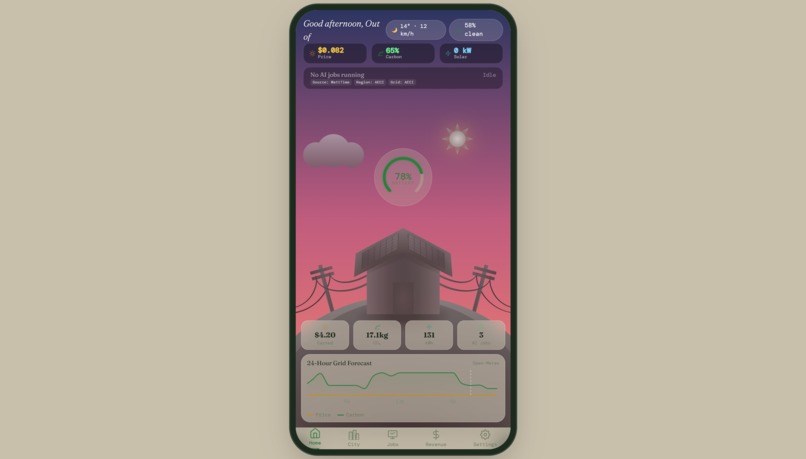
Home Tab
-
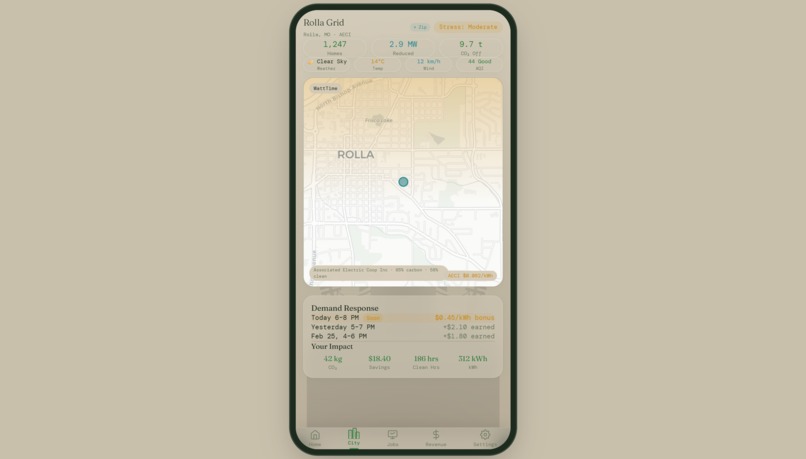
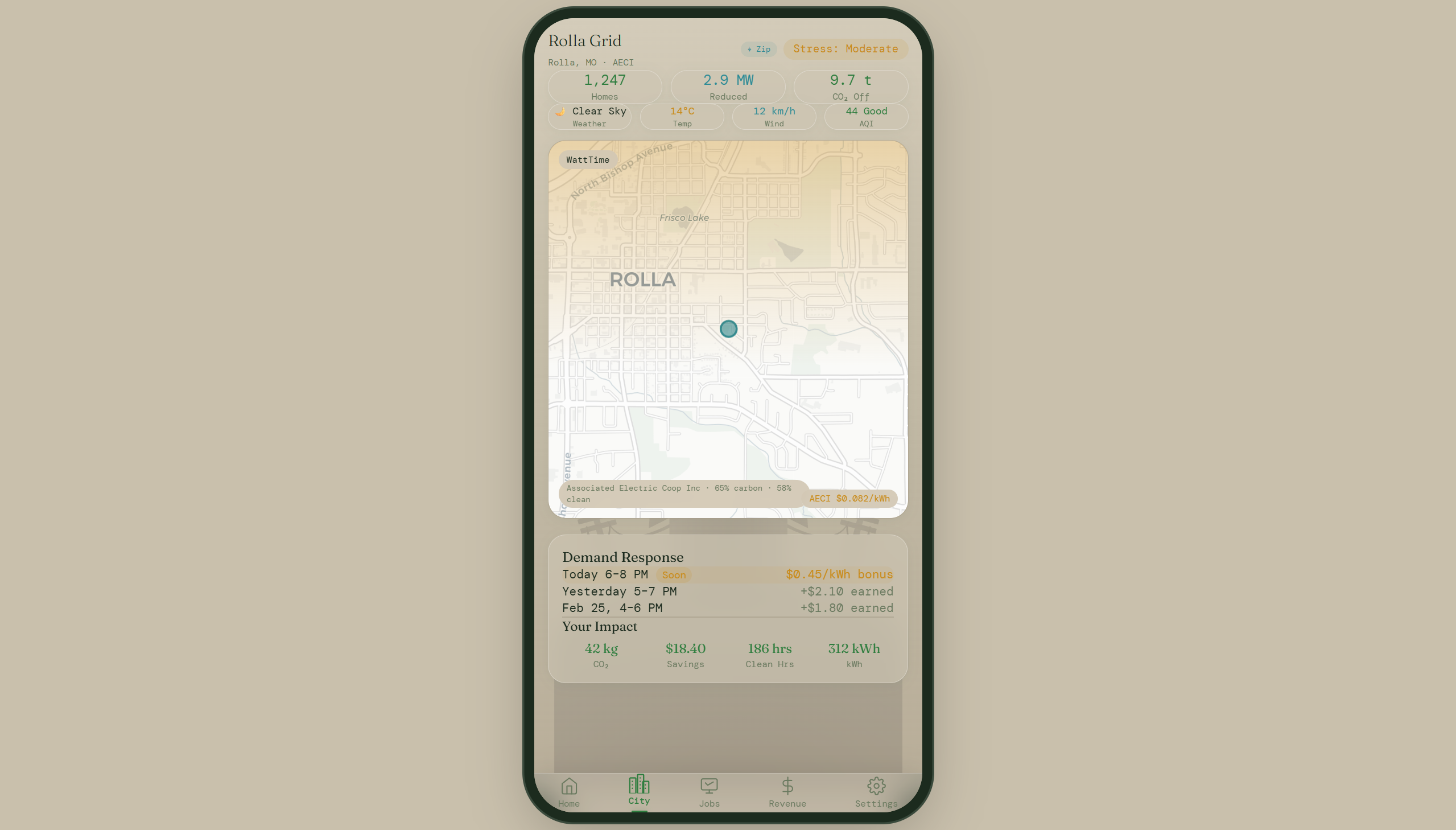
City Tab
-
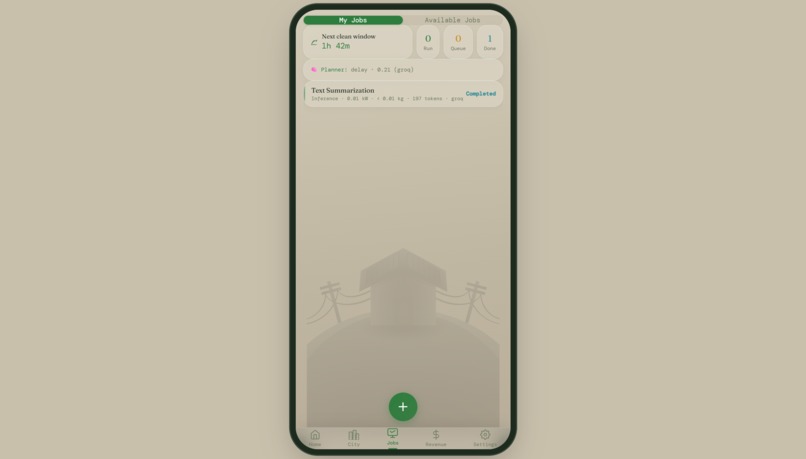
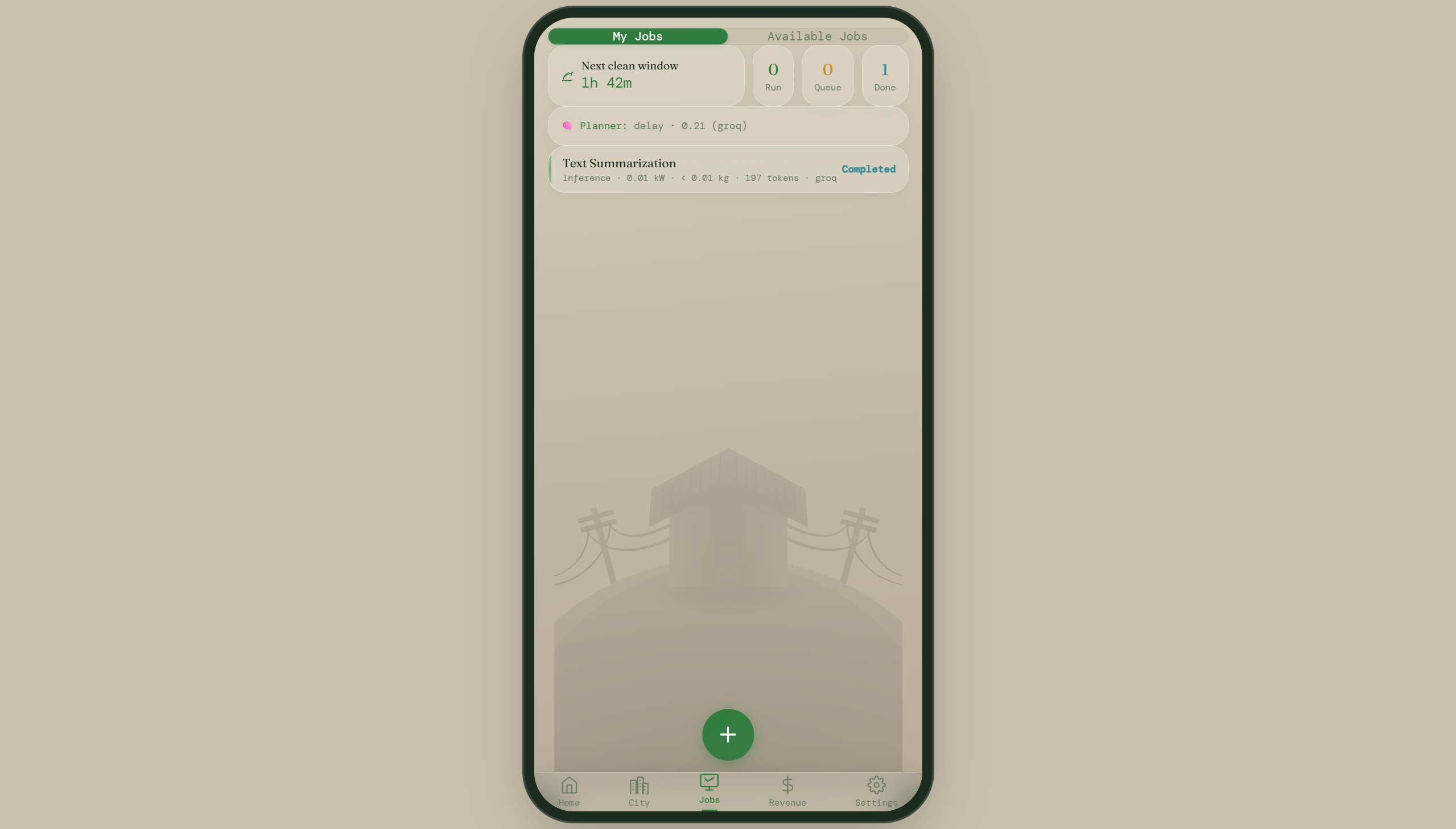
Jobs Tab
-
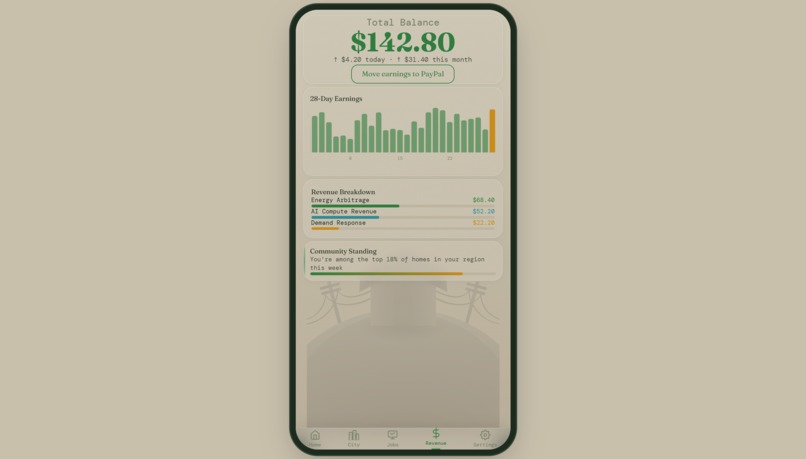
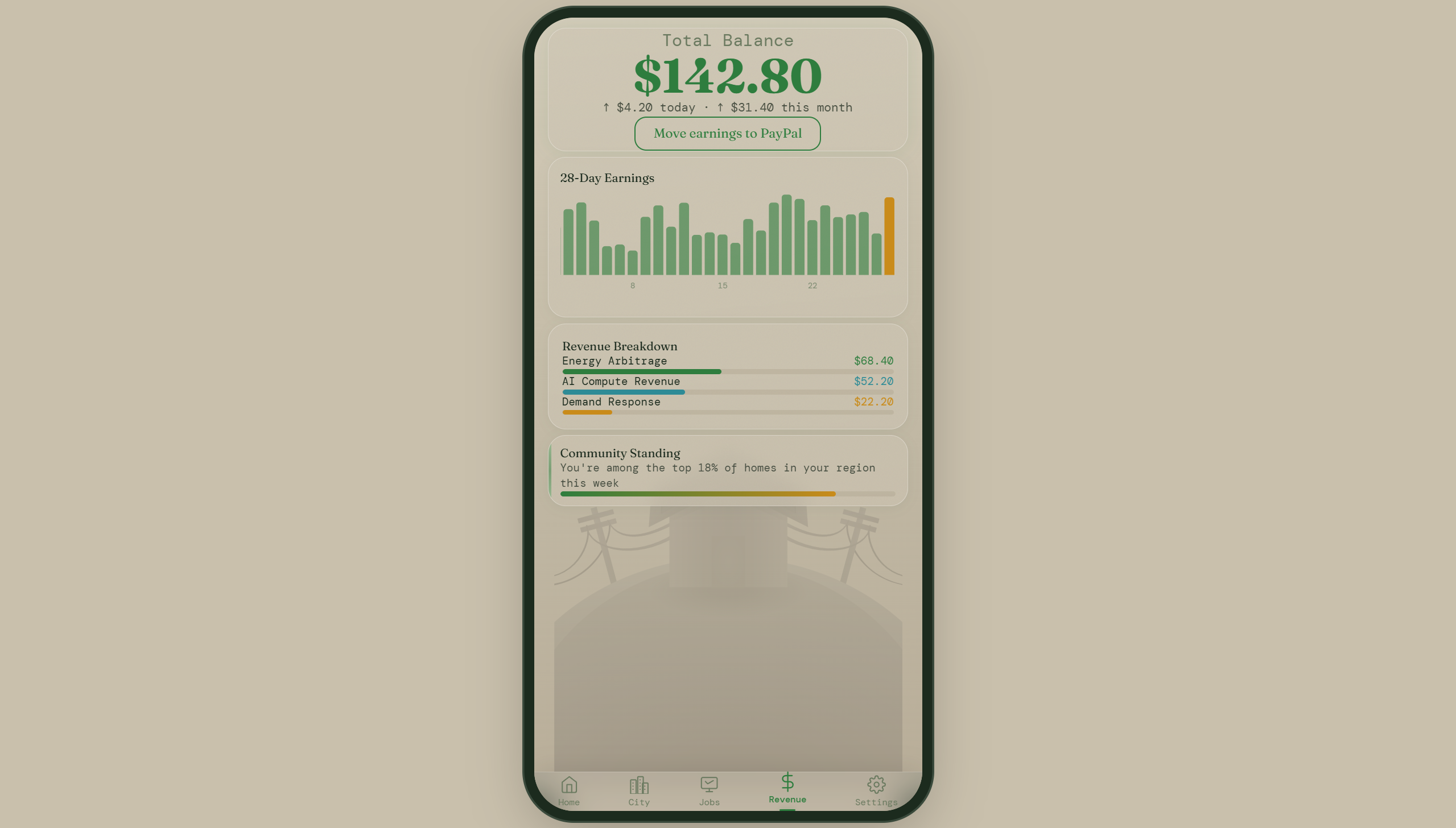
Revenue Tab
-
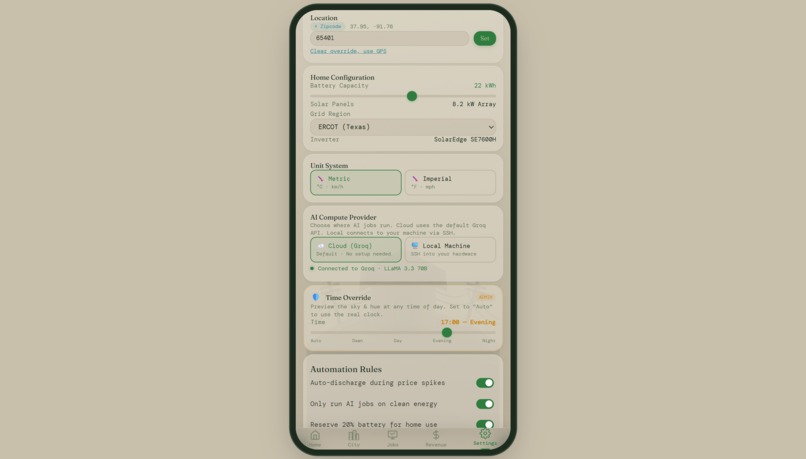
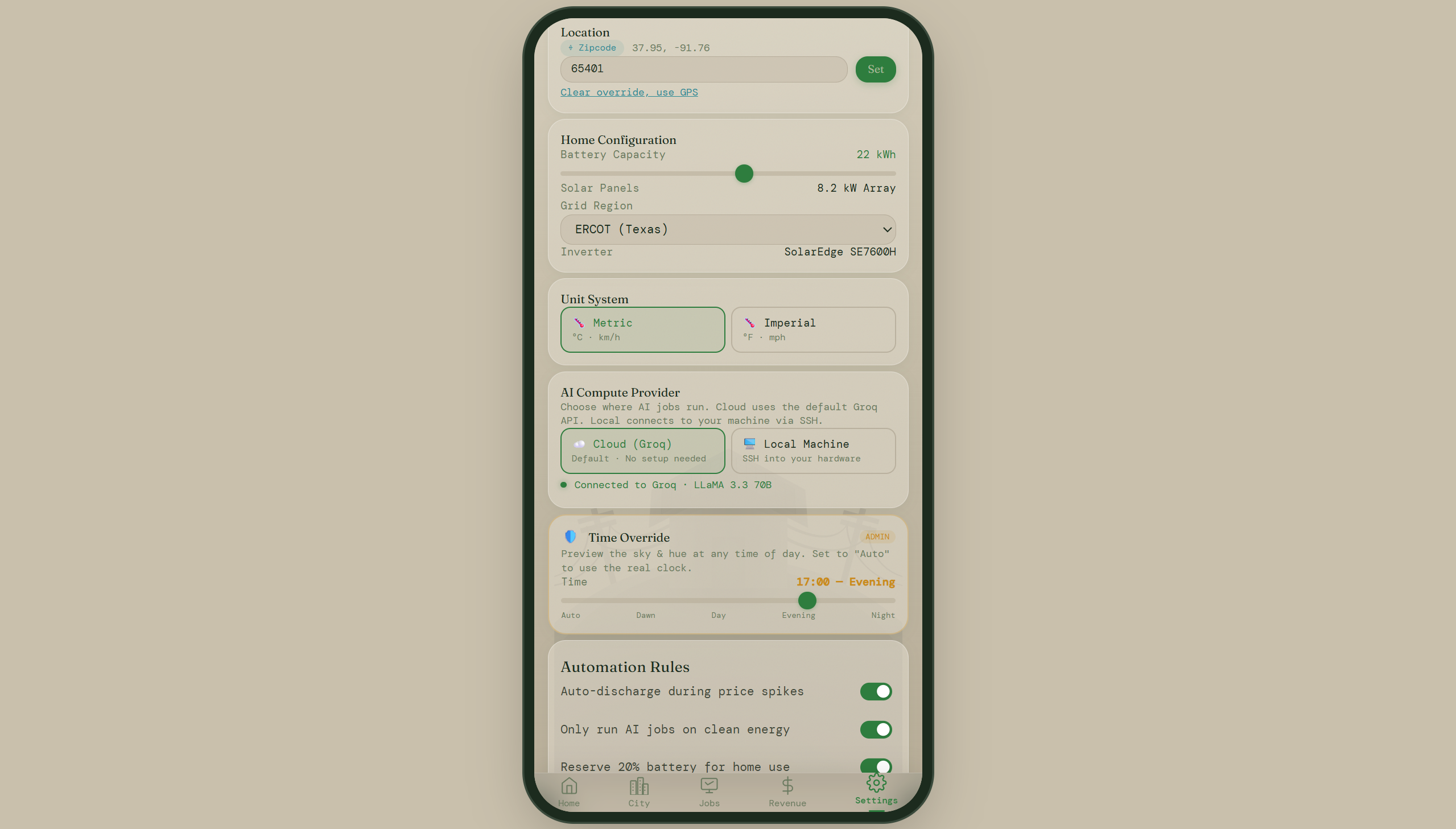
Settings Tab
Inspiration
One of the biggest problems facing modern towns and cities is AI data centers. They consume enormous amounts of energy, strain local grids, and take up large swaths of land. With HomeNode, every household would be turned into a nano data center node. Instead of building massive centralized facilities, we distribute compute and energy intelligence across thousands of homes connected to the grid, optionally equipped with solar panels and batteries.
What it does
Our project allows people to run AI jobs locally from their homes to offset the effects a data center would have in their towns. We've created an app that allows users to track their town's real-time power grid conditions, weather, and local energy. With this data, they can schedule AI jobs to run whenever power stress is low. Ideally, you could garner money that would offset the power costs of running these models.
Features
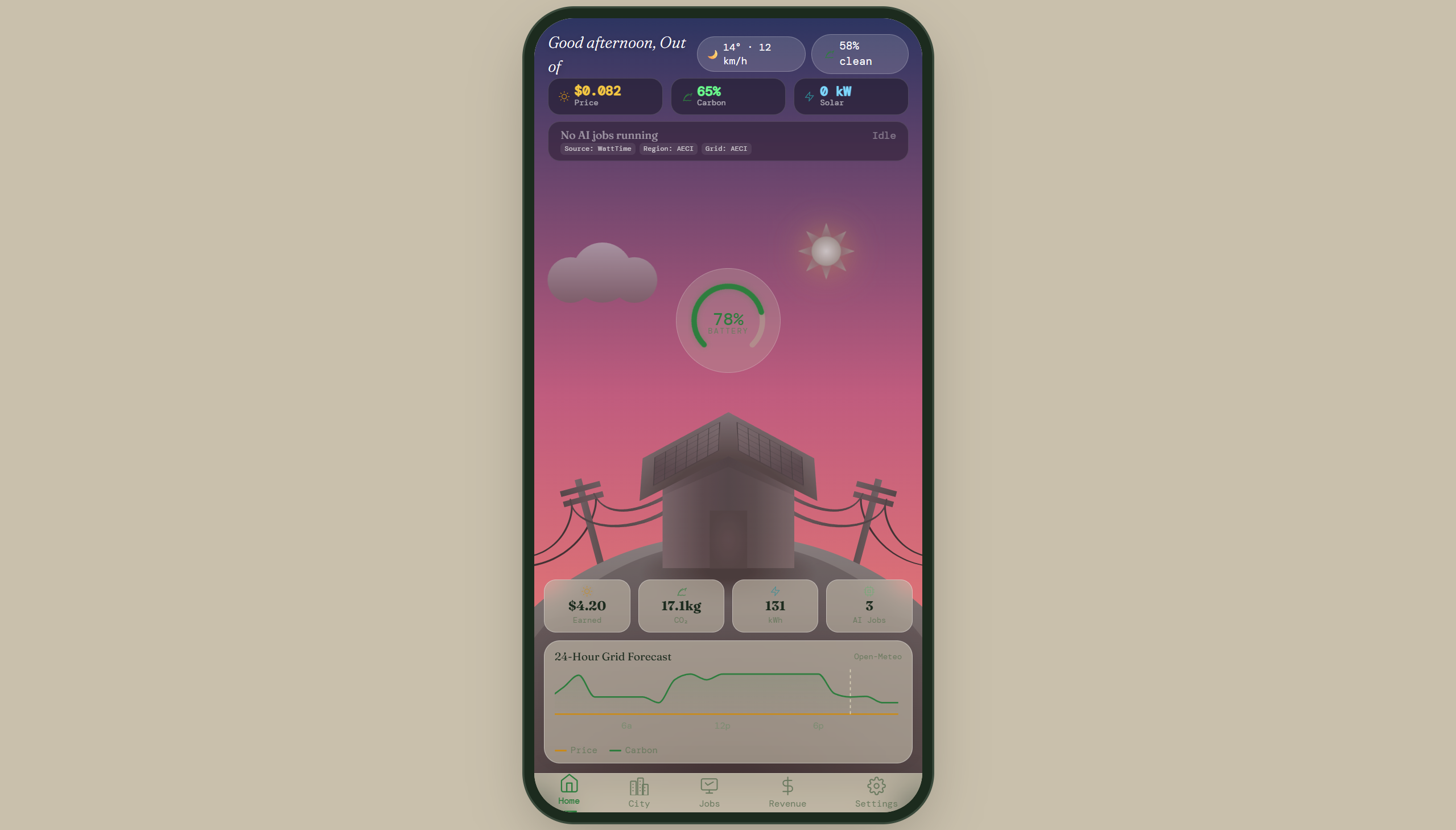
- Real-time energy dashboard showing live grid conditions, weather, and household energy state.
- AI-powered job scheduler that queues and runs compute tasks during optimal clean-energy windows.
- Dynamic home visual that changes color and atmosphere based on time of day (dawn, day, evening, night), with cloud coverage that reflects how much solar energy can be generated at any given moment.
- City network view showing how your home contributes to the broader grid in real time.
- Revenue tracking with earnings summaries, trends, and community standings.
- Location-aware context via GPS, ZIP override, and geocoding.
- Auth0 authentication.
How we built it
- Built a React + Vite mobile-first Progressive Web App organized into five core tabs: Home, City, Jobs, Revenue, and Settings.
- Designed a FastAPI backend as a secure orchestration layer, keeping all API keys server-side and normalizing data into stable contracts for the frontend.
- Integrated real-time grid, weather, and location data through custom hooks (useWeather, useWattTimeData, useLocation) to power live household energy insights.
- Built an AI job scheduling system that recommends and executes compute tasks during optimal clean-energy windows, turning homes into nano data center nodes.
- Used Auth0 for authentication and role-based access control, with an admin layer for testing and demos.
- Deployed on a split infrastructure: frontend on Netlify, backend on Render, with MongoDB for database.
- Used Leaflet/OpenStreetMap for city-level network visualization and Recharts for real-time energy dashboards.
Challenges we ran into
- Integrating over 8 external APIs was one of the hardest parts. Each API could fail, timeout, or return inconsistent data, so we had to build defensive defaults, cache layers, and deterministic fallback responses throughout the backend to keep the UI stable.
- Simultaneously hosting a database, backend, and frontend across different services while also connecting to a local LLM running on a local machine created issues with coordination. Ensuring all of these systems communicated properly with low latency required careful environment configuration.
- Preventing unnecessary refetch loops caused by array-reference effect dependencies in React hooks required significant debugging to stabilize data flow across the app.
Accomplishments that we're proud of
We're proud of creating and executing an idea that solves a real, modern issue. We feel we've created something unique that could genuinely be used to solve a modern concern.
What we learned
We learned a lot about API inclusion and integrating a program with an online database. Also, we spent a lot of time tweaking our program's UI, so we learned about many features we didn't realize could be so easily implemented to make our project look nicer.
What's next for HomeNode
HomeNode's progression would include implementing new features and increasing its scale to include more users and larger workloads.


Log in or sign up for Devpost to join the conversation.