-
-
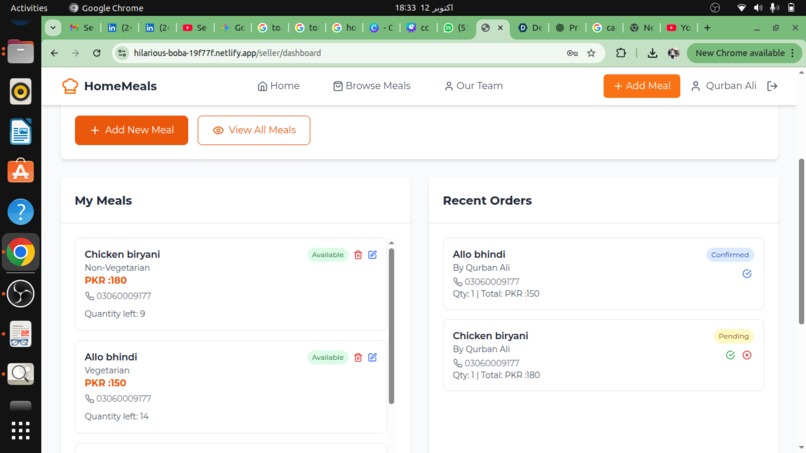
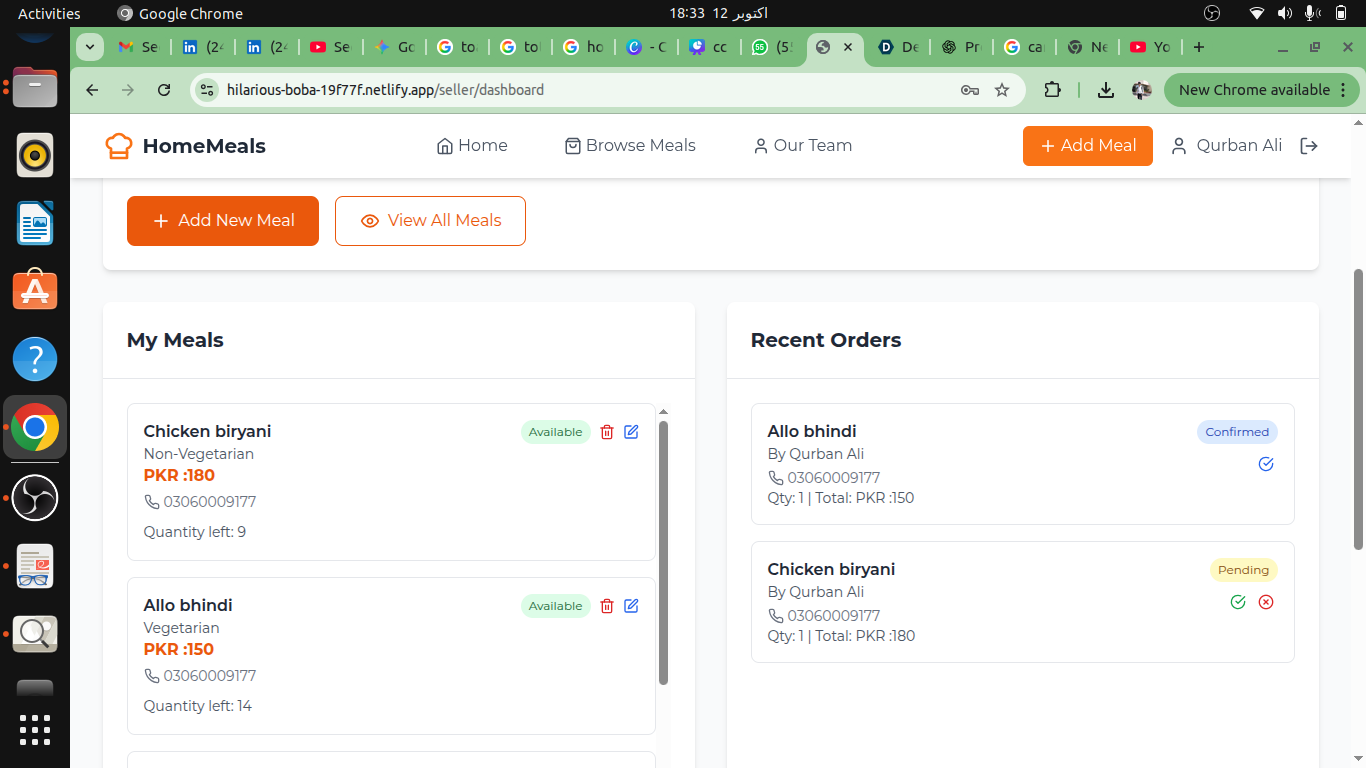
Seller Dashboard from where , Seller can post meal and accept orders
-
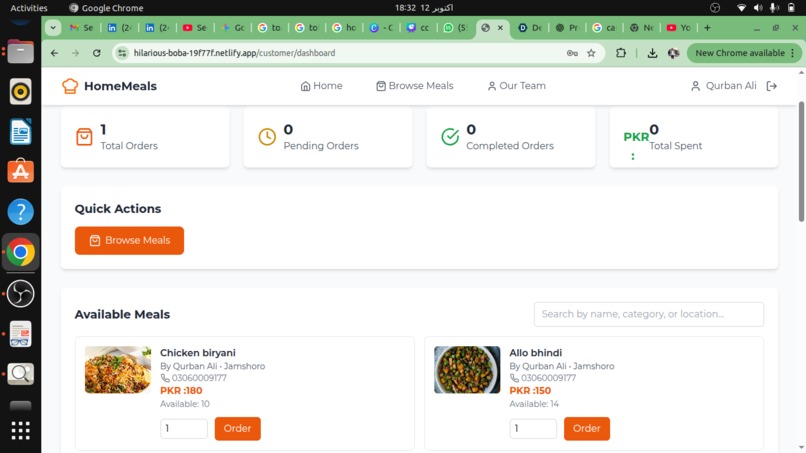
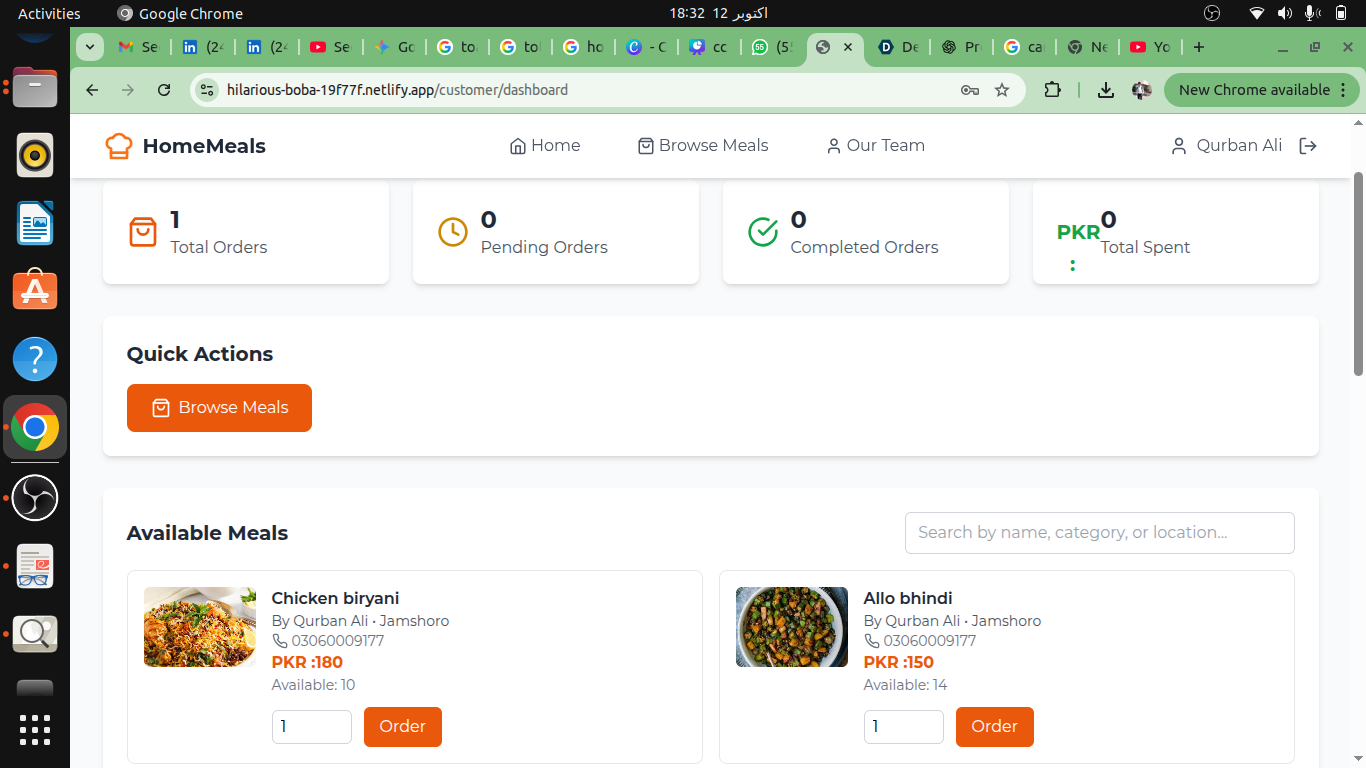
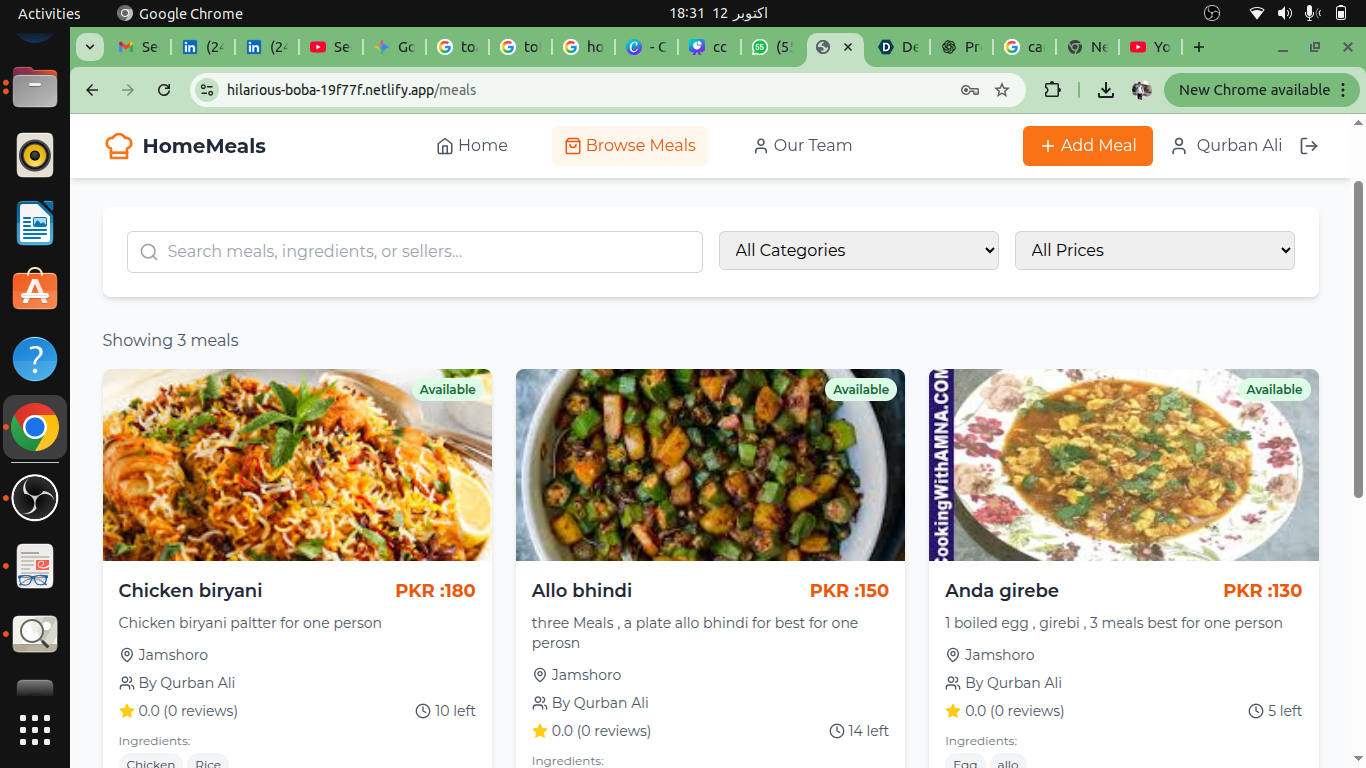
coustomer dashboard , from where coustomer can browse meal and order meal
-
-
-
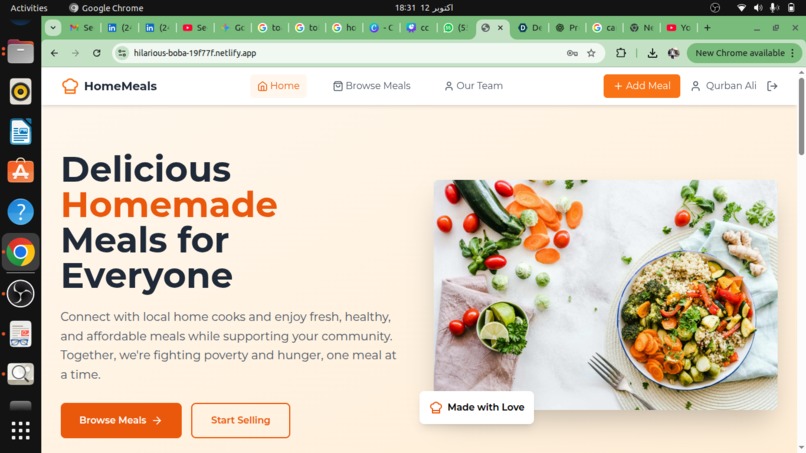
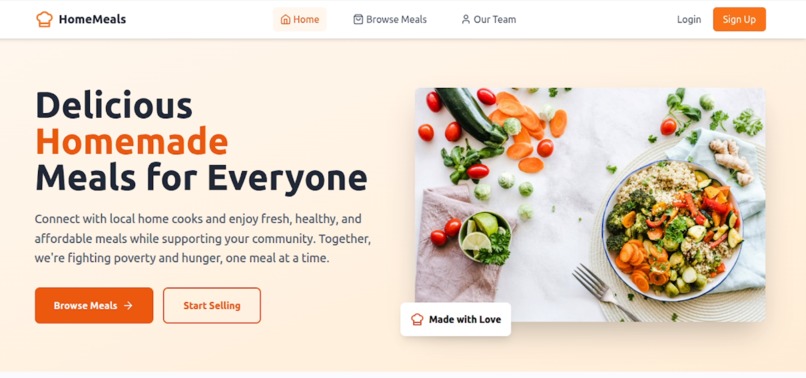
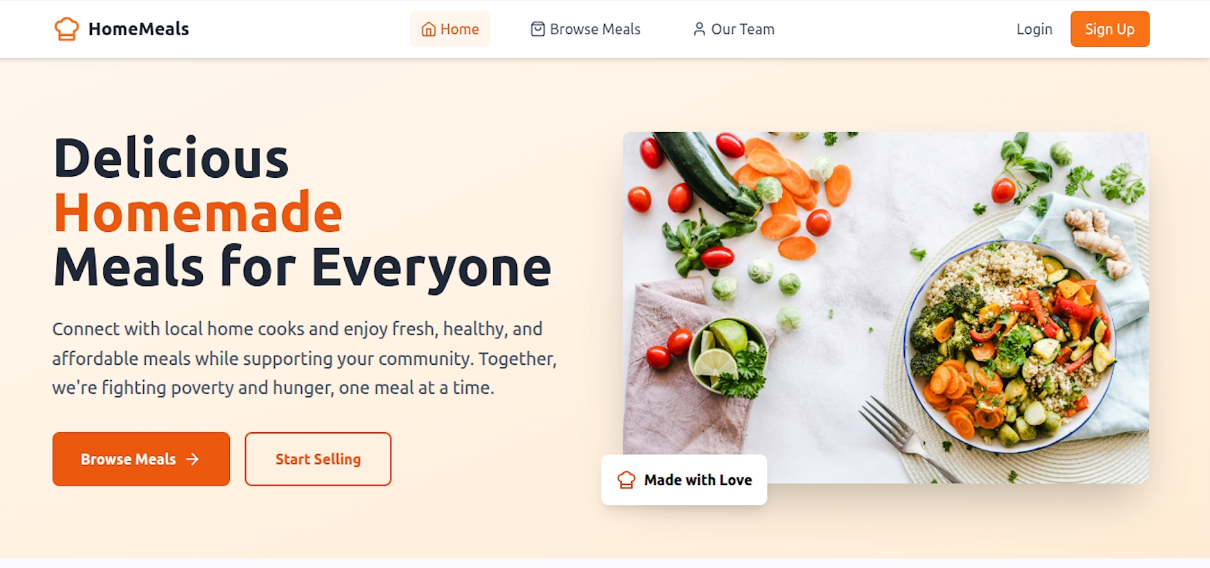
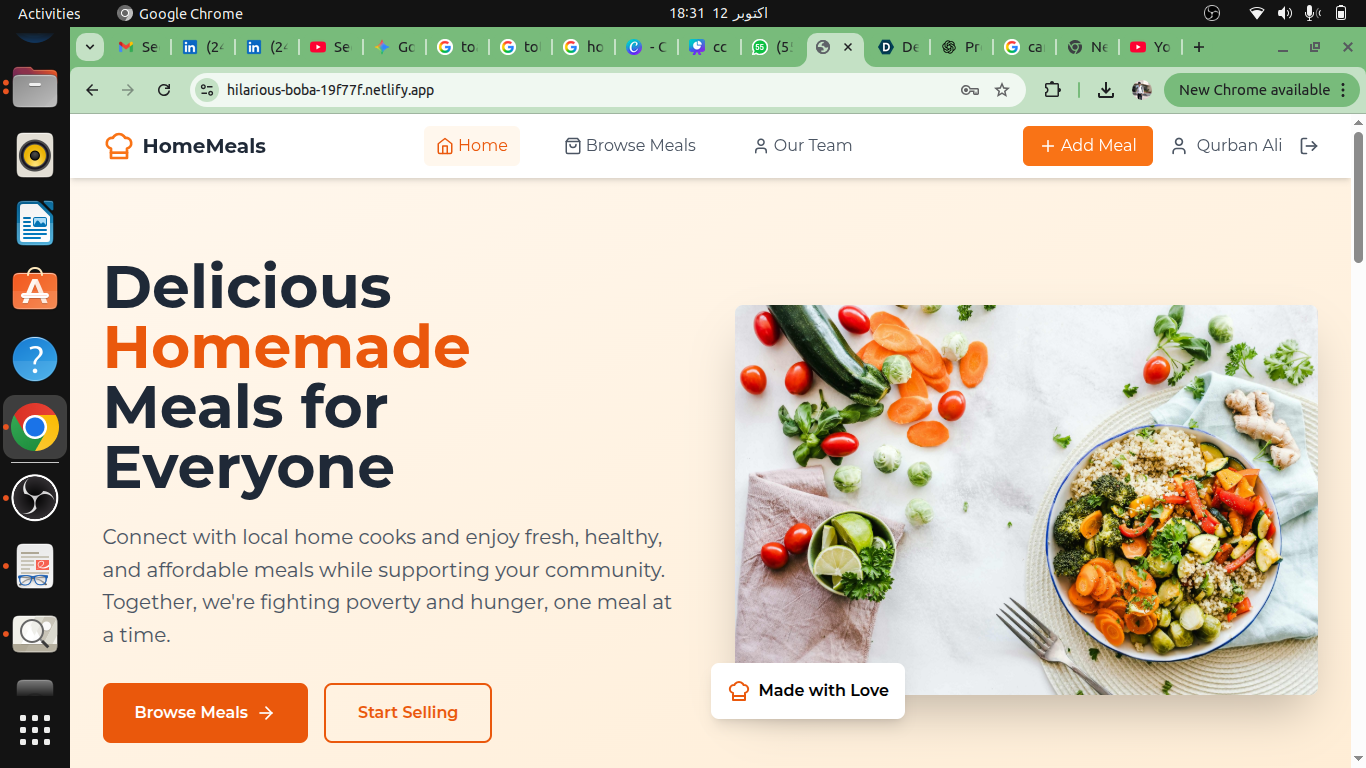
Landing page of our website
-
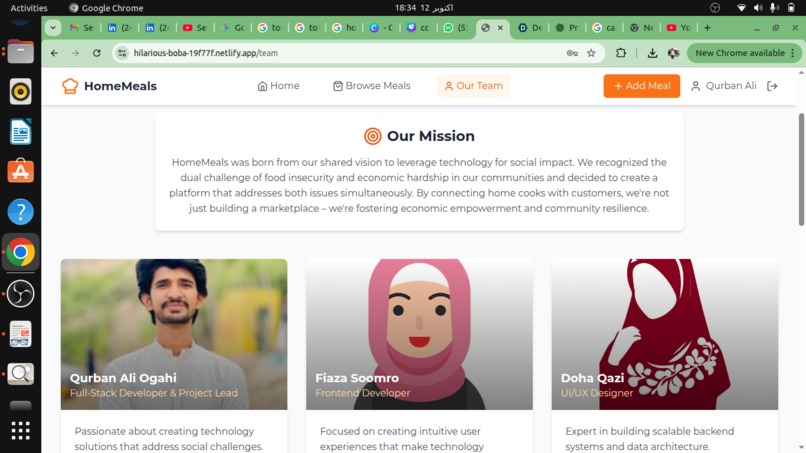
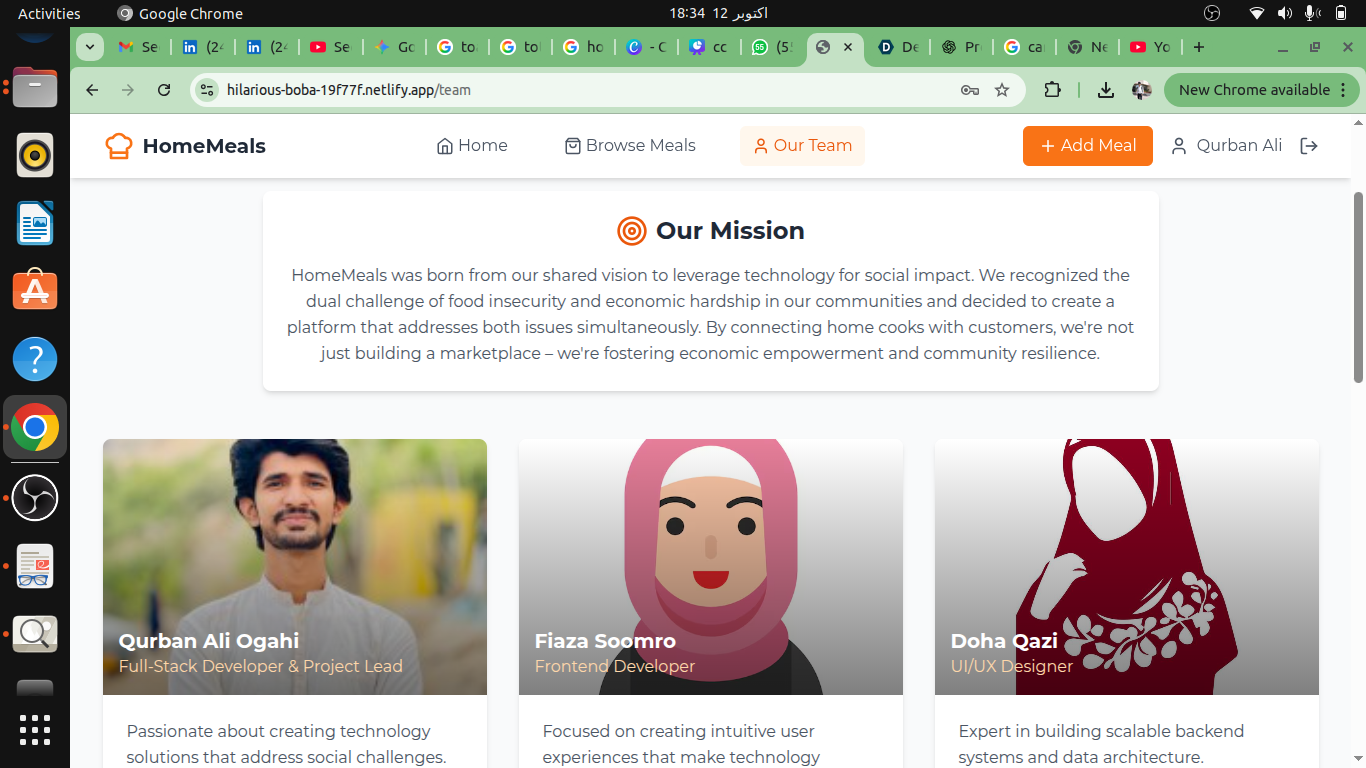
our Team
Inspiration
The idea for HomeMeals was inspired by the everyday struggles of university students and hostel residents in Jamshoro, Pakistan. Most students rely on expensive restaurant food that’s often unhealthy. At the same time, many local home cooks—especially women and unemployed individuals—possess great cooking skills but lack a platform to earn from them.
We envisioned HomeMeals as a community-based solution: connecting home cooks with students and professionals seeking fresh, affordable, and nutritious homemade meals.
What it does
HomeMeals is a community-driven digital platform that connects local home cooks with students and professionals who need fresh, healthy, and affordable homemade food.
It allows:
Home cooks to register, create meal listings with details like ingredients, price, and quantity, and manage customer orders.
Customers to browse available meals, place orders, and contact the cook directly for confirmation.
Orders to be delivered through local couriers or picked up in person.
Payments made conveniently via Cash on Delivery, Easypaisa, or JazzCash.
In simple terms, HomeMeals bridges the gap between those who cook and those who crave homemade meals — promoting healthy eating, reducing food costs, and supporting small-scale local entrepreneurs.
How we built it
We built HomeMeals as a full-stack web application designed to be scalable, secure, and user-friendly. Our goal was to create a seamless workflow for both home cooks and customers — from posting meals to order delivery. System Workflow
Seller Registration: A home cook creates an account and verifies their information.
Meal Posting: Sellers add meal details — title, ingredients, price, quantity, and photo.
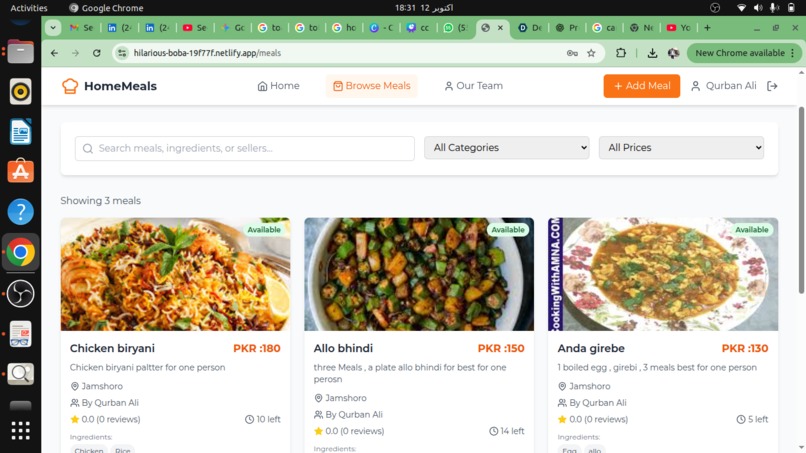
Meal Browsing: Customers view available meals using location or category filters.
Order Placement: Once an order is placed, it’s stored in the backend database for processing.
Order Confirmation: The cook accepts or declines the order. If accepted, both parties connect via phone for delivery and payment confirmation.
Delivery & Payment: The order is delivered through a local courier or picked up by the customer, with payment handled via Cash on Delivery, Easypaisa, or JazzCash.
Tech Stack Overview The HomeMeals platform was developed using a modern and efficient technology stack to ensure performance, scalability, and ease of use. For the frontend, we used React.js, which allows us to build an interactive, dynamic, and responsive user interface that works smoothly across all devices. The backend is powered by Laravel or Node.js with Express, which handles the application’s business logic, API routing, and data communication between the server and client. We used MySQL or Firebase as our database, responsible for securely storing user profiles, meal listings, and order details. To manage secure user access and sessions, we implemented JWT (JSON Web Token) based authentication. For hosting and deployment, the frontend is hosted on Netlify, while the backend runs on Render or Heroku, providing scalability and reliable uptime for real-world use.
This technology combination ensures that HomeMeals remains efficient, user-friendly, and ready for future enhancements like GPS tracking and real-time notifications
Challenges we ran into
During the development of HomeMeals, our team encountered several technical and practical challenges that helped us grow as developers and problem-solvers.
One of the major challenges was designing a system that balanced simplicity with functionality. We needed a platform powerful enough to manage orders, users, and meals, yet simple enough for non-technical users like home cooks to navigate easily.
Another challenge was maintaining real-time data consistency between sellers and customers. Ensuring that order updates, confirmations, and status changes reflected instantly required careful backend design and database optimization.
We also faced UI/UX challenges, as our target audience included both students familiar with digital tools and older home cooks who may not be as tech-savvy. Creating an interface that worked equally well for both groups took several design iterations.
Additionally, integrating multiple payment options such as Easypaisa, JazzCash, and cash on delivery required testing across various devices and network conditions to ensure reliability.
Finally, as university students, managing time constraints between coursework and development deadlines tested our planning and teamwork skills. Despite these challenges, each problem helped us strengthen our understanding of software architecture, teamwork, and real-world application design.
Accomplishments that we're proud of
The inspiration for HomeMeals came directly from our own experiences during university life. Throughout our bachelor’s studies, we often saw our hostel friends struggling daily to find healthy and affordable meals. Many of them had to depend on expensive restaurants or compromise on food quality just to manage their routines.
We always used to think — what if there was an easier way for students to get home-cooked food, and at the same time help local people earn from their cooking? That thought gradually became our motivation, and today, HomeMeals stands as our answer to that problem.
We’re proud that we didn’t just identify an issue — we built a working solution. From designing a user-friendly system to implementing secure authentication and integrating payment options like Cash on Delivery, Easypaisa, and JazzCash, every part of this project reflects our learning, teamwork, and purpose.
Most importantly, we’re proud that HomeMeals isn’t just a technical achievement — it’s a platform that empowers local home cooks, especially women, and helps students access healthy food at an affordable cost. It’s our small step toward solving a problem we once faced ourselves.
What we learned
Building HomeMeals was not just a technical journey — it was a learning experience that shaped us as developers, problem-solvers, and as a team.
We learned how to transform a real-life problem into a digital solution — starting from an idea inspired by our own hostel experiences and turning it into a working platform that can genuinely help people.
From a technical perspective, we gained hands-on experience in full-stack development, including frontend design using React, backend logic with Laravel or Node.js, database management, and secure authentication using JWT. We also learned how to integrate payment systems, manage data flow, and deploy a scalable application online.
On a personal level, we discovered the importance of team coordination, communication, and time management — balancing our academic work with development deadlines. We realized that creating a useful product is not just about code, but about understanding people’s needs and designing technology that makes their lives easier.
Most importantly, this project taught us that technology can create real social impact — empowering individuals, improving communities, and solving everyday problems through innovation.
What's next for HomeMeals
Our journey with HomeMeals doesn’t end here — this is just the beginning. In the next phase, we aim to expand the platform’s features, improve scalability, and extend its impact beyond Jamshoro.
Our immediate goals include integrating online payment gateways and building a secure digital wallet system to make transactions faster and safer. We also plan to introduce a dedicated delivery system by partnering with local drivers or adding a driver role within the platform.
To improve user experience, we’ll add GPS-based meal filtering, allowing customers to discover nearby home cooks quickly and easily. We’re also working toward seller verification, food safety guidelines, and an admin dashboard for performance analytics and system management.
In the long term, we envision scaling HomeMeals to other cities across Pakistan — connecting thousands of students and local cooks, and eventually creating a nationwide network of healthy, affordable homemade food.
Our ultimate goal is to make HomeMeals not just a platform, but a movement — promoting sustainable food systems, empowering small entrepreneurs, and strengthening communities through technology.
Built With
- express.js
- json
- laravel
- netfly
- react.js


Log in or sign up for Devpost to join the conversation.