-
-
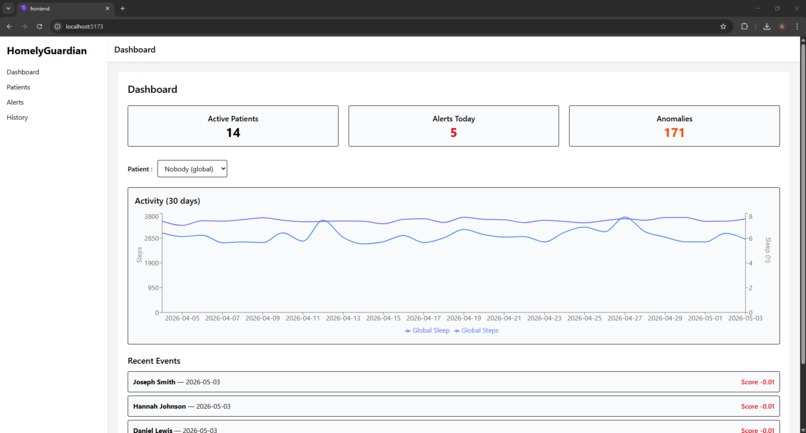
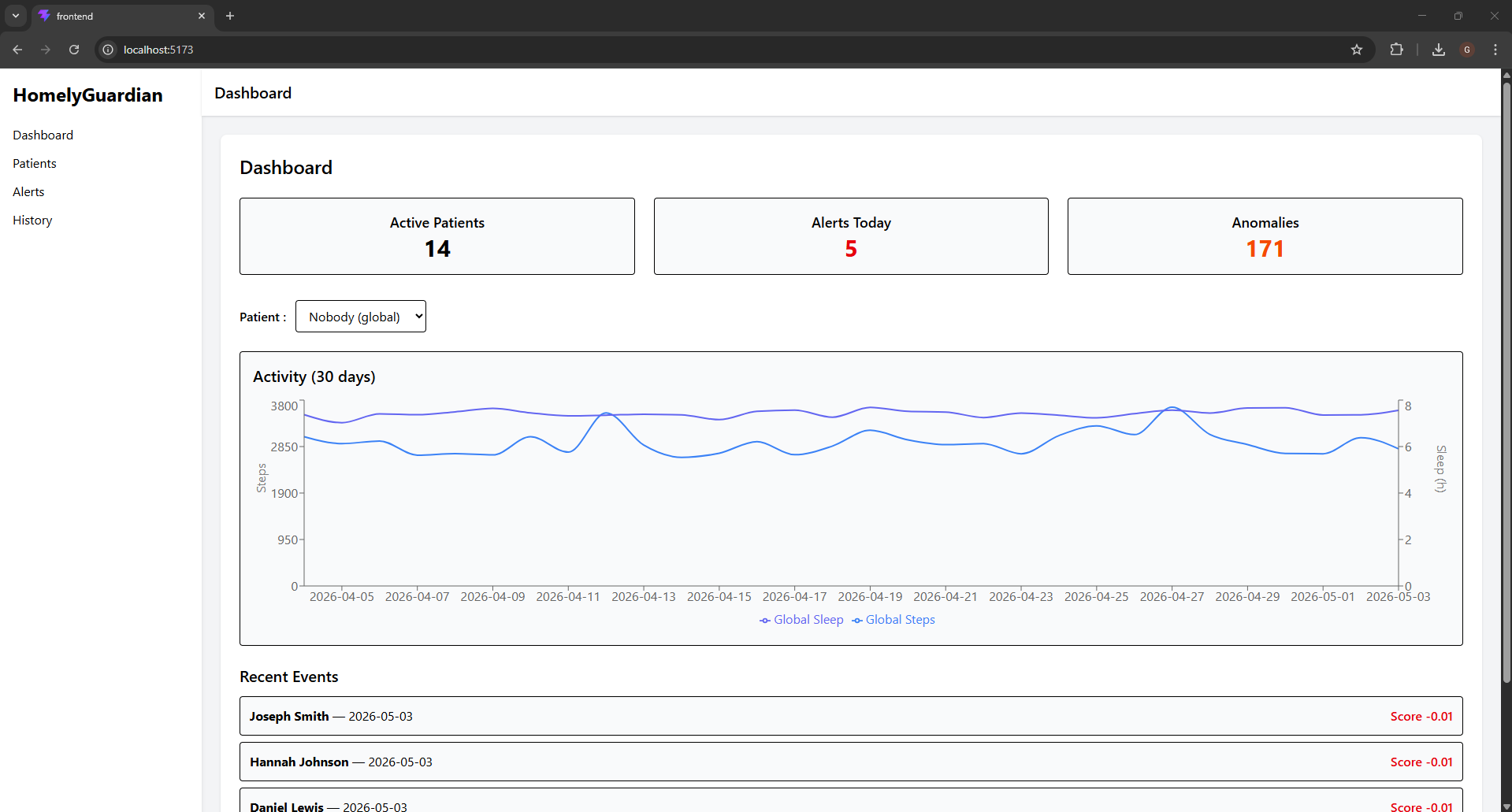
Centralized health overview showing patient trends, alerts, and activity insights at a glance.
-
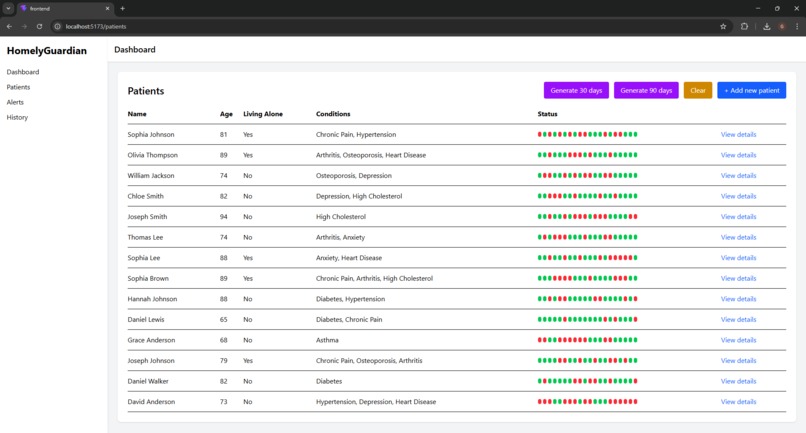
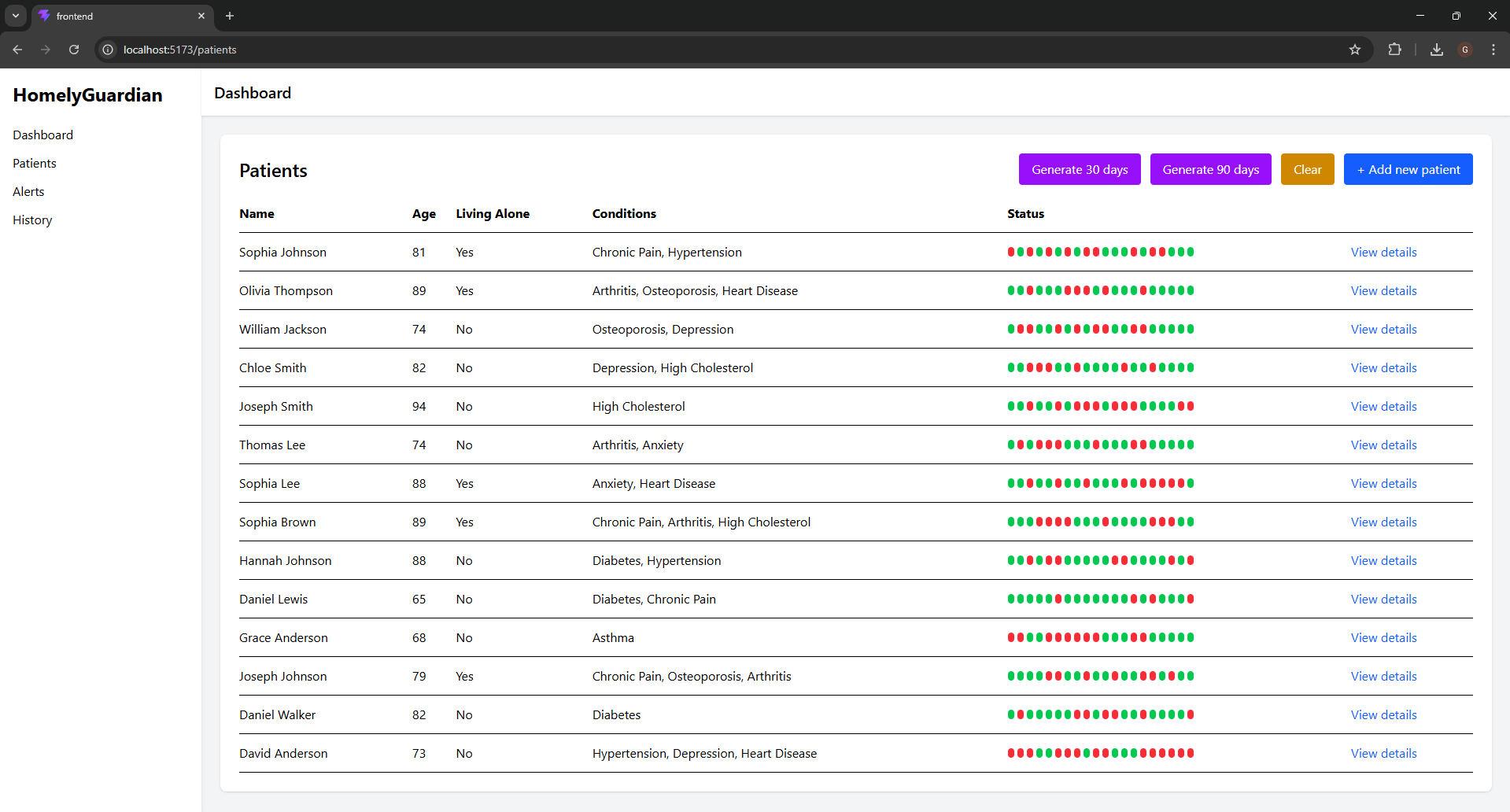
List of all monitored patients with real‑time activity sparklines and quick access to details.
-
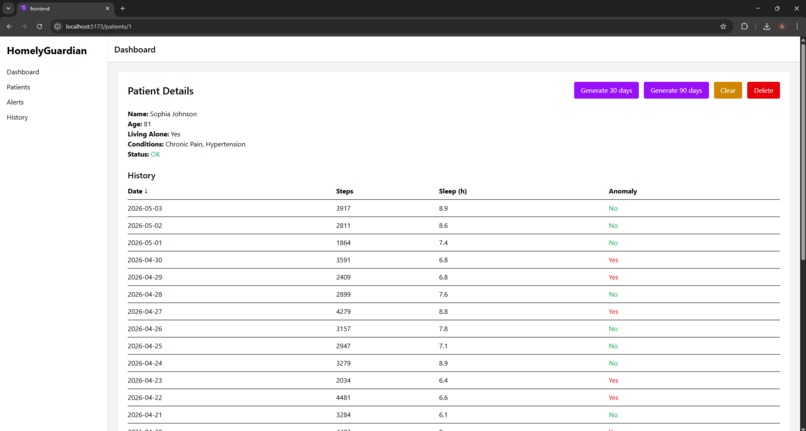
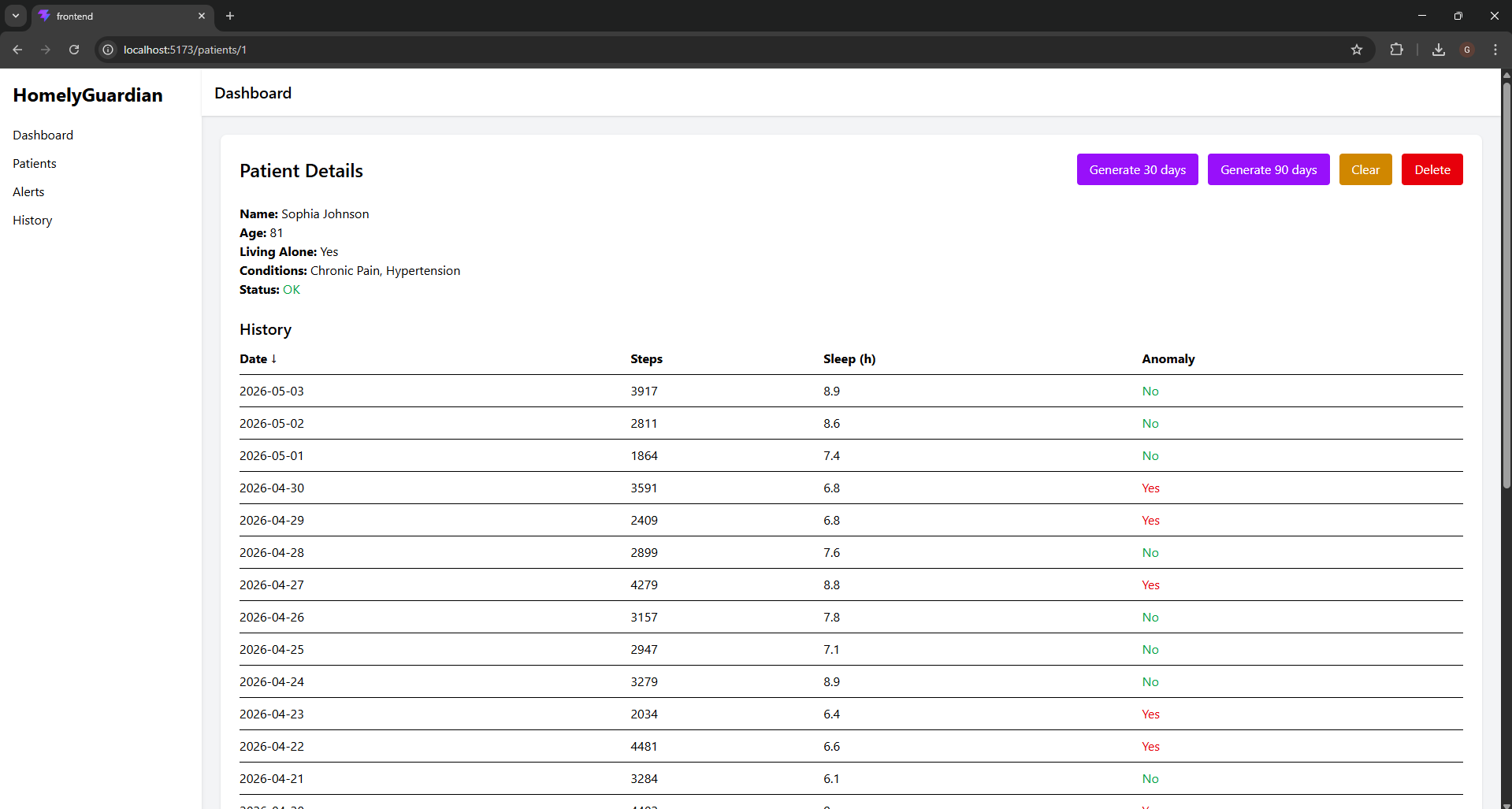
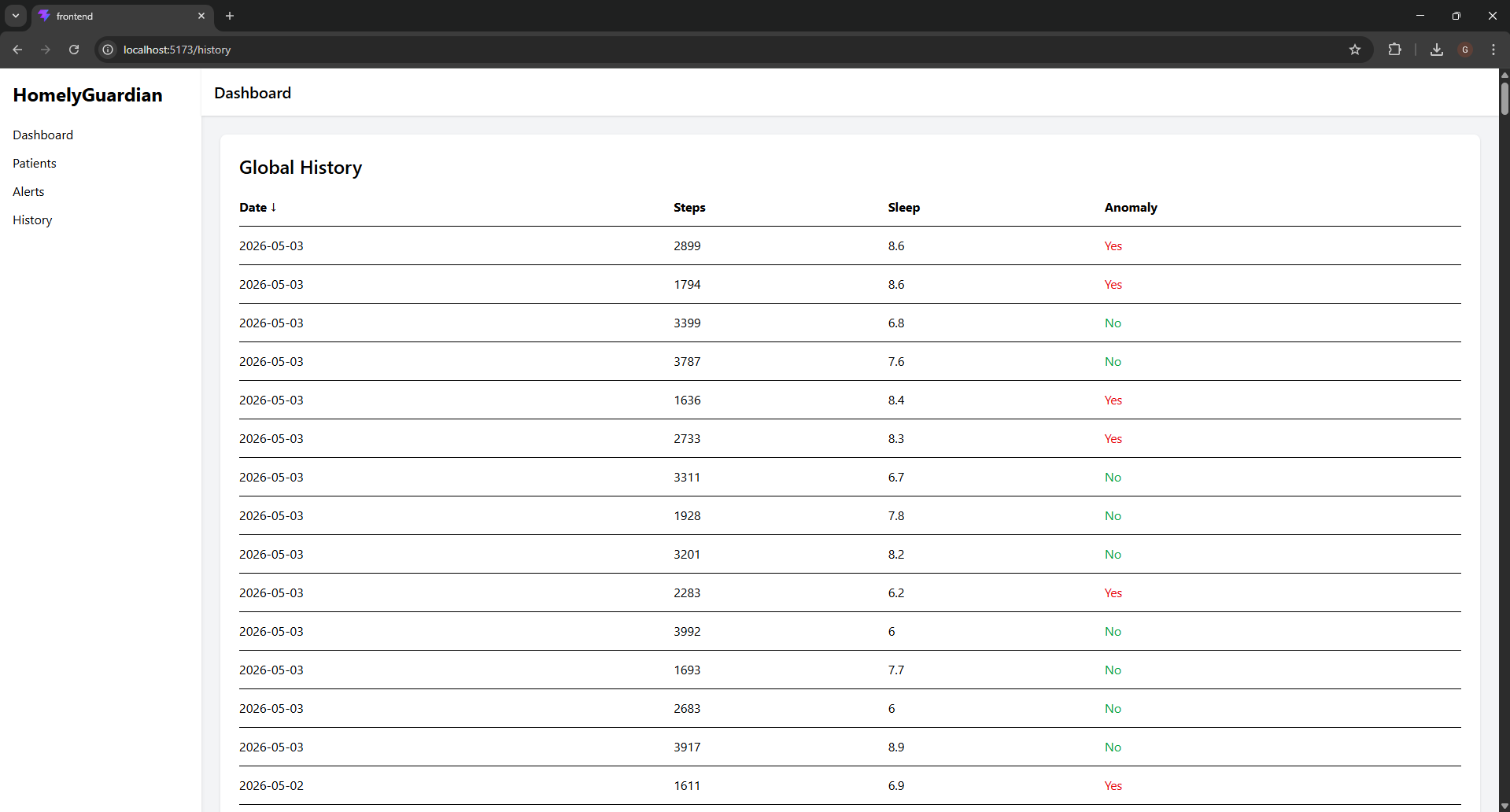
Full activity history, anomalies, and status indicators to track each patient’s daily health.
-
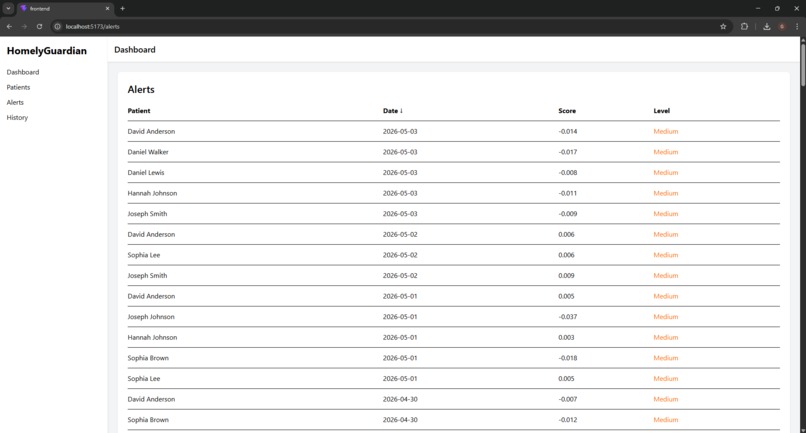
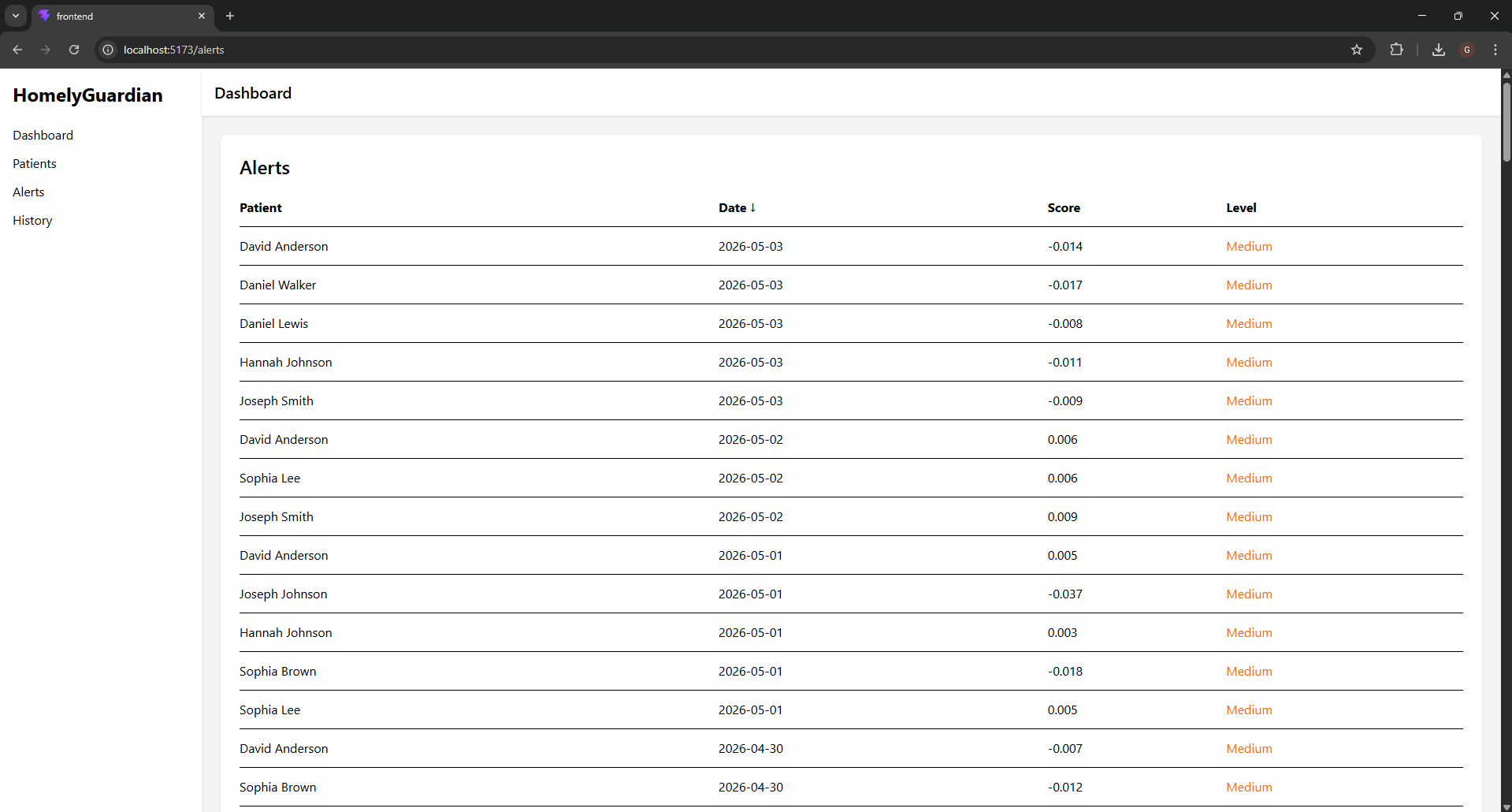
Highlighted anomalies and unusual activity patterns to help caregivers spot risks quickly.
-
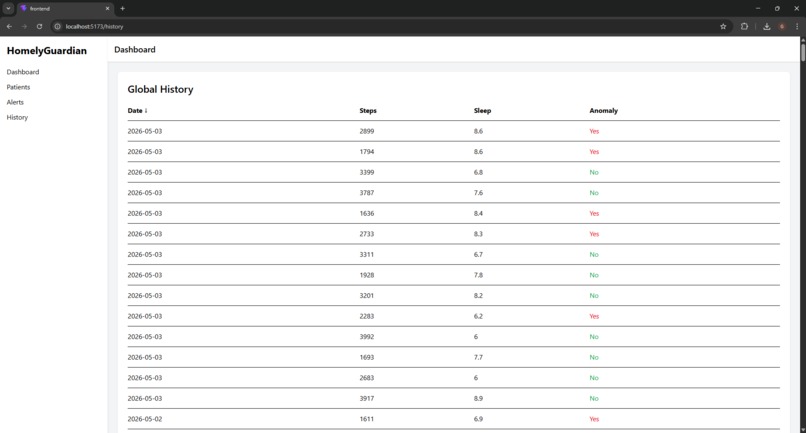
Chronological view of steps, sleep, and anomalies to understand long‑term health trends.
Inspiration
We wanted to address a growing real‑world problem: elderly people living alone often experience unnoticed health deterioration. Small changes in sleep, mobility, or daily activity can be early indicators of serious issues — but caregivers rarely have the tools to monitor these trends easily. HomelyGuardian was born from the idea of creating a simple, visual, AI‑assisted dashboard that makes these invisible signals visible.
What it does
HomelyGuardian provides: - A dashboard listing all patients with real‑time activity sparklines - Automatic generation of daily activity data (steps, sleep, anomalies) - Anomaly detection to highlight unusual or risky patterns - A detailed patient view with sortable history - Tools to generate 30 or 90 days of synthetic activity for testing - One‑click actions: clear history, delete patient, create new patient
It’s a complete monitoring tool for caregivers, built to be fast, intuitive, and reliable.
How we built it
Backend (FastAPI) - User management - Activity generation (AI‑assisted synthetic data) - Anomaly detection - Sparkline data endpoints - History management (clear, generate, predict)
Frontend (React + Tailwind) - Patient list with sparklines - Detailed patient dashboard - Sorting, status detection, and quick actions
Database (SQLAlchemy + SQLite) - Users - DailyActivity - Anomalies
We iterated quickly, focusing on clean architecture and fast feedback loops.
Challenges we ran into
- Designing a synthetic activity generator that feels realistic
- Keeping the UI responsive while generating large histories (30–90 days)
- Ensuring sparkline data stays consistent after resets
- Managing multiple endpoints and keeping the backend clean
- Handling edge cases like empty history, deleted users, or inconsistent data
Accomplishments that we're proud of
- A fully functional end‑to‑end system built in a very short timeframe
- A clean, intuitive UI that feels like a real medical dashboard
- Automatic anomaly detection that highlights risky behavior
- Bulk generation tools (30/90 days) that make testing extremely fast
- A backend architecture that is simple, robust, and extendable
What we learned
- How to design synthetic datasets that still feel meaningful
- How to structure a clean FastAPI backend with multiple routers
- How to build a responsive React dashboard with dynamic data
- How to iterate quickly under time pressure without sacrificing quality
- How to design features that are both useful and easy to test
What's next for HomelyGuardian
- Real wearable device integration (Fitbit, Apple Health, Garmin…)
- Machine‑learning‑based anomaly detection instead of rule‑based
- Notifications and alert thresholds configurable per patient
- A caregiver mobile app
- Predictive health scoring using time‑series models
- Secure authentication and multi‑caregiver access
Built With
- fastapi
- fetch-api
- javascript
- jsx
- react
- sqlalchemy
- sqlite
- tailwindcss
- vite

Log in or sign up for Devpost to join the conversation.