-
-
thumbnail
-
demo report
-
demo report
-
demo report
-
demo report
-
demo report
-
demo report
-
demo report
-
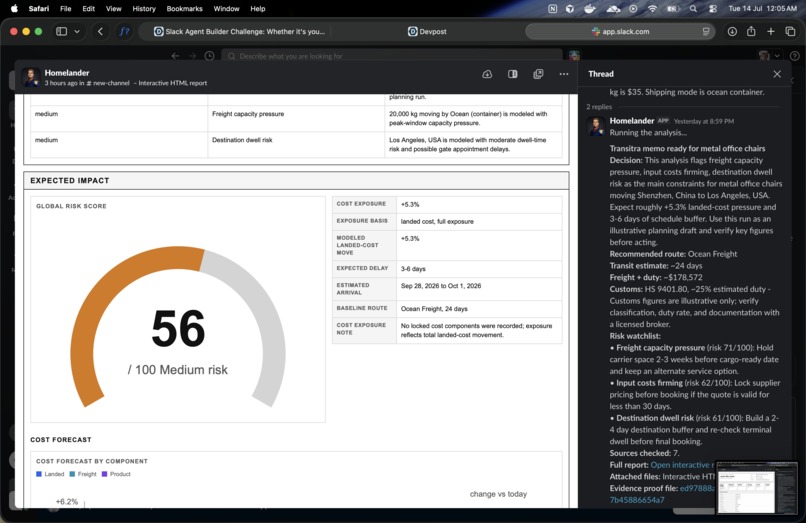
demo report
-
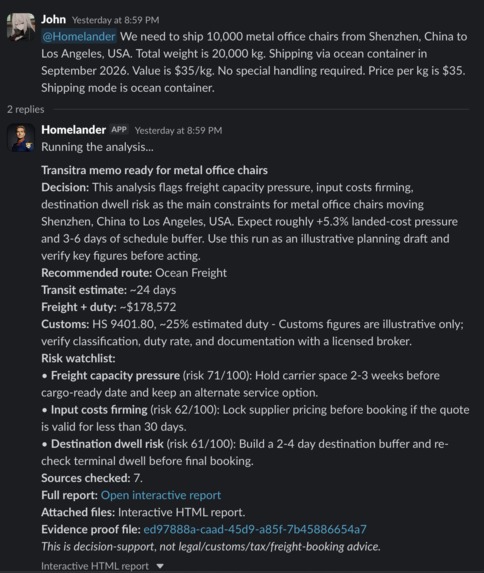
-
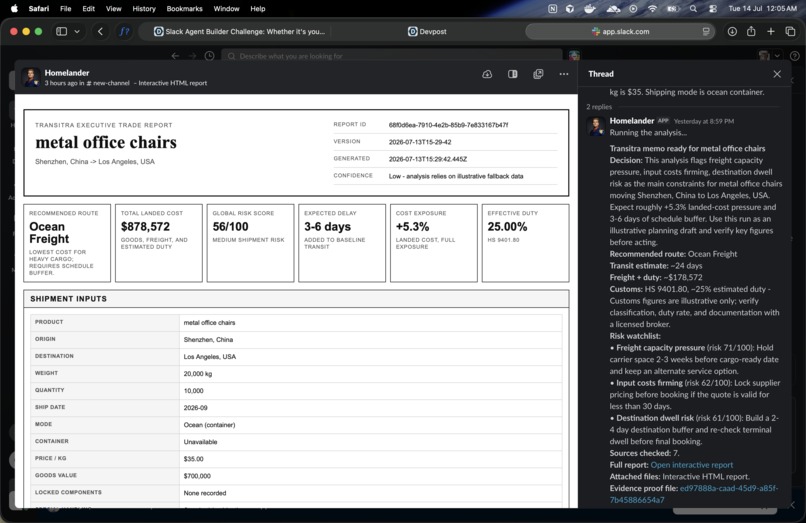
demo report
-
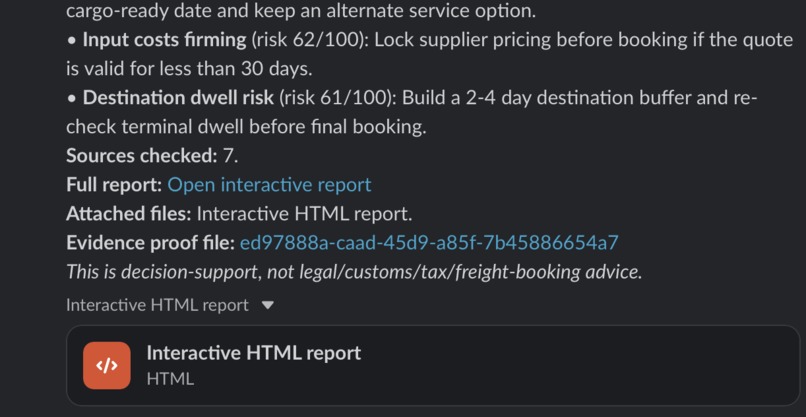
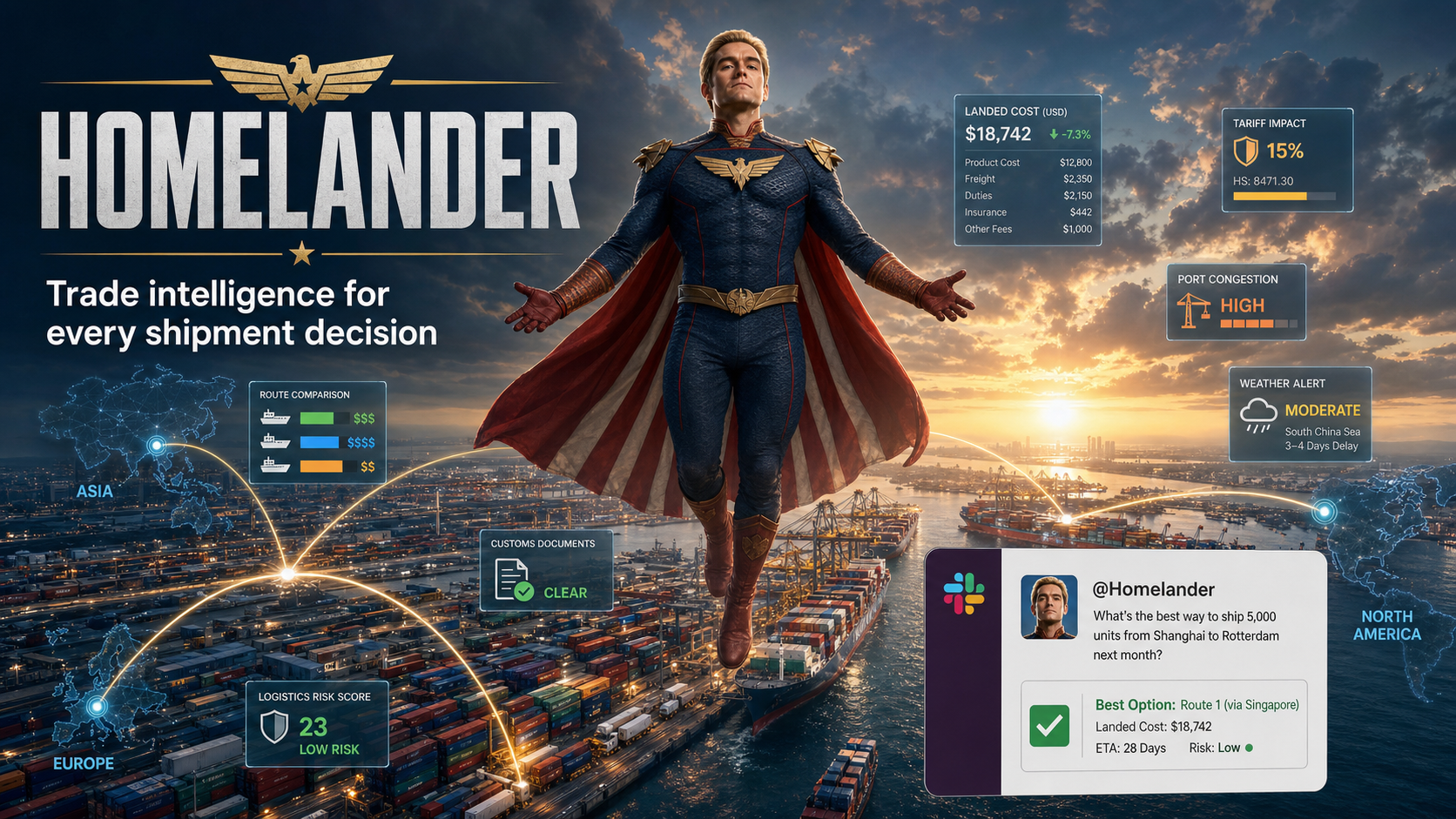
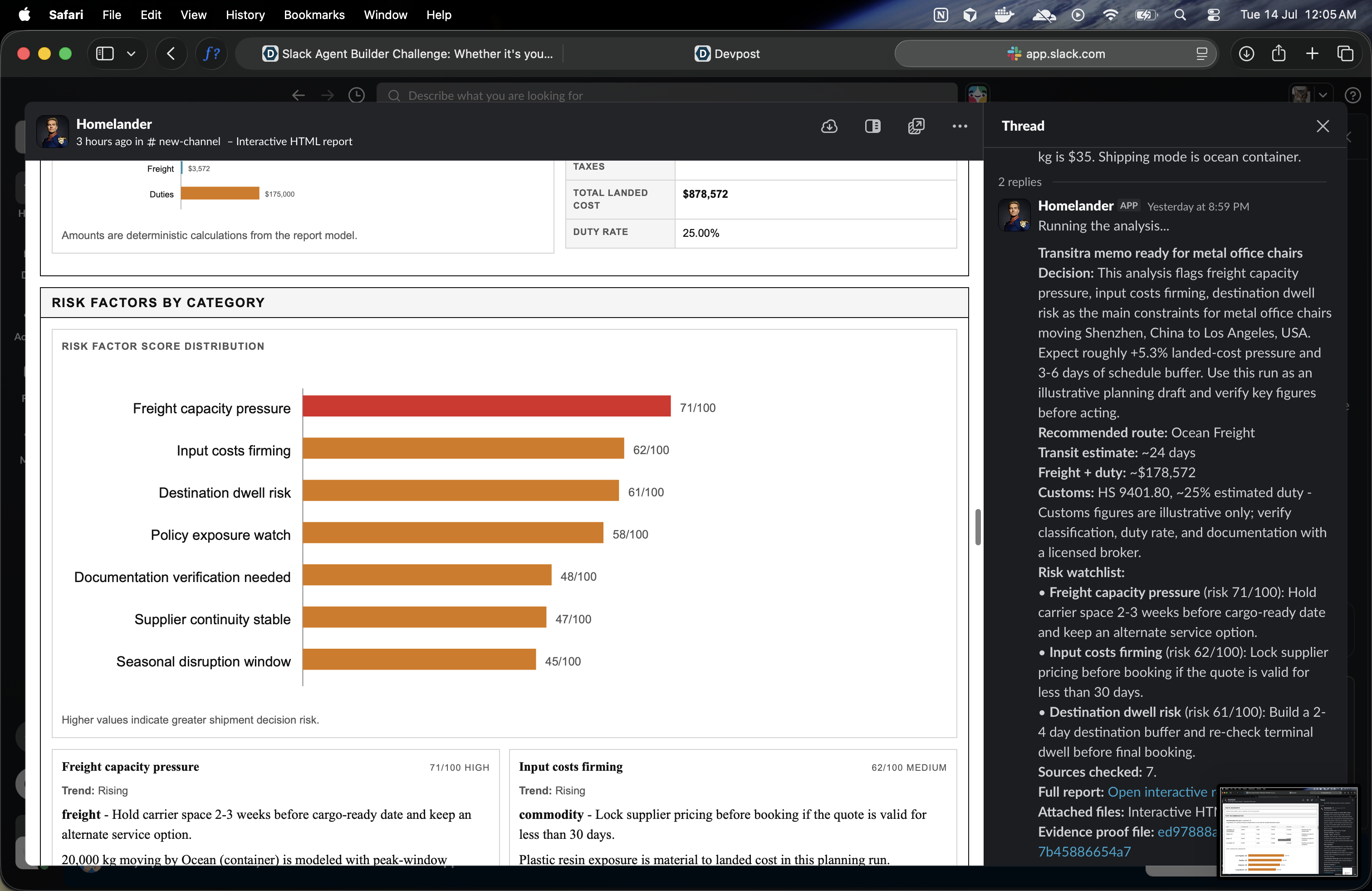
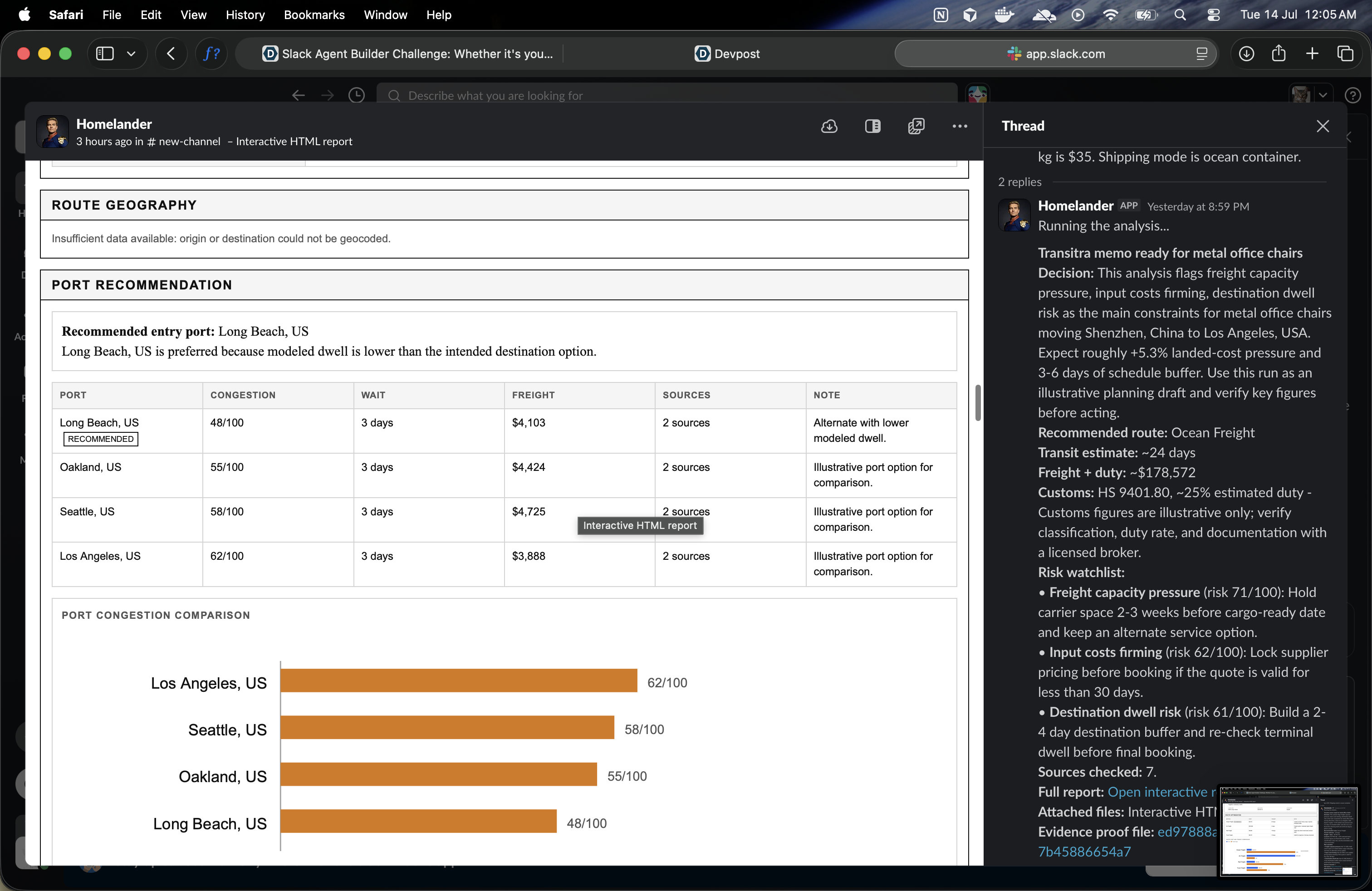
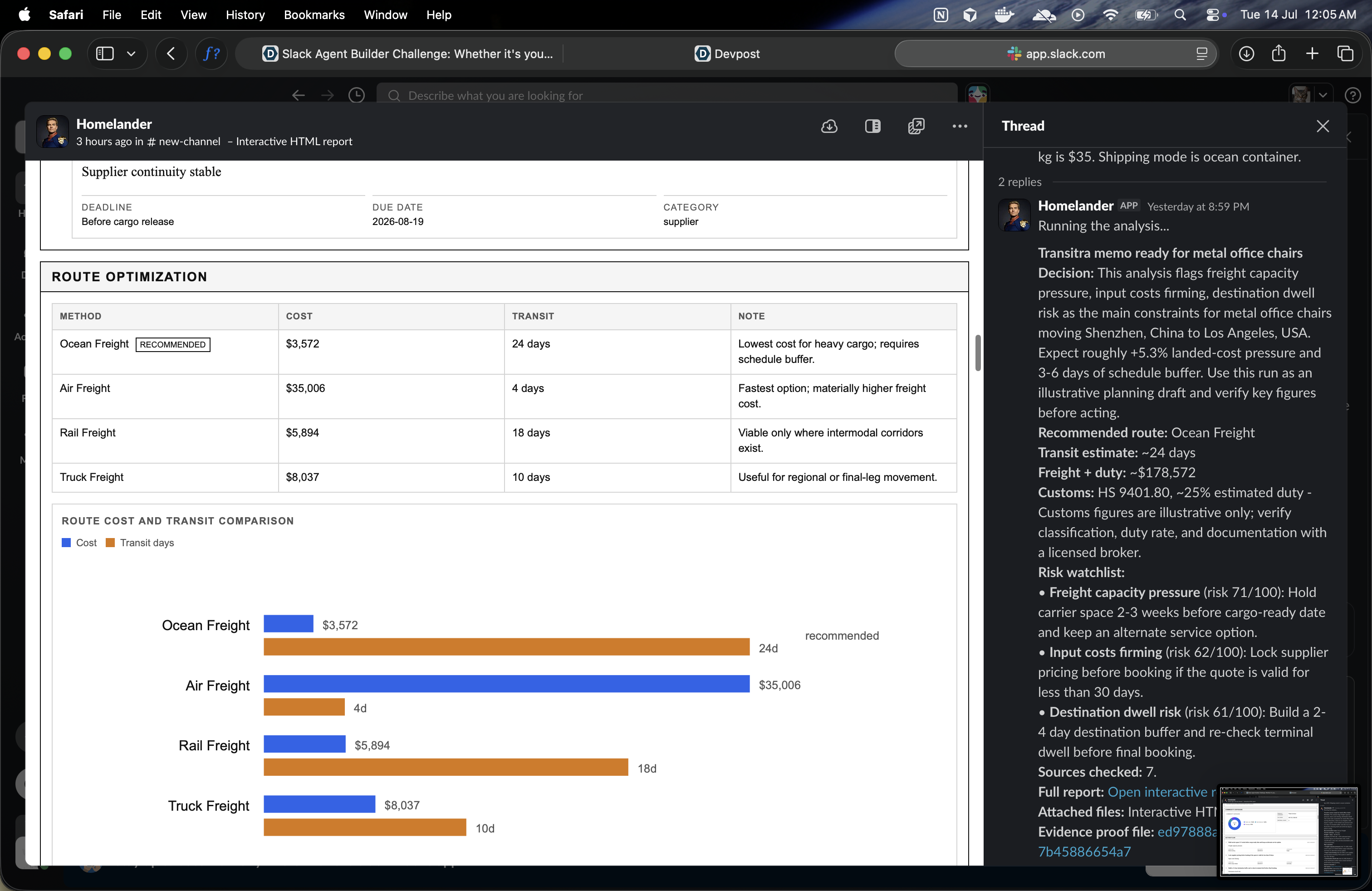
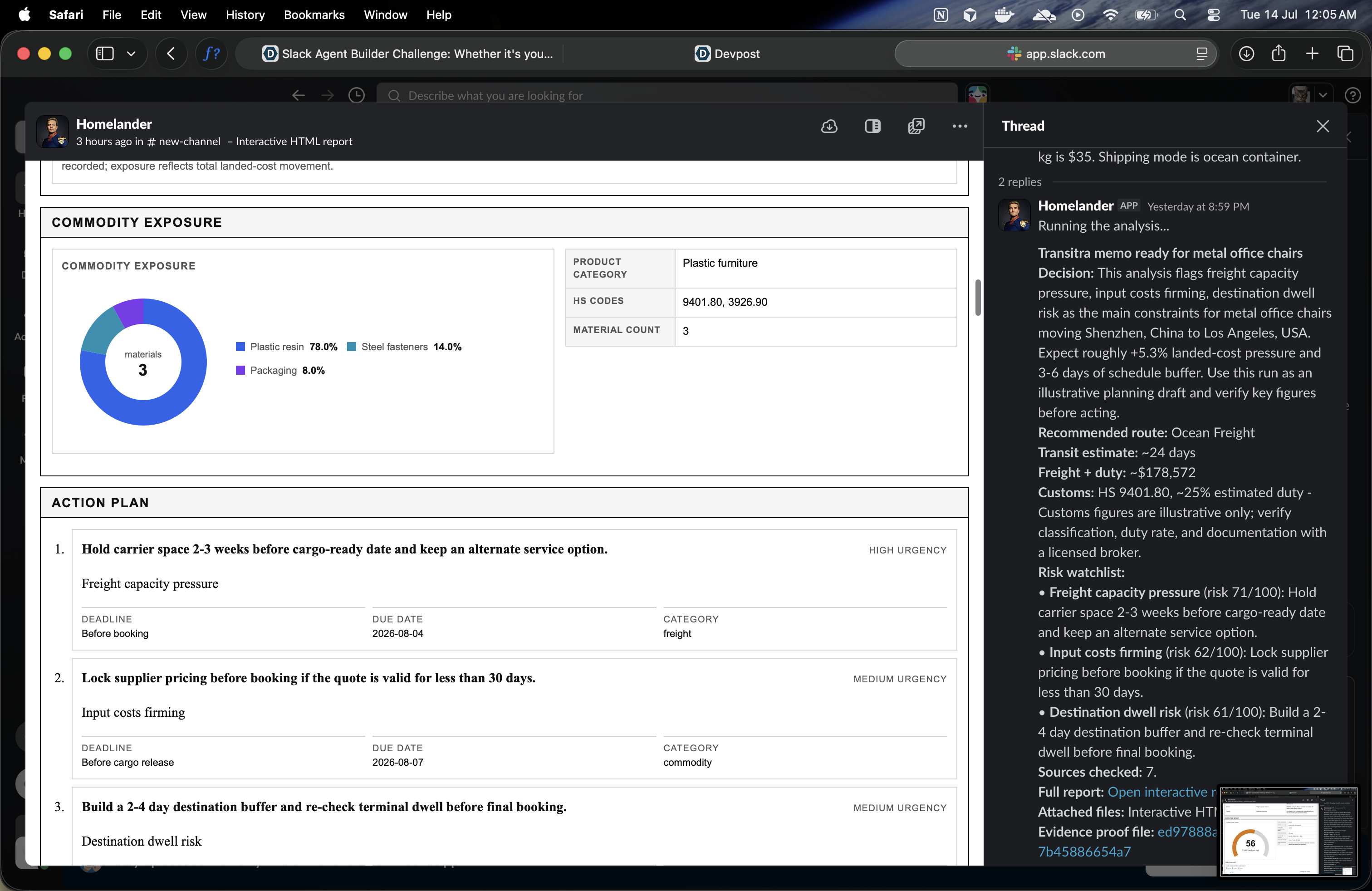
What is Homelander?
Trade intelligence for the moment a shipment decision has to be made
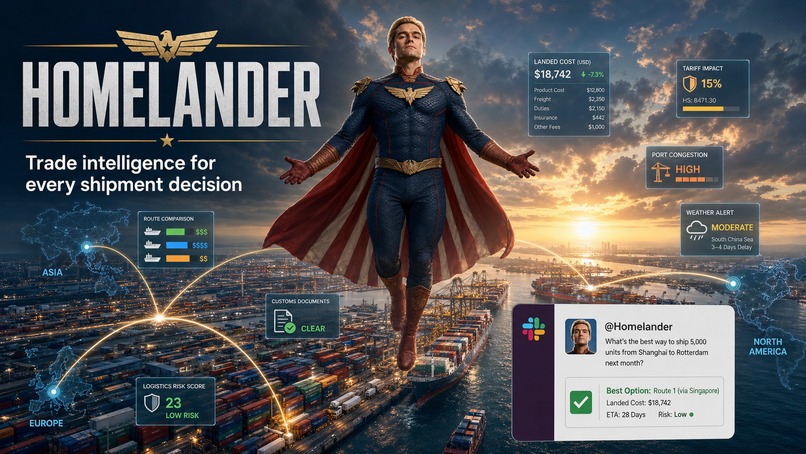
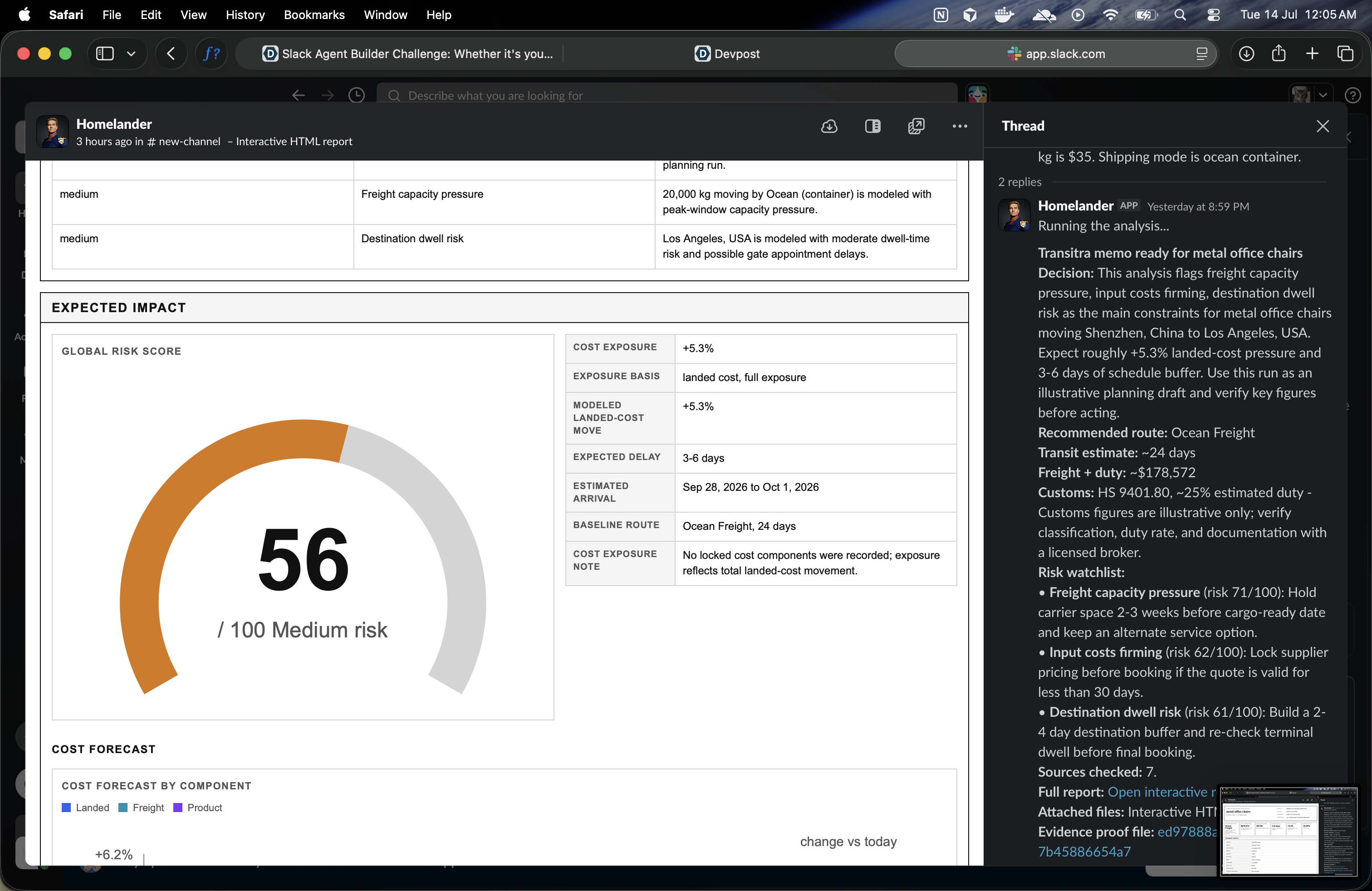
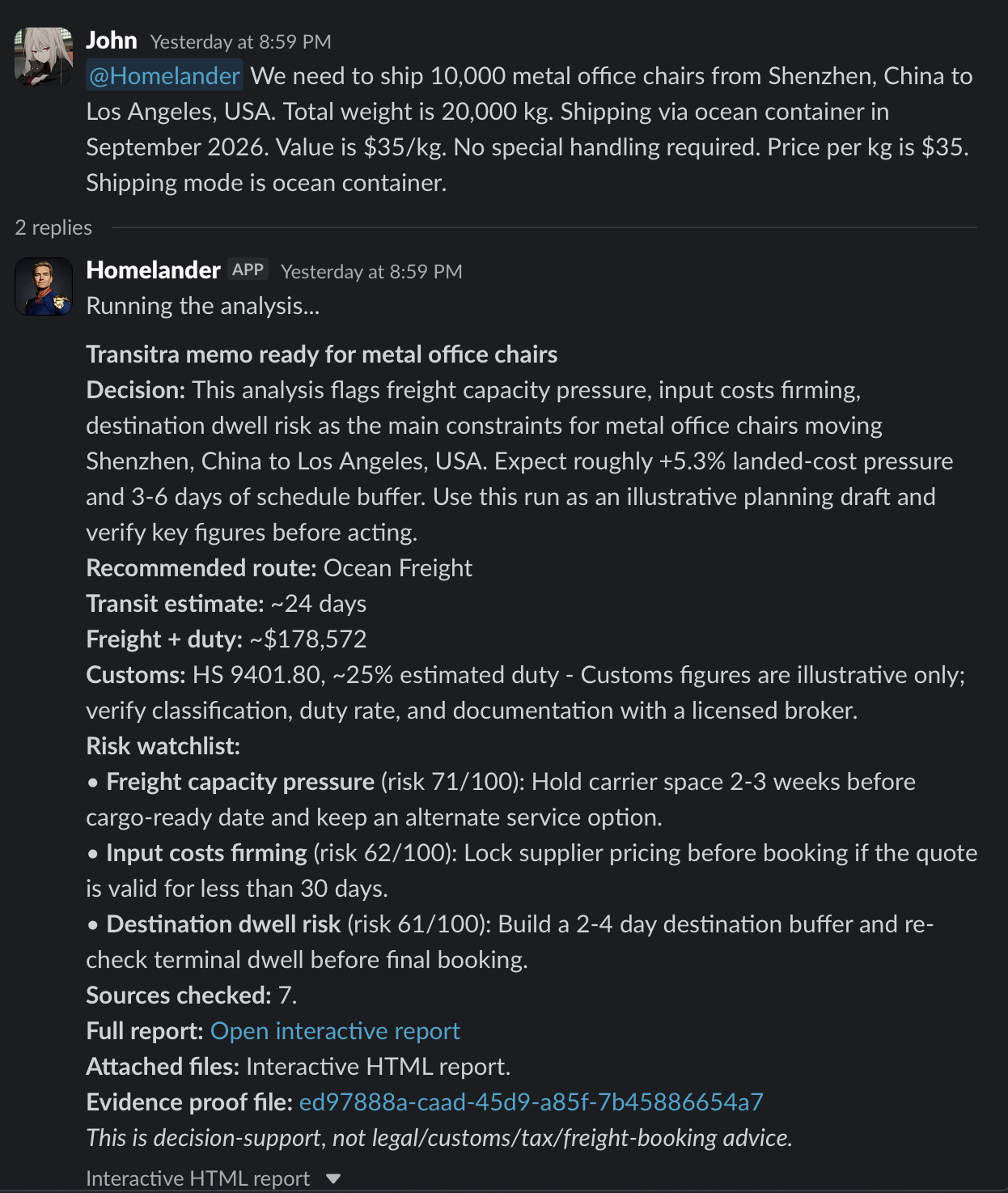
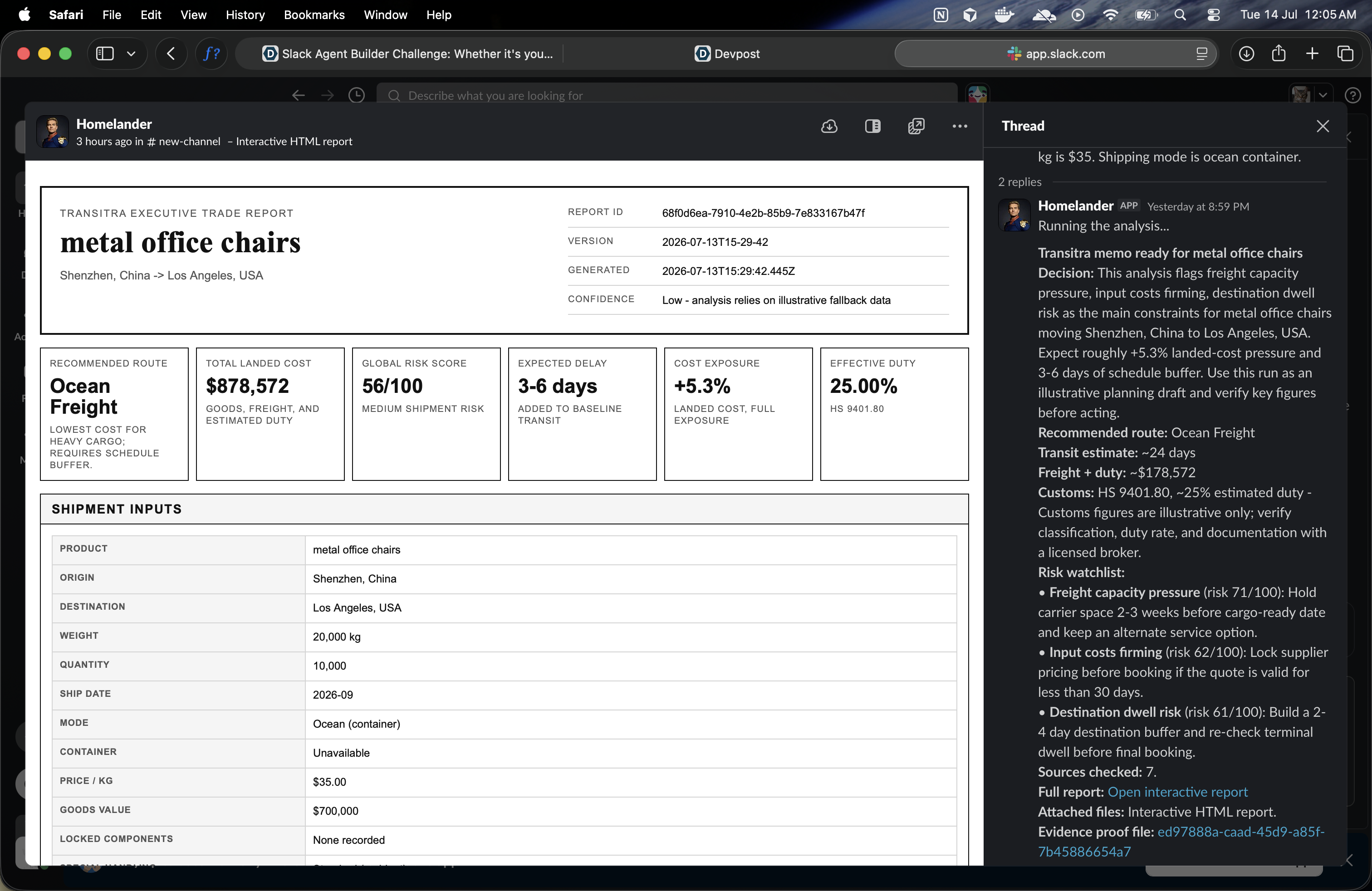
Homelander is a Slack-native trade intelligence agent for teams managing international shipments. A team member can describe a shipment in plain language, and Homelander researches routes, customs requirements, documentation, landed cost, and operational risks before returning an evidence-backed recommendation directly in Slack.
Instead of opening multiple websites and manually combining information from different departments, the team gets one structured workflow and one place to collaborate.
Inspiration
International shipping decisions aren't difficult because the information is hard to find, but because it's scattered.
A single shipment might require checking customs regulations, tariff databases, freight information, port congestion, documentation requirements, weather conditions, carrier updates, and geopolitical events. Different teams often own different parts of that research, so every new shipment ends up repeating the same work.
We wanted to build something that could bring all of those pieces together inside Slack, where those conversations are already happening.
How it works
A user sends a shipment request to Homelander in Slack using natural language.
Homelander first extracts structured shipment information from the message. If important details are missing, it asks follow-up questions before continuing instead of making assumptions.
Once the shipment is fully defined, an orchestration layer coordinates multiple specialist agents in parallel.
These agents independently research areas such as:
- Product classification and HS code candidates
- Tariffs, customs requirements and documentation
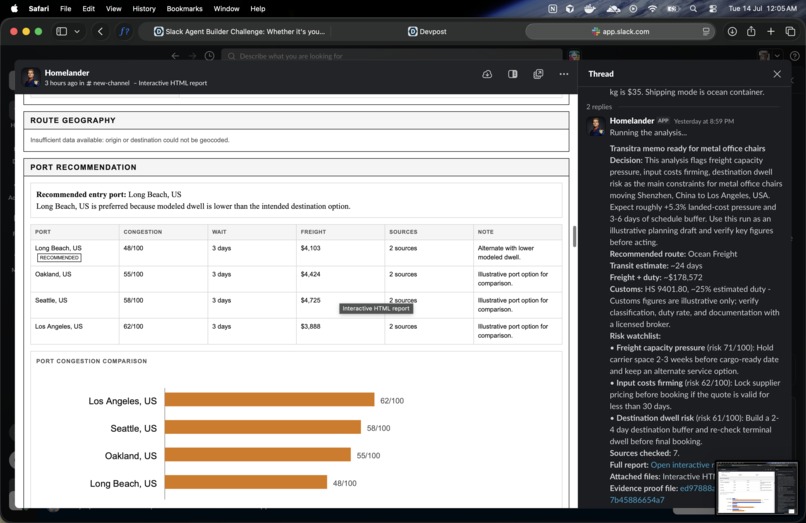
- Port recommendations and congestion
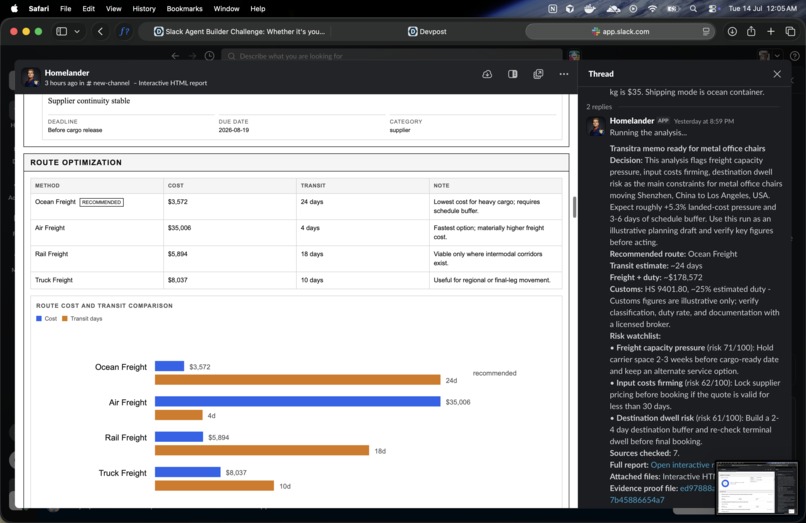
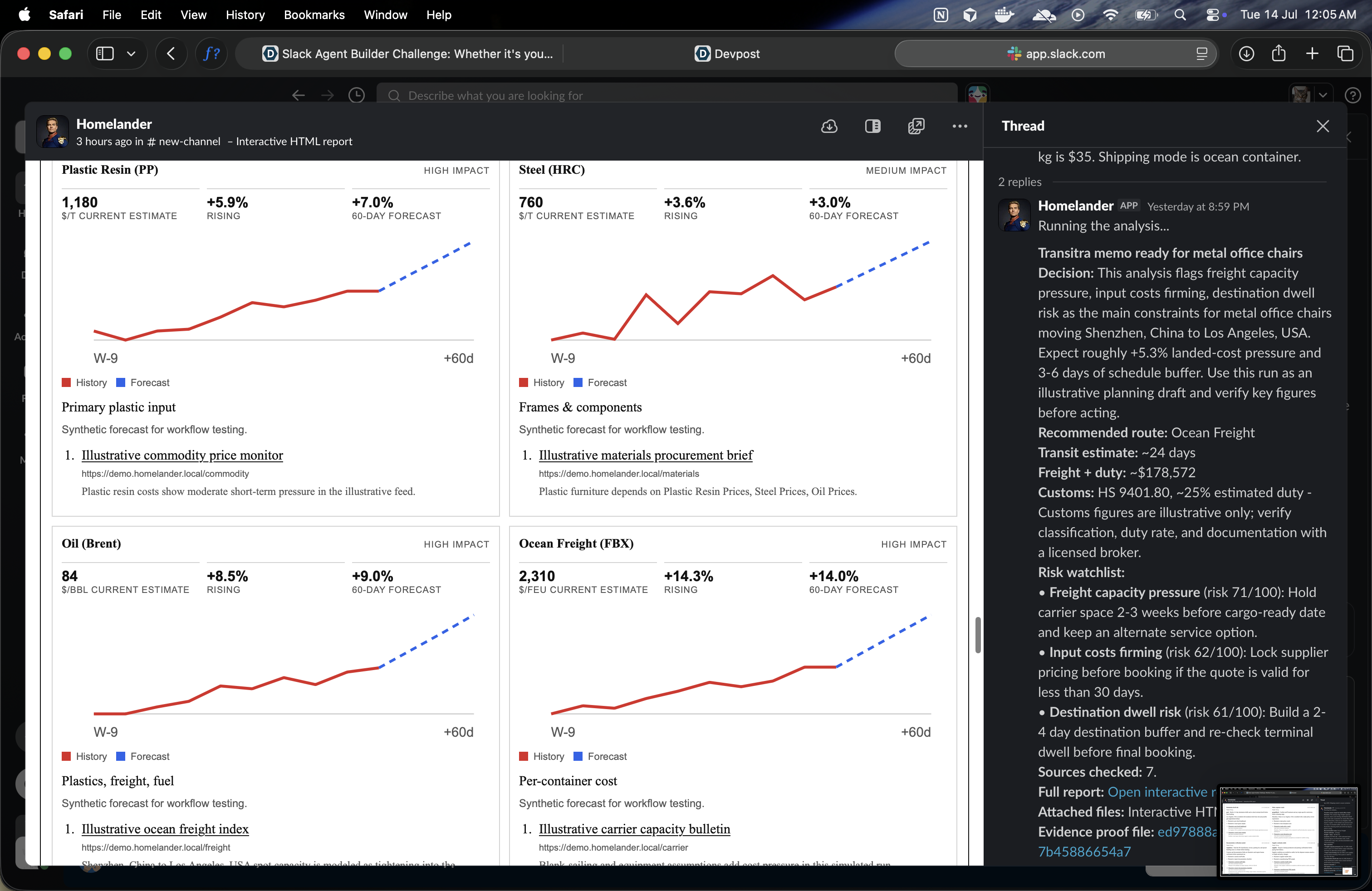
- Freight conditions
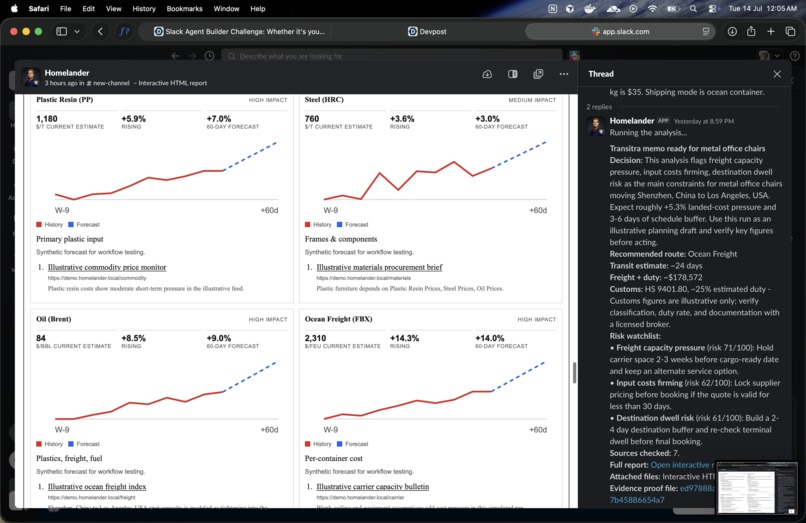
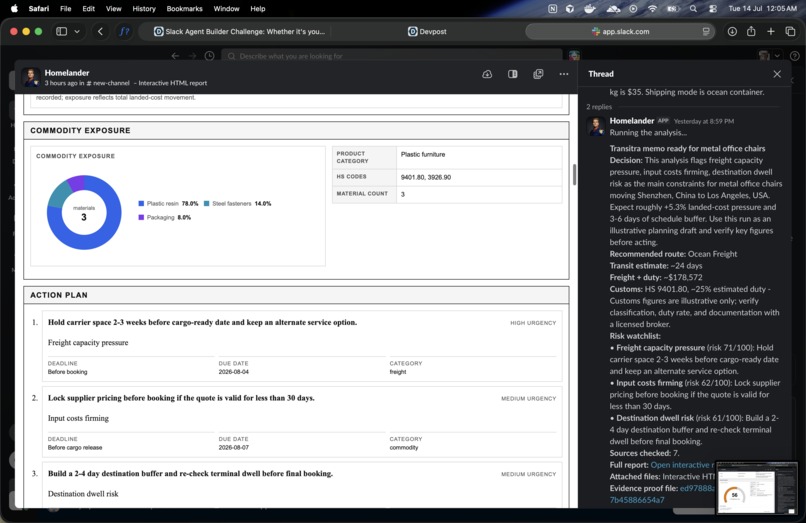
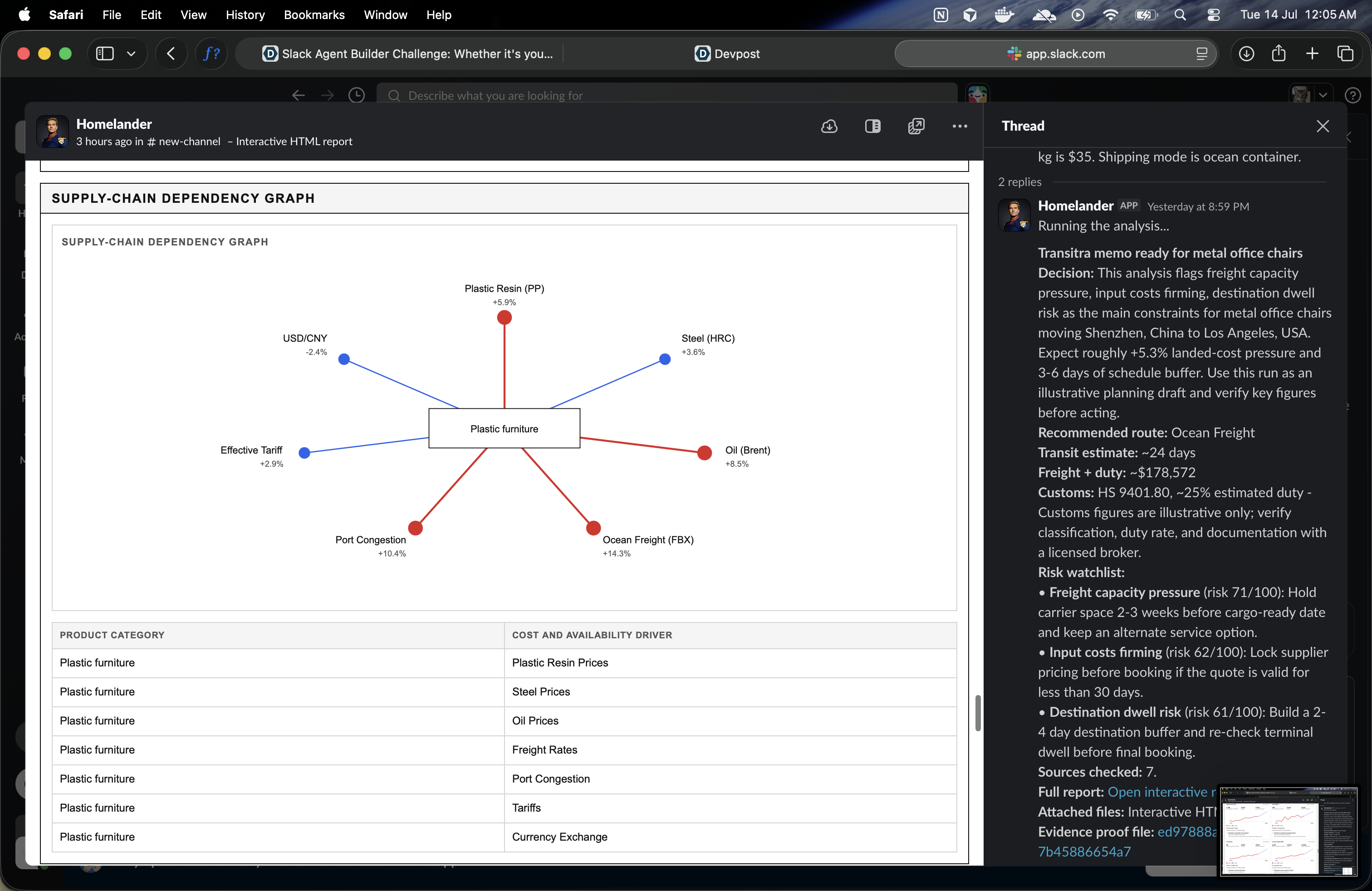
- Commodity intelligence
- Weather disruptions
- Geopolitical risks
- Supplier and regulatory changes
Rather than relying on a single LLM response, every agent retrieves information through MCP-powered tools and authoritative public sources, then returns both its findings and supporting evidence to the orchestrator.
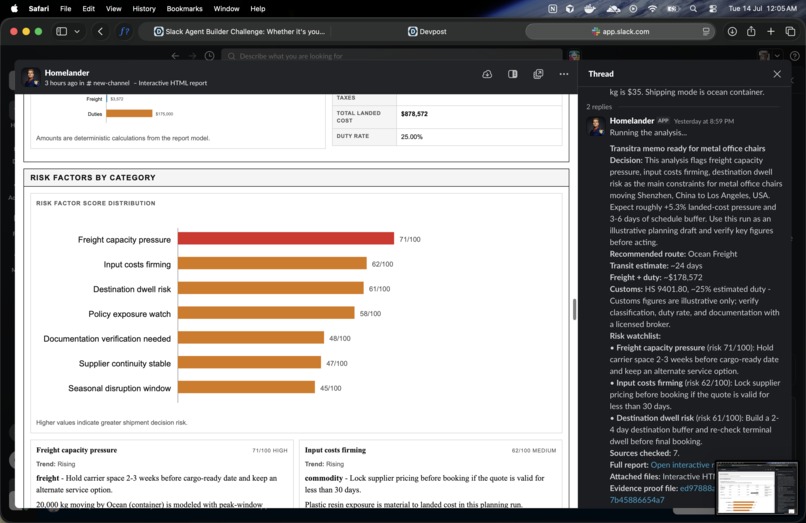
Financial calculations such as landed cost, duties, taxes and weighted risk scores are performed deterministically in code instead of by the language model.
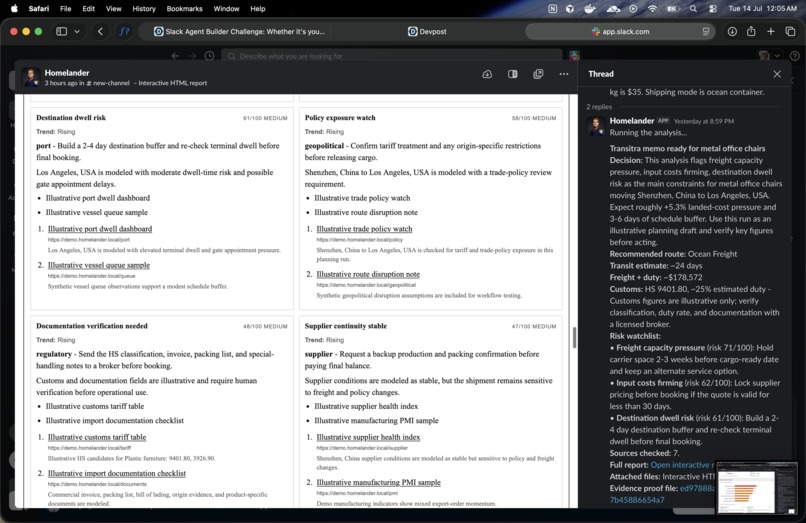
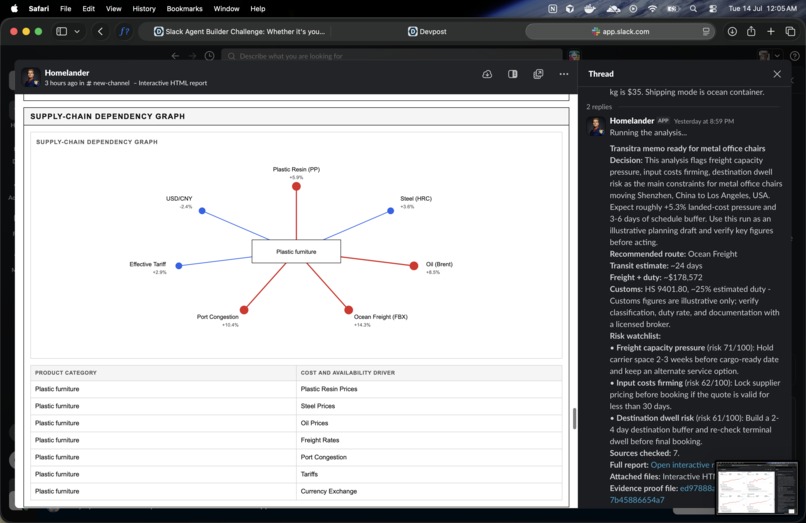
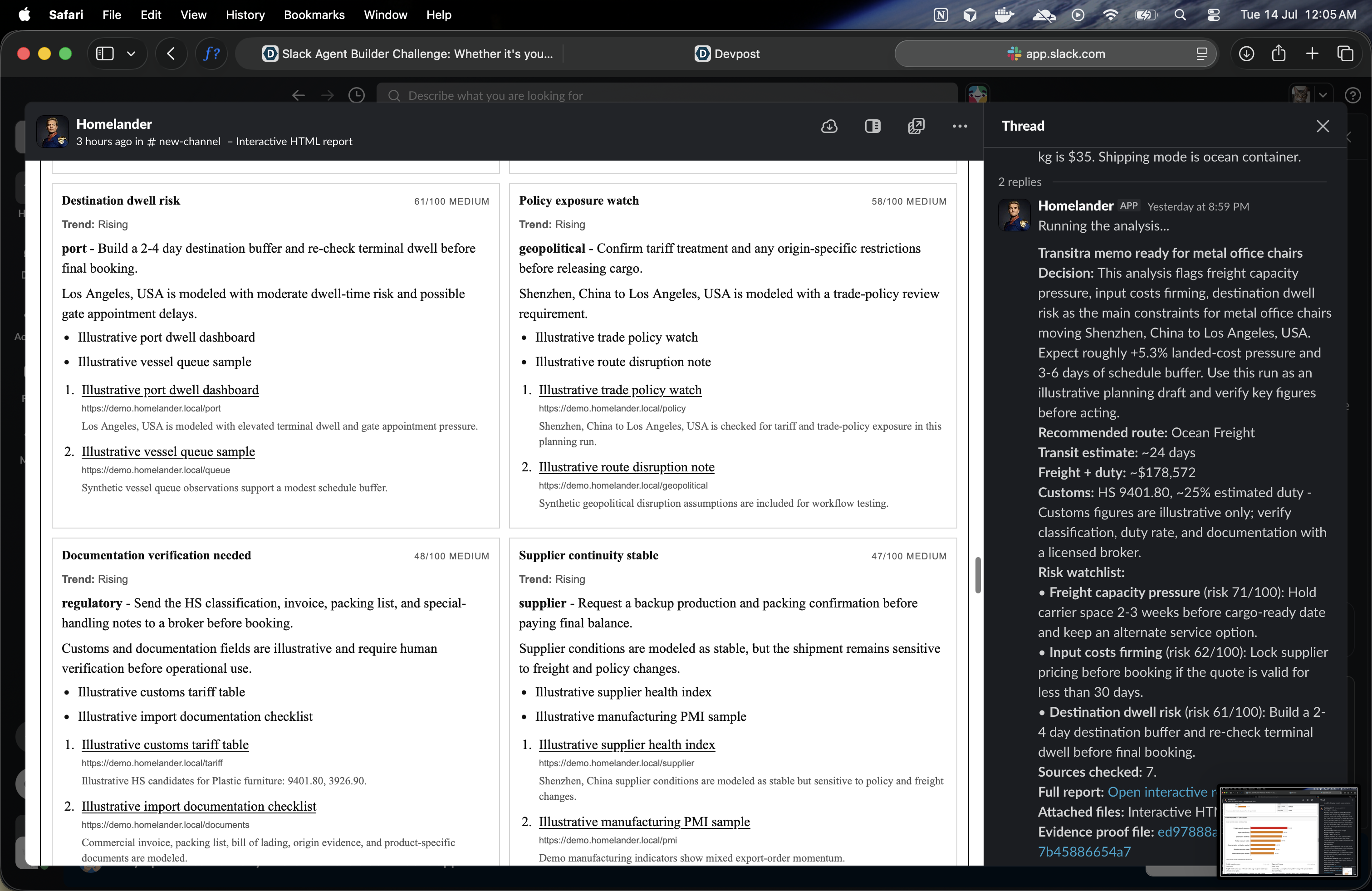
The Synthesis Engine combines every agent's output into one structured decision model, which is then used to generate:
- A concise Slack summary
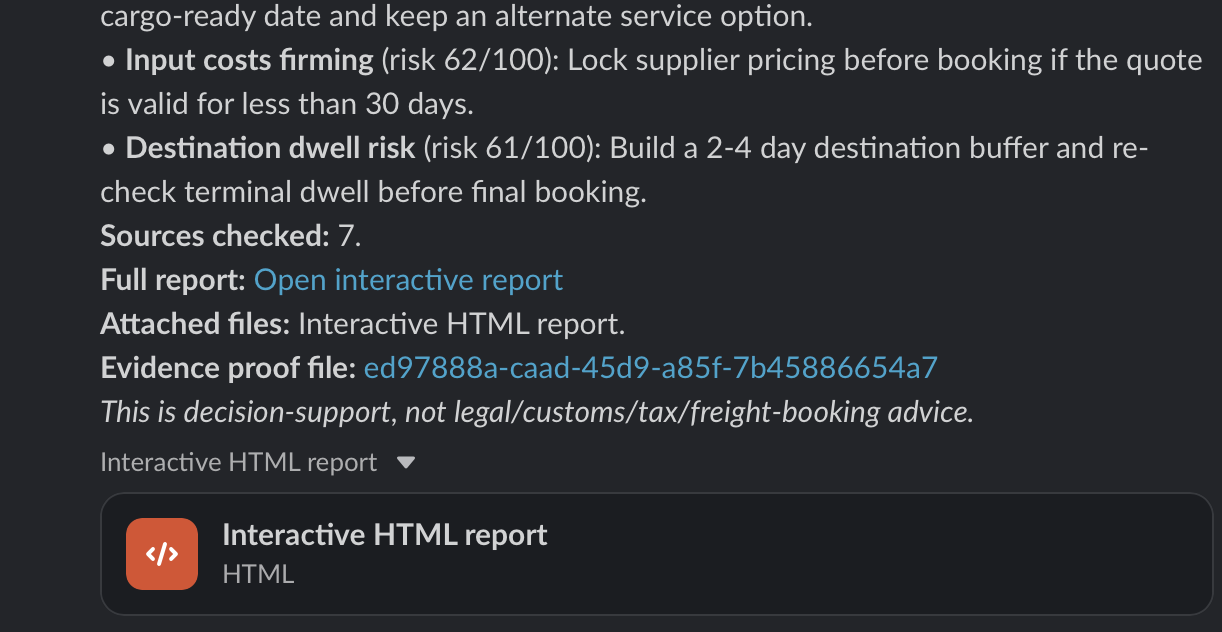
- A detailed HTML report
- A PDF report
- A temporary evidence file containing sources, assumptions and supporting excerpts
Because every output comes from the same structured model, they always remain consistent with each other.
Example questions
- Compare ocean and air freight for this shipment and estimate total landed cost.
- Which shipping route has the lowest operational risk?
- What customs documents will be required before importing this product?
- How would the recommendation change if the destination port becomes congested?
- What happens if we switch this shipment from ocean freight to air freight?
What makes Homelander different
Most AI assistants search the web and generate an answer.
Homelander treats shipment planning as an orchestration problem instead.
It structures the shipment first, delegates research to specialist agents working in parallel, separates deterministic calculations from language generation, and grounds every recommendation in retrieved evidence before producing a final decision.
This makes the output easier to verify, easier to audit, and much more useful for real operational decisions.
Trust and verification
Homelander is designed to support human decisions, not replace them.
It does not make binding legal, customs, tax or compliance decisions, and it does not book freight or file customs entries.
To make every recommendation transparent:
- Official government, customs, carrier and regulatory sources are preferred whenever possible.
- Source URLs, retrieval timestamps and evidence excerpts are attached to findings.
- Financial calculations are performed in deterministic code.
- Values that cannot be confidently determined are marked as Unknown or Unavailable instead of guessed.
- Important customs and compliance findings include human verification warnings.
Challenges we faced
The biggest challenge was to make sure we aren't building another chatbot but a system that people could actually trust for high-impact trade decisions.
That meant separating retrieval from reasoning, moving calculations outside the language model, coordinating multiple specialist agents instead of relying on one prompt, and keeping every recommendation traceable back to evidence.
Designing a workflow that still felt natural inside Slack while exposing all of that technical complexity was one of the hardest parts of the project.
What we learned
Building Homelander reinforced that reliable AI systems need more than a capable language model.
Orchestration, deterministic computation, retrieval quality, structured outputs and transparent evidence all contribute to making an AI system trustworthy.
The project also gave us hands-on experience designing multi-agent workflows, integrating MCP-powered tools, coordinating parallel research, and building AI systems where humans remain in control of the final decision.
Built With
- brightdata
- hono
- mcp
- nextjs
- postgresql
- react
- slack
- typescript


Log in or sign up for Devpost to join the conversation.