-
-
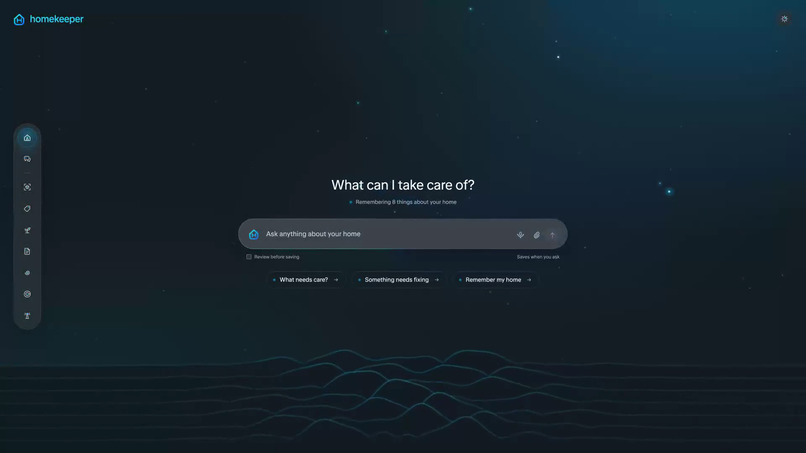
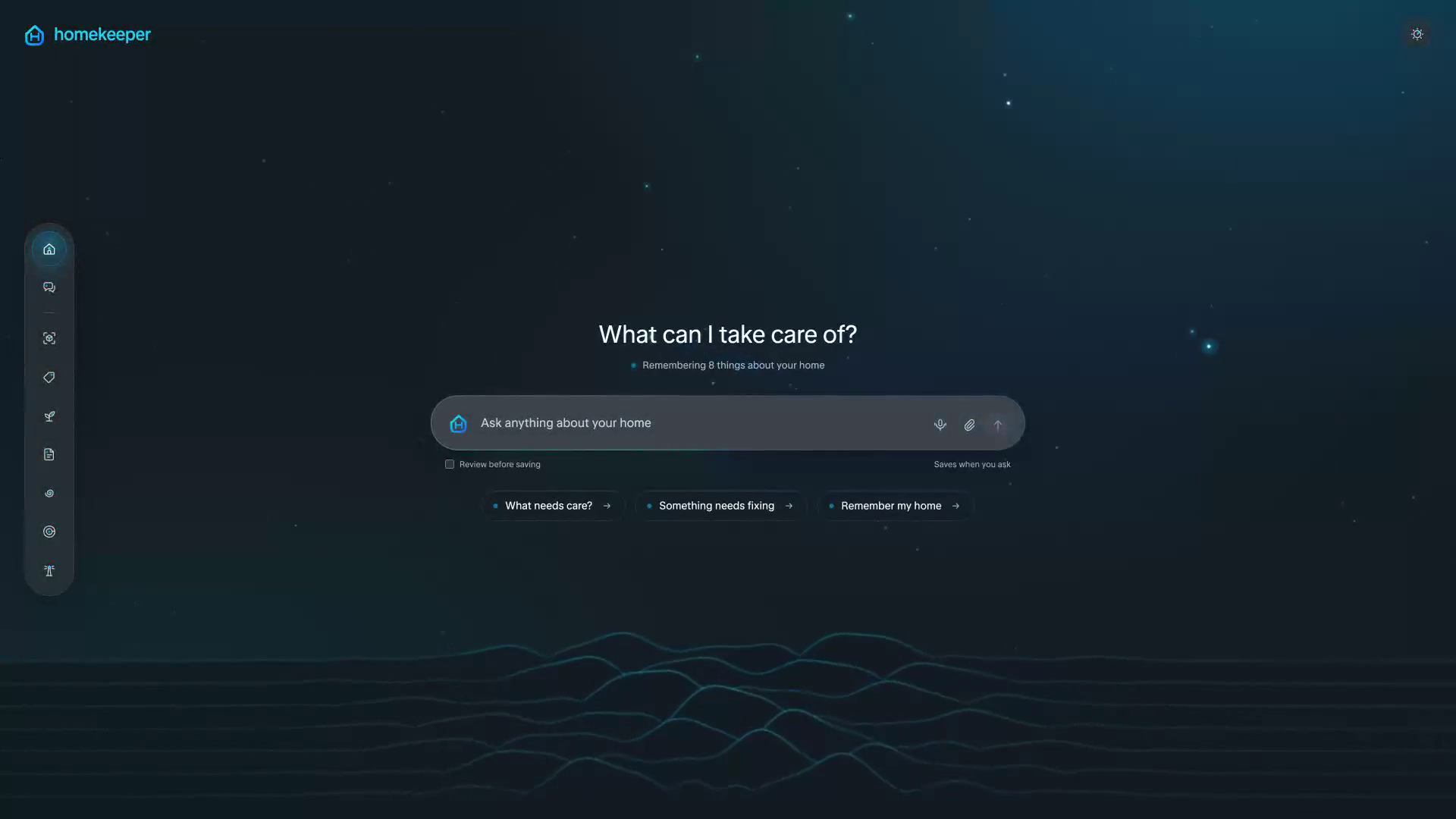
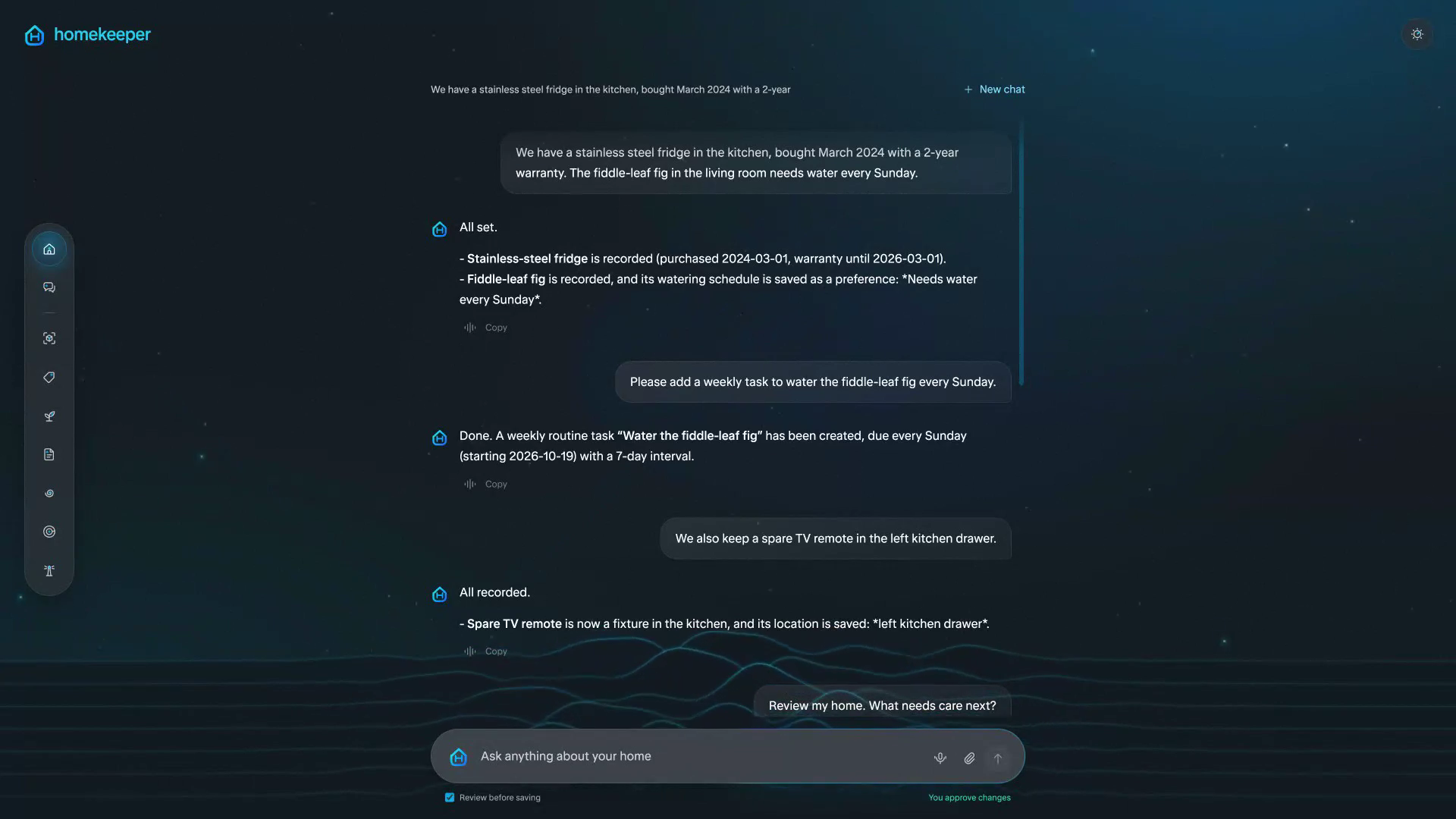
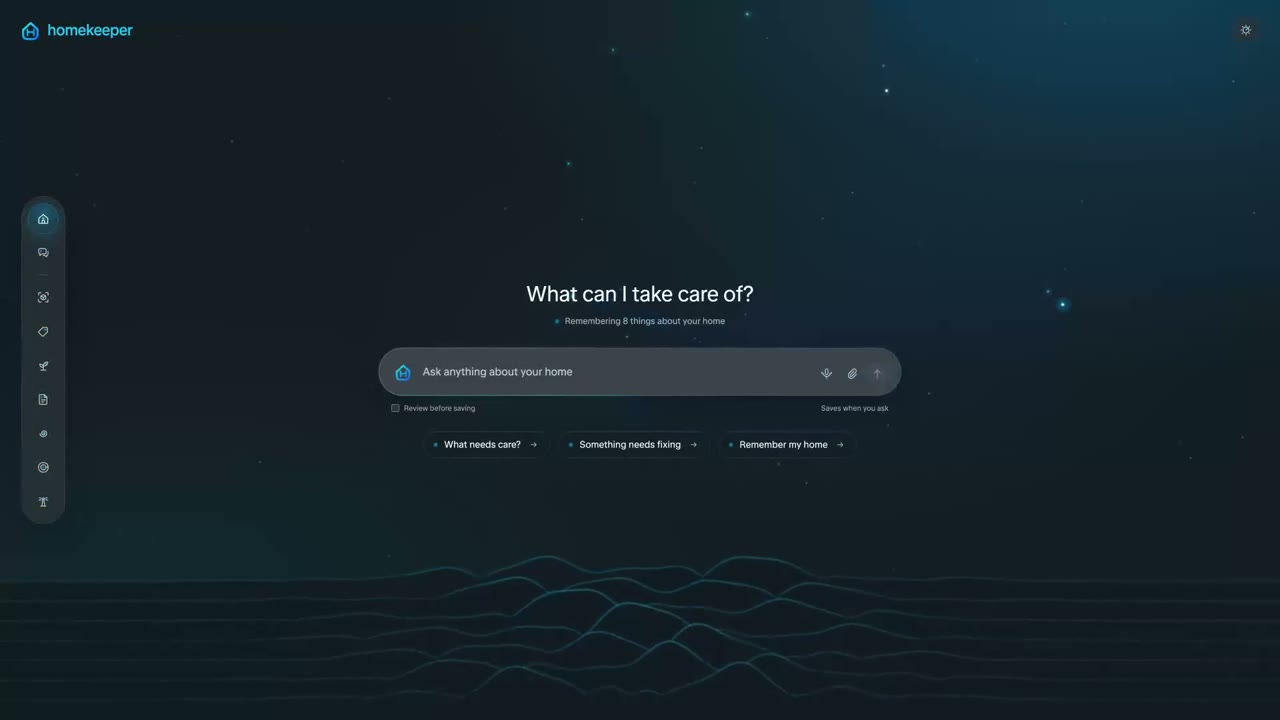
A new chat: "What can I take care of?" Ask anything about your home, by voice or text.
-
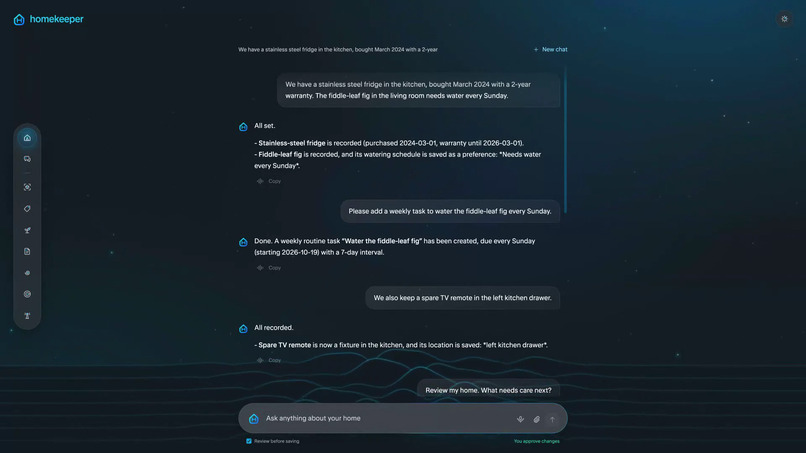
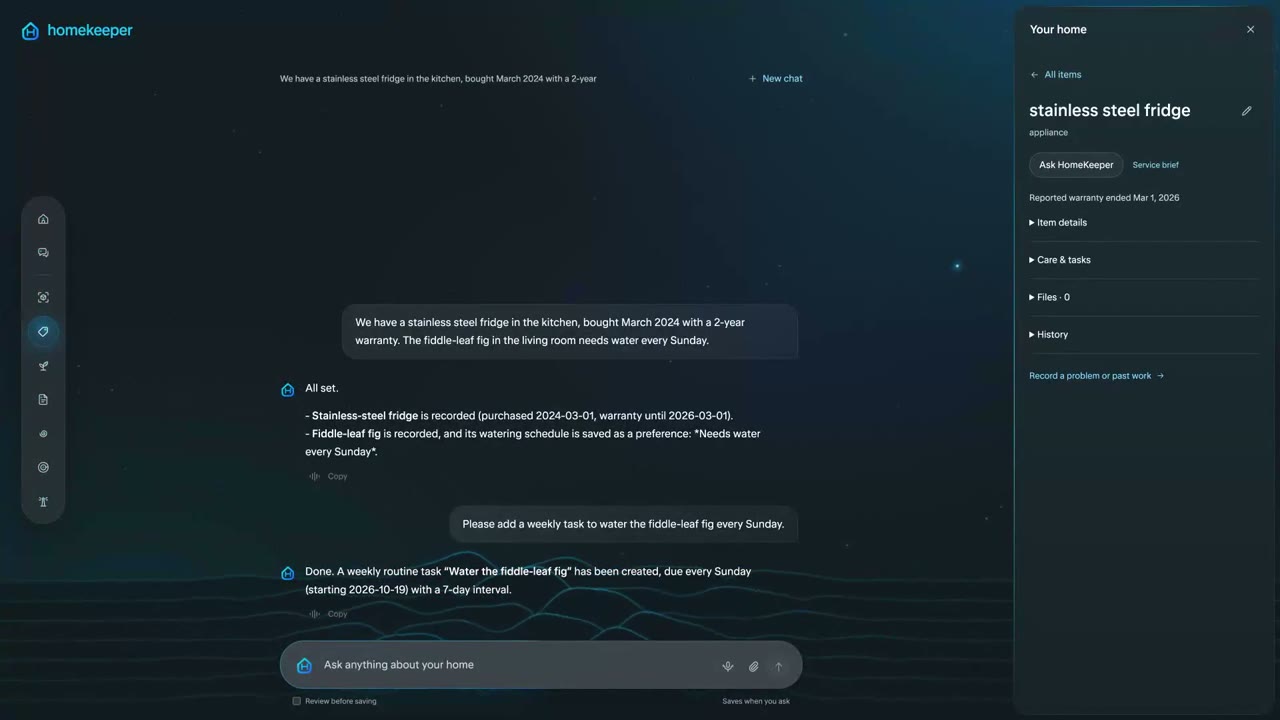
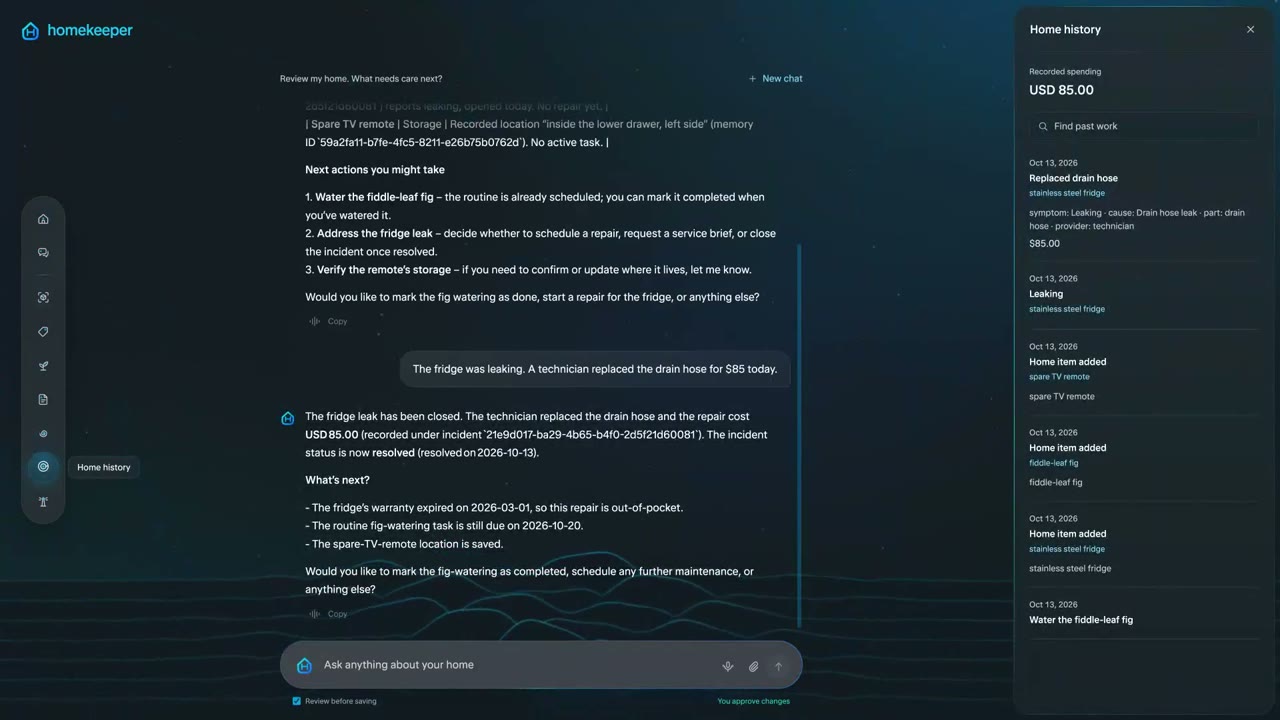
Say it once. One sentence becomes saved records for the fridge, its warranty and the fig's watering.
-
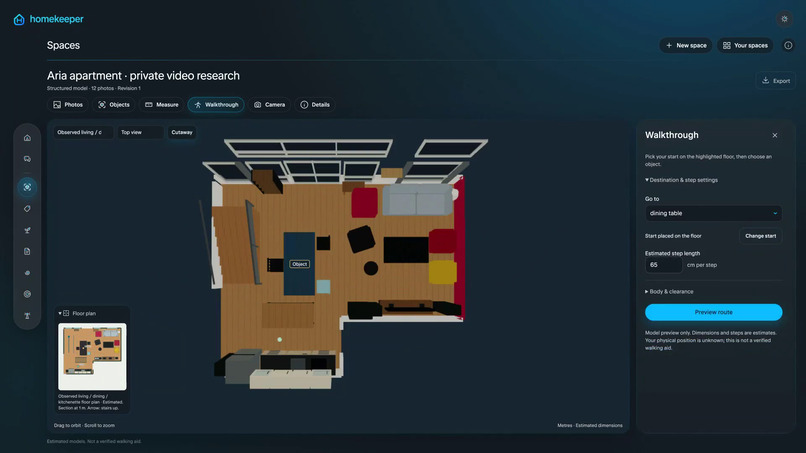
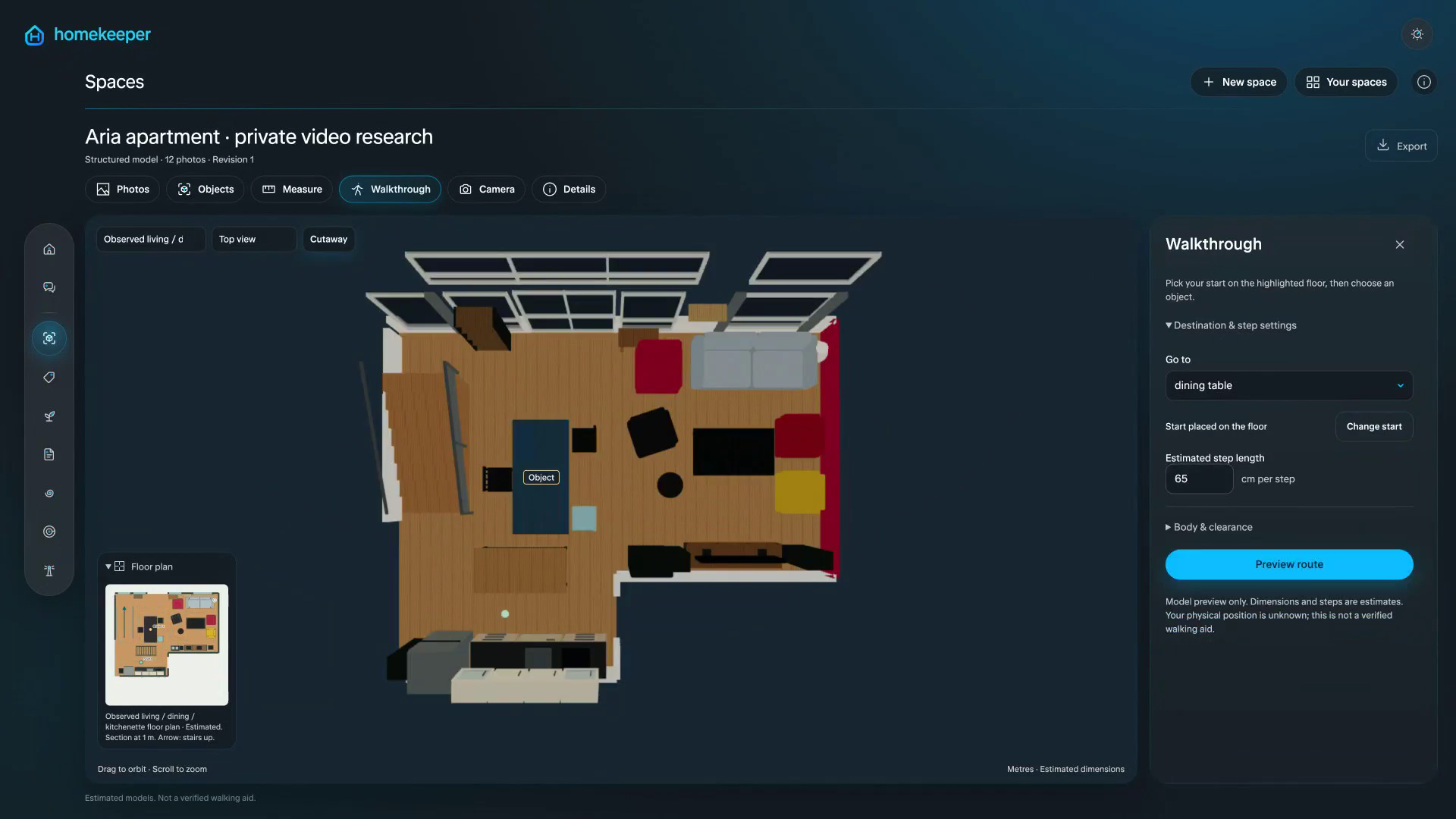
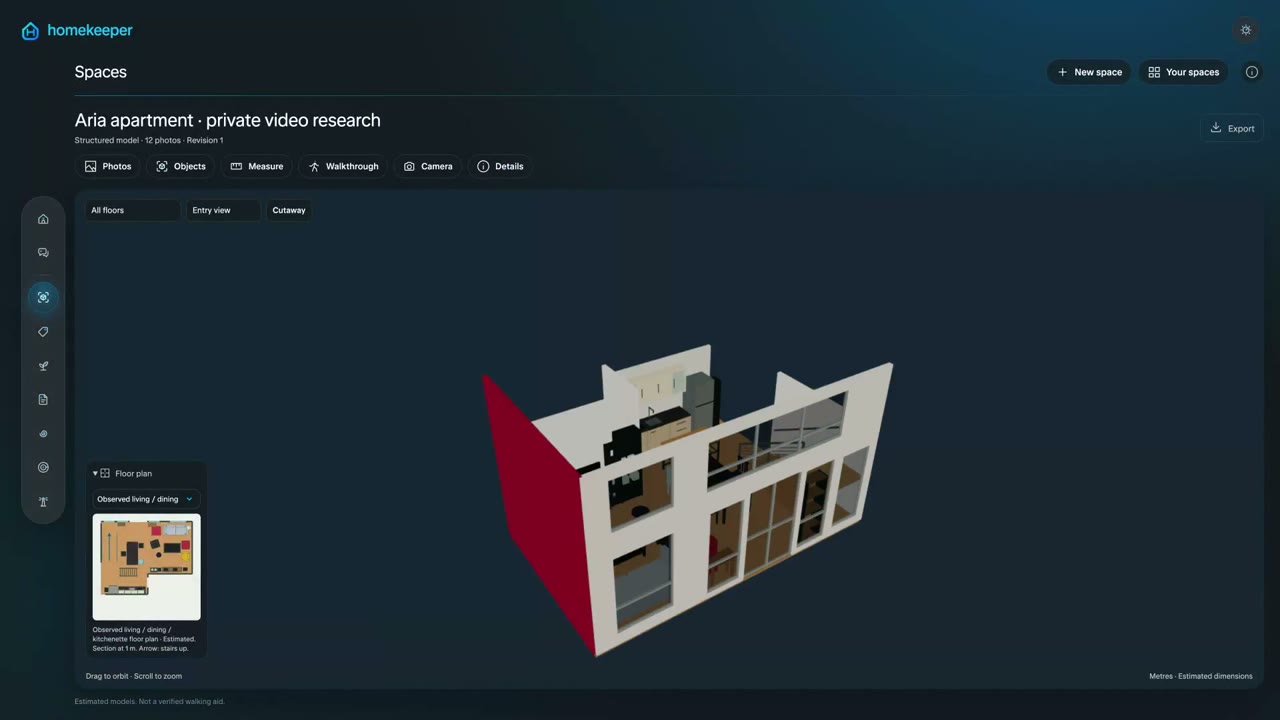
Walkthrough: plan a route through the 3D home to the dining table.
-
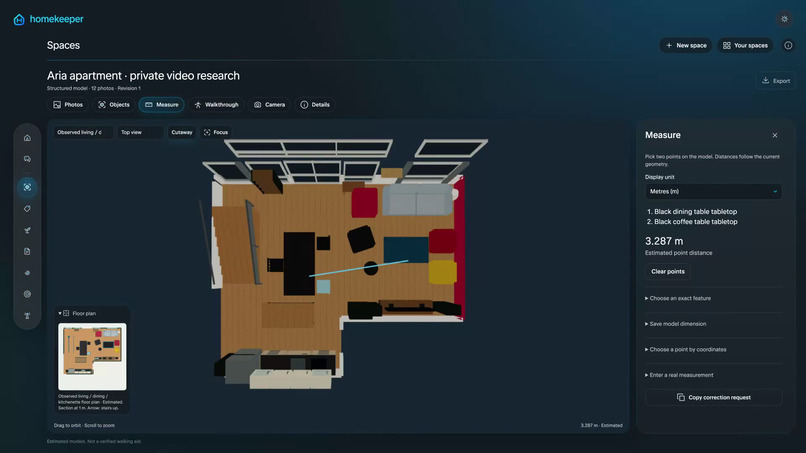
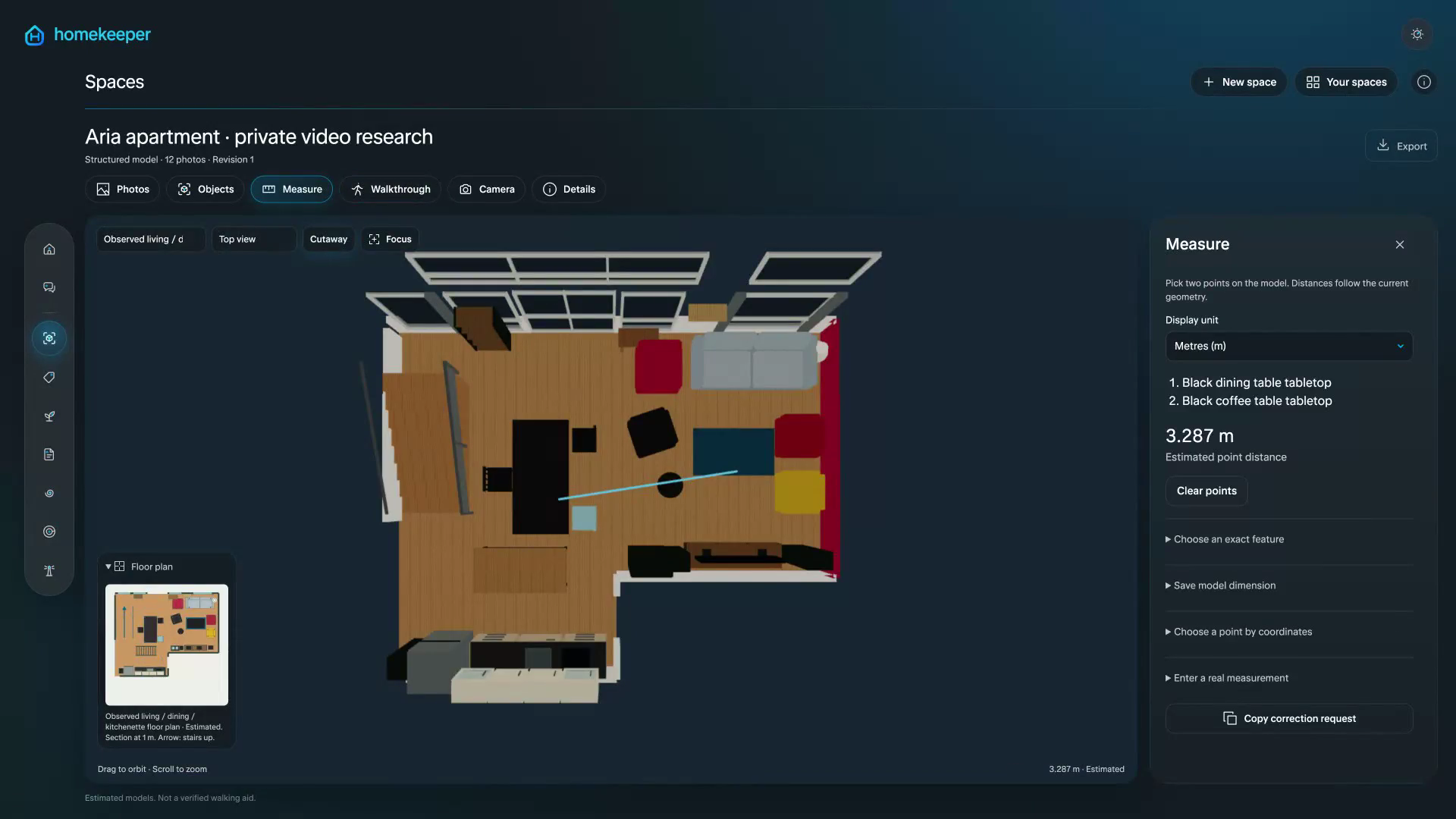
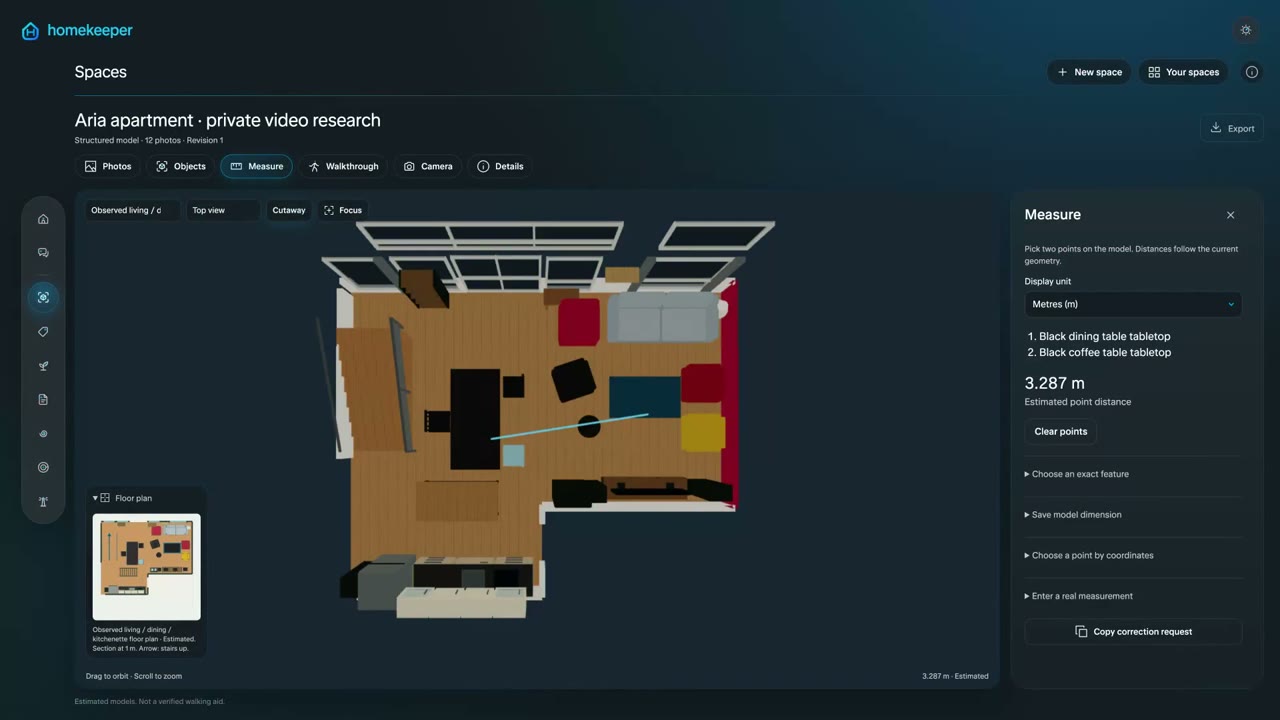
Measure any two points: dining table to coffee table, 3.287 m.
-
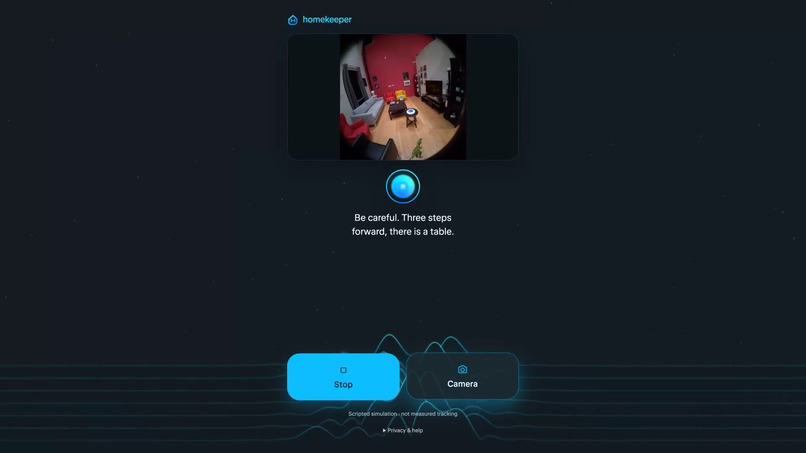
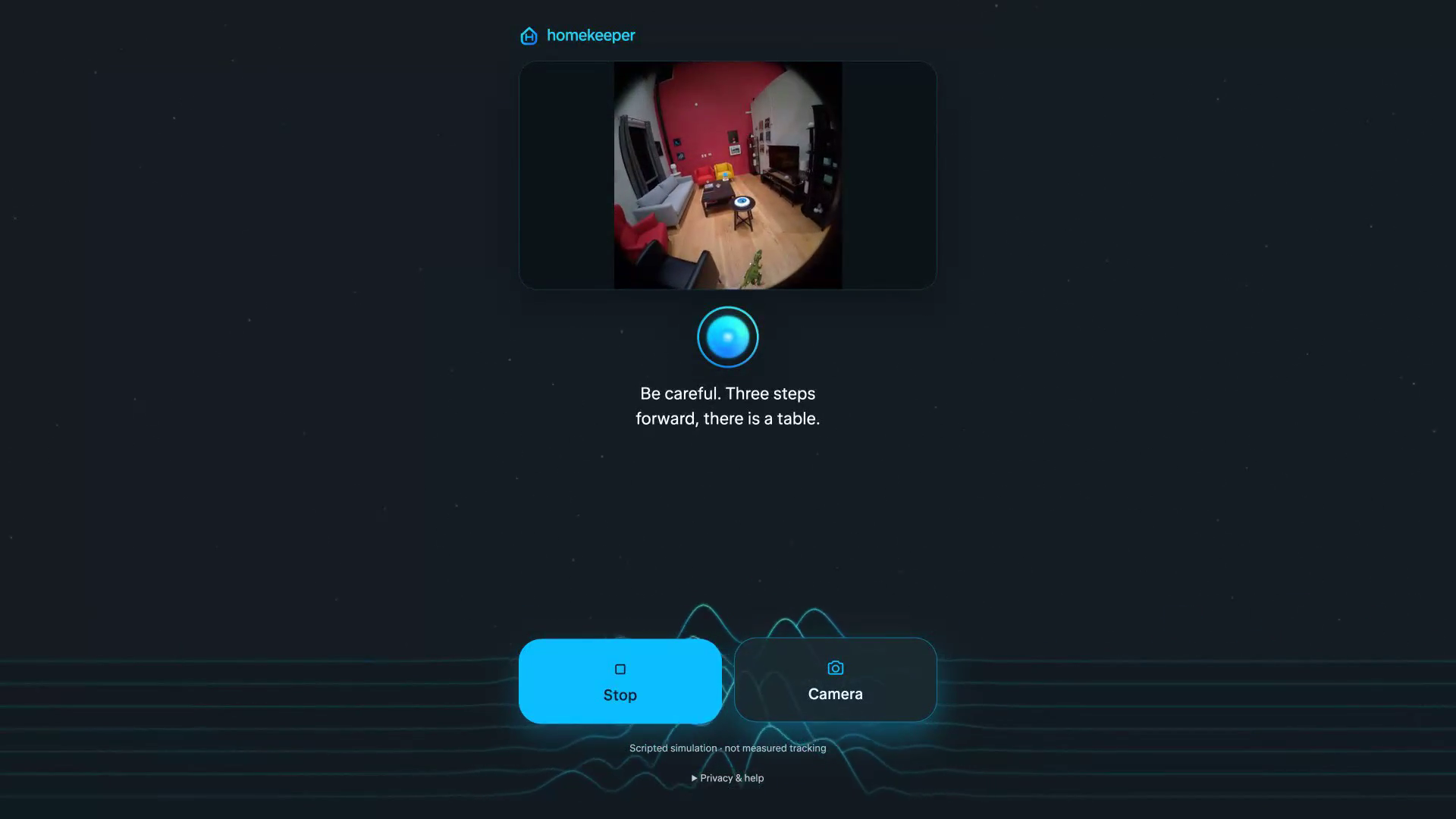
Home Guide: short spoken steps. "Be careful. Three steps forward, there is a table."
-
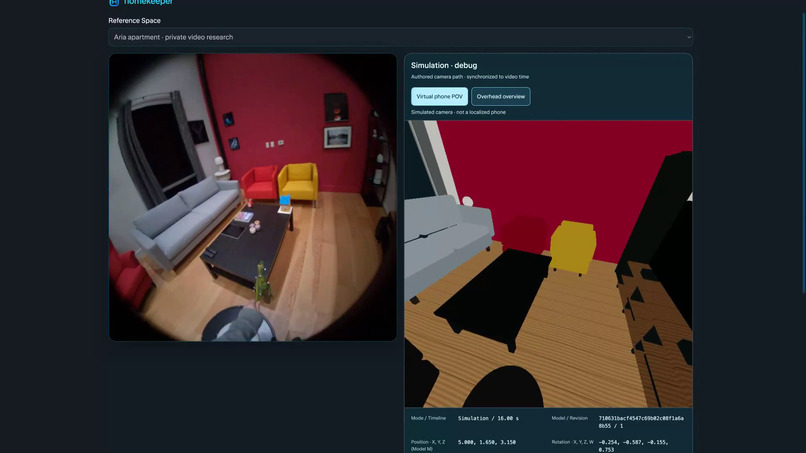
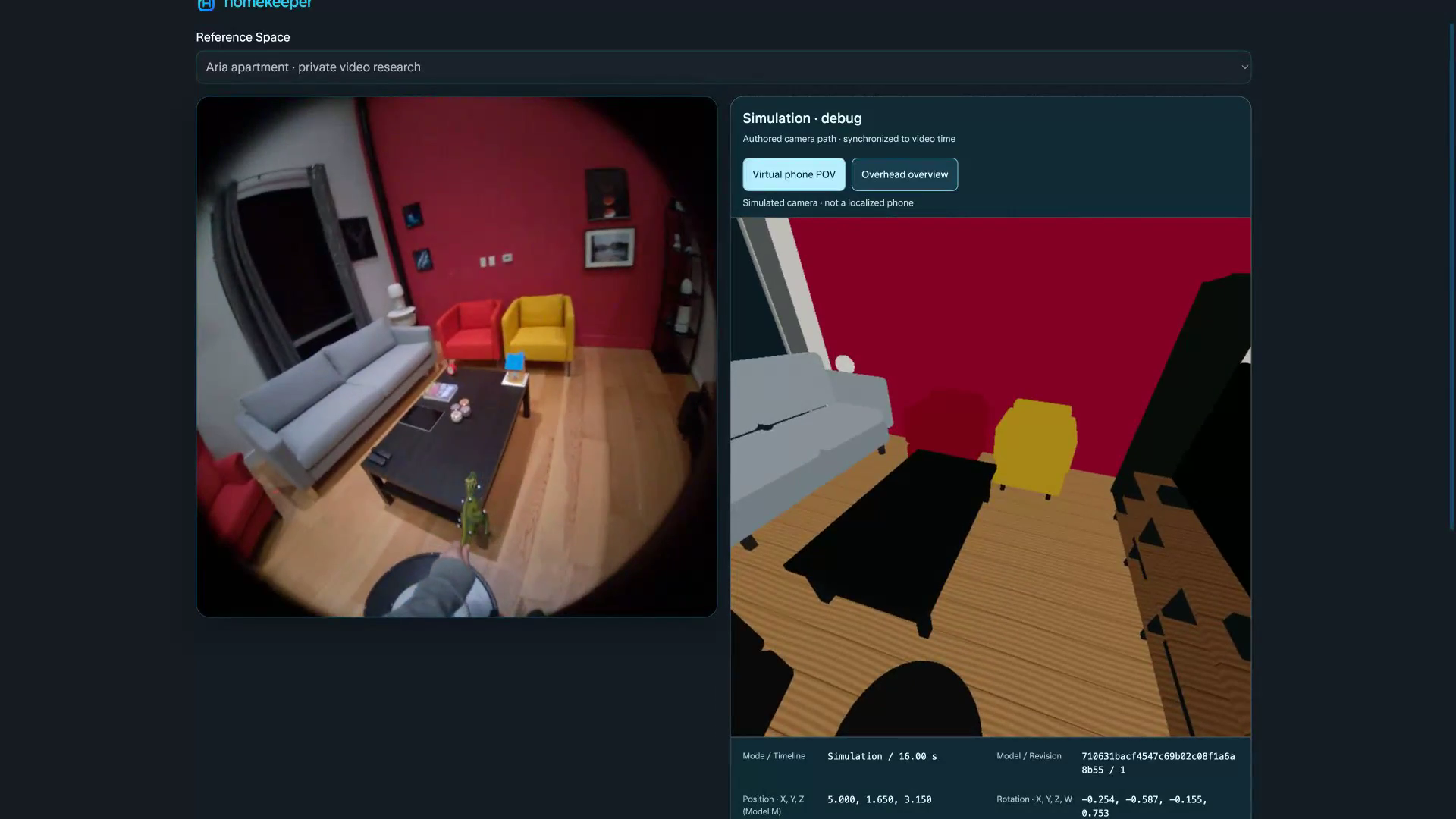
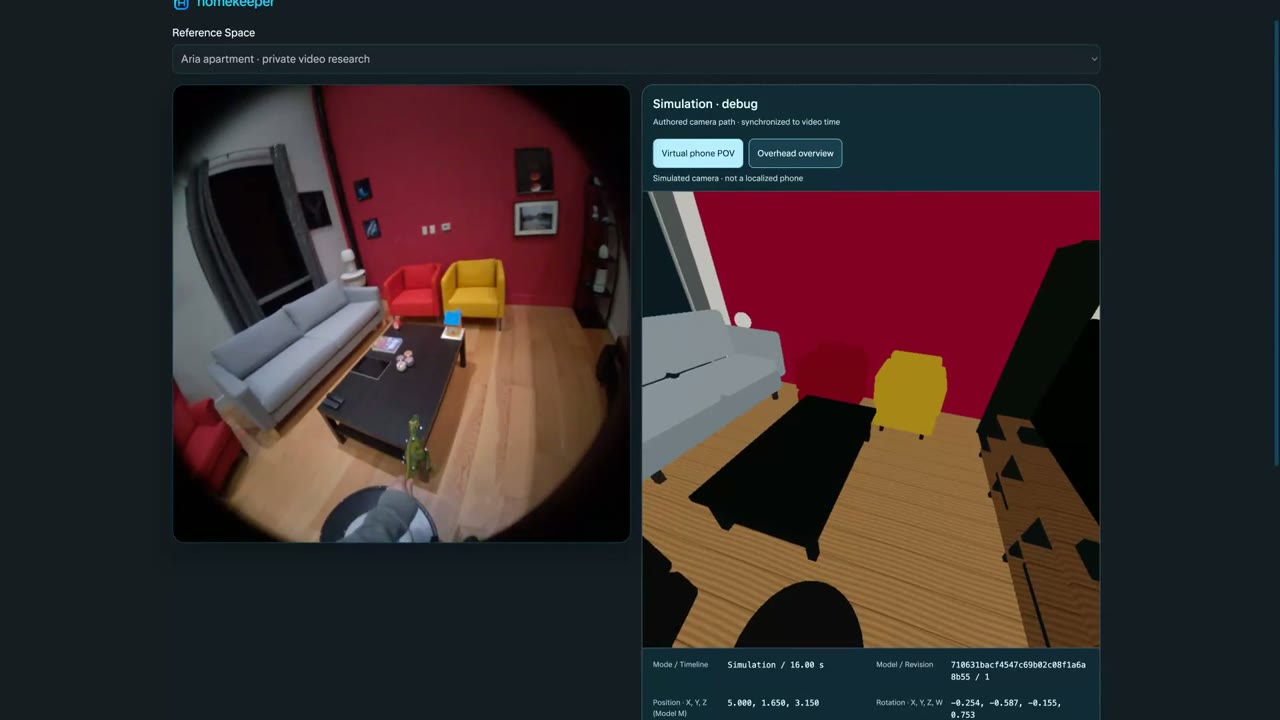
The guide's debug view: the live camera matched to the 3D model, side by side.
-
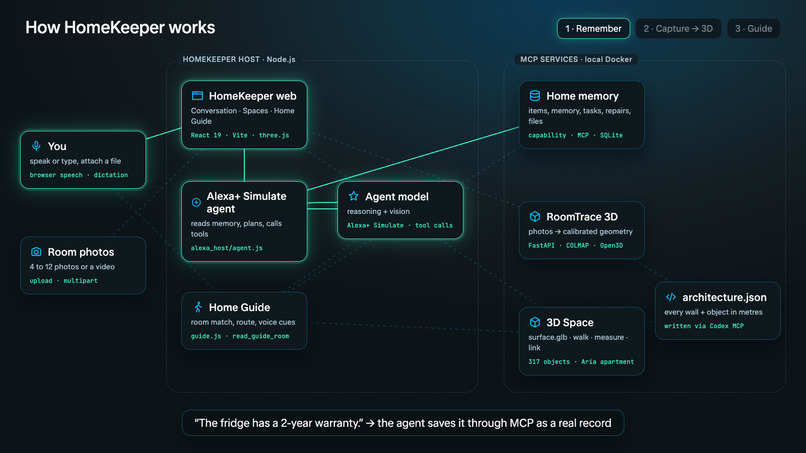
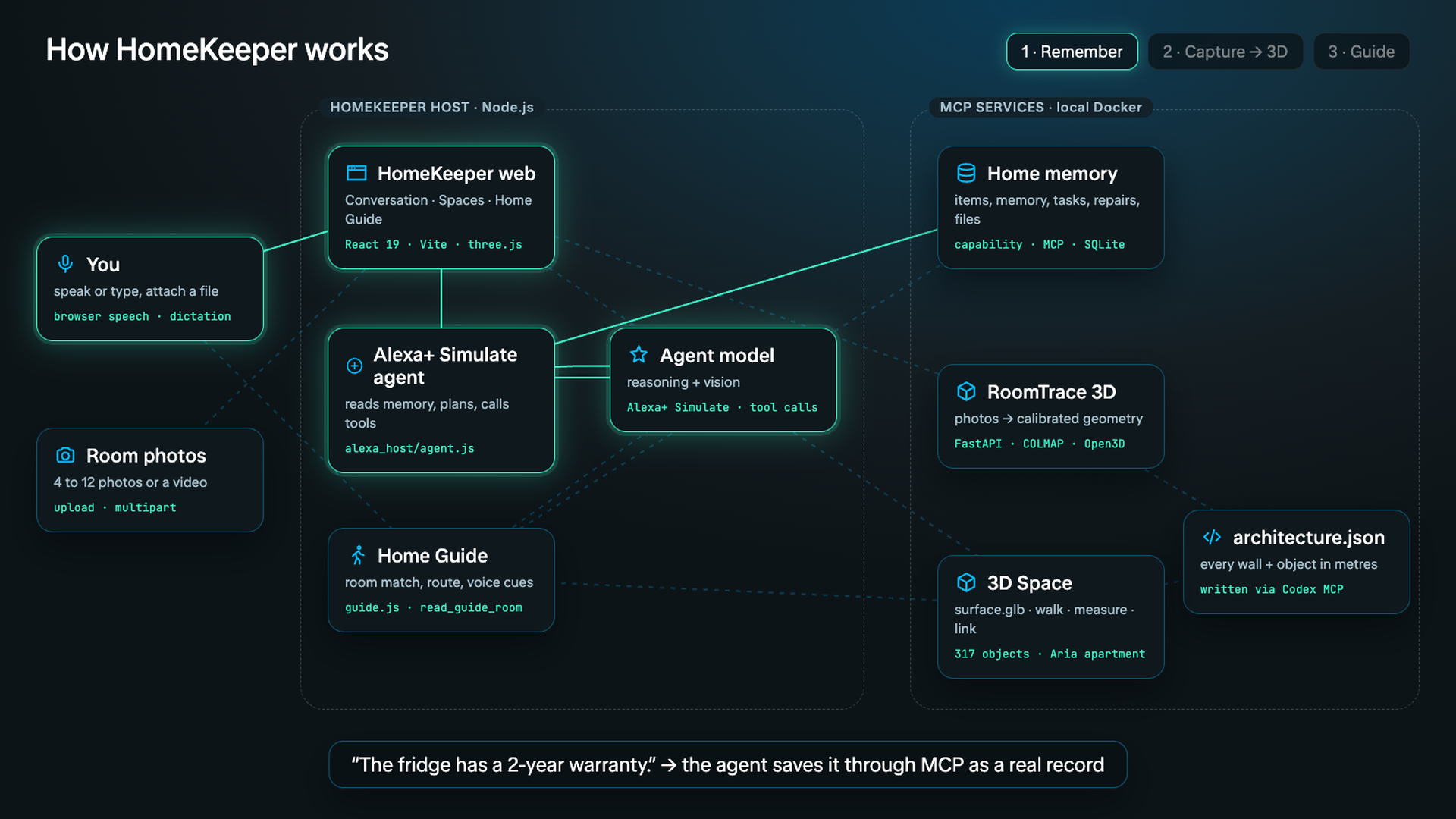
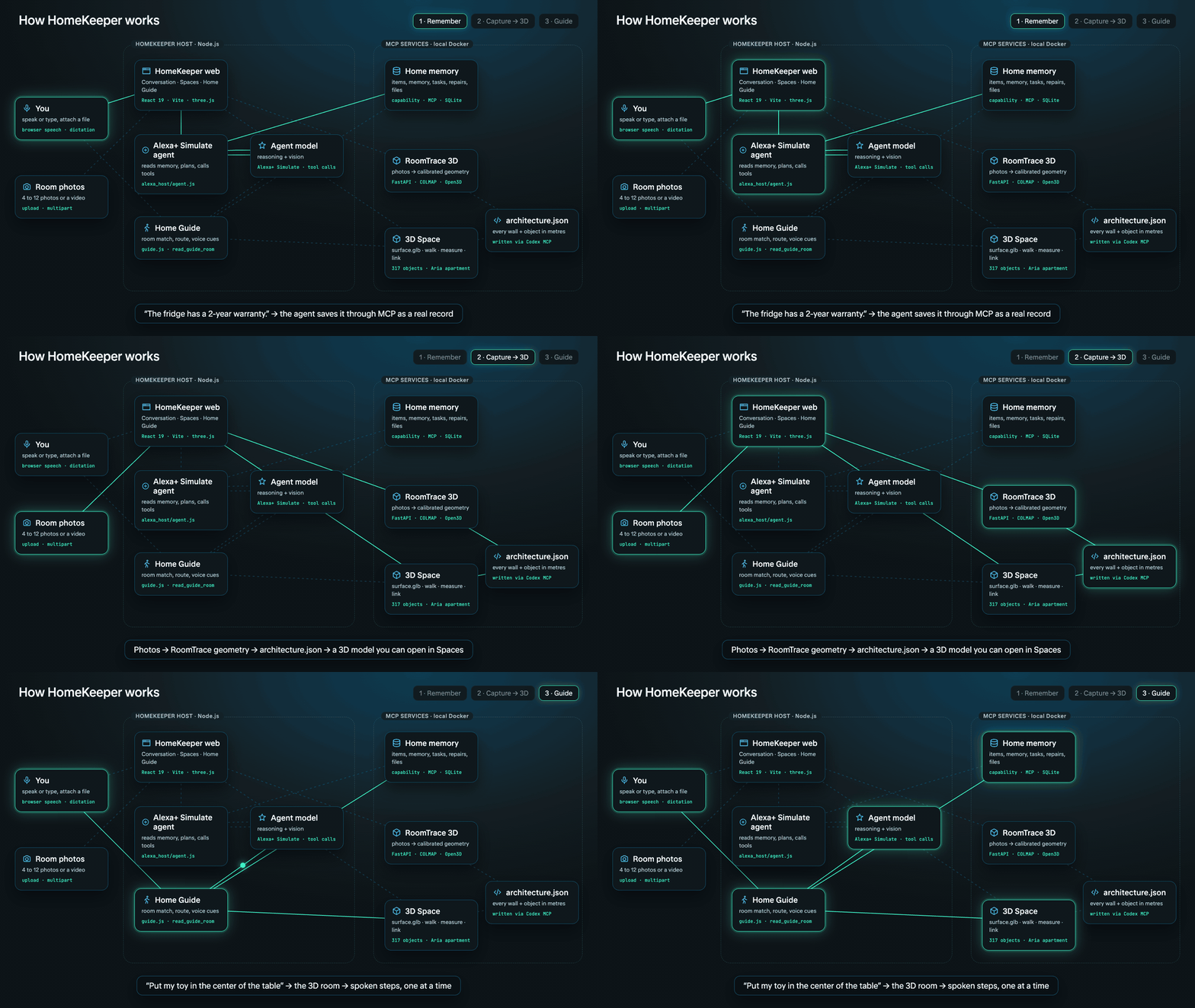
How HomeKeeper works: the Alexa+ Simulate agent calls MCP tools for home memory and 3d Space
HomeKeeper
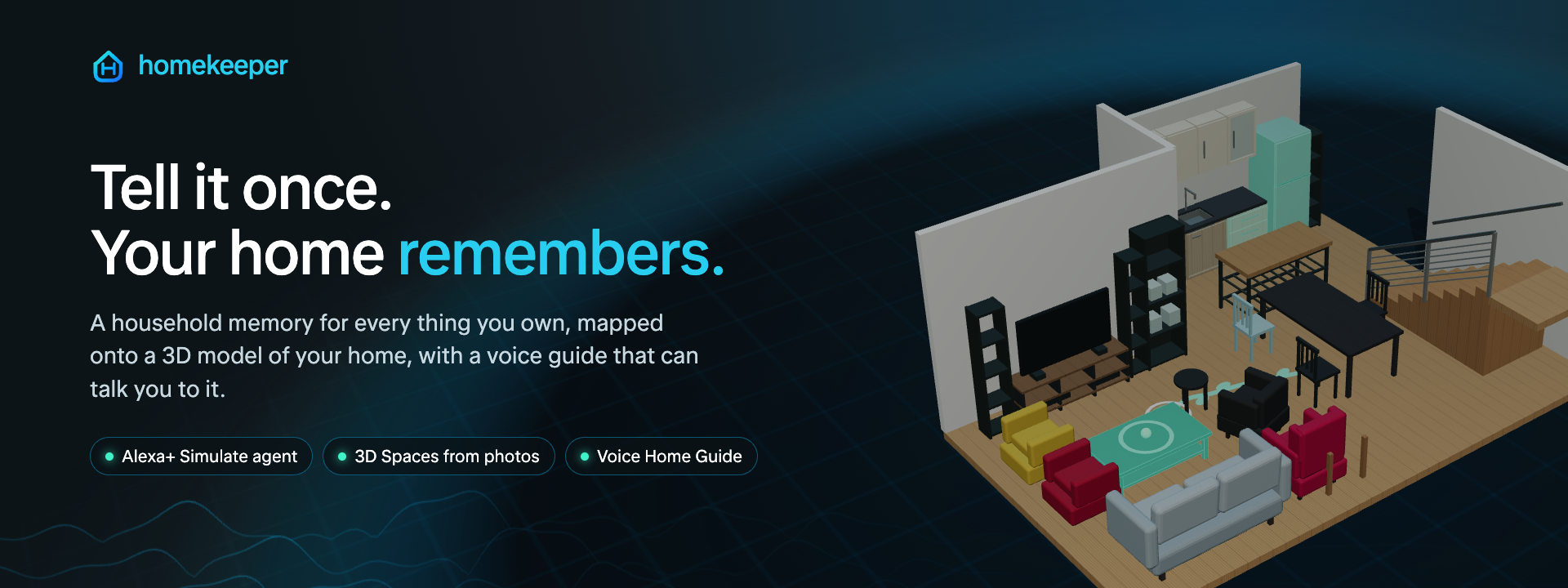
Tell it once. Your home remembers.
HomeKeeper is a household memory for every thing you own. You tell it about your home in plain words, by voice or text, and it keeps those facts as real records: the fridge and its warranty, the plant that needs Sunday water, the repair and what it cost. Then it puts them where they belong, on a 3D model of your home made from a few photos. And for anyone who can’t see the room, a voice Home Guide can talk them through it, step by step.



Inspiration
Every home runs on a hundred things we’re supposed to remember.
Where did I put the spare remote? When was the fridge last fixed? Did anyone water the fig? The answers live in a drawer of receipts, an old chat, or one person’s head. Smart-home apps only know the handful of devices with Wi-Fi; the sofa, the fig and the drawer are invisible to them. Notes apps remember words but know nothing about where anything is.
And for a person who is blind or has low vision, “it’s on the table in front of the TV” is the start of a search, not an answer.
We wanted one place you could tell your home something once, and have it remembered, attached to the real object, and useful the next time anyone needs it.
What it does

| HomeKeeper capability | What it does | Why it matters |
|---|---|---|
| 1 · Remember, by voice | Say “We have a stainless steel fridge, bought March 2024, with a two-year warranty.” The Alexa+ Simulate agent saves it as a real record and answers out loud. | Nobody learns a filing system. You just say it. |
| 2 · Capture your home in 3D | 4 to 12 photos of a room become a structured 3D model: walls, windows, stairs, furniture and fittings, in metres. Walk it, measure it, compare it with the source photos. | Your records gain a where. |
| 3 · Connect records to real objects | Click the fridge in 3D and link it to the fridge record. Save “spare remote: lower kitchen drawer, left side” on the drawer. | “Where is it?” has an answer you can see. |
| 4 · Care, with consent | “What needs care?” is answered from real records. A repair keeps its symptom, part, provider and exact cost, and review mode asks before anything changes. | The record stays true, and stays yours. |
| 5 · Home Guide | “I want to put my toy in the center of the table, in front of the TV.” HomeKeeper matches the camera to the saved room and speaks short steps: “Two steps forward… Table ahead. Stop here.” | A home you can ask your way around. |
Product walkthrough
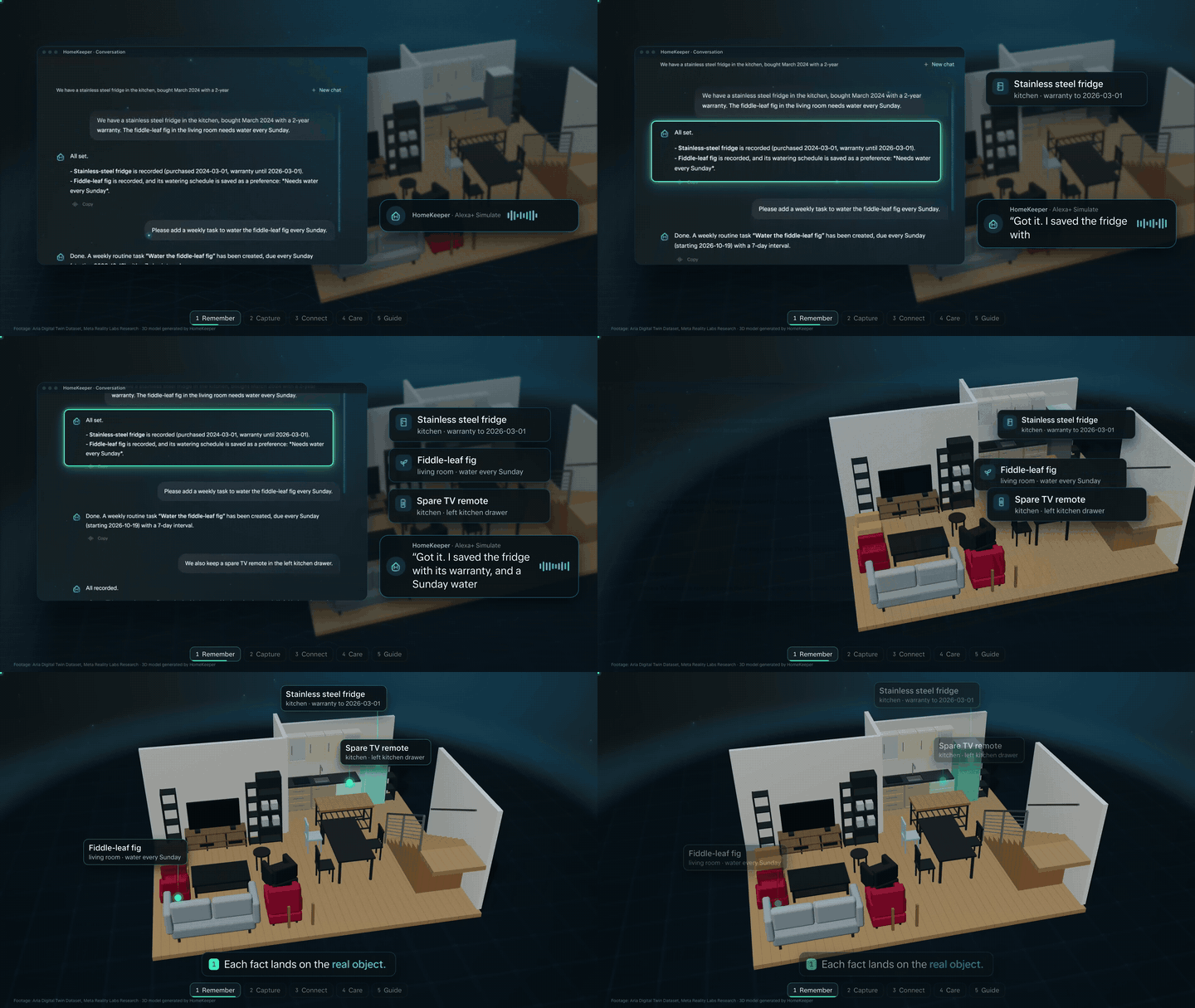 1 · Remember. One sentence becomes three records, and each one lands on its real object in the 3D home. |
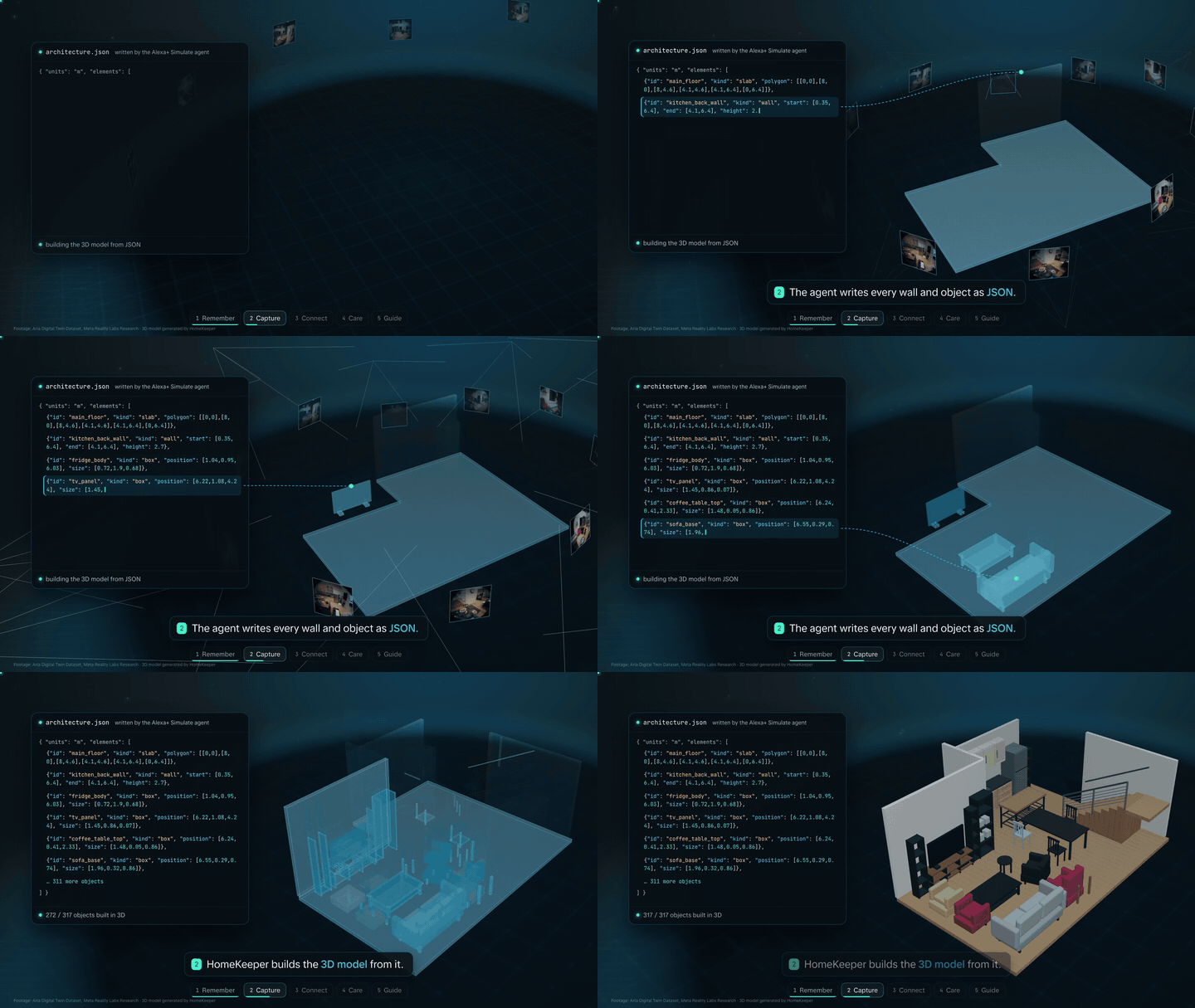 2 · Capture. The agent writes the room as JSON, and HomeKeeper builds each object from it: 317 in this apartment. |
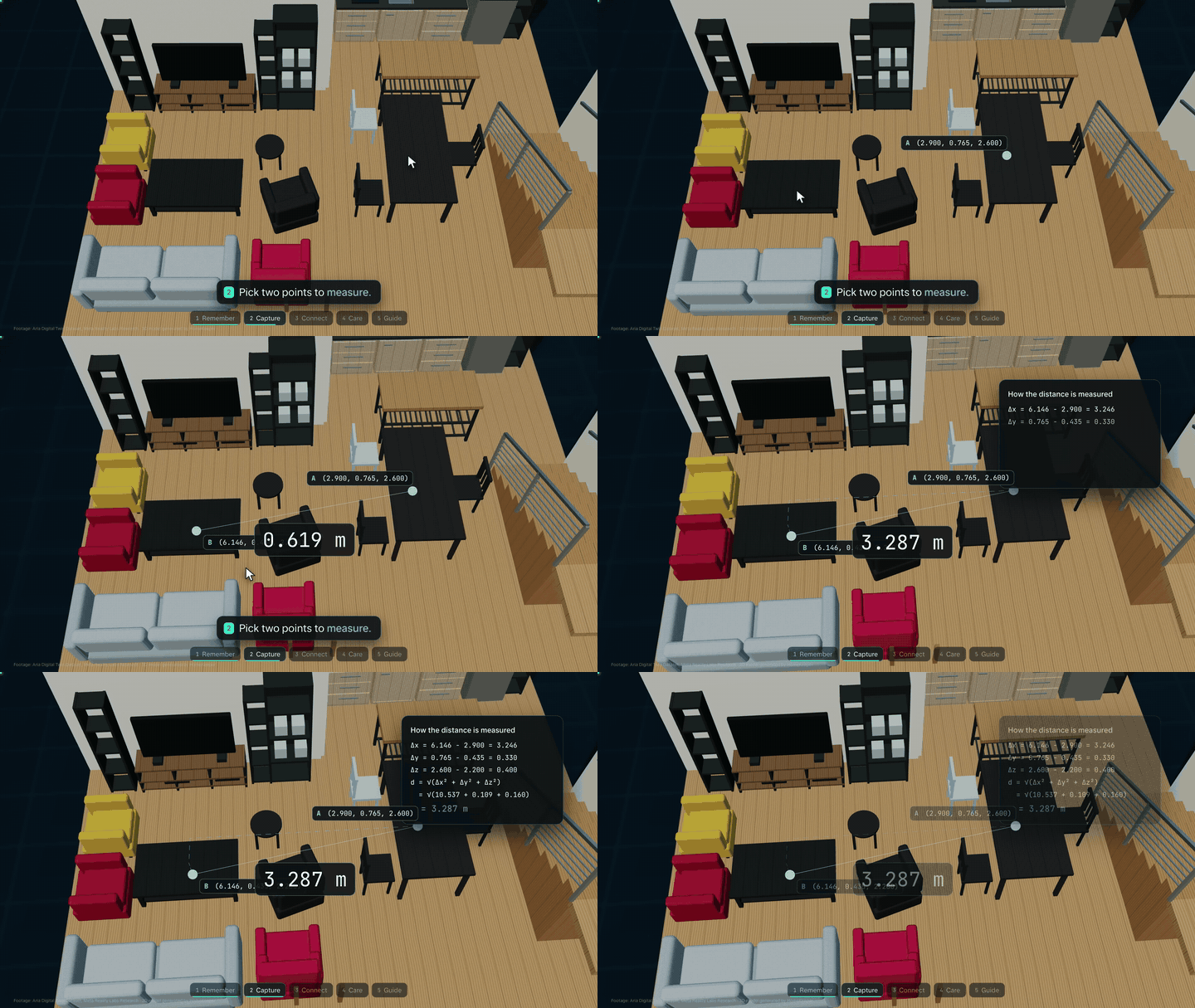 2 · Measure. Pick two points; the distance is simple geometry on the model’s coordinates. |
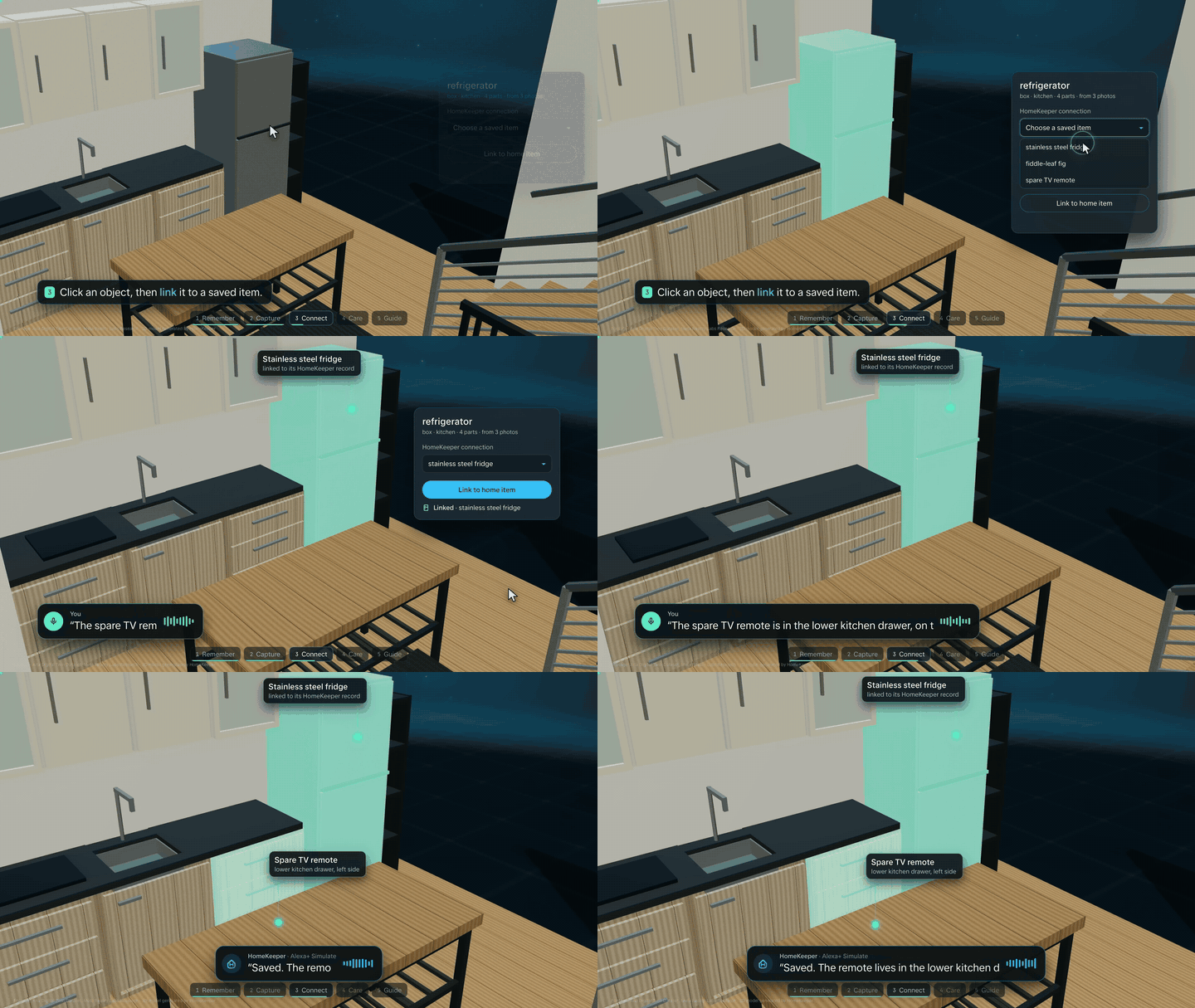 3 · Connect. Click, choose the saved item, link. Then say what is stored inside the drawer. |
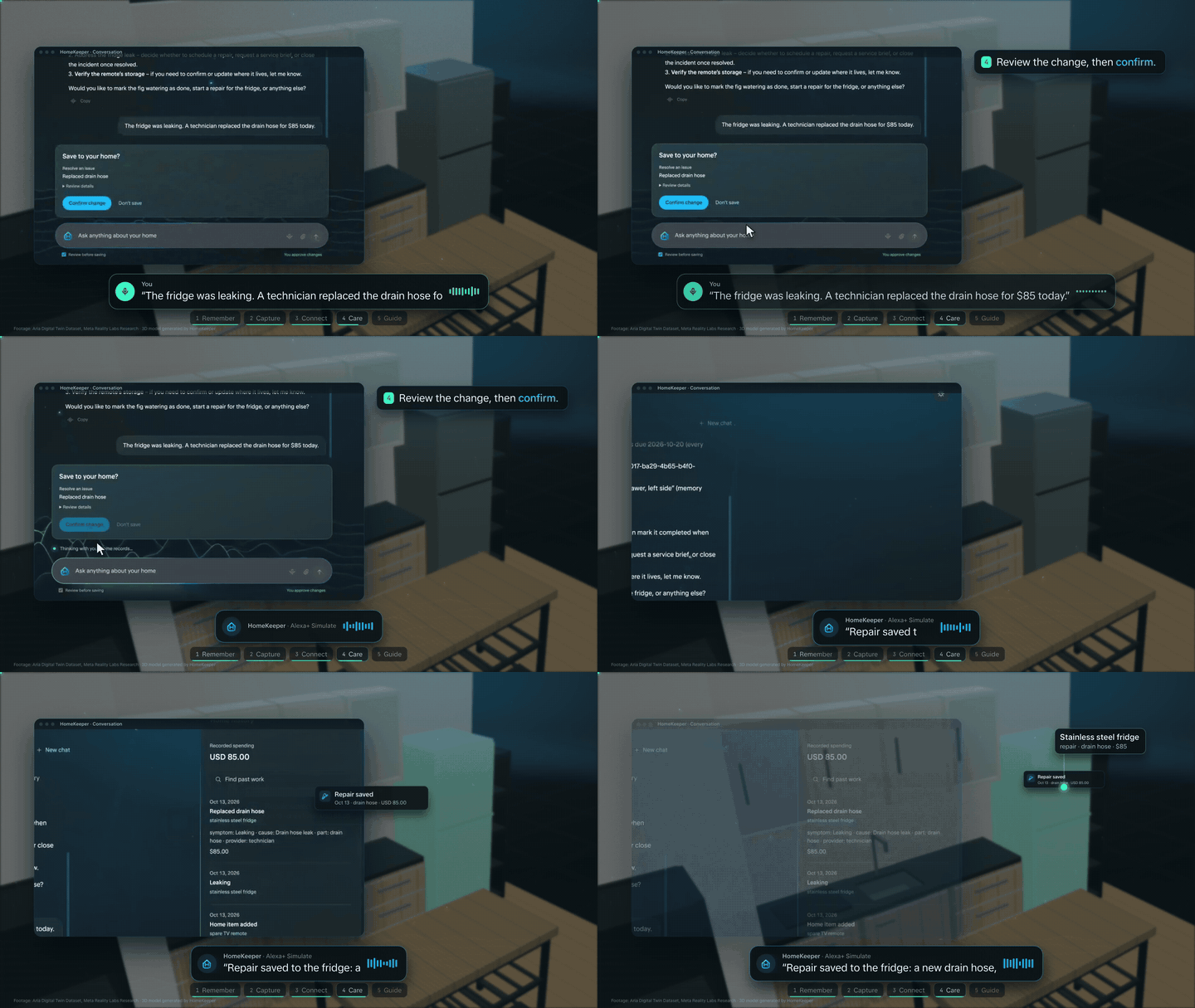 4 · Care. Review the change, confirm it, and the $85 repair joins the fridge’s history. |
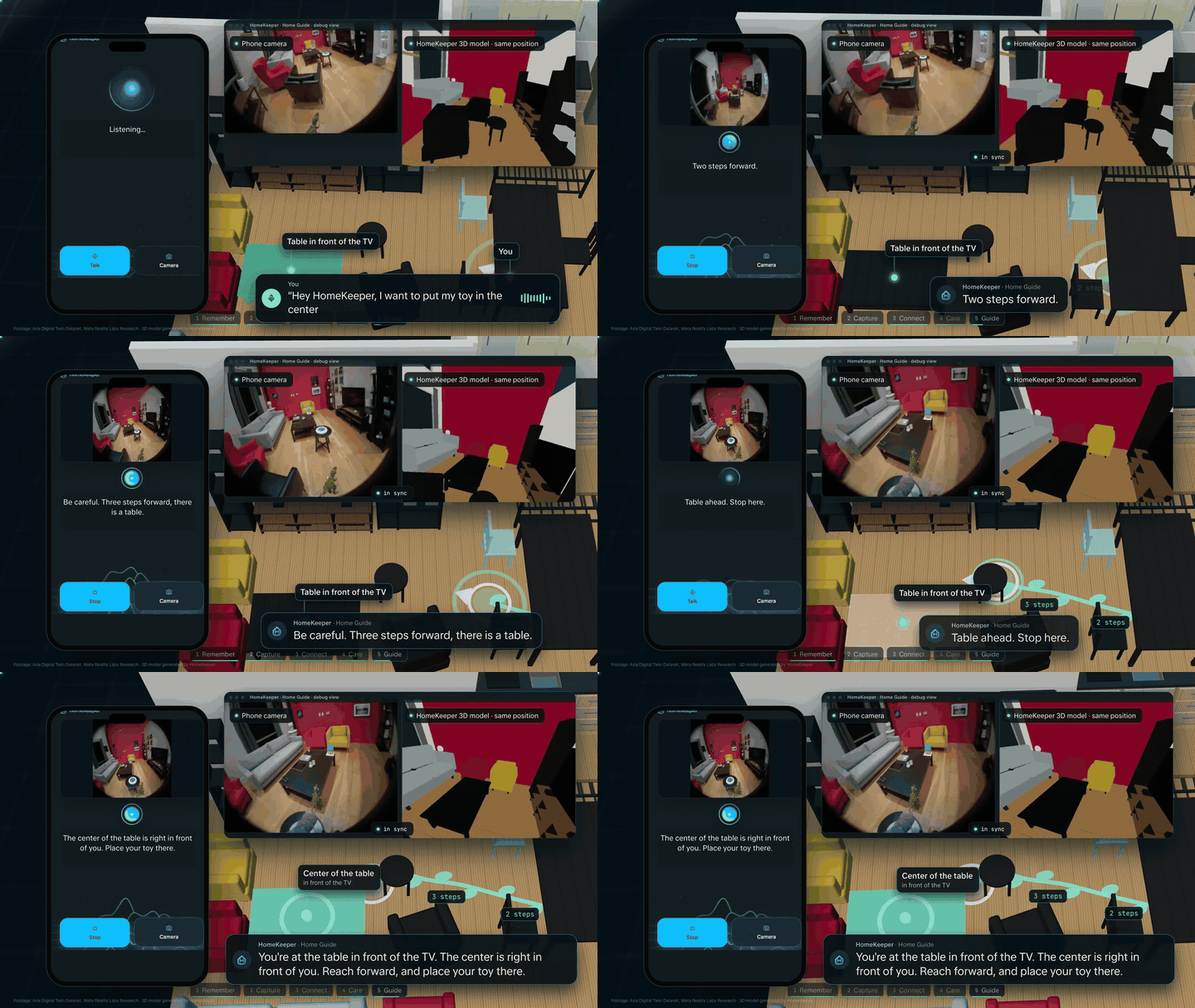 5 · Guide. Spoken steps, with the camera and the 3D model in sync, to the table in front of the TV. |
| The conversation | The item’s passport | The 3D Space |
|---|---|---|
 |
 |
 |
| Walk to an object | Measure | Link an object |
|---|---|---|
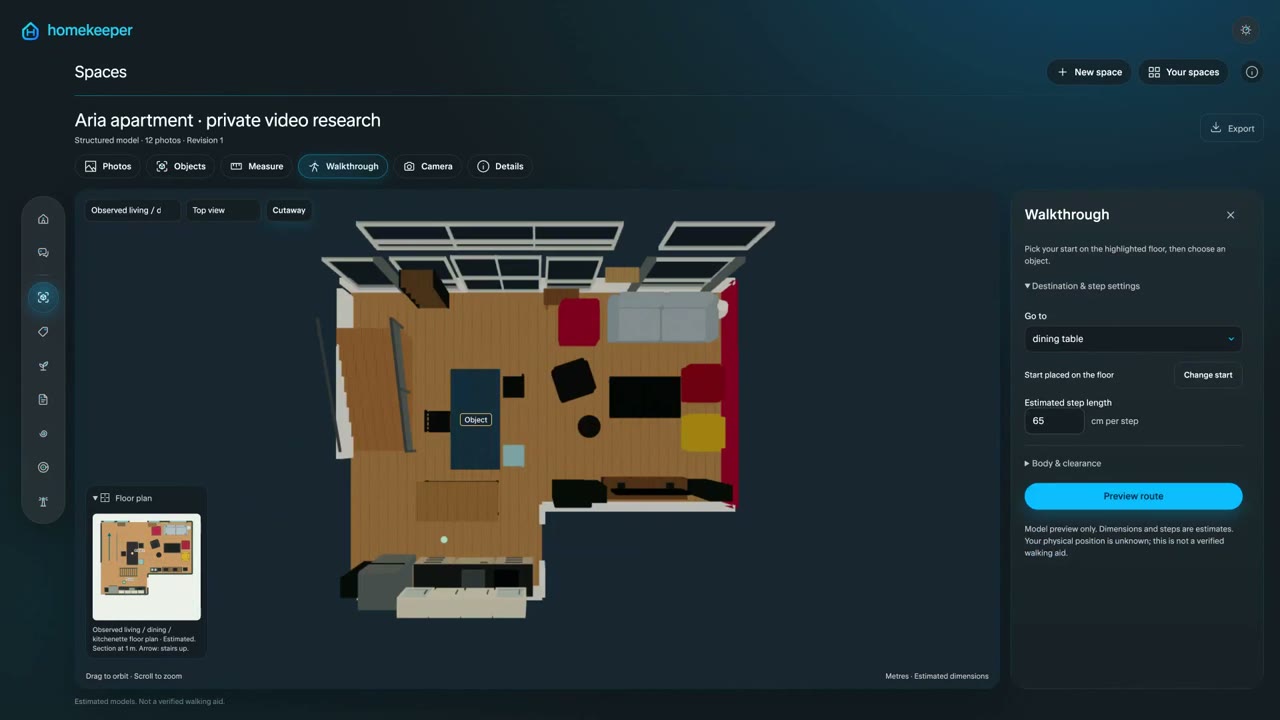 |
 |
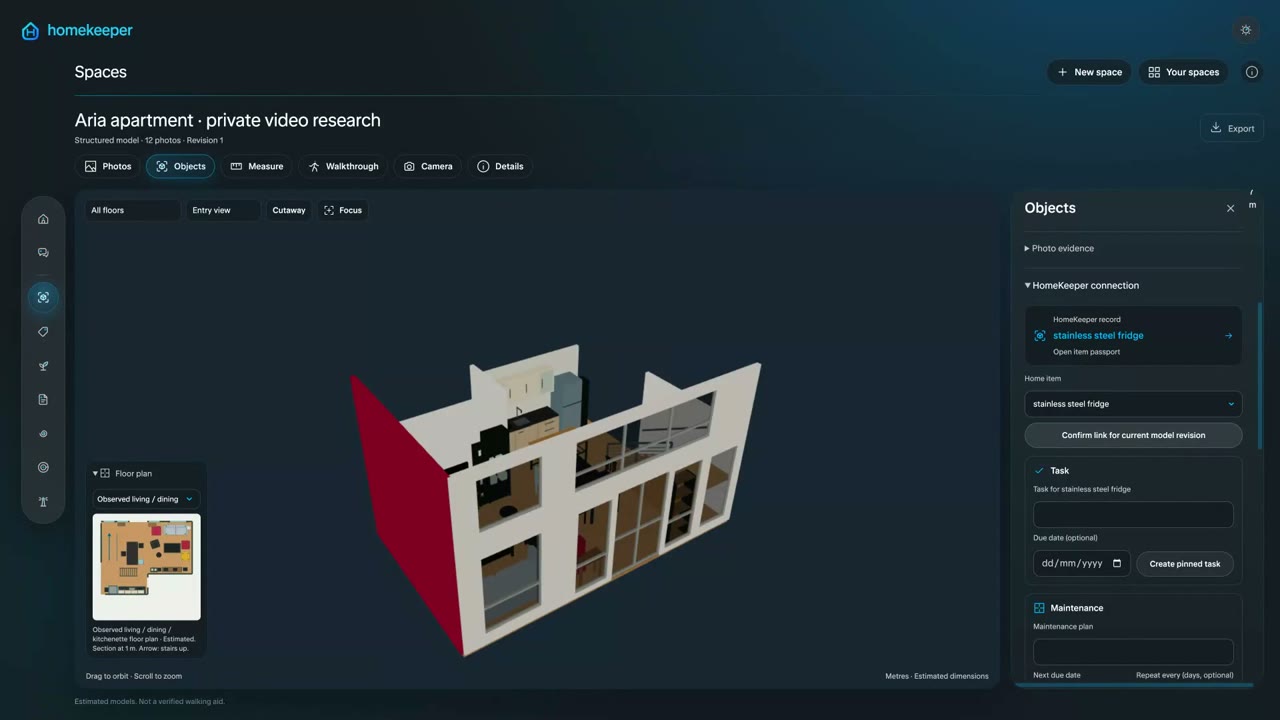 |
| Approve before saving | Home history | Home Guide debug view |
|---|---|---|
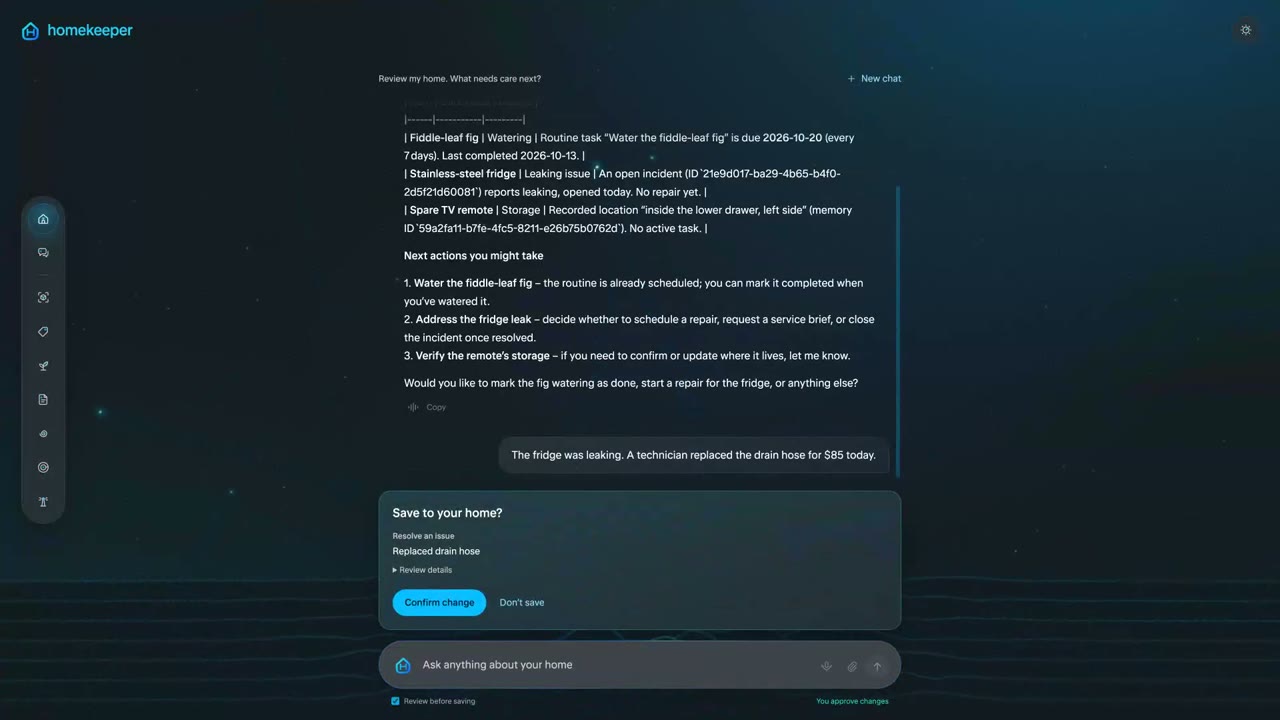 |
 |
 |
How the agent works
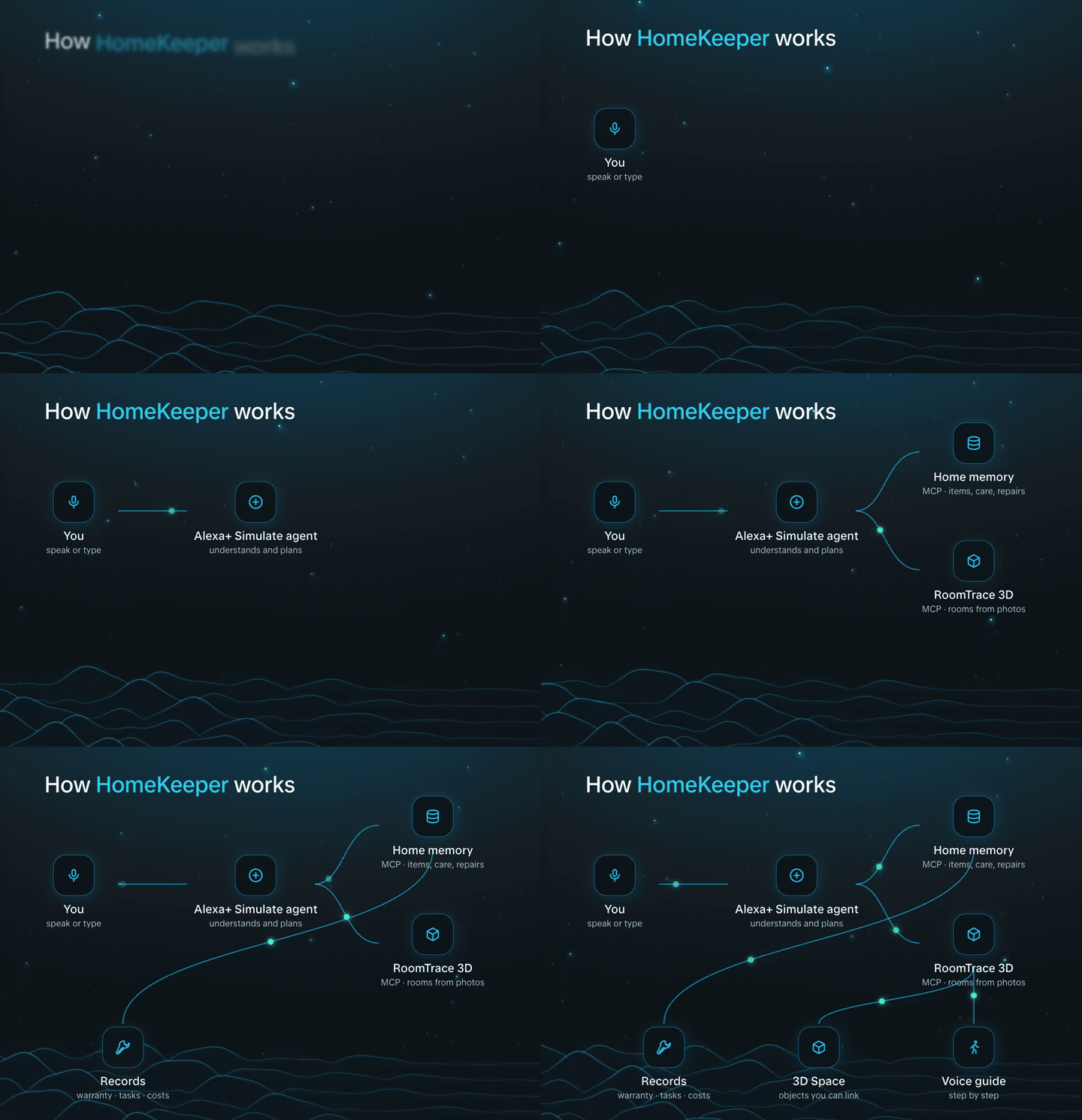
- You speak or type. Browser dictation turns speech into text; files can ride along.
- The Alexa+ Simulate agent reads your current household memory through MCP before every step.
- It chooses real tools:
save_home_item,save_memory,save_task,schedule_maintenance,report_issue,resolve_issue,file_document, or the spatial ones,link_space_objectandsave_spatial_location. - Writes run directly when you asked for them, or wait for your approval in review mode. Memory removal and task cancellation always ask. Care reviews are enforced read-only.
- HomeKeeper answers out loud, and may offer up to three next steps, which run only when you pick them.
| The agent can | The agent cannot |
|---|---|
| Read and update real records through MCP, and search earlier conversations. | Invent a record, a date, a cost or a completed action. |
| Link records to 3D objects and storage locations after you confirm the object. | Decide an object is your item because the names match. |
| Resolve a guide destination from your saved records and the 3D model. | Claim a physical position without a fresh, matching camera pose. |
From photos to a 3D home
The Spaces feature turns 4 to 12 photos into a structured model. RoomTrace calibrates the cameras with COLMAP, and the room is authored as architecture.json through RoomTrace’s MCP tools: every wall, opening, stair and object, in metres, each tied to the photos that show it. A published revision becomes surface.glb, one mesh per object, rendered in the browser with three.js.
{ "id": "fridge_body", "kind": "box", "position": [1.04, 0.95, 6.03], "size": [0.72, 1.9, 0.68] }
Measurement is plain geometry on those coordinates: dining table (2.900, 0.765, 2.600) to coffee table (6.146, 0.435, 2.200) gives √(3.246² + 0.330² + 0.400²) = 3.287 m.
How we built it
| Technology | Role in HomeKeeper |
|---|---|
| React 19.3 · Vite 8.3 | One frontend: conversation, record drawers, Spaces and the Home Guide. |
| three.js · React Three Fiber | The 3D Space viewer, walkthroughs, measurement and the guide’s debug view. |
| Node.js 24 · Express | The local host: agent loop, NDJSON streaming, guide endpoints, RoomTrace gateway. |
| Model Context Protocol | Official MCP SDK over Streamable HTTP between the agent and the household capability server; RoomTrace exposes its own MCP tools for modeling. |
| SQLite | Household records, transactions, original documents, history and export. |
| Alexa+ Simulate agent | Reasoning and tool choice, plus vision for Home Guide camera stills. No model is hardcoded. |
| Python · FastAPI · COLMAP · Open3D | RoomTrace: uploads, calibration, structured geometry, localization and walkthroughs. |
| Docker Compose | Three local services, non-root, read-only filesystems, loopback-only ports. |
Challenges we ran into
- Memory that stays true. An assistant that “remembers” by guessing is worse than none. Every write goes through validated MCP tools with request IDs, revision checks and an approval path, and the agent reads current memory before each step.
- Names are not identity. A model object labelled “refrigerator” is not proof it is your fridge. Links are confirmed by a person and re-confirmed when the model revision changes.
- Containers versus contents. The drawer is a model object; the remote is a household item stored inside it. Keeping those roles separate made storage locations reliable.
- Guidance without overclaiming. Matching camera stills to a calibrated room, replanning once per second, and clearing guidance when tracking is lost or stale, while never claiming a safe path.
- Honest Alexa+. Without Alexa+ add-on access, we built the integration surface for real (MCP tools) and labelled the experience Alexa+ Simulate.
Accomplishments we’re proud of
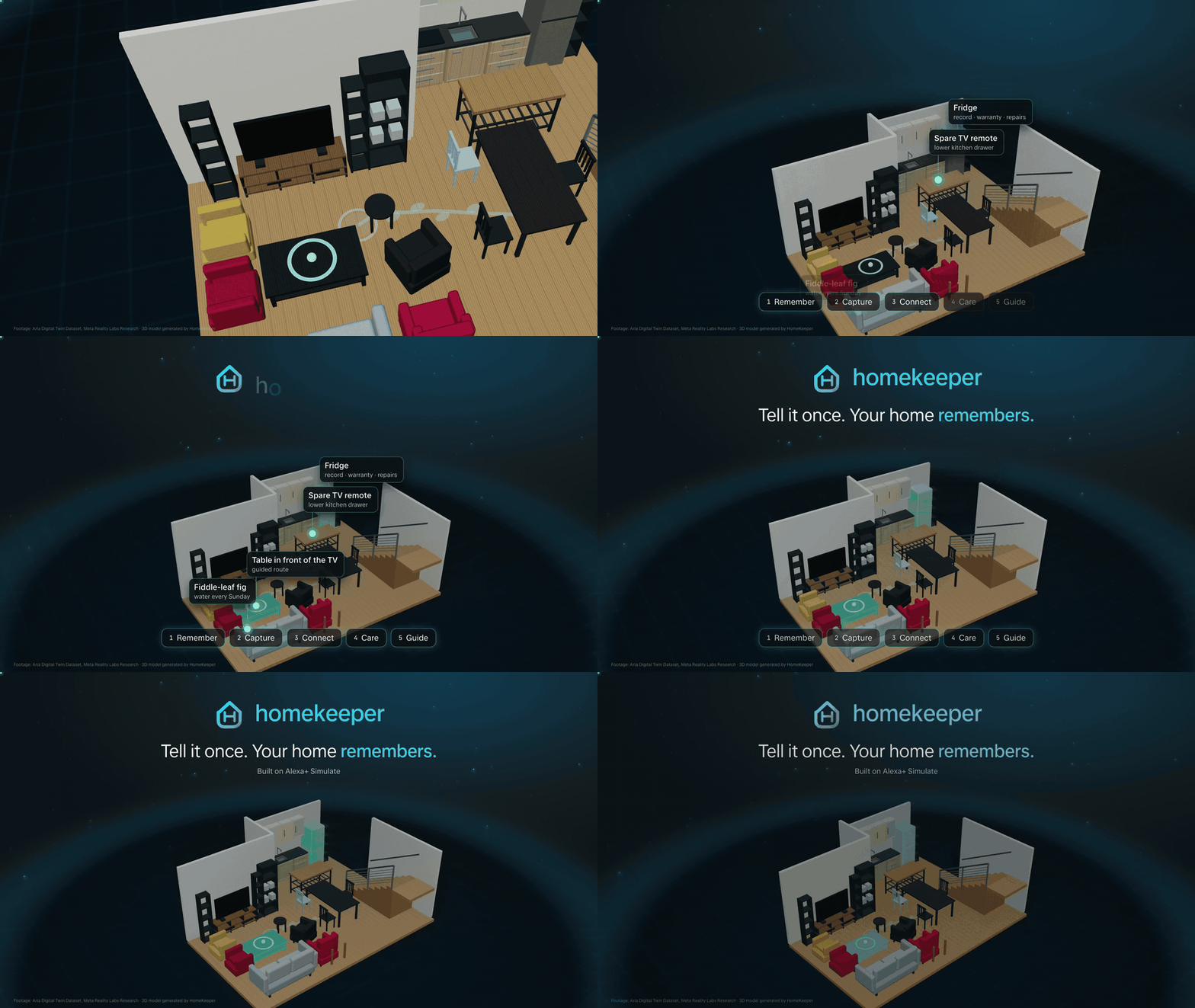
- One conversation that remembers a whole home, not just its smart devices, with every change inspectable, correctable and approved.
- A 3D model of a real apartment, 317 objects generated by HomeKeeper from twelve video frames, that records can live on.
- Storage locations you can reopen as a focused 3D view, and a voice guide that uses the same model.
- A 3-minute showreel built from the real recordings and the live 3D model, with an original score and three distinct voices.
What we learned
The most useful thing an AI can do at home is not to talk more. It is to remember exactly what you told it, show you where, and be honest about what it doesn’t know. The hard engineering lives in the boundaries: what may be saved without asking, what must be confirmed, and when guidance has to stop.
What’s next
- Real Alexa+ add-on access, plugging the existing MCP tools into Alexa+.
- On-device evaluation of the Home Guide with blind and low-vision participants and mobility specialists.
- Multi-room homes with recorded doorway connections, already supported in the guide’s data model.
- Authenticated HTTPS deployment for households beyond a single local machine.
Honest limits
- Alexa+ Simulate is our own agent; no live Alexa+ integration, Echo device or Amazon account is connected.
- Geometry is an estimate. Models, measurements and step counts come from photos and authored structure, not sensors, and a model anchor is not live item tracking.
- Local, single household. No multi-user accounts; not for public exposure without identity, authorization and HTTPS.
Demo footage: Aria Digital Twin Dataset, Meta Reality Labs Research (license). Only the video comes from the dataset; the 3D model was generated by HomeKeeper.
Try it
Built With
- colmap
- docker
- docker-compose
- express.js
- fastapi
- javascript
- model-context-protocol
- node.js
- open3d
- playwright
- python
- qwen3-tts
- react
- react-three-fiber
- sqlite
- three.js
- vite

Log in or sign up for Devpost to join the conversation.