-
-
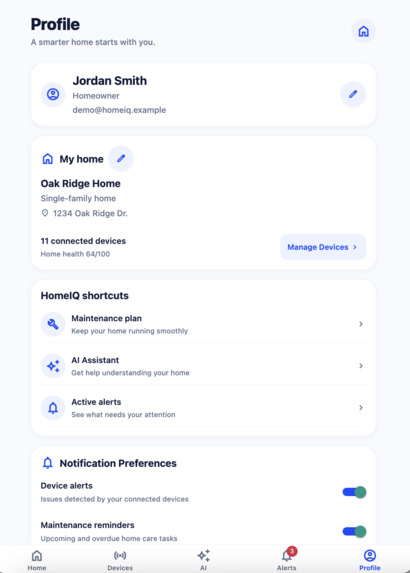
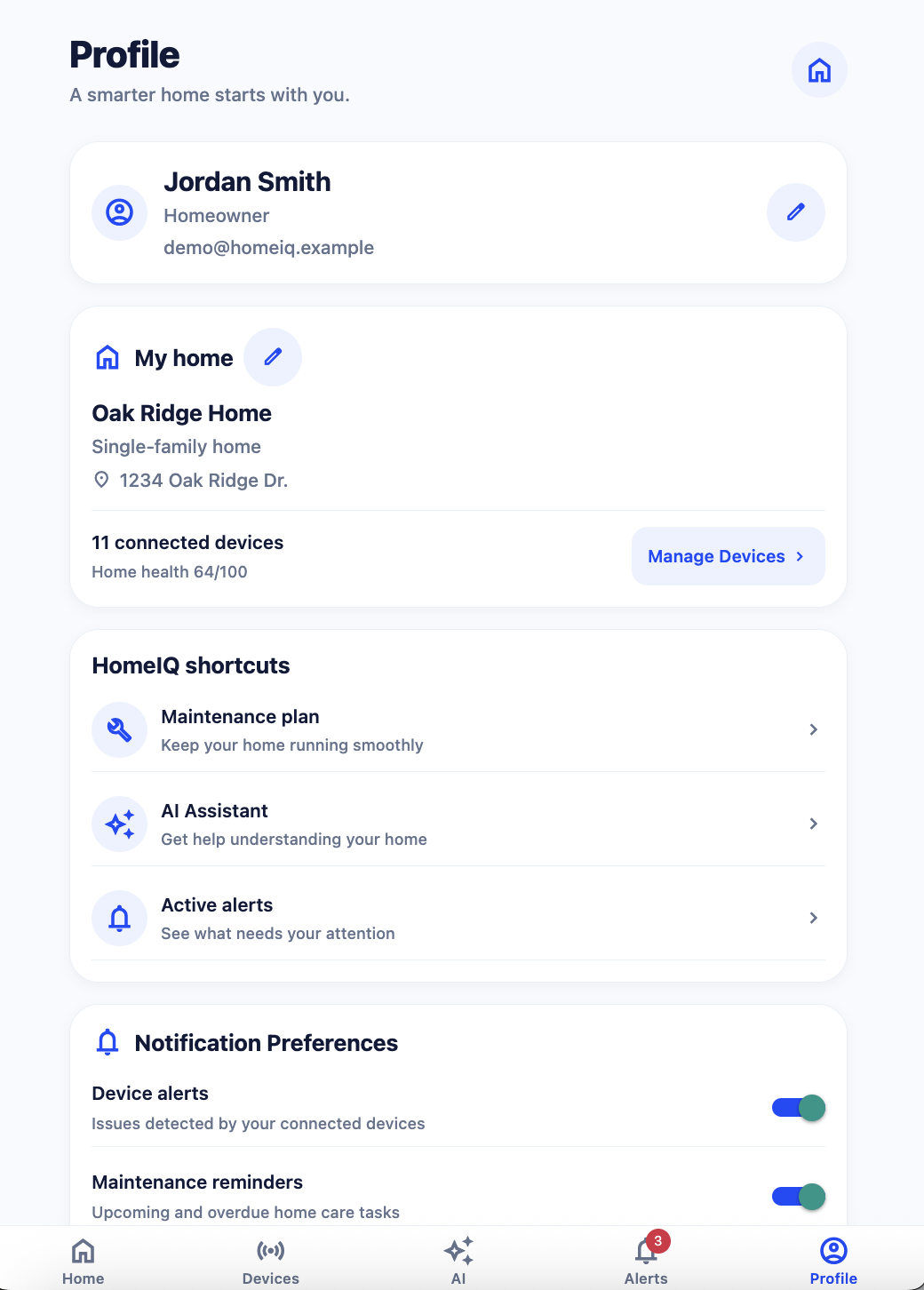
Profile page
-
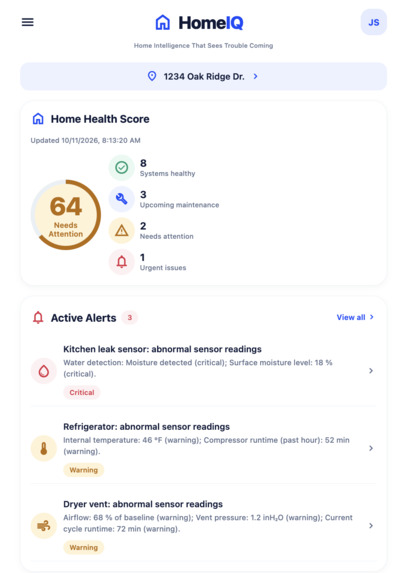
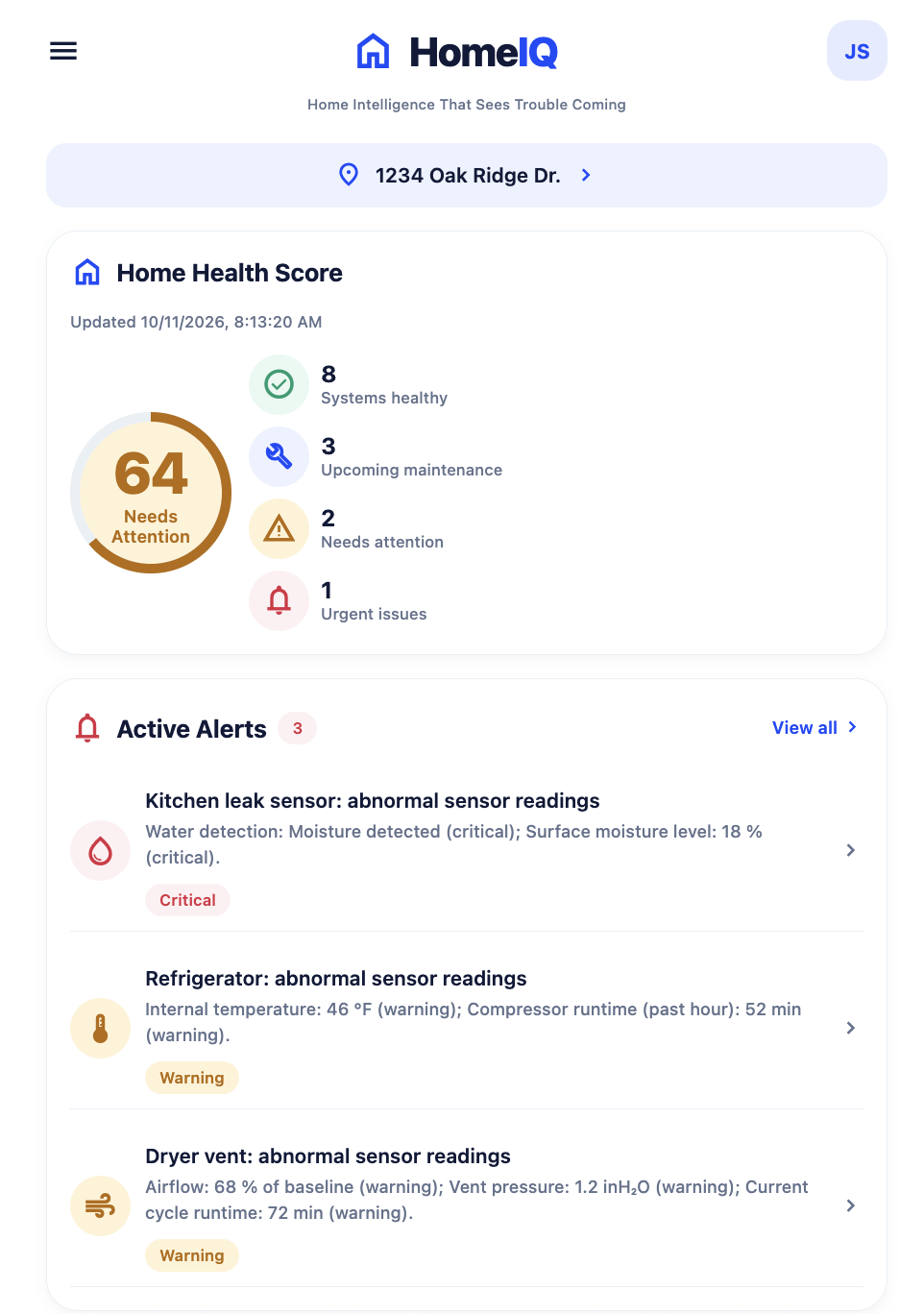
Home Dashboard
-
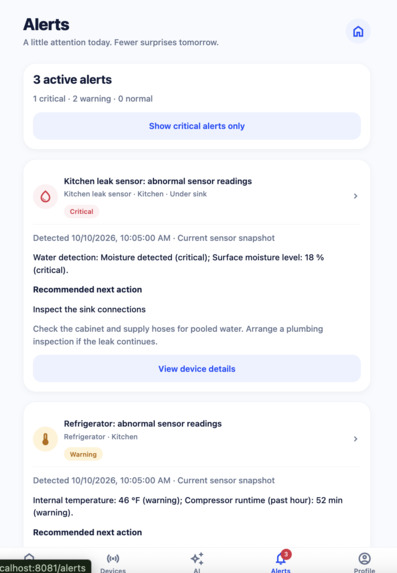
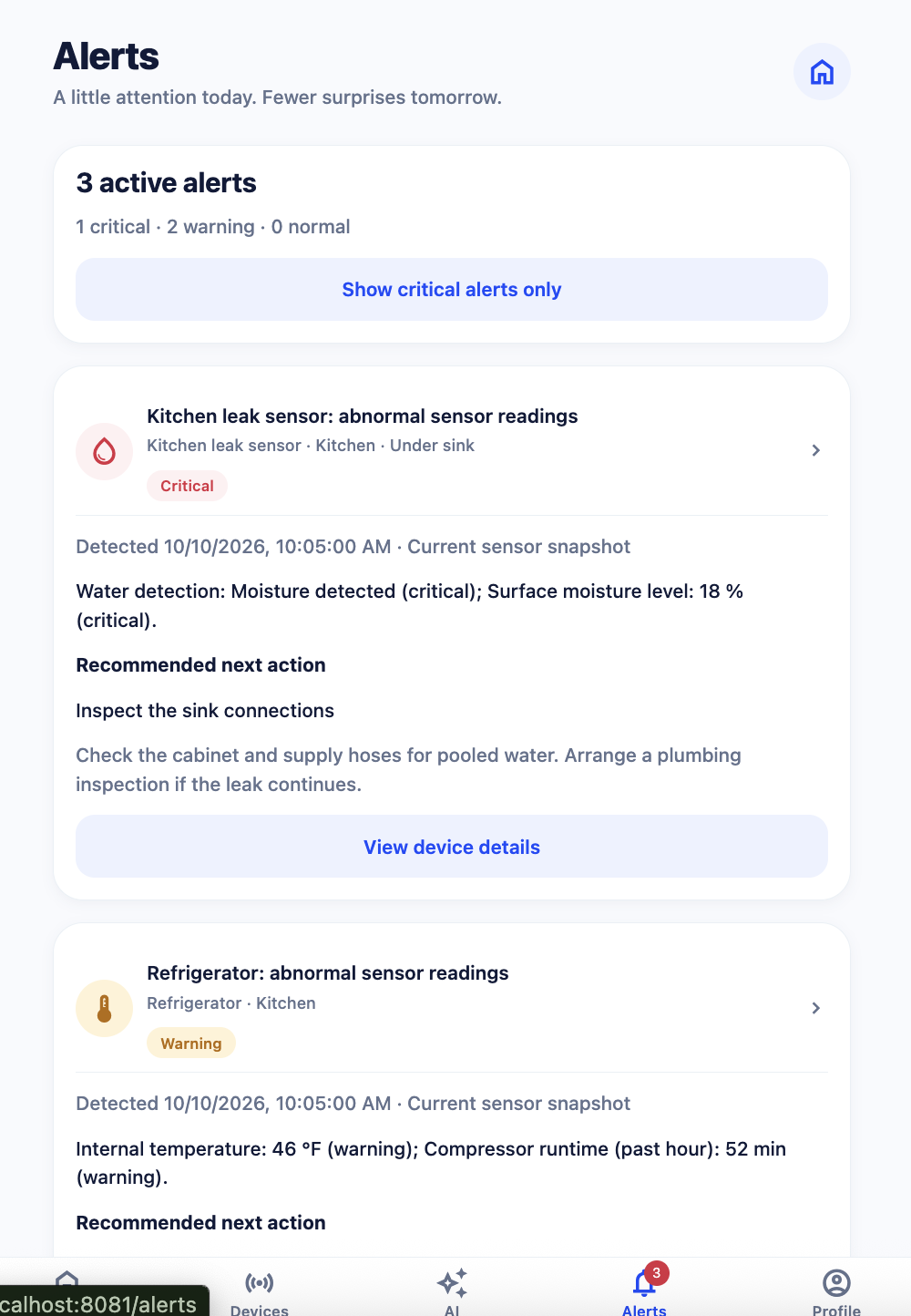
Alerts base on Priority with different filters
-
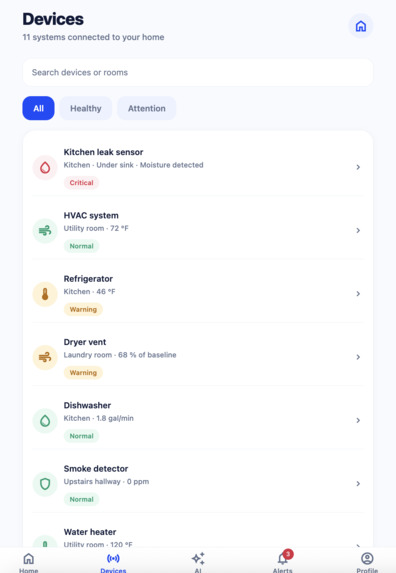
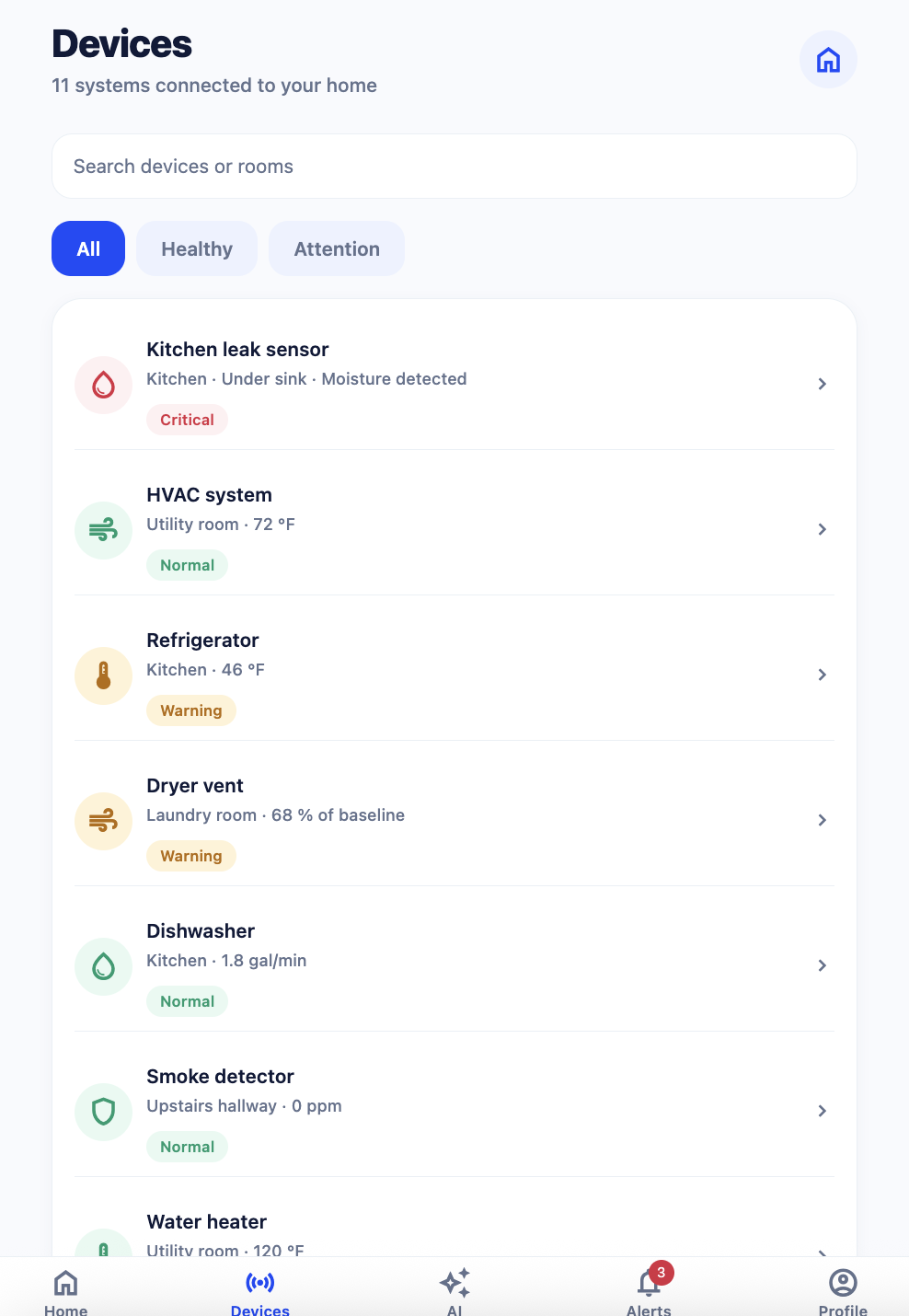
Devices connected
How we built it
HomeIQ was inspired by a simple problem: many expensive home repairs begin as small issues that go unnoticed. A slow leak, an appliance acting differently, or a missed maintenance task can become costly if it is not caught early. We wanted to build a system that helps homeowners and property managers become proactive instead of reactive.
What it does
HomeIQ is a smart home monitoring system that helps users detect potential household problems before they become expensive repairs.
It brings together:
- Smart sensor monitoring
- Maintenance reminders
- A home-care dashboard
- AI-powered insights
- Repair recommendations
The system is designed to monitor areas such as water usage, leaks, refrigerators, dishwashers, dryers, and other major household systems. HomeIQ helps users understand what is happening in their home, identify unusual activity, and know what action to take next.
Our goal is simple:
Detect problems early + take action sooner = fewer costly repairs
Or, in a simple formula:
$$ \text{Early Detection} + \text{Preventive Action} = \text{Reduced Repair Costs} $$
How we built it
We designed HomeIQ around three main parts: smart sensor data, cloud-based data management, and AI-powered analysis.
Sensors collect information from different systems around the home. That data is stored and organized using Snowflake, giving us a scalable way to manage device and household data.
We incorporated Gemini to help analyze the information and turn it into clear explanations, warnings, and recommended next steps for the user.
The mobile application is being built with React Native and TypeScript, while Node.js and Express.js handle the backend communication.
Our core technology stack includes:
- React Native
- TypeScript
- Node.js
- Express.js
- Snowflake
- Gemini API
- REST APIs
We also designed a dashboard where users can view:
- Overall home health
- Connected devices
- Alerts
- Maintenance reminders
- AI-generated recommendations
Challenges we ran into
One of our biggest challenges was deciding how broad HomeIQ should be.
Our original concept focused mainly on water leaks, but we realized that homeowners face many different types of unexpected problems. We expanded the idea to include appliances and other household systems while still trying to keep the experience simple.
Another challenge was figuring out how to connect physical sensor data with the software and AI components. We had to think about what data was important, how it should be stored, and how to present it in a way that would actually be useful instead of overwhelming.
Because we were working within a limited hackathon timeframe, we also had to prioritize the most important parts of the prototype and focus on proving the core idea.
Accomplishments that we're proud of
We are proud that HomeIQ grew from a single-problem idea into a broader preventive home intelligence platform.
We created a concept that combines:
- Hardware
- Software
- Cloud data
- Artificial intelligence
We also developed a clear business model that includes:
- Starter kits
- Monthly subscriptions
- Business partnerships
Most importantly, we created a system focused on prevention.
Instead of simply notifying someone after something breaks, HomeIQ is designed to help users recognize warning signs earlier and take action before a small issue becomes a major repair.
What we learned
We learned that collecting data is only useful if that data can be translated into something people understand and can act on.
We also learned how technologies like Snowflake, Gemini, smart sensors, React Native, and backend APIs can work together in an IoT-based product. Beyond the technical side, we learned a lot about product design and business strategy.
We had to think about:
- Who would actually use HomeIQ
- What features users would value
- How the platform could generate revenue
- How the app could remain simple and useful
- How the system could eventually scale to multiple homes and properties
What's next for HomeIQ
The next step is to continue developing the prototype and connect HomeIQ to real sensors so we can test it using live household data. We also want to improve the predictive capabilities of the platform so it can learn what normal activity looks like and recognize unusual patterns earlier.
Future versions of HomeIQ could include:
- Predictive appliance failure detection
- Water and energy insights
- Automatic maintenance scheduling
- Repair cost estimates
- Trusted contractor referrals
- Multi-property management
- Insurance partnerships
- Home-service partnerships
Our long-term goal is simple:
HomeIQ: Home Intelligence That Sees Trouble Coming.
Built With
- express.js
- gemni
- node.js
- react-native
- snowflake
- typescript

Log in or sign up for Devpost to join the conversation.