-
-
App icon
-
Inspiration
Today, millions of people recovering on heavy medication face a quiet struggle. They've moved out of constant supervision, yet every small symptom could signal danger. Medications like Opioids and Immunosuppressants make it risky to take even basic remedies - leaving many to suffer through common ailments without safe options. On top of that, figuring out what’s serious and what’s not becomes a stressful guessing game. In this gap, I discovered the quiet strength of home remedies - natural, accessible, and deeply underutilized. That realization sparked Home Heal: a tool to bring clarity, comfort, and safe recovery into people’s hands.
How it works
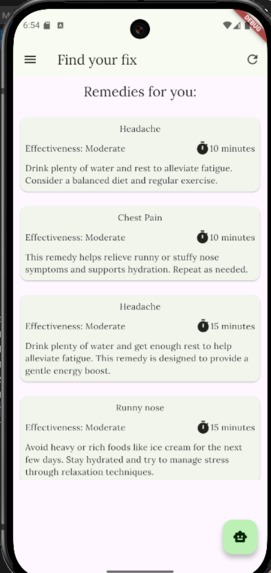
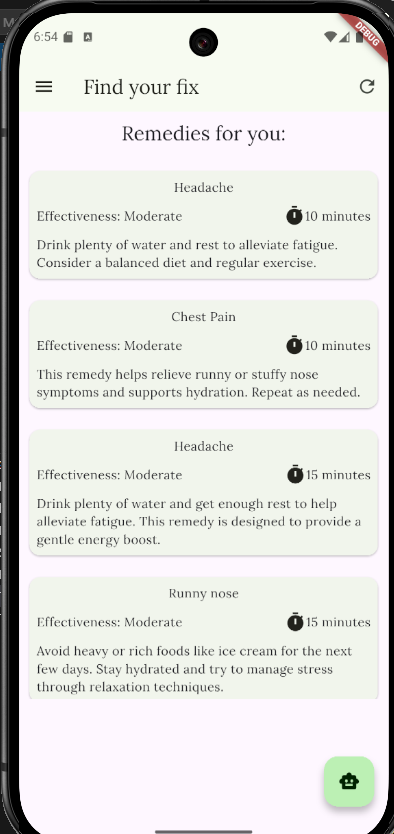
Home Heal makes recovery on heavy medication safer and more comfortable. The app helps users log, track and understand every symptom with AI-powered insights and intuitive charts - bringing clarity to what your body’s telling you. Backed by a community sharing real needs and remedies, Home Heal offers safe, natural solutions for everyday ailments - so you can heal with confidence and sleep easy.
How we built it
Home Heal is crafted using Flutter, a powerful cross-platform framework that ensures smooth performance across all devices. For backend services, we rely on Supabase, a cutting-edge BaaS solution that delivers lightning-fast authentication and secure data storage. To enhance the user experience, we’ve integrated libraries like fl_chart for clean, interactive visualizations. At the heart of our AI layer is the Meta Llama model, which powers personalized insights and risk assessments - making recovery smarter, safer, and more intuitive.
Challenges we ran into
Flutter was a new tool for me. While I quickly got comfortable with its core functionality, creating engaging user experiences proved to be a real challenge. Learning libraries like fl_chart added another layer of complexity - with their own quirks, requirements, and learning curves. Building dynamic charts meant diving deep into logic-heavy transformations, converting raw data into meaningful visuals. This task wasn’t just technical but also demanded creative problem-solving and a lot of trial and error. But through persistence and a few errors, I was able to overcome these hurdles.
Accomplishments that we're proud of
In just two days, I built Home Heal as a solo developer on one of my first hackathons. I’m proud of how quickly I adapted, engineering and curating prompts to harness the full potential of LLMs. I’m grateful for the chance to learn unfamiliar tools like fl_chart and Supabase, and gain experience on their nuances. Most of all, I’m proud to have created a solution that goes beyond code to create a tool that can genuinely improve lives and make recovery safer and more informed for those who need it most.
What we learned
This project was a crash course in growth. I explored new tools like Dart in Flutter, and technologies such as Supabase and fl_chart, each with its own learning curve and opportunities. More importantly, I deepened my understanding of Large Language Models by learning more about how to engineer prompts and harness AI to deliver meaningful results. Building a real-world solution from scratch gave me hands-on experience in debugging, problem-solving, and creative coding. Every challenge was a lesson that I will hold on for the rest of my journey.
What's next for HomeHeal
Home Heal is more than just an app - it's an idea toward safer, smarter recovery. With the support of a larger community, the platform can evolve into a trusted space for sharing remedies, tracking symptoms, and offering personalized care. I believe this project has the potential to make a real difference in people’s lives - and that this is just the beginning.
Built With
- dart
- flutter
- supabase
- typescript

Log in or sign up for Devpost to join the conversation.