-
-
Team - 54
Inspiration
HomeGenie was inspired by the vision of a truly intelligent home—one that goes beyond simple automation to actively learn and adapt to its residents’ habits. The goal: combine AI-driven decision-making with seamless IoT integration for accessible, energy-efficient smart living.
What it does
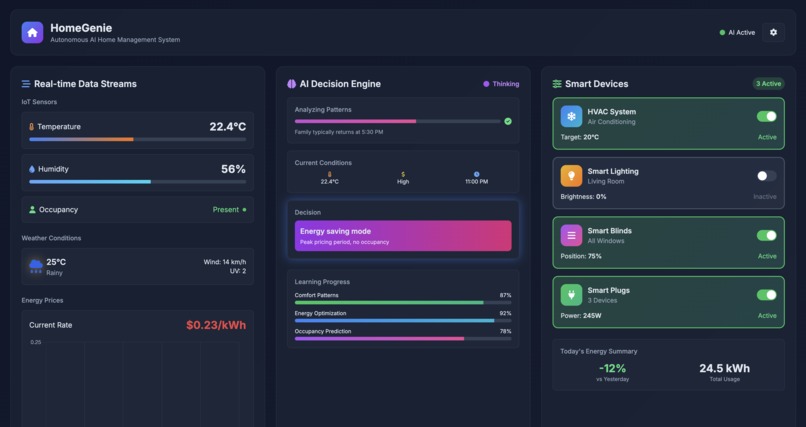
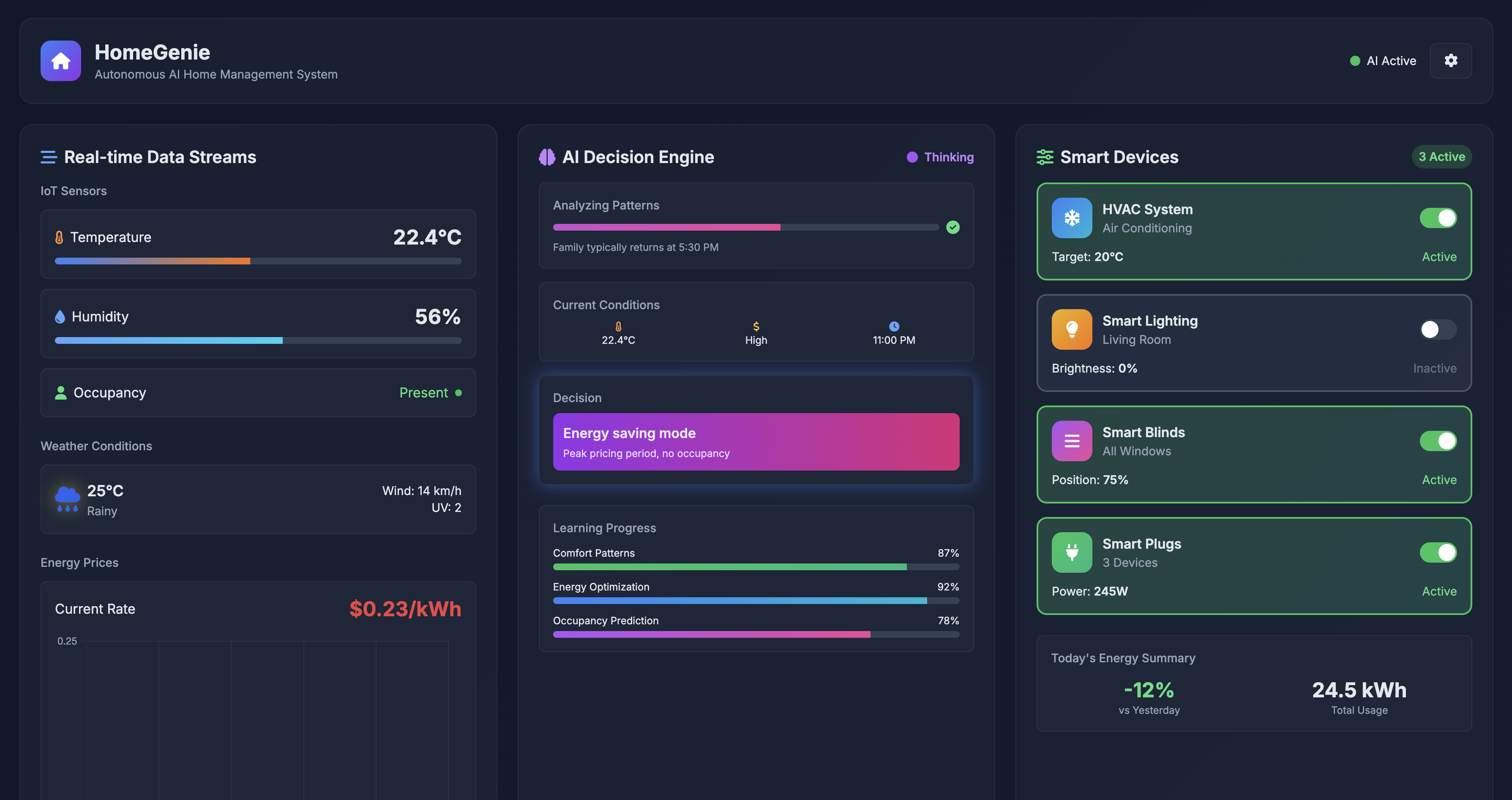
HomeGenie is an AI-powered home automation system. It learns user routines, manages sensors and devices, adapts to changing conditions, and helps optimize energy usage. The dashboard provides real-time insights and control, making smart living intuitive.
How we built it
- Backend: FastAPI powers the AI agent, sensor management, and action modules. Pydantic models ensure robust data validation.
- Frontend: React and Tailwind CSS deliver a modern, responsive dashboard for user interaction.
- DevOps: Docker and Python virtual environments streamline development and deployment.
Challenges we ran into
- Designing a scalable architecture for future AI/ML integration.
- Ensuring reliable communication between IoT devices and the backend.
- Balancing usability with security and data privacy.
Accomplishments that we're proud of
- Built a modular, extensible backend ready for advanced AI features.
- Delivered a responsive, user-friendly dashboard.
- Established clear documentation and session continuity for maintainable development.
What we learned
- How to structure modular AI services and manage real-time sensor data with FastAPI.
- Best practices in component-based frontend engineering and responsive design.
- The importance of separating backend and frontend concerns, and maintaining thorough documentation.
What's next for HomeGenie
- Integrate advanced AI/ML frameworks (LangChain, OpenAI).
- Expand IoT protocol support (MQTT, Zigbee, Z-Wave).
- Implement robust data persistence and user authentication.
- Add real-time updates via WebSocket and prepare for cloud/edge deployment.
- Continue refining security and privacy features.
Built with
- Languages: Python 3.13.7, JavaScript (ES6+)
- Backend Framework: FastAPI
- Frontend Framework: React
- Styling: Tailwind CSS
- Containerization: Docker, docker-compose
- Virtual Environment: Python
.venv - Data Validation: Pydantic
- Testing: pytest
- API Design: RESTful (WebSocket planned)
- Documentation: Markdown, session continuity via
DEVELOPMENT_STATE.md - Platforms: Local development, Docker-ready for cloud/edge deployment
- Planned Integrations: AI/ML frameworks (LangChain, OpenAI), IoT protocols (MQTT, Zigbee, Z-Wave), databases (PostgreSQL, SQLite, Redis)
Built With
- .venv)
- 3.13.7
- api
- claude
- clickhouse
- cloud/edge)
- continuity)
- css
- datadog
- development
- docker
- docker-compose
- docker-ready
- documentation
- environment
- es6+)
- fastapi
- for
- javascript
- langchain
- local
- markdown
- mqtt
- openai
- phenoml
- planned)
- postgresql
- pydantic
- pytest
- python
- react
- restful
- session
- sqlite
- structify
- tailwind
- truefoundary
- virtual
- websocket
- z-wave
- zigbee


Log in or sign up for Devpost to join the conversation.