Inspiration
What it does
How we built it
Challenges we ran into
Accomplishments that we're proud of
What we learned
What's next for homeflow ai## Inspiration
Every day, people struggle to manage tasks, organize their schedules, and decide what to do next. A simple to-do list is helpful, but it does not solve scheduling conflicts or turn ideas into clear, actionable plans.
We created HomeFlow AI with a vision to make personal productivity smarter and simpler. We wanted to build an AI assistant that does more than give suggestions—it helps users turn their plans into organized tasks while keeping them in control.
What it does
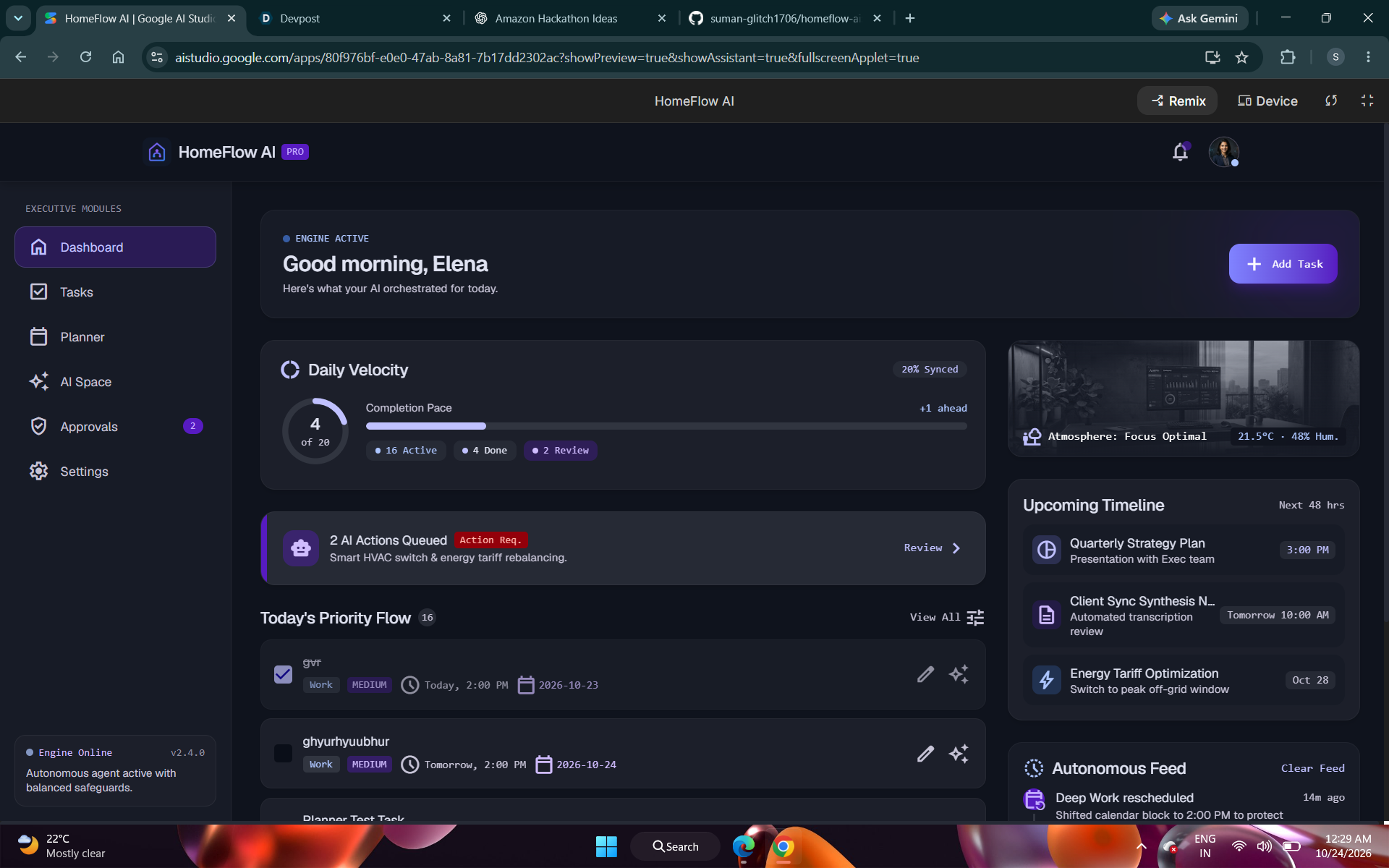
HomeFlow AI is an AI-powered personal productivity assistant designed to help users plan, organize, and manage their daily activities.
Key features include:
- AI-powered assistance: Get helpful responses and practical suggestions.
- Task management: Create, edit, complete, delete, and track tasks.
- Smart planning: Organize tasks and view schedules through a dynamic calendar.
- Conflict resolution: Identify scheduling conflicts and get assistance resolving them.
- Plan approval: Review AI-generated action plans before adding their steps to the task list.
- Persistent task storage: Keep tasks saved locally so they remain available after refreshing the page.
HomeFlow AI follows a simple workflow: Plan → Approve → Act → Verify, designed to keep users involved in important decisions.
How we built it
We built HomeFlow AI as a web application with a responsive user interface and a dedicated backend for AI communication.
- Frontend: React, TypeScript, and Tailwind CSS.
- Backend: Node.js and Express.
- AI integration: Google's Gemini API through the official Google GenAI SDK.
- Data persistence: Browser localStorage for task and application data that needs to persist locally.
- Calendar and planning: Dynamic date handling, task scheduling, and conflict-resolution logic.
- Development tools: Google AI Studio and GitHub.
The application keeps the Gemini API key on the server side instead of exposing it in the browser. The interface is organized into Dashboard, Tasks, Planner, AI Space, Approvals, and Settings.
Challenges we ran into
One of our biggest challenges was connecting the frontend to the AI backend reliably. We encountered API errors, usage limits, and permission issues while testing Gemini integration.
We also worked on making task data persist after refresh, handling calendar dates dynamically, and ensuring that AI-generated plans could be converted into actual tasks.
Another challenge was maintaining a clear separation between AI suggestions and user-approved actions. We wanted users to review a plan before its steps were added to their task list.
Accomplishments that we're proud of
We are proud to have developed a working productivity application that brings task management, calendar planning, and AI assistance together in one place.
Some of our key accomplishments include:
- Building a multi-page, responsive application.
- Implementing task creation, editing, completion, and deletion.
- Preserving tasks across page refreshes.
- Creating a dynamic calendar with scheduling and conflict-resolution functionality.
- Connecting the AI workspace to a backend Gemini API integration.
- Implementing an approval step that converts AI-generated plans into tasks.
Most importantly, we established a foundation that can grow into a more capable personal AI assistant.
What we learned
Through this project, we learned how frontend and backend systems communicate, how to integrate an AI API, and why API keys must be handled securely.
We also learned the importance of persistent data, reliable date handling, error management, and testing features after refreshing or restarting an application.
We discovered that building an AI-powered product involves more than generating intelligent responses. It also requires useful workflows, clear user control, and reliable application behavior.
What's next for HomeFlow AI
Our next goal is to make HomeFlow AI a more proactive and dependable personal assistant.
Planned improvements include:
- Smart reminders and optional browser notifications.
- Better AI-powered scheduling and conflict resolution.
- More personalized planning based on user preferences.
- Improved handling of API errors and service availability.
- Calendar integrations and cross-device synchronization.
- A safer action system with clearer approval and verification steps.
Our long-term vision is to help people spend less time organizing their lives and more time doing the things that matter.
Built With
- ai-assistant
- artificial-intelligence
- automation
- calendar
- gemini-api
- generative
- google-ai
- personal-assistant
- productivity
- react
- smart-scheduling
- task-management
- time-management
- typescript
- web-application
