About HomeFlow AI
Inspiration
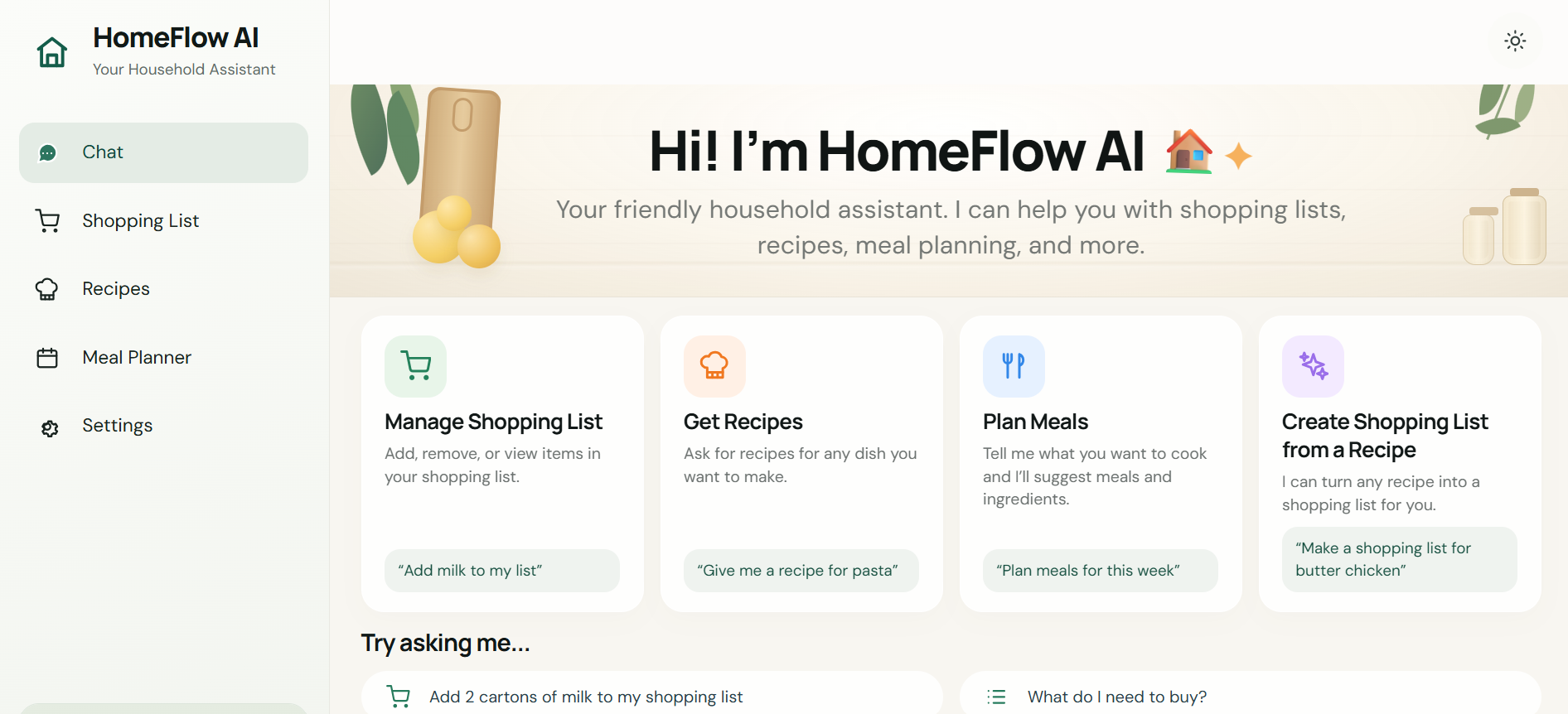
Managing everyday household tasks, deciding what to cook, planning meals, and maintaining a shopping list can become repetitive and time-consuming. I wanted to build an AI-powered assistant that brings these activities together in one place and makes household planning more convenient through natural conversations. This idea inspired HomeFlow AI, a smart home assistant that helps users move from deciding what to eat to organizing the ingredients they need.
What It Does
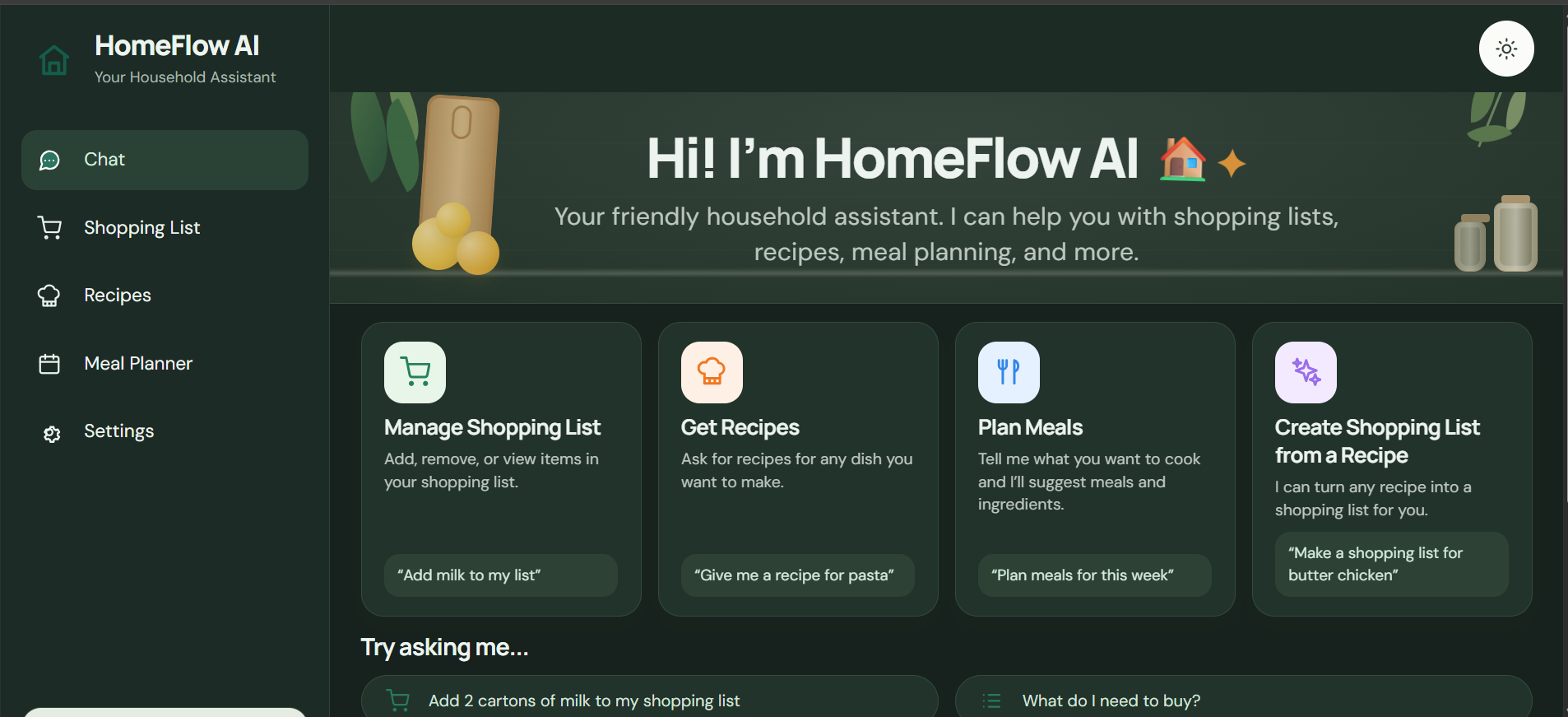
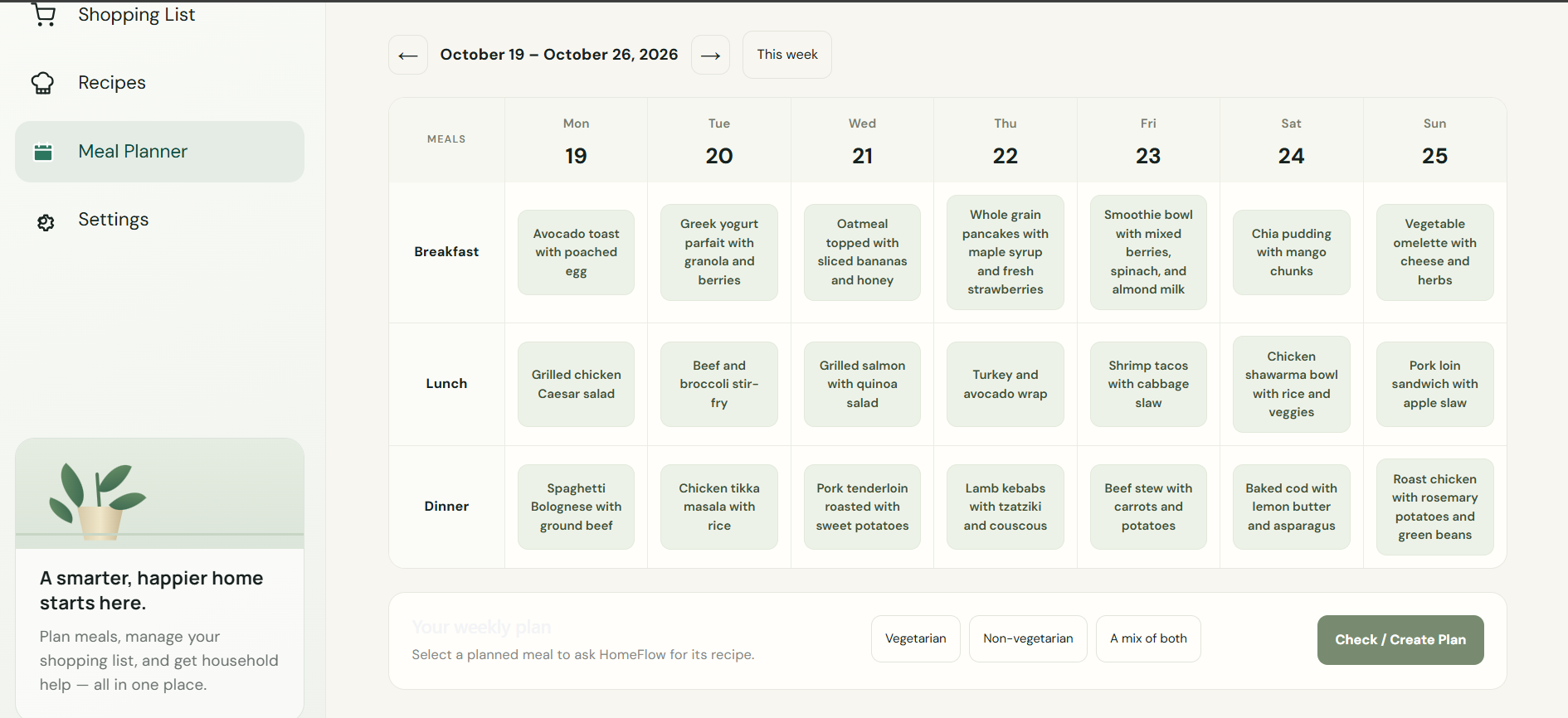
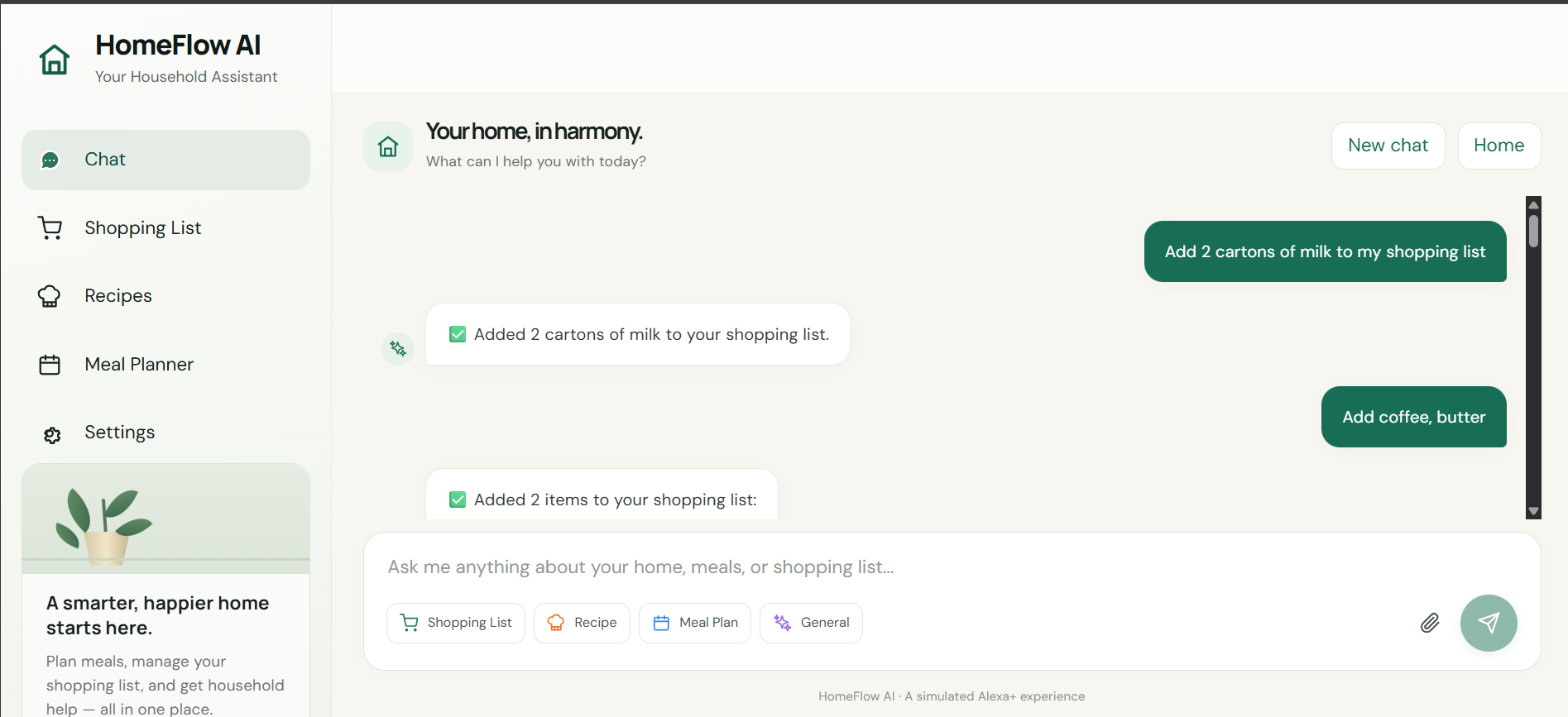
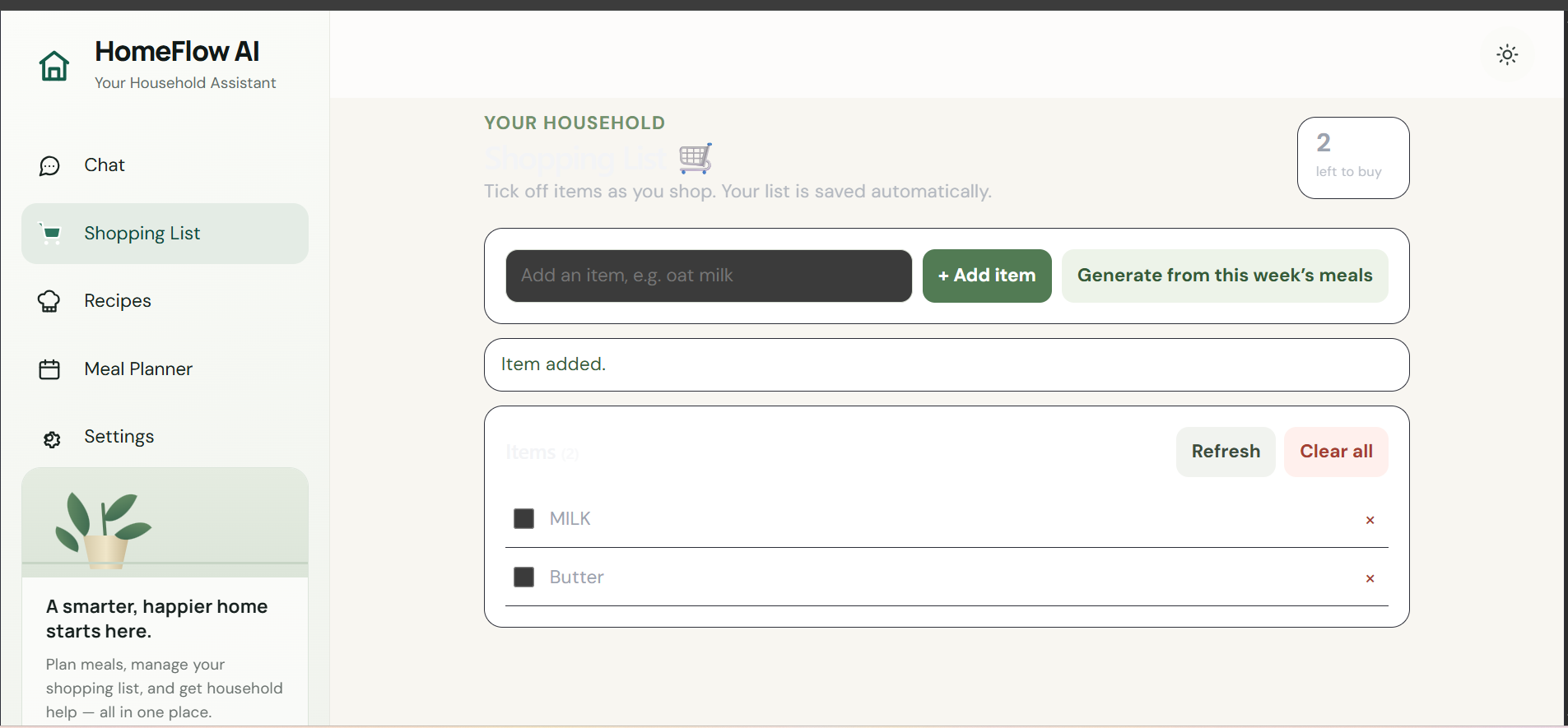
HomeFlow AI combines conversational AI with practical household planning features. Users can interact with the assistant to explore recipes, create weekly meal plans, and manage a shopping list. Instead of manually entering every ingredient, users can ask the assistant to add the ingredients for a recipe to their shopping list. The application also supports checking off purchased items, removing items, and maintaining a persistent shopping list.
How We Built It
HomeFlow AI was built using React and Vite for the frontend, Python and FastAPI for the backend API, SQLite for persistent shopping-list storage, and Groq's API for AI-powered conversations. We also implemented a Python MCP server using FastMCP with Streamable HTTP transport.
The MCP server exposes tools for adding items, retrieving the shopping list, removing items, and clearing the list. This allows the assistant to interact with application functionality through structured tool calls rather than relying entirely on conversational responses. The backend connects the AI experience with the application's shopping-list functionality, while the React interface provides a simple way to interact with the assistant and manage household tasks.
Challenges We Faced
One of the main challenges was connecting natural-language conversations to reliable application actions. For example, when a user asks to add all the ingredients from a recipe, the application needs to preserve the relevant conversational context and translate the request into the correct shopping-list operations.
Another challenge was keeping the shopping list consistent between the chat experience, backend API, database, and MCP tools. We worked through integration issues, API errors, and frontend behavior to make the experience reliable and ensure that shopping-list changes persist.
What We Learned
Building HomeFlow AI helped us understand how to combine a modern React frontend, a Python backend, persistent storage, and an LLM-powered conversational interface into one application. We gained practical experience with MCP, tool-based interactions, API integration, and designing AI experiences that do more than generate text—they help users complete real tasks.
What's Next
HomeFlow AI is a foundation for a more capable personal household assistant. Future improvements could include voice interaction, personalized meal recommendations, household preferences, and integrations with smart-home services.
Our goal is simple: make everyday home management easier by turning natural conversations into useful actions.

Log in or sign up for Devpost to join the conversation.