Inspiration
What it does## Inspiration
AI assistants are moving from passive chatbots to proactive agents embedded into phones, homes, cars, and personal devices. HomeCue Edge explores what that shift could look like inside the home: an edge agent that understands local context, protects sensitive data, and turns intent into safe smart-home actions.
What It Does
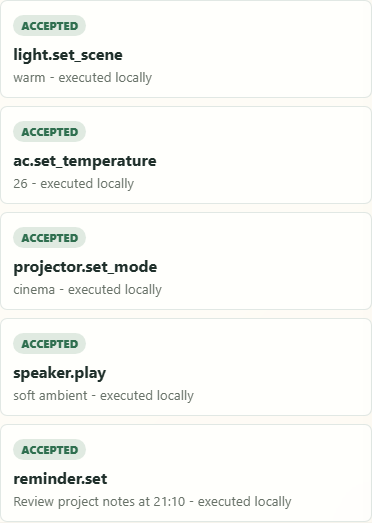
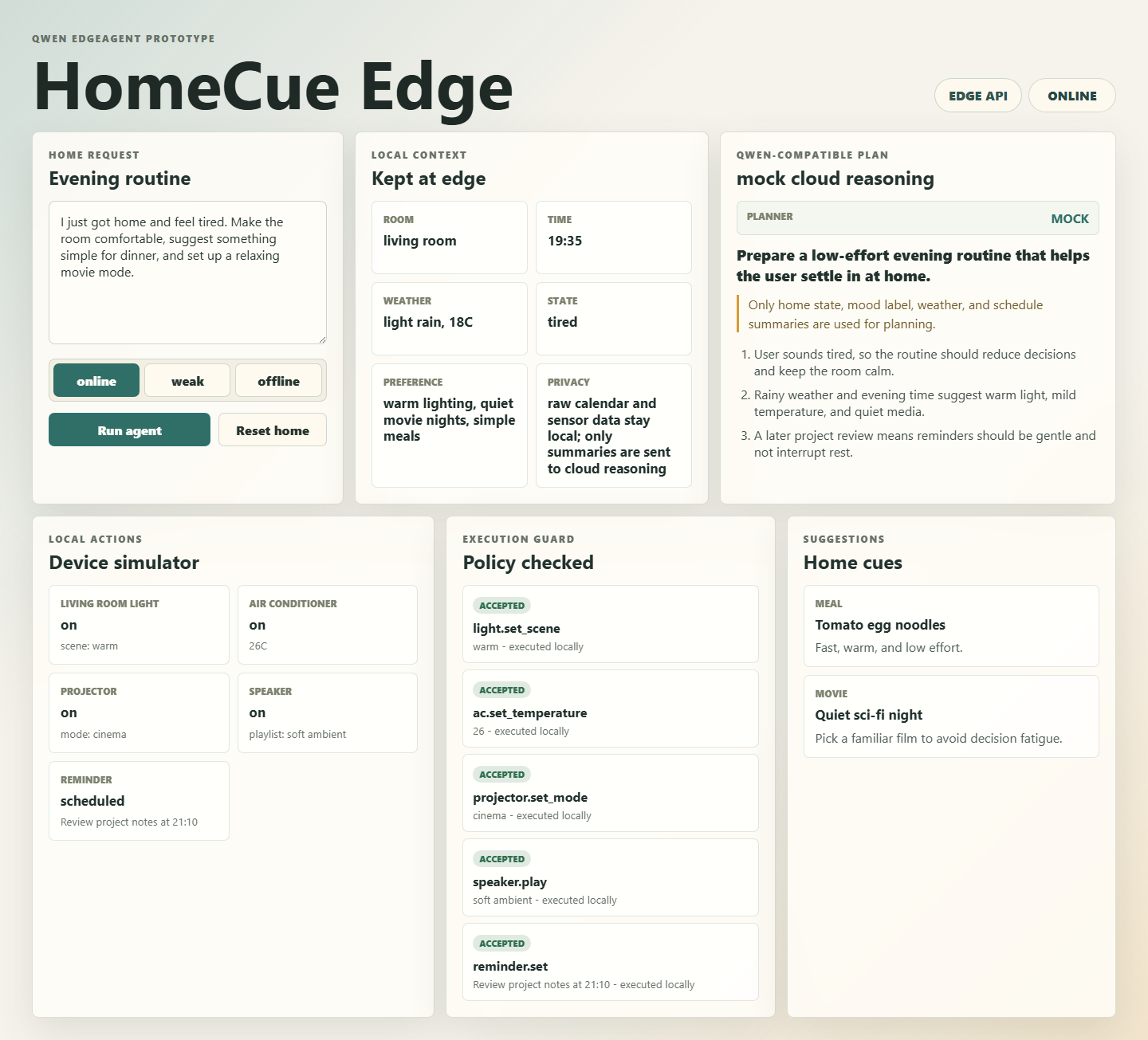
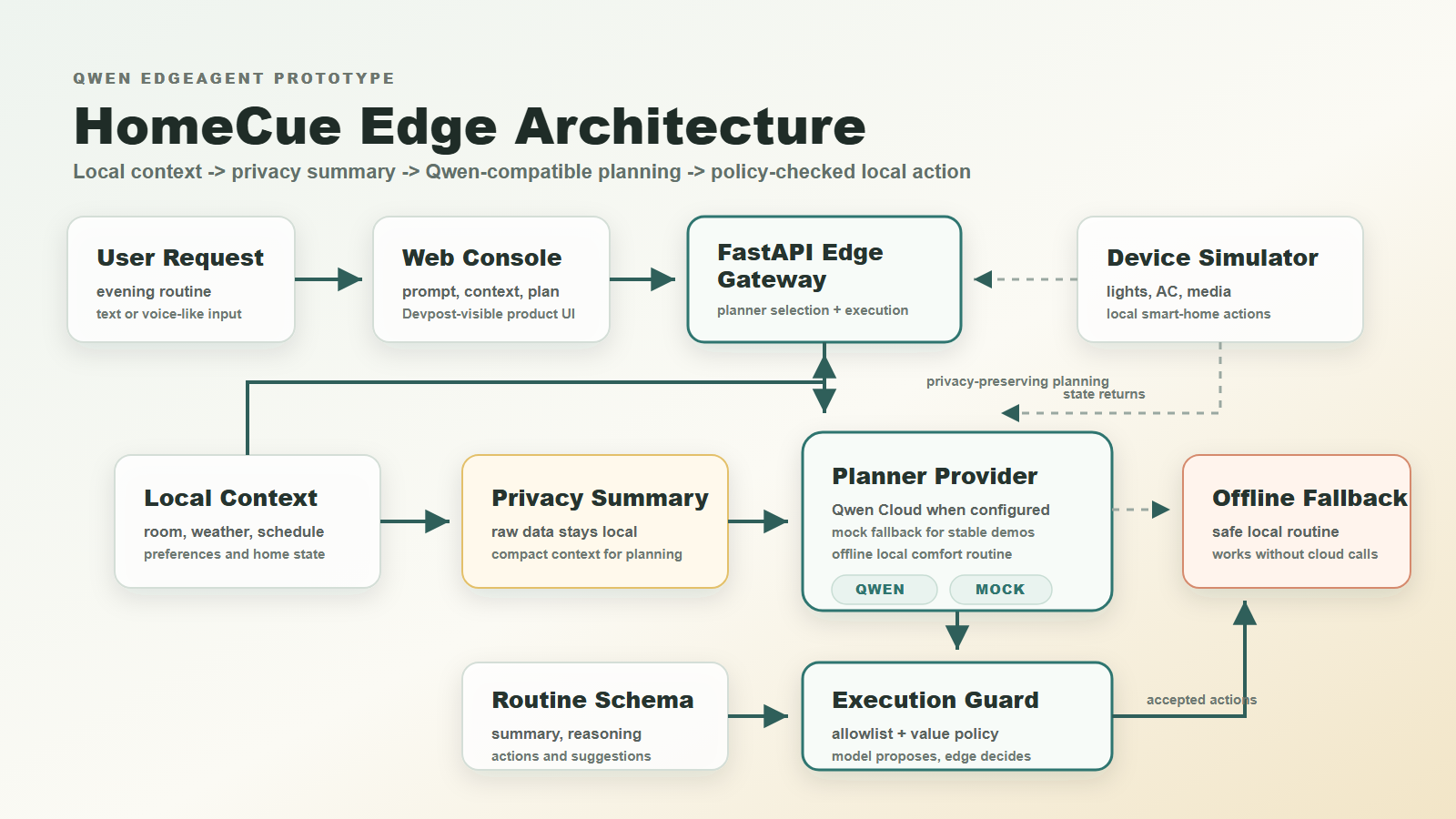
HomeCue Edge reads simulated home context, summarizes sensitive information locally, uses a Qwen-compatible planner to generate a routine, validates every proposed action through a local execution guard, and updates simulated smart-home devices.
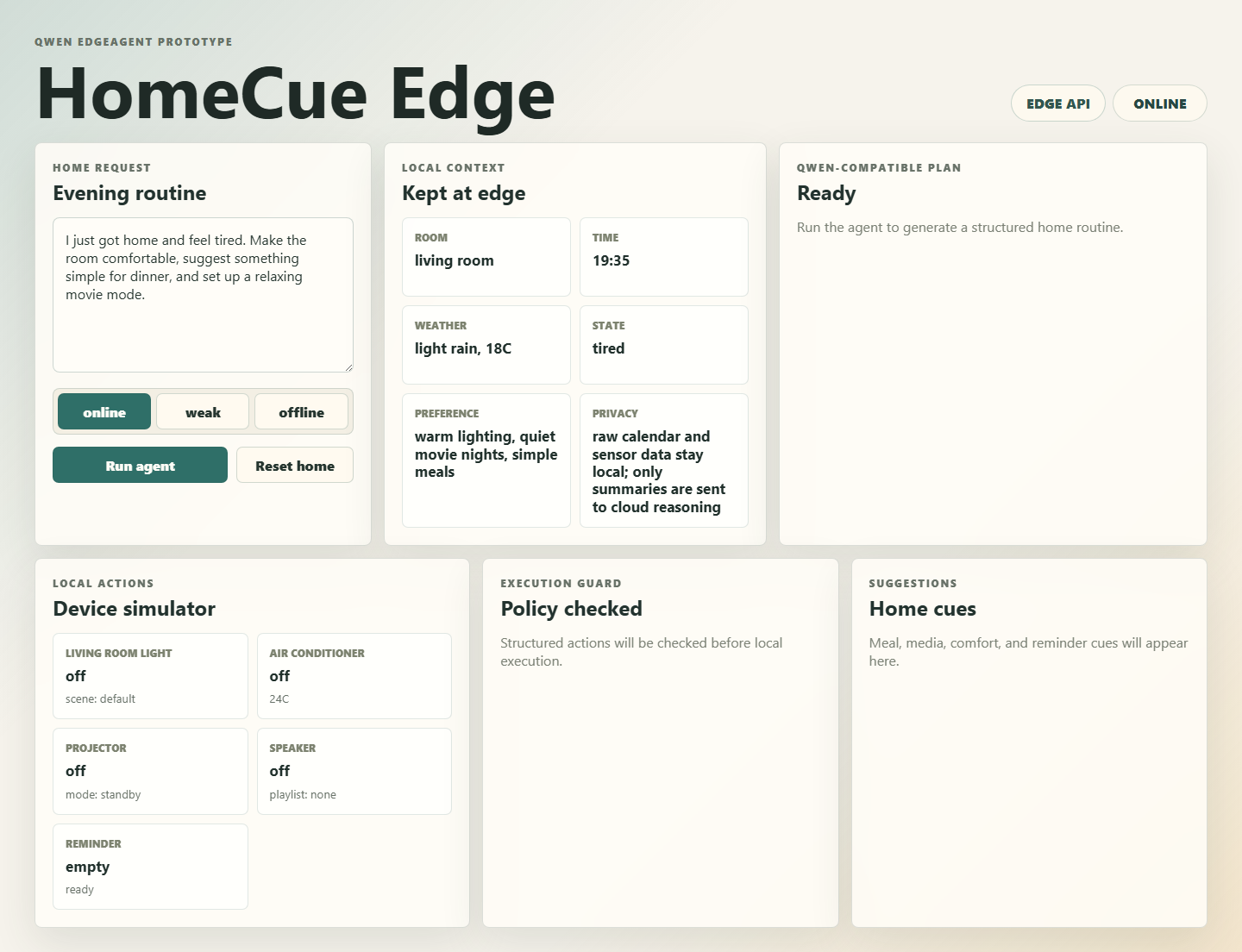
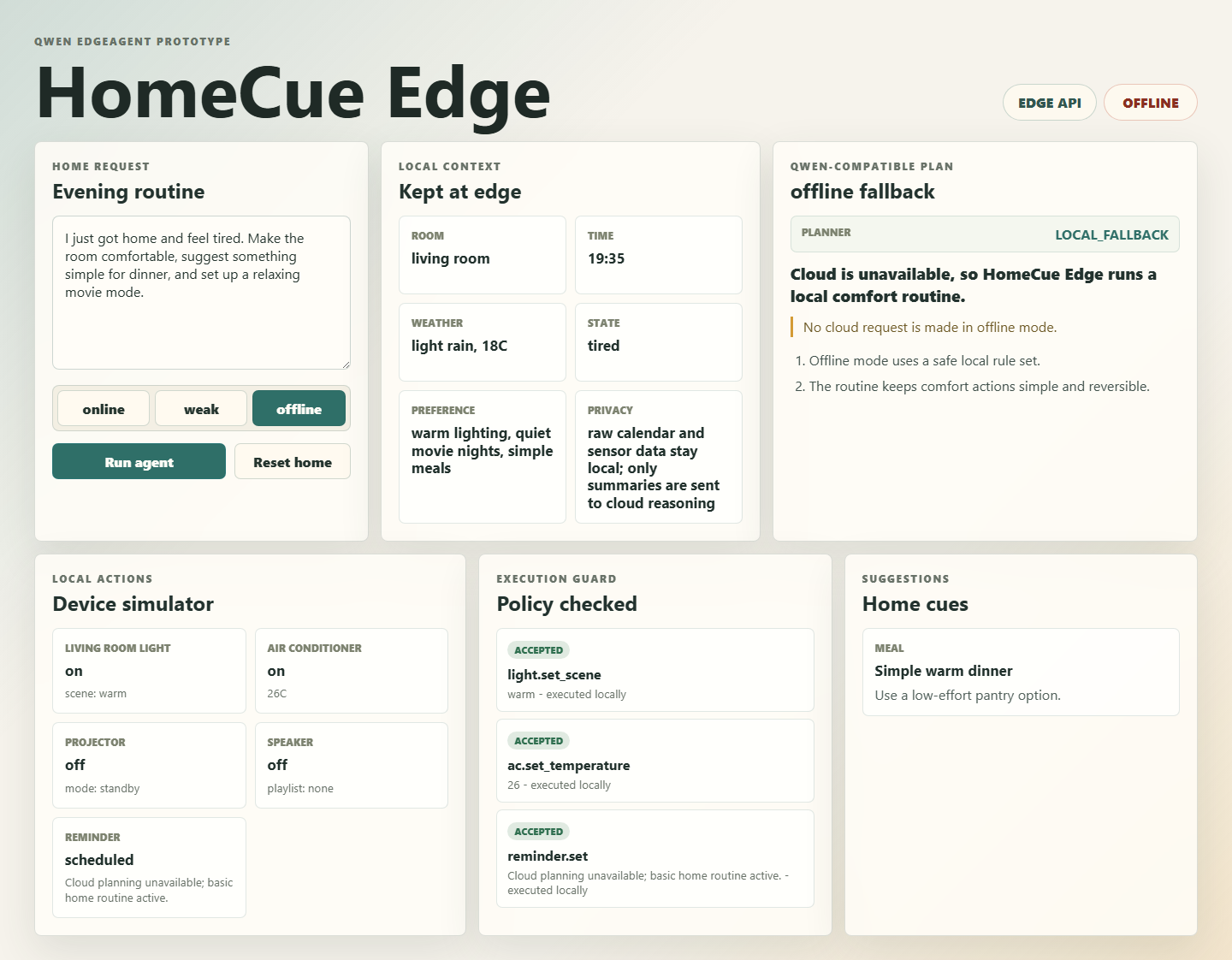
The demo focuses on an evening home scenario: the user comes home tired and asks the home to become comfortable. The system plans lighting, AC, projector mode, reminders, and meal suggestions. If cloud reasoning is unavailable, it falls back to a safe offline routine.
How We Built It
The frontend is a React and TypeScript control console. The backend is a FastAPI edge gateway. The planner path supports Qwen-compatible reasoning when configured, plus deterministic mock and offline fallback modes for reliable demos.
The system separates planning from execution. The model proposes structured actions, but the local edge policy decides which actions are safe to execute.
Challenges
The hardest part was balancing agent intelligence with local safety. A smart-home agent should not directly mutate device state just because a model suggested an action. We designed the execution guard to keep local control at the edge.
Another challenge was making the project demo-friendly without hiding the architecture. The UI shows context, planner source, reasoning, accepted actions, rejected actions, and resulting device state.
What We Learned
We learned that a home AI agent is less about chat and more about the full loop: sensing context, summarizing privacy-sensitive data, planning, validating, acting, and recovering when the network is weak.
Accomplishments
We built a complete edge-cloud-local action loop in a short hackathon cycle, with a public web demo, GitHub repository, Devpost assets, architecture docs, and offline fallback.
What's Next
Next steps include connecting real smart-home devices through Home Assistant, Matter, or vendor APIs; adding phone calendar and notification context; and testing a local small model for offline planning.
How we built it
Challenges we ran into
Accomplishments that we're proud of
What we learned
What's next for HomeCue Edge
Built With
- action
- cloudflare
- fastapi
- github
- local
- markdown
- mermaid
- planner
- policy
- python
- qwen-compatible
- react
- tunnel
- typescript
- ubuntu
- vite


Log in or sign up for Devpost to join the conversation.