Inspiration
Modern smart home systems often compromise user privacy by relying heavily on cloud infrastructure, causing lag and security risks. We built HomeCue 3.0 to offer a completely private, accessible, and ultra-responsive smart-home control center that runs entirely in the browser without external cloud dependencies.
What it does
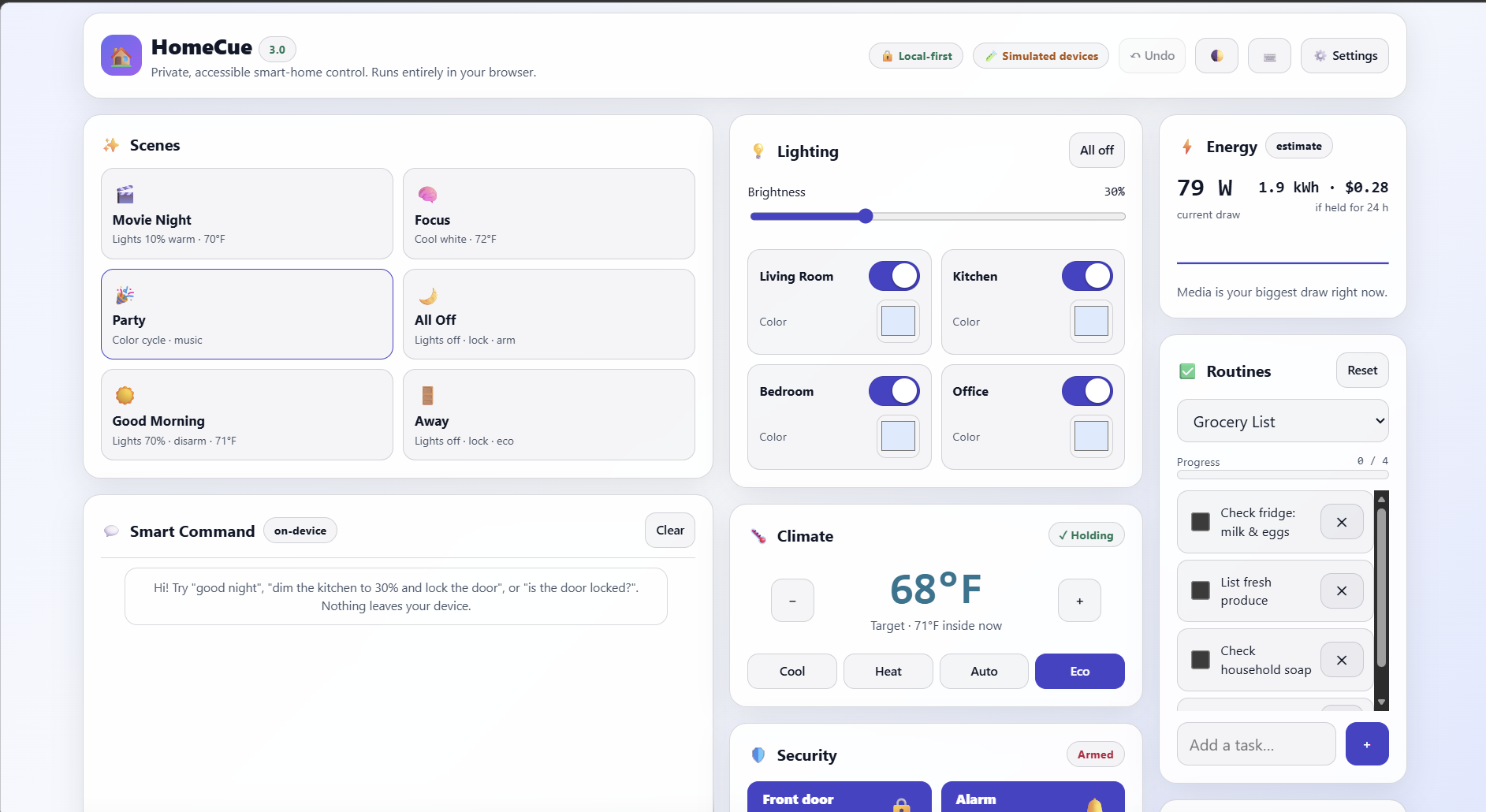
HomeCue 3.0 is a local-first smart home dashboard offering seamless control over home environments:
- Scenes & Lighting Control: Quick triggers for preset environments ("Movie Night", "Focus", "Party") alongside room-by-room light and color toggles.
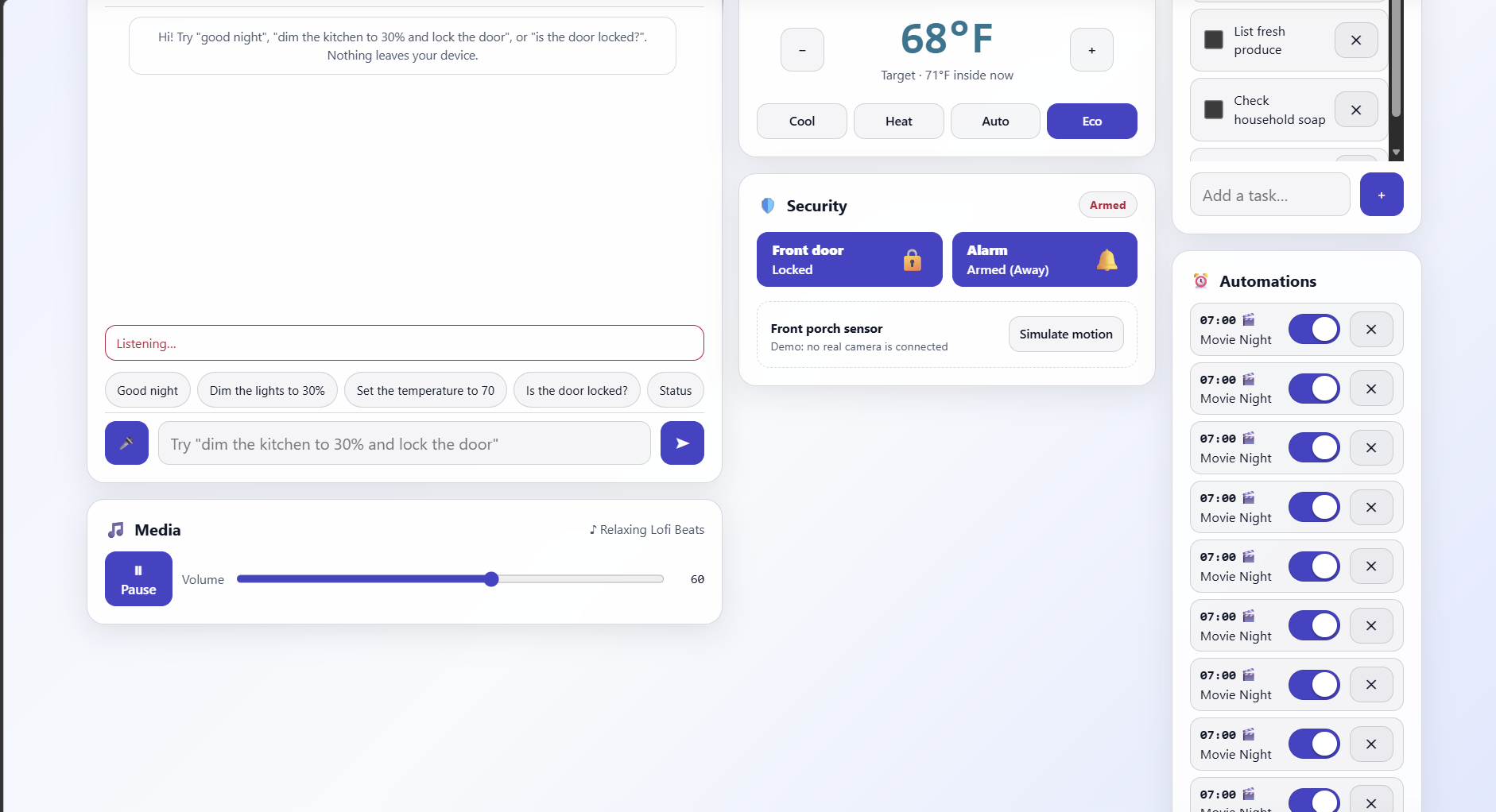
- Smart Command (On-Device AI): A natural language voice and text command assistant processing actions locally (e.g., "Dim the lights to 30%", "Is the door locked?").
- Climate & Energy Auditing: Real-time power usage monitoring (79W current draw, energy estimates) and climate thermostat target controls.
- Routines & Task Checklists: Built-in task tracking and automated household routines.
How we built it
- Frontend Architecture: Modern UI components built with React, TypeScript, and TailwindCSS for high responsiveness and clean design.
- On-Device Intelligence: Web-based lightweight model processing for on-device natural language intent recognition without sending voice/text data to cloud servers.
- Local-First Storage: IndexedDB and browser storage primitives ensuring data stays completely private on the user's device.
Challenges we faced
- Browser-Side Natural Language Parsing: Implementing accurate entity recognition for smart home commands ("Dim lights to 30%") directly in the client.
- State Synchronization: Maintaining real-time state sync across multiple simulated devices, climate controls, and energy meters without server lag.
Accomplishments that we're proud of
- Zero Latency: Instant response times for lighting, scenes, and climate toggles.
- 100% Data Privacy: Complete offline capability with no data harvesting or third-party cloud requirements.
What we learned
- Implementing local-first application architecture in browser environments.
- Designing accessible, intuitive smart home interfaces optimized for real-time interactions.

Log in or sign up for Devpost to join the conversation.