Inspiration
Modern family life is a constant logistical juggling act. Between demanding technical engineering work, community leadership, and family responsibilities, the cognitive load is immense. I built HomeCopilot to solve my own real-world challenge: a human-supervised autonomous AI agent that turns a family's real schedule and an unexpected situation into an explainable logistics plan, actively shouldering daily family and life logistics so I can focus on what actually matters.
What it does
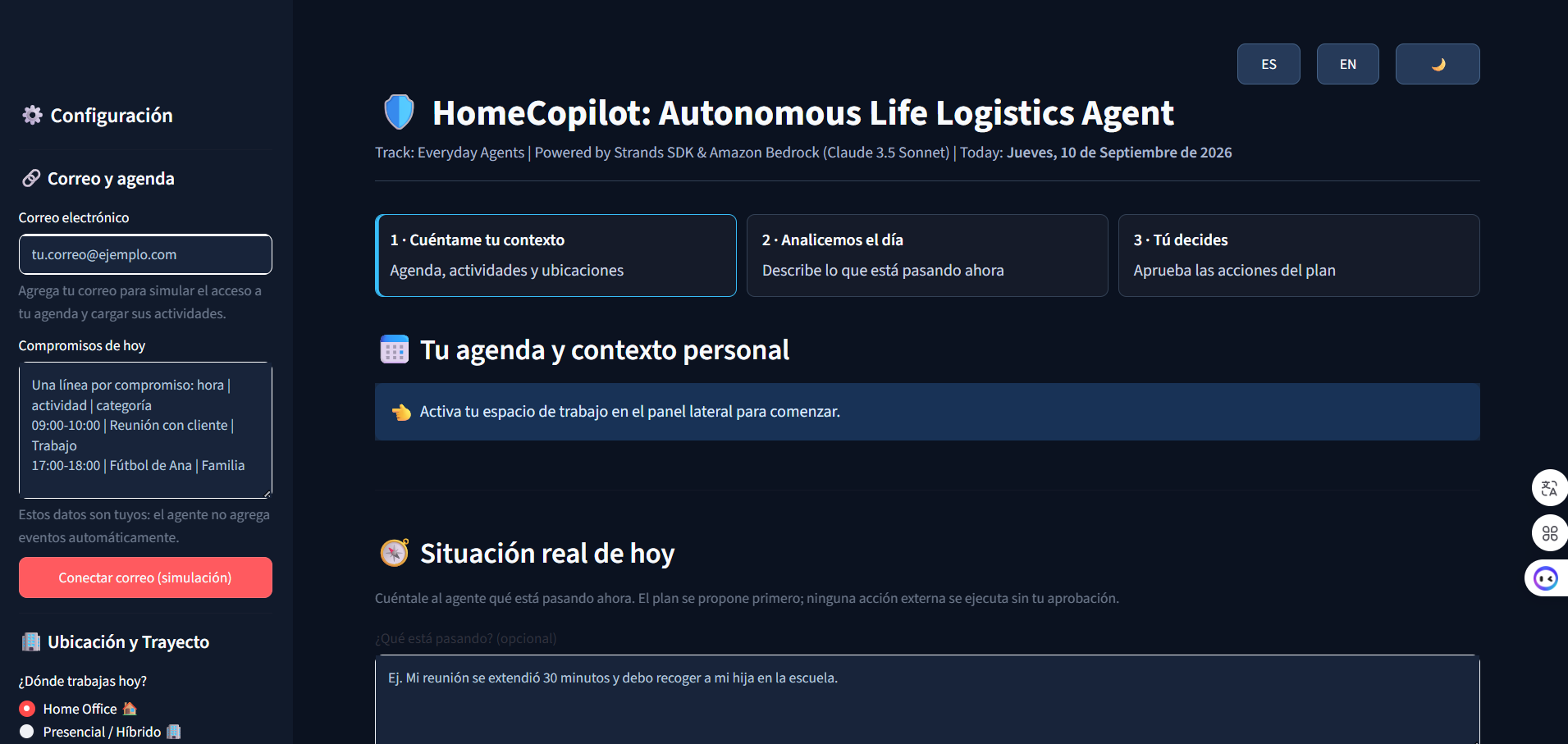
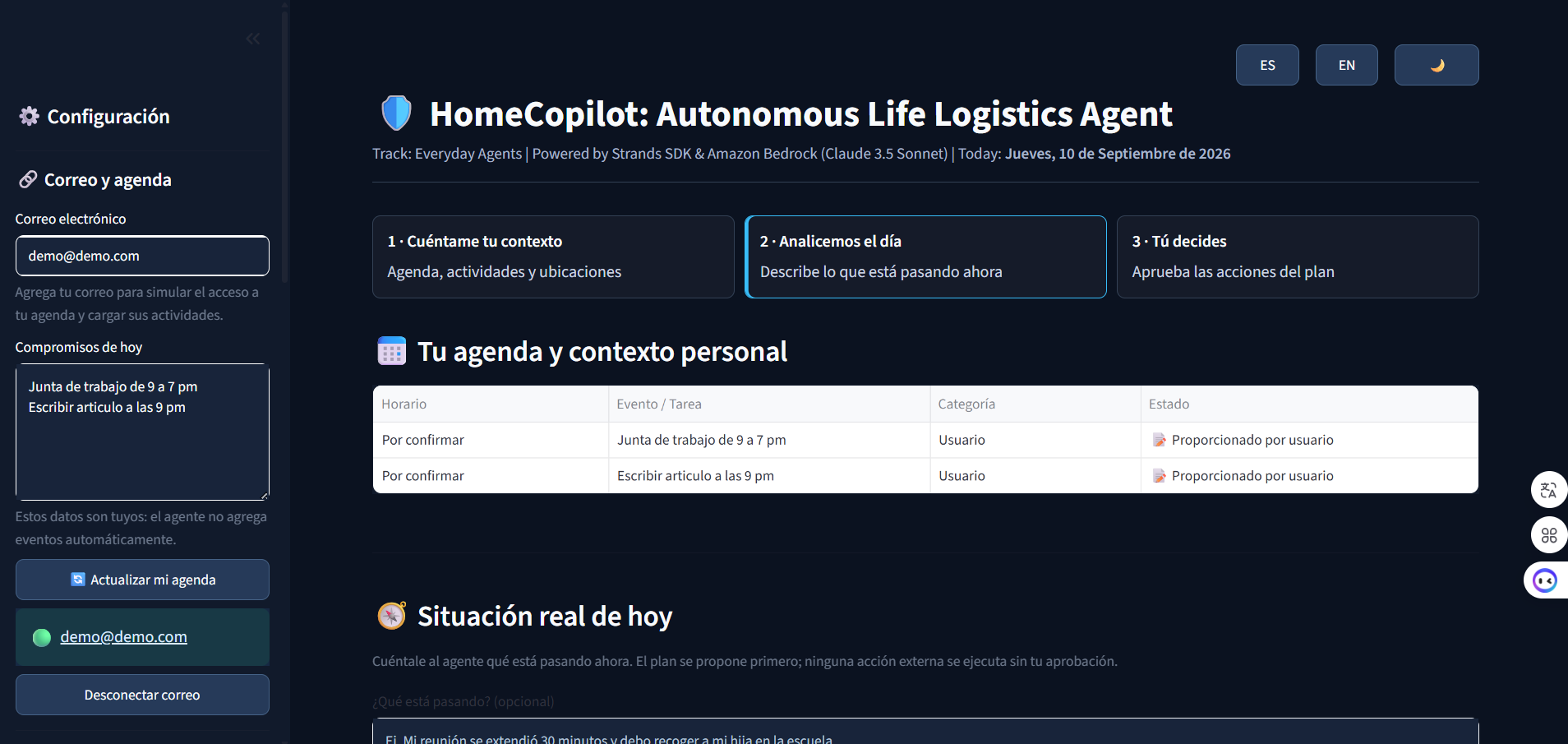
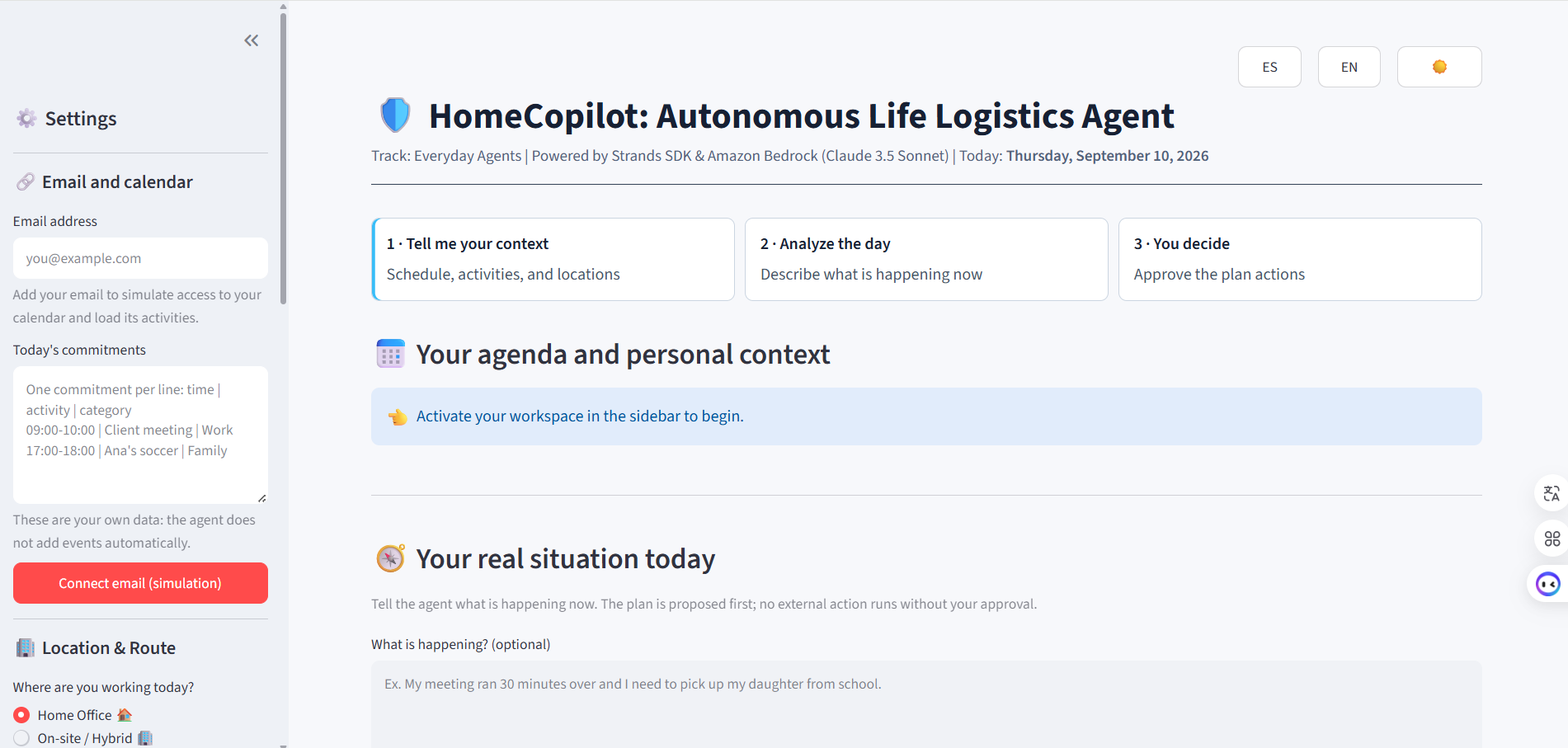
- Accepts a real agenda using structured
time | activity | categorylines. - Accepts free-form incidents such as a late meeting, a cancelled caregiver, or an impossible pickup.
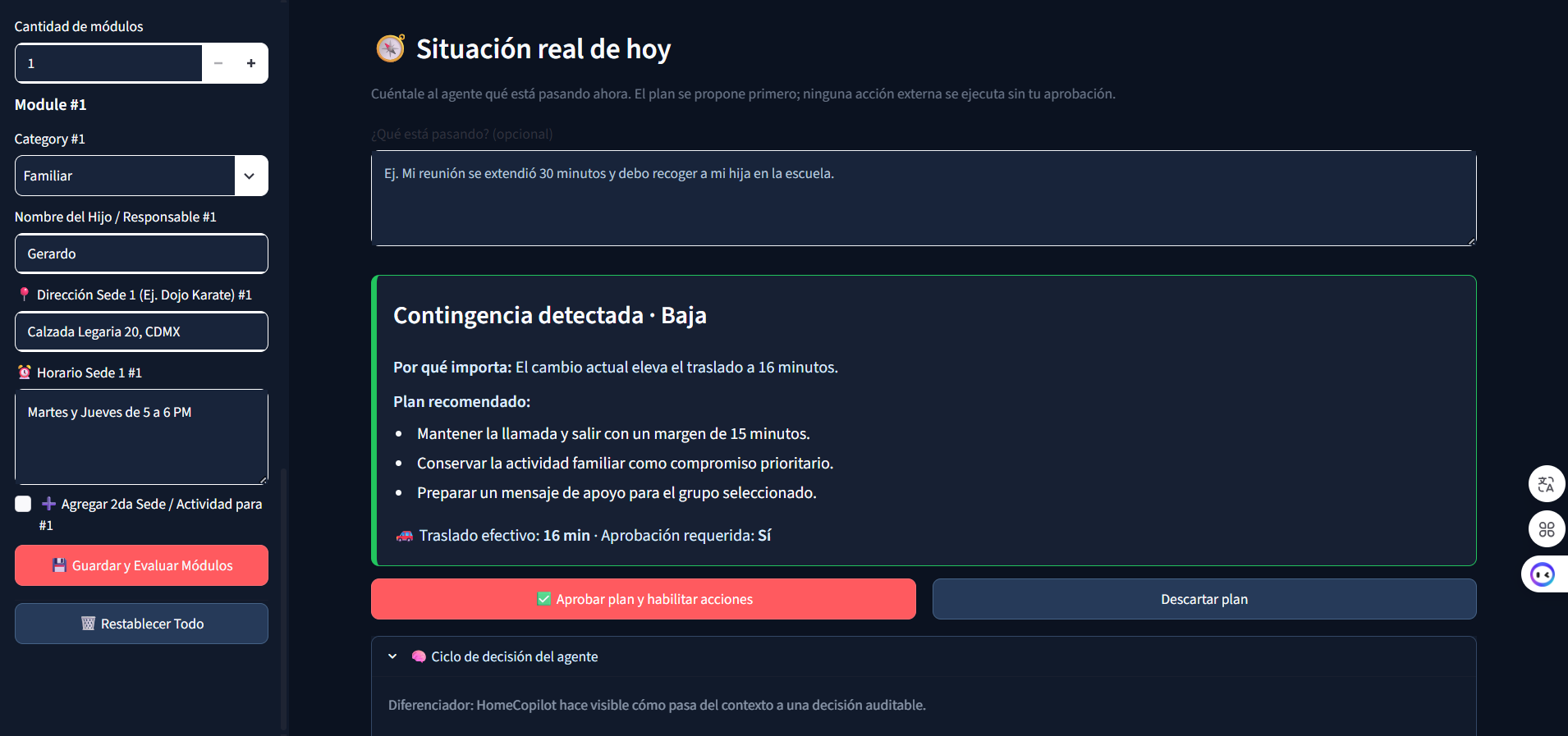
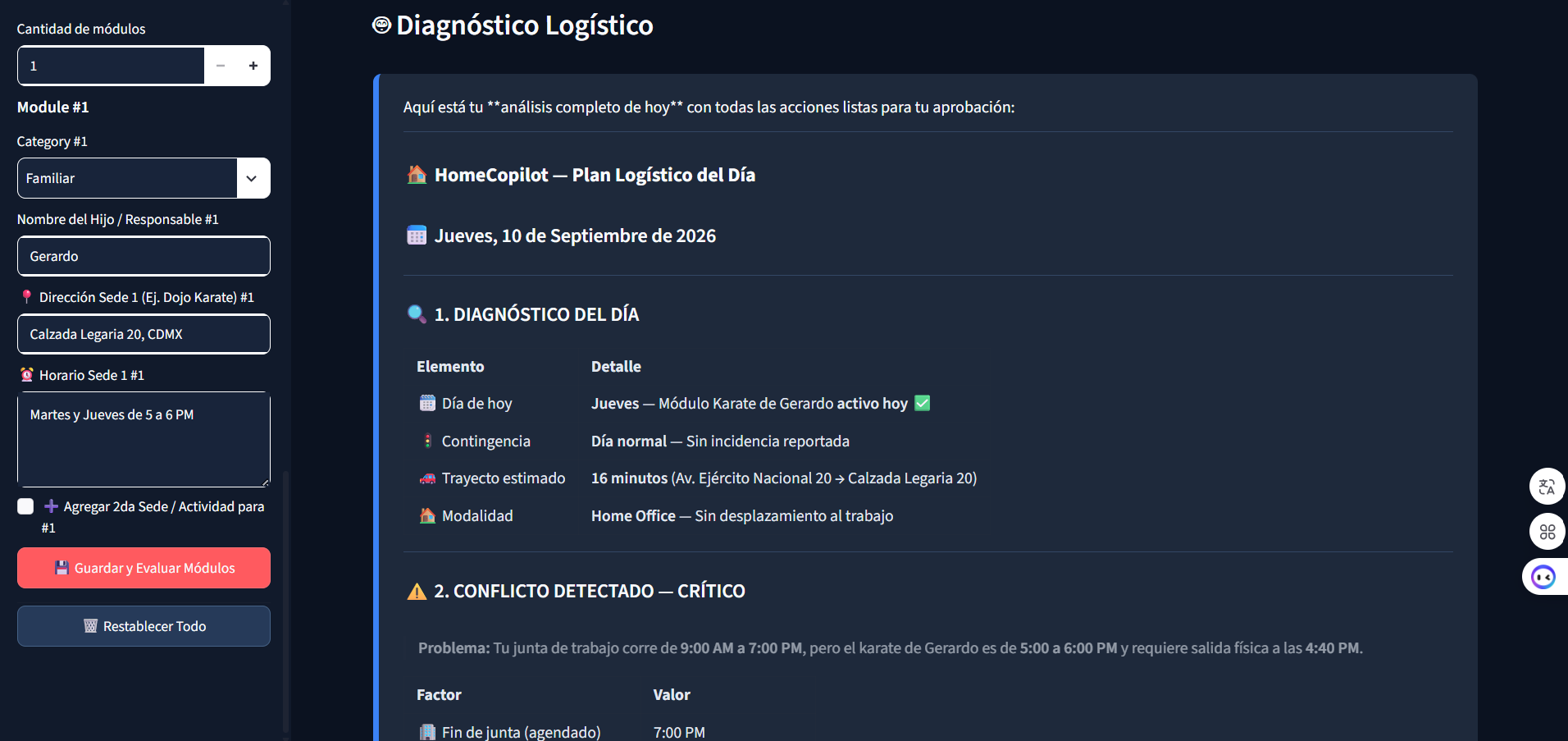
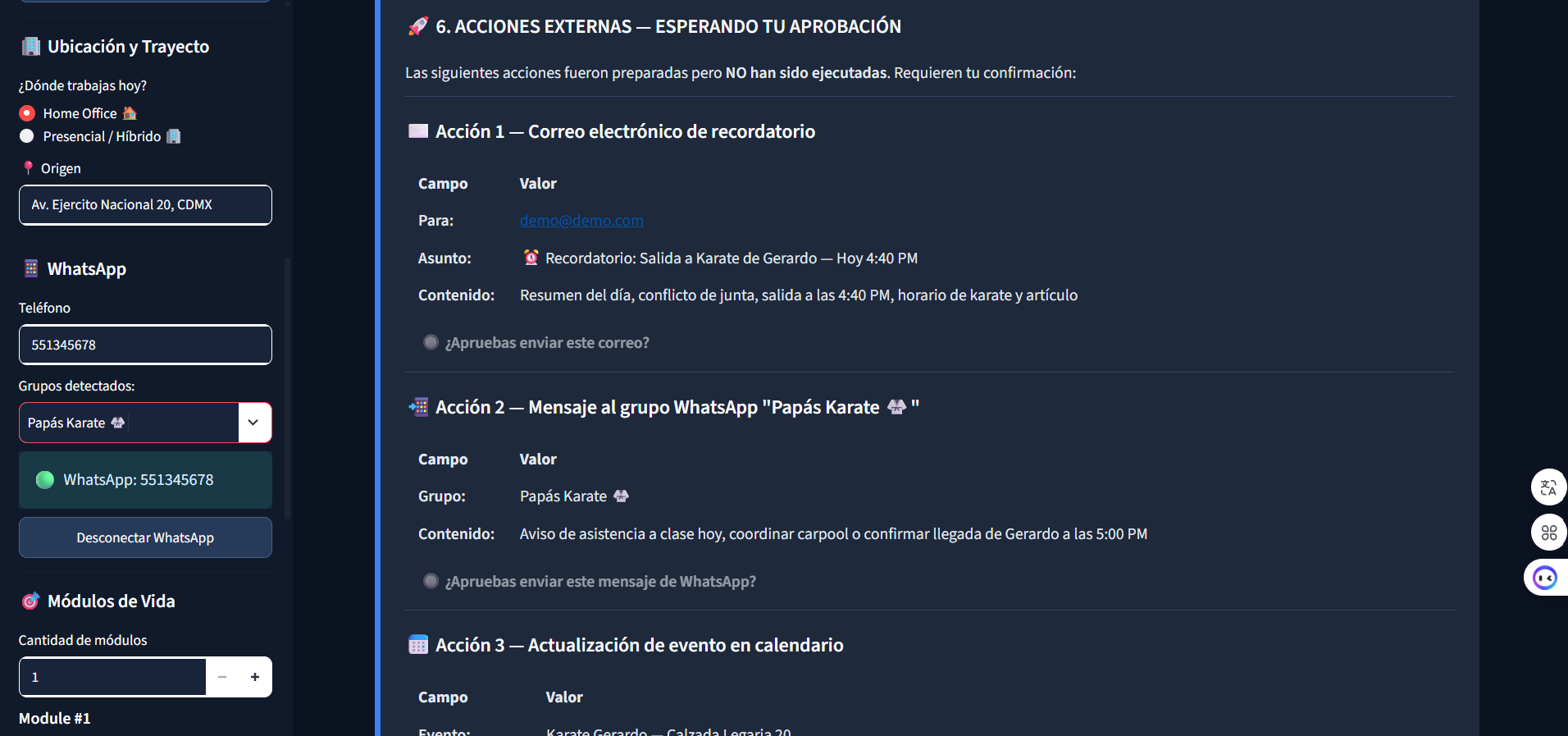
- Evaluates the incident against the user's travel estimates and family modules without inventing missing personal data.
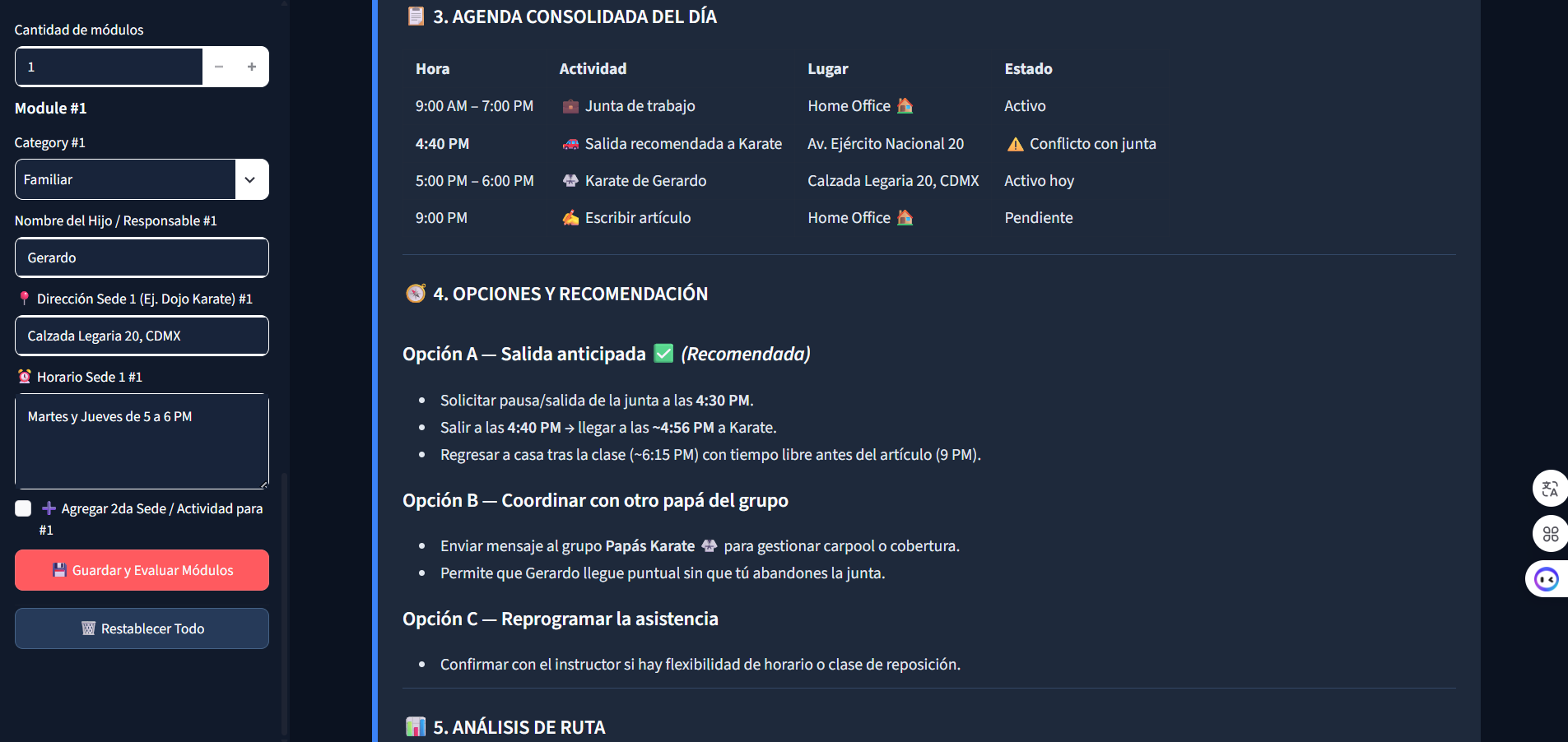
- Produces severity ratings, root causes, alternatives, recommendations, and approval-required actions.
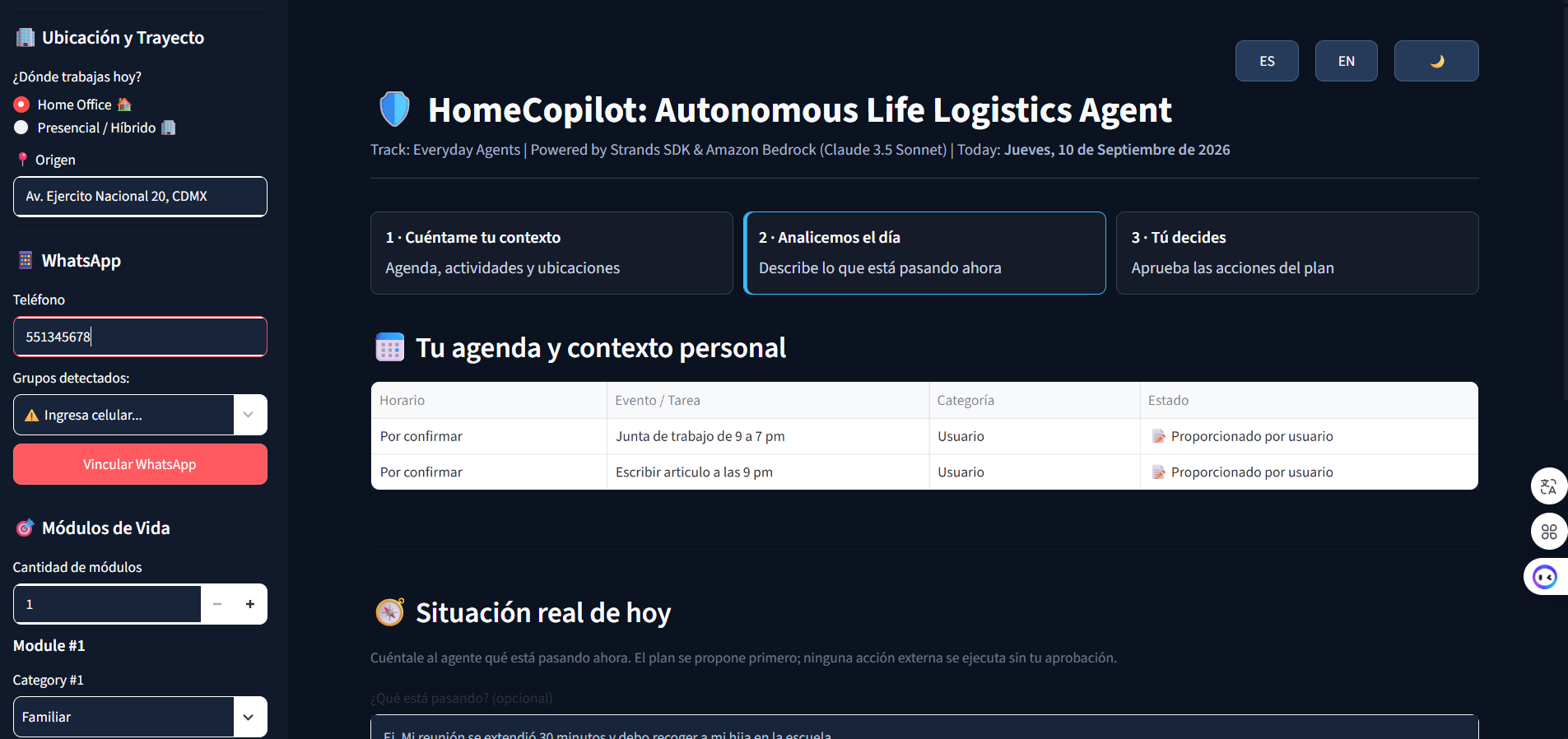
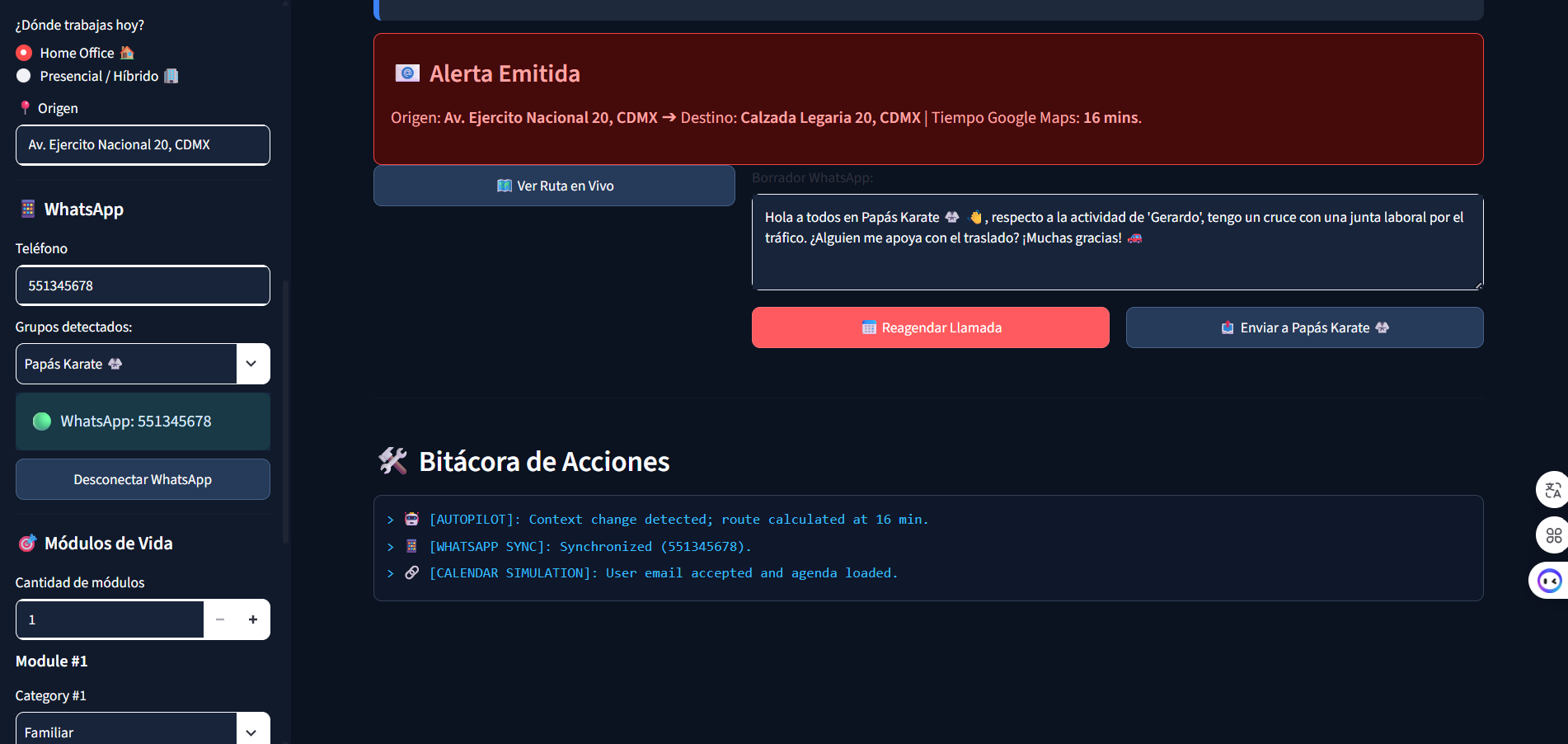
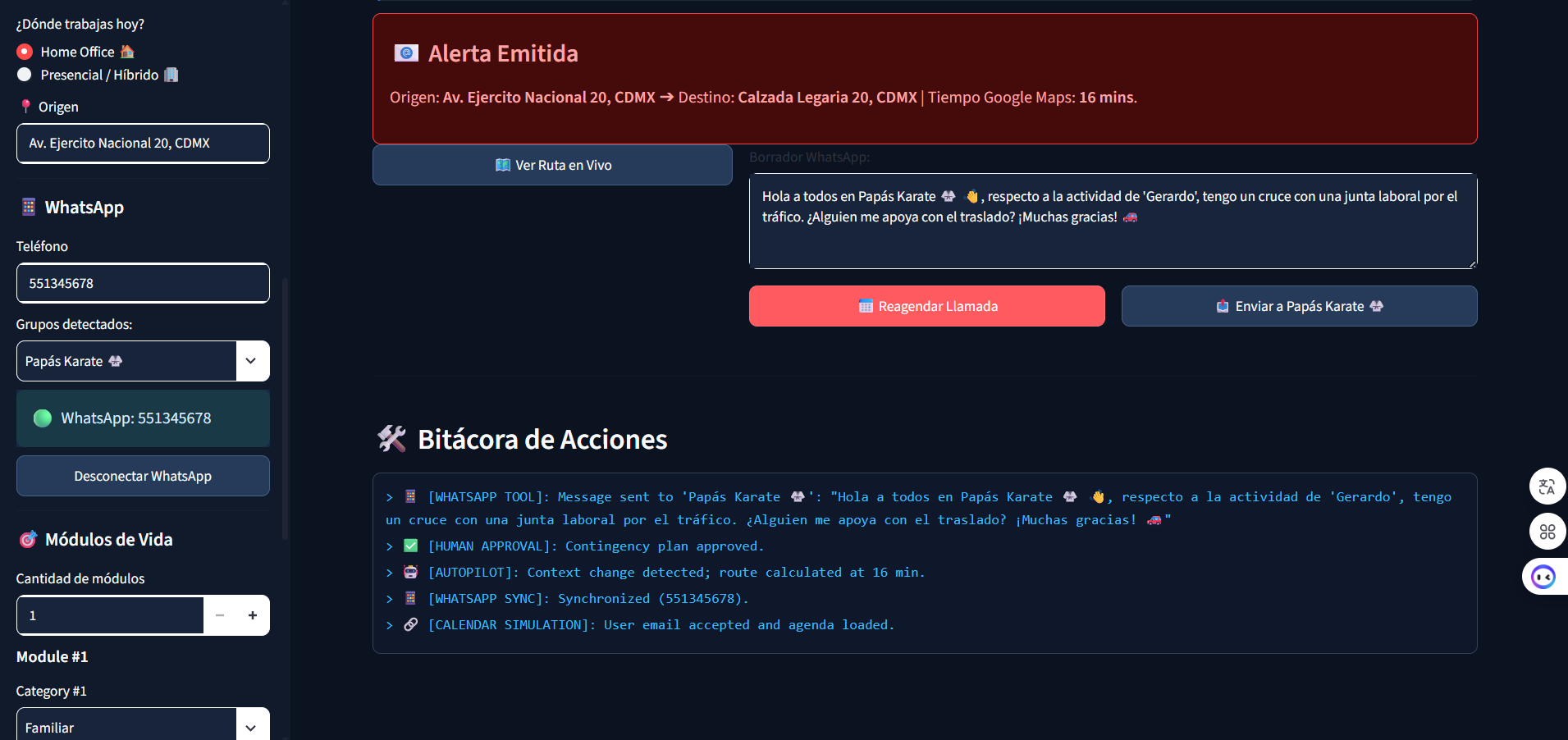
- Creates WhatsApp drafts only when an activity has a confirmed name, venue address, and schedule.
- Blocks calendar, email, and WhatsApp actions when data or human approval is missing.
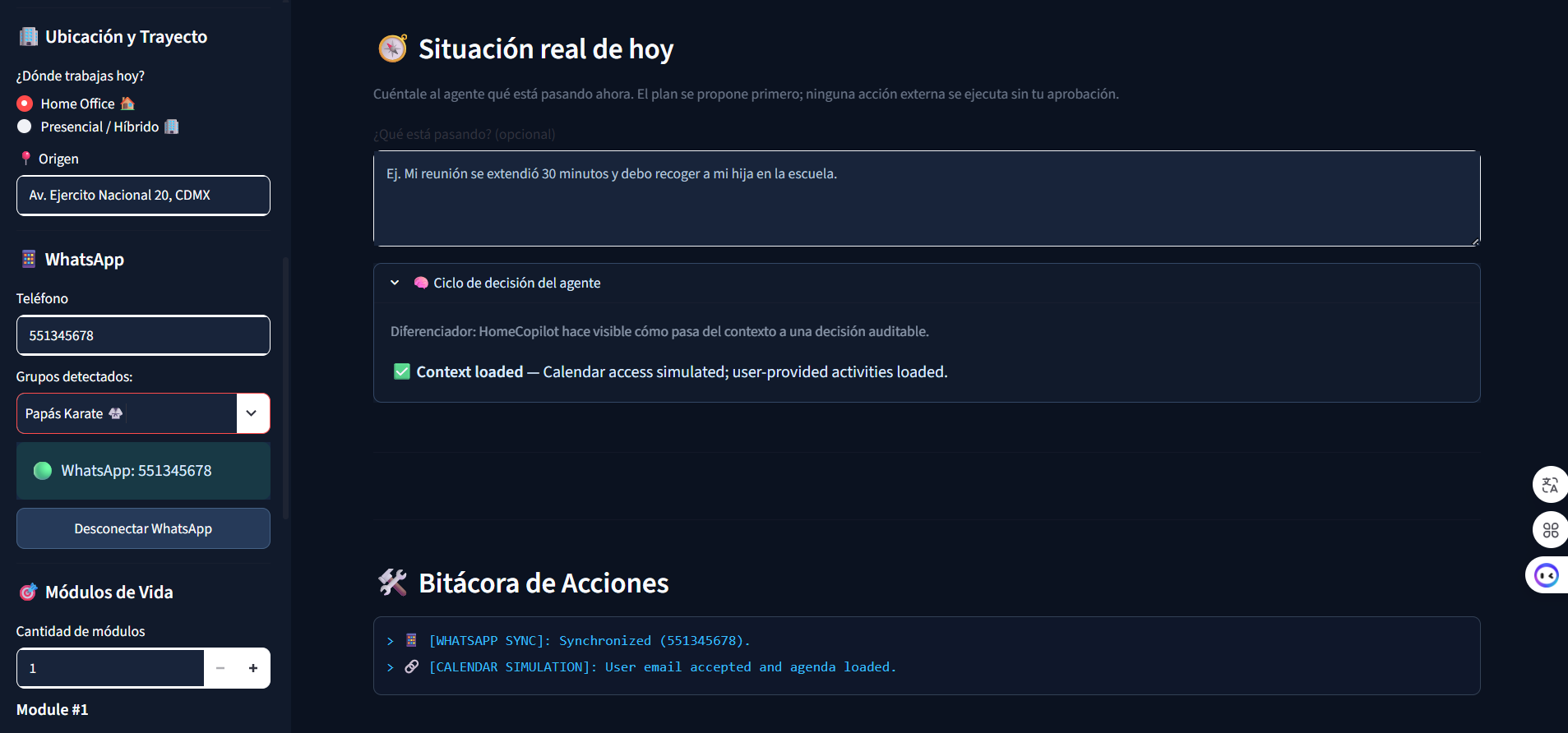
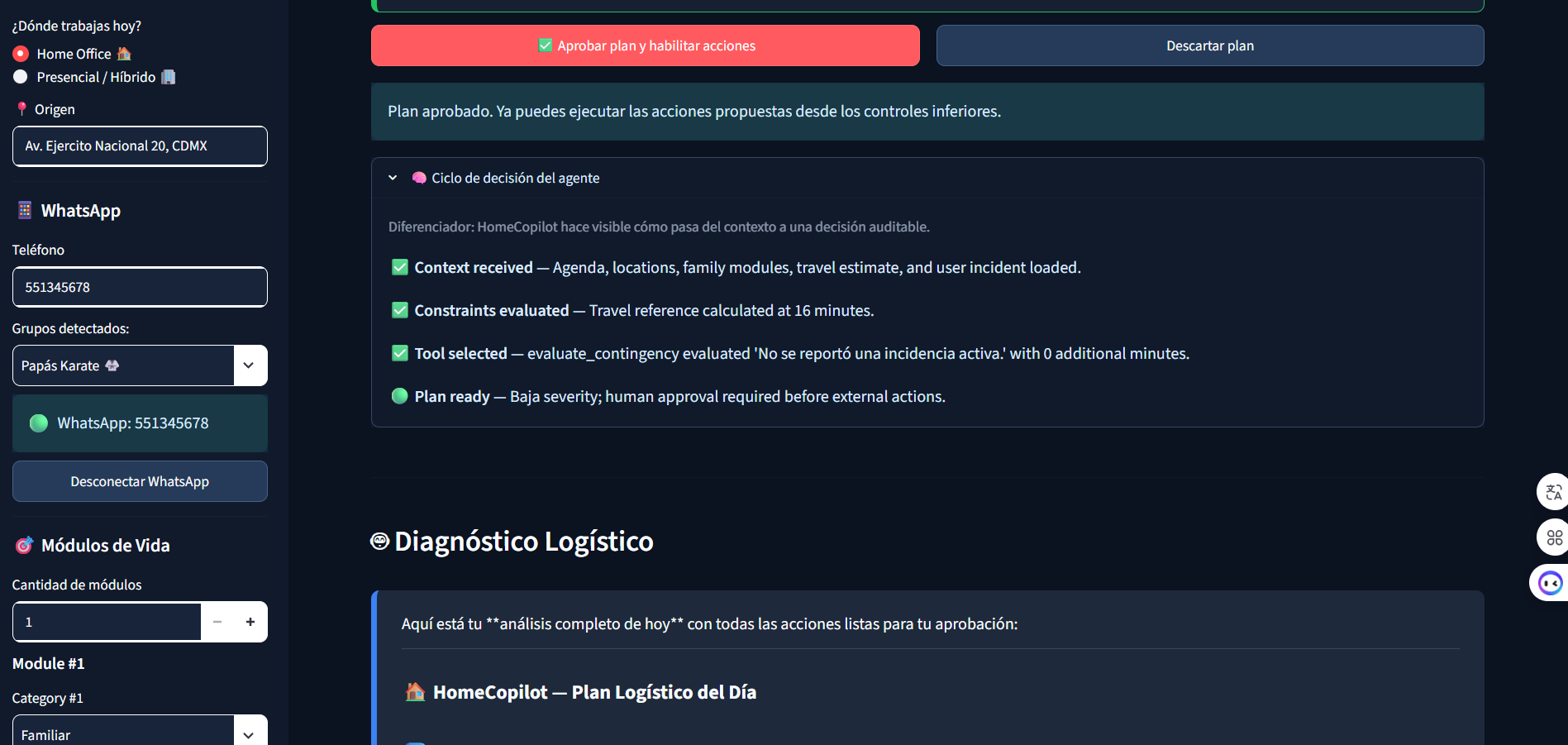
- Shows an auditable decision cycle: context received, constraints evaluated, tool selected, plan ready, and approval status.
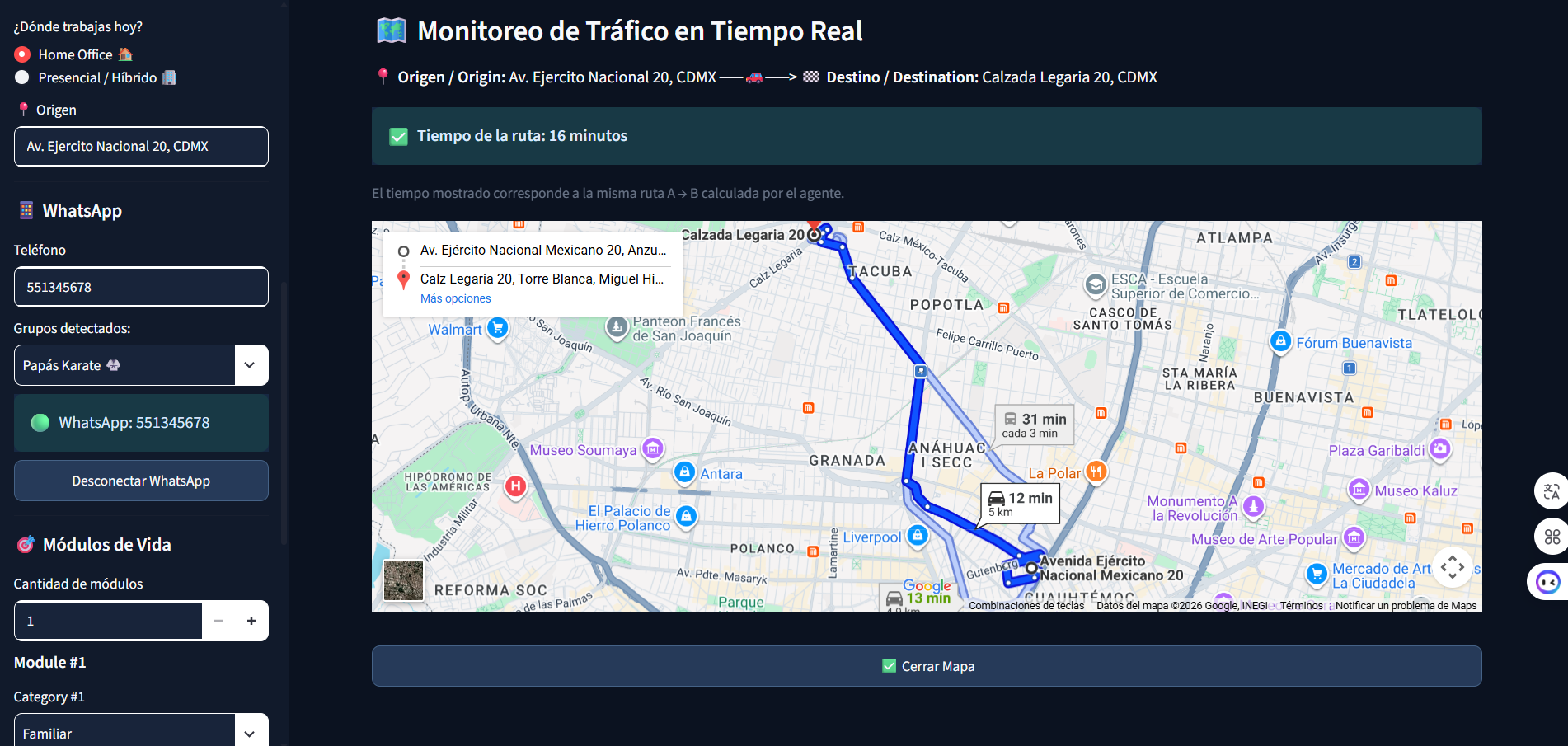
- Opens a Google Maps route for visual reference while keeping its estimate separate from the user's planning estimate.
How I built it
HomeCopilot was built as a human-in-the-loop agent spanning 6 architectural layers:
- Context Layer: Streamlit collects the user's agenda, locations, life modules, travel estimates, and current real-world incidents.
- Reasoning Layer: Powered by Amazon Bedrock (Claude 3.5 Sonnet) (
global.anthropic.claude-sonnet-4-6) for advanced multi-step reasoning and natural language understanding. - Tool Layer: Built using the Strands Agents SDK with custom
@toolfunctions to evaluate contingencies and prepare or modify actions. - Decision & Approval Layers: The app records and displays an explainable plan where consequential actions remain strictly blocked until user approval is granted.
- Audit Layer: The decision trace and action log show exactly what happened, which constraints were checked, and why.
- Tech Stack: Python 3.10+, Streamlit, Strands Agents SDK, Amazon Bedrock, and an embedded Google Maps route viewer.
Challenges I ran into
- State & Context Management: Maintaining persistent context across fluctuating daily schedules, multiple venues, and changing priorities without losing track of temporal constraints.
- Tool Orchestration: Ensuring the agent seamlessly coordinates calendar events, custom life modules, and messaging tools without manual intervention or inventing missing personal data.
- Balancing Flexibility with Safety: Designing deterministic guardrails so that the flexible reasoning of LLMs never bypasses human approval gates for messaging or scheduling changes.
Accomplishments that I'm proud of
- Delivering a fully autonomous agent workflow that goes beyond a basic chatbot to manage complex, real-world time constraints and family logistics.
- Implementing live diagnostic logging and an auditable decision trace for complete transparency into the agent's thought process, constraint checks, and tool executions.
- Successfully enforcing strict human-in-the-loop safety guardrails (preventing incomplete data from generating messages and blocking unapproved actions).
What I learned
- Observability is Trust: Displaying live tool execution logs and auditable decision traces fundamentally improves user clarity and trust in agentic systems.
- Focus on Real Friction: Building AI tools centered around genuine human friction points (like juggling family schedules and work meetings) makes software infinitely more practical and impactful.
- Guardrails are Essential: Combining flexible agentic reasoning with strict programmatic boundaries is the key to safely handling personal and sensitive user context.
What's next for HomeCopilot
- Expanding calendar and messaging integrations with live API synchronization.
- Adding voice-activated task logging and automated expense tracking.
- Enhancing multi-venue route optimization with real-time public transit and traffic feeds.
Built With
- agentic-workflows
- ai-agents
- amazon-bedrock
- amazon-web-services
- anthropic
- artificial-intelligence
- automation
- claude
- cloud-computing
- generative-ai
- google-maps
- human-in-the-loop
- logistics
- natural-language-processing
- pandas
- productivity
- python
- software-architecture
- strands-agents-sdk
- streamlit
- workflow-management

Log in or sign up for Devpost to join the conversation.