-
-
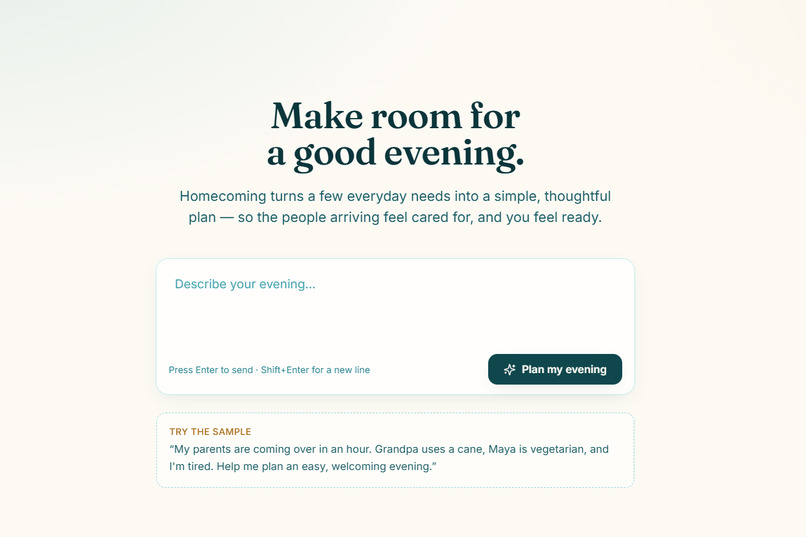
Homecoming turns a family’s needs into a thoughtful plan for a welcoming evening
Inspiration
Bringing people together should feel joyful not like handling small tasks. I believe a family visit often involves remembering preferences considering a persons mobility needs managing short preparation time and ensuring everyone feels comfortable.
I imagined Homecoming, an Alexa+ experience that brings these details together in one thoughtful evening plan. The goal is simple: help people spend energy coordinating the evening and more time enjoying it together.
What it does
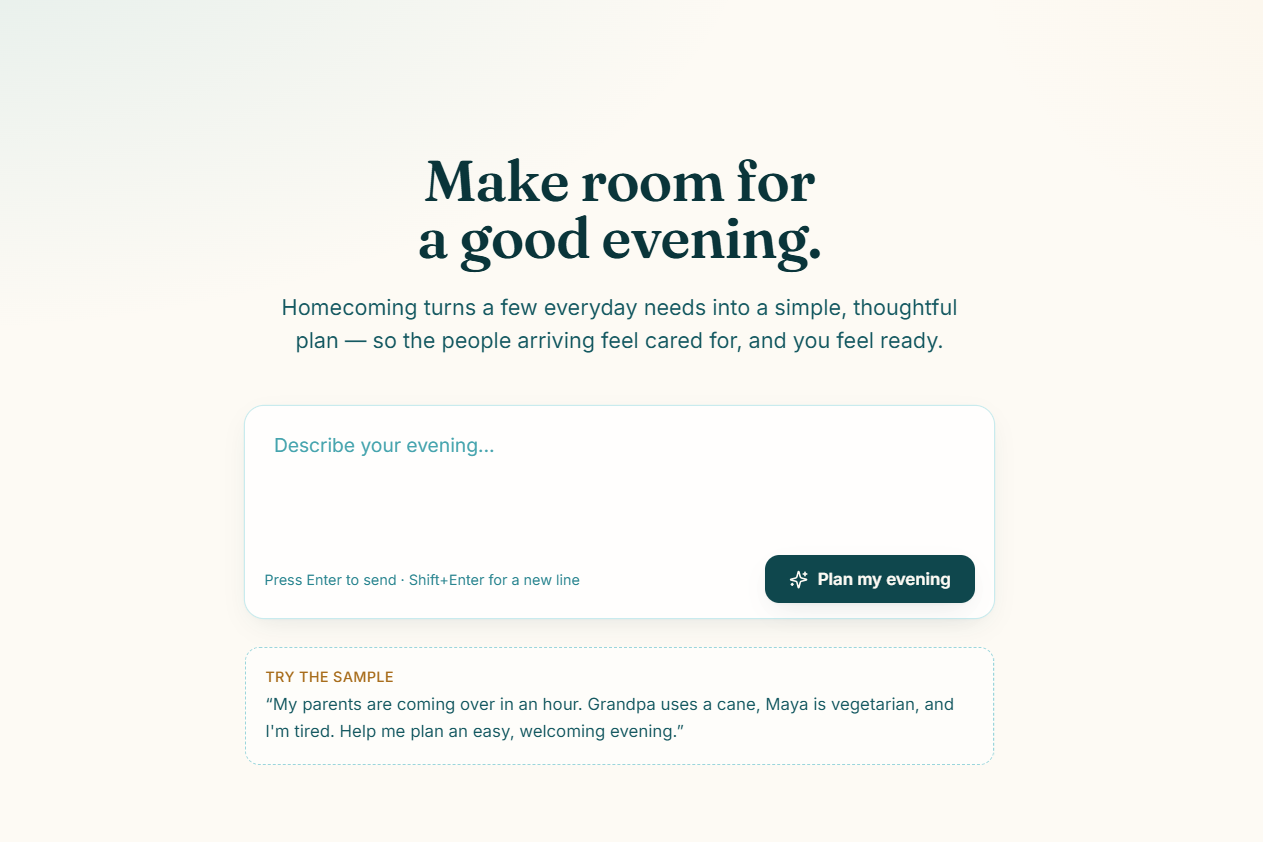
Homecoming helps people prepare for an evening with guests through a context-aware experience. Users describe their situation in language and Homecoming responds to the needs behind the request.
For example: “My parents are coming over in an hour. Grandpa uses a cane Maya is vegetarian. I'm tired. Help me plan a welcoming evening.”
The experience recognizes the accessibility consideration, dietary preference and hosts limited energy. Homecoming then asks one follow-up question and generates a tailored plan with a meal idea, practical preparation steps, a sample timeline, accessibility suggestions and a checklist.
Homecoming follows a confirmation- interaction: users review the proposed plan before confirming it. The current demo is simulated,. It does not place orders make bookings or contact external services.
How we built it
I built Homecoming as a single-page web application using React, TypeScript, Vite and Tailwind CSS.
I organized the interface around a flow and a personalized evening-plan panel. For the hackathon prototype the assistants responses, follow-up question, meal suggestions, timeline and sample venues use predefined content. React state powers the interactions, including the users choices, plan display, confirmation state and reset flow.
I deliberately kept the experience self-contained with no backend database, API keys or external service integrations. This allowed me to demonstrate the user journey while clearly distinguishing simulated suggestions from real-world actions.
The Alexa+ track inspired me to explore how a conversational assistant could go beyond answering a question and help someone work through a multi-step task.
What we learned
I learned that a helpful assistant needs more than a response. It must recognize which details matter avoid overwhelming the user with questions and turn the conversation into a next step.
I also learned that trust is part of the experience itself. Users should understand what the assistant is doing what information its suggestions rely on. Whether an action is real or simulated. Asking for confirmation and communicating limitations clearly can make an experience feel more considerate and predictable.
Challenges we faced
One challenge was balancing personalization with simplicity. Homecoming needed to account for guest needs without making the host complete a long checklist.
Another challenge was creating a understandable demonstration within hackathon constraints. I focused on one scenario, a single useful follow-up question and a practical plan that makes the value visible within a short demo.
I also made transparency a design priority: fictional venues are labeled as sample data. Confirming a plan does not trigger a real transaction or external action.
Whats next
I would like to explore integrations with services optional household preferences and more flexible planning across different guest needs and occasions.
Future versions could help coordinate reservations, meal options, calendars and household routines—with permission before consequential actions and clear controls, over what information is retained.
My longer-term vision is to make planning time together feel easier and more considerate while keeping people firmly in control.
Built With
- bolt.new
- css
- react
- tailwind
- typescript
- vite
