-
-
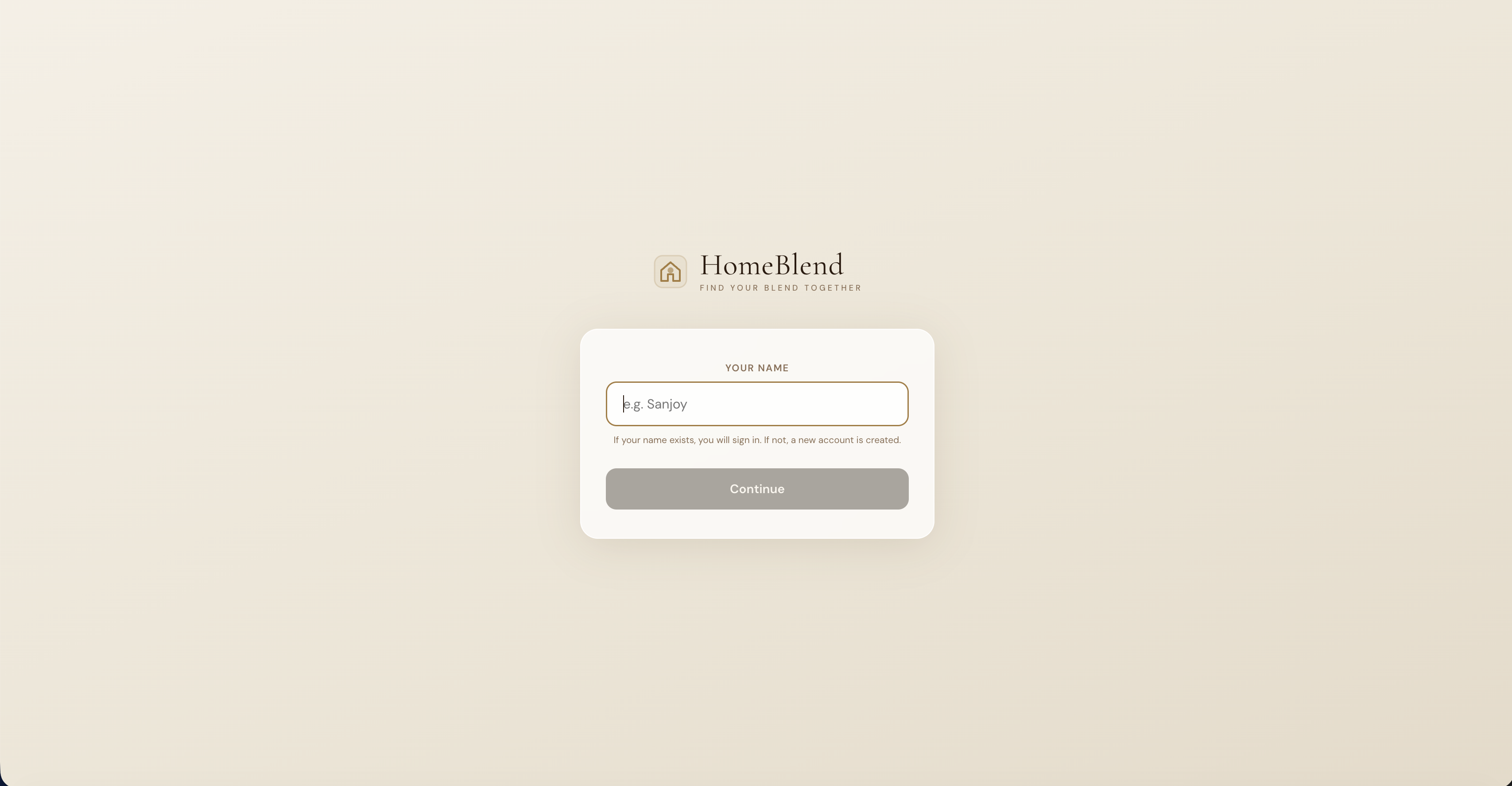
Login/signup view.
-
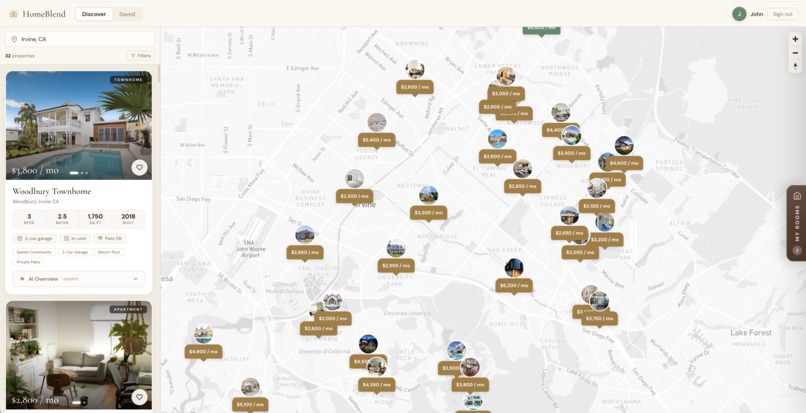
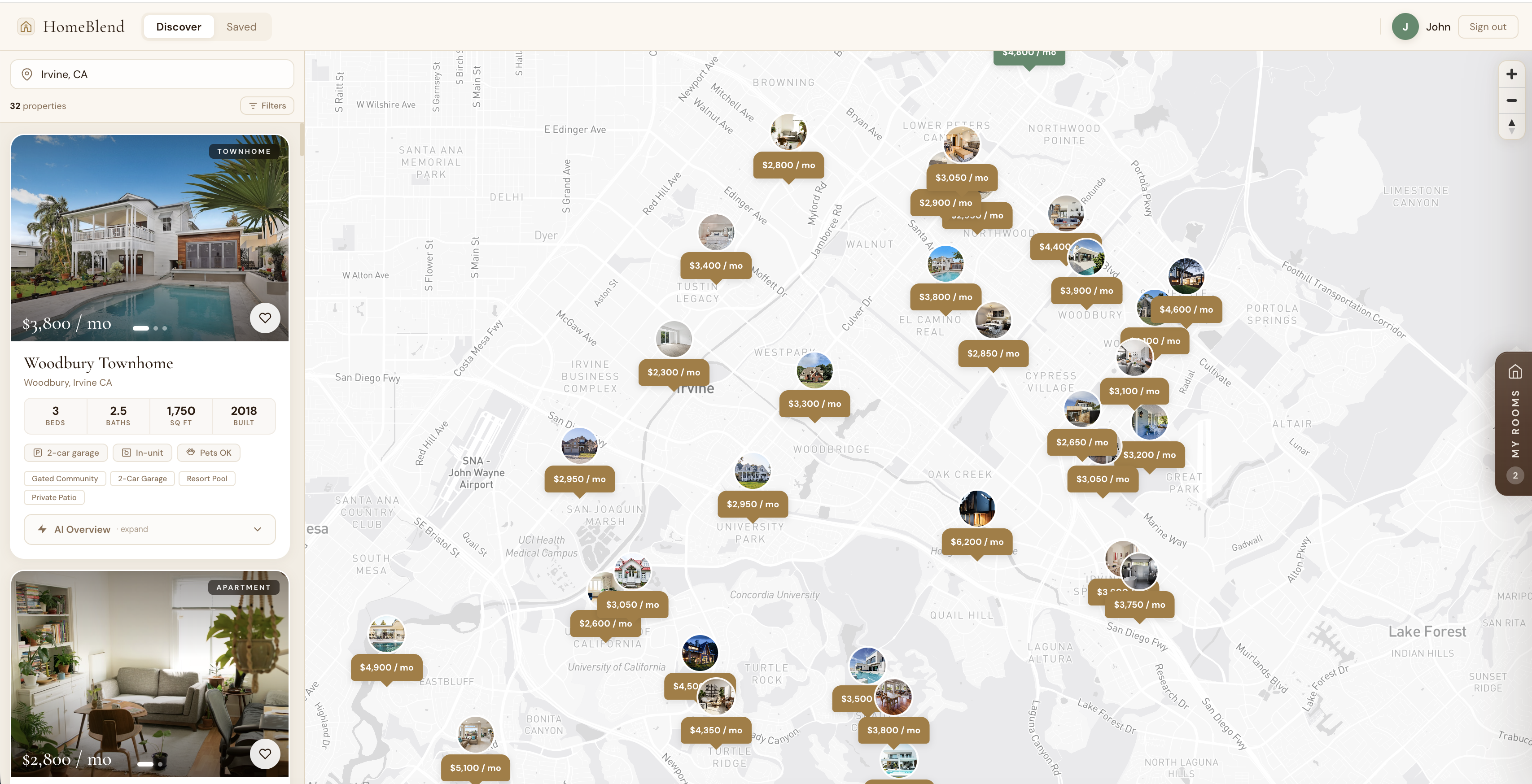
Main homepage to discover new properties.
-
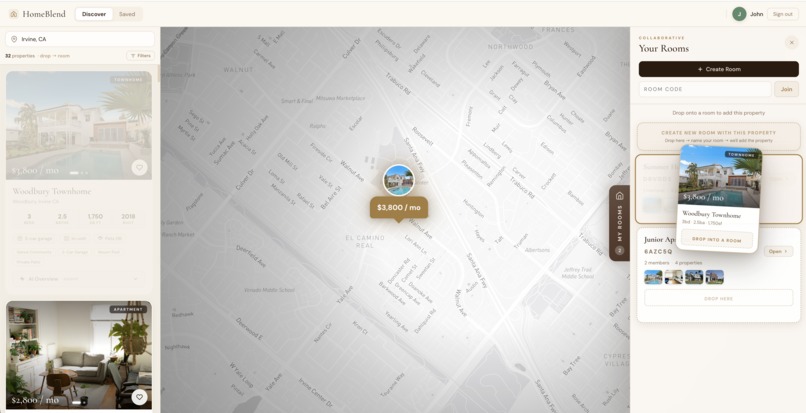
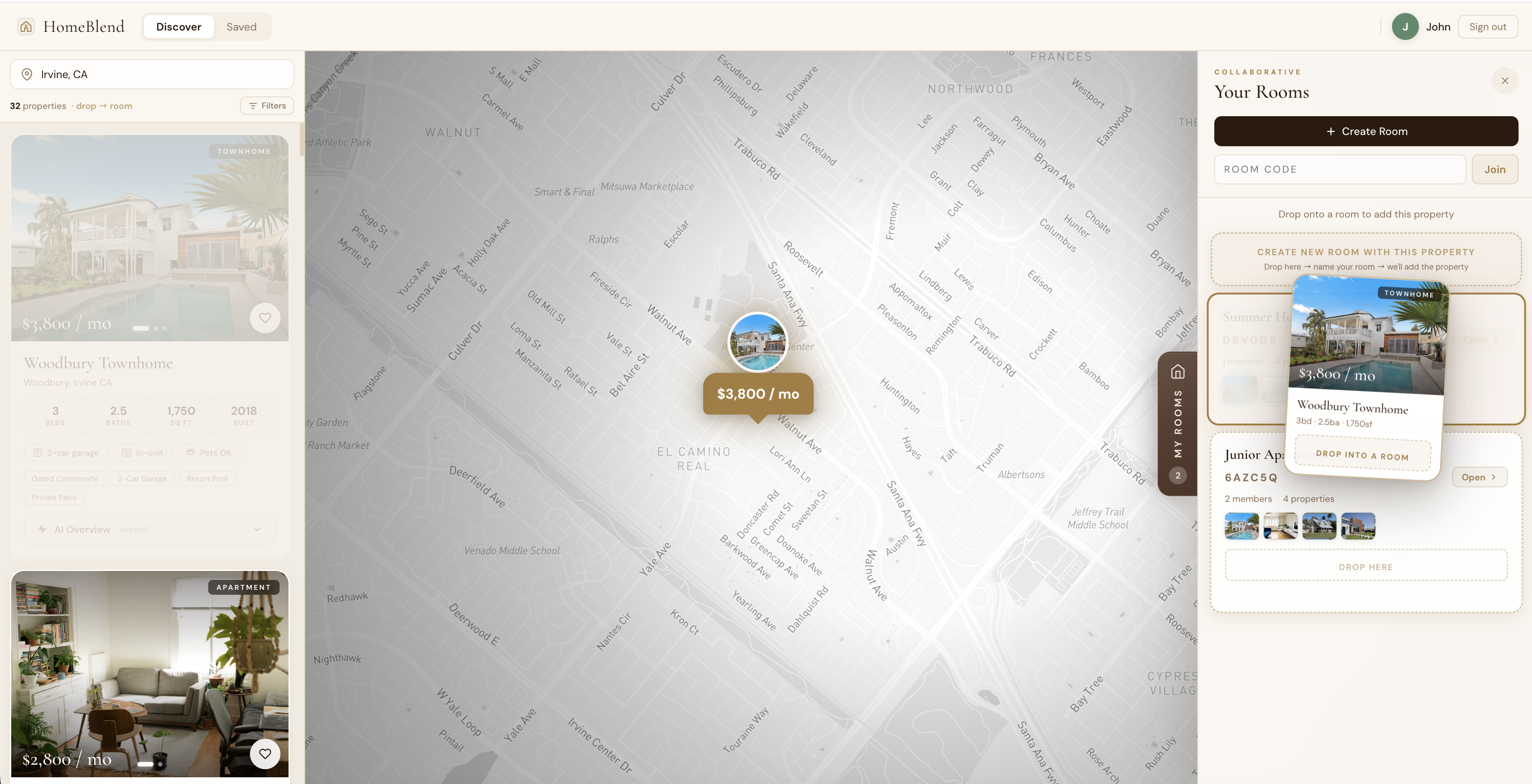
Drag and drop a property into a blend room.
-
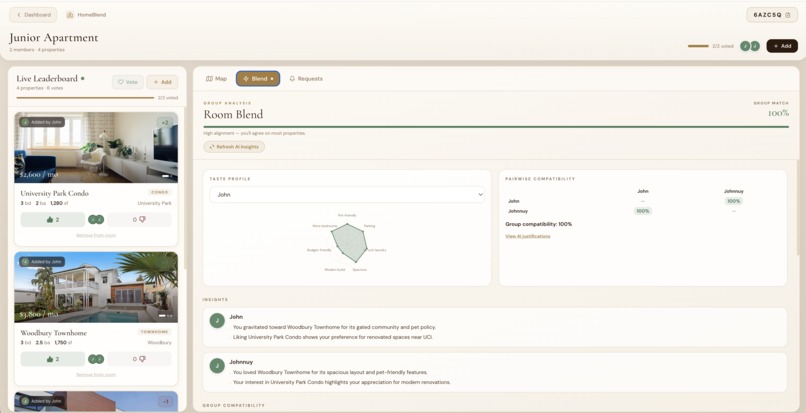
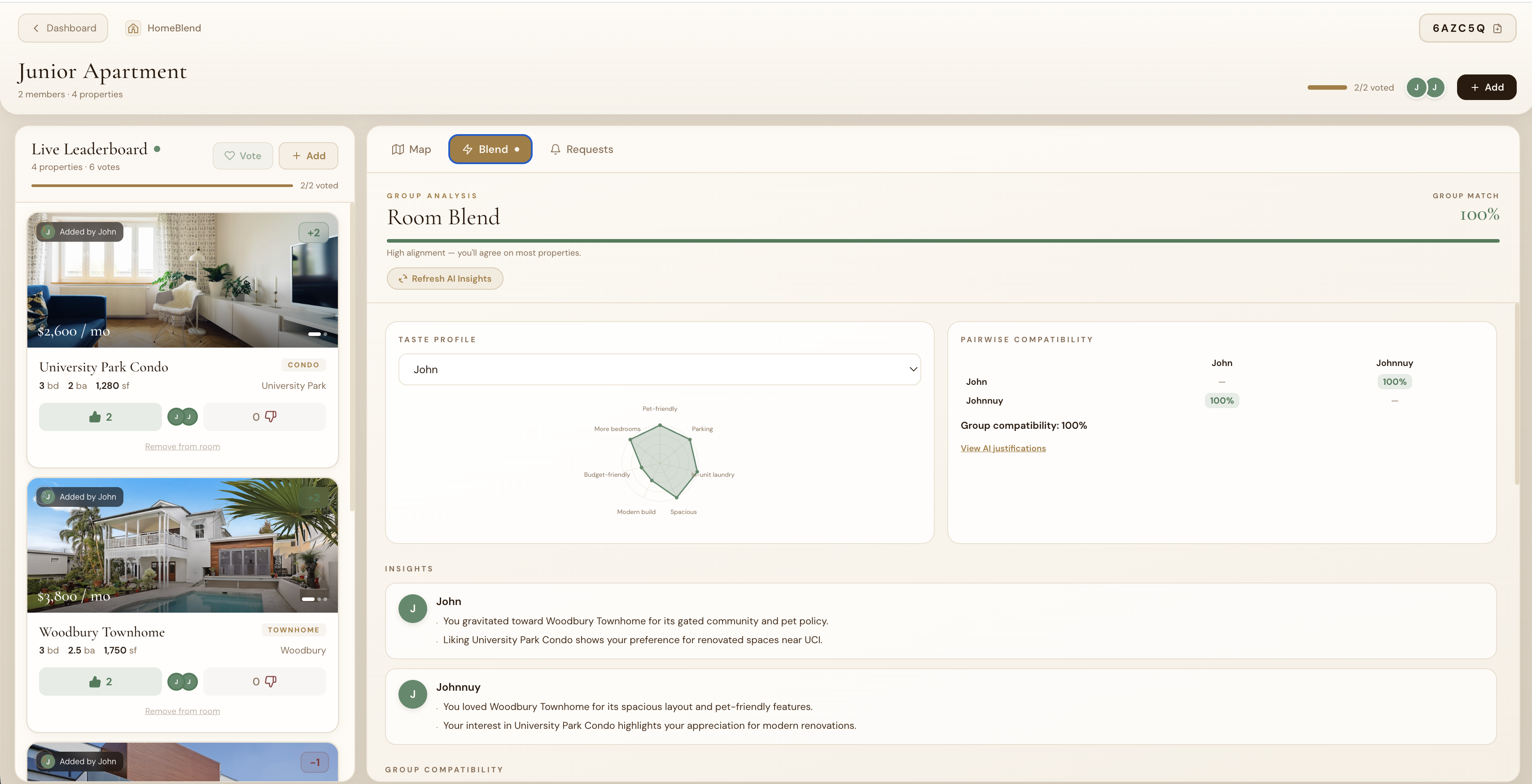
Blend room view with AI insights for group compatibility.
Inspiration
By the time I was nine years old, we had moved to nine different homes. New countries, new cities, and new environments but one motif was always constant. Finding a house that makes everyone happy. Most mainstream websites like Zillow, Redfin etc. only take into account one buyers' constraints for properties. But the truth is most of them time, people renting or buying a house are living together whether that be families, a couple, or even college roomates! Everyone has different preferences, priorities, and needs which needs to be taken care of. When those differences aren’t surfaced early, decisions get slower, conflicts grow louder, and compromises feel unfair. We built HomeBlend to fix that.
What it does
HomeBlend steps in before the Zillow tabs, the group chats, and the quiet frustration.
Everyone brings their wants, worries, and non-negotiables, sunlight, commute, budget, vibe, shared through quick, expressive inputs that feel more like a conversation than a form. HomeBlend blends those voices into a single snapshot, revealing where priorities align, where tradeoffs exist, and where friction might surface later.
Think Spotify Blend, but instead of music taste, it captures how you make one of the biggest decisions of your life, together.
How we built it
Because this idea came from lived experience, we knew we could not rush into building.
We spent our first few hours stepping back and asking the hard questions. What problem are we actually solving? Who is being left out by current platforms? And what would have helped us during those nine moves instead of adding more noise? Getting aligned early gave us clarity and prevented us from building features that did not matter.
We then mapped the experience in its simplest form. Instead of polished designs, we sketched rough UI flows in Google Docs and focused on how a group would move through the product together. We used AI as a thought partner to iterate on structure, challenge assumptions, and refine how preferences should be captured without turning the experience into a survey.
Once the flow felt right, we translated it into the product itself, prioritizing clarity, speed, and collaboration over complexity. Every decision came back to one guiding question: does this help people understand each other sooner?
HomeBlend was built intentionally, with just enough structure to create alignment and just enough flexibility to feel human.
Challenges we ran into
One of the biggest challenges was that preferences are not clean or consistent. People do not always know how to articulate what they want, and when they do, it is often emotional, vague, or tied to past experiences. Translating things like comfort, safety, or “vibe” into something structured without stripping away meaning took a lot of iteration.
Another challenge was designing for fairness. In group decisions, louder voices often win. We had to be intentional about making sure every person felt equally represented, without turning the experience into a negotiation tool or making it feel confrontational.
Finally, we had to resist the urge to overbuild. There were many moments where adding more logic or automation felt tempting, but we learned that too much complexity gets in the way of alignment. The real challenge was knowing when simplicity would serve users better.
Accomplishments that we're proud of
We are proud of building something that tackles a deeply human problem rather than just optimizing listings. HomeBlend shifts the focus from properties to people and helps groups have clearer conversations before conflict arises.
We are also proud of how intentionally we designed the experience. Every feature exists to support alignment, not overwhelm users with options. The result is a product that feels lightweight, collaborative, and easy to engage with.
Most importantly, we built something rooted in lived experience. HomeBlend reflects real frustrations and real compromises, and turns them into clarity instead of tension.
What we learned
We learned that alignment is more valuable than precision. People do not need a system to tell them what to choose, they need help understanding each other earlier in the process.
We also learned that good design is often about what you leave out. Creating space for reflection and conversation can be more powerful than adding more features or filters.
Finally, we learned that storytelling is a powerful tool in decision making. When people can see themselves and their priorities reflected back to them, decisions feel more fair and more shared.
What's next for HomeBlend
ext, we want to deepen how preferences are blended and visualized, making tradeoffs even clearer and more intuitive.
We plan to integrate real listings and explore partnerships with agents to bring HomeBlend earlier into the housing journey.
Longer term, we see HomeBlend expanding beyond buying into renting, moving, and any situation where housing decisions are made together. The goal is to make one of life’s biggest decisions feel less isolating and more collaborative.
Built With
- expo.io
- express.js
- firebase
- mapbox
- openai
- react
- vite


Log in or sign up for Devpost to join the conversation.