-
-
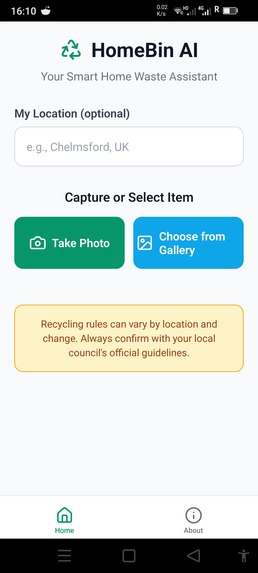
Home Screen
-
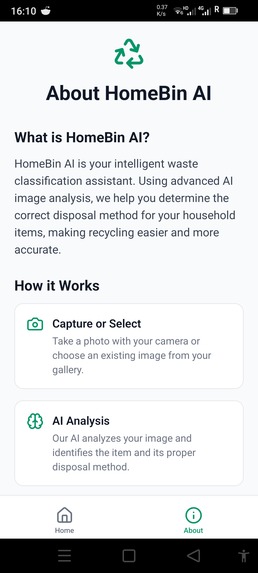
About Section
-
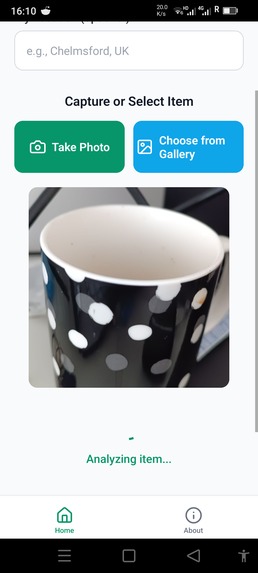
Loading state
-
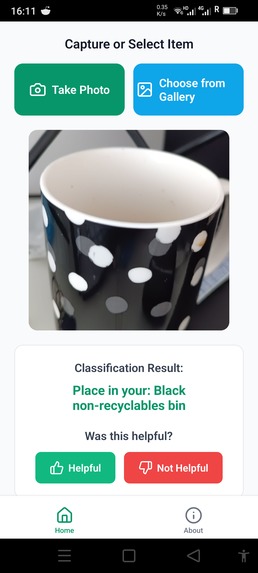
Results and Feedback
-

Crop of the Image
-

Capture of Image
-
Architecture


Inspiration
Our journey to create HomeBin AI was sparked by a frustrating reality across the UK: recycling confusion is rampant, undermining our collective efforts towards a greener future. We've all been there: standing by the bin, holding an item, and staring blankly. Should this plastic tray be rinsed? Can this broken glass go in the green box? What about that coffee cup? The answer, unfortunately, is rarely simple, and it changes depending on which local authority you live in, even right here in Broomfield, England.
This isn't just anecdotal observation; it's a systemic problem highlighted repeatedly in national news:
Varying Local Rules: As The Guardian highlighted, there are "more than 300 different sets of recycling rules" across England alone. What's recyclable in one council area might be general waste just a few miles away. This lack of uniformity is a major source of contamination.
Contamination Crisis: Incorrect items in recycling bins aren't harmless mistakes. They lead to "contaminated loads" which are often rejected entirely and sent to landfill or incineration, wasting effort and resources. The BBC has frequently reported on local councils, including those in the wider Northamptonshire area, facing high contamination rates.
The "Wish-Cycling" Phenomenon: Faced with uncertainty, many people resort to "wish-cycling" – putting items in recycling bins hoping they're recyclable. While well-intentioned, this is a significant contributor to contamination. Our project directly aims to combat this by providing clarity.
Inspired by these challenges, we envisioned HomeBin AI as a practical, accessible solution. We want to empower every household in the UK (starting with specific local areas like Broomfield) to make correct sorting decisions confidently. By leveraging advanced AI to understand complex waste items and retrieve precise, hyperlocal rules, HomeBin AI turns recycling confusion into clarity, one item, one home, one community at a time. It's about making sustainability effortless and truly impactful.
What it does
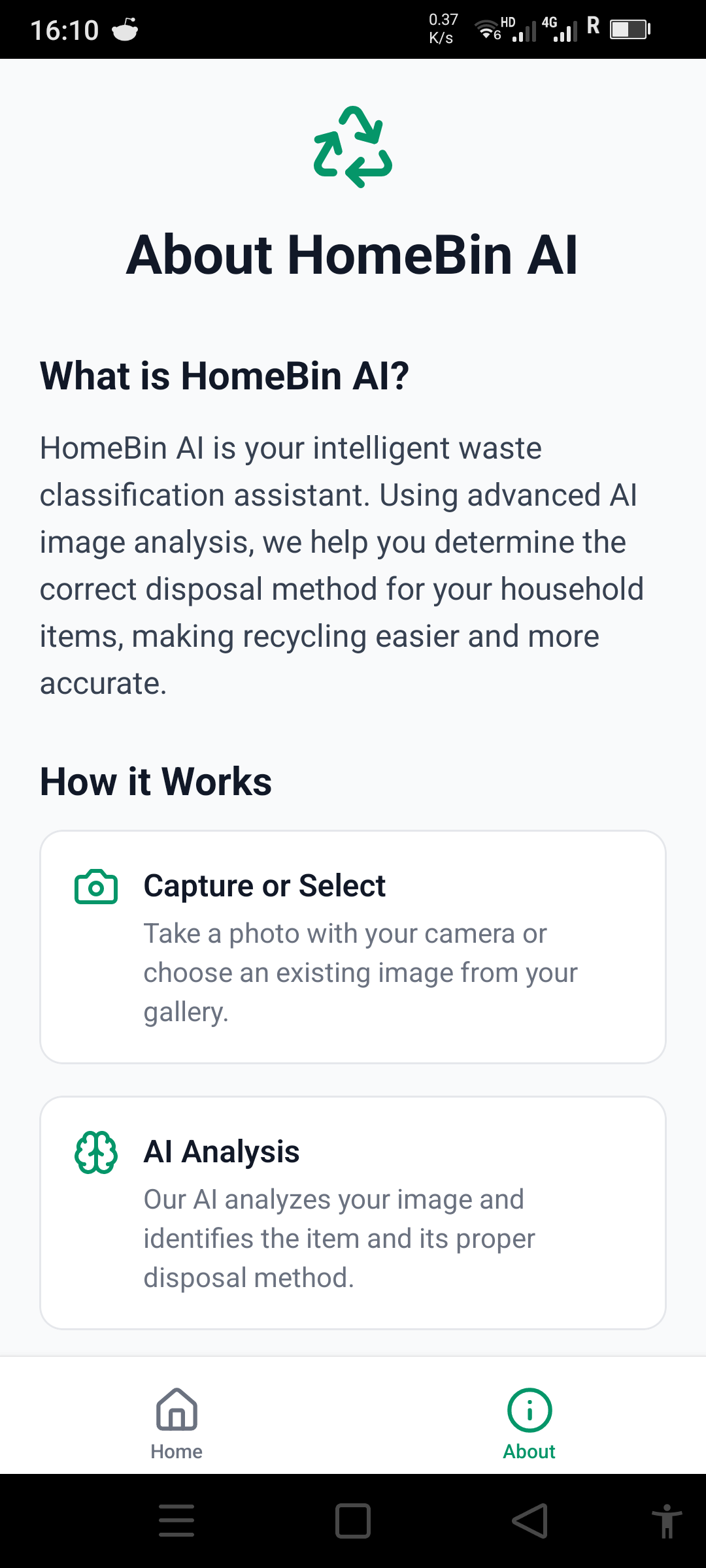
HomeBin AI transforms the confusing task of waste sorting into a simple, accurate, and empowering experience.
Here’s how it works:
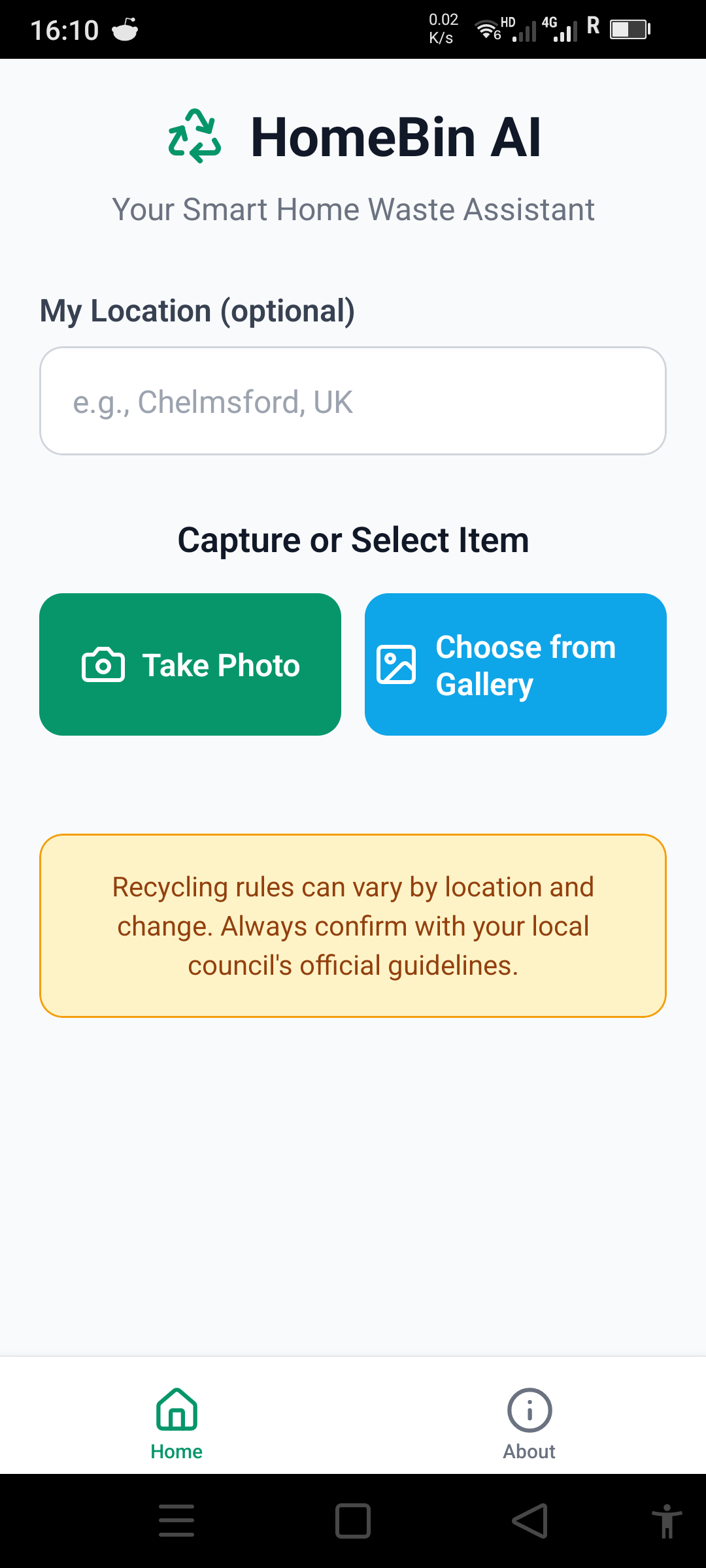
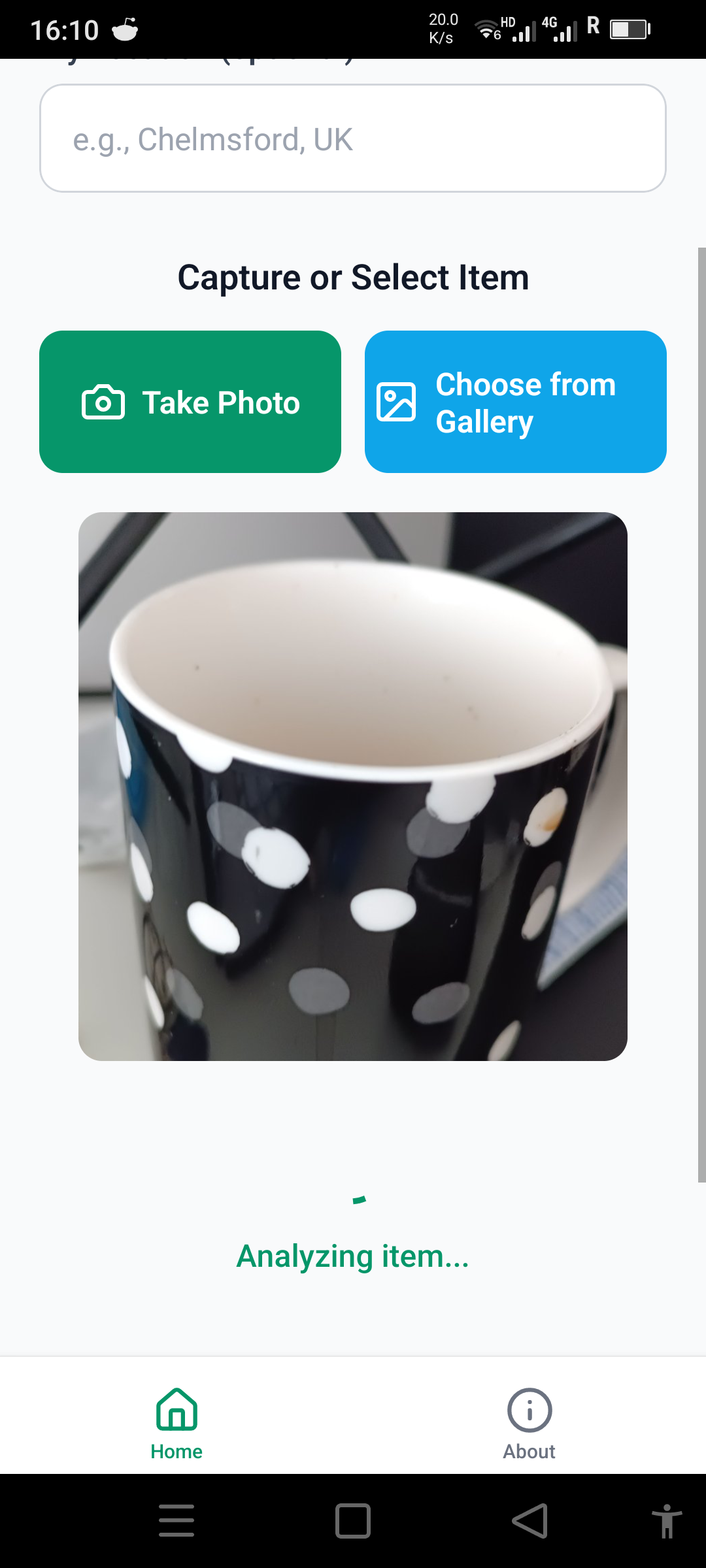
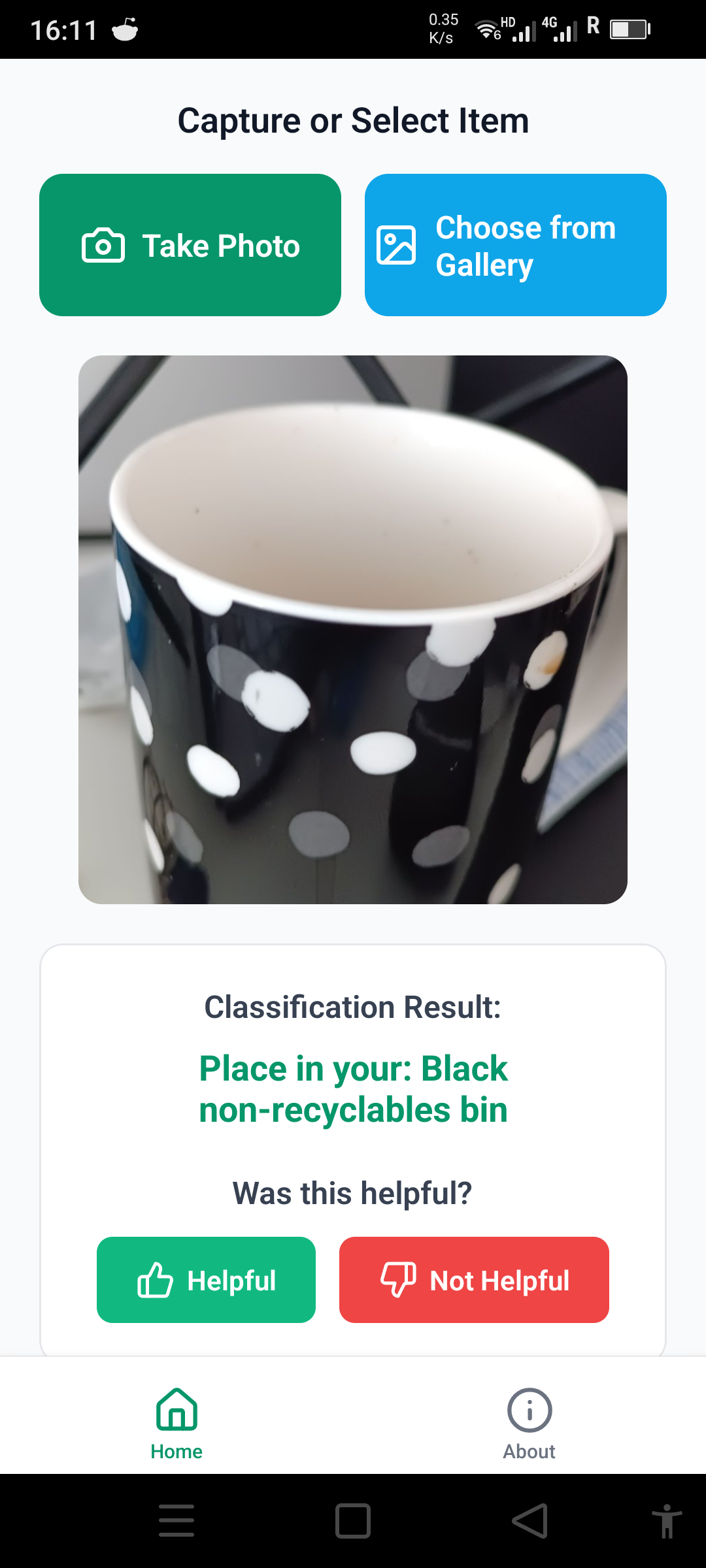
Snap & Identify: Users simply open the HomeBin AI app on their mobile device or web browser, take a photo of any waste item (or upload one from their gallery).
AI-Powered Precision: Our intelligent backend, powered by Google Gemini's cutting-edge multimodal AI, instantly and accurately analyzes the image. It doesn't just give broad categories; it identifies nuanced details like "broken glass fragment," "ceramic coffee mug," or "aluminum soda can."
Hyperlocal Rule Retrieval: The precisely identified item is then processed by our n8n AI agent, which queries a Qdrant vector store loaded with real, hyperlocal recycling rules (e.g., for Broomfield, UK).
Clear Instructions: The app displays immediate, clear, and specific instructions on exactly which bin to use and any necessary preparation steps (e.g., "Place in your Green recycling box. Please rinse thoroughly and remove the lid.").
Continuous Improvement: A built-in feedback mechanism ("Helpful/Unhelpful" buttons) allows users to provide input, which continuously informs and refines our AI and recycling rule knowledge base.
HomeBin AI makes accurate recycling effortless, reducing contamination and promoting sustainable practices for a greener future.
How we built it
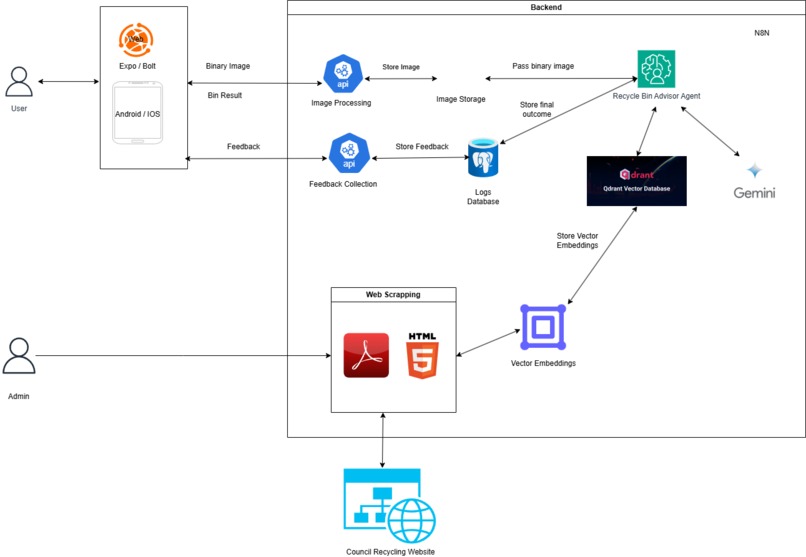
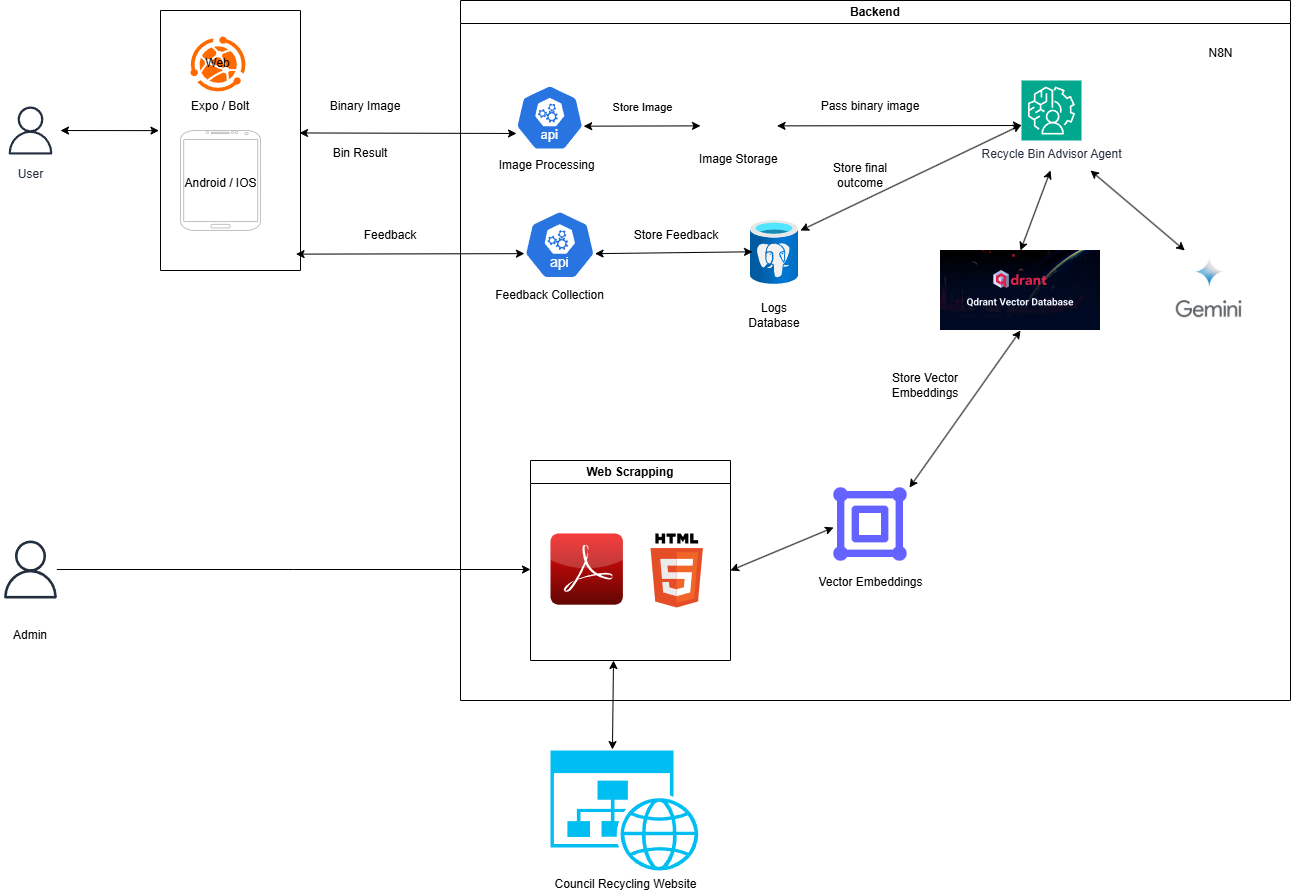
HomeBin AI is built on a robust, modular, and innovative architecture designed for intelligence, scalability, and ease of maintenance.
Frontend (User Interface): Our cross-platform mobile web application was rapidly developed using Bolt.new's intuitive environment, leveraging Expo (React Native). This allowed us to create a seamless, mobile-first user experience that works across Web, iOS, and Android devices. Users can easily capture images directly via their device camera or upload from their gallery using expo-image-picker.
Backend Orchestration & AI Agent (n8n): n8n serves as the central intelligent agent and orchestrator for our entire backend workflow. When an image is submitted from the app, n8n receives it via a webhook. This agent is where the core intelligence for waste identification lies: it directly interfaces with Google Gemini's multimodal API and then orchestrates the precise Qdrant lookup.
Multimodal AI Analysis (Google Gemini API): Instead of relying on traditional image classification models that often struggle with waste granularity, we opted for Google Gemini API's (gemini-pro-vision / gemini-flash) cutting-edge multimodal capabilities. This decision was a breakthrough, enabling our AI agent to achieve high accuracy in identifying diverse and nuanced waste items (e.g., differentiating a 'broken glass' from a 'whole glass bottle' or recognizing 'ceramics' precisely). Gemini's natural language output directly informs our system.
Intelligent Item Extraction (n8n's AI Agent Logic): A key component within our n8n workflow is a custom code node that acts as the "brain" of our AI agent. It parses and interprets Gemini's potentially verbose natural language description, extracting the most relevant, concise waste item term (e.g., converting "This appears to be a fragment of a broken glass bottle" into "broken glass fragment") for precise lookup.
Hyperlocal Recycling Rules (Qdrant Vector Store & RAG): Our Retrieval-Augmented Generation (RAG) system leverages Qdrant as a high-performance vector database. We developed Python scripts using requests and BeautifulSoup to scrape real, hyperlocal recycling rules from council websites (e.g., Chelmsford City Council, specifically for Broomfield, UK). These rules are then embedded using Sentence Transformers and ingested into Qdrant. The n8n agent queries Qdrant semantically, ensuring the precise rules are retrieved based on Gemini's output.
Challenges we ran into
Building HomeBin AI required tackling several complex challenges:
Overcoming AI Granularity (The Core Problem): Initially, our biggest hurdle was getting AI to understand the nuances of waste beyond broad categories (e.g., classifying a 'ceramic cup' as 'paper,' or only recognizing 'glass' without differentiating 'broken glass'). Traditional image classification models (like ML5.js with CocoSsd or YOLOv11-cls pre-trained on ImageNet), which we initially experimented with, proved insufficient without extensive, time-consuming custom fine-tuning. This forced us to innovate beyond standard classification.
Integrating Diverse Technologies: Seamlessly connecting a mobile frontend (Expo/Bolt.new), a workflow automation tool (n8n), a cutting-edge multimodal AI (Google Gemini), a vector database (Qdrant), and a home server with a reverse proxy (Caddy) required careful orchestration, networking, and debugging. Ensuring all these disparate systems communicated effectively was a significant task.
Nuanced Data Extraction for RAG: Scraping highly specific, hyperlocal recycling rules from varying council websites and structuring that data for effective semantic search in Qdrant was challenging. We needed to ensure our Qdrant documents were rich enough to handle the precise queries generated by our AI agent.
Accomplishments that we're proud of
Achieving High Accuracy with Gemini: We are incredibly proud of the breakthrough in waste item identification accuracy achieved by integrating Google Gemini. This pivot allowed us to move beyond broad categories and precisely identify nuanced items, directly solving the core problem that stalled earlier attempts.
Robust AI Agent Orchestration with n8n: Building a sophisticated "AI Agent" within n8n that intelligently orchestrates Gemini's multimodal analysis, interprets its output, and then executes precise RAG queries against Qdrant is a significant accomplishment. This demonstrates a deep understanding of AI pipelines.
Fully Functional End-to-End System: Delivering a complete, working prototype that allows users to scan an item and receive accurate, hyperlocal recycling instructions is a testament to our team's rapid development capabilities.
Leveraging Diverse Technologies Effectively: Successfully integrating multiple cutting-edge tools (Bolt.new, Expo, n8n, Gemini, Qdrant, Caddy) into a cohesive, functional product within the hackathon timeframe.
Practical & Impactful Solution: We've built an app that directly addresses a common real-world problem with tangible environmental benefits, making recycling genuinely easier for individuals.
What we learned
Our hackathon journey with HomeBin AI was a steep but rewarding learning curve:
The Power of Multimodal Models: We learned firsthand that for nuanced classification tasks, leveraging a powerful Vision-Language Model like Google Gemini via API is incredibly effective and efficient, vastly outperforming simpler classification models, especially under time constraints. It allowed us to achieve breakthroughs we couldn't with conventional methods.
Orchestration is Key in Complex AI Systems: Managing the flow of data and logic between multiple AI services (Gemini, Qdrant) and frontend/backend components requires a robust orchestration layer. n8n proved invaluable as a visual, low-code "AI agent" platform for this, simplifying complex integrations and debugging.
Data Granularity Drives RAG Success: The precision of our RAG system is directly dependent on the granularity and quality of the data in our vector store. Even with a powerful VLM, the output is only as good as the knowledge it can retrieve.
Trade-offs in Model Choice & Deployment: We experienced the trade-offs between client-side vs. server-side AI, and between pre-trained general models vs. powerful foundation models via API. Opting for the Gemini API, despite its cost implications for massive scale, provided unparalleled accuracy for this prototype's purpose.
The Value of a Feedback Loop: Designing for continuous improvement from day one is critical. The feedback mechanism is not just a feature; it's a strategic pathway to long-term model and data refinement.
What's next for HomeBin AI
HomeBin AI has a clear path to becoming an even more impactful and widely adopted solution:
Continuous AI Improvement: The built-in user feedback loop is critical. We'll leverage collected data to:
Refine Gemini Prompts: Continuously optimize prompts sent to Google Gemini for even greater identification accuracy and specificity in edge cases.
Expand Qdrant Data: Systematically scrape and integrate recycling rules from more local councils across the UK and potentially globally, making HomeBin AI truly universal.
Explore Cost-Effective Inference: For future high-volume scaling, we will research and potentially fine-tune smaller, more specialized open-source multimodal models (like LLaVA or MiniGPT-4) on custom waste datasets. These could be deployed on serverless functions for optimized cost and performance.
Enhanced User Experience:
Gamification: Introduce challenges, leaderboards, and achievements to encourage better recycling habits.
Personalized Reminders: Integrate smart notifications for collection days or specific item drop-off locations.
Offline Mode: Implement basic functionality for core item classification even without an internet connection.
Community Integration: Develop features for users to connect with local waste initiatives, share recycling tips, and foster a greener community.
Business Model Exploration: Research potential monetization strategies, such as premium features (e.g., detailed waste analytics for households), partnerships with waste management companies, or sponsored educational content.
Built With
- bolt.new
- docker
- expo.io
- gemini
- javascript
- n8n
- node.js
- python
- qdrant
- react-native

Log in or sign up for Devpost to join the conversation.