-
-
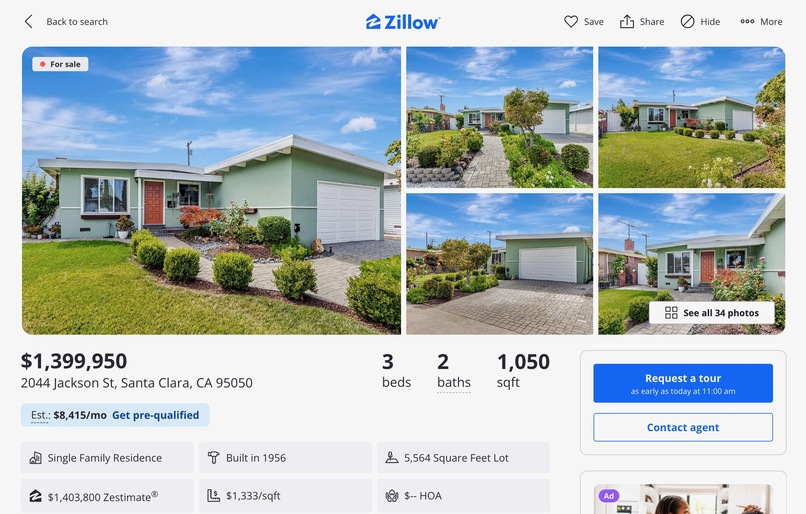
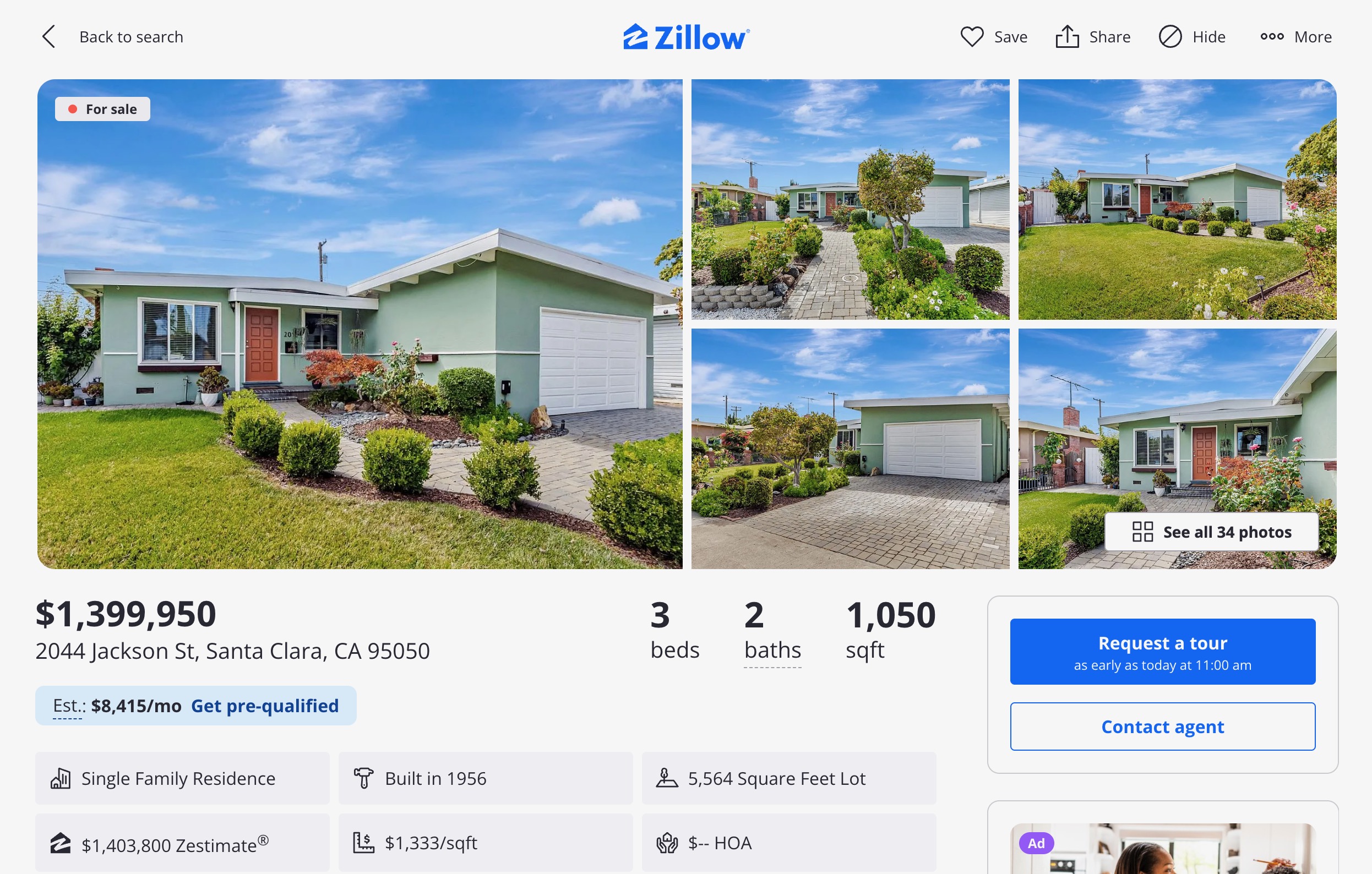
Regular Zillow Listing
-
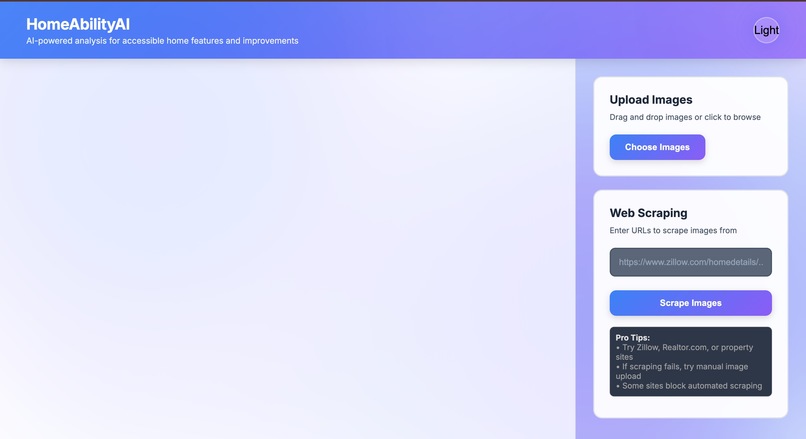
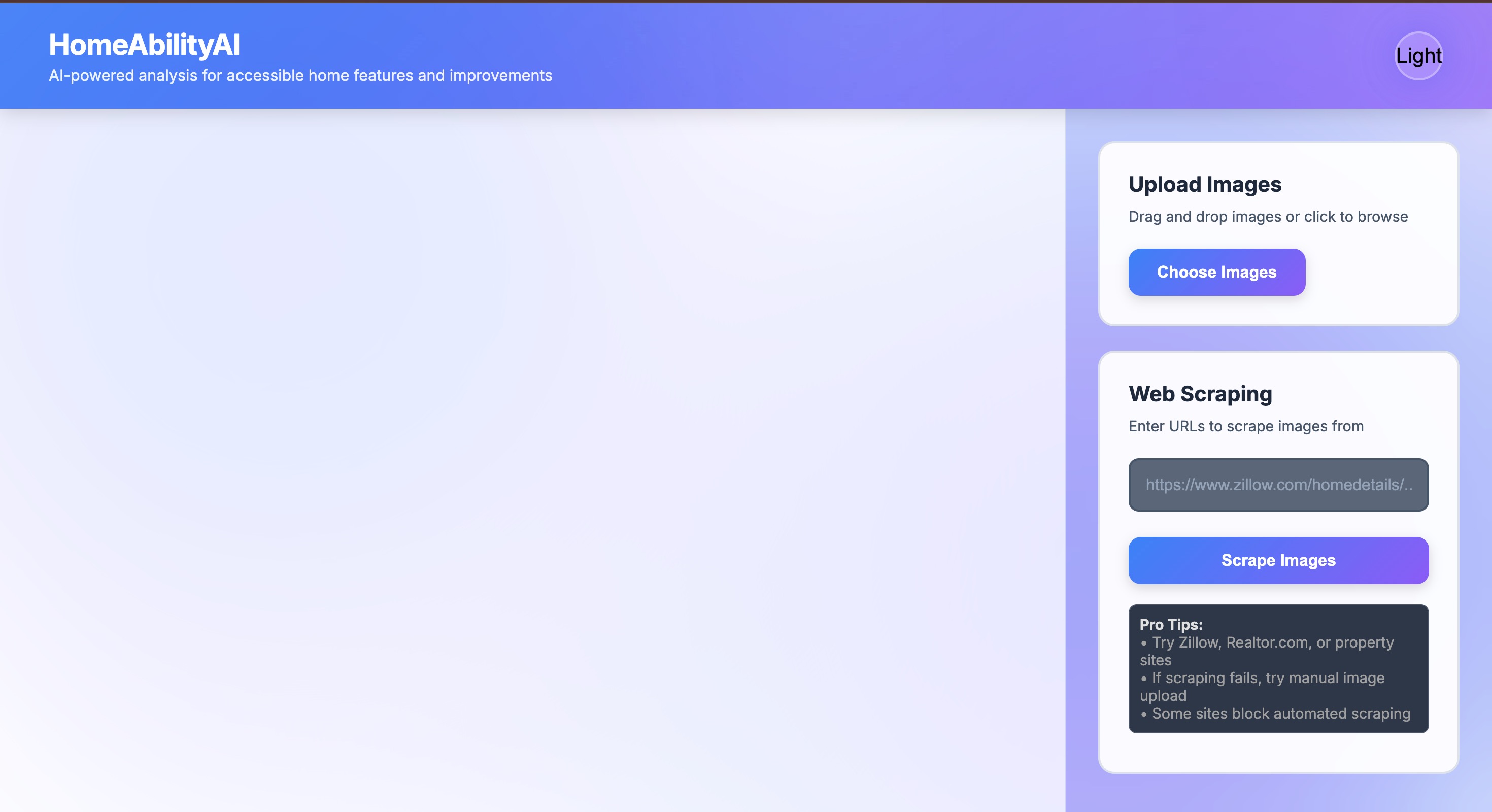
Base state of our website
-
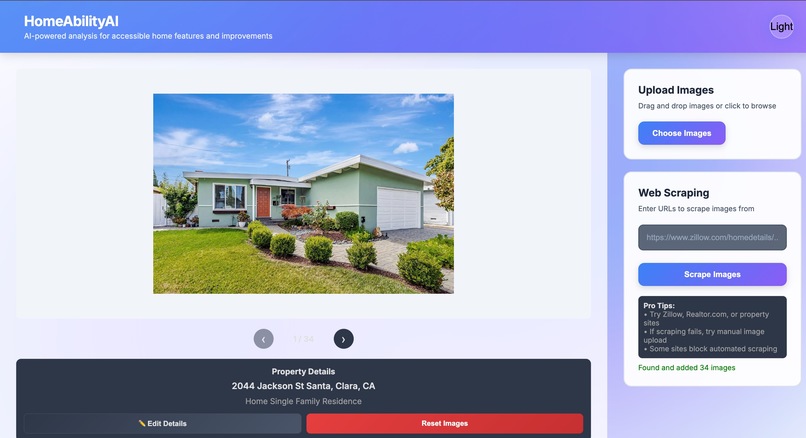
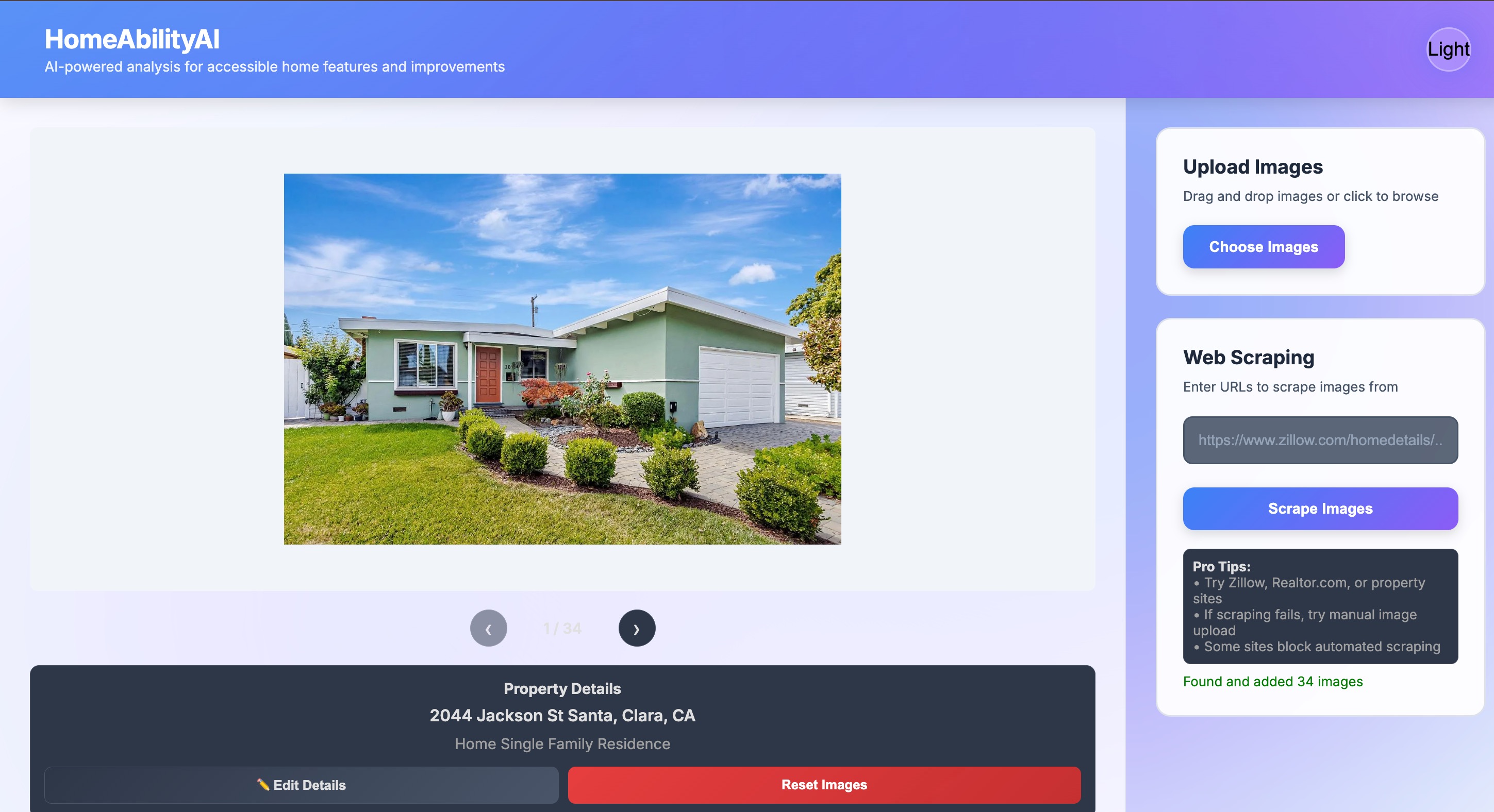
After Listing Input
-
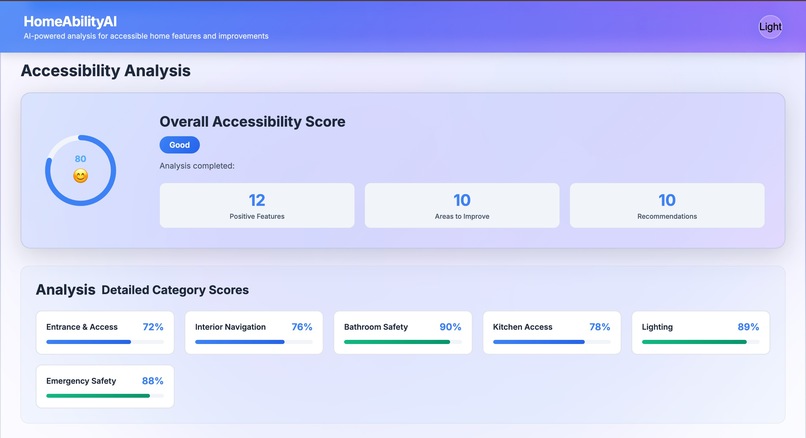
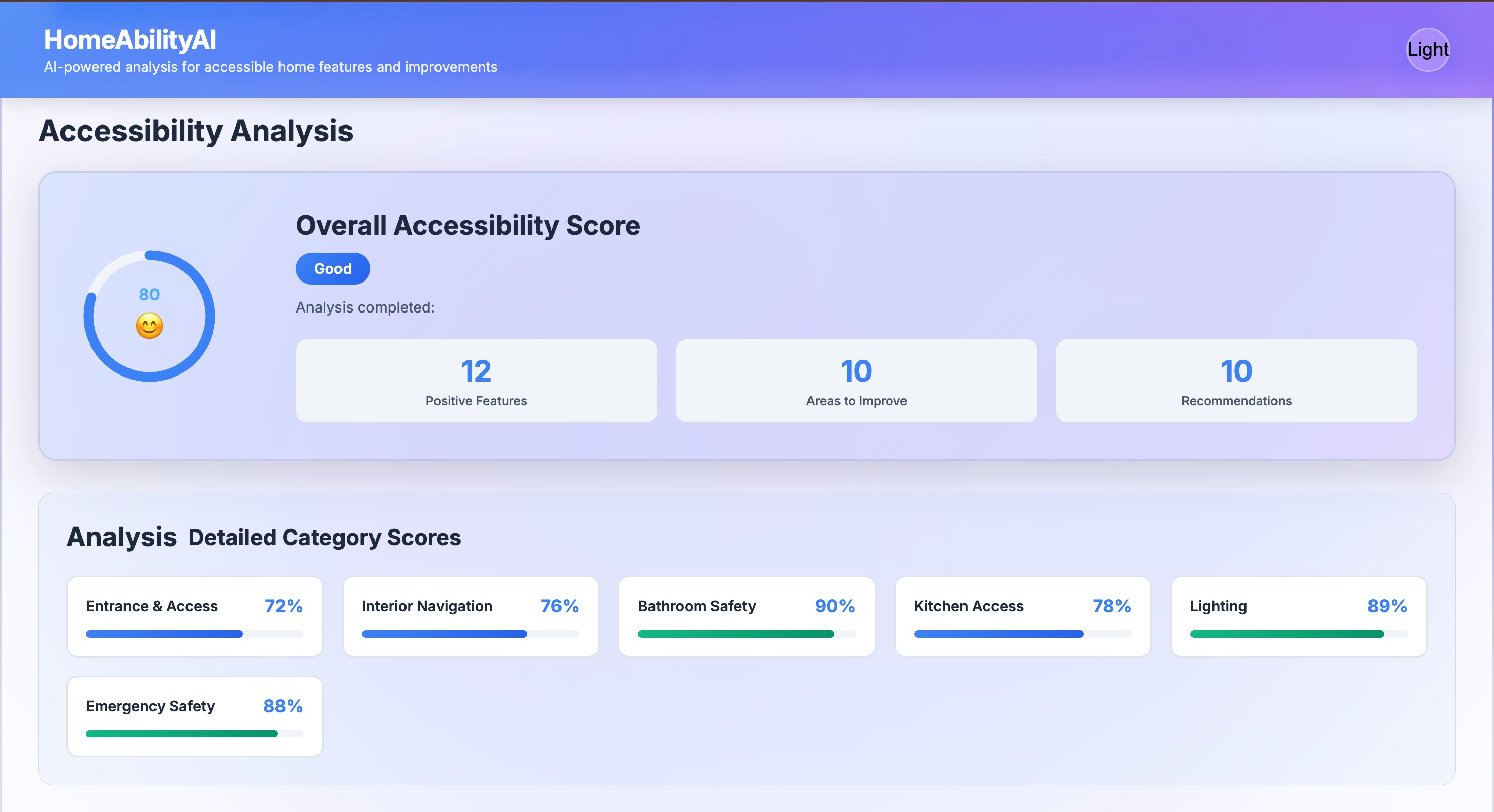
Accessibility scoring
-
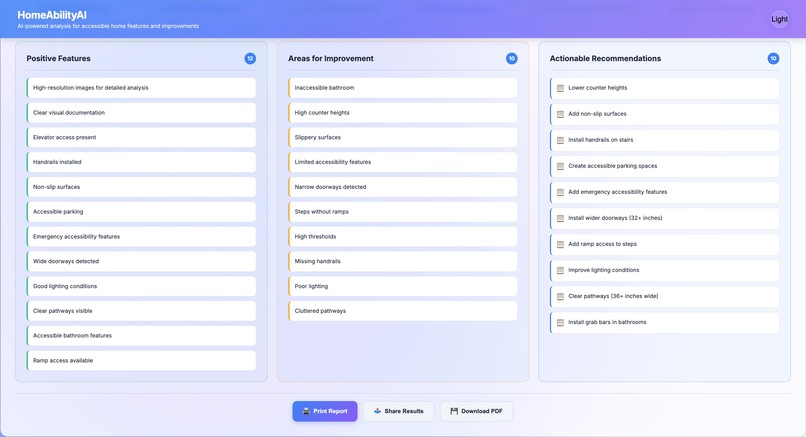
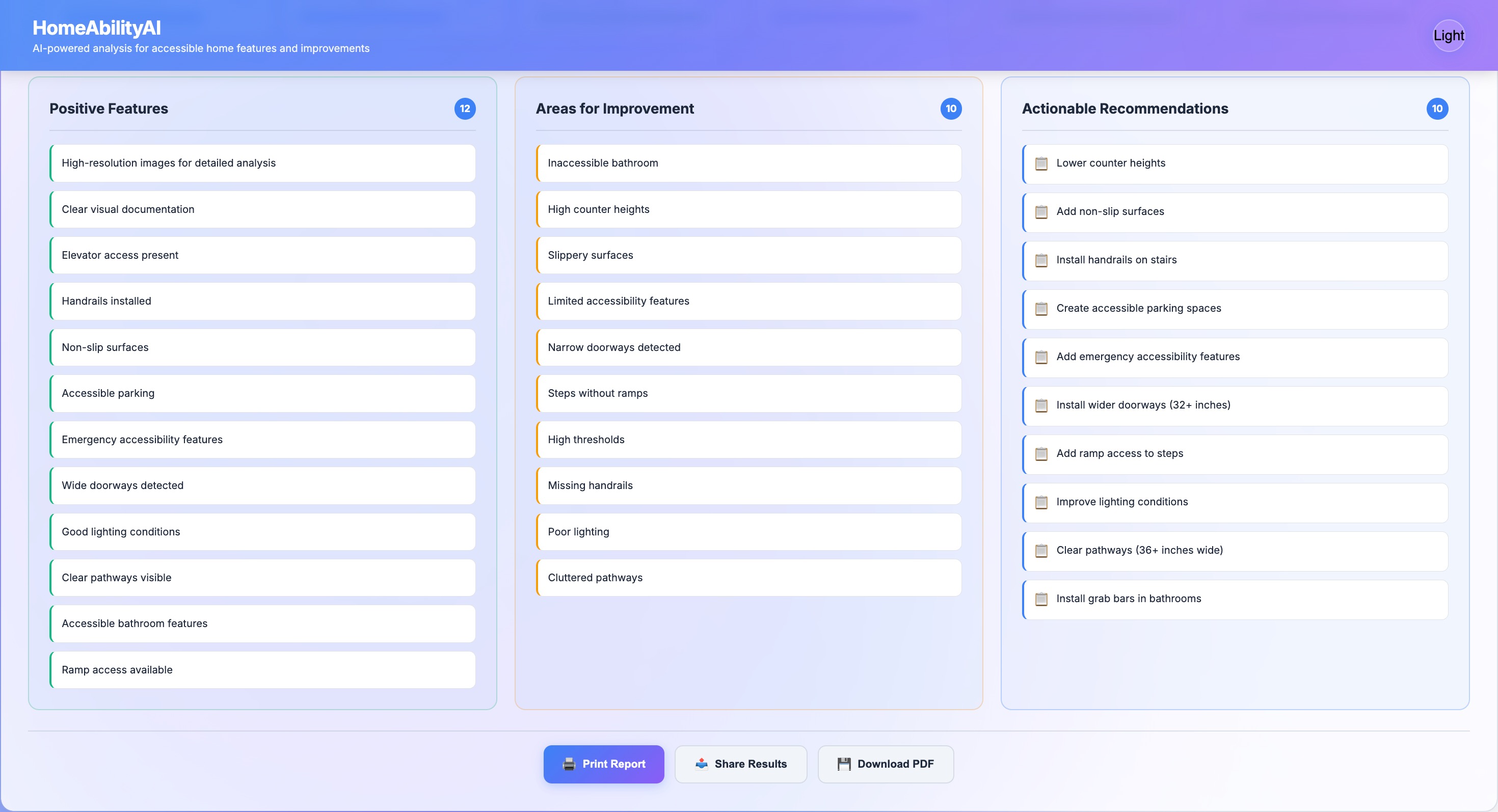
Detailed Criterion and Report
Inspiration
The process of buying a home is already overwhelming, but for people with mobility challenges, it could be much more difficult in knowing whether a home is truly livable. Listing photos may show picture perfect interiors, though they can hide the critical details: such as narrow stairs, inconvenient doorways, high countertops and inaccessible bathrooms. We were inspired by the idea that accessibility shouldn't be nearly invisible as it currently is on real estate platforms. Everyone deserves to know and have a firsthand glance at whether a house can support their lifestyle without all of the contacting hassle. That's why we built HomeAbility.AI, bringing transparency, inclusion, and data-driven clarity to the housing market through object and spacial recognition.
What it does
HomeAbility.AI analyzes real-estate photos automatically through a link of the listing or user upload of photos to automatically detect accessibility features and potential barriers, such as specific details in stairs, doors, ramps, and bathrooms. The platform generates an Accessibility Score based on many features of the home, helping users make more informed decisions to best curate for their needs. For real estate companies, it offers a scalable solution in including accessibility data on their listings, building more transparency and trust with all of their buyers.
How we built it
We developed HomeAbility.Al backend by creating a web scraper that takes in all images from a URL (such as Zillow), then the images are uploaded to AWS S3, then we used AWS Rekognition, where it allowed us to parcel certain objects, where those objects goes to a LLM (OpenRouter.AI) where we used Gemini to allow us to score the house on certain factors, as the AI would take in the images then using logic to make a prediction and outputs. For the frontend we mainly used React, html and CSS to create a clean and responsive interface for users.
Challenges we ran into
The biggest challenge we faced was managing API keys and navigating through AWS services. Because our team had little to no prior experience with using AWS services directly in a project, identifying which specific tools and APIs would best fit our project criteria took much time and back-and-forth experimentation. Learning how to properly configure credentials, permissions, and integrations across numerous AWS services was a challenging and steep learning experience we value.
Accomplishments that we're proud of
We're proud to have been able to built HomeAbility.AI, a project that brings awareness to people with disabilities and promotes accessibility awareness in real estate and housing as a whole. Our team successfully integrated multiple AWS services as well as AI tools to create a fully functional, and scalable prototype, all within the 24 hour time frame. Most importantly, we are proud of the impact of our project. Every part of HomeAbility AI was focused on the goal of helping real people and bringing light to a flaw in the real estate business -- not just showcasing technology, but also finding a way to help the real world.
What we learned
Through the building of HomeAbility.AI we learned the importance of accessibility on a deeper level -- from the flaws in the real estate business to its impact in technology. Working with AWS services for the first time as an entire group taught us the impact of cloud tools and how when used thoughtfully and innovatively, can create a powerful project. We gained hands on experience on integrating multiple AI models and API while balancing many factors such as user experience and scalability in a unique program.
What's next for HomeAbility.AI
We plan to expand HomeAbility.AI beyond just this prototype by integrating it directly onto real estate platforms, such as Zillow and Redfin, allowing instant accessibility analysis and insights to appear on the home listings as they are visited. We also aim to integrate a browser extension version of HomeAbility.AI, giving homebuyers the ability to analyze accessibility anytime throughout their everyday browsing. In the long run, we anticipate on making accessibility awareness a built in piece of the everyday home-searching process, helping every buyer, seller, and real estate agent make more informed and inclusive decisions.
Built With
- amazon-bedrock
- amazon-dynamodb
- amazon-rekognition
- amazon-web-services
- api-gateway
- aws-lambda
- html
- javascript
- python


Log in or sign up for Devpost to join the conversation.