



About the Project: Home Vision AI
Inspiration
As a UX/XR designer, I recognized the common frustrations homeowners and renters face when designing their interiors. From visualizing how furniture and decor would look in their spaces to overcoming the overwhelming choices of styles and layouts, the process often leads to indecision and stress. Home Vision AI was born out of the desire to bridge these gaps using cutting-edge technology, creating a solution that empowers users to make confident, informed design decisions.
What It Does
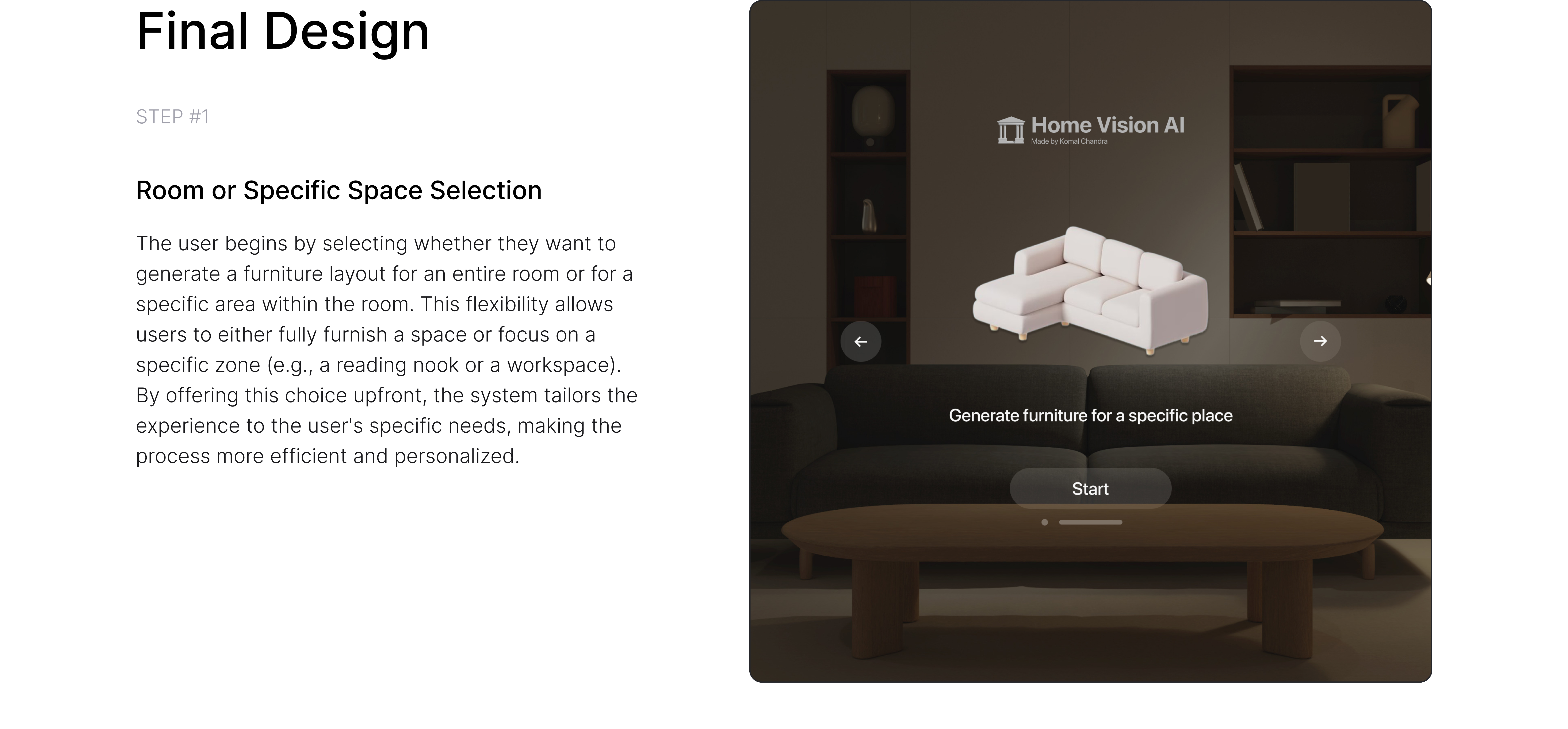
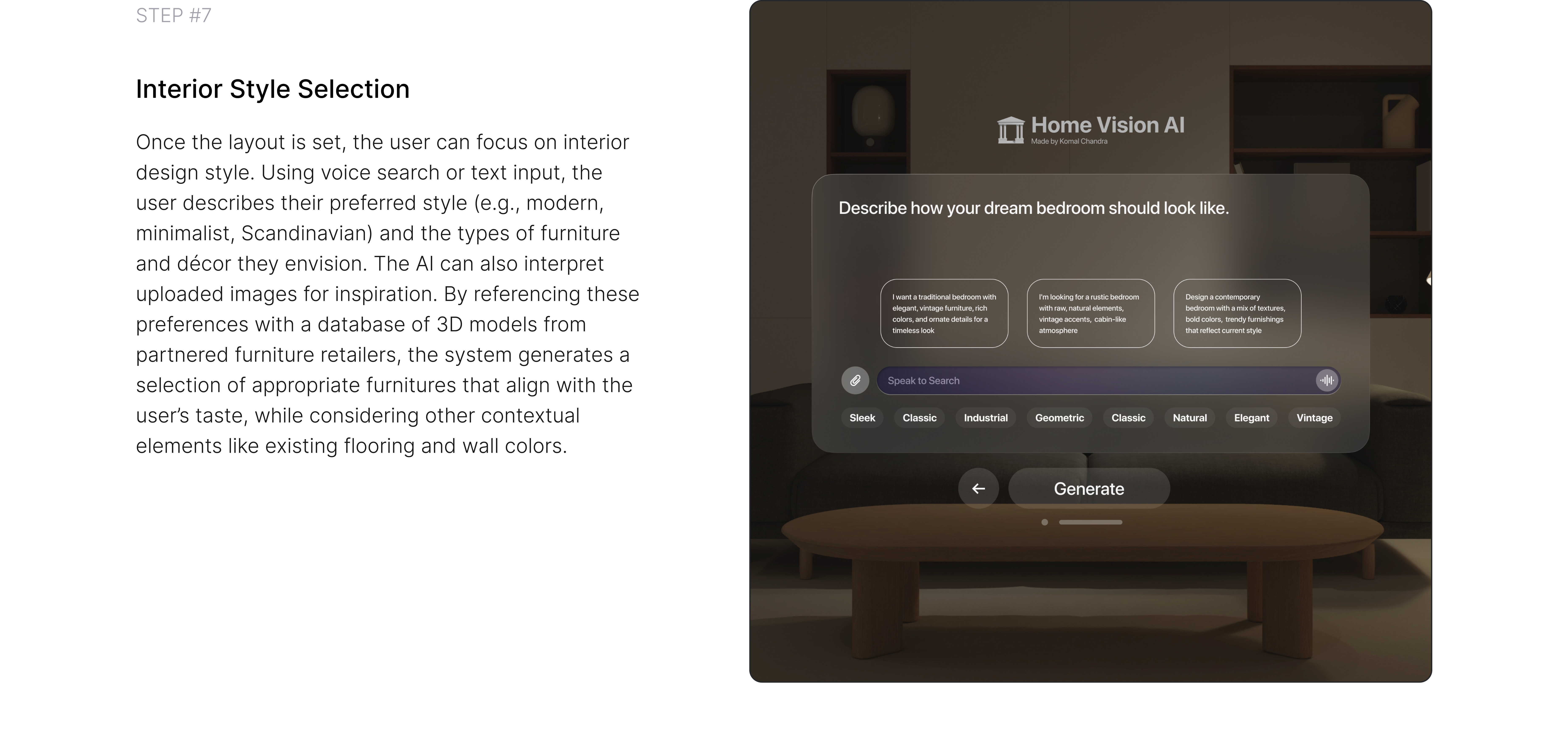
Home Vision AI is a mixed reality application powered by multimodal generative AI that revolutionizes the interior design process by:
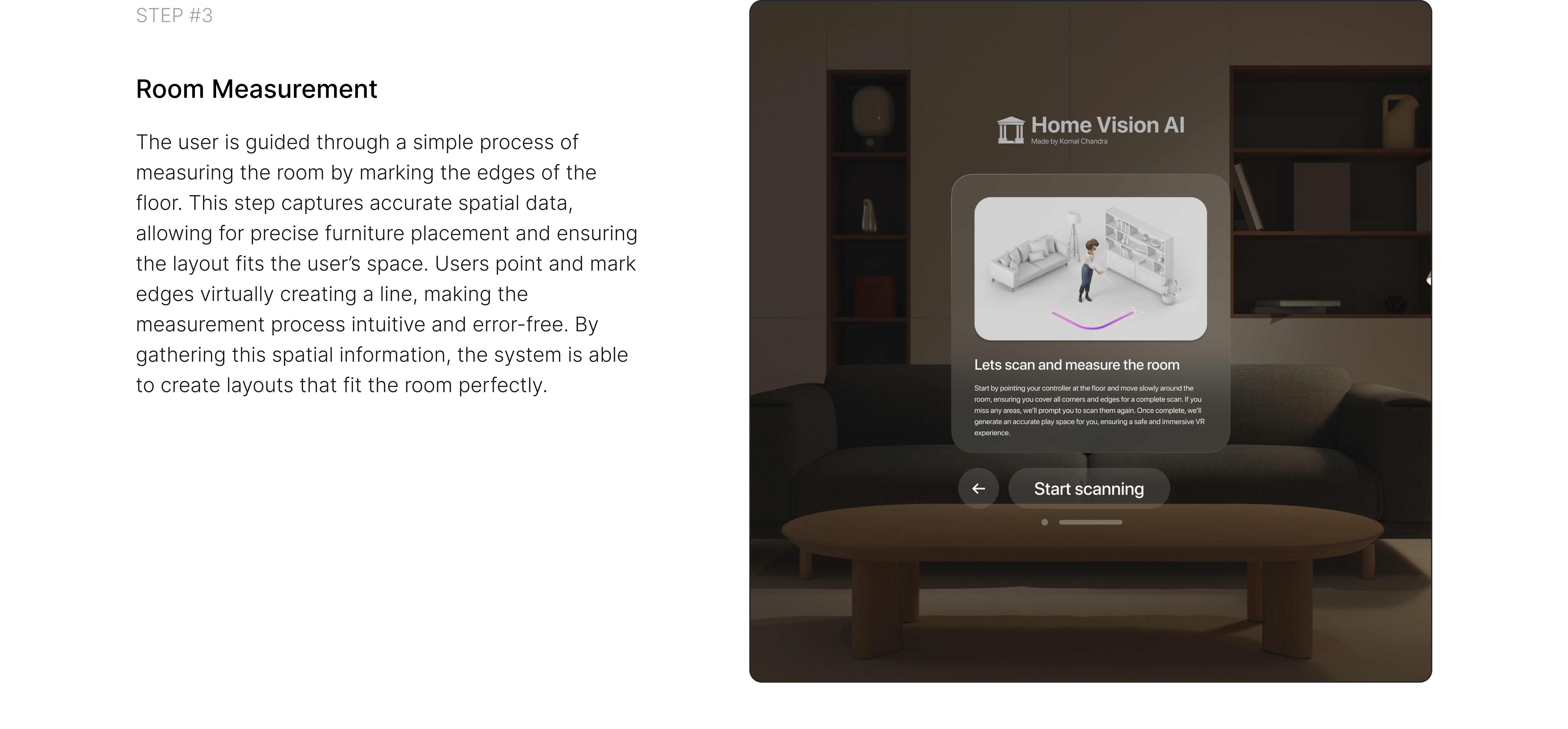
- Visualizing 3D models of furniture and decor in real-time, helping users see how pieces fit into their space.
- Enabling immersive interaction with virtual furniture through mixed reality technology, allowing users to experiment with styles, layouts, and colors.
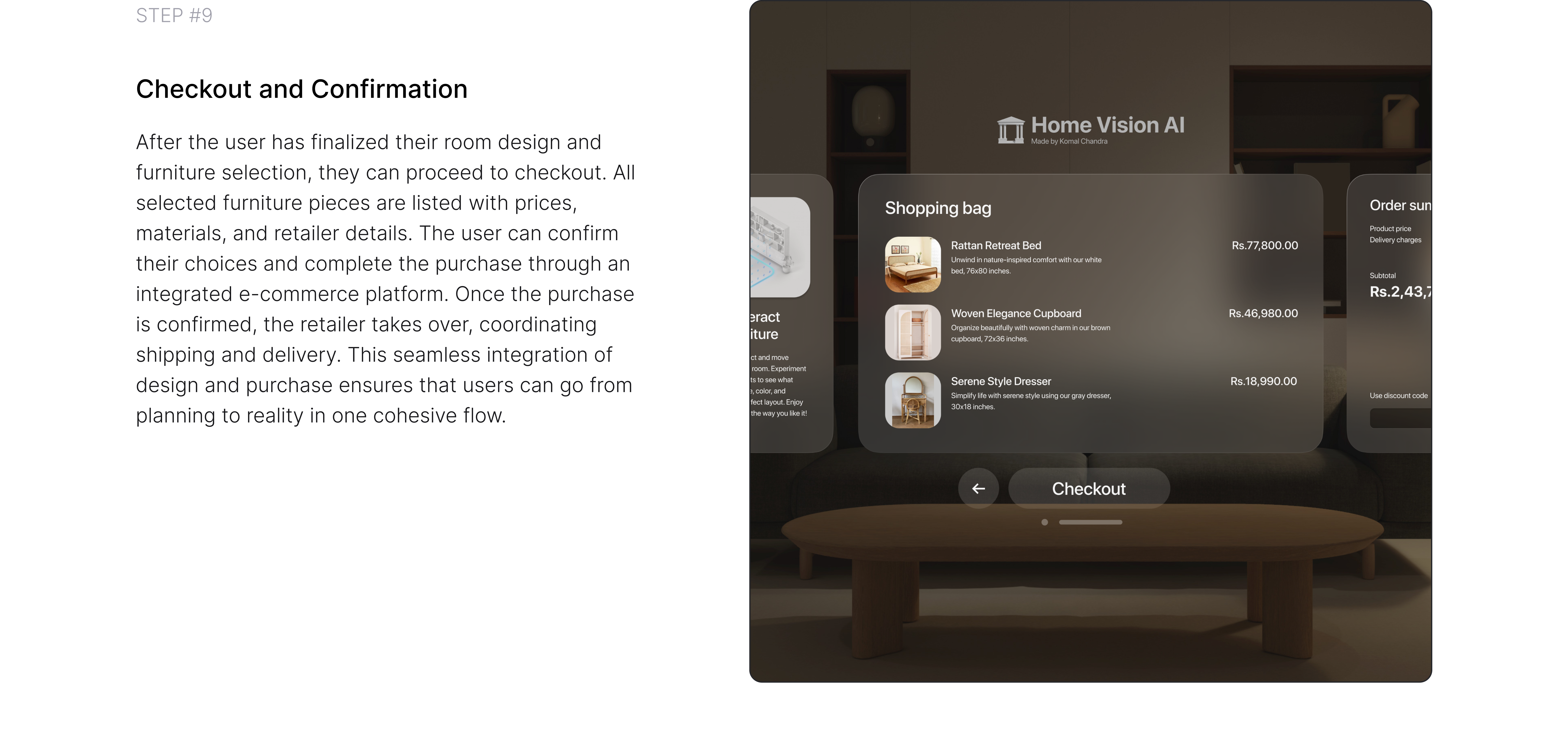
- Simplifying purchases with integrated shopping options, streamlining the journey from visualization to acquisition.
How I Built It
- Research: Conducted user research to understand challenges and opportunities in interior design visualization.
- Prototyping Tools:
- Designed user flows, wireframes, and high-fidelity prototypes using Figma.
- Utilized Shapes XR to create immersive 3D prototypes for testing interactions in mixed reality.
- Designed user flows, wireframes, and high-fidelity prototypes using Figma.
- Testing and Iteration: Refined the design based on user feedback to enhance usability and address pain points effectively.
Challenges We Ran Into
- Prototyping for XR: Adapting traditional UX methods to create effective spatial experiences using mixed reality tools.
- Balancing Realism and Simplicity: Ensuring 3D visualizations were lifelike while keeping the user interface intuitive and accessible.
Accomplishments That We're Proud Of
- Successfully prototyped a user-friendly mixed reality experience that allows users to interact with virtual furniture in real spaces.
- Addressed significant user pain points by creating a solution that reduces decision fatigue and boosts confidence in purchasing decisions.
- Leveraged cutting-edge tools like Shapes XR and Figma to create immersive and practical prototypes.
What I Learned
This project was an incredible learning experience, reinforcing:
- The importance of empathy in designing for user needs and pain points.
- Advanced skills in mixed reality prototyping using Shapes XR.
- Best practices for integrating generative AI into UX workflows to create meaningful and user-friendly solutions.
What's Next for Home Vision AI
The future of Home Vision AI involves:
- Expanding AI capabilities: Adding more advanced generative features for personalized design recommendations.
- Enhanced retailer integration: Partnering with furniture brands to provide users with diverse options and streamlined purchasing.
- User Testing and Refinement: Conducting further usability testing to improve the mixed reality experience and ensure seamless functionality.
Conclusion
Home Vision AI highlights the transformative power of design and technology in solving everyday challenges. It stands as a testament to the value of mixed reality and AI in enhancing user experiences and empowering individuals to create spaces they love.
Built With
- chatgpt
- figma
- meta
- quest
- shapesxr


Log in or sign up for Devpost to join the conversation.