-
-
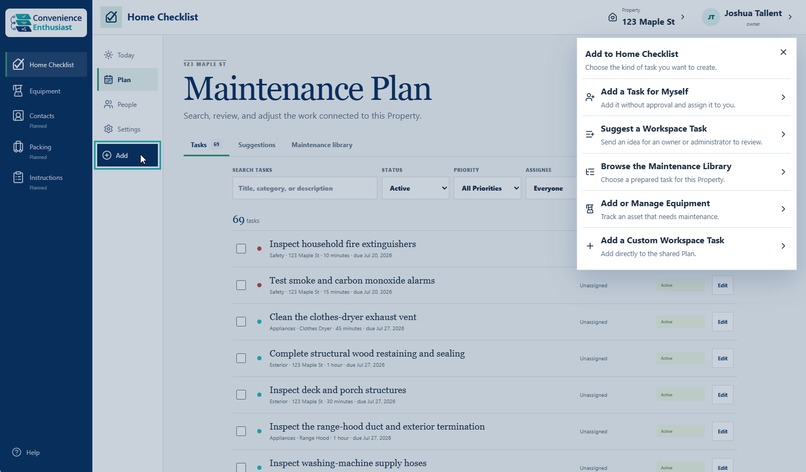
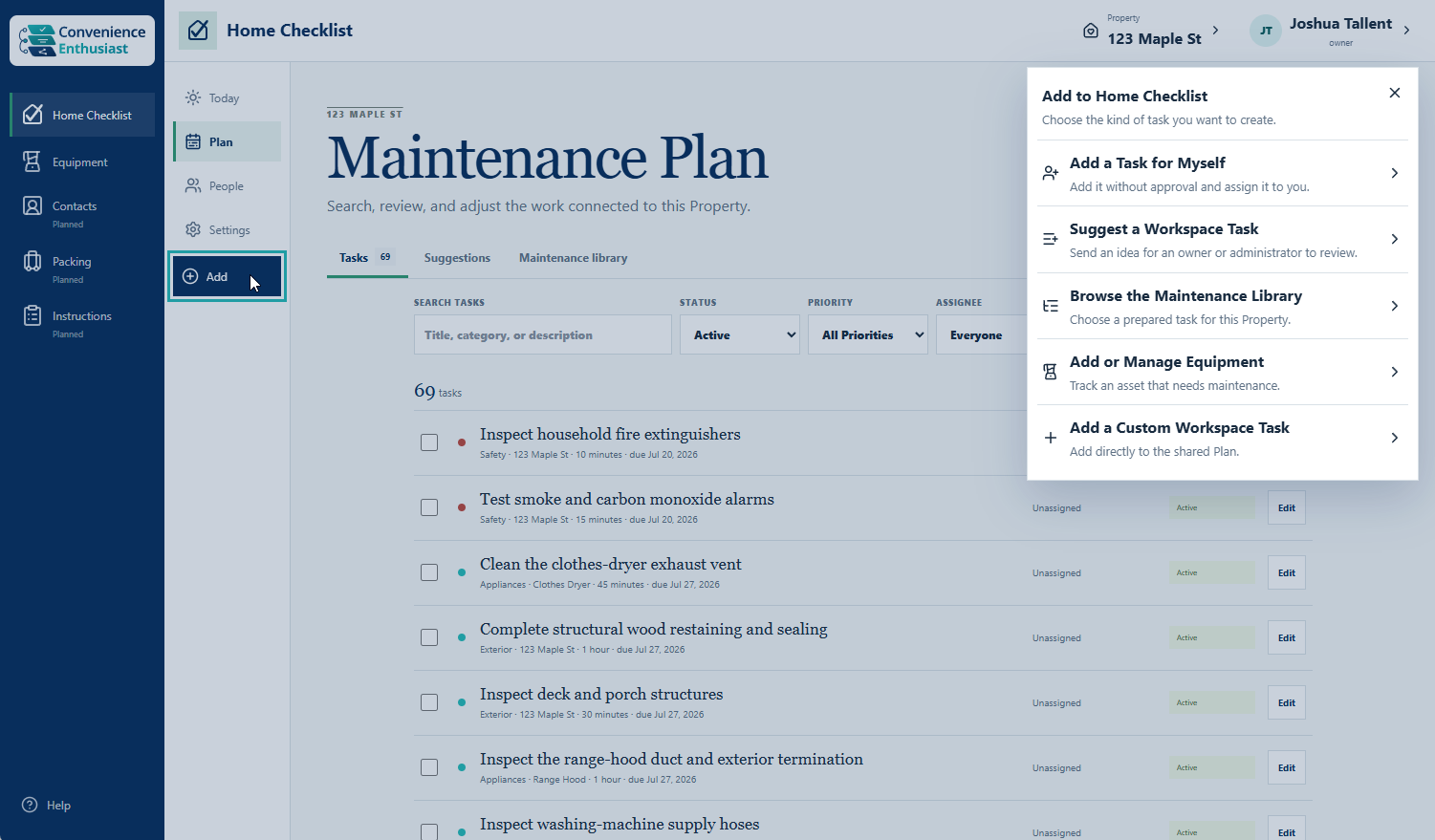
Add your own custom tasks, suggest new tasks for the Owner to approve, and more.
-
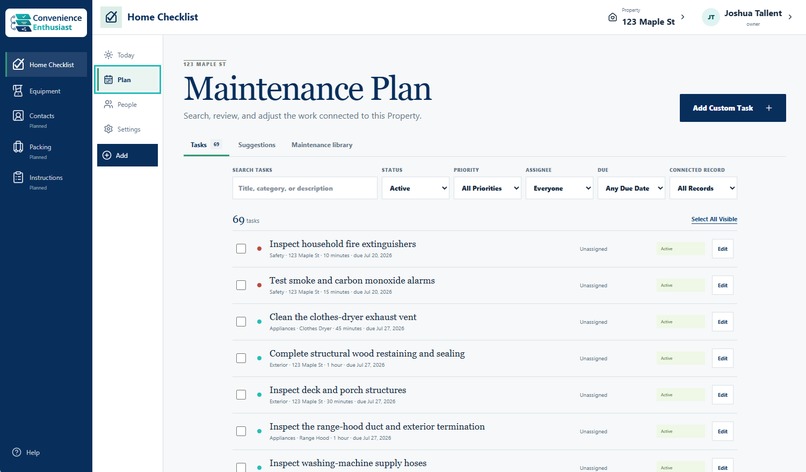
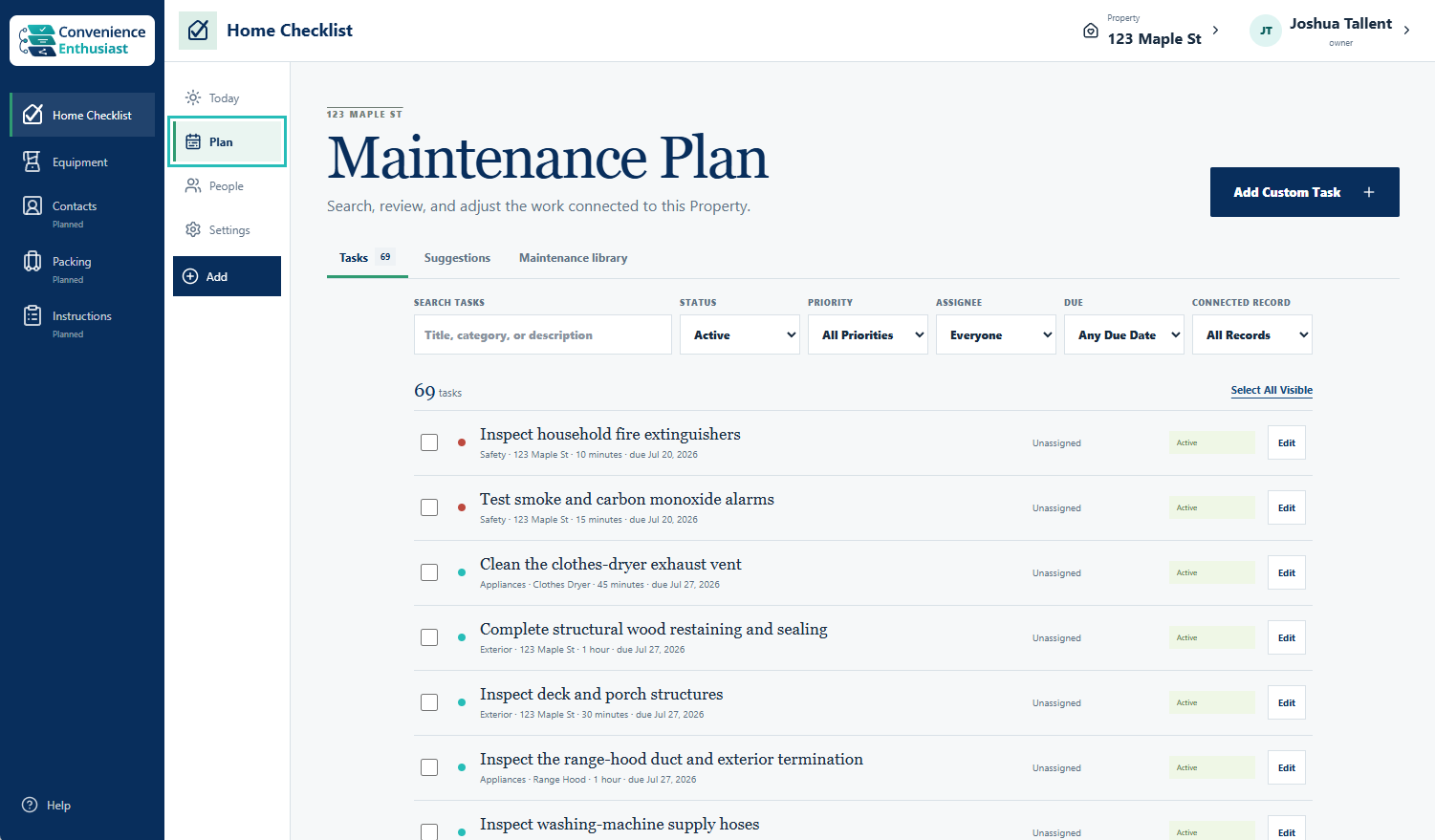
The complete task plan, searchable, sortable, etc.
-
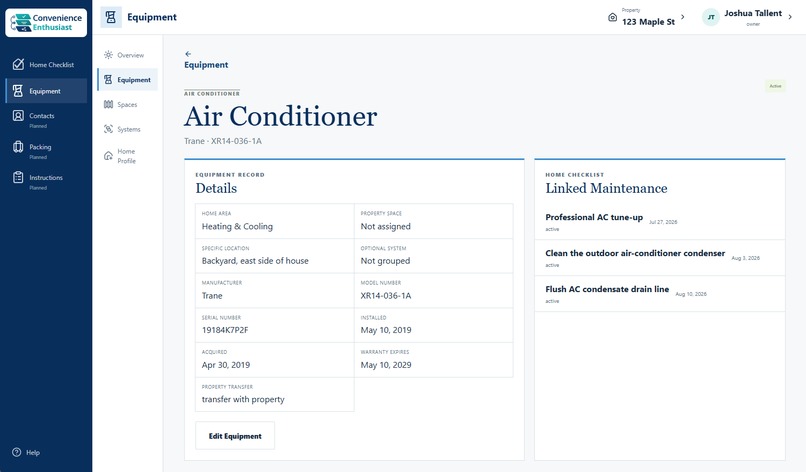
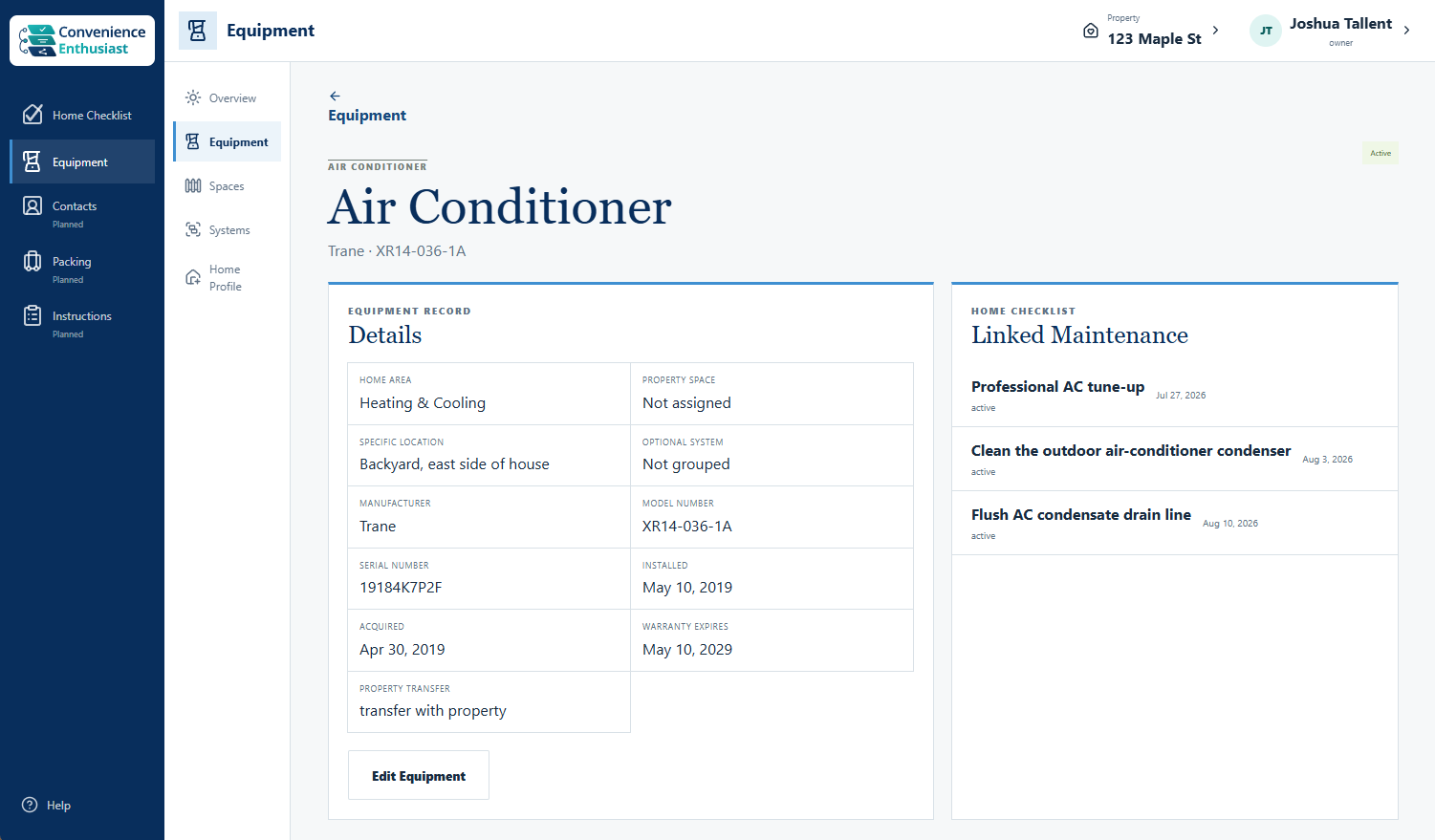
Details about each piece of equipment
-
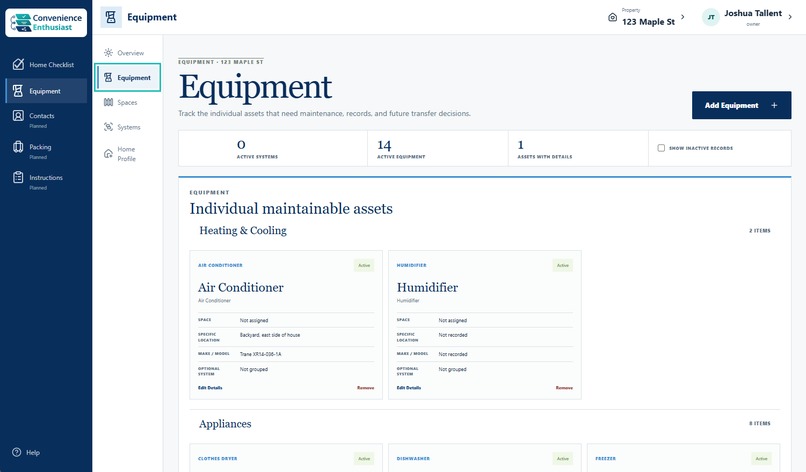
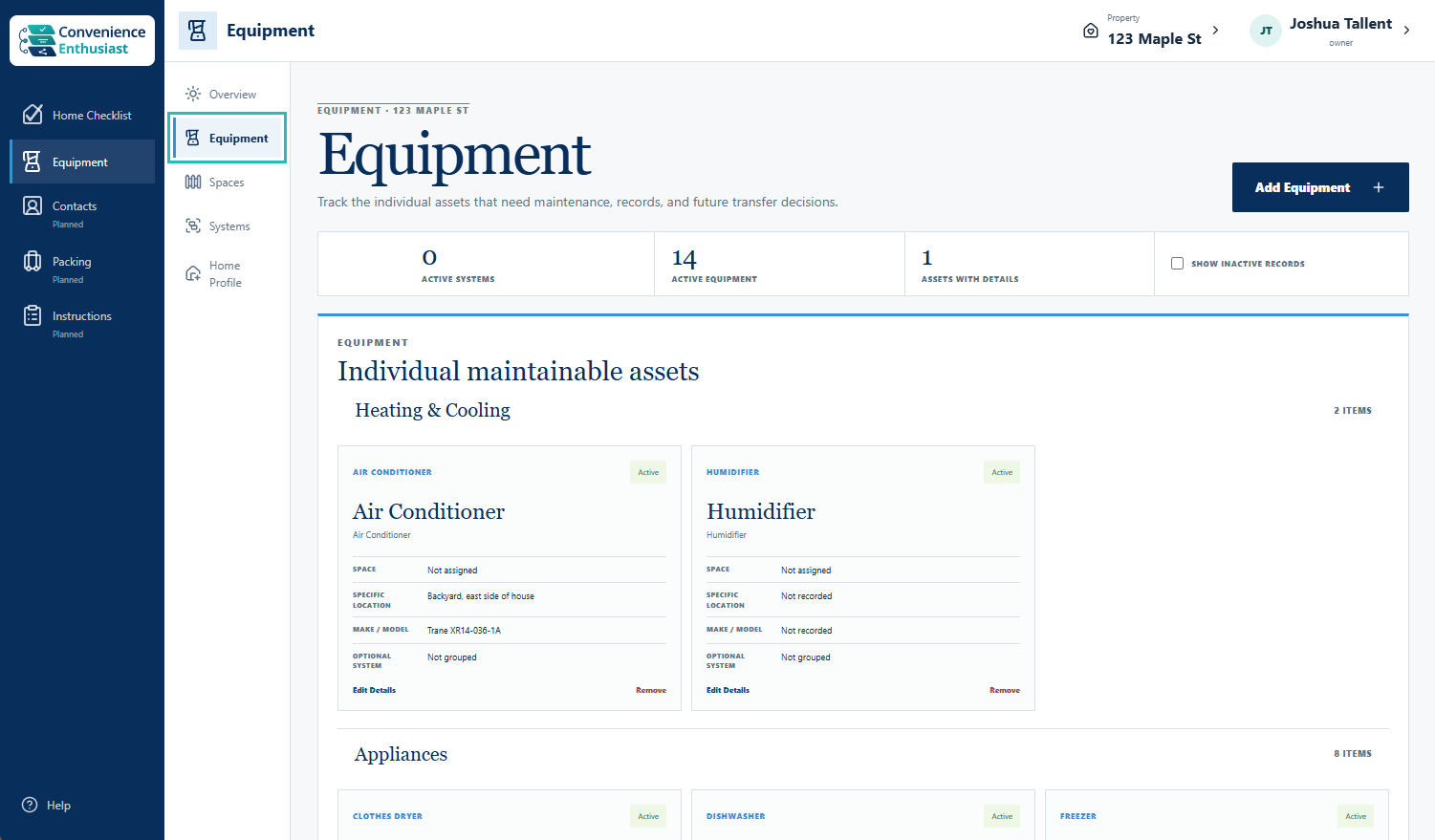
Your fully customizable Equipment list
-
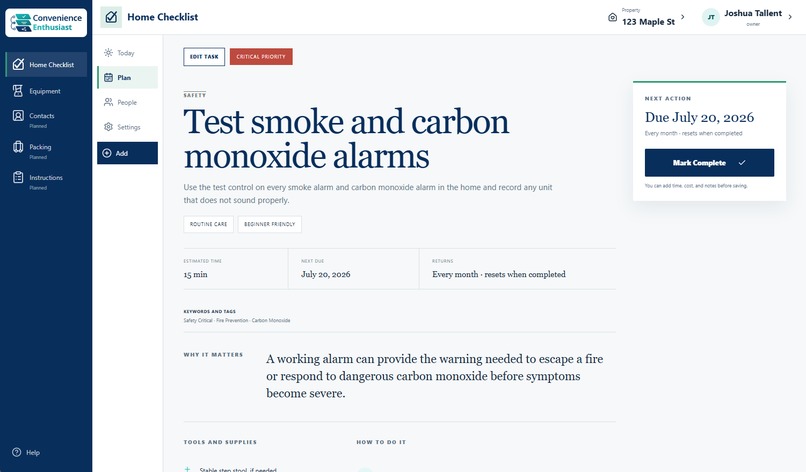
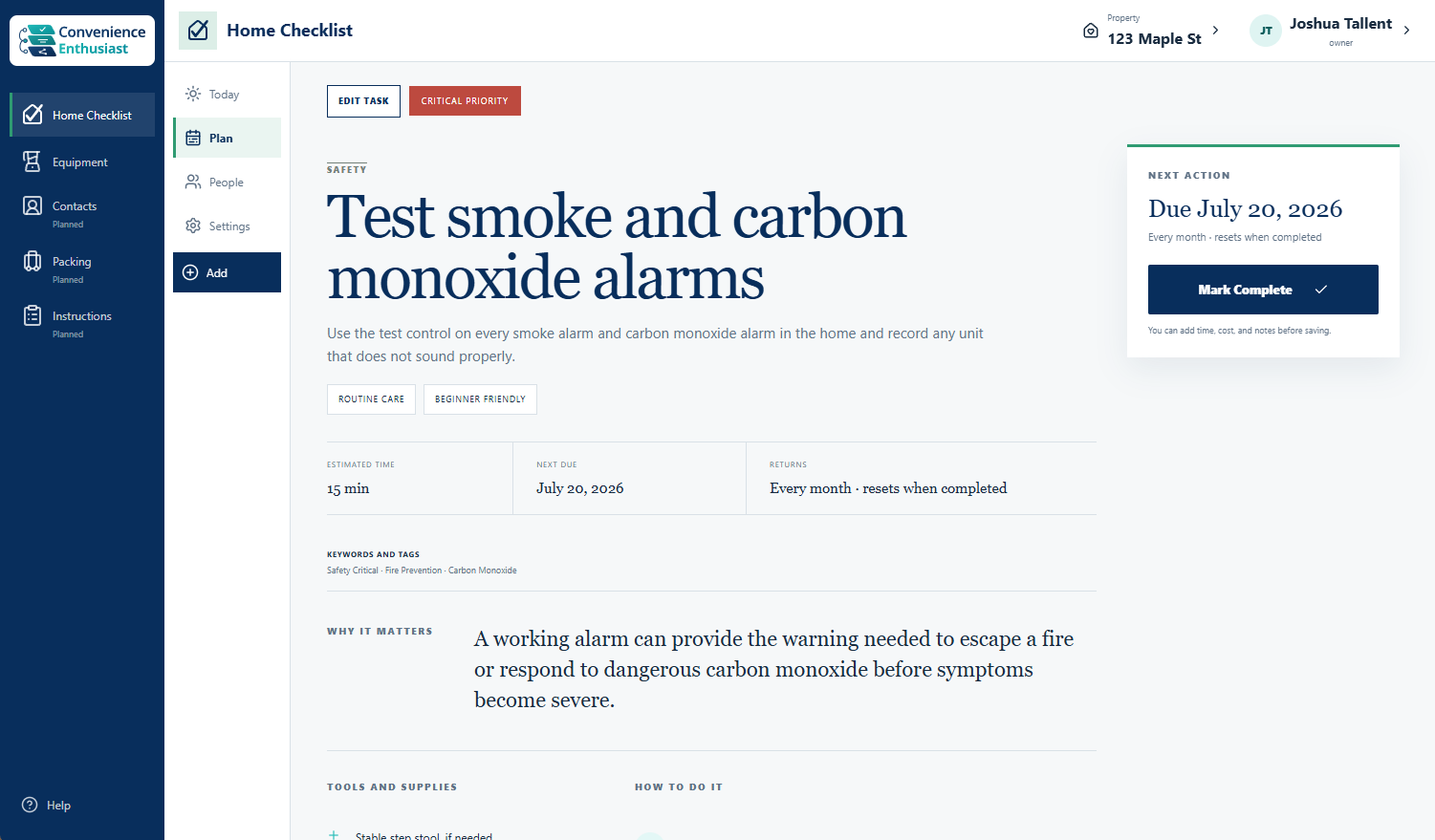
A single task view, showing all of the task's details, suggestions, completion steps, history, and more.
-
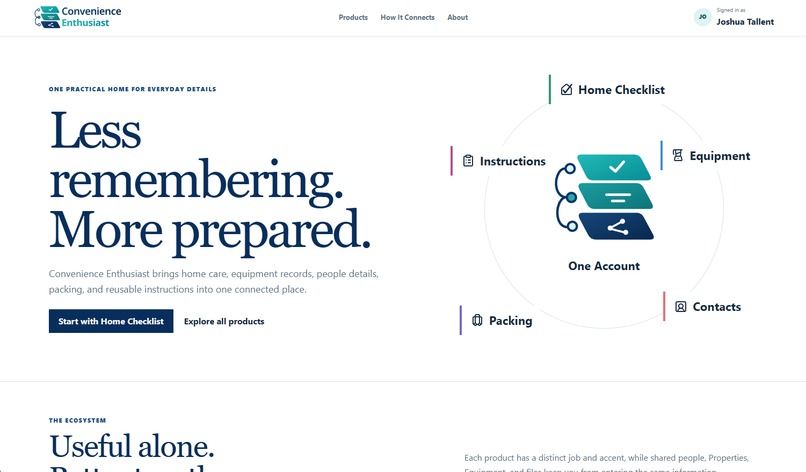
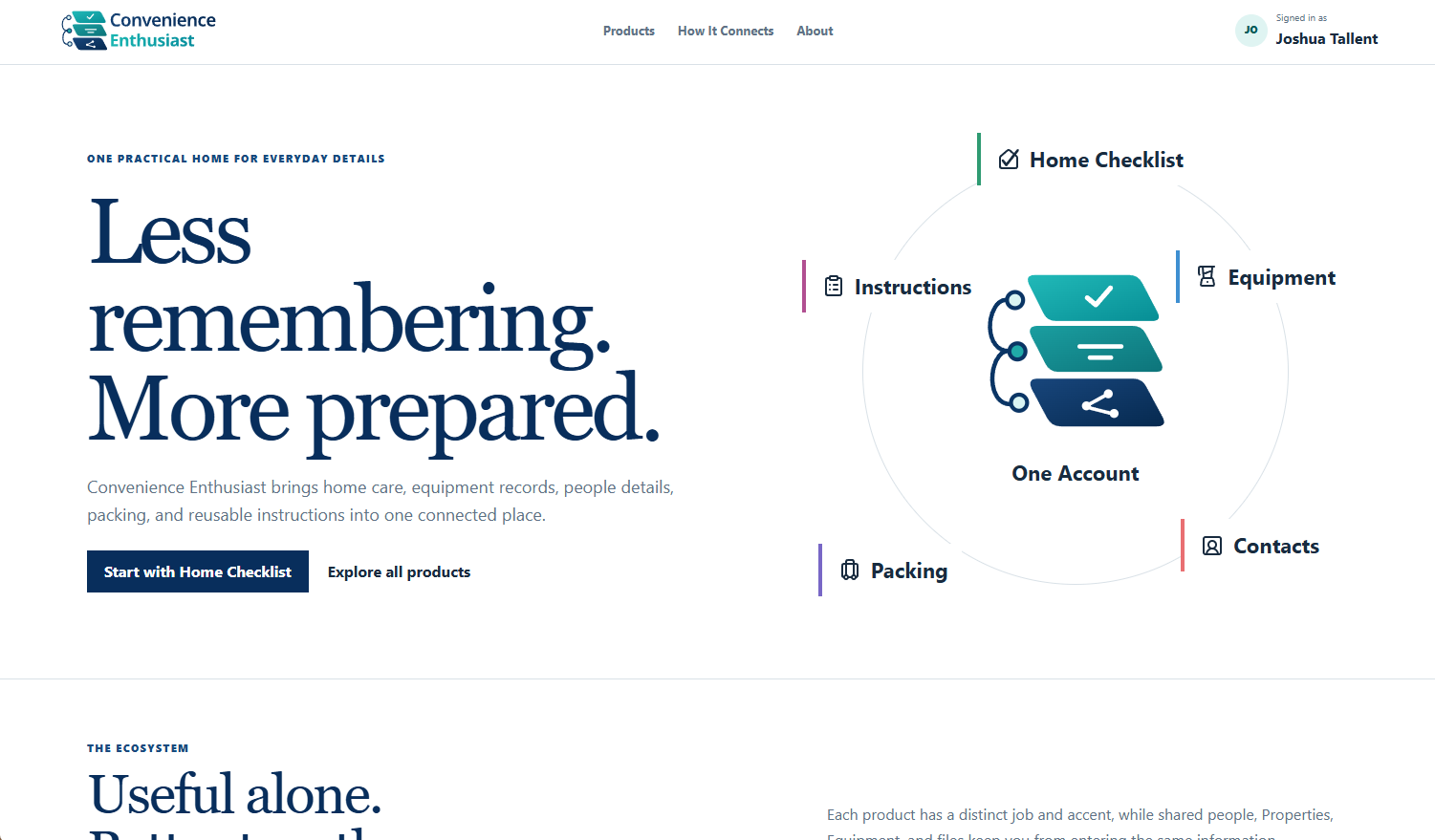
Convenience Enthusiast home page
-
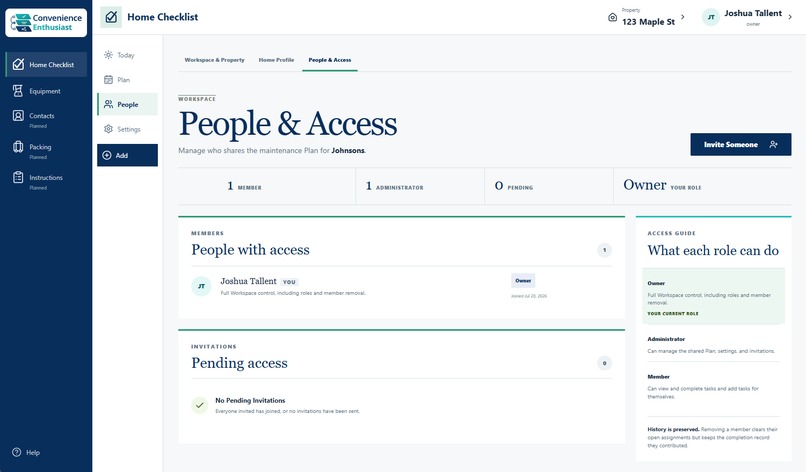
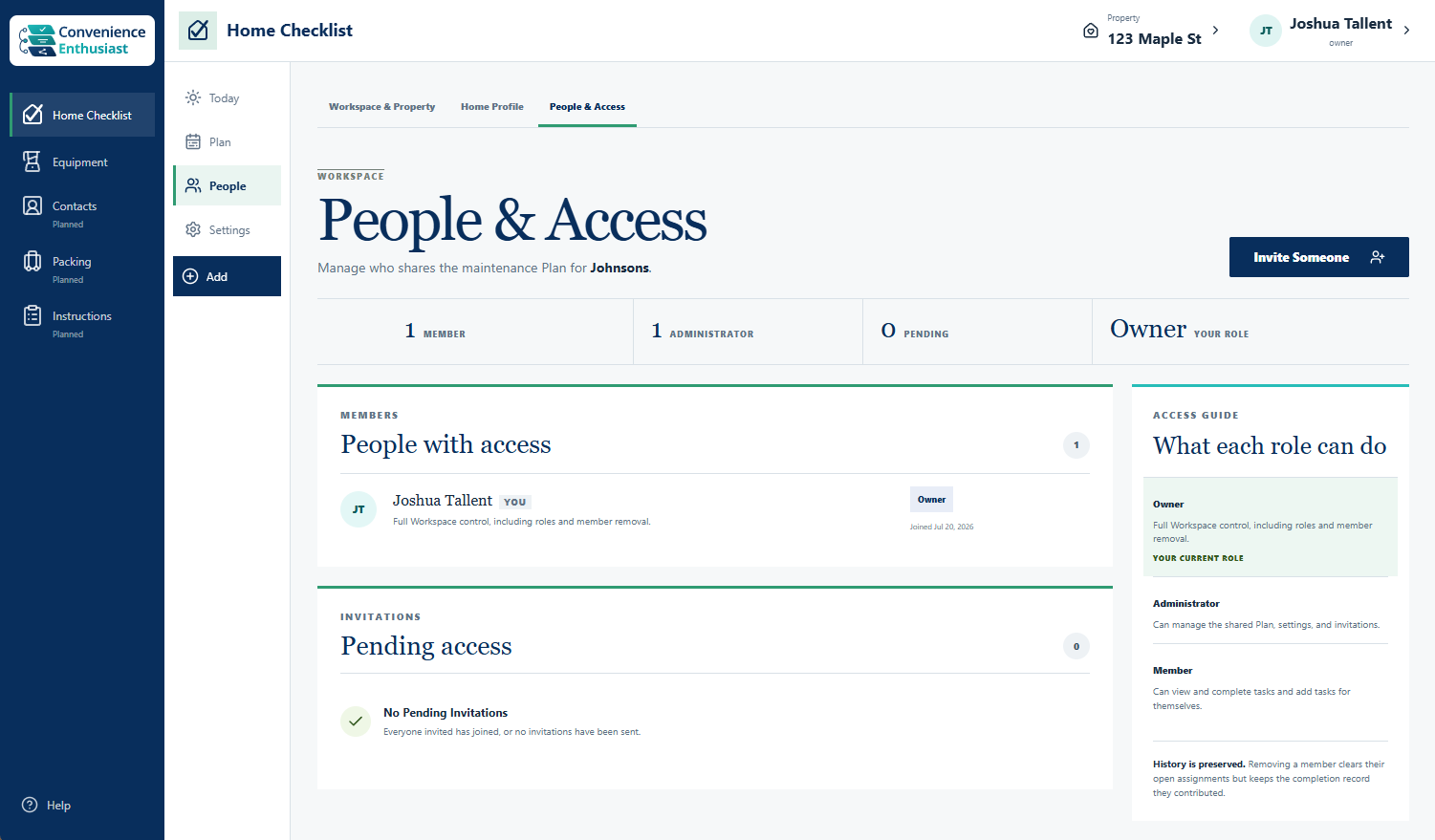
Invite family members or roommates to your workspace, share tasks, equipment, and more.
-
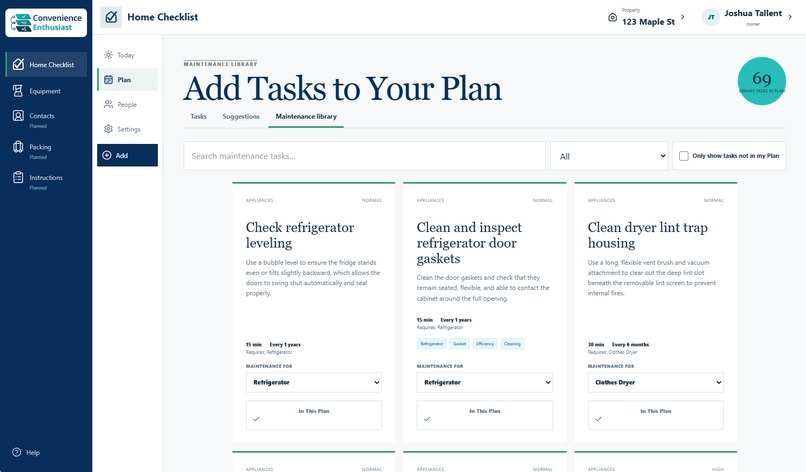
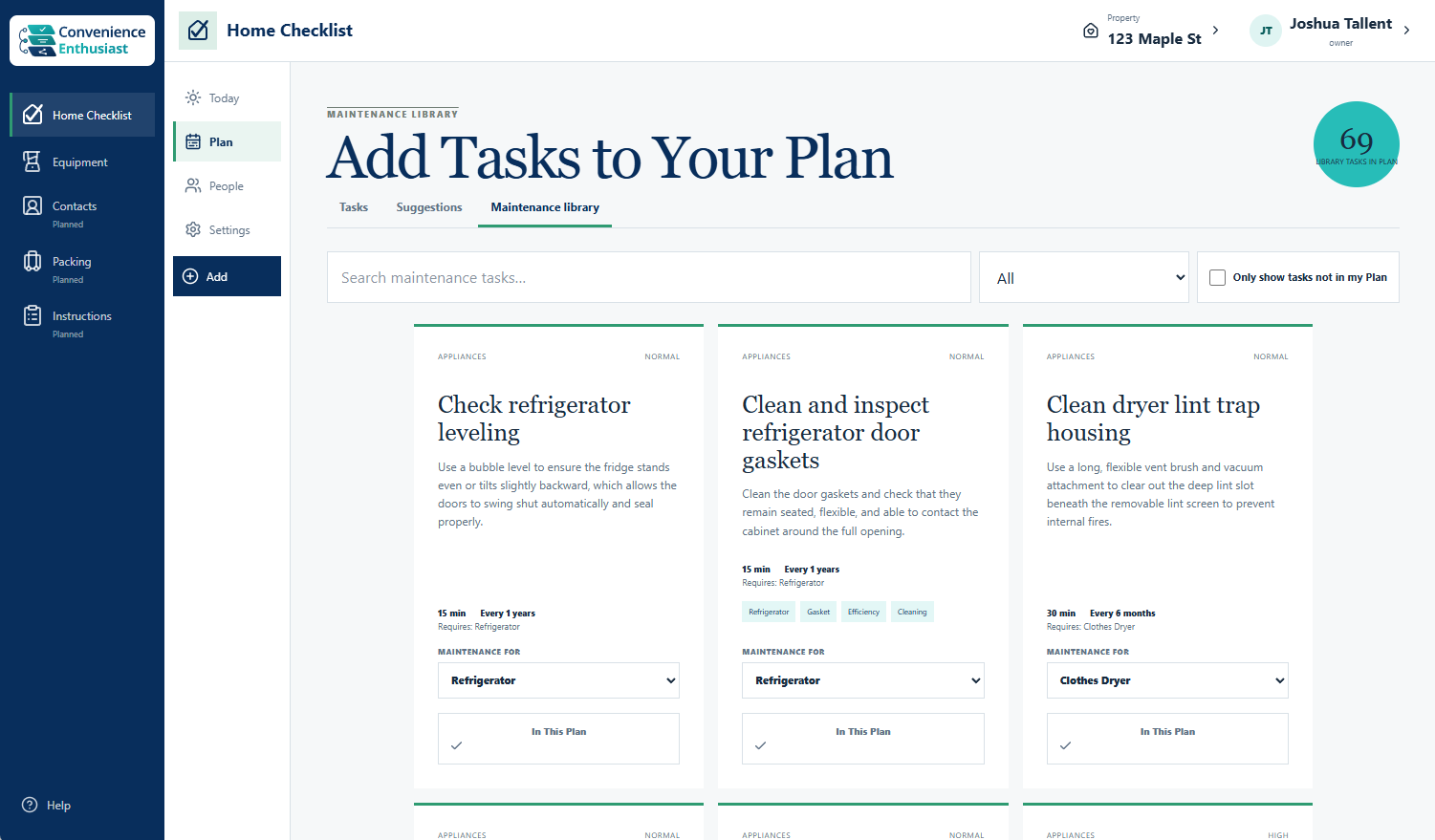
The master Maintenance Library, with hundreds of tasks that can be added.
-
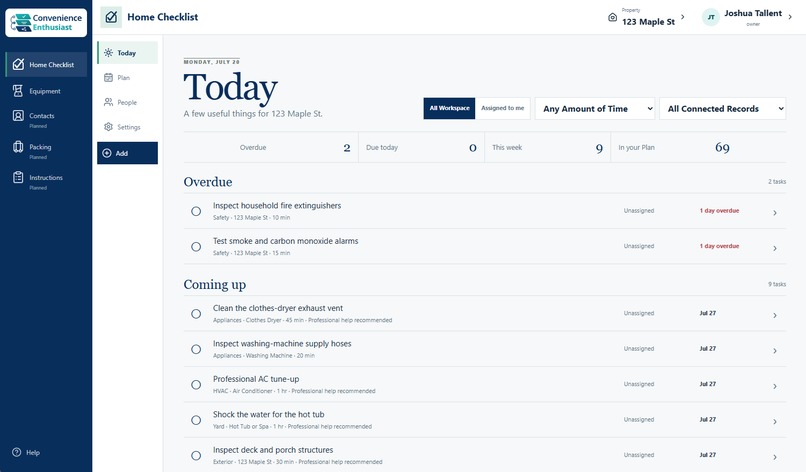
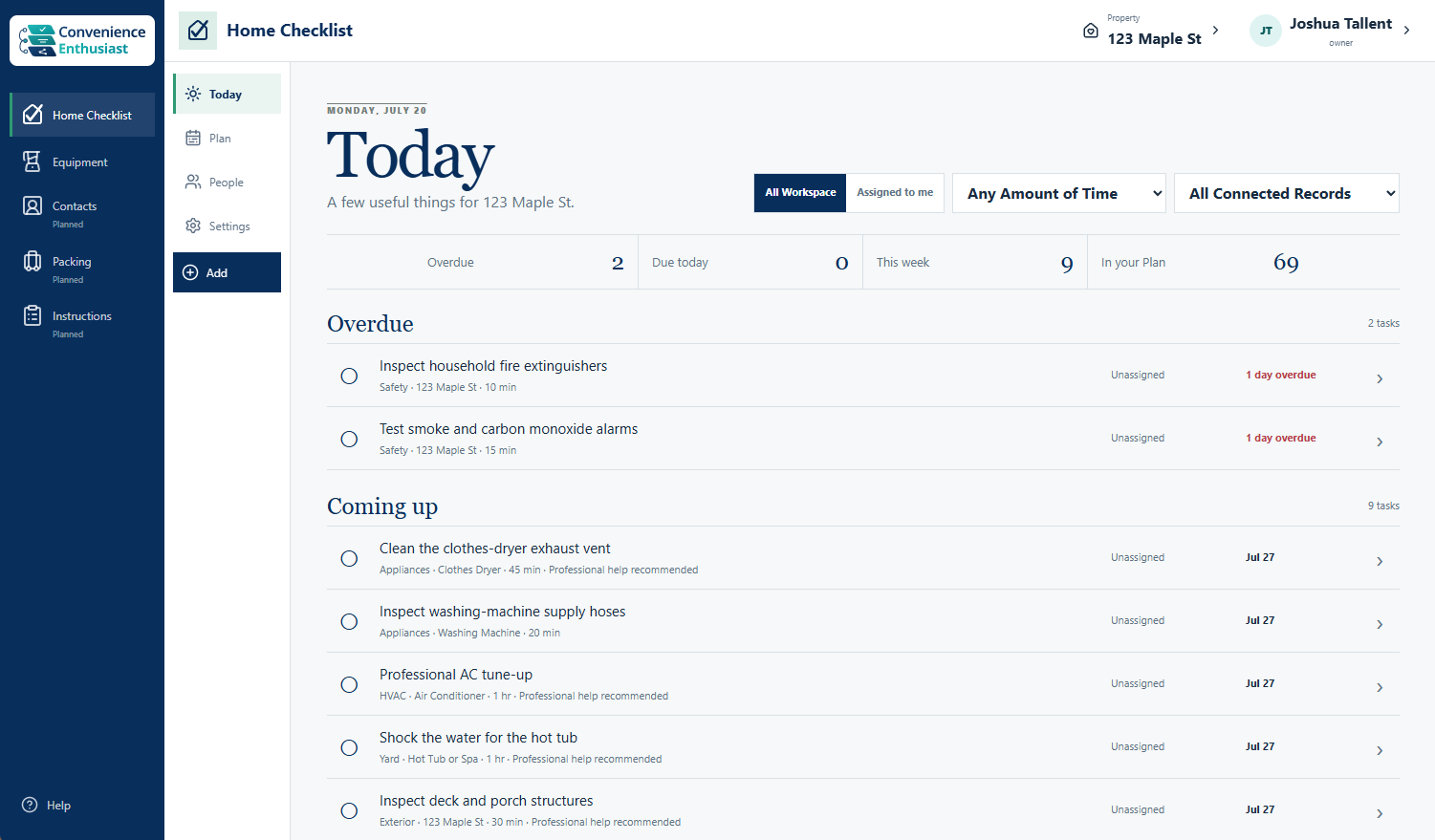
Main task checklist, with today's tasks at the top
-
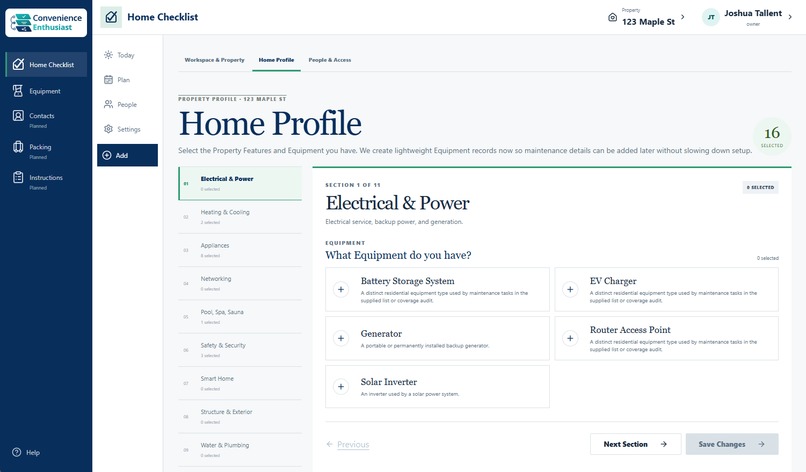
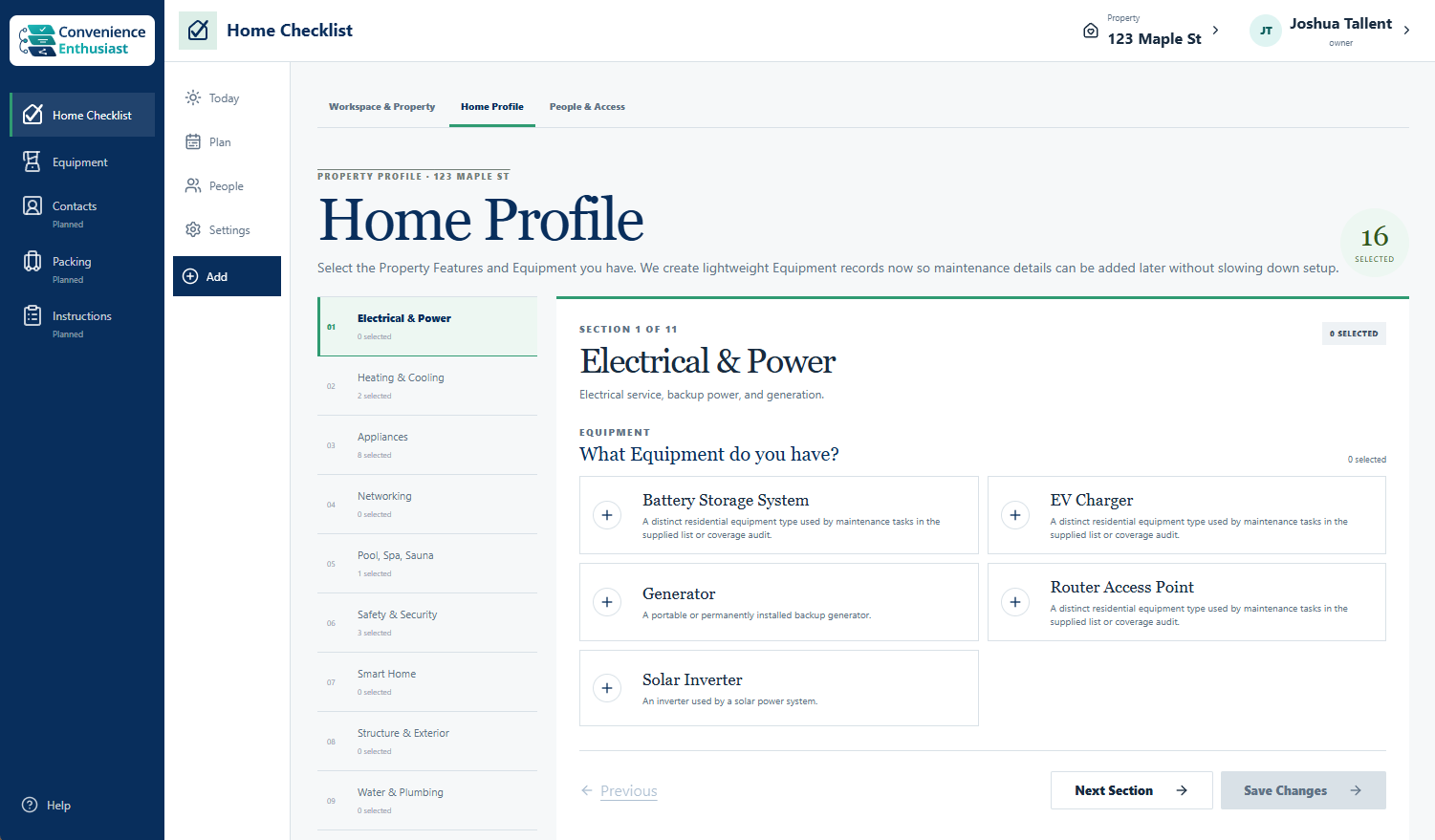
Your editable Home Profile. Add new features or Equipment at any time.
-
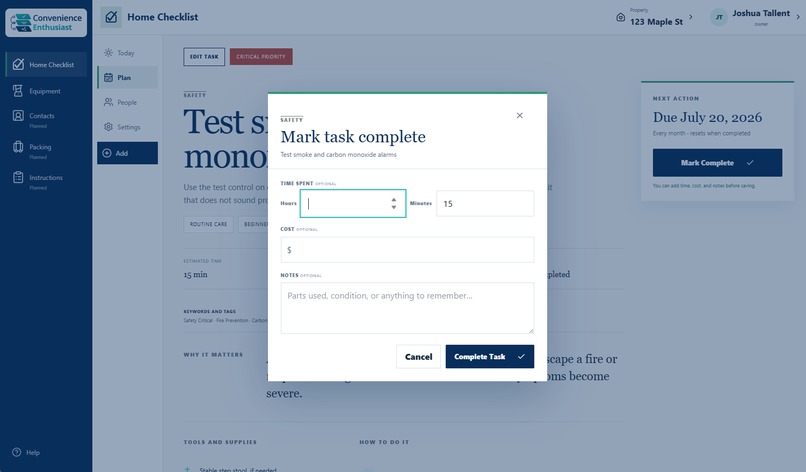
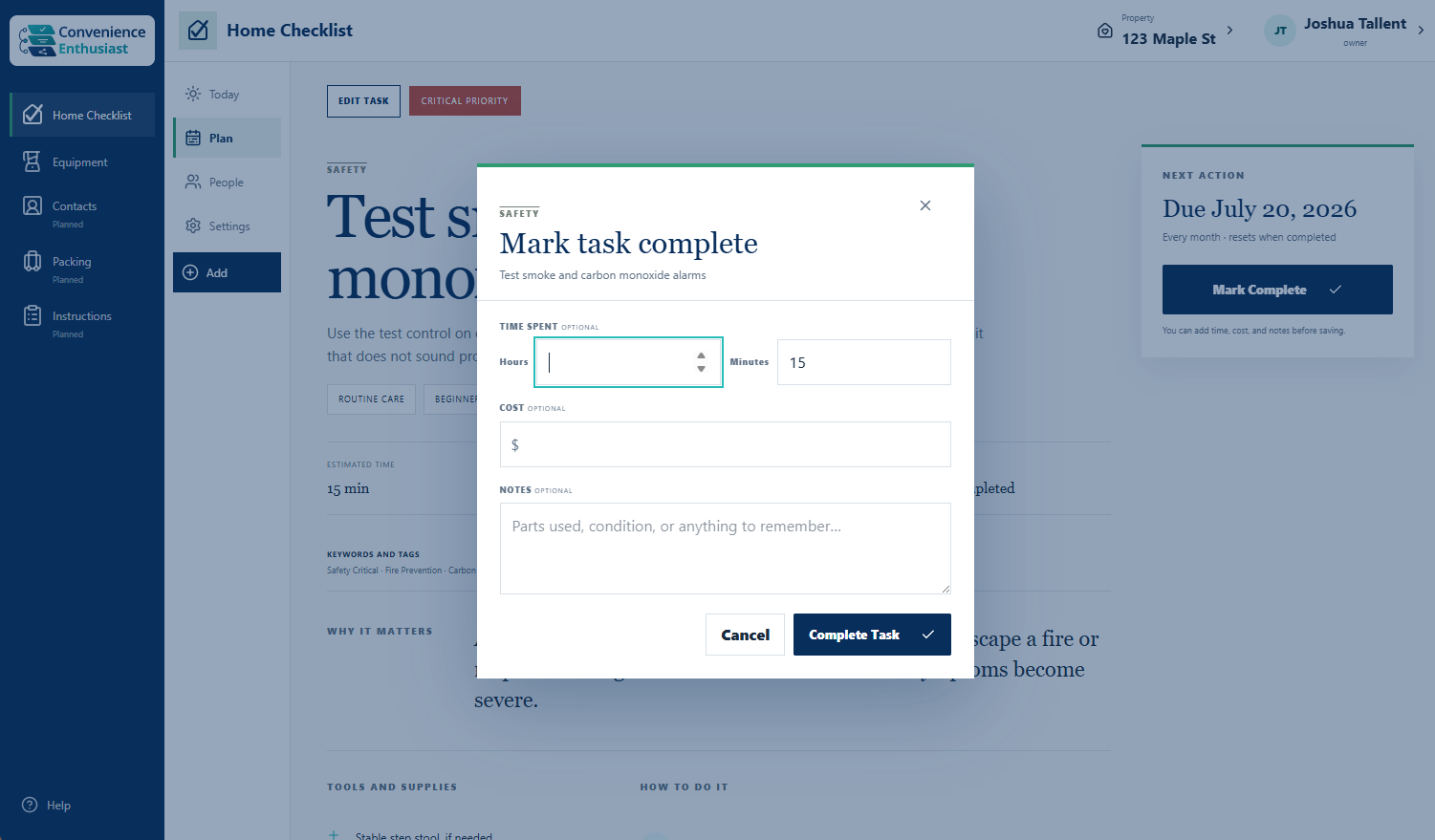
Complete a task, enter details about the completion for the history.
Inspiration
I learned about this competition on Friday morning in an email from OpenAI, but I didn't initially have any ideas for an app that might be a good submission. I've been working on a different app in Codex for the last month or so, but since it's almost done I figured it would not be the best option for the competition.
On Friday afternoon I sat down to figure out what I needed to do this weekend. Many of the tasks I started writing down were home maintenance items. Suddenly, I thought, "I don't really have a good list of all the things I should be doing each year/season around the house, and that sounds like a great app idea!"
Of course, like every good project, the scope changed as I went along, morphing into the full Convenience Enthusiast platform.
What it does
Convenience Enthusiast is a shared platform for practical tools that make everyday life easier to remember, organize, and share.
Its first working product is Home Checklist, which helps users build and manage a recurring maintenance plan for their home. Users can describe their Property, record relevant features and Equipment, add recommended maintenance tasks, assign work to Workspace members, filter upcoming tasks, and record completion details such as time, cost, and notes.
Tasks can belong to the Property as a whole, a Property System—such as a private well or HVAC installation—or a specific piece of Equipment, such as a furnace, water heater, sump pump, or generator. This allows a user with multiple similar assets to maintain a separate schedule and history for each one.
The Equipment area records information such as type, location, manufacturer, model, serial number, installation date, warranty date, and connected maintenance. Equipment pages can also recommend relevant maintenance templates that have not yet been added to the user’s plan.
The platform supports shared Workspaces, invitations, member roles, Property settings, task assignments, completion history, and administrative tools for maintaining the task and taxonomy library.
The main Convenience Enthusiast website also introduces the future product ecosystem:
- Home Checklist
- Equipment
- Contacts
- Packing
- Instructions
These products are being designed to share one account, navigation system, permission model, and connected data foundation.
How we built it
The project was developed through an ongoing collaboration with OpenAI Codex powered by GPT-5.6 Sol. While different effort levels were utilized, Sol was used consistently from the beginning.
I initially just wrote down some thoughts for the Home Maintenance Checklist, and started working with GPT-5.6 to decide on an application software stack. It not only guided me through that decision process, it even developed a full project brief, including tons of app and feature ideas I had not considered, for Codex to start with.
When the time came to decide where to host the new app, a perfect path presented itself. Sure, I could have just added it as a subdomain on my personal website, but I wanted to give it a better home that would be more broadly useful. I have owned the domain name https://convenienceenthusiast.com for more than 10 years but never found a good use for it. I'm not lazy, I'm a Convenience Enthusiast. And this unused domain name was convenient.
At first, I focused on developing the Home Checklist app, including authentication, user roles, checklist management, new user onboarding, admin features, and much more. Pretty quickly, though, I decided that I needed to completely revamp. I really wanted to place the Home Checklist app within the broader context of a more complete Convenience Enthusiast website.
GPT-5.6 helped me explore product decisions, identify missing edge cases, create interface mockups, implement features, design the underlying data relationships, diagnose problems, and validate changes. The process was highly iterative: features were tested, reviewed, questioned, renamed, simplified, and revised based on real use.
The interface was built as a responsive web application that works across desktop, tablet, and mobile layouts. Supabase provides accounts, shared data, and permission controls, while the application is hosted on DreamHost and deployed through GitHub.
Challenges we ran into
Finding terminology that made sense to users—and then applying it consistently throughout the interface and data model—required several rounds of redesign. The AI initially structured the data models around equipment in ways that were honestly very confusing.
Navigation was another major challenge. The application grew one page at a time, which initially resulted in inconsistent navigation and pages that felt disconnected. Once we made the shift to a full product ecosystem, that allowed us to step back and design a shared Convenience Enthusiast shell that could support Home Checklist, Equipment, and the future products without making each one feel like a separate website.
Accomplishments that we're proud of
Going from a bare idea to a working application with the level of detail this one has in just three days is pretty amazing. I am also proud that Convenience Enthusiast has developed into a coherent platform rather than a collection of disconnected features. GPT-5.6 was central to the process, helping translate product direction into implementation, surface edge cases, and accelerate development. I remained responsible for the product decisions, testing, review, and final judgment.
Another major accomplishment was designing for the future without requiring every future feature to be built immediately. The platform already has concepts for durable Property records, Equipment ownership, sharing, and eventual Property transfer. If someone sells a house, the long-term goal is to let its relevant maintenance and Equipment history travel with the Property without transferring unrelated personal information or Workspace membership.
What we learned
We learned that naming and data ownership decisions are product-design decisions, not merely technical ones. If the system cannot clearly distinguish a Workspace, Property, Household, Optional System, and Equipment record, the user experience will eventually become confusing as well.
We also learned that it is sometimes necessary to step back and design the larger ecosystem before finishing the first application. Thinking about Contacts, Packing, and Instructions changed how we approached accounts, navigation, sharing, and permissions in Home Checklist.
What's next for Convenience Enthusiast
The Convenience Enthusiast website will be expanded to include other home/family convenience solutions. Specific features currently on the development plan:
- Shared Family Contacts: A single place where the whole family can share contact information of friends and family, and keep them up to date and in sync. Send links to others so they can update your Christmas card addresses themselves. Included in this will be a unique Personal Preferences tracking and sharing functionality, that will allow you to store all the little preferences people repeatedly ask for, both on your own sharable contact record and on anyone else’s.
- Packing Lists: Resettable packing list that is broken into categories, with recommendations based in trip type and length. Shared packing lists so you don’t all bring sunscreen.
- Instructions: Turn a task into a clear handoff guide for yourself, a spouse, friend, babysitter, pet sitter, house sitter, or caregiver. Step-by-step with thumbnail pictures. Connects to Home Checklist tasks, packing list items, and more.
Built With
- codex
- postgresql
- react
- supabase
- tailwind
- typescript
- vite

Log in or sign up for Devpost to join the conversation.