Inspiration
I first tried Codex Modeling Studio and was fascinated by the idea of designing something together with an AI agent in a shared visual workspace. It made me want to explore the same kind of human-agent collaboration in a domain I care about personally.
Strength training is my hobby, so I started wondering whether the same approach could help design a home gym around real spatial, training, and budget constraints. That question became Home Gym Creator.
What it does
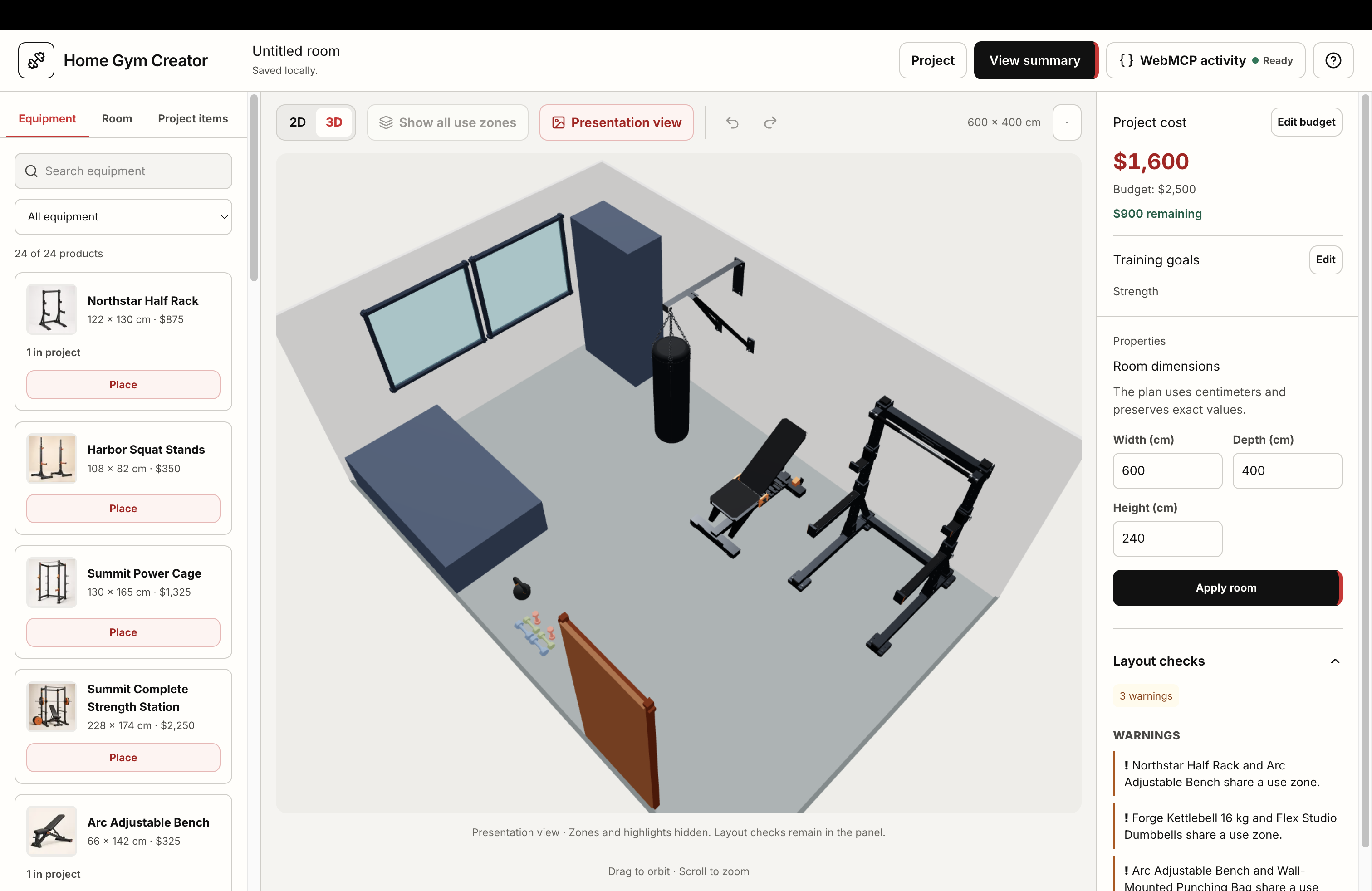
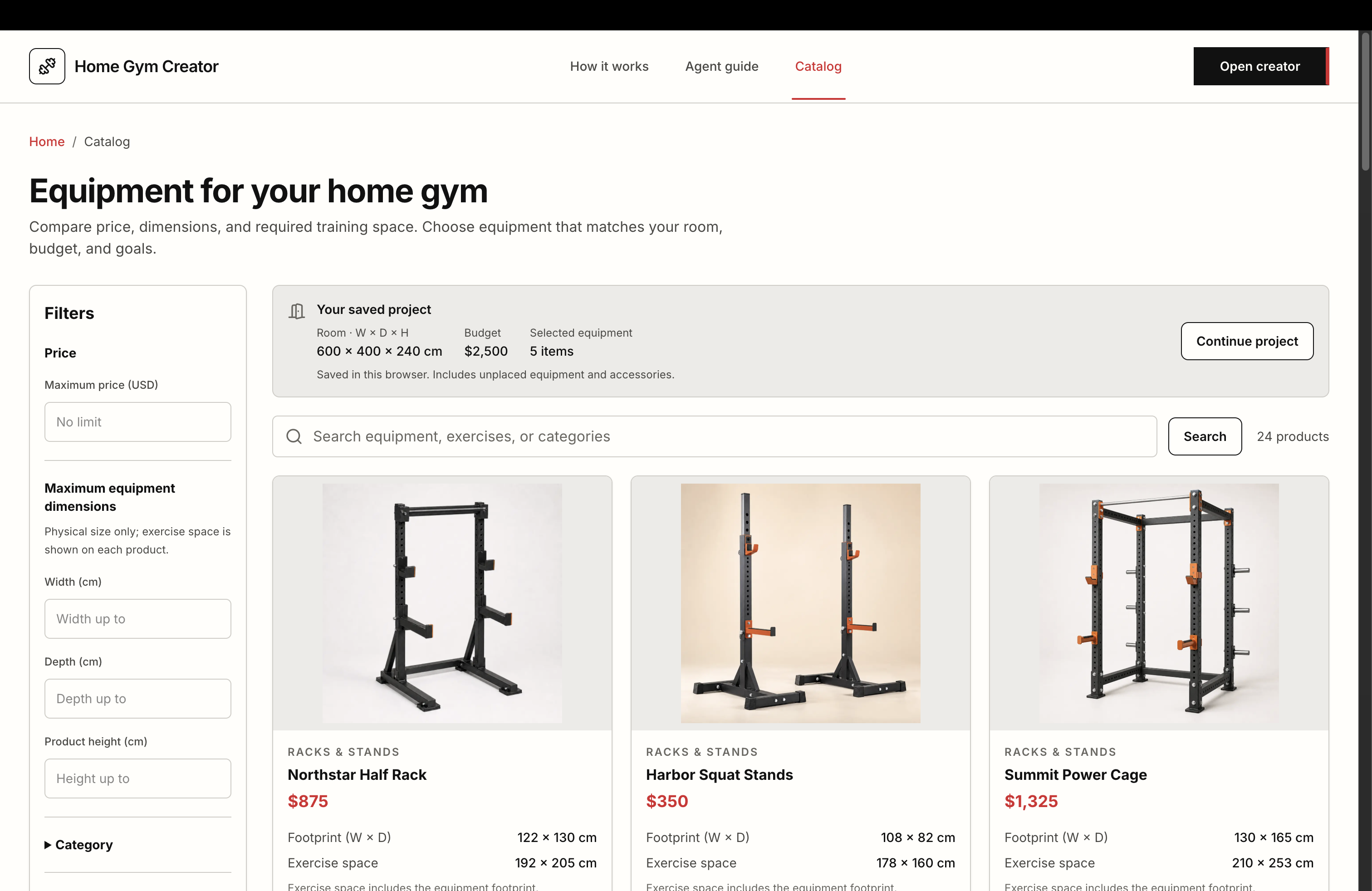
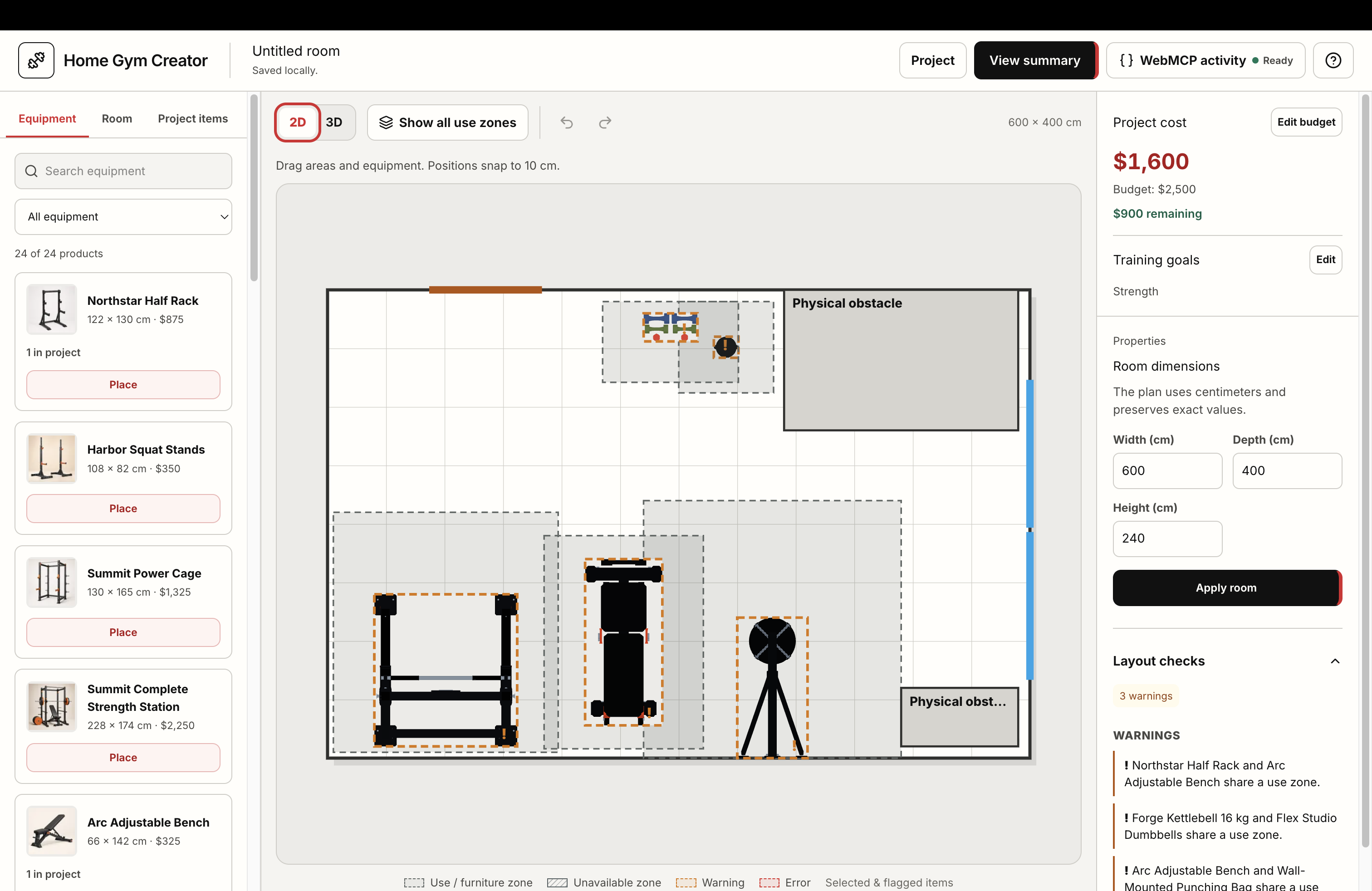
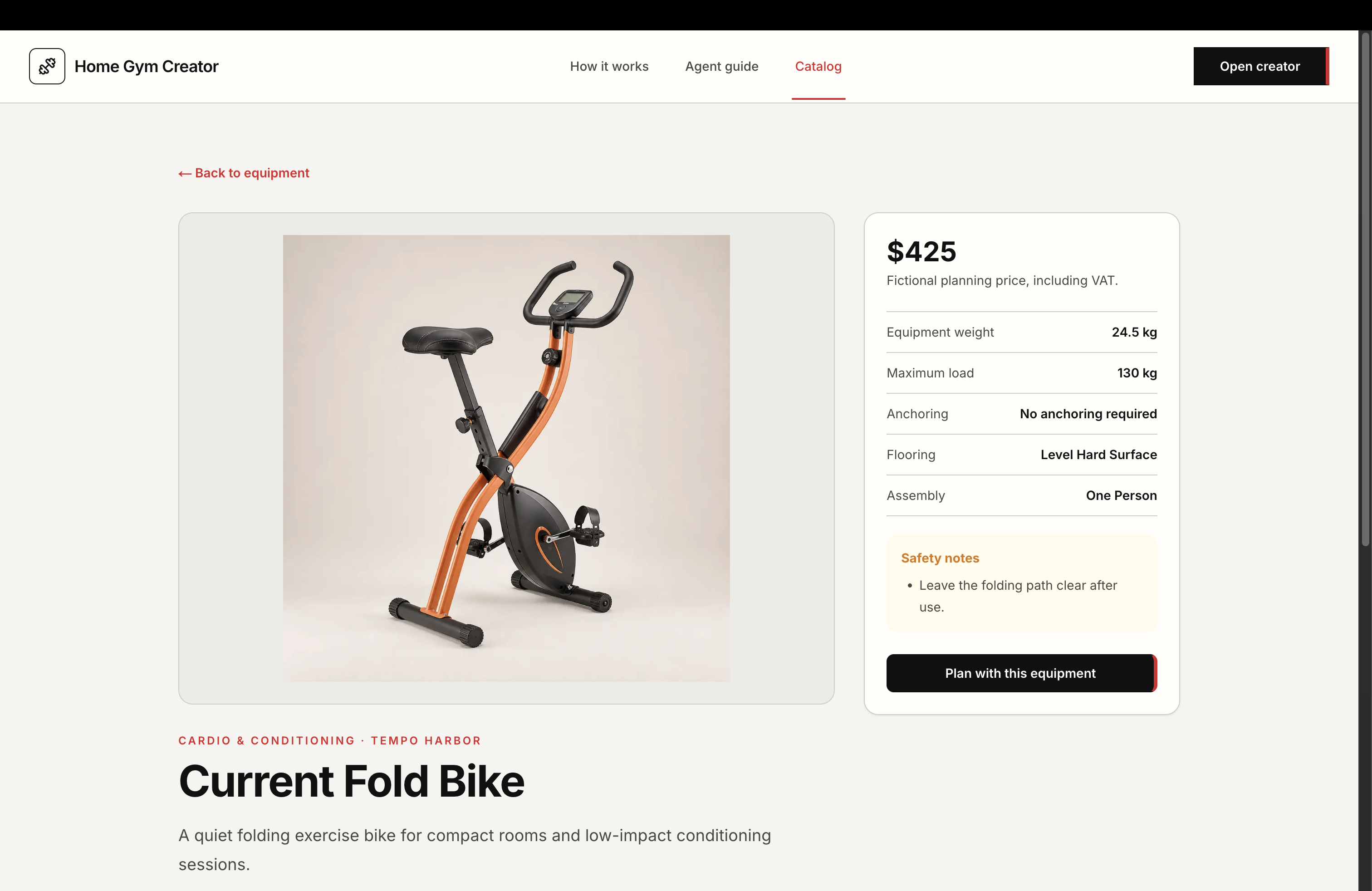
Home Gym Creator helps people design a home gym that fits their actual room, training goals, and budget. Users can model the room in 2D or 3D, add furniture, doors, windows, and unavailable areas, then choose equipment from a catalog of 24 fictional products.
An AI agent can read and modify the same project through WebMCP. It can configure the room, search the catalog, add and arrange equipment, react to manual changes, and validate the finished layout. Every agent action is immediately visible in the editor and uses the same undo and redo history as manual edits.
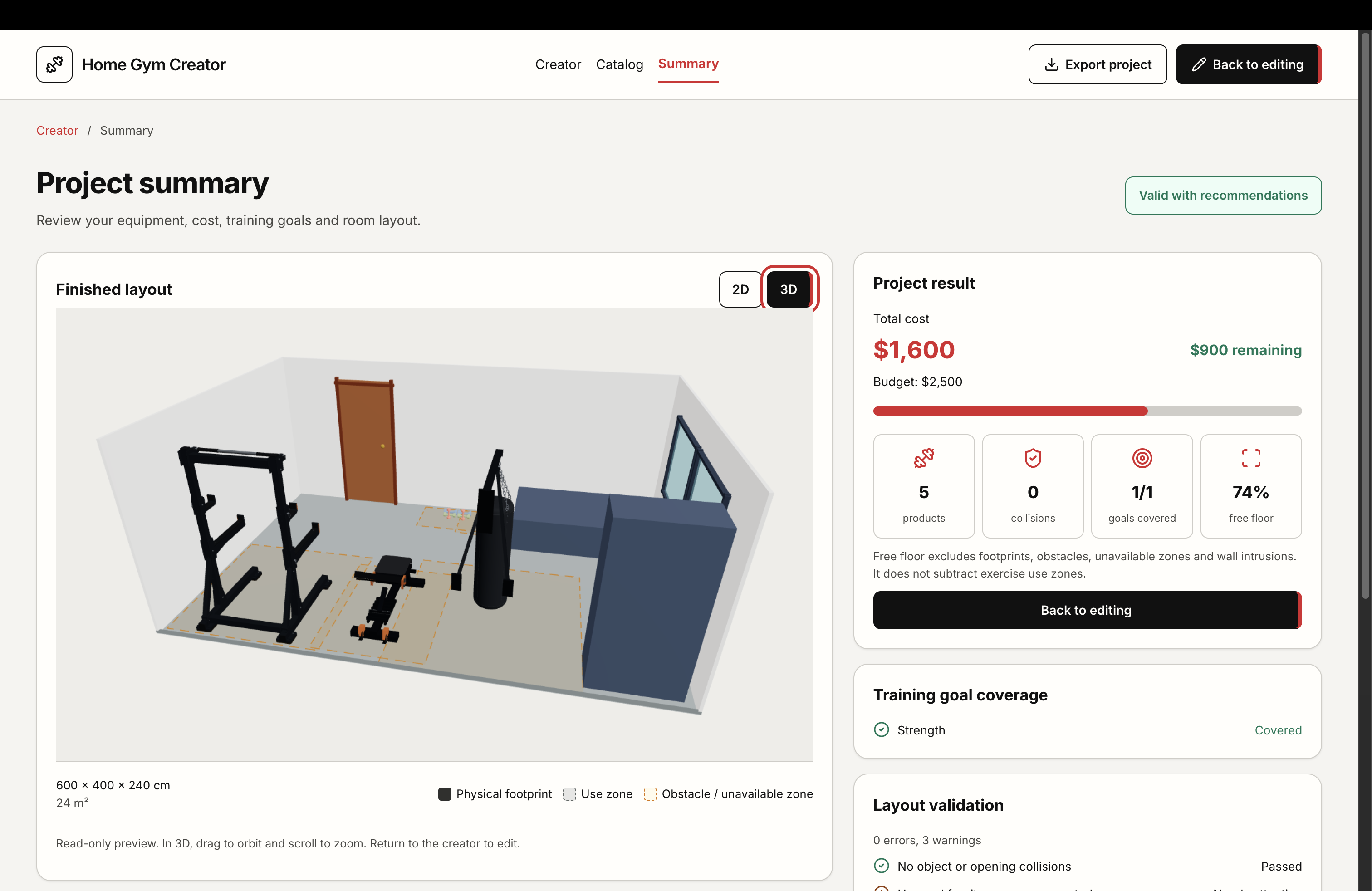
The application validates the layout by checking collisions, room boundaries, exercise clearance, access paths, ceiling height, wall mounting, training-goal coverage, and total cost. The agent respects these validation results and uses them to improve the design together with the user.
How I built it
I built Home Gym Creator with Next.js, TypeScript, Zustand, Zod, and React Three Fiber. Manual actions and WebMCP tools use the same project commands, state, validation, and undo history. I used Codex and Cursor throughout development for planning, implementation, debugging, and testing. The app runs entirely in the browser and is deployed on Vercel.
Challenges I ran into
At first, the agent placed equipment too close to furniture or blocked paths from the door to the wardrobe and bed. I introduced collision detection, equipment and furniture use zones, and access-path validation to model these practical constraints.
I did not want placement tools to contain rigid rules that removed the agent’s freedom. Instead, I added a tool that suggests suitable positions before placement and another that validates the complete layout afterward. Modeling realistic combinations was also challenging: for example, a wall-mounted pull-up bar can remain usable above a low object, and people can still walk underneath it. Representing these height-aware rules required careful iteration.
Accomplishments that I'm proud of
I am proud that the agent can use deterministic tools to check its own work and respect the user's room, budget, and training requirements. Selecting equipment often requires combining several products: for example, a strength setup for squats and bench press may need a rack, bench, barbell, and weight plates.
The agent can choose that combination within the available budget, arrange it inside the room, and verify that it fits without collisions or blocked access paths. Making this complete workflow work reliably was one of my biggest accomplishments in the project.
What I learned
I learned about the current limitations of AI-generated 3D assets. My first attempt was to generate 50 equipment models at once, but it did not produce usable results. Generating one model at a time and improving it iteratively worked much better.
I also learned how to guide an agent without adding rigid instructions to every tool. Instead, I gave it dedicated suggestion and validation tools, allowing it to explore solutions, check its own work, and improve the layout based on deterministic feedback.
What's next for Home Gym Creator
If I continue developing Home Gym Creator, I would add protective floor-mat planning, wall and floor customization, and more equipment options with additional 3D models.
I would also expand the concept beyond home gyms toward commercial facilities, supporting multiple rooms and floors, changing rooms, and more complex equipment layouts.
Built With
- next.js
- typescript
- vercel

Log in or sign up for Devpost to join the conversation.