-
-
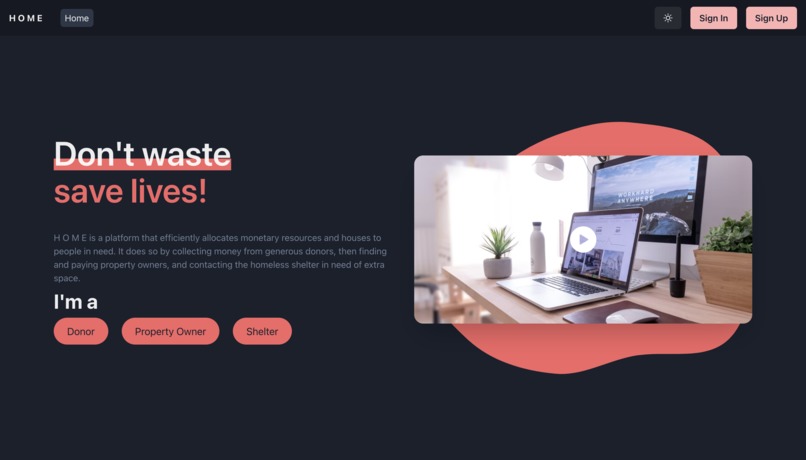
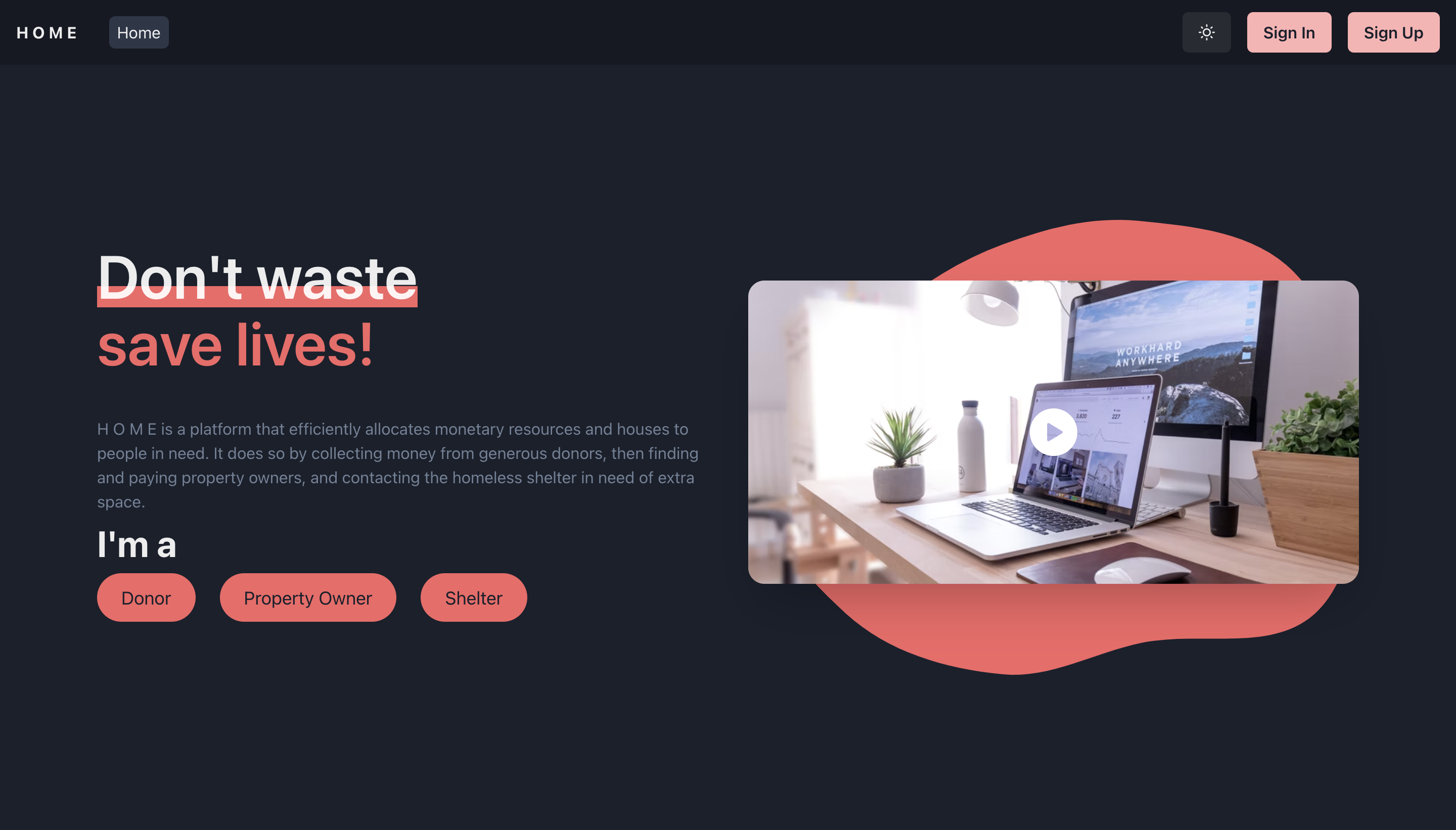
Main Home Page
-
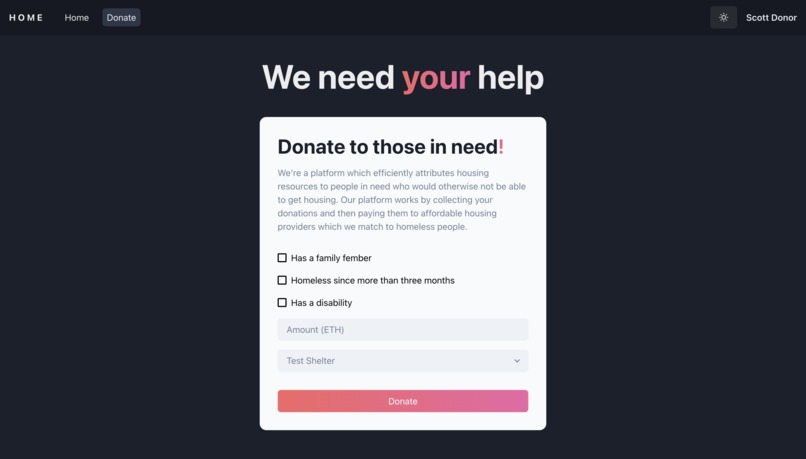
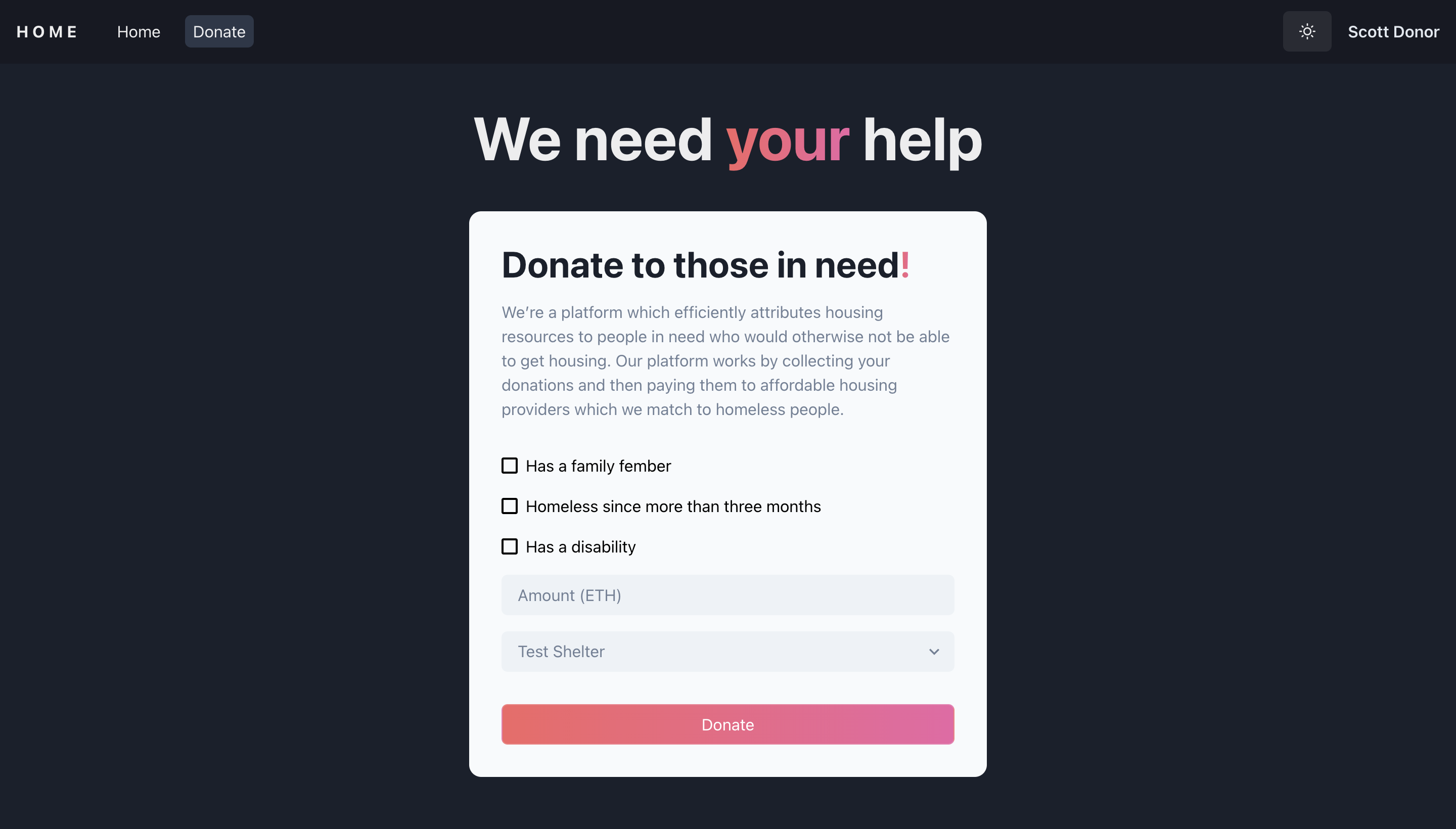
Donation Page
-
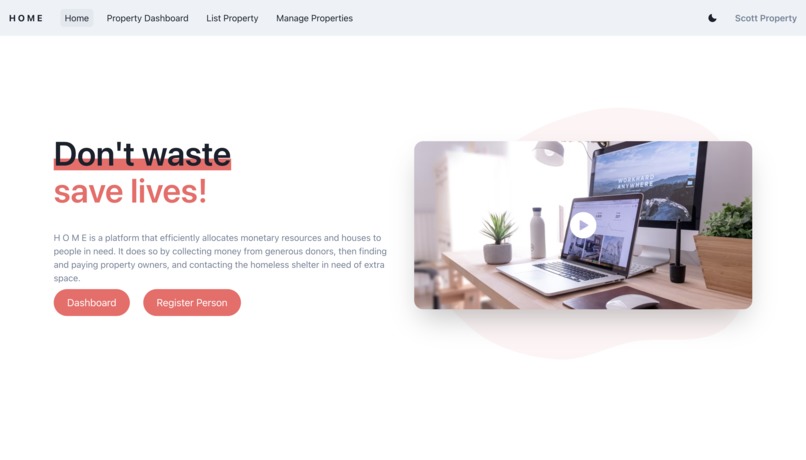
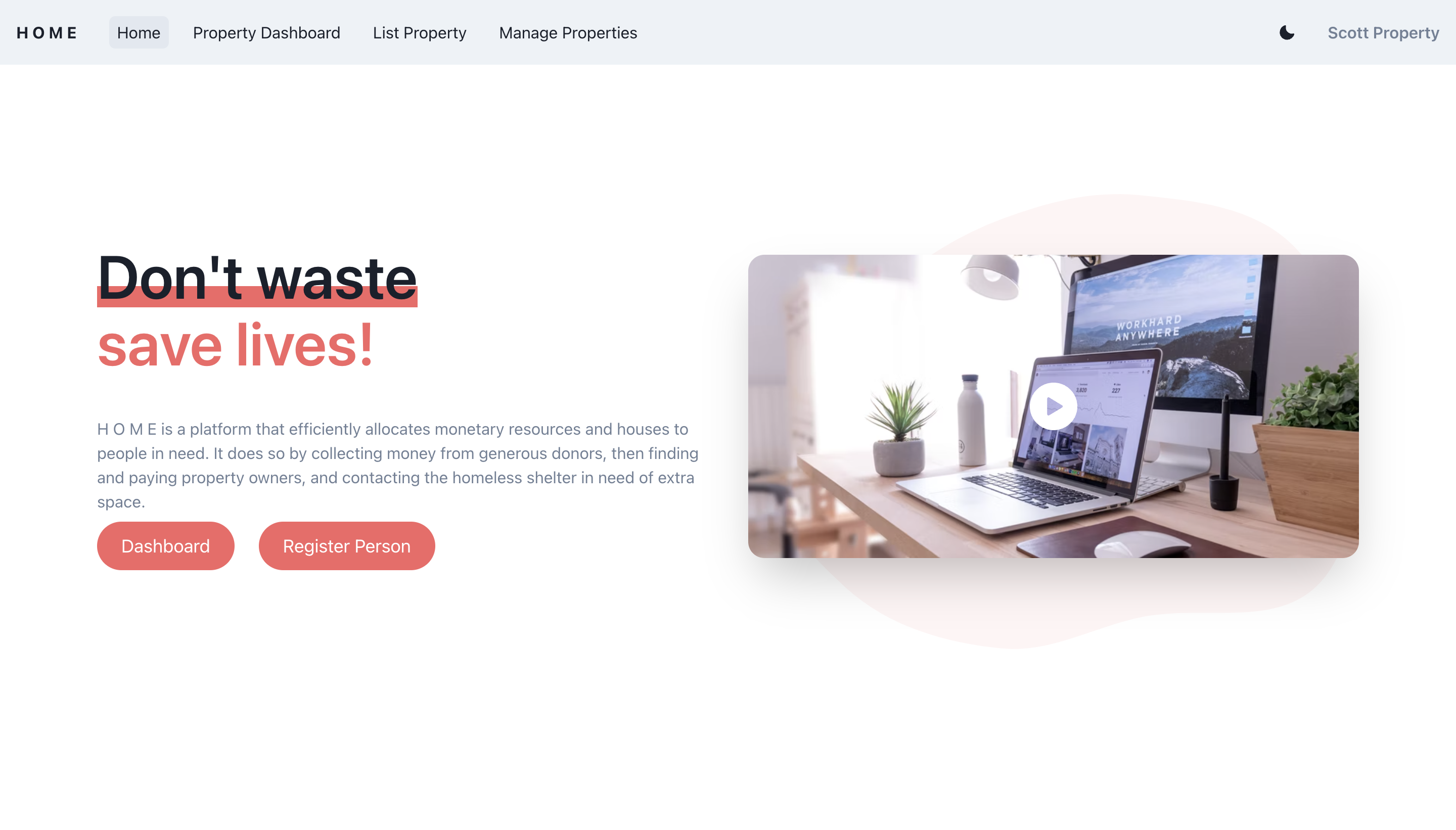
Main Page when logged in as Property Owner
-
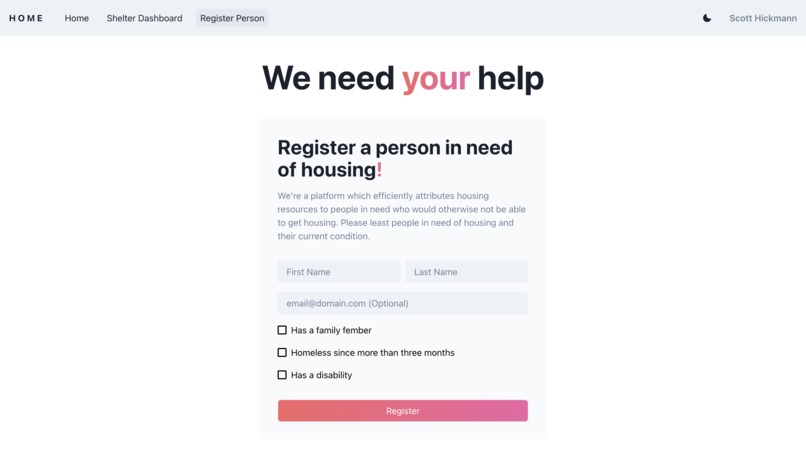
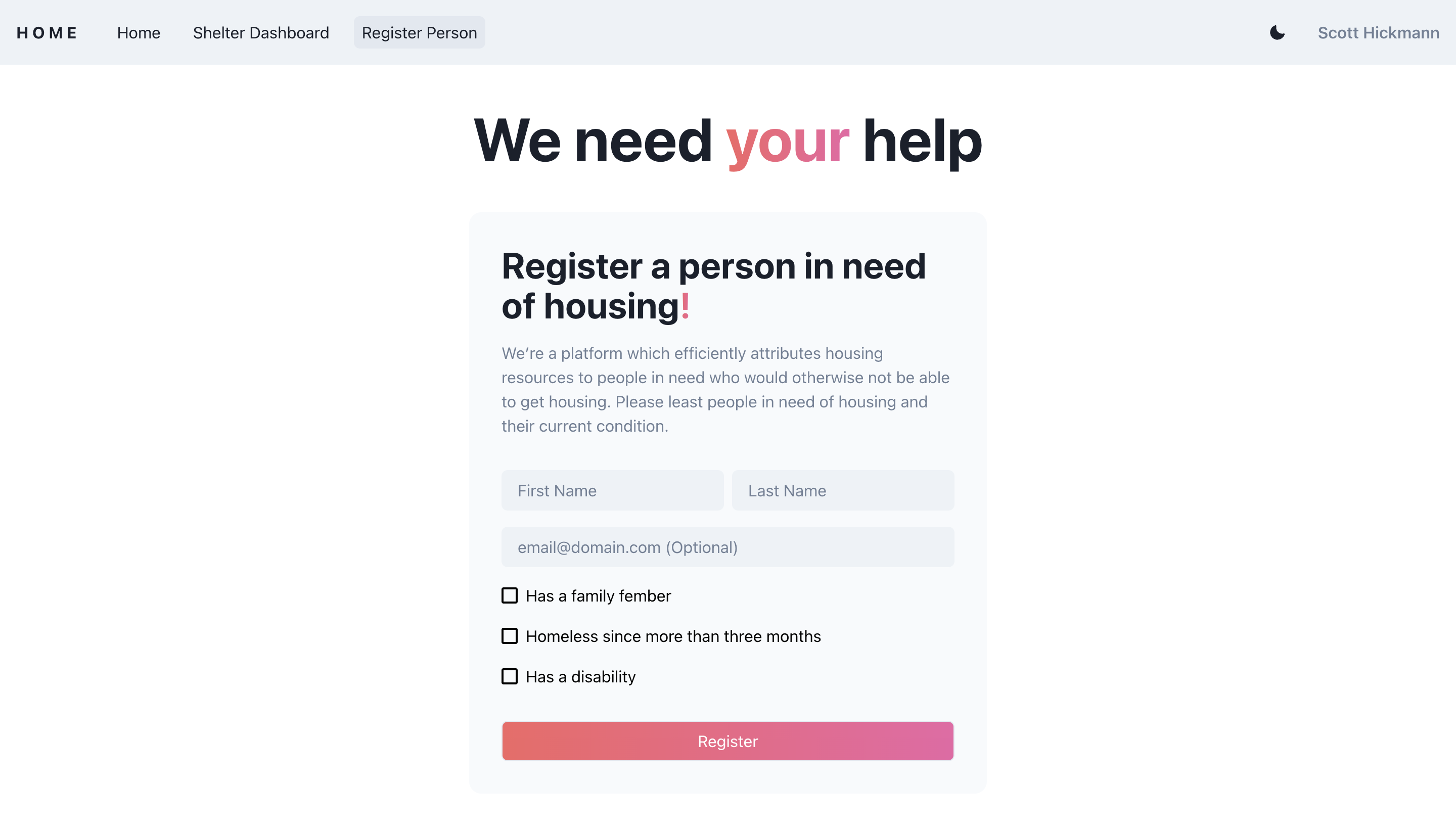
Main Page when logged in as Homeless Shelter Staff
Inspiration
Homelessness affects over half a million Americans on any given night, yet almost 17 million potential homes were standing empty according to a White House report in 2019. This means there are 33 empty properties for each homeless person in the US. Since 2010, the number of empty properties per homeless person has increased 24%
Increasingly, individuals and families needing emergency shelter have a disability, come from unsheltered locations, and face higher barriers to housing. While transitional and emergency housing can immediately provide month-long stays while people reconnect with housing, we saw opportunity in utilizing empty properties for shorter stays — as little as 3 hours worth — for instances where someone needs:
- a safe place to leave their children to run errands/go for job interview
- shelter from unpredictable and inclement weather
- a private space to work safely and remotely
What it does
That's why we created HOME (Housing Opportunities for Movers Everywhere), a platform that enables homeless shelters to rapidly and efficiently connect people with housing through microtransactions and smart contracts.
Our blockchain-based app collects cryptocurrency from donors to fund temporary stays that can be a little as 3 hours long. Using smart contracts, donors can determine criteria for who ultimately receives their assistance and have transparency in how their donation was used, have a tax write-off via having a receipt of their donation on an immutable ledger and as autogenerated by the homeless shelter they donated to, and donate with peace of mind because of our app's safeguarding mechanism of ensuring that, if donors gave a large amount, only a portion of what's donated is distributed each day.
Those searching for housing and temporary housing would register their information with homeless shelters. Our app would be integrated with this process in a way that allows individuals to remain anonymous to the app. What homeless shelter staff would be able to see is the relevant demographics of their clients, a list of housing available, and potential matches through our app's matching algorithm. Once staff suggests having a verified client take advantage of a housing opportunity, the respective property owner would confirm whether the stay can happen. After confirming that this connection can happen, shelter staff would provide a code to their client or alternative way for verifying who they are to property owners. Once they successfully verify who they are with the property owner and gain access to the property, the payment from one or more smart contracts (depending on the cost of a stay) would be released to the property owner.
All this is done without the app needing to know any information about those experiencing homelessness. Property owners would only know that a homeless shelter has verified that this individual or family has a need. Not only does our app allow individuals to receive housing support with dignity, but it also solves an inefficiency problem whereby not everyone needs to reserve a space for a whole day or even a whole month, or has the means to do something like an airbnb.
How we built it
We built this using React.js, Next.js, Chakra UI for fast prototyping, MongoDB for database, and Solidity for faciliating smart contracts.
Challenges we ran into
An app like this has not been created before to our knowledge, so we were exploring new frontiers here. We had many discussions about architecture such as whether we could pare down to one smart contract that does it all or if we needed two. As we were working through the project, we discovered some initial approaches we had planned like using signatures in blockchain were no longer feasible due to synchronization problems.
Accomplishments that we're proud of
Our project scope was huge for what we wanted to accomplish technically, and we were able to figure out the necessary pieces to have a working app without having to scale down our original vision.
What we learned
We learned about how blockchain can be applied to help tackle a complex system issue like homelessness. Surprisingly, one mentor mentioned being at one of the world's largest Web3 innovation festivals discussing how blockchain hasn't been used as much to solve high stakes social problems.
For some team members, there was a steep learning curve for learning new frameworks (React/Next.js) and component libraries. For other team members, coding and architecting workflow in blockchain and integrating UI to the back end was most challenging yet rewarding to figure out.
What's next for HOME
Moving forward with a pilot program—
Built With
- chakra-ui
- mongodb
- next.js
- react.js
- solidity
- typescript

Log in or sign up for Devpost to join the conversation.