-
-
Index
-
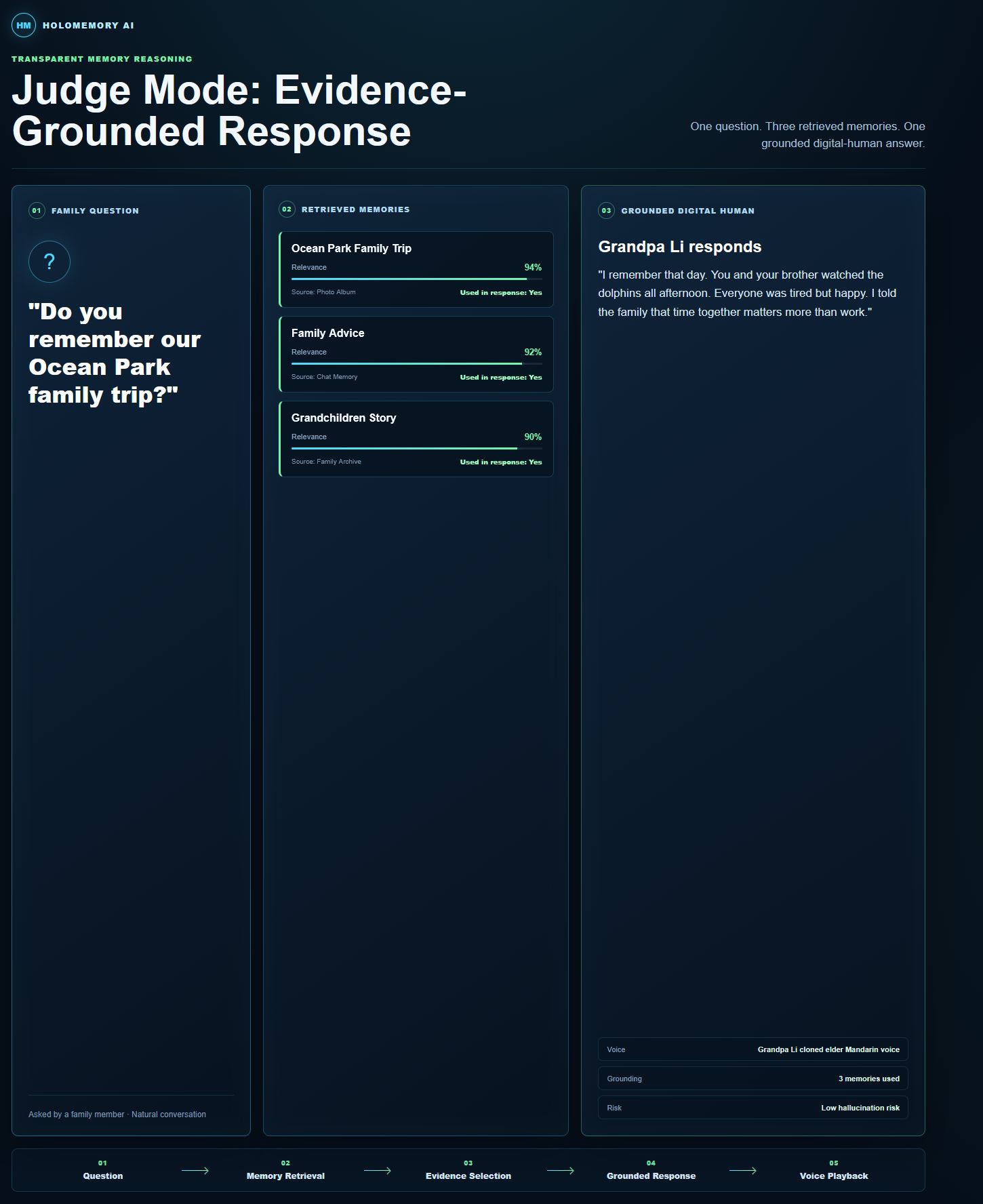
Judge Mode
-
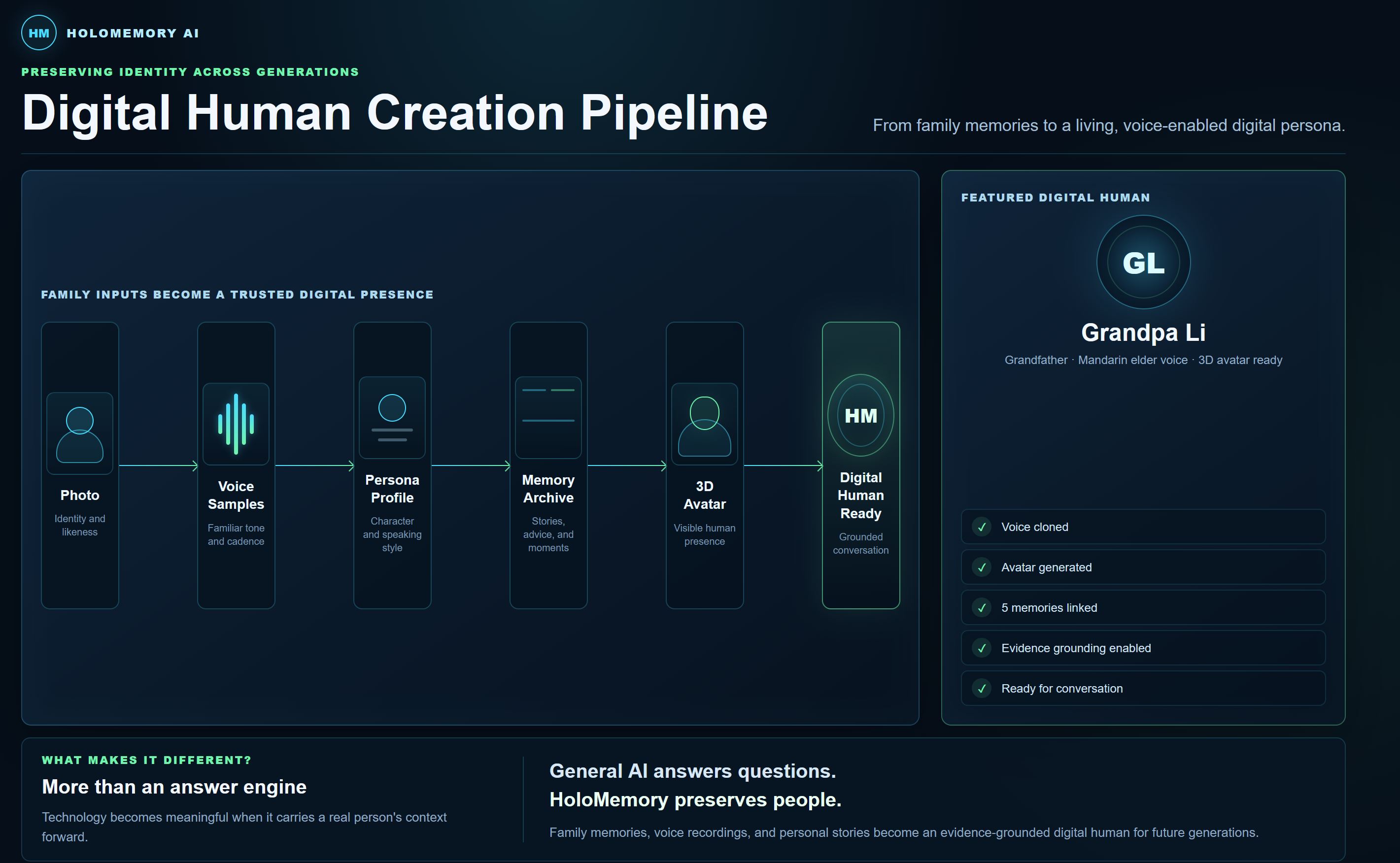
Digital Human Pipeline
-
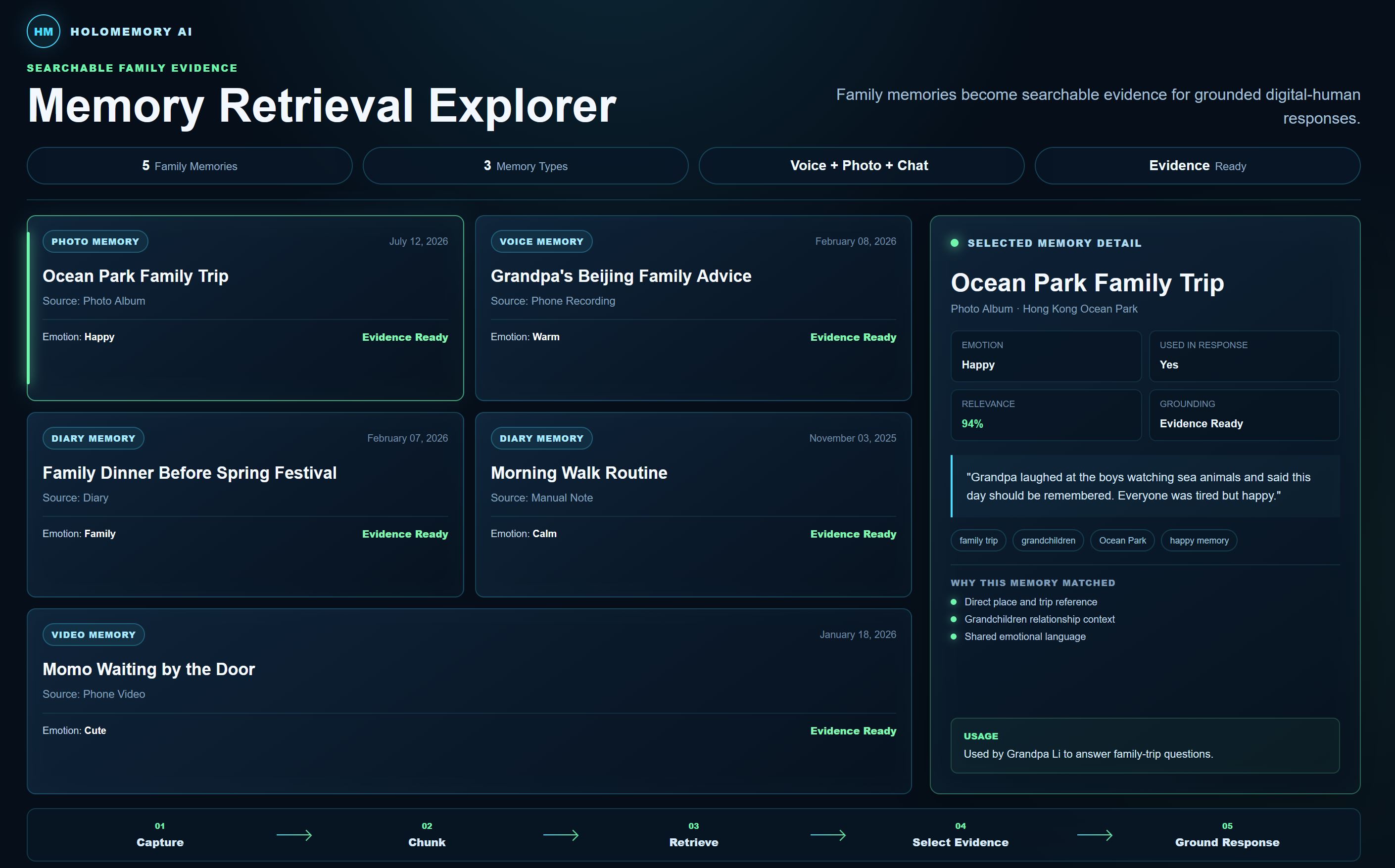
Memory Retrieval Explorer
Inspiration
Every family carries stories, memories, voices, and wisdom that slowly disappear across generations.
Photos preserve faces. Videos preserve moments. Audio preserves voices. But none of them preserve the deeper connection of a person: what they remembered, what they cared about, what advice they gave, and how they would respond to future generations.
HoloMemory AI was built around one question:
What if future generations could still talk to the people they love?
What it does
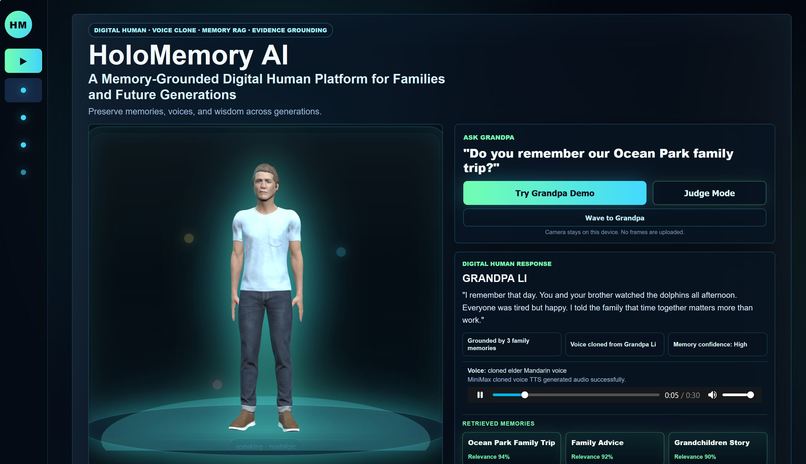
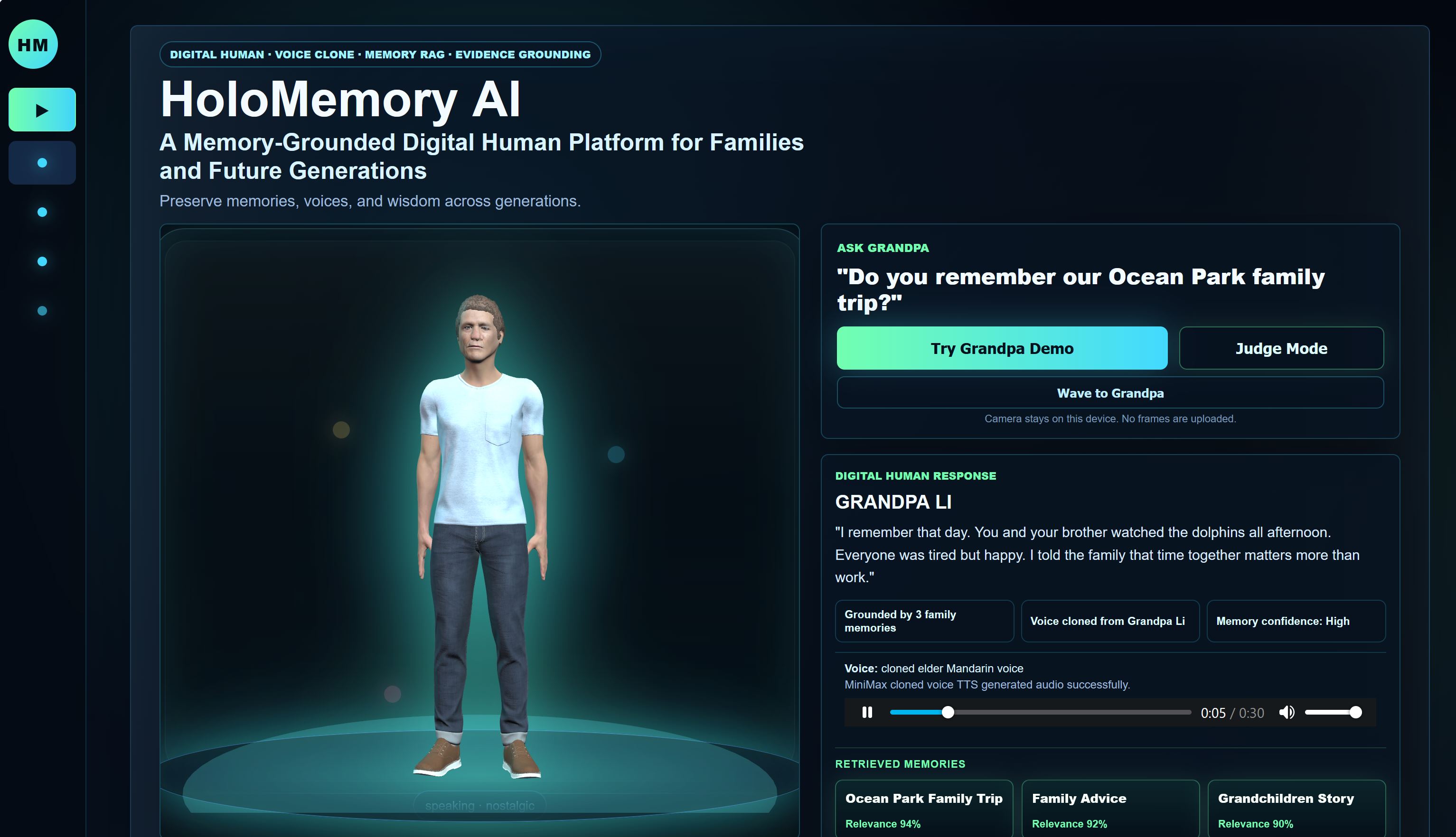
HoloMemory AI is a memory-grounded digital human platform for families and future generations.
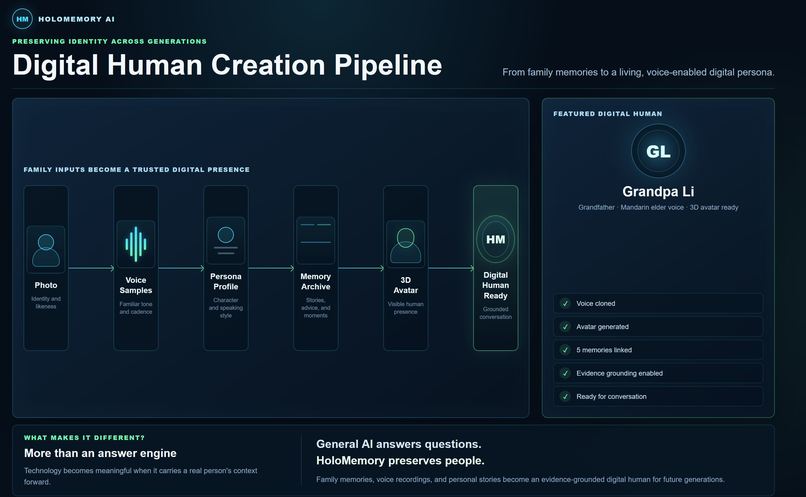
Users can create a digital persona from family memories, voice samples, photos, and personality traits. The system allows people to ask questions such as:
“Do you remember our Ocean Park family trip?”
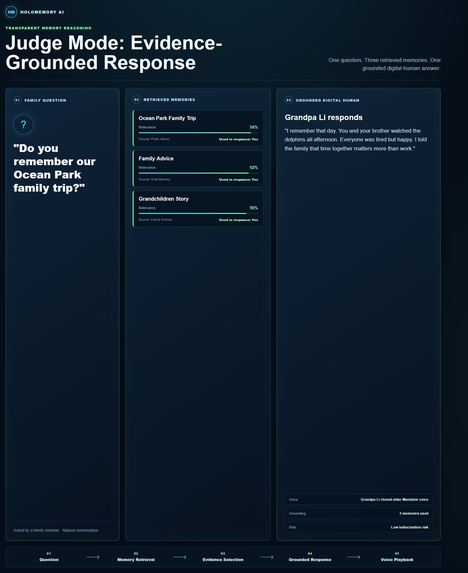
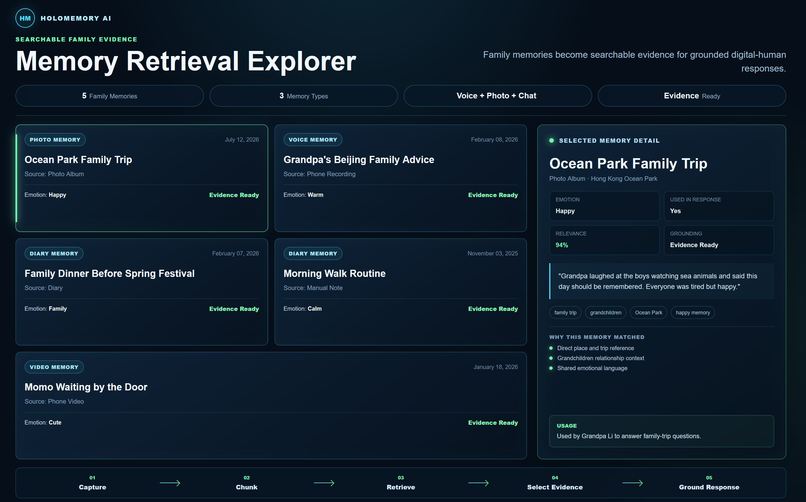
The digital human retrieves relevant memories, generates a grounded response, shows the memory evidence used, and speaks back using the persona’s cloned voice through a 3D avatar interface.
How we built it
HoloMemory AI combines a web-based digital human interface with a memory retrieval and response generation pipeline.
The system includes:
- Persona management for family members
- Long-term memory storage
- Retrieval-Augmented Generation for memory grounding
- Evidence cards showing retrieved memories
- Voice clone playback
- 3D avatar presentation
- Judge Mode for a one-click demo experience
The frontend is built with ColdFusion/CFML, JavaScript, HTML, CSS, and Three.js. The backend uses Python, FastAPI, PostgreSQL, LLM APIs, MiniMax voice cloning, and MetaPerson avatar generation.
Challenges we ran into
The biggest challenge was making the AI feel emotionally meaningful while still being grounded in evidence.
A generic chatbot can easily invent answers. HoloMemory AI needed to avoid hallucinated memories and show exactly which memories were used. We focused on evidence-first interaction: retrieve memories first, generate the answer second, and display the evidence clearly.
Another challenge was combining several different AI layers — memory retrieval, language generation, voice cloning, and 3D avatar rendering — into one smooth demo flow.
What we learned
The most powerful AI experiences are not always about faster answers.
Sometimes they are about preserving something human.
We learned that memory grounding, evidence transparency, and emotional interaction can make AI feel less like a tool and more like a bridge between generations.
What’s next
Next steps include family memory timelines, better privacy controls, mobile support, multi-person family archives, improved emotional memory tagging, and real-time talking-avatar synchronization.
Our long-term vision is simple:
AI should not only answer questions. It should help preserve the people, stories, and wisdom we do not want to lose.
Built With
- api
- cloning
- coldfusion
- css3
- fastapi
- github
- html5
- javascript
- langchain
- metaperson
- minimax
- multi-agent
- nginx
- openai
- postgresql
- python
- rag
- three.js
- ubuntu
- vector-search
- voice

Log in or sign up for Devpost to join the conversation.