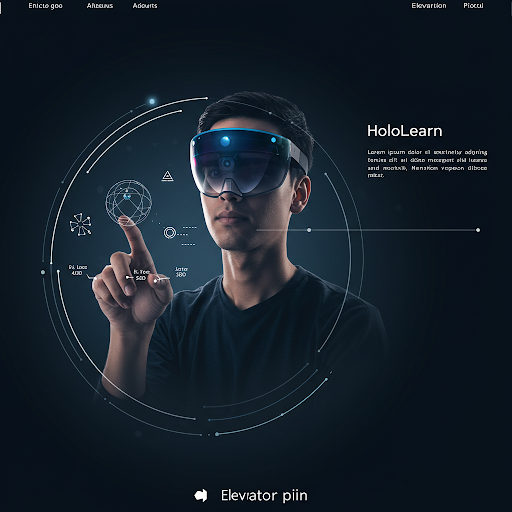
Inspiration
Making learning more engaging and interactive: Traditional learning methods can often be passive and disengaging. AR offers a way to bring learning to life by overlaying digital content onto the real world, creating interactive experiences that capture students' attention and make learning more fun. Improving knowledge retention and comprehension: Studies have shown that AR can enhance learning outcomes by making it more memorable and easier to understand. By providing a multi-sensory experience, AR can help students visualize complex concepts, simulate real-world scenarios, and gain a deeper understanding of the subject matter. Personalizing the learning experience: AR platforms can adapt to individual learning styles and preferences, providing a more personalized learning experience. For example, students can choose their own pace, focus on areas where they need more help, and receive customized feedback. Creating collaborative learning experiences: AR can facilitate collaboration among students by enabling them to share virtual spaces and work together on projects. This can foster teamwork, communication, and critical thinking skills. Making learning more accessible: AR can break down barriers to learning by providing access to resources and experiences that may not be available in traditional settings. For example, students can explore historical sites, conduct virtual experiments, or receive one-on-one tutoring from experts located anywhere in the world. Overall, the inspiration behind AR learning platforms like HoloLearn is to revolutionize education by making it more engaging, effective, and accessible for all learners.
What it does
HoloLearn Enhancing Online and Hybrid Learning: HoloLearn focuses on improving the feeling of "presence" in online and hybrid classrooms. This means making remote learning feel more like being in a physical classroom. It utilizes holograms to create more lifelike interactions between teachers and students. Facilitating Naturalistic Interaction: A key goal is to overcome the limitations of traditional online communication tools by enabling more natural interactions. Holograms allow for the display of non-verbal cues, such as posture and gestures, which are crucial for effective communication. Creating Immersive Educational Environments: HoloLearn aims to build infrastructure for holographic online lectures, creating immersive environments where students can engage with educational content in a more dynamic way. Improving Educational Outcomes: By increasing engagement and improving communication, HoloLearn seeks to enhance cognitive presence and overall learning outcomes. Expanding Access to Education: HoloLearn aims to provide an accessible education facilitated by hybrid classrooms that are both synchronous and asynchronous. In essence, HoloLearn is focused on using holographic technology to create more engaging, interactive, and effective learning experiences, particularly in online and hybrid educational settings.
How we built it
HoloLearn is built upon a foundation of advanced technologies, including:
Holographic Display Systems: These systems use specialized hardware and software to project 3D images into the real world, creating the illusion of lifelike, interactive holograms. High-Speed Networking: Reliable, high-bandwidth networks are essential for transmitting high-resolution holographic data in real-time, ensuring smooth and seamless interactions between users. Artificial Intelligence (AI) and Machine Learning: AI algorithms are used to power intelligent features such as personalized learning paths, real-time feedback, and adaptive learning experiences. Virtual Reality (VR) and Augmented Reality (AR) Technologies: These technologies are integrated to create immersive and interactive learning environments that blend the physical and digital worlds. User-Friendly Interfaces: Intuitive and easy-to-use interfaces are designed to make HoloLearn accessible to users of all ages and technical abilities. The development of HoloLearn involves a multidisciplinary approach, bringing together experts in fields such as computer science, education, neuroscience, and human-computer interaction.
It's important to note that HoloLearn is still under development, and the specific technologies and methodologies used may evolve over time.
Here are some additional details on how HoloLearn is being built:
Collaboration with Educational Institutions: HoloLearn is being developed in close collaboration with educational institutions to ensure that the platform meets the specific needs and requirements of educators and students. User-Centered Design: A user-centered design approach is being adopted to ensure that the platform is intuitive, engaging, and effective for learners of all ages and backgrounds. Continuous Improvement: HoloLearn is an ongoing project, and the platform will continue to be refined and improved based on user feedback and advancements in technology.
Challenges we ran into
some hurdles they might encounter:
Technological Limitations: Bandwidth and Latency: Transmitting high-resolution holographic data in real-time requires significant bandwidth and low latency, which can be challenging, especially in areas with limited internet infrastructure. Holographic Display Technology: Creating affordable, high-quality holographic displays that are comfortable for extended use is still an ongoing area of research. Hardware Costs: The hardware required for holographic learning, such as holographic projectors and sensors, can be expensive, which could limit accessibility. Software Development: Creating Realistic Holographic Content: Developing engaging and effective holographic learning content requires specialized skills and tools. AI Integration: Effectively integrating AI for personalized learning and real-time feedback requires sophisticated algorithms and large datasets. User Interface Design: Designing intuitive and user-friendly interfaces for holographic environments can be complex. Educational Challenges: Pedagogical Integration: Effectively integrating holographic technology into existing curricula and teaching practices requires careful planning and training for educators. Accessibility and Equity: Ensuring that holographic learning is accessible to all students, regardless of their socioeconomic background or location, is a critical challenge. User Adoption: Overcoming resistance to new technologies and encouraging widespread adoption among educators and students can be difficult. Health and Safety: Eye Strain and Discomfort: Extended use of holographic displays could potentially lead to eye strain and discomfort. Motion Sickness: Some users may experience motion sickness when interacting with holographic environments. Content creation: Creating a large library of high quality holographic content is time consuming and expensive. Standards for holographic educational content needs to be created.
Accomplishments that we're proud of
Technological Achievements:
Successful Holographic Projection: Demonstrating a functional and reliable holographic display system capable of projecting clear, interactive 3D images. Low-Latency Data Transmission: Achieving minimal latency in transmitting holographic data, ensuring seamless real-time interactions. AI-Powered Personalization: Developing and implementing AI algorithms that effectively personalize learning paths and provide accurate real-time feedback. Integration of VR/AR Technologies: Successfully blending virtual and augmented reality to create immersive and engaging learning environments. User-Friendly Interface Development: Designing an intuitive and accessible interface that makes holographic learning easy to use for all ages. Educational Achievements:
Pilot Program Success: Conducting successful pilot programs in educational settings, demonstrating improved learning outcomes and student engagement. Positive Student Feedback: Receiving positive feedback from students who have used the platform, indicating that it is engaging, effective, and enjoyable. Educator Adoption: Gaining adoption among educators who are incorporating HoloLearn into their teaching practices. Curriculum Integration: Developing and implementing effective strategies for integrating holographic learning into existing curricula. Improved Learning Outcomes: Showing through testing and reports that the use of HoloLearn improves the amount of information that is retained by students. Business and Development Achievements:
Securing Funding: Obtaining funding to support the development and deployment of the platform. Building Partnerships: Establishing partnerships with educational institutions, technology companies, and other organizations. Team Building: Assembling a talented and dedicated team of experts in technology, education, and design. Prototype Completion: Creating a functional prototype that demonstrates the core features and capabilities of HoloLearn. Community Building: Creating an online community of educators, students, and developers that are interested in HoloLearn. Overcoming Challenges:
Successfully resolving technical hurdles related to bandwidth, latency, and hardware limitations. Finding solutions to challenges related to content creation and pedagogical integration. Demonstrating the platforms ability to function with diverse populations of students.
What we learned
Technological Learnings:
The Importance of Bandwidth Optimization: Real-time holographic projections demand efficient data compression and transmission. We learned to prioritize algorithms that minimize latency and maximize visual fidelity. Hardware Limitations and Adaptability: Current holographic display technologies have constraints. We discovered the need for flexible software that can adapt to varying hardware capabilities. AI's Role in Personalized Learning: AI can effectively tailor learning experiences to individual student needs. We learned how to refine AI algorithms to provide accurate and relevant feedback. VR/AR Integration Complexities: Seamlessly blending VR and AR requires careful calibration and synchronization. We gained expertise in creating hybrid environments that enhance learning. User Interface Design for 3D Environments: Traditional UI principles don't always translate to holographic spaces. We learned to design intuitive interfaces that facilitate natural interaction. Educational Learnings:
The Power of Immersive Learning: Holographic environments significantly increase student engagement and knowledge retention. We confirmed the value of immersive learning for complex subjects. The Need for Pedagogical Flexibility: Educators require adaptable tools that can integrate with diverse teaching styles. We learned to prioritize flexibility and customization in our platform. The Significance of Accessibility: Equity in education is paramount, and technology must be accessible to all. We gained a deeper understanding of the challenges and solutions related to accessibility. The importance of content creation: Creating high quality 3d content is very time consuming, and requires a specialized skill set. We learned the importance of creating tools that allow educators to easily create their own content. Student and educator feedback is critical: We learned that constant feedback from the people that are using the product is the best way to improve it. Development and Business Learnings:
The Value of Iterative Development: Rapid prototyping and user testing are essential for refining complex technologies. We embraced an agile development approach that prioritizes iteration. The Importance of Partnerships: Collaboration with educational institutions and technology companies is crucial. We learned to build strong partnerships that support our mission. The Challenges of Market Adoption: Introducing new technologies requires effective communication and training. We gained insights into the strategies that drive market adoption. The Necessity of Adaptability: The technology sector is always changing, and we learned that it is important to be able to change with the technology. We learned the importance of remaining flexible.
What's next for HoloLearn
Technological Advancements:
Improved Holographic Projection: More realistic and higher-resolution holograms. Increased field of view and depth perception. Development of more compact and affordable holographic displays. Enhanced AI Integration: More sophisticated AI algorithms for personalized learning and adaptive assessments. AI-powered holographic tutors and assistants. Real-time language translation for global collaboration. Seamless VR/AR Integration: More immersive and interactive hybrid environments. Haptic feedback and other sensory enhancements. Improved hand tracking and gesture recognition. Cloud-Based Holographic Learning: Scalable and accessible holographic learning platforms. Remote access to holographic content and resources. Collaborative holographic learning spaces. Increased Bandwidth and Connectivity: Taking advantage of 5g and future network technology to improve the stability of holographic projections. Expanded Applications:
Broader Educational Adoption: Integration into K-12, higher education, and vocational training programs. Development of specialized holographic curricula for various subjects. Increased adoption in remote and underserved communities. Corporate Training and Development: Holographic simulations for hands-on training and skill development. Virtual collaboration spaces for remote teams. Interactive holographic presentations and demonstrations. Medical and Healthcare Applications: Holographic anatomy and surgical simulations. Virtual consultations and patient education. Holographic rehabilitation and therapy. Museums and Cultural Institutions: Interactive holographic exhibits and artifacts. Virtual tours and historical reenactments. Accessible cultural experiences for remote audiences. Entertainment and Gaming: Interactive holographic games and entertainment experiences. Virtual concerts and performances. Increased Accessibility:
Affordable Hardware: Lowering the cost of holographic displays and related technologies. Development of mobile holographic devices. Accessible Software: User-friendly interfaces and intuitive controls. Accessibility features for users with disabilities. Easy to use content creation tools for educators. Global Reach: Expanding access to holographic learning in developing countries. Providing multilingual support and culturally relevant content. …
Built With
- all

Log in or sign up for Devpost to join the conversation.