Inspiration
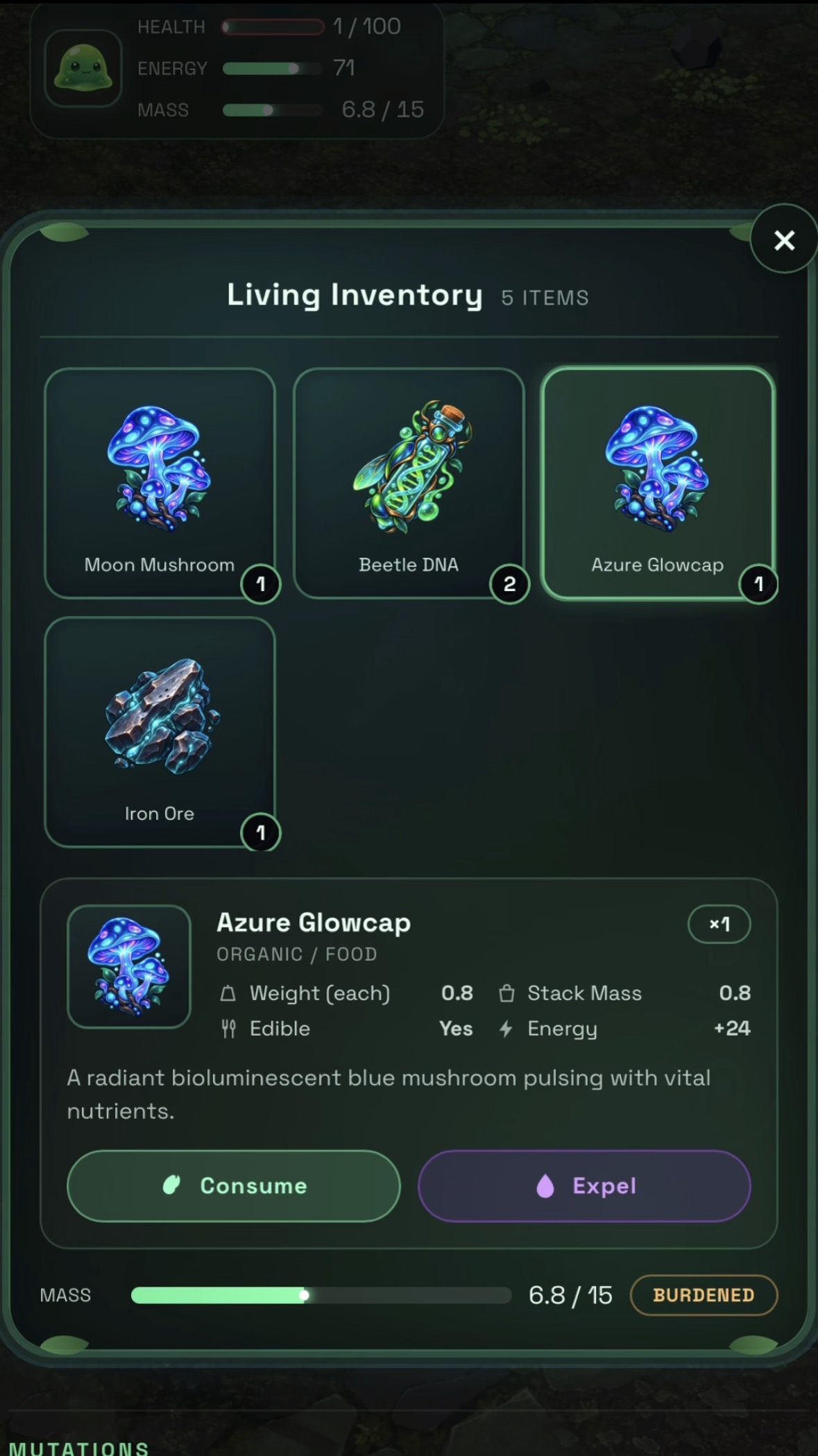
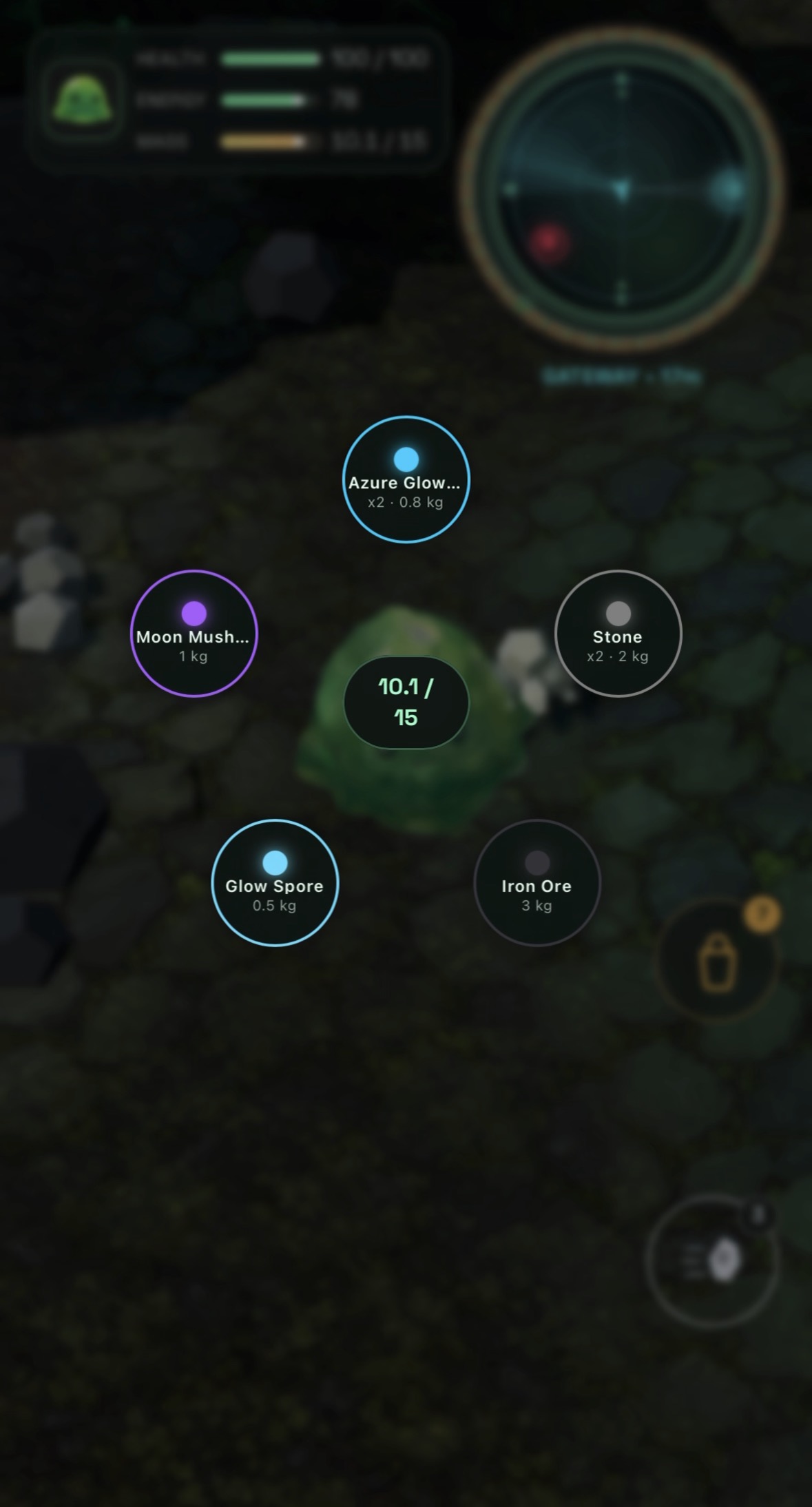
We wanted to try something that's easy to describe but hard to build well: what if your inventory wasn't a menu, but part of your body? Most survival games abstract away what you're carrying into a number or a grid. We kept coming back to the idea that hoarding should have a visible, physical cost you should be able to see your own greed slowing you down. That idea, more than any theme or prompt, is what became Hollowdrop.
What it does
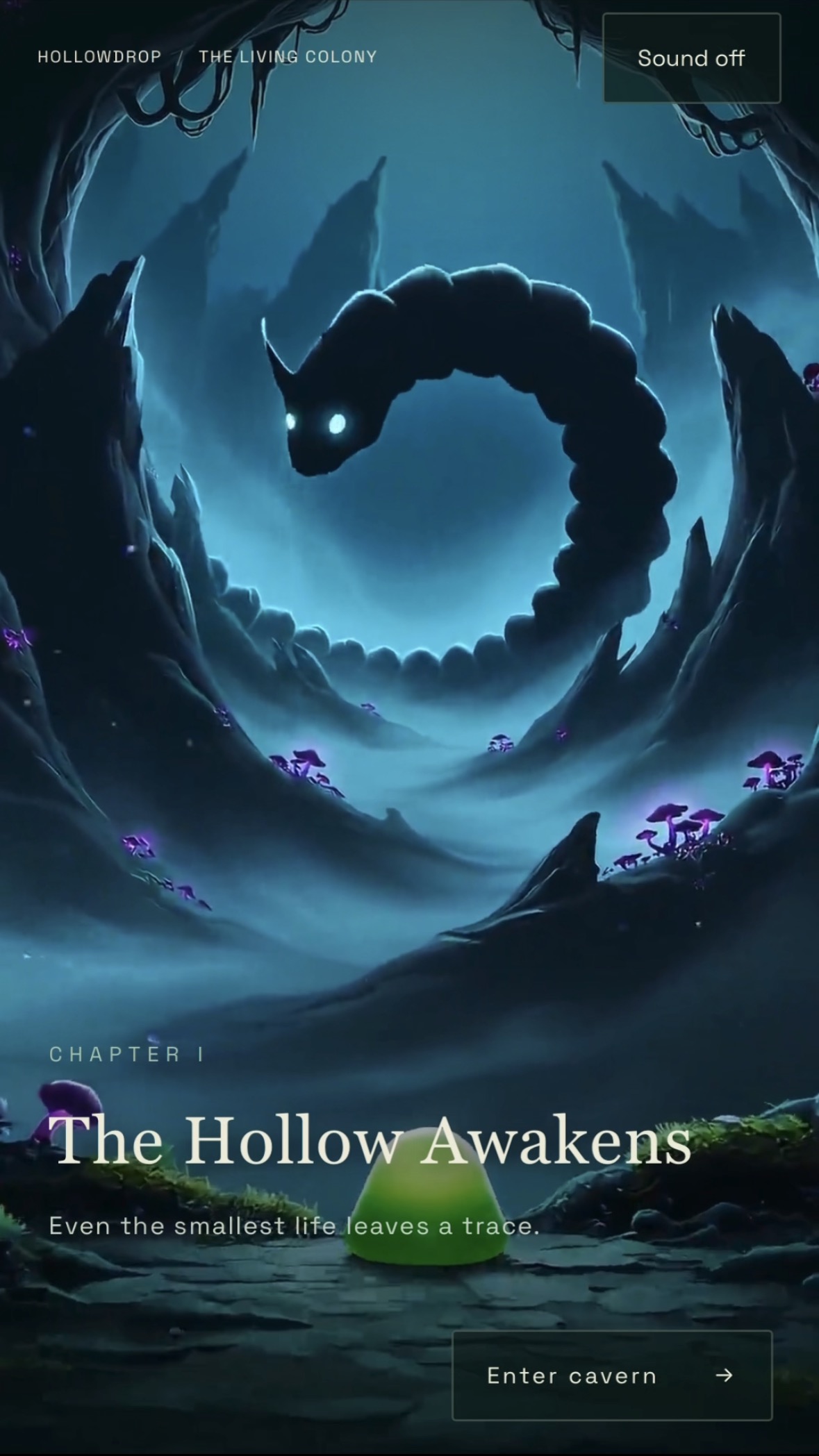
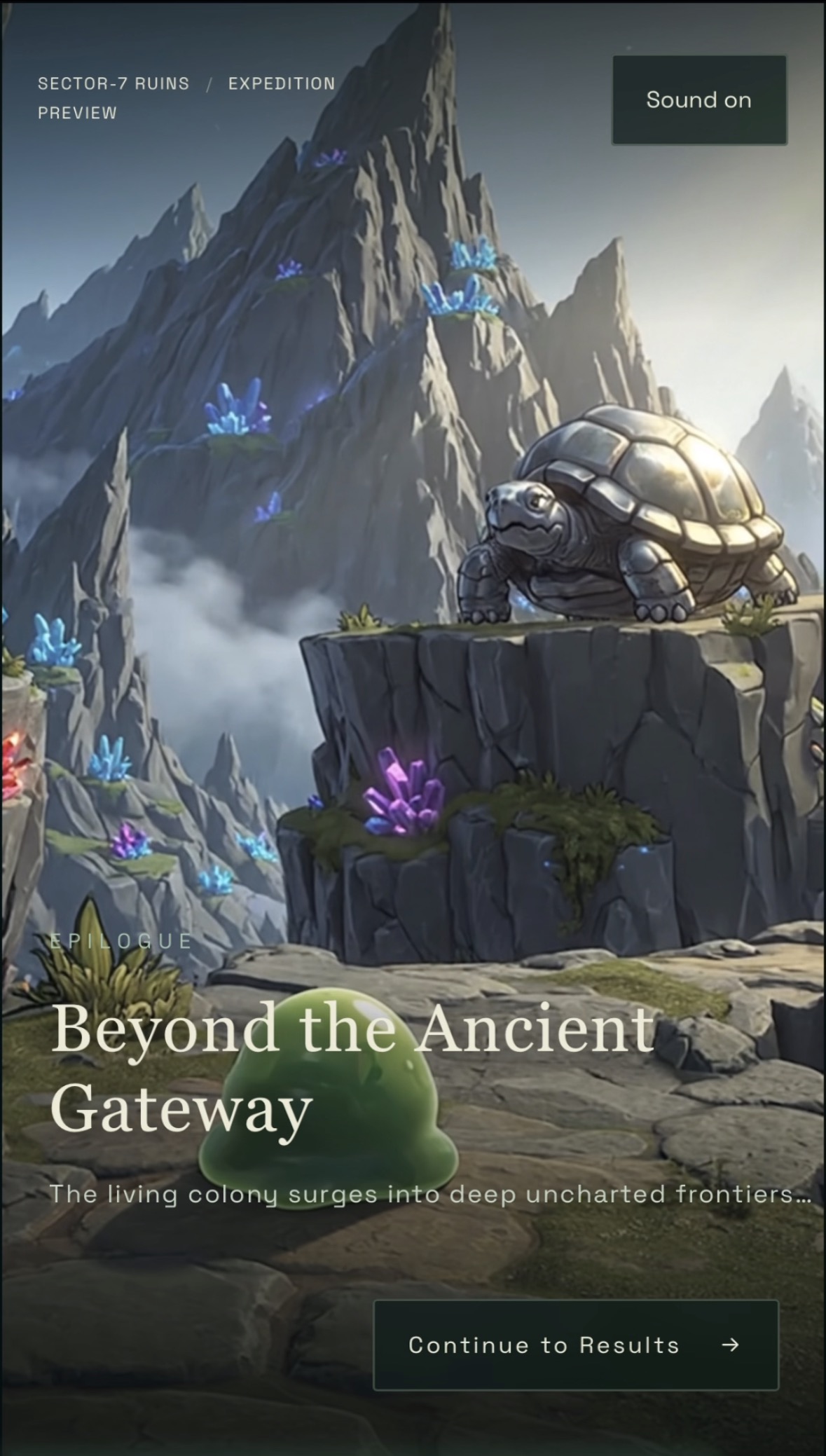
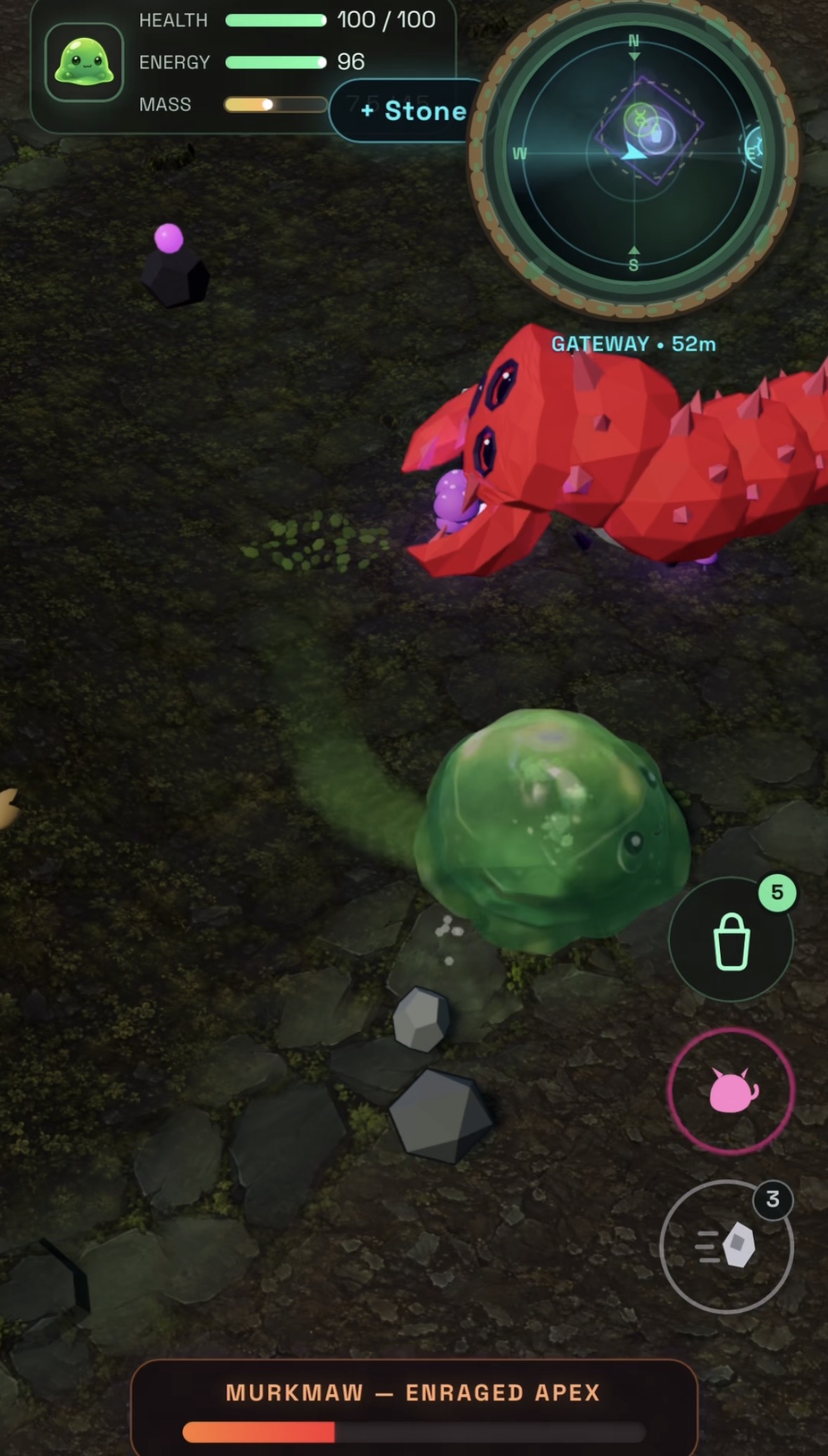
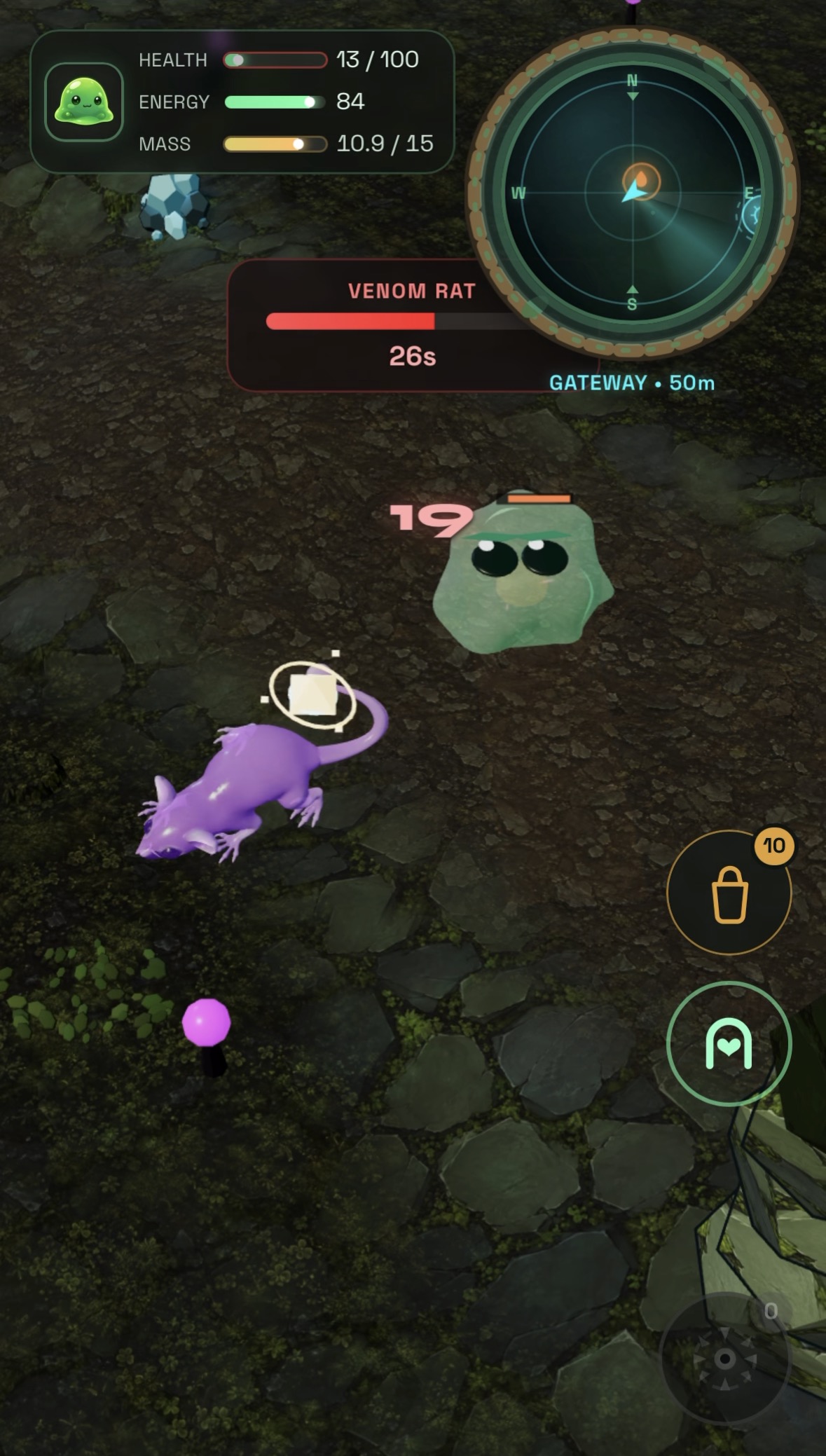
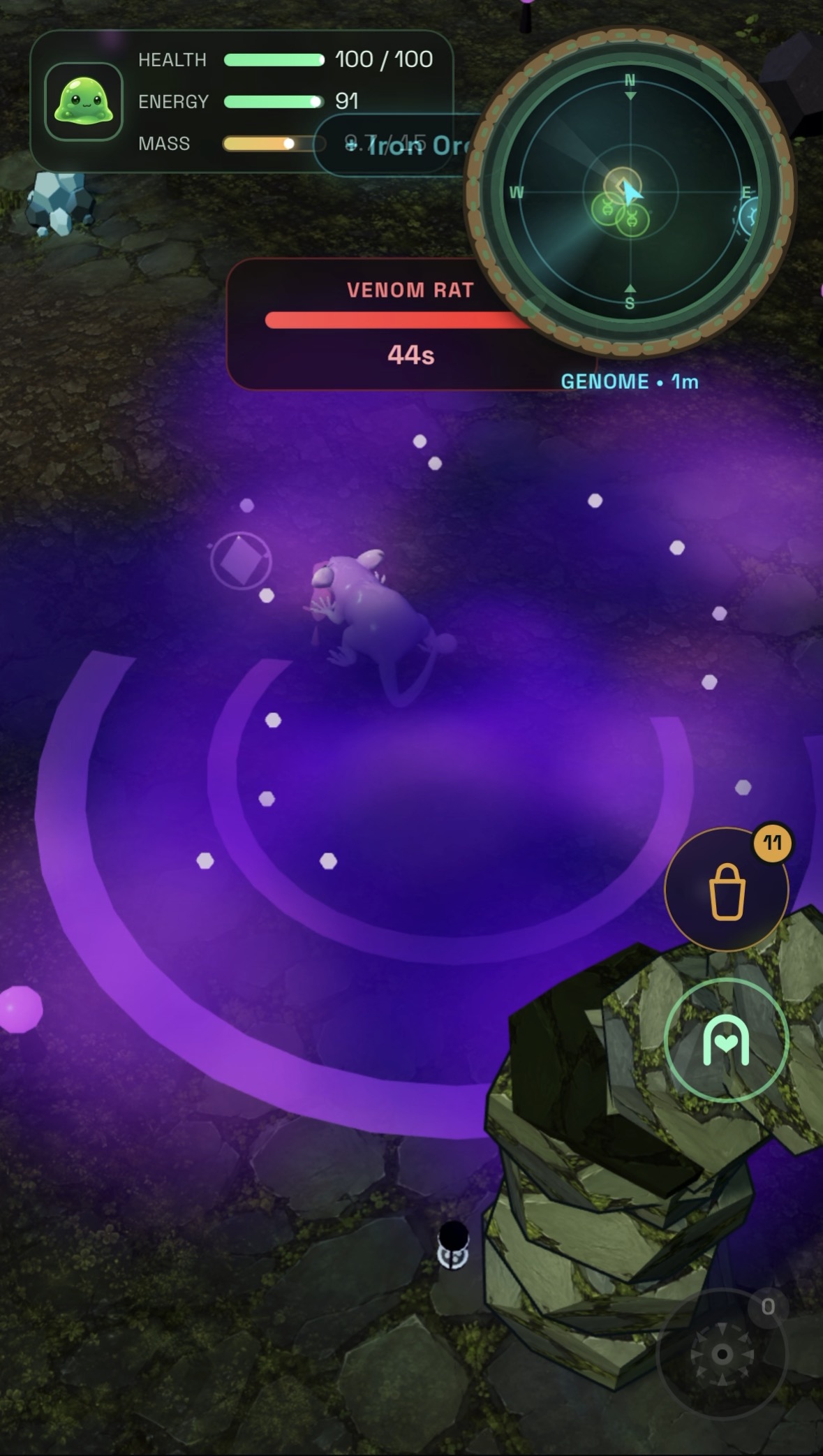
Hollowdrop: The Living Colony drops you into a biological cave system as a slime. You explore, inspect resources, and decide what to carry against how much weight and energy you can afford. Gathering the right combination Rat DNA, a Toxic Spore, and a Mushroom lets you trigger a 45-second mutation into a Venom Rat, a stronger but energy-hungry combat form with automatic bite attacks and a poison burst. You use that window to fight through the colony, defeat an Apex predator, and race a rival AI to secure a Human Genome Fragment before extracting it and triggering the run's memory-reveal ending. Death drops your resources and respawns you, so every run is shaped by how efficiently you route your gathering and time your mutation.
The build includes a full cave map, animated characters, an opening cinematic, radar, a tutorial, and touch UI for both portrait and landscape.
How we built it
Hollowdrop runs on a custom HTML5/JS engine we wrote ourselves rather than a pre-built framework like Unity or Godot. The whole prototype ships as a self-contained ZIP with an index.html entry point, playable through a local server or compatible HTML5 runner with no internet connection required. Building the engine from scratch meant handling movement, inventory, metabolism, combat, and the mutation state machine all ourselves more work up front, but full control over how the living-inventory visuals and the rat transformation actually feel.
Challenges we ran into
Building the engine layer ourselves meant we didn't get physics, animation blending, or touch input handling for free all of it had to be written and tuned by hand, especially getting drag-move and contextual acquire/consume prompts to feel responsive on mobile touchscreens. The living inventory system was its own challenge: making carried resources visibly attach to and slow the slime without the character reading as cluttered or unclear took several passes. Balancing the mutation window was tight too 45 seconds needed to feel like real pressure without being punishing, and the Venom Rat's faster energy drain had to make the trade-off matter without making the form useless.
Accomplishments that we're proud of
We shipped a complete loop, not just a mechanic demo: exploration, a metabolism system (food, weight, energy), a transformation mechanic with real combat trade-offs, an AI rival that creates pressure during extraction, and a full narrative arc from tutorial to ending all on an engine we built ourselves. The living inventory twist works exactly as intended: hoarding becomes a tension the player feels, not just reads about in a stat panel.
What we learned
Building our own engine instead of leaning on Unity or Godot taught us how much of what those tools give you for free physics, animation blending, input handling has to be earned by hand, and how much slower that makes iteration early on. It paid off in one specific way: because we controlled every layer, we could make the living inventory read clearly on the character model instead of fighting a framework's assumptions about how inventory should work.
We also learned that a tight time-boxed mechanic like the 45-second mutation window lives or dies on tuning, not on the concept. The idea of "borrow a stronger body, use it before it's gone" sounds good on paper, but it only feels tense once the energy drain, combat pacing, and revert timing are dialed against each other that balance took more iteration than any single system in the game.
Finally, mobile touch controls surfaced a lot of small but real UX lessons contextual prompts (approach a resource, tap to acquire) need to be forgiving about timing and hitbox size in a way desktop input doesn't, and getting drag-to-move to feel precise on a touchscreen took more passes than we expected going in.
What's next for HollowDrop - The Living Colony
This prototype is one cave and two playable forms Slime and Venom Rat. Using early access creation tools, the plan is to expand into connected biomes with branching mutations beyond the current recipe, persistent genetic loadouts players carry between runs, ecosystem-wide events, and competing populations that react to the player's choices. Narratively, further Human Genome Fragments and recovered memories would build toward the full humanity-restoration campaign and a confrontation with the First Slime.
Built With
- built-with-claude
- codex
- gemini
- html5
- javascript
- meshy
- mobile
- three.js


Log in or sign up for Devpost to join the conversation.