-
-
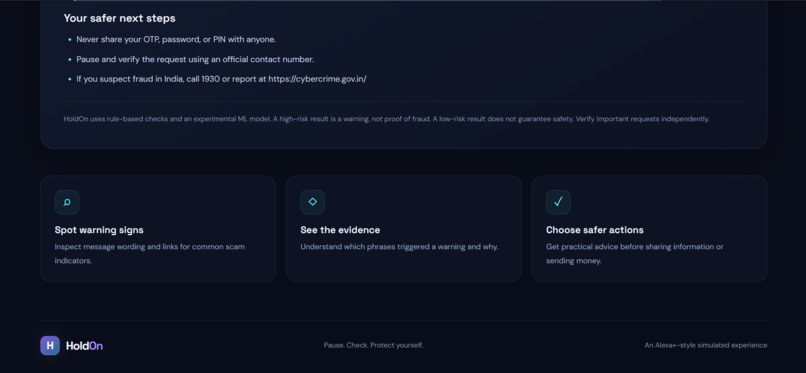
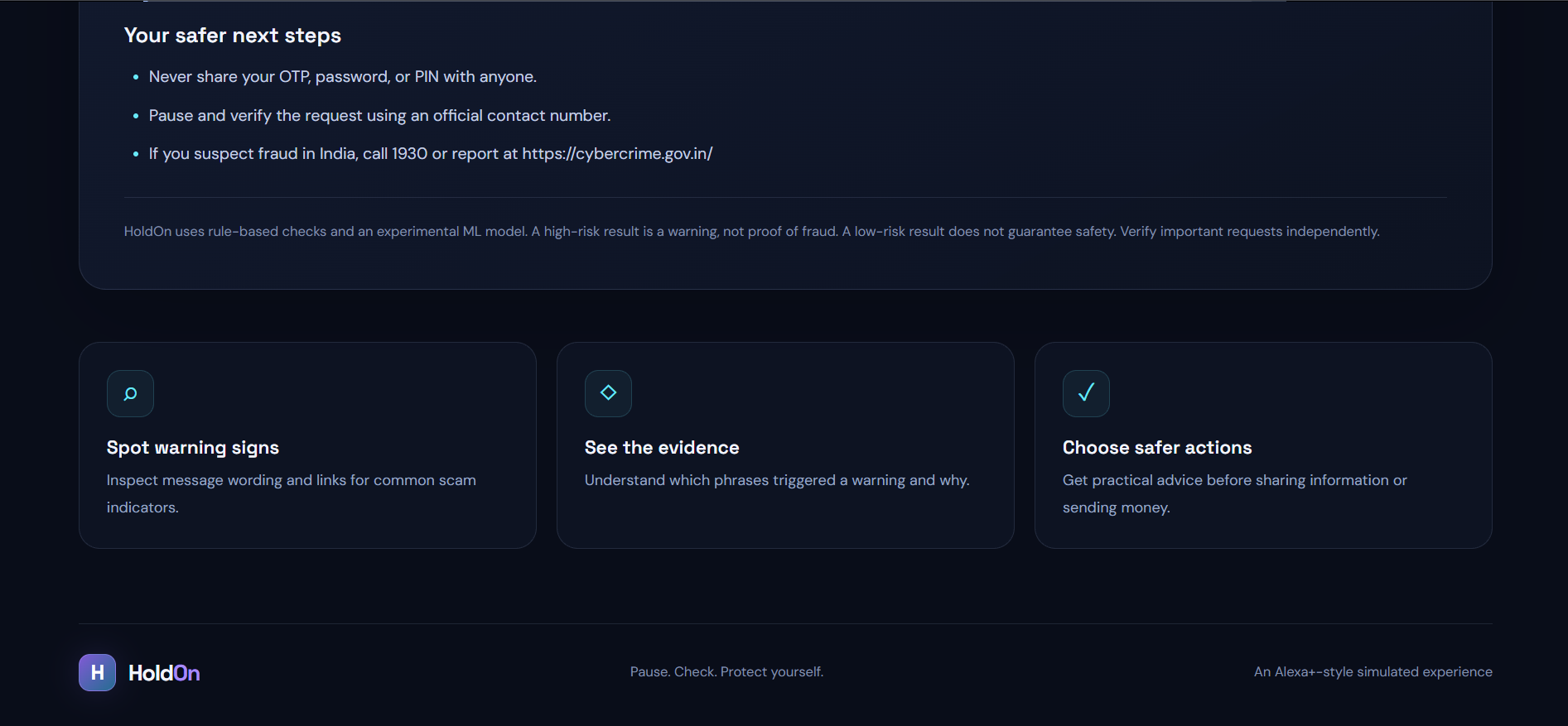
Providing practical next steps to help users respond safely to potential scams, including India's cybercrime reporting helpline.
-
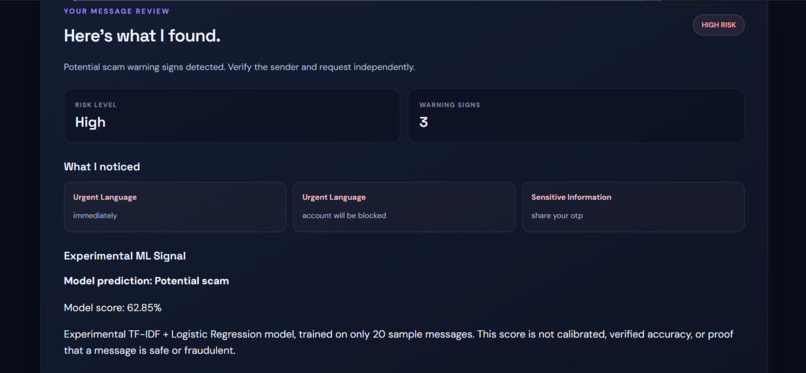
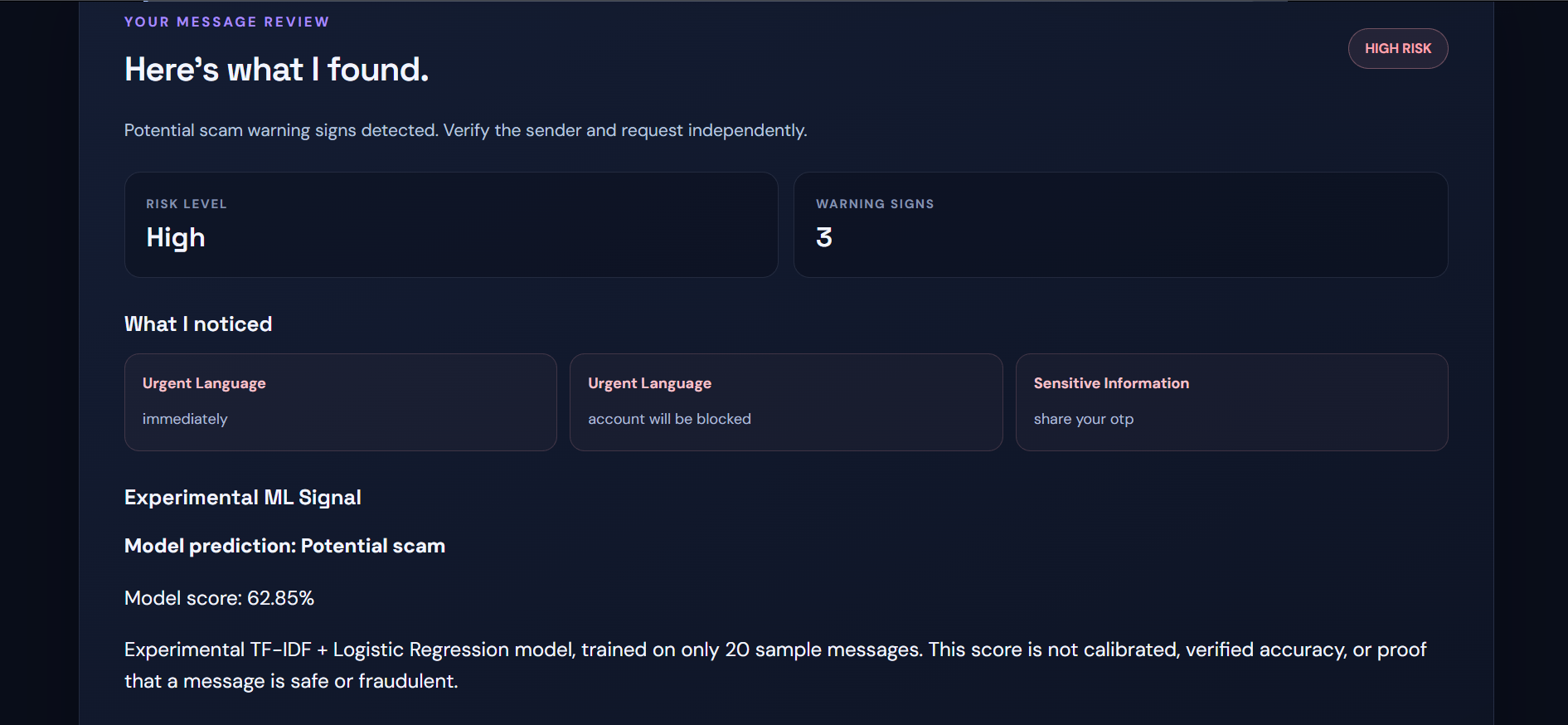
Identifying warning signs in messages requesting sensitive information, helping users protect their accounts.
-
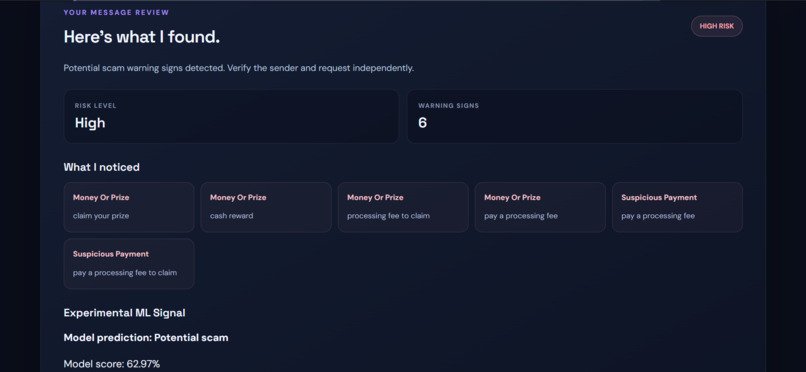
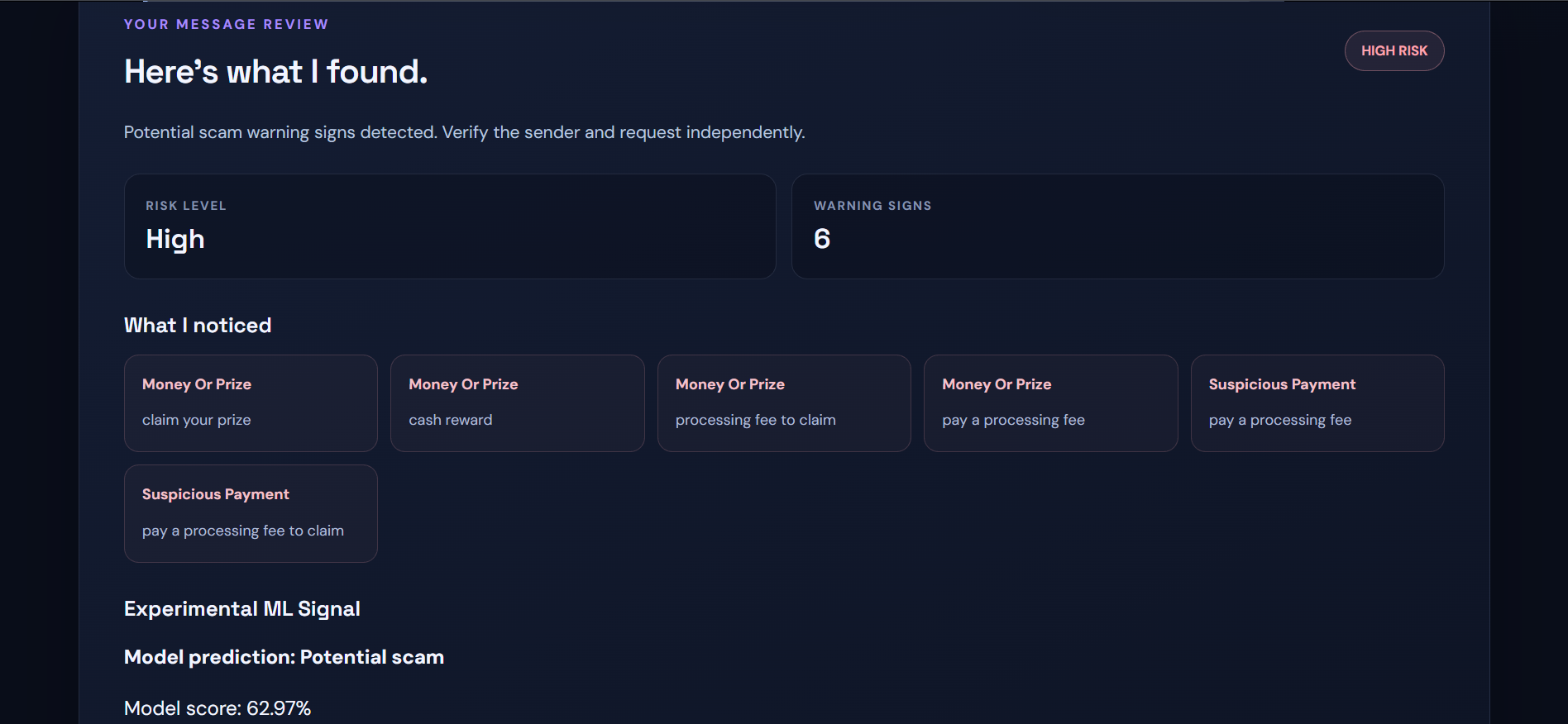
Detecting suspicious prize offers, urgent language, and requests for processing fees before users take action.
-

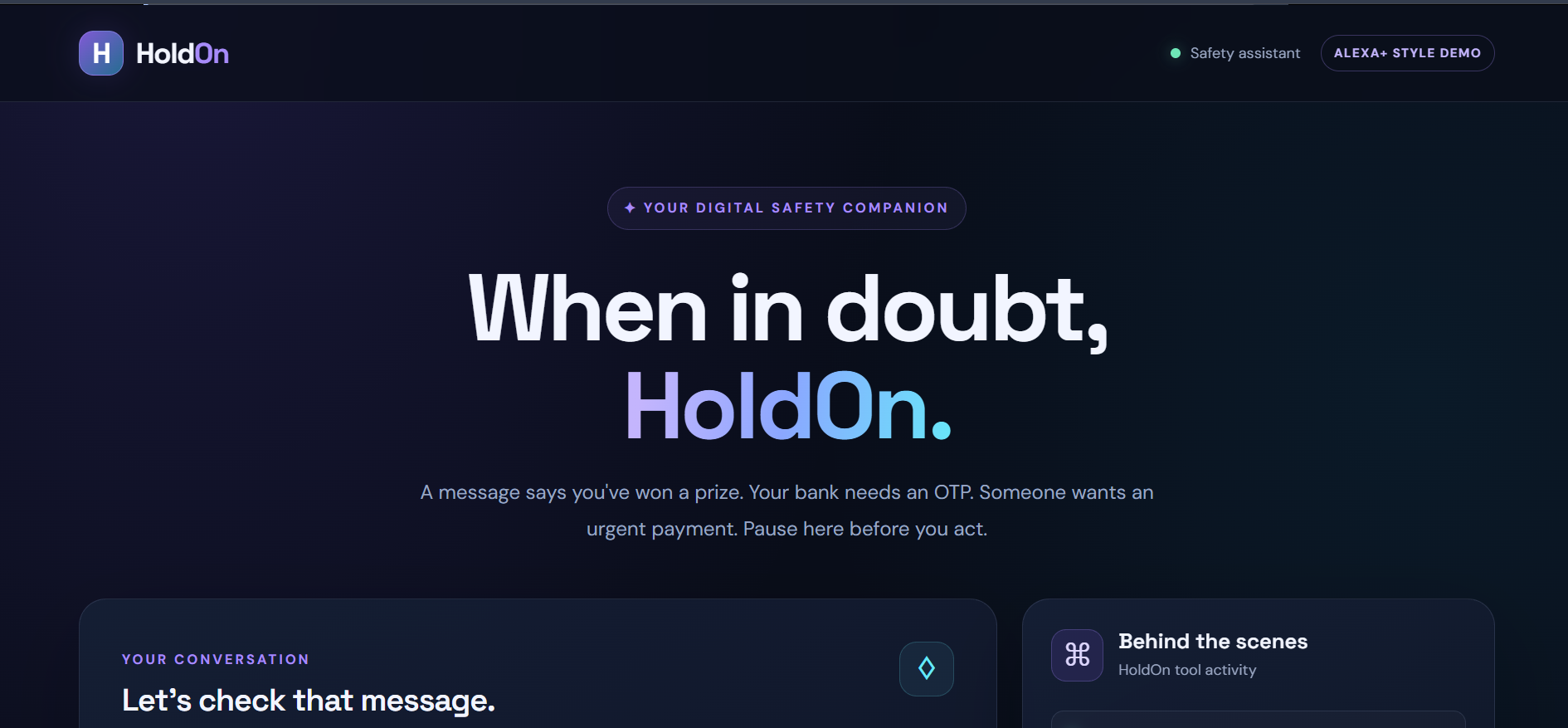
HoldOn — Your Digital Safety Assistant. Pause, check, and protect yourself from potential online scams.
-
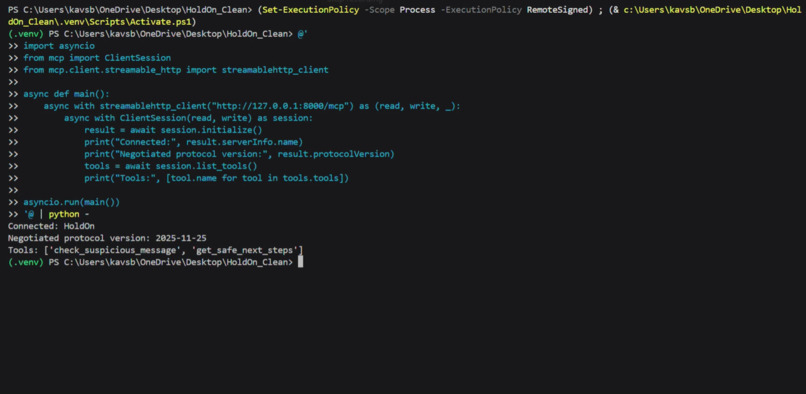
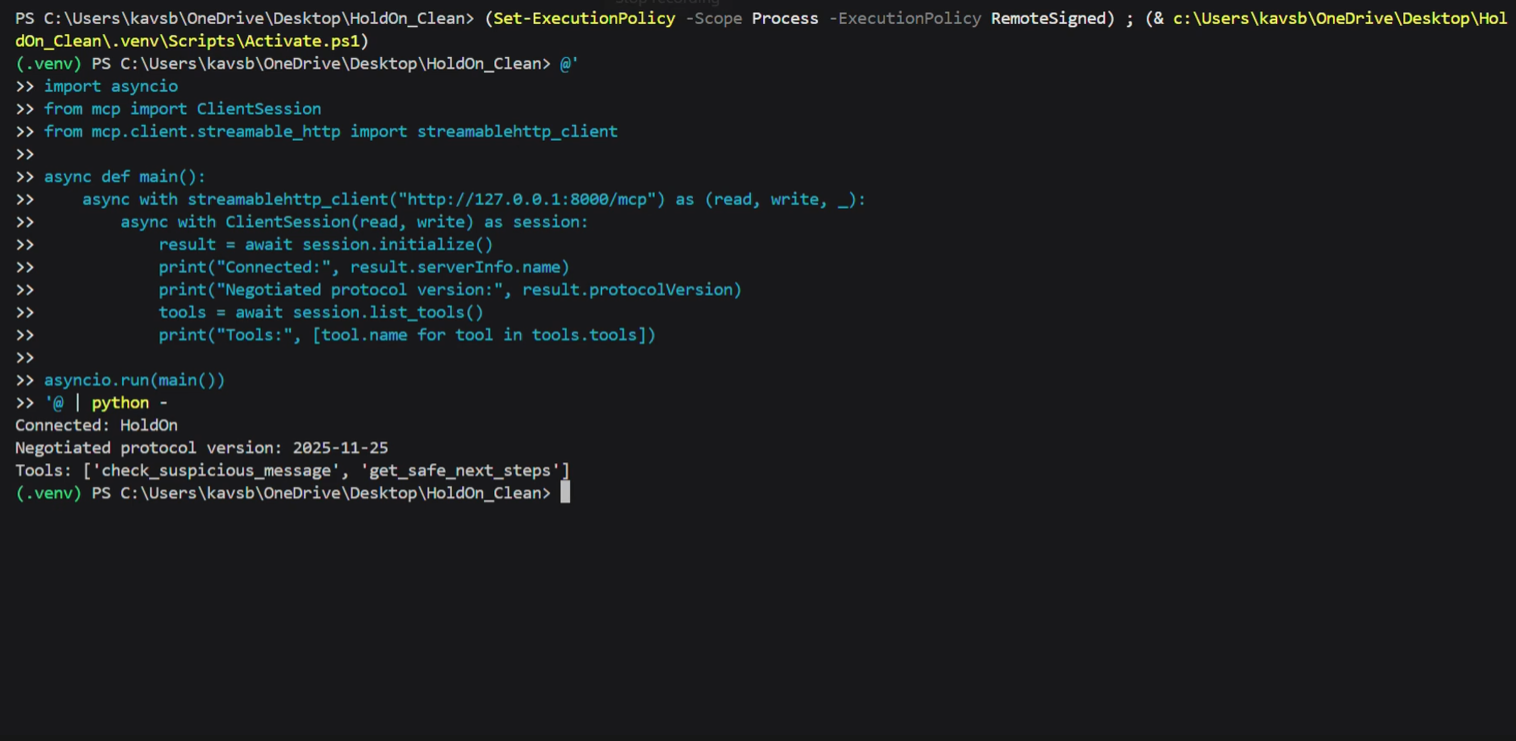
HoldOn's working Model Context Protocol (MCP) server exposes scam-checking and safety-advice tools through Streamable HTTP.
Inspiration
Online scams are becoming increasingly convincing. Messages promising prizes, demanding urgent payments, or asking for OTPs can trick people into sharing sensitive information or losing money. We wanted to build a simple tool that helps people pause and recognize potential scams before taking action.
That idea inspired HoldOn — Your Digital Safety Assistant, built around one simple message: Pause. Check. Protect yourself.
What It Does
HoldOn analyzes suspicious messages and identifies warning signs such as unexpected prizes, urgent language, requests for processing fees, sensitive-information requests, and suspicious links. It assigns a risk level and provides practical next steps to help users respond more safely.
The project combines rule-based scam detection with an experimental machine-learning model. It also provides two tools through a working Model Context Protocol (MCP) server using Streamable HTTP: suspicious-message checking and safe next-step recommendations.
How We Built It
We built HoldOn using Python and FastAPI for the backend, HTML, CSS, and JavaScript for the web interface, and an MCP server to expose its safety tools. We also experimented with a TF-IDF and Logistic Regression model to classify messages.
During development, we tested different examples, including prize scams, OTP requests, suspicious links, and ordinary messages. We refined the detection logic and connected the results to clear warnings and safety recommendations.
Challenges We Faced
One major challenge was making the warning signs consistent between different messages and ensuring the risk assessment matched the evidence displayed to the user. We also worked through connecting the web application to the MCP server and verifying that its tools could be discovered and called using the required protocol version.
Another important challenge was recognizing the limitations of machine learning. Our model is experimental and trained on a small sample dataset, so its predictions are not definitive proof that a message is safe or fraudulent. HoldOn therefore presents its results as guidance rather than a guarantee.
What We Learned
Building HoldOn taught us how to connect a frontend, backend, machine-learning model, and MCP tools into one application. We gained practical experience with API development, testing, debugging, protocol integration, and communicating technical results in a way that ordinary users can understand.
Most importantly, we learned that useful security software should do more than flag a threat. It should also explain the warning signs and help people decide what to do next.
What's Next
We aim to improve the model using a larger, more diverse dataset, expand support for regional languages, strengthen link analysis, and test the application against a wider range of real-world scam patterns.
HoldOn is our step toward making digital safety easier to understand and access — one message at a time.
Built With
- api
- context
- css
- fastapi
- github
- html
- http
- javascript
- learning
- logistic
- machine
- mcp
- model
- protocol
- python
- regression
- rest
- scikit-learn
- streamable
- tf-idf


Log in or sign up for Devpost to join the conversation.