-
-
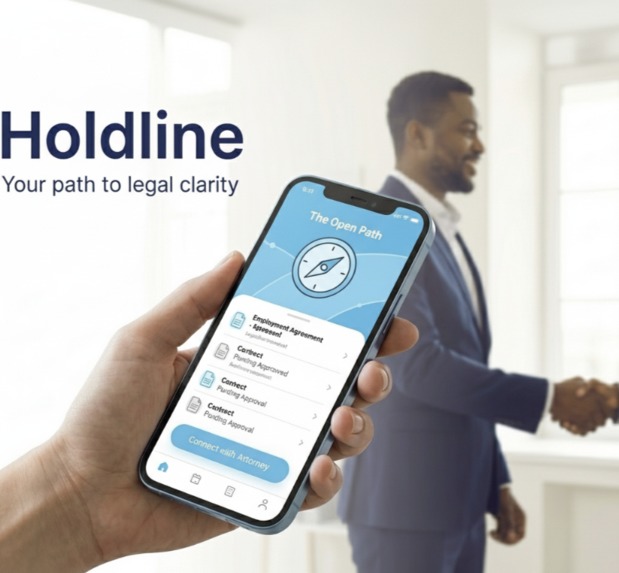
Holdline AI
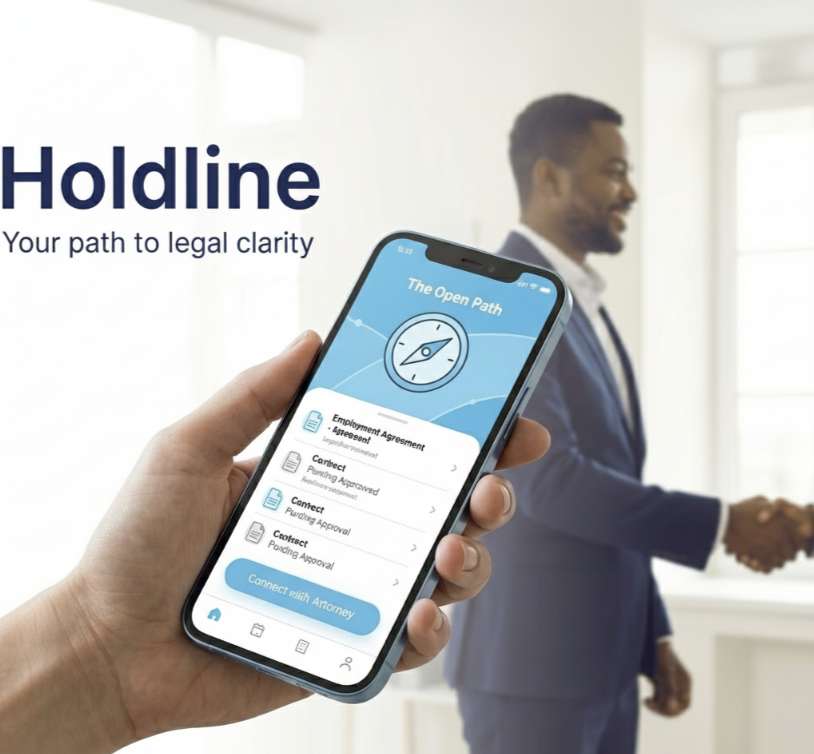
Inspiration
Over 300,000 Black women are currently unemployed — and behind that number is a pattern I kept witnessing up close. Friends being pushed out of companies, handed severance agreements, and signing them. Not because the terms were fair. Because they were in shock, and nobody told them they had another option. Here's what most people don't know: companies frequently miss critical steps in the termination process, creating legal exposure. Many terminations violate EEOC protections that workers never pursue. Nearly every severance agreement is negotiable — but only before you sign. People from our communities rarely seek legal resources in these moments, and money that rightfully belongs to them disappears quietly. Not because there was no case. Because no one intervened in time. Holdline was built for that intervention.
What it does
Holdline is a legal support app for workers who believe they've been terminated illegally. It's named for the single most important instruction: hold the line. Don't sign. Don't agree to anything until you've spoken to a lawyer. The app does four things: stabilizes users emotionally in the critical first 48 hours; guides them through a structured intake questionnaire that mirrors an employment attorney's first consultation; connects them with verified employment attorneys filtered by state and practice area; and provides plain-language summaries of their rights — including what their situation may be worth financially.
How I built it
I've worked in tech for nearly a decade and have never written a single line of code. This is the first app I've ever built. Strategy came first. I used Claude to develop a full PRD — user personas, feature specs, 25-question intake logic, screen inventory, and technical architecture — before touching any build tool. I designed the UI in Stitch by Google, built and deployed the application in Google AI Studio, and integrated Firebase for secure authentication. When bugs surfaced, I returned to Claude to debug and iterate.
Challenges I ran into
The biggest challenge was one I didn't anticipate: the gap between what an AI tool generates and what actually renders correctly in a browser. Persistent layout bugs — blank whitespace, broken images, runaway section heights — required real debugging patience and precise problem description to resolve iteratively. The second challenge was restraint. This app could be so much more. Keeping it anchored to MVP discipline — get the right information to the right person before they sign something irreversible — required constant refocusing.
Accomplishments that I'm proud of
A non-engineer built a functioning, deployed, full-stack legal support app in 48 hours. The intake questionnaire reflects genuine employment law expertise. The stabilization screen delivers real emotional design, not just functional design. And the name, the copy, and the product thesis are unified around a single idea that is both strategically sound and genuinely useful to people in crisis.
What I learned
The constraint was never technical ability — it was always imagination and strategy. AI tools have collapsed the distance between having an idea and having a product, but they haven't changed the underlying truth: the quality of what you build is determined by the quality of how you think. The PRD process was the reason the execution worked. Thinking first, building second, is still the right order of operations — even when the build takes hours instead of months.
What's next for Holdline AI
The business model is attorney lead generation — intake-complete users are the highest-quality leads in employment law. The secondary path is B2B licensing to legal aid organizations and workforce nonprofits who need structured intake infrastructure at scale. On the product roadmap: AI-powered case assessment that gives users a preliminary read on claim strength before they contact an attorney; expansion of the legal resource library to all 50 states; and a mobile-native experience optimized for the moment users actually need this — on their phone, in a parking lot, thirty minutes after it happened. The EEOC receives 67,000+ workplace discrimination charges annually. That's only the people who know to file. The communities Holdline serves are the most affected and the most underserved by existing legal technology. The market is real, the intervention is timely, and the tools to deliver it now exist. Holdline.
Don't move. Don't sign. Know what you're worth
Built With
- claude
- firebase
- googleaistudio
- stitch


Log in or sign up for Devpost to join the conversation.