Inspiration
Air traffic control is an incredibly demanding responsibility, requiring controllers to make quick decisions while managing dozens of moving aircraft, changing runway conditions, and the constant possibility of human error. Even a small mistake in communication or ground routing can lead to significant delays or dangerous runway incursions. We wanted to explore how artificial intelligence and modern software could help air traffic controllers make safer, more informed decisions while reducing the mental workload associated with managing busy airports.
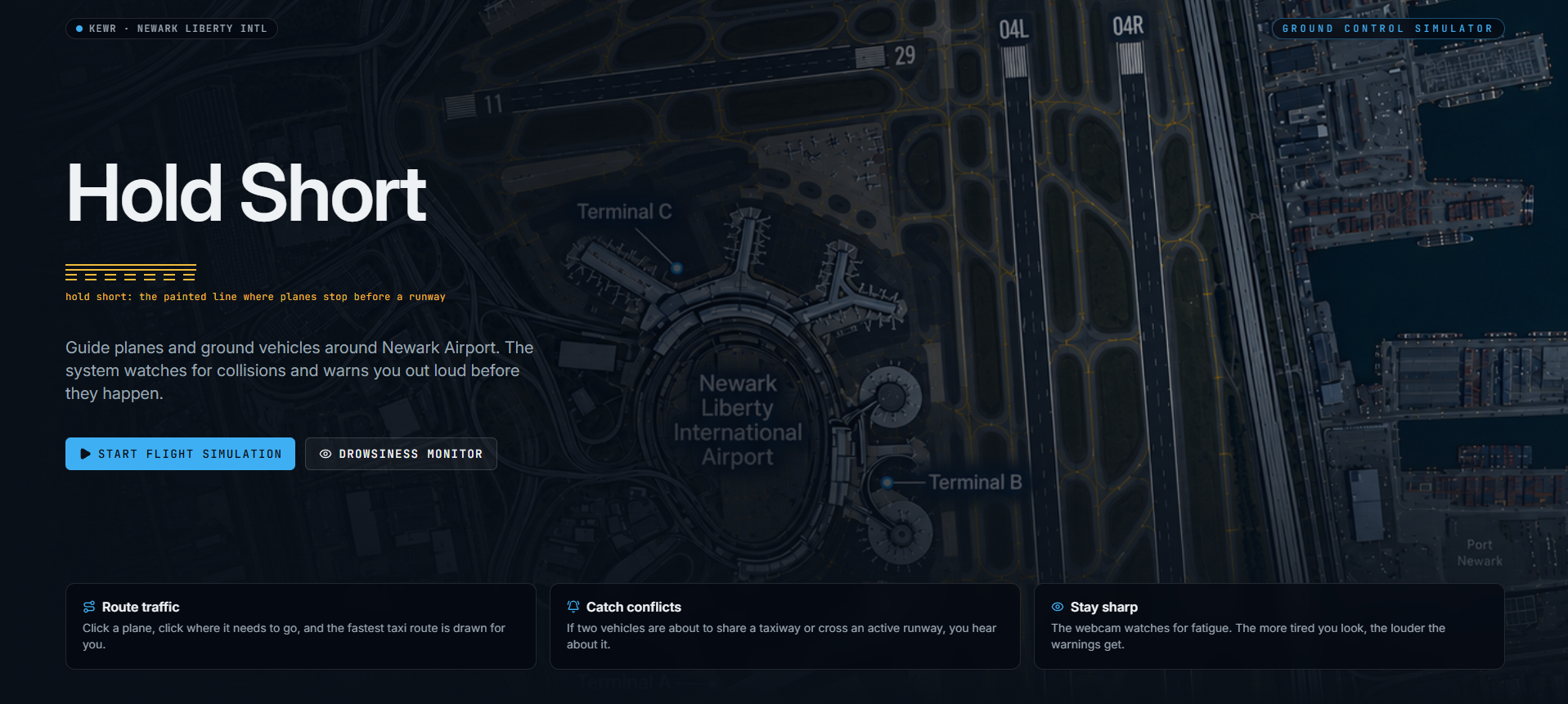
This inspired us to create Hold Short, an interactive airport ground-control simulator that demonstrates how intelligent routing, real-time conflict detection, and controller monitoring can work together to improve aviation safety. Rather than building a purely automated system, we wanted to place users in the controller's position, allowing them to interact with aircraft, make routing decisions, and experience firsthand how difficult managing airport ground traffic can be.
What it does
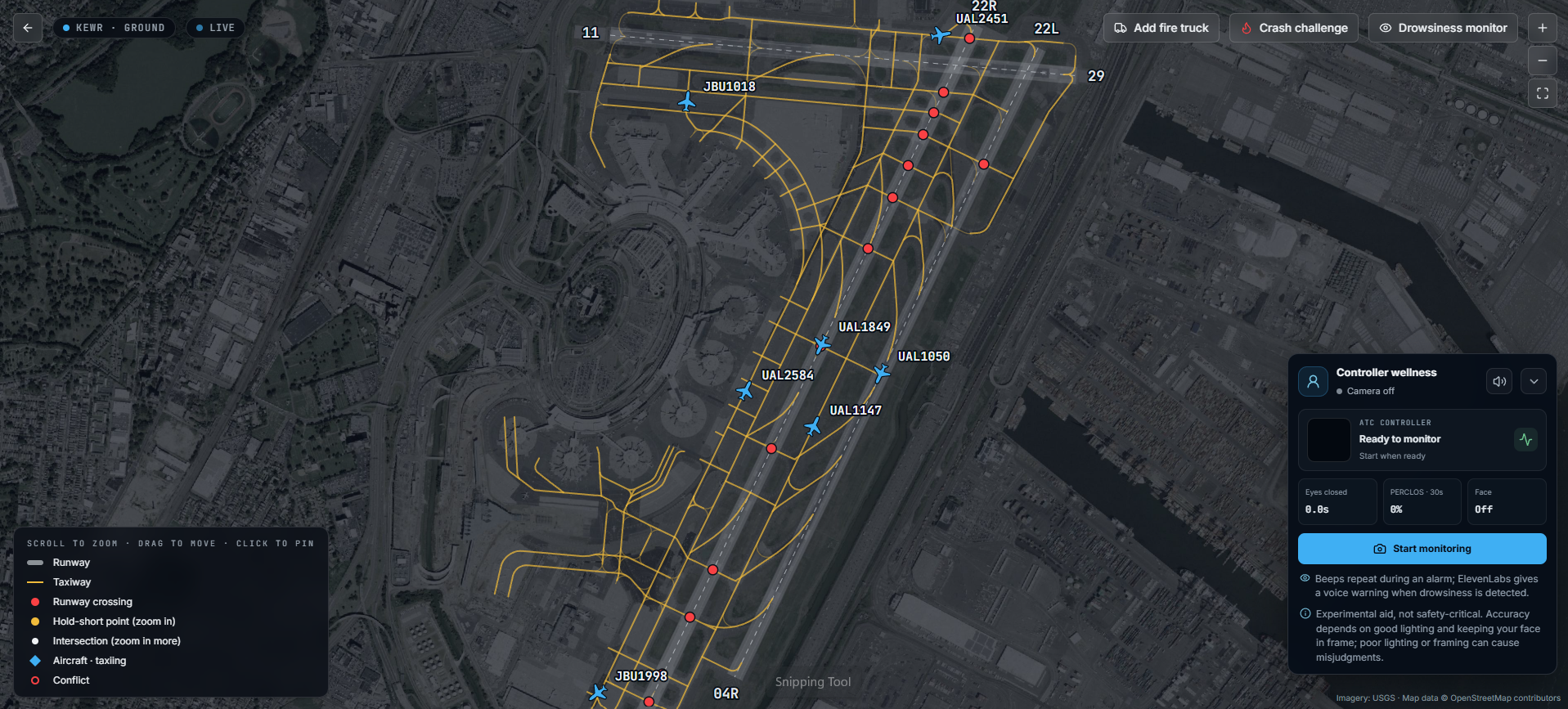
Hold Short is an interactive, AI-assisted airport ground-control simulator built around a digital representation of Newark Liberty International Airport (KEWR). The simulator dynamically introduces aircraft into the airport environment, calculates taxi routes, and tracks their movement across a network of real airport taxiways. Users can observe aircraft moving throughout the airport, intervene in routing decisions, and issue commands to manage traffic.
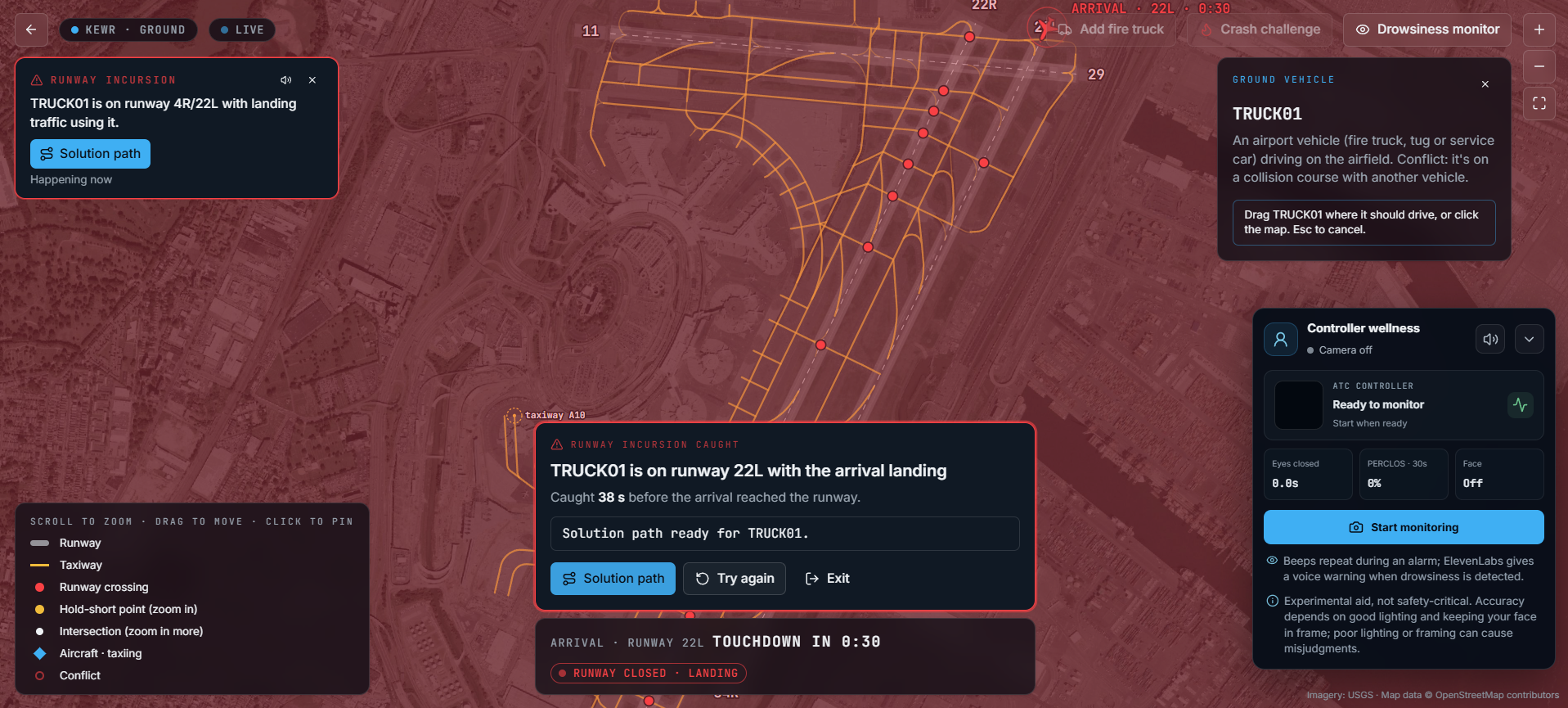
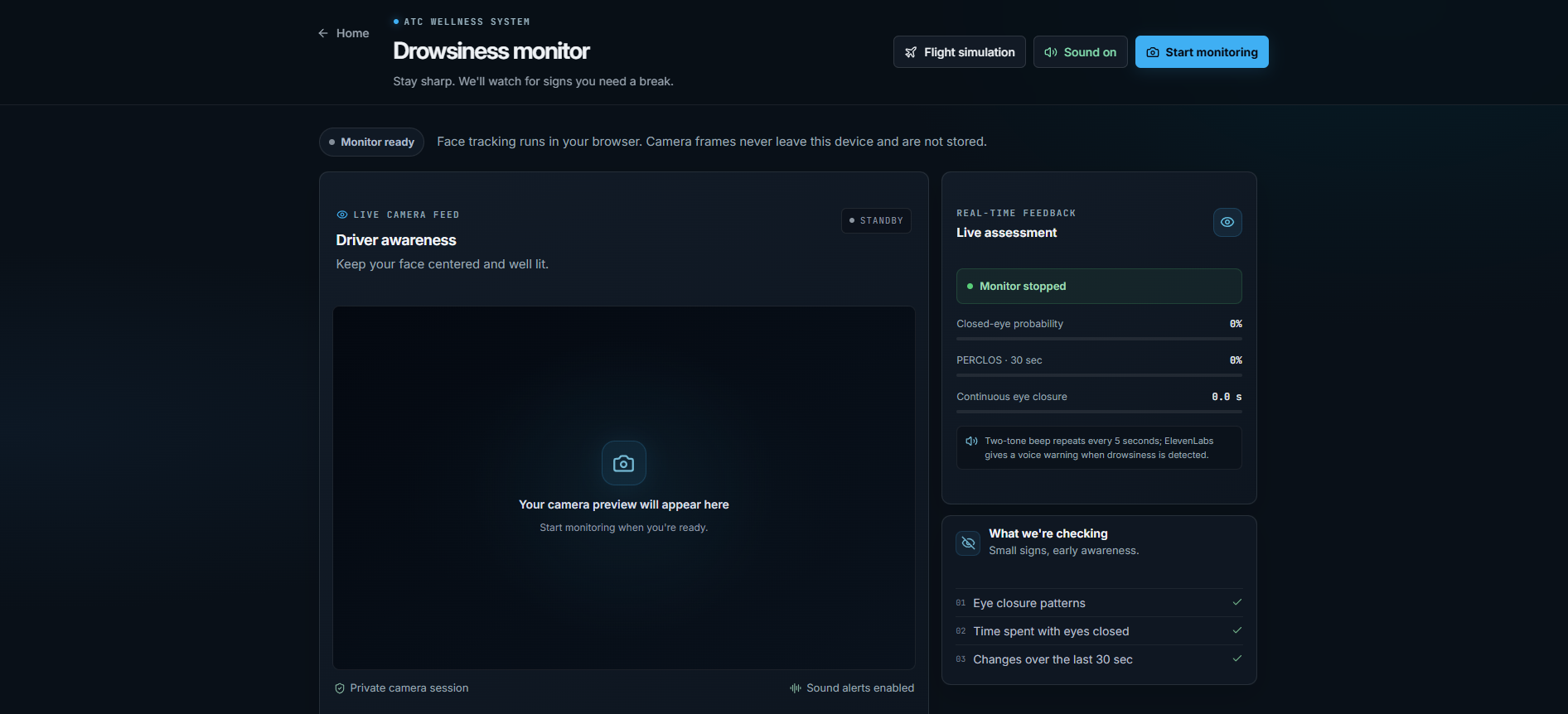
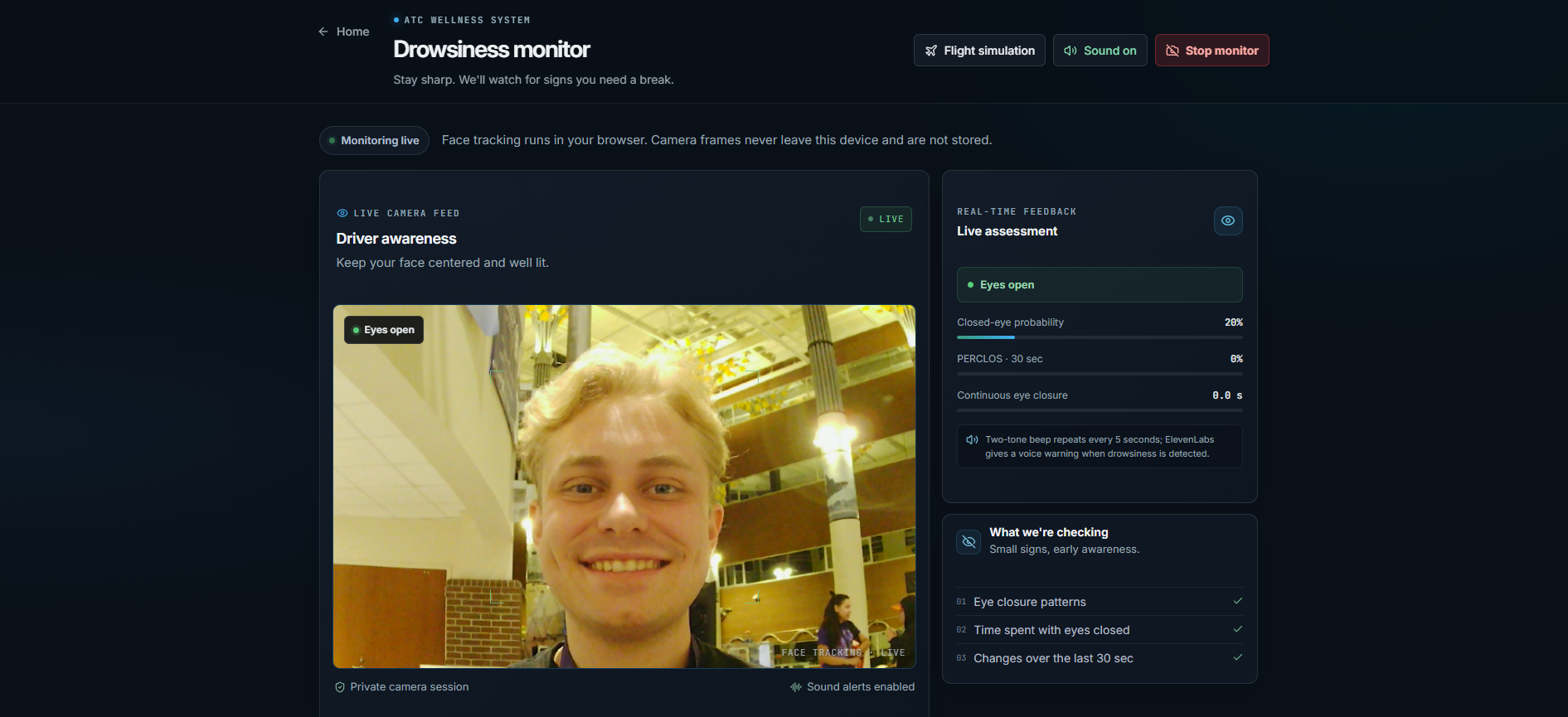
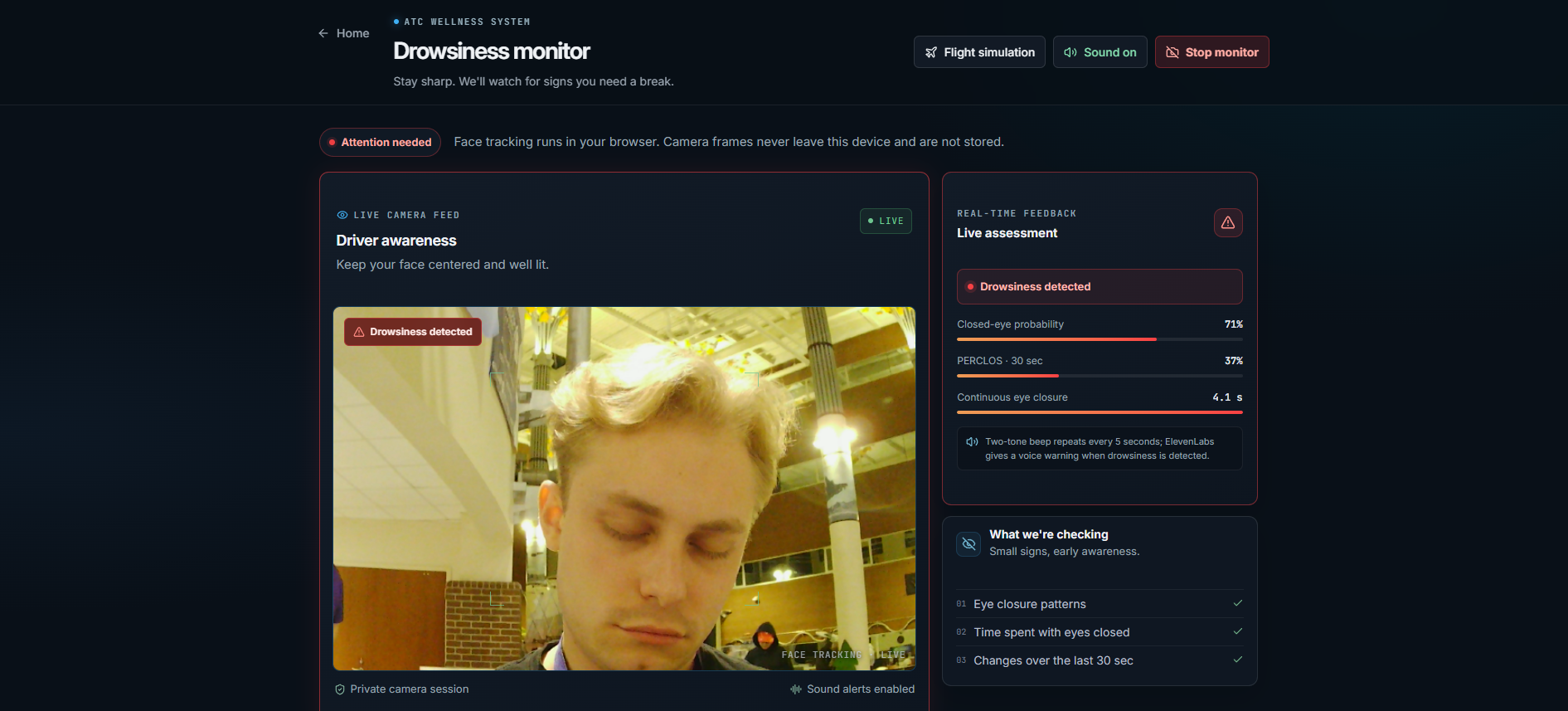
One of Hold Short's central features is its ability to detect potentially dangerous situations, including aircraft separation conflicts and runway incursions. The system analyzes aircraft and vehicle movements to identify hazards and support timely controller intervention. Our project also explores incorporating fatigue detection to monitor controller attentiveness and adjust the urgency of warnings accordingly.
Through interactive gameplay, Hold Short aims to demonstrate both the complexity of ground-control operations and the potential for intelligent software to assist human decision-making.
How we built it
We developed Hold Short using a full-stack architecture with React and TypeScript on the frontend and Python with FastAPI on the backend. The frontend provides an interactive airport visualization, displaying aircraft positions, taxiway routes, and simulation information. Communication between the two systems uses WebSockets, allowing the interface to receive continuously updated aircraft positions and game-state information.
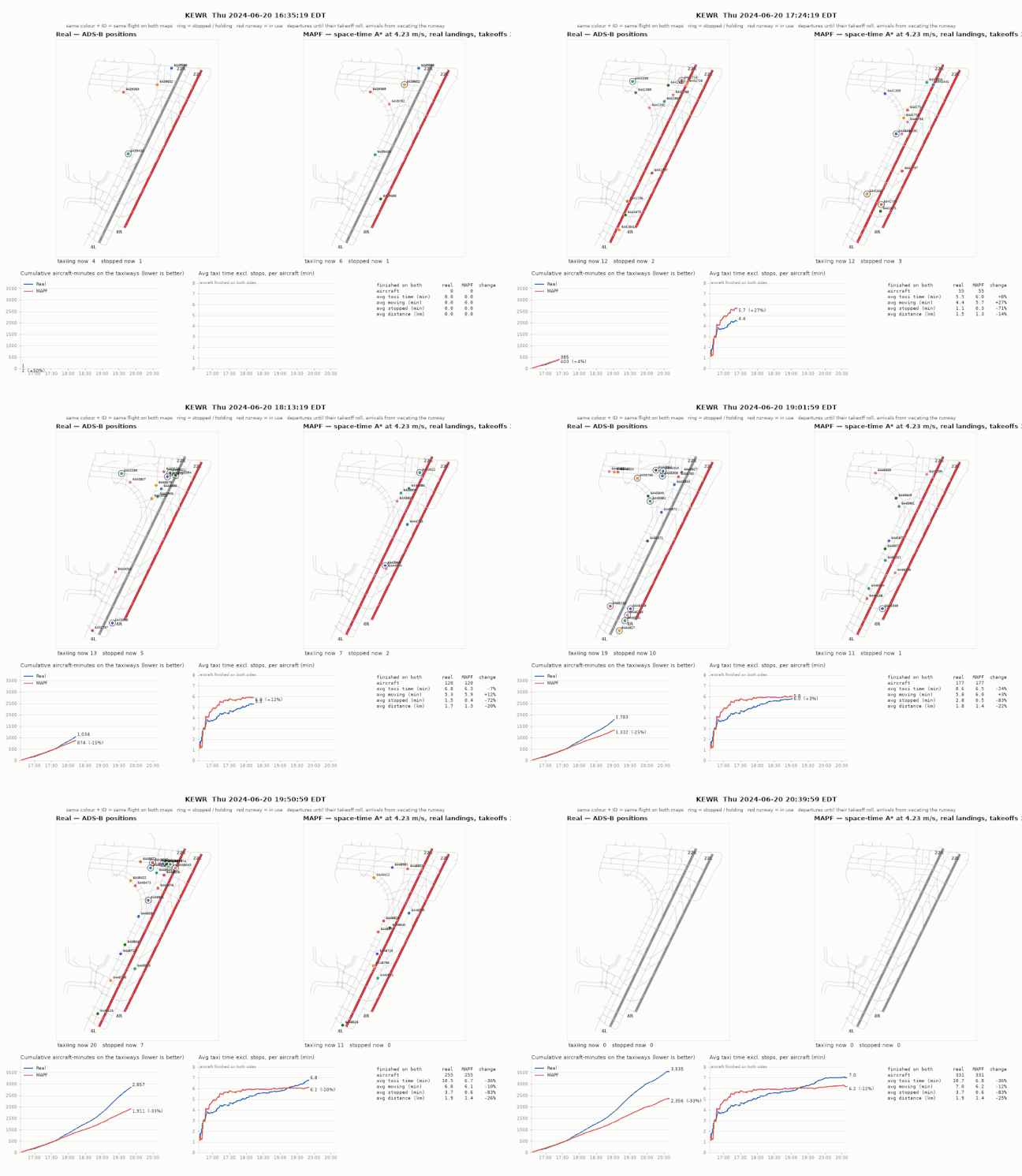
For the simulation environment, we constructed a connected representation of Newark Liberty International Airport using real-world OpenStreetMap geographic data. Airport taxiways are represented as a graph of nodes and edges, allowing the backend to calculate paths between different locations. We implemented A* pathfinding alongside more advanced space-time routing and reservation systems to support aircraft movement and account for shared taxiway resources.
Our backend manages aircraft spawning, movement, route assignment, runway scheduling, and conflict detection. The simulator updates continuously, tracking aircraft as they travel through the airport and checking for potential safety hazards. We also structured the project to support historical taxiway data analysis, fatigue detection, and additional AI-assisted functionality.
Challenges we ran into
One of our biggest challenges was translating real-world airport infrastructure into a usable simulation environment. Airport taxiways are much more complex than simple paths between points, and we needed to ensure that the graph used for routing matched the airport layout displayed on the frontend. Maintaining consistent geographic identifiers between the backend and visualization was essential to prevent aircraft from appearing in incorrect locations or following invalid routes.
Another major challenge involved coordinating multiple moving aircraft while accounting for shared taxiways, runway access, and potential conflicts. It wasn't enough to find the shortest route between two locations; our routing and simulation systems also needed to consider when different aircraft would occupy specific segments of the airport.
We also encountered challenges integrating separately developed frontend and backend components. Working across different GitHub branches introduced merge conflicts involving dependencies, configuration files, and API functionality. Resolving these issues required us to establish consistent data structures, clarify which components each team member was responsible for, and ensure that changes to one part of the application didn't break another.
Finally, the limited timeframe of a hackathon required us to carefully balance technical ambition with having a stable, demonstrable application.
Accomplishments that we're proud of
One of our proudest accomplishments was transforming real geographic airport data into a functioning, interactive ground-control simulation. Rather than relying on a completely fictional airport layout, we developed a system that represents actual taxiway connections and allows aircraft to navigate through them.
We're particularly proud of implementing an integrated backend capable of automatically spawning aircraft, assigning routes, updating their positions, and detecting potential conflicts as the simulation progresses. Seeing aircraft move across the frontend's airport map using routes generated by our own algorithms was an important milestone because it demonstrated that our routing, simulation, and visualization systems could operate together.
Another accomplishment was designing Hold Short around meaningful user interaction. Instead of simply displaying aircraft movements, we wanted users to participate in managing airport traffic and understand how their decisions could affect operational safety. This helped transform a technically complex simulation into a project that could communicate its purpose through an engaging, hands-on experience.
What we learned
Developing Hold Short gave us valuable experience working with graph algorithms, real-time simulations, geographic data, and full-stack software integration. We learned how to represent a complex physical environment as a connected graph, apply pathfinding algorithms to real-world routing problems, and synchronize continuously changing backend data with an interactive frontend.
We also gained a greater appreciation for the complexity of airport ground operations. What initially appeared to be a straightforward routing problem quickly became much more challenging when considering multiple aircraft, runway restrictions, scheduling, and conflict prevention. This reinforced the importance of combining efficient algorithms with carefully designed simulation rules.
From a software engineering perspective, we learned the importance of modular architecture, consistent API contracts, collaborative Git workflows, and thorough testing. With different team members working on interconnected parts of the project, communication and integration became just as important as the individual components we developed.
What's next for Hold Short
Looking ahead, we want to expand Hold Short into a more sophisticated and realistic air traffic control training environment. One of our primary goals is to further develop our AI-assisted routing capabilities using historical aircraft movement data, allowing the system to make increasingly informed predictions about taxi times, congestion, and potential conflicts.
We also want to expand the simulator's interactive features, including more detailed vehicle controls, runway-incursion challenges, and scoring systems that compare human controller decisions against automated routing. Improving conflict alerts with natural-language explanations, voice notifications, and predicted time-to-conflict information would make the experience more immersive and educational.
Other potential improvements include integrating speech recognition for spoken ATC clearances, expanding fatigue detection and controller monitoring, and supporting additional airports and traffic scenarios.
Ultimately, we envision Hold Short as more than a hackathon demonstration. We want it to serve as a foundation for exploring how artificial intelligence, human-centered design, and interactive simulations can work together to make aviation operations safer and more efficient.
Built With
- fastapi
- python
- react
- typescript


Log in or sign up for Devpost to join the conversation.