-
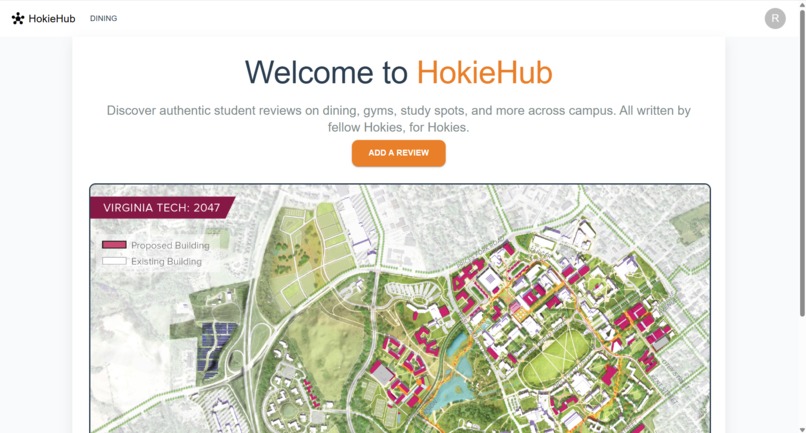
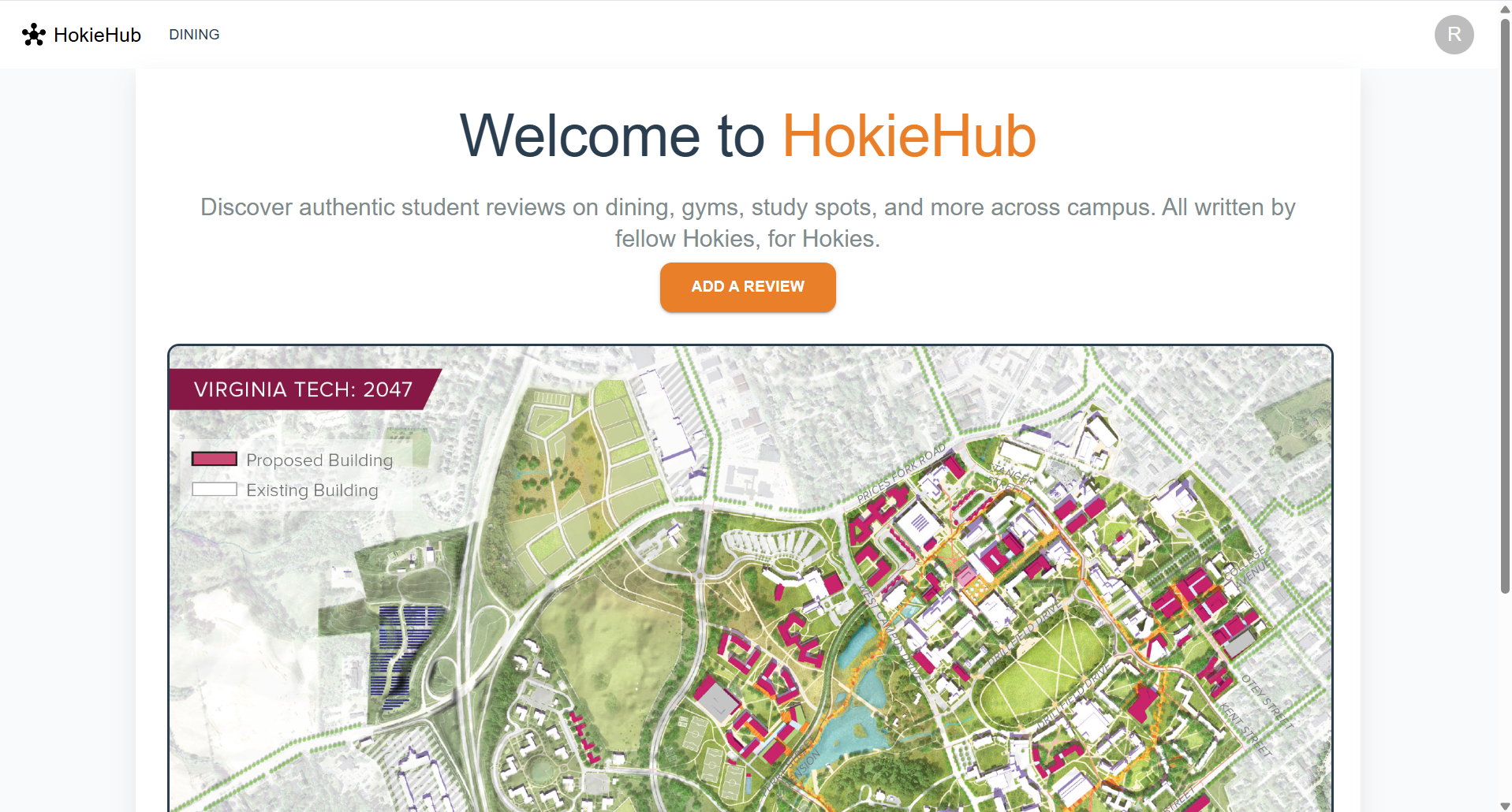
Home Page
-
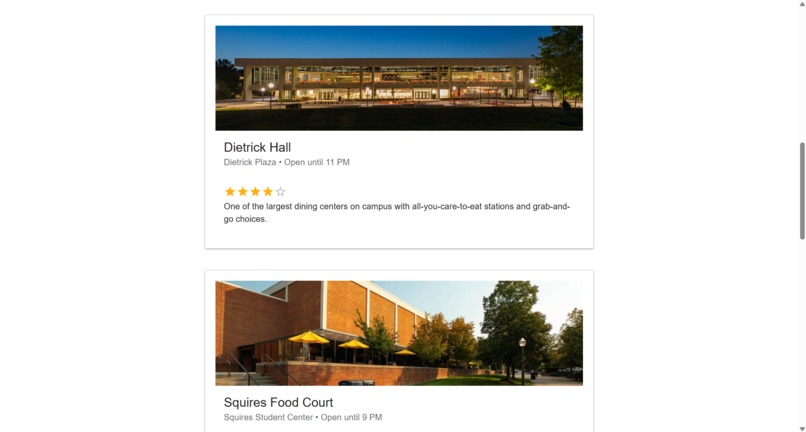
Dining Halls
-
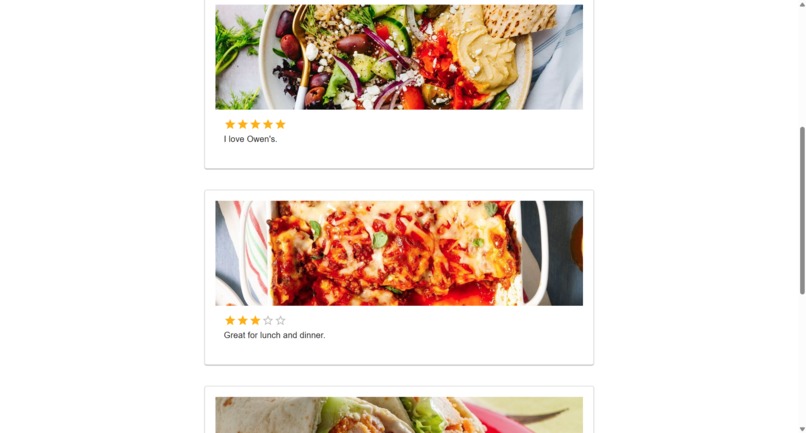
Viewing Reviews
Inspiration
Many new VT students and even some upperclassmen are hesitant to try new places at Virginia Tech after their first few weeks because they don't want to waste their time and money on food that might not be good, a gym membership for an awful gym, or anything else; also, there are so many options on campus that it's difficult to know what to try. We wanted to solve this problem by giving more information to students to help them decide whether a place is worth it.
What it does
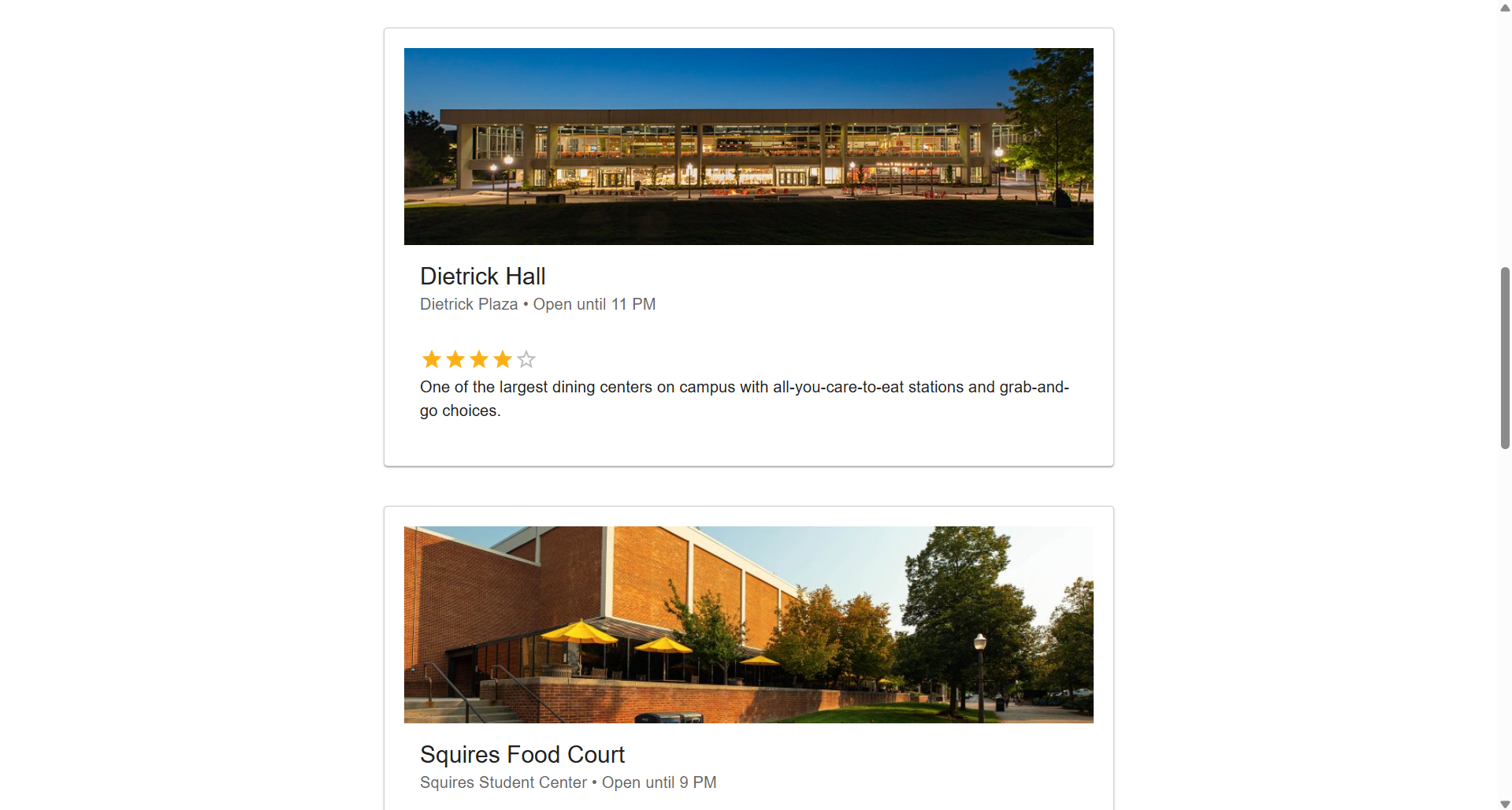
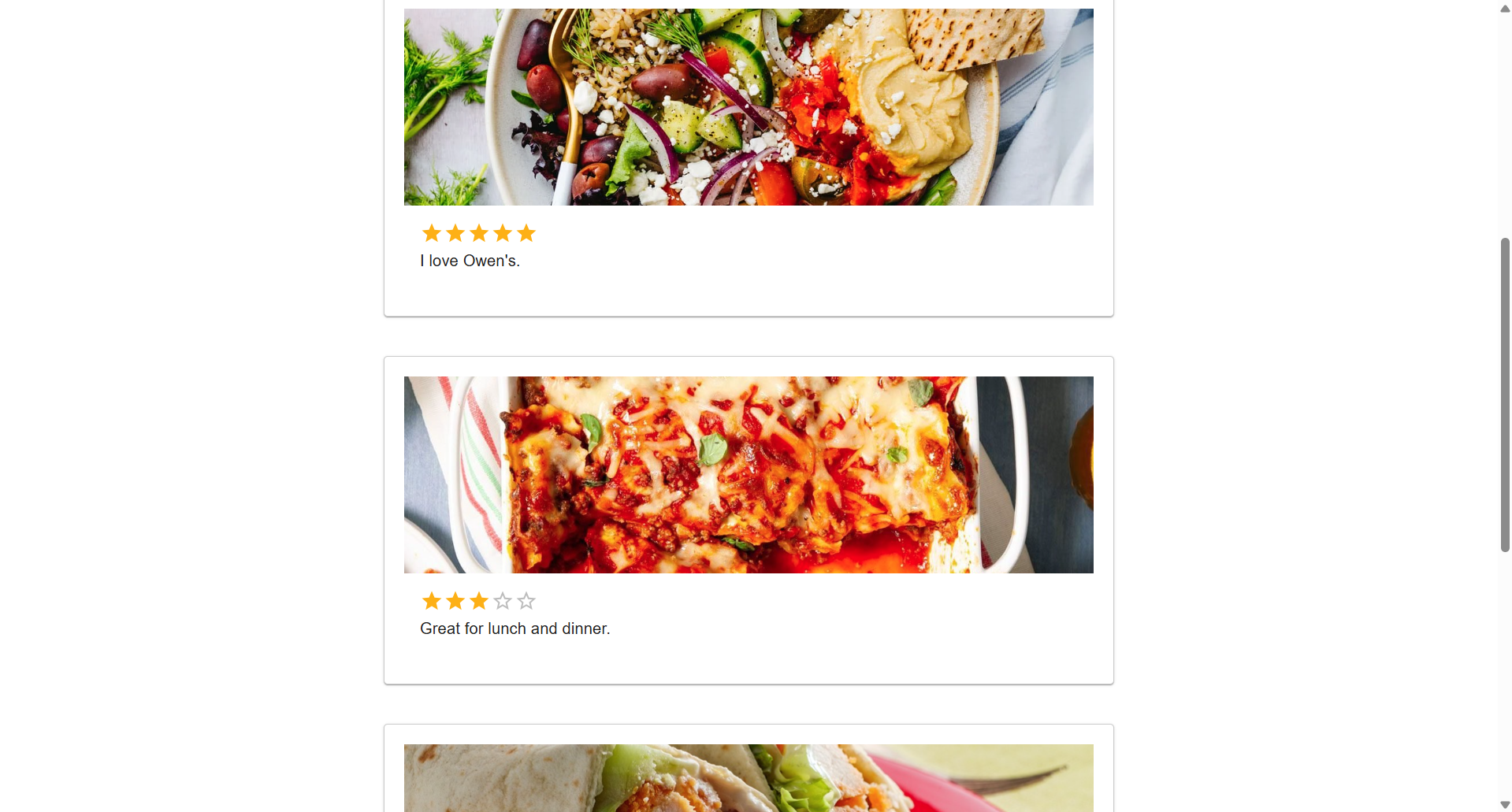
Our project allows VT students to give reviews to dining halls on campus with a rating out of 5, a description, and an image of their food. Anyone can then easily view these reviews to learn more about a dining hall to decide whether or not to go and what to get there.
How we built it
The frontend was built with React in Javascript using MUI components and a data array to render each hall entry, with a navigation-ready card structure for per-hall pages. The backend was built using Node.js that interacts with a Firebase Realtime Database to store the reviews, as well as with Express and Axios for the API calls. The database is a NoSQL database organized by dining hall, with each hall having reviews that contain the data mentioned above.
Challenges we ran into
The main challenge we faced was inexperience. Most of our group had never even come close to making a full scale application before, so we faced challenges when attempting to scale our initial website into a full application because we didn't have the experience to plan ahead. Additionally, we had to learn to use Firebase and implement it in only a few hours, which was about as difficult as it sounds. In the end, though, we managed to make it through and output our design that is scalable to include other types of buildings and businesses around campus.
Accomplishments that we're proud of and what we learned
We are especially proud of how much we learned in such a short amount of time. None of us had worked with React, Node.js, or Firebase before, but we were able to learn how to use both frameworks fast enough to implement them in this project. Also, we learned a lot about the process of creating an application in a short time span and how to split roles effectively to avoid redundancy and merge conflicts.
What's next for HokieHub
We built HokieHub as an MVP that could be easily built upon, so we plan to expand the project to include not only dining on campus but dining off campus, study spaces, and other areas. Also, we plan to create a better way for users to view the reviews, potentially using AI to summarize the large amount of reviews into a more easily viewed format.


Log in or sign up for Devpost to join the conversation.