-
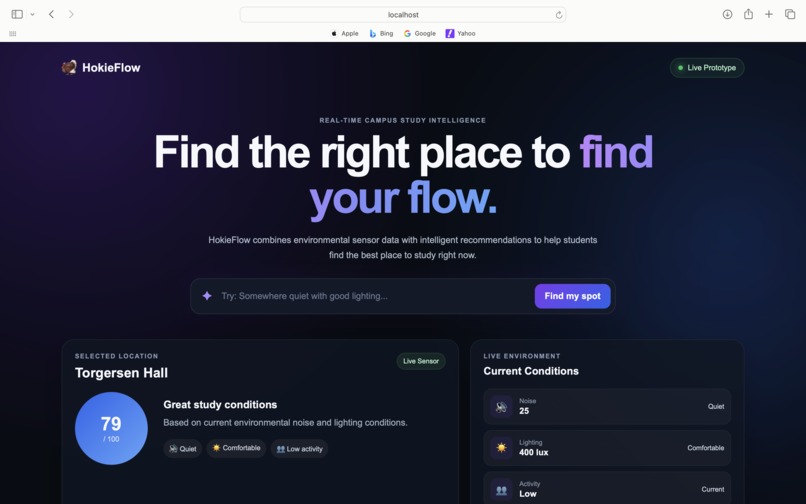
Home page
-
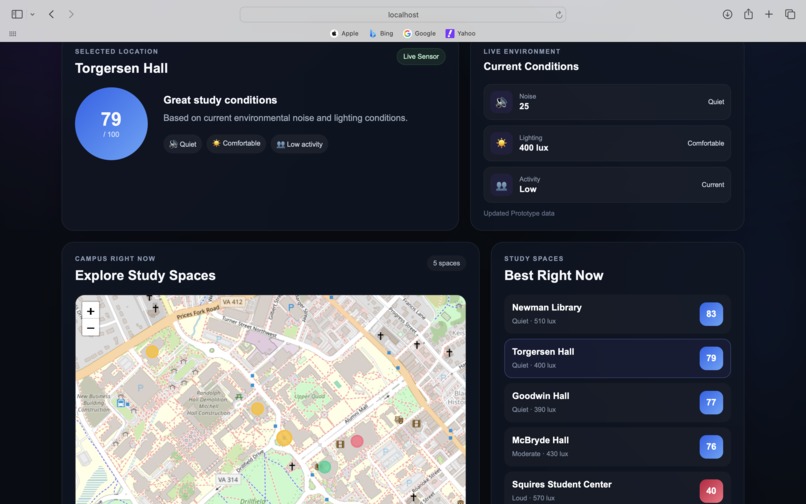
AI recommendations
-
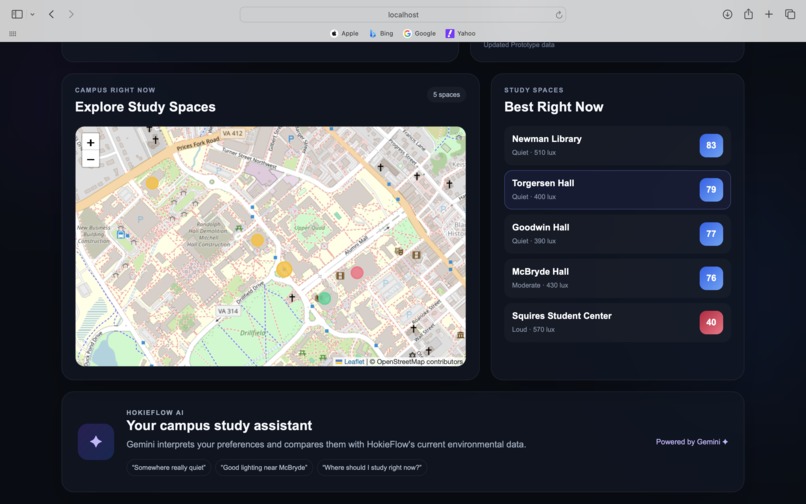
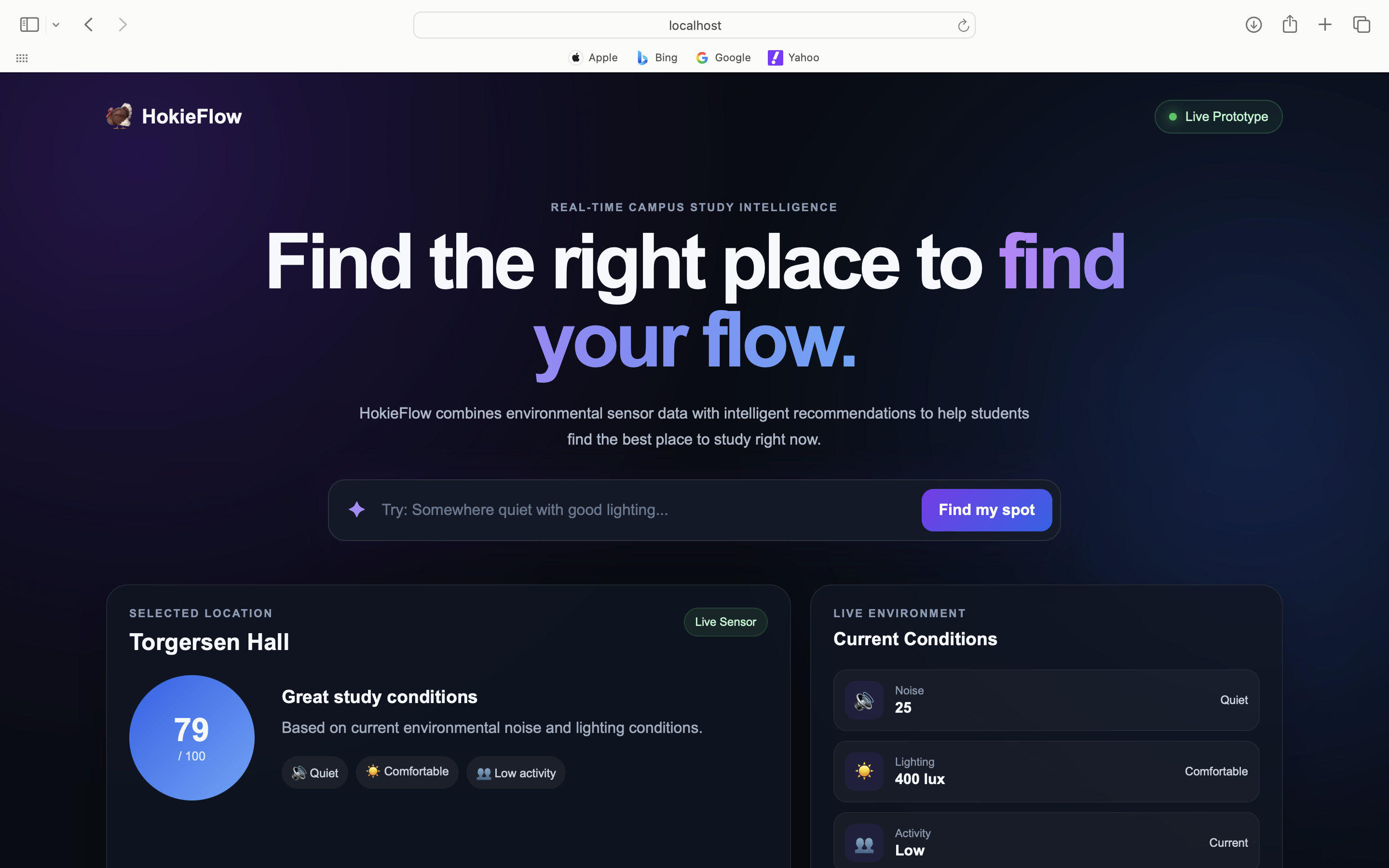
Inspiration
Finding a good place to study can be surprisingly difficult. A space may look perfect but turn out to be too loud, too dark, too warm, or too busy to focus. Different students also work best under different conditions. We created HokieFlow to help students understand their surroundings and find study spaces that better match how they focus.
What it does
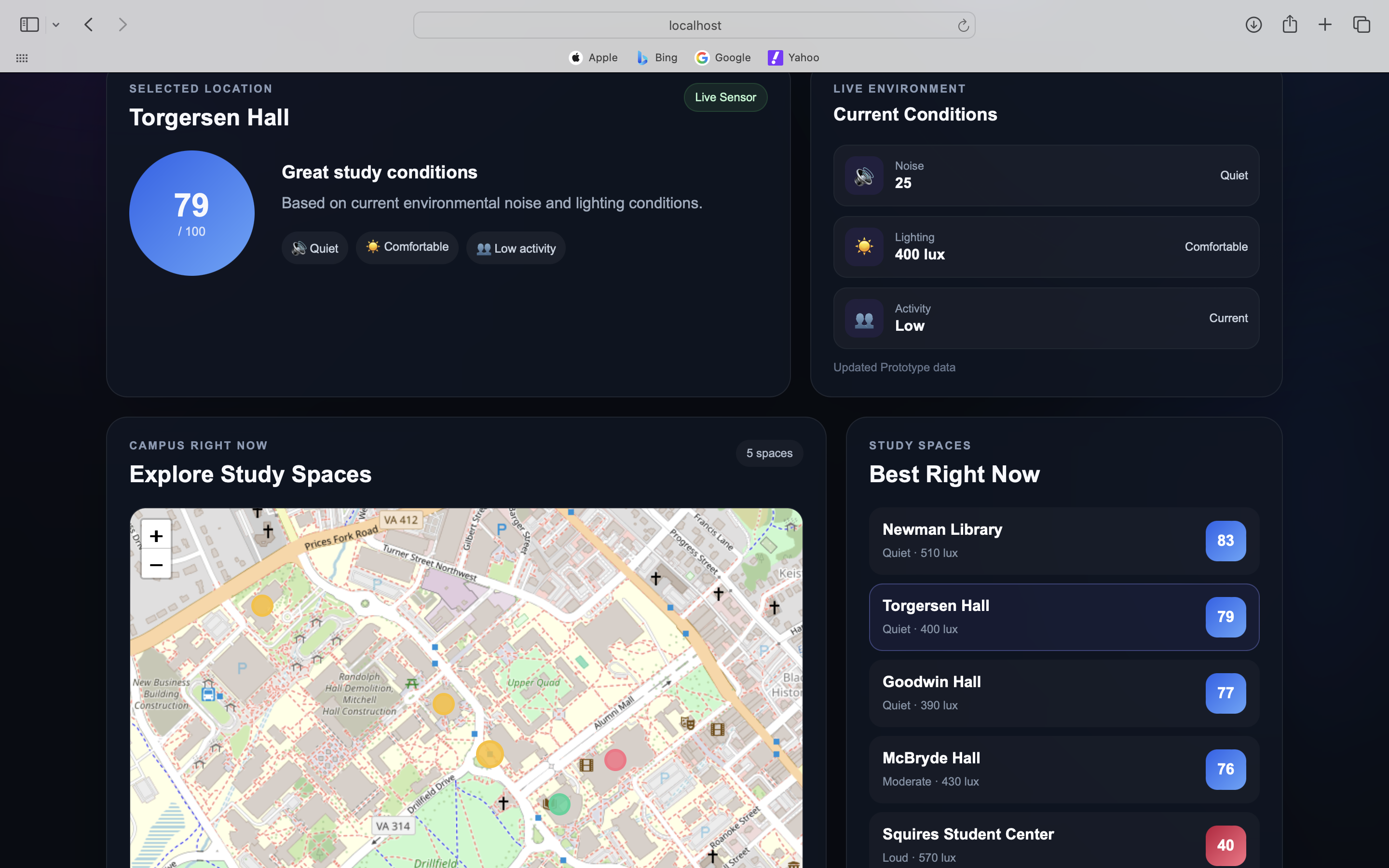
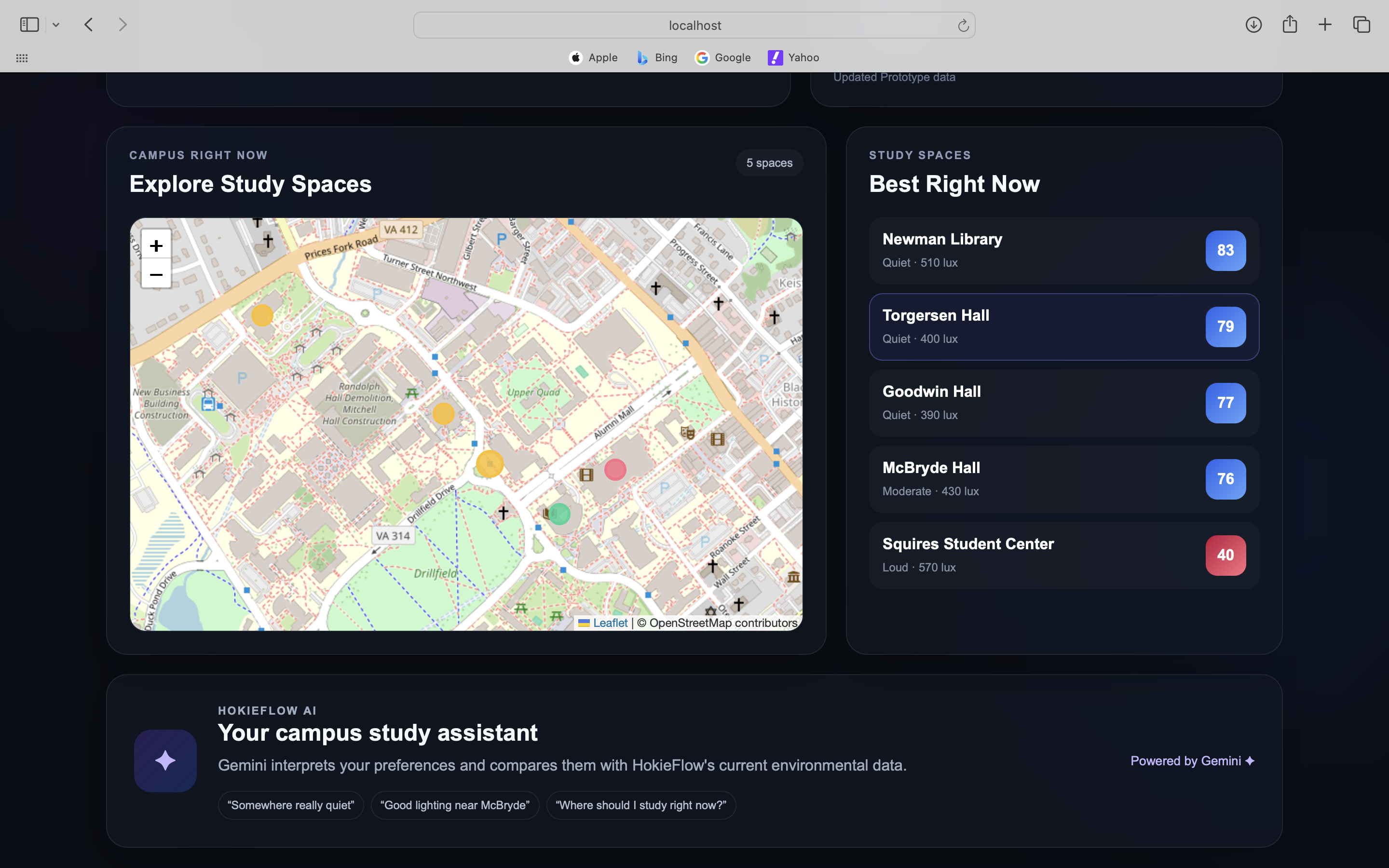
HokieFlow is an AI-powered environmental dashboard designed to evaluate study spaces using factors like noise level, lighting, and activity.
The dashboard displays changing environmental readings and analyzes them together. Instead of only presenting numbers, HokieFlow uses AI to explain the conditions and provide personalized recommendations that help students decide whether a space suits their needs.
How we built it
We designed a sensor system using an ESP32, a breadboard, and environmental sensors. The intended system sends sensor readings through the ESP32 to our backend, where they can be displayed and analyzed.
We built a web dashboard that retrieves updated environmental data from a Python FastAPI backend. The frontend regularly requests the latest readings and presents them through clear status cards. We also integrated an AI recommendation system powered by gemini that interprets the combined conditions and generates practical suggestions for the user.
For our demonstration, HokieFlow uses an automated data stream to represent changing study-space conditions and demonstrate the dashboard and AI analysis workflow.
Challenges we ran into
Our biggest challenge was the physical sensor integration. The ESP32 worked, but the soldered sensor connections did not provide reliable readings, and we did not have access to additional soldering equipment during the hackathon.
Rather than allowing the hardware issue to stop development, we created a demo mode that supplies representative environmental readings. This allowed us to continue testing the backend, live dashboard updates, and AI recommendation system while preserving the intended sensor-based architecture.
We also worked through challenges involving communication between the frontend and backend, continuous data updates, and converting multiple environmental measurements into one clear recommendation.
Accomplishments that we're proud of
We are proud that we built a complete working software experience despite the hardware setback. HokieFlow includes:
- A responsive environmental dashboard
- Automatically updating data
- A functioning FastAPI backend
- AI-generated environmental recommendations
- A physical ESP32 prototype representing the planned sensor system
We are especially proud that the project does more than display measurements—it turns environmental information into advice that students can actually use!
What we learned
We learned how hardware and software components communicate within an IoT system, how to build and test API endpoints, and how to update a frontend with changing data. We also gained experience integrating AI into a practical application.
Most importantly, we learned how to adapt when part of a prototype does not work as expected. Creating a demo mode allowed us to keep testing the central idea.
What's next for HokieFlow
Our next step is completing and testing the physical sensor connections so the ESP32 can transmit live readings to the dashboard. We would also like to:
- Deploy HokieFlow devices across campus study locations
- Allow students to save their preferred environmental conditions
- Compare nearby spaces and recommend the best match
- Add historical trends and availability information
- Integrate automatic controls for lighting, fans, and focus settings
Our long-term vision is for HokieFlow to help every student find a space where they can do their best work!
Built With
- css
- fastapi
- gemini
- html
- javascript
- python
- unvicorn

Log in or sign up for Devpost to join the conversation.