Inspiration
Campus information is often designed around the average student. Finding a classroom, getting to an event, or navigating campus can seem simple, but the best option can change depending on what a student needs that day.
A student might need to avoid stairs, minimize walking, find somewhere to sit, stay indoors, avoid crowds, or conserve energy. These needs can also change from one day to the next.
We wanted to build something that treats accessibility as a personal, flexible need rather than a diagnosis. Instead of asking students to explain why they need an accommodation, we wanted HokieAssist to simply ask:
What would make today easier?
That idea became the foundation for HokieAssist.
What it does
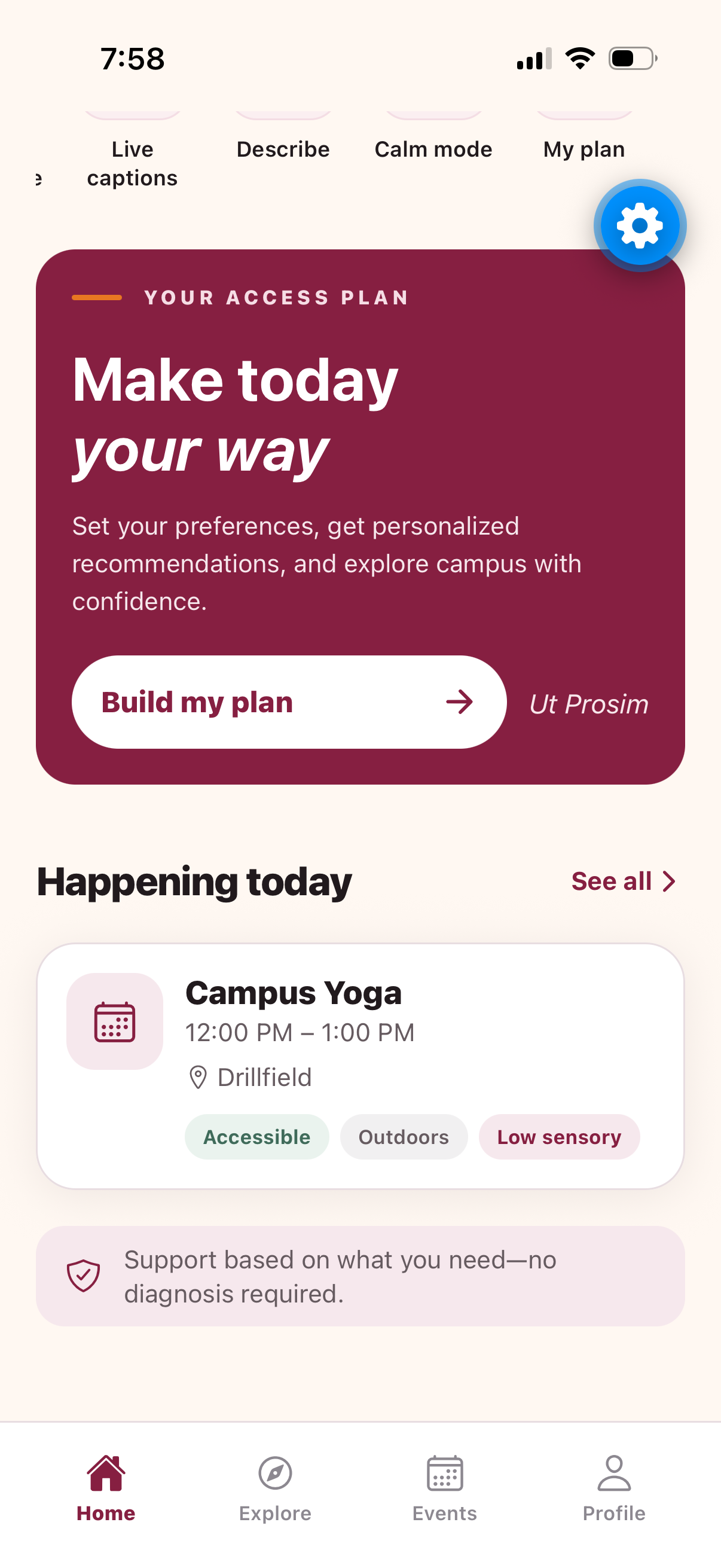
HokieAssist is an AI-powered campus assistant that helps students navigate campus based on their needs in the moment.
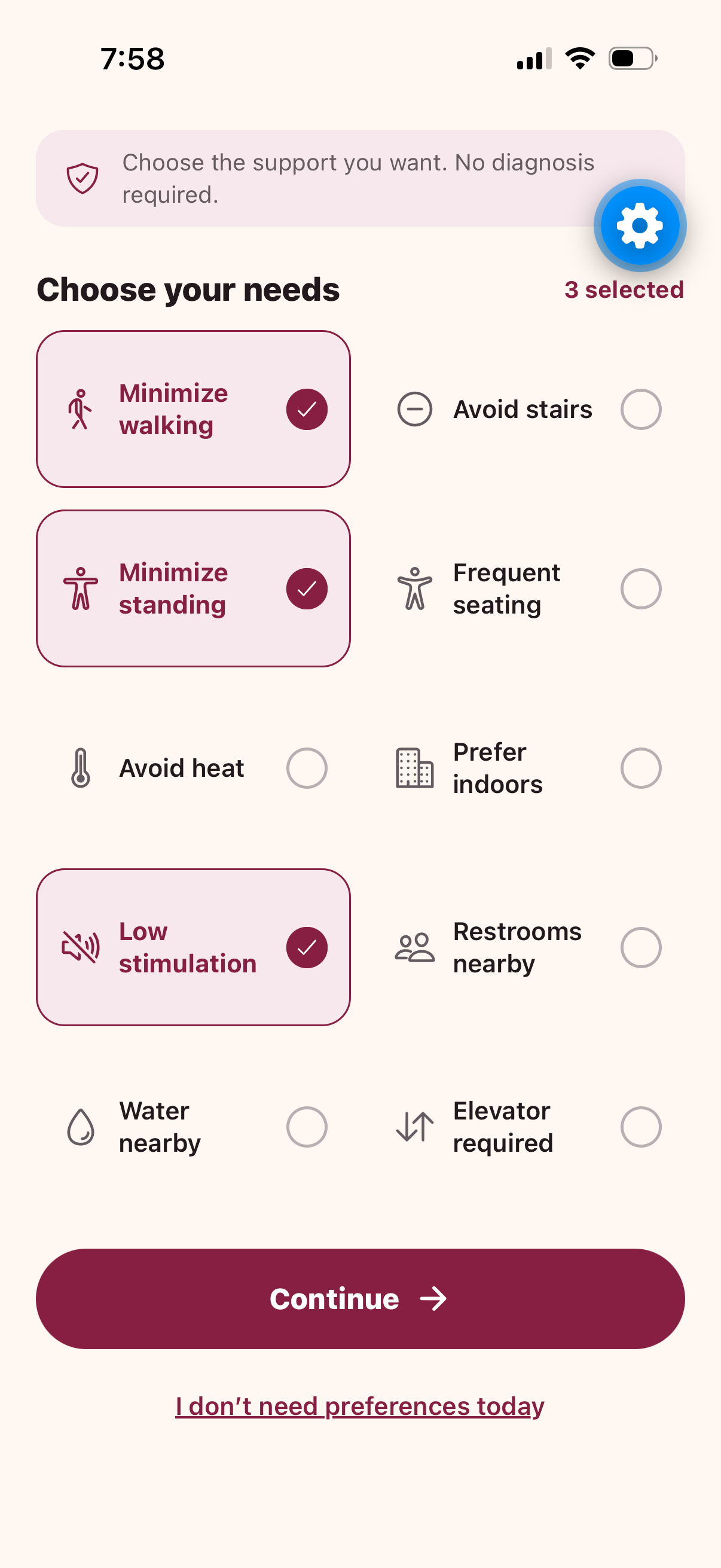
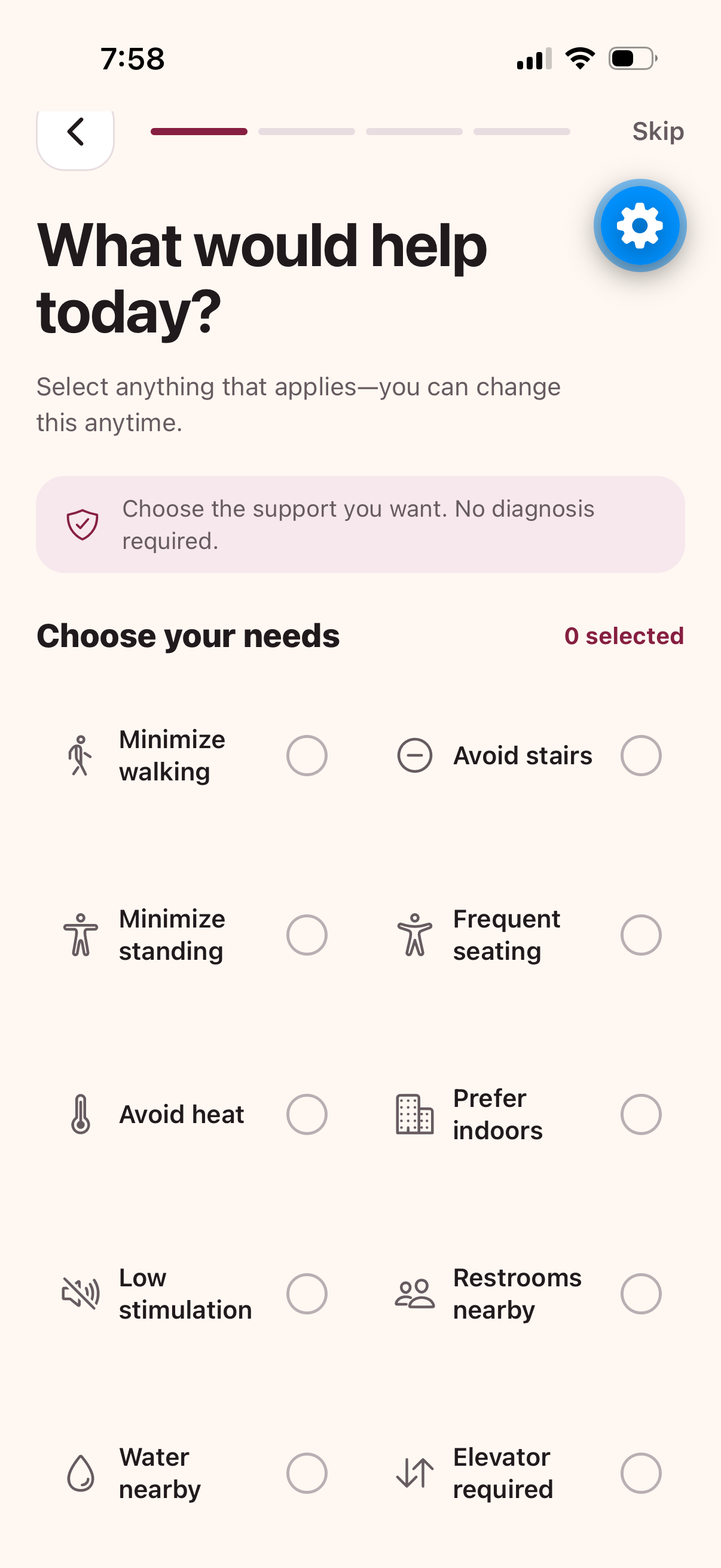
Students can select accessibility preferences such as:
- No stairs
- Minimize walking
- Seating
- Avoid crowds
- Stay indoors
- Restrooms
- Water
- Elevators
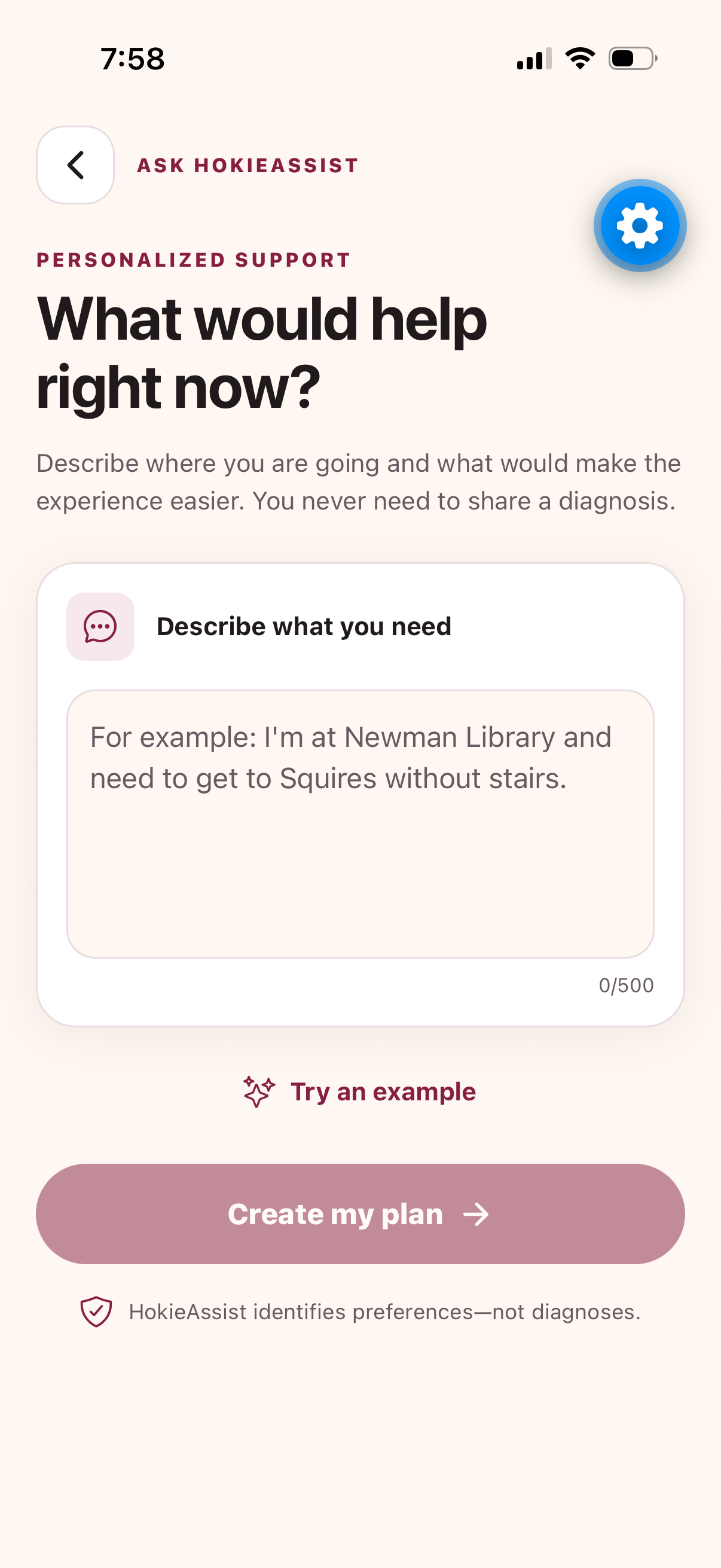
They can also describe what they need naturally. For example:
"I'm exhausted and running late. I'm at Newman Library and need to get to Squires Student Center. I don't want stairs and I need somewhere to sit."
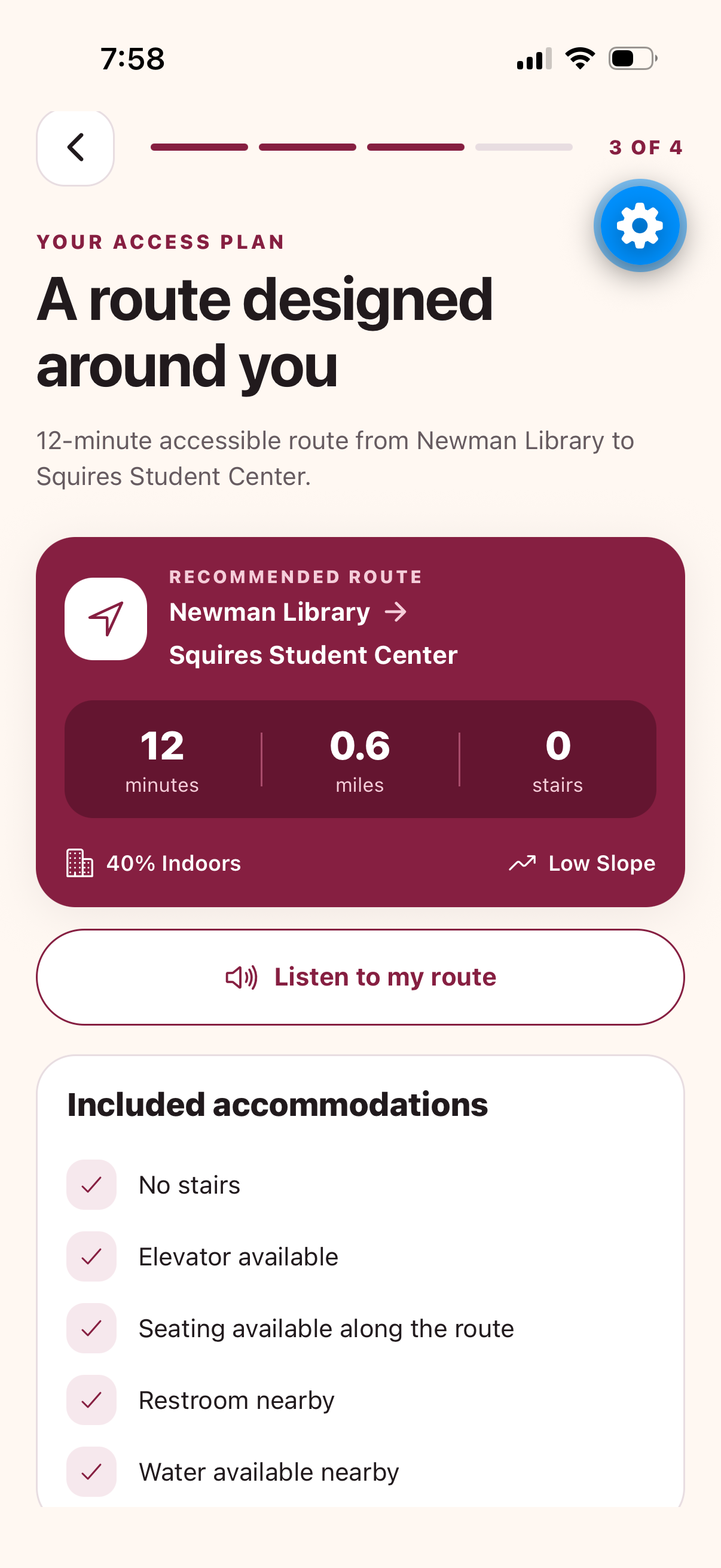
HokieAssist interprets that request and turns it into structured needs, then uses campus information to create a personalized access plan.
Rather than automatically choosing the shortest route, the system considers factors such as stairs, elevators, walking time, indoor coverage, seating, restrooms, and water.
The larger goal is to connect understanding, navigation, and participation in one campus experience.
How we built it
HokieAssist is built as a mobile application using React Native, Expo, TypeScript, and Expo Router.
Our system is organized around several components:
- AI request parsing: Gemini interprets natural-language student requests and identifies needs such as accessibility preferences, urgency, and energy level.
- Access planning: Our agent matches student needs against available campus route information and generates an access plan.
- Campus data: We created structured campus route data containing information such as walking time, stairs, elevators, indoor coverage, seating, restrooms, and water.
- Databricks: We are building toward a unified campus data layer that can bring together information about buildings, routes, events, accessibility features, and changing campus conditions.
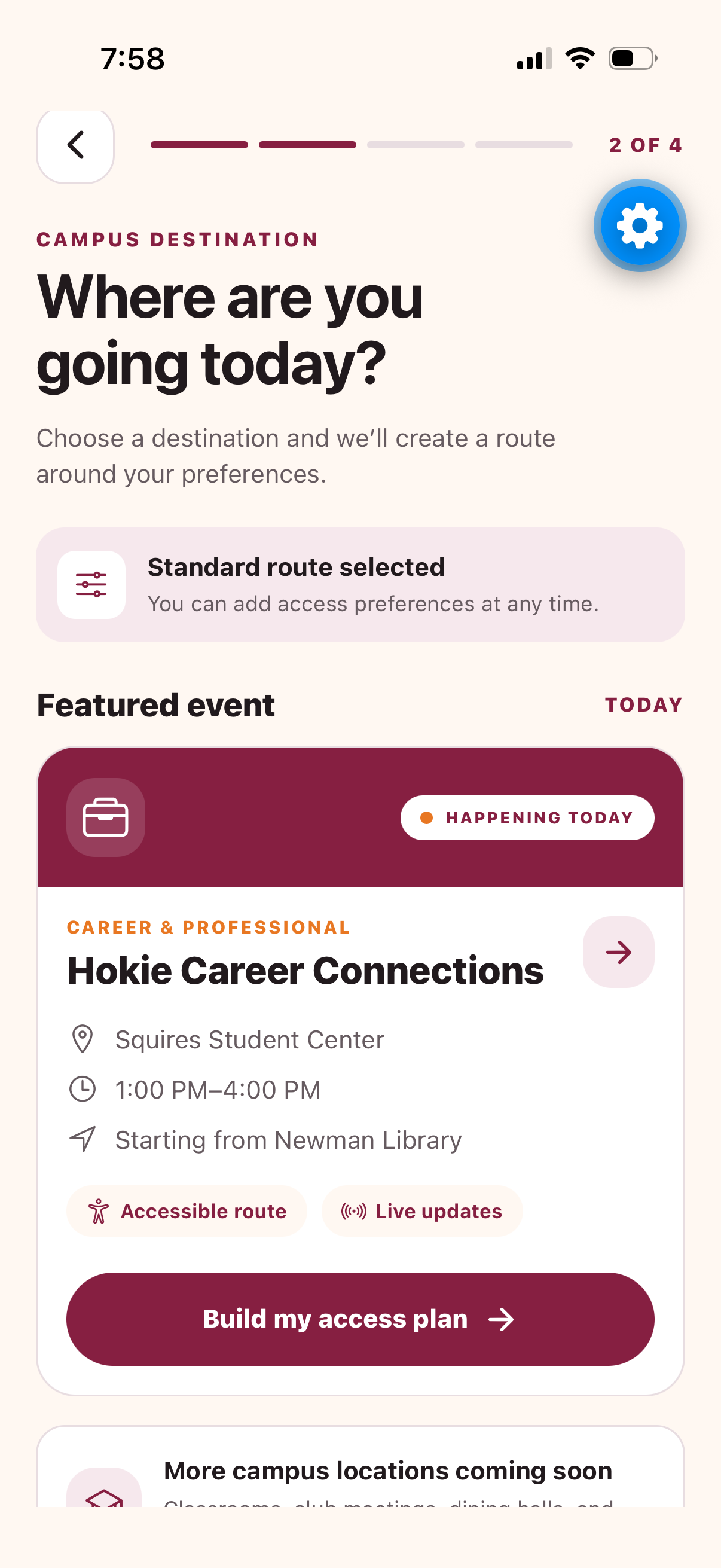
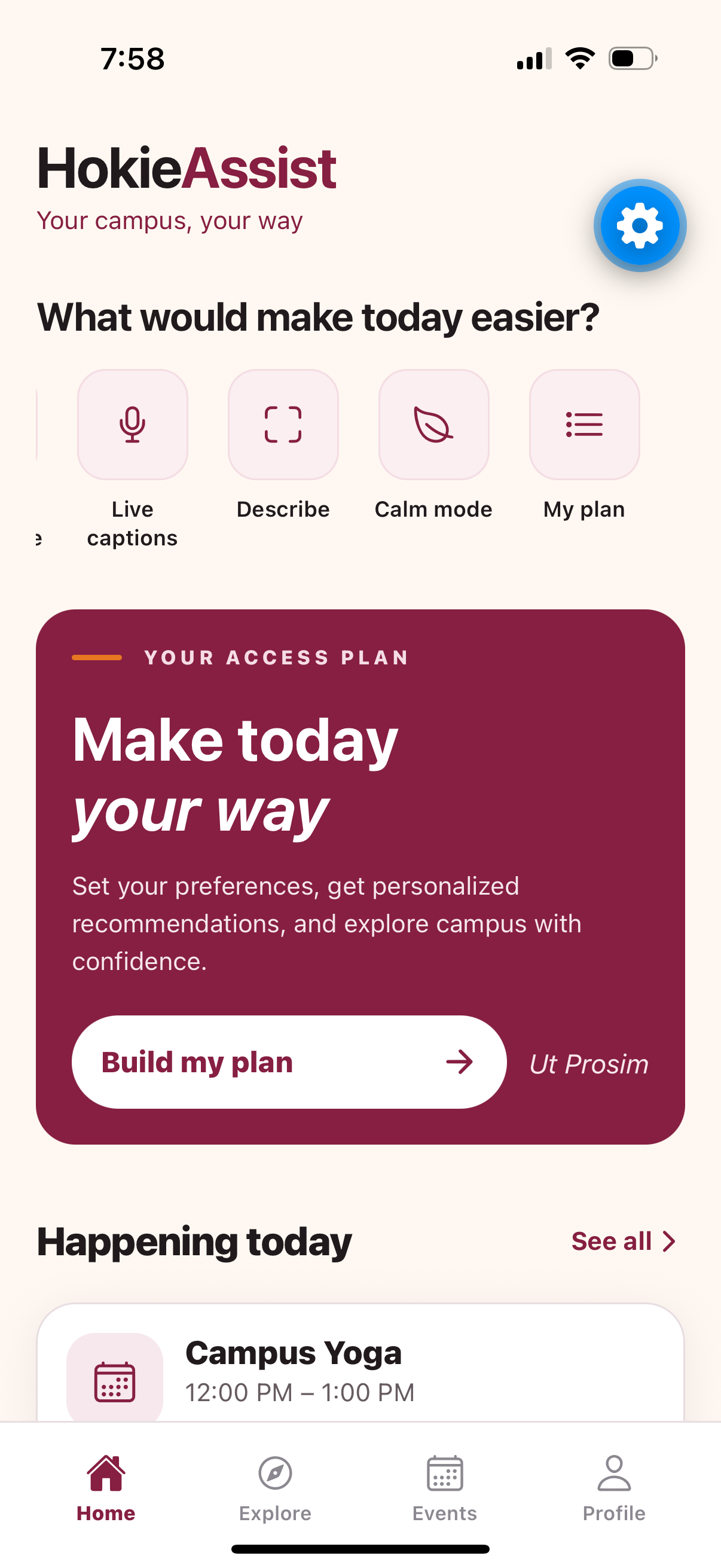
- Mobile interface: The frontend provides a simple student-facing experience for selecting needs, exploring campus information, and requesting assistance.
The architecture is designed so that the initial route data can eventually be expanded with real campus data and dynamic information.
Challenges we ran into
One of our biggest challenges was deciding how to represent accessibility in a way that was both useful and flexible.
Accessibility isn't always binary. A student may not need the same accommodations every day. Someone might normally be comfortable walking across campus but need to minimize walking on a particular day, or they may want to avoid crowded areas without needing any formal accommodation.
We also had to think beyond simply finding the shortest route. A route that takes eight minutes but includes stairs may be less useful to a student than a twelve-minute route with no stairs, seating, and more indoor coverage.
Another challenge was connecting natural-language AI with structured application logic. Gemini can understand a request like "I'm exhausted and running late," but the rest of the application needs that information in a predictable structure that can be used to make decisions.
This led us to separate the system into an AI interpretation layer and an agent layer that works with structured campus data.
Accomplishments that we're proud of
We're proud that we turned a broad idea about accessible campus technology into a working foundation for HokieAssist.
Our current system can:
- Interpret natural-language accessibility requests
- Identify multiple student needs from a single request
- Detect urgency and energy level
- Match student needs against structured route data
- Filter routes based on accessibility requirements
- Generate a personalized access plan
- Present campus accessibility information in a student-friendly way
We are especially proud of the philosophy behind the project. HokieAssist is designed to ask what a student needs, rather than requiring them to identify or explain a diagnosis.
We also built the project with expansion in mind. The same agent architecture can eventually reason over much more than routes, including campus events, buildings, construction, weather, crowd levels, and other changing conditions.
What we learned
We learned that building an AI agent is about more than connecting a language model to an application.
The AI needs to understand a student's request, but the application also needs reliable structured data and clear logic for turning that understanding into useful actions.
We also learned the importance of designing around the user's actual experience. Accessibility information can be technically correct while still being difficult to use. Our goal was to make that information conversational and actionable instead of forcing students to search through multiple sources.
Most importantly, we learned that accessibility can be approached as something dynamic and personal. The same student can have completely different needs depending on the day, environment, schedule, or energy level.
What's next for HokieAssist
Our next step is to connect HokieAssist to richer and more dynamic campus data.
We want to expand beyond static route information to include:
- Real Virginia Tech campus buildings and accessibility features
- Campus events and event accessibility information
- Construction and temporary route closures
- Weather and environmental conditions
- Crowd and noise conditions
- Real-time event updates
- More advanced route scoring based on individual needs
We also want HokieAssist to become more proactive. If a route changes or an event location moves, the agent could automatically adjust the student's plan rather than making them start over.
Ultimately, we want HokieAssist to become a campus agent that connects events, buildings, routes, accessibility, and real-time campus conditions into one personalized experience.
Instead of students having to figure out how to navigate campus around their needs, the campus experience can start adapting to them.

Log in or sign up for Devpost to join the conversation.