-
-
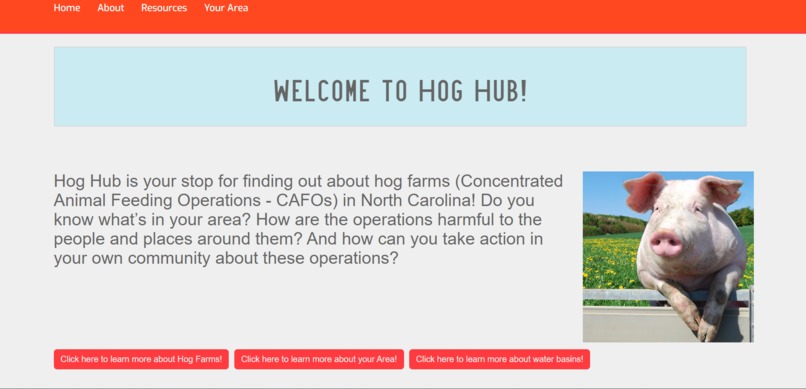
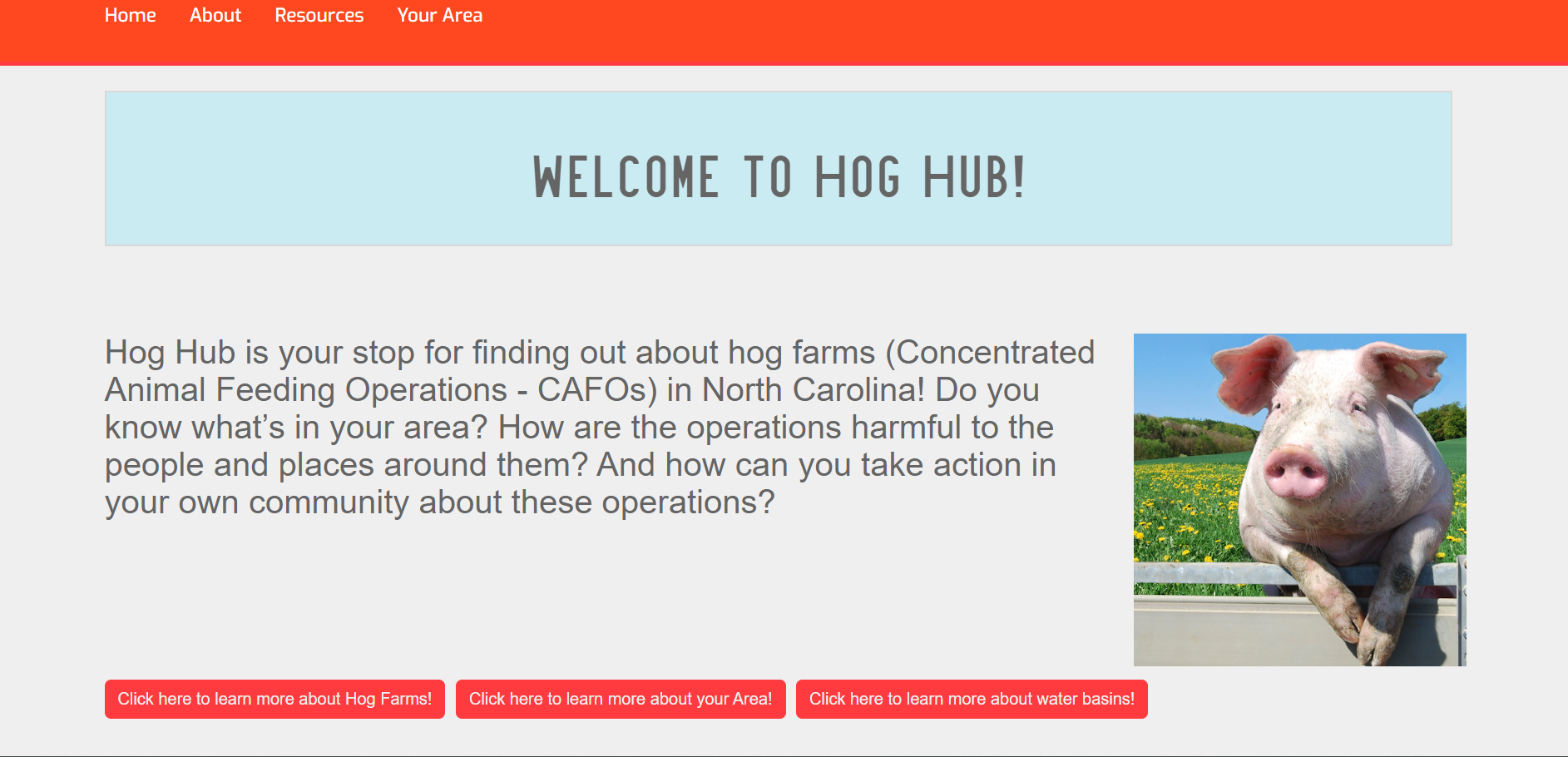
The homepage of Hog-Hub
-
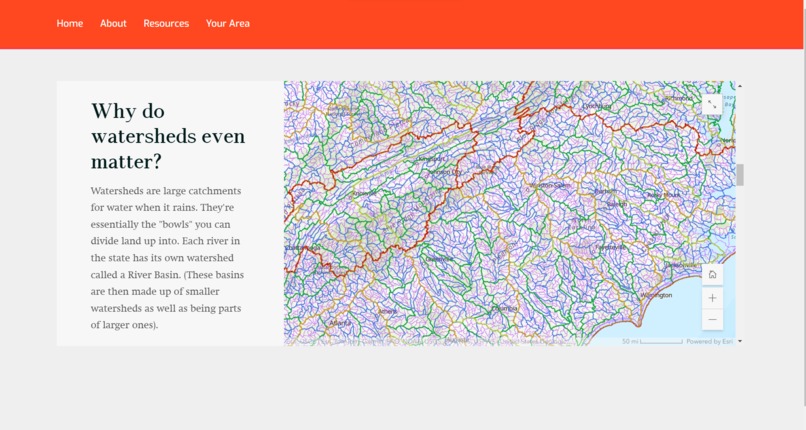
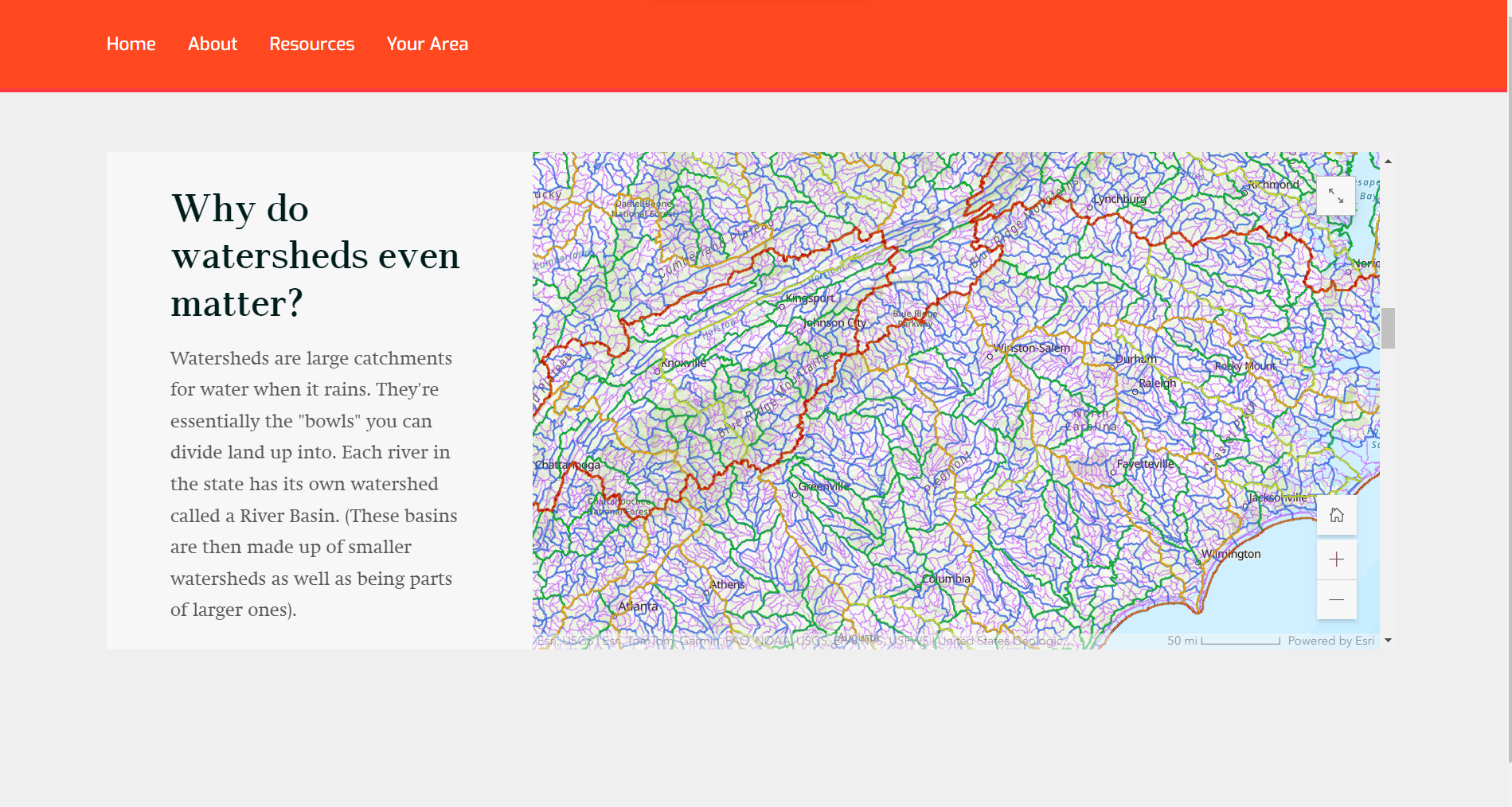
The watershed map
Inspiration
North Carolina has the 3rd largest inventory of pigs and hogs in the US with around eight million pigs. These hog farms are primarily found in the Coastal Plains (eastern NC), and in turn, these farms generate much hog fecal matter/waste. The waste is often collected and kept in large ponds known as lagoons so that it can break down and turn into manure. This manure is then sprayed on farms, but in the process, the spray is dispersed into the air, entering the water supply and spreading harmful pathogens from the hog’s lifestyle. Additionally, with the increased frequency of stronger floods due to severe storms and hurricanes, hog lagoons are being flooded, causing increased drainage of hog waste in local watersheds and ecosystems.
When we started thinking about hog farm waste as an issue, we initially were going to tackle it from the side of informing hog farmers, however we decided to shift toward a community focused approach. Our reasoning behind this was to help empower local communities and help connect them with tools in their area.
What it does
Hog hub is a website meant to serve as a sort of central repository for people living in marginalized communities influenced by CAFOs. Oftentimes things like scientific jargon and a lack of access to introductory level resources make science inaccessible. We’re aiming to help mitigate that by compiling the basics about CAFO contamination.
Hog Hub is also meant to serve as a place for community members to be able to find resources to help. Our hope is that this can bridge the gap between a lot of grassroots organizations that aren’t well known (think about it, do you know anything about local environmental justice organizations in your own area?) and the people they’re trying to help.
How we built it
We coded a website using HTML and Javascript. We also used ArcGIS StoryMaps to create our “Your Area” page.
Challenges we ran into
Half of our team was sick the second day of the hackathon, and half was also gone the majority of the first day due to prior commitments. We had a carry over of 1 person who was able to be there for the entirety of the first day.
In terms of technical challenges, we had a struggle with getting the website code to work, especially because most of us didn’t have any experience using HTML. We also struggled a lot with trying to get ArcGIS to cooperate, as well as with finding data sets that were relevant to our issue, that would be beneficial to community members, and were in the right file type to be integrated into a map.
Accomplishments that we're proud of
We’re proud of the speed we completed this project at. There were many learning curves we had to overcome, but nonetheless we overcame them in only a few hours. We are also proud of the knowledge we learned. We had to read several research papers about the topic and then apply that information very quickly.
What we learned
First, we learned about hog farms and their impact on NC ecosystems and watersheds. Then, we learned how to use HTML and ArcGIS. Next, we learned how to apply both of those together so that we could effectively build our website.
What's next for Hog Hub
We have a couple of rough spots still on the actual website, so we firstly want to work those out. We also want to continue adding more information that can be hard to understand explained in visual ways to make it more accessible. However our main priority is to get the Resources Page up and running better. We were hoping to have a search function that would bring up resources if a person searched up things like air quality, water quality, hurricanes, etc. in addition to the unfinished tiles. The tiles are meant to not only give detailed descriptions about each of the river basins, but also provide local resources and organizations that community members could get in contact with if they had questions, concerns, and wanted to volunteer and get involved.

Log in or sign up for Devpost to join the conversation.